• Police seek suspects in deadly birthday party shooting
  • Lawmakers launch inquires into U.S. boat strike
  • Nov. 29, 2025, 10:07 PM EST / Updated Nov. 30, 2025,…
  • Mark Kelly says troops ‘can tell’ what orders…

Be that!

contact@bethat.ne.com


Be That ! Menu   ≡ ╳
  • Home
  • Travel
  • Culture
  • Lifestyle
  • Sport
  • Contact Us
  • Politics Politics
☰

Be that!

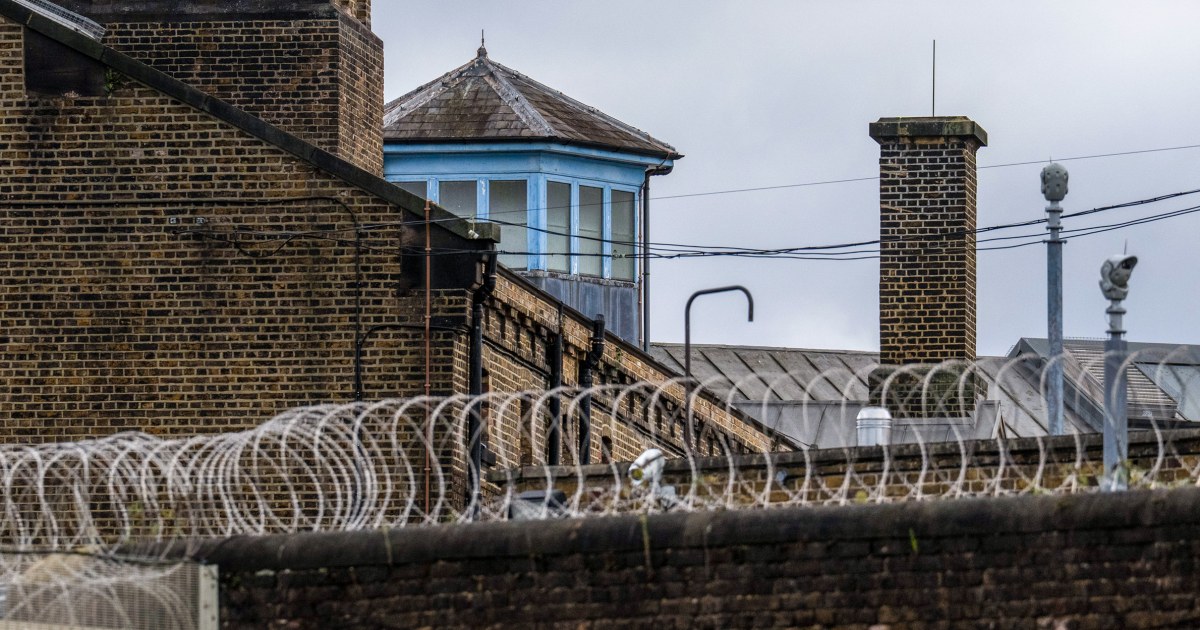
Nov. 8, 2025, 11:07 AM ESTBy Freddie ClaytonLONDON — It’s been a strange sort of prison break: no daring escapes, no Hollywood getaways — just inmates quietly released, by mistake, onto the streets of Britain.What once might have been an isolated blunder comes at an unwelcome time in a country strained by rising prices, stagnant wages and crumbling public services.One man, an Algerian sex offender, was arrested in London on Friday after being freed in error nine days earlier; another, a British national and convicted fraudster, accidentally released from the same prison shortly afterward and turned himself in on Thursday.Their cases followed the mistaken release of a convicted sex offender from a separate prison in October, which sparked a three-day manhunt before he was rearrested.At least four prisoners released in error over the past year remain at large, the BBC reports. More than 260 were wrongly released in England and Wales in the year to March, official data shows — more than double the figure the year before.Deputy Prime Minister and Justice Secretary David Lammy said on X Friday that he was “appalled at the rate of releases in error,” and had ordered “tough new release checks, launched an investigation, and started overhauling archaic prison systems.”He told Parliament on Wednesday that the opposition Conservative Party, whose 14-year spell in government was ended by Prime Minister Keir Starmer last year, had “left our prisons on the brink of collapse entirely.”But the recent litany of errors coincides with the ruling Labour Party battling its own economic constraints and record-setting unpopularity.British prisons have been in a state of crisis for several years, with the prison population more than doubling in size since 1990, while staffing and infrastructure struggle to keep pace.The Algerian offender, Brahim Kaddour-Cherif, 24, was mistakenly let out on Oct. 29, though police say they weren’t informed until nearly a week later. He was rearrested for being unlawfully at large and on suspicion of assaulting an emergency worker in connection with an earlier incident.As officers bundled him into a van, he offered his own verdict on the system that lost track of him: “Look at the justice of the U.K., they release people by mistake,” he said in a video aired by NBC News’ British partner Sky News.It’s a throwaway line, but it lands with an uncomfortable truth. In a country where little seems to function as it should — from the courts to the National Health Service to the trains — even the prisons can’t quite manage to keep the doors locked.Years of budget cuts are “catching up” with Britain’s public services, according to Glen O’Hara, a professor of modern and contemporary history at Oxford Brookes University.“The whole system of social care, for instance, is completely overwhelmed,” he told NBC News on Saturday, adding that Britain’s prisons had been swamped by a large number of short prison sentences.“It’s just overwhelming the system that can’t cope economically with all these numbers,” he said.Last summer, the men’s prison system was nearly filled to capacity with only a hundred or so empty places, a crisis that triggered the government’s emergency release scheme, allowing some inmates to leave after serving 40% of their sentence instead of the usual 50%. Introduced to ease overcrowding, the policy has since seen nearly 40,000 prisoners released early, Ministry of Justice figures show.Staffing issues have also plagued the services. In the year to June, nearly 13% of staff left British prisons, according to data from the Prison and Probation Service.Prison officers said a clerical error meant there was no warrant from the court to hold Kaddour-Cherif, and he was let go. William Smith, the convicted fraudster, was released as a result of a clerical error at the court level, the BBC reports.Wandsworth prison, where Smith and Kaddour-Cherif were released, was built in 1851 to house fewer than 1,000 prisoners. An August 2024 report by the prison’s independent monitoring board found inmate numbers had grown to 1,513.“Wings were chaotic and staff across most units were unable to confirm where all prisoners were during the working day,” the report said.The Victorian-era prison, one of many still in use dating back to the 1800s, has previously been the scene of high-profile escapes. Wandsworth made headlines in 2023 when former British soldier Daniel Khalife escaped by clinging to the underside of a lorry while awaiting trial for espionage and terrorism offenses.A Ministry of Justice spokesperson said that the recent cases “further expose the scale of the crisis in our prisons we inherited,” adding: “This will not be fixed overnight, but we are using every possible lever to bear down on these errors.”For all the headlines and investigations, the mistakes continue to pile up in a country struggling to hold itself together, one unlocked gate at a time.Freddie ClaytonFreddie Clayton is a freelance journalist based in London. 
admin - Latest News - November 8, 2025
admin
16 views 15 secs 0 Comments


LONDON — It’s been a strange sort of prison break: no daring escapes, no Hollywood getaways — just inmates quietly released, by mistake, onto the streets of Britain


Source link

TAGS:
PREVIOUS
Supreme Court Allows Trump to Temporarily Pause SNAP Funding
NEXT
Nov. 7, 2025, 4:49 PM EST / Updated Nov. 7, 2025, 6:01 PM ESTBy Corky SiemaszkoFlying anywhere for the Thanksgiving holiday is likely to be tortuous for legions of travelers — even if the government shutdown ends today, Transportation Secretary Sean Duffy warned on Friday.Hundreds of flights during one of the busiest travel weeks of the year could be affected by staffing shortages of air traffic controllers. The shortages have been exacerbated by the shutdown, prompting the Federal Aviation Administration to implement unprecedented flight reductions.Follow live coverage here. And those staff shortages — at least for now — appear to be set in stone for Thanksgiving, Duffy said.’It’s been awful’: Passengers experience rough travels amid FAA flight disruptions03:36″So if the government opens on day one, will I see an immediate response from controllers? No, the union is telling me it’s going to take time to get them all back in,” Duffy told CNN on Friday when asked if the flight reductions would spill into the holiday. “I don’t wish this was the circumstance in which I was dealing with,” he said. “So I imagine, as we see the data change and more controllers come to work, we are as quickly as possible going to take these restrictions away.”The FAA announced it would begin cutting the number of flights in the “high traffic” parts of the country while the government shutdown grinds on and local airports contend with the staffing shortages.The flight reductions went into effect Friday, on Day 38 of the federal government shutdown, now the longest such shutdown in U.S. history.The FAA is requiring 4% of flights in and out of 40 of the nation’s busiest airport to be cut and that percentage will gradually increase to 10% by next Friday.Duffy, in an interview Friday with Fox News, also raised the possibility of reducing up to 20% of flights at some airports. “I don’t want to see that,” he said. The airports facing reductions include Chicago O’Hare, Hartsfield-Jackson Atlanta International Airport, Miami International Airport and all three New York-area airports.FAA Administrator Bryan Bedford said Thursday the move to reduce the number of flights was sparked by “fatigue” plaguing air traffic controllers, who have been working without pay since the start of the shutdown.Bedford said airports across the country were already contending with staffing shortages before most government operations ground to a halt.Air traffic controllers are considered essential workers and are not allowed to walk off their jobs. But they’re also exhausted, said Nick Daniels, president of the National Air Traffic Controllers Association.“It’s unprecedented to go through two full paychecks, 37 days, and receive no compensation,” he said Thursday. “So it’s not a matter of calling in sick. They’re calling their employer and saying, ‘I don’t have gas. I have not received pay in 37 days. What do you want me to do?’”Patrick Penfield, a Syracuse University professor of supply chain practice, said cutting flights could also make it harder for retailers to replenish their stocks of “hot” items for the holiday season.”Forty percent to 50% of all air freight is shipped in the belly of passenger planes,” Penfield said. “If you eliminate 10% of airline capacity, air freight prices will rise, and we could see delays in getting materials via air.”Corky SiemaszkoCorky Siemaszko is a senior reporter for NBC News Digital.Jay Blackman contributed.
Related Post
November 25, 2025
X reveals where some users are based. It might backfire.
November 22, 2025
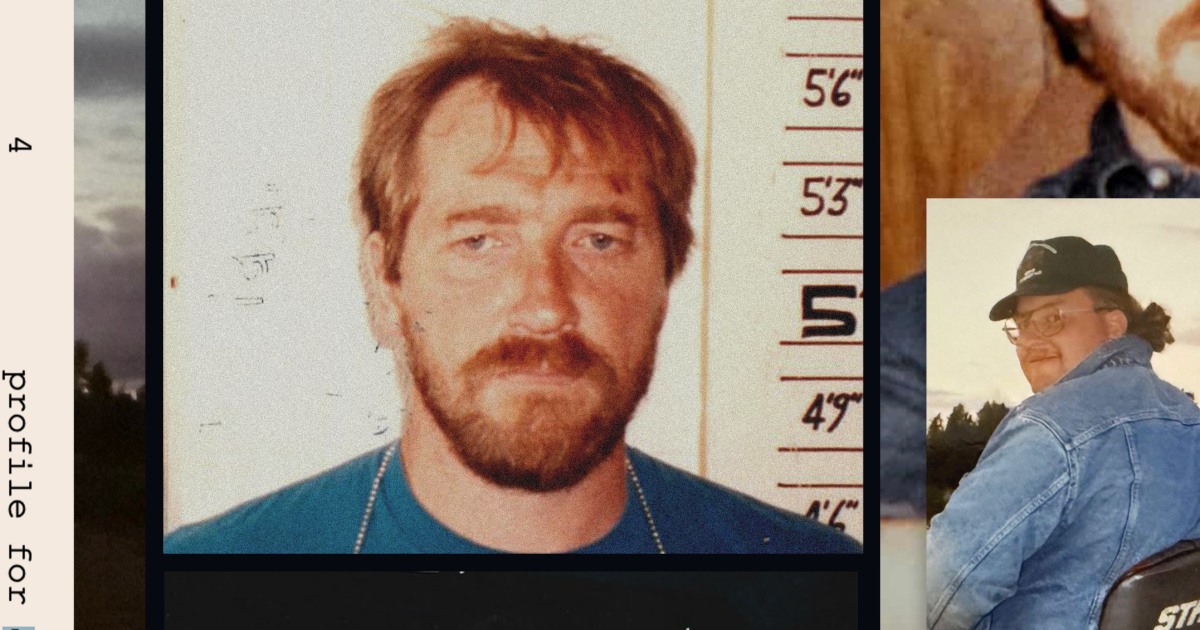
Nov. 21, 2025, 5:49 PM ESTBy Tim StellohFor as long as she can remember, Heather Thiel believed her father was a killer.She was so convinced that she twice urged authorities to examine whether he was responsible for a horrific, unsolved double murder that shook rural Wisconsin more than three decades ago. But her role in the investigation into the slaying of Tim Mumbrue and Tanna Togstad led to an outcome she never could have imagined: three years ago, authorities concluded that her cousin, not her now-deceased father, fatally stabbed the couple on March 21, 1992.For more on the case, tune in to “Raising the Dead” on “Dateline” at 9 ET/8 CT tonight.DATELINE FRIDAY SNEAK PEEK: Raising the Dead01:59Just as head-spinning, that cousin, Tony Haase, was acquitted in the murders earlier this year. During a nearly monthlong trial, Haase’s lawyers made the case that the evidence pointed at Heather Thiel’s dead father, Jeff Thiel. For Heather Thiel, who is 40 and works at a group home for mentally ill adults, the whiplash of the last three years left her questioning longstanding beliefs and wrestling with a familiar feeling.“I wish there was a definite answer,” she said. “Now, I feel like we still don’t know for sure.”Fixated on murderOn March 11, 1995, Jeff Thiel pointed a shotgun at a law enforcement officer after he was pulled over in a traffic stop. The officer retreated to his car, and Jeff Thiel, who’d worked in the maintenance department of an iron foundry in a rural community east of Green Bay, escaped, Haase’s defense attorney said at trial. Heather Thiel. Courtesy DatelineHe blew through a roadblock and fled the state, said the attorney, John Birdsall. Nearly three months later, in a hotel room in Washington state, Jeff Thiel died by suicide, according to his daughter. He was 44. Heather Thiel, who was 11 when her mother told her the news, can still recall her response: “I said, ‘When’s the party?’”Heather Thiel described her father as a scary and abusive parent who killed neighborhood pets and would casually — and routinely — threaten to shoot her mother. Her mom, Marie Stanchik, also believed her ex-husband was a killer. In an interview with authorities three years ago, she recalled how his “ultimate dream was to kill somebody.”Jeff Thiel. Courtesy Dateline“He used to tell me that all the time,” Stanchik said, according to audio of the interview. “He’s had a gun in my face and said if I ever call the cops on him, he’s gonna use it.”Jeff Thiel also had a thing for knives, said Heather Thiel, who has memories of him sitting in a recliner with sharpening tools and blades. Because he worked at a foundry, she said she came to believe he easily could have brought a murder weapon to work with him and melted it down.And there was this comment, which she said her father made the day Togstad and Mumbrue were killed: “It’s funny how you can get away with murder these days.”A suspect from the start The murders were brutal. They were found in the bedroom of Togstad’s farmhouse. Mumbrue, 34, was stabbed 27 times, according to a forensic pathologist who testified at Haase’s trial. His throat had been cut. Togstad, 23, had been stabbed once in the chest and appeared to have been sexually assaulted. Tanna Togstad and Tim Umbrue.Courtesy DatelineEven Togstad’s dog, a terrier named Scruffy, was fatally stabbed. According to one of the original detectives who investigated the case, authorities focused on Jeff Thiel as a possible suspect early on. “With his background and build and strength, he was certainly a person that we had to go after,” said Al Kraeger, who retired from the Waupaca County Sheriff’s Department six years ago.But physical evidence soon cleared those suspicions for law enforcement, said Capt. Nick Traeger of the Waupaca County Sheriff’s Department. In 1996, just as DNA was revolutionizing forensic sciences, an analysis eliminated Jeff Thiel as the person who sexually assaulted Togstad, Traeger told “Dateline.” A blood sample taken from the clothes he was wearing at the time of his suicide did not match semen found on Togstad, the captain said.Heather Thiel said she knew none of this. And as the years passed and no arrests were made, she said she would tell anyone who would listen that her father was probably responsible for the murders.In 2010, she saw a billboard authorities had put up seeking information about the killings and called the listed phone number.According to a law enforcement summary of the interview that followed, Heather Thiel told investigators about her father’s habit of killing animals and his casual comments about murder. She told them that he’d wanted to be with Togstad and had an obsession with knives. And she told them that he’d taken his own life after fleeing from law enforcement. “I had spent my whole life thinking my dad did this and maybe I’d get answers,” Heather Thiel said. “But then, literally nothing came of it.”One of the investigators who interviewed Heather Thiel, Mike Sasse of the Wisconsin Division of Criminal Investigation, said that they did nothing with her information because he already knew that DNA had eliminated Jeff Thiel as a suspect years earlier.“Now, could he have been a peripheral character” in the murders? Sasse added. “At that time, yes, he could have been.”A confession from a night in a ‘drunken stupor’More than a decade passed and still, there were no arrests. Then, on April 8, 2022, Heather Thiel found herself speaking to law enforcement — again. This time, her mother was present for the interview, according to a case report from the Wisconsin Division of Criminal Investigation. Authorities were interested in obtaining their DNA and learning about the family’s allegations against Jeff Thiel, the report states.During the interview, Heather Thiel said she raised the same concerns that she’d detailed for Sasse in 2010. She provided a buccal swab, she said, as well as access to a family tree she’d been developing on a genealogy site. “She turned on her profile, and it was like the Christmas tree lit up,” said Traeger, one of the investigators who interviewed her. The mystery DNA obtained from the crime scene did not match Jeff Thiel, Traeger said, but it did match someone else in the family — Heather Thiel’s cousin, Tony Haase, a father of four with no criminal record who worked at the same iron foundry as Jeff Thiel.Authorities confirmed the link by surreptitiously collecting Haase’s DNA from a pen during a traffic stop, Traeger said. During interviews with authorities, Haase, 54, denied that he had anything to do with the murders. When one of the officers told him that his DNA was found at the crime scene, he said: “I still don’t buy it,” a video of the interview shows.Tony Haase. Courtesy DatelineBut as investigators continued to press Haase, he admitted that over the years he’d had “little clicks” — or memories — that made him wonder if he’d been involved in the killings. He said he remembered a barbell in the house — crime scene photos showed one in the bedroom — then leaving the house and vomiting outside, according to the video. In an interview at the sheriff’s office, investigators said this latter detail was a natural human response following an extreme event.Haase described how his father had been killed in an accident while racing snowmobiles with Togstad’s father, and how on the night the couple was killed, he was drunk and all he could think about was the accident.“I didn’t go there to hurt nobody,” he told investigators. “I honestly can tell you that I don’t know what started, what happened, what started it all.”Asked why it took so long for him to acknowledge what he’d done, Haase said: “Because I didn’t want it to sound like I had this planned.”On Aug. 11, 2022, Haase was arrested for the murders of Togstad and Mumbrue. A probable cause affidavit filed in Waupaca Circuit Court said that at the time of the killings he’d been in a “drunken stupor.”Doubt surrounds murder trialHeather Thiel was shocked. She didn’t know her cousin well but said he didn’t seem to have a mean bone in his body.The arrest also prompted some self-reflection.“I was like, how could I have had it wrong?” she said. “If I was wrong about my dad and it was actually my cousin — well, sorry, you should pay for what you did.”Jeff Thiel, however, continued to loom over the case as Haase’s trial approached. In a pretrial hearing in May, Haase’s attorneys said that because Jeff Thiel’s genetic profile had not been excluded from all of the blood evidence gathered at the crime scene, they should be able to argue at trial that he was still a possible suspect in the murders. Prosecutors objected, but the judge sided with the defense, a transcript shows. So the state asked to exhume Jeff Thiel’s remains to carry out additional DNA testing — a process that Waupaca County District Attorney Kat Turner said would allow them to exclude him from physical evidence gathered at the scene. In June, Jeff Thiel’s remains were disinterred from a Waupaca County cemetery.“The DNA analyst worked on nothing but that until he had the analysis complete,” Turner told “Dateline.” “And again, excluded Jeff Thiel from all of the blood evidence that was available.”In the pretrial proceedings, Haase’s lawyers sought to bar that evidence because they said they didn’t have time to prepare a response before trial, which was scheduled to start two weeks later. Prosecutors again objected, Turner said, but the judge ruled that if the trial started as scheduled, the state would be prohibited from presenting any DNA evidence related to Jeff Thiel.Instead of delaying the trial and challenging the ruling — a process that could have taken years, Turner said — the prosecution forged ahead. Turner said that decision was made after consulting with victims’ families and weighing the challenge of trying an old case in which investigators and scientists were becoming sick or dying.’Somebody who has no conscience’Haase’s trial began in July in a Waupaca County courthouse. His attorneys argued that Haase’s confession had been coerced — investigators planted false memories in an hourslong interrogation — and they said the male DNA found on Togstad’s body had been degraded by years of testing and storage. As evidence of Jeff Thiel’s involvement in the murders, attorney John Birdsall cited an apparent motive — Tanna had rejected Jeff Thiel’s advances — and he linked Jeff Thiel’s habit of killing pets to Scruffy’s death.“This was killed by somebody who has no conscience, who has absolutely no problem killing anything in its path,” he said in his closing argument. “That’s Jeff.”Amy Ohtani, the assistant attorney general who also prosecuted the case, described the defense’s strategy as an effort to “weave together a fantasy to keep you from paying attention to the actual evidence.” The DNA had been properly collected, preserved and tested, she said in her closing argument, and the idea that Haase’s admissions were false was a “distraction.” Jeff Thiel, she said, was the “perfect scapegoat.”Jeff Thiel. Courtesy DatelineAt trial, she said, he’d been described by family members as an “absolutely terrible person” — but wasn’t there to defend himself and there was no evidence actually linking him to the crime. “Jeff Thiel sounds like he was a terrible guy,” she said. “But that doesn’t mean he killed Tim and Tanna.”On the fourth day of deliberations, the jury acquitted Haase of the murders.For his cousin, that decision was the right one. Heather Thiel had come to doubt the forensics that excluded her father from the murders and linked her cousin to them, she said, and she believed Haase had been coerced into making a false confession.Although the trial produced no definitive answers, Heather Thiel said, the proceedings prompted her to return to a long-held position about who killed Mumbrue and Togstad.“Until proven otherwise, I will always believe it’s my dad,” she said.Tim StellohTim Stelloh is a breaking news reporter for NBC News Digital.
November 5, 2025
Supreme Court hears arguments in Trump tariffs case
November 14, 2025
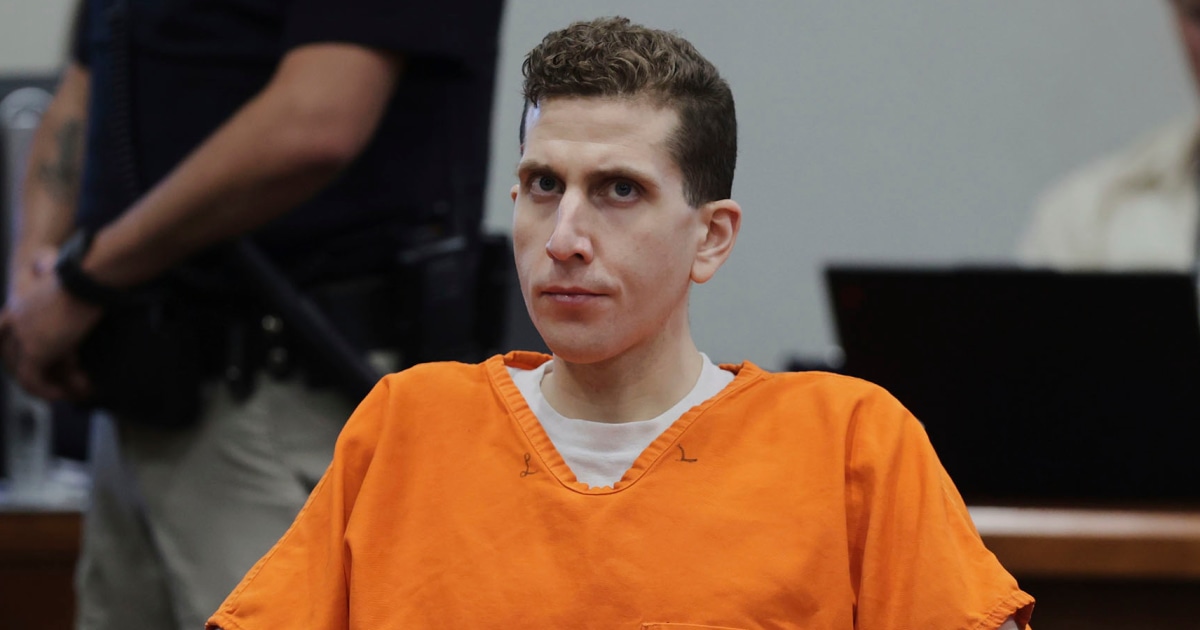
Nov. 14, 2025, 9:39 AM ESTBy Rebecca CohenBryan Kohberger, the man convicted of killing four University of Idaho students in 2022, must pay for the urns for two of the slain students as a part of restitution, a judge ruled.Kohberger killed four students — Madison Mogen, 21; Kaylee Goncalves, 21; Xana Kernodle, 20; and Ethan Chapin, 20 — at an off-campus house on Nov. 13, 2022. He took a plea deal over the summer and was sentenced to four consecutive life sentences for four counts of first-degree murder and 10 years in prison for a burglary charge.From top left, Kaylee Goncalves, Madison Mogen, Ethan Chapin and Xana Kernodle.On Thursday, the anniversary of the slayings, an Ada County judge said Kohberger would be financially responsible for the urns for two of his victims — Goncalves and Mogen. The total of the two urns is $3075.58. Additionally, Kohberger has also been ordered to pay $251,227.50 in criminal fines and fees, a civil judgment of $20,000 to each family, and $31,964.67 in restitution orders to the families of Kernodle and Chapin. A public defender listed for Kohberger did not immediately respond to a request for comment on the ruling.The ruling follows the already agreed-upon restitution that Kohberger would pay to the families of his victims, and after his defense team argued he should not be responsible for the urns because Kohberger will be in prison for the rest of his life and therefore does not have an opportunity to earn more money to cover extra expenses. District Judge Steven Hippler wrote that the cost of the urns is considered a funeral expense, something Kohberger had already agreed to pay for under the plea agreement. He also said that the additional cost for the urn “represents minimal additional burden on Defendant’s financial obligations in connection with this case” and that Kohberger has already received enough donations to cover the agreed-upon restitution. Hippler added that he believes Kohberger will receive more donations over the course of his life that can cover the cost of the urns, and that he can also get a job in prison to earn more funds. Also on Thursday, the third anniversary of the students’ deaths, tributes poured in remembering them. The University of Idaho posted a slideshow of photos on Instagram that appeared to show a campus memorial dedicated to the four students. “Forever in our hearts,” the school wrote in the post’s caption. Idaho Gov. Brad Little wrote on X that the students’ slayings “shook our state to its core.” “Idahoans continue to offer our love and support to the families and many, many loved ones of these four beautiful souls,” Little added. Rebecca CohenRebecca Cohen is a breaking news reporter for NBC News Digital.
Comments are closed.
Scroll To Top
  • Home
  • Travel
  • Culture
  • Lifestyle
  • Sport
  • Contact Us
  • Politics
© Copyright 2025 - Be That ! . All Rights Reserved