• Police seek suspects in deadly birthday party shooting
  • Lawmakers launch inquires into U.S. boat strike
  • Nov. 29, 2025, 10:07 PM EST / Updated Nov. 30, 2025,…
  • Mark Kelly says troops ‘can tell’ what orders…

Be that!

contact@bethat.ne.com


Be That ! Menu   ≡ ╳
  • Home
  • Travel
  • Culture
  • Lifestyle
  • Sport
  • Contact Us
  • Politics Politics
☰

Be that!

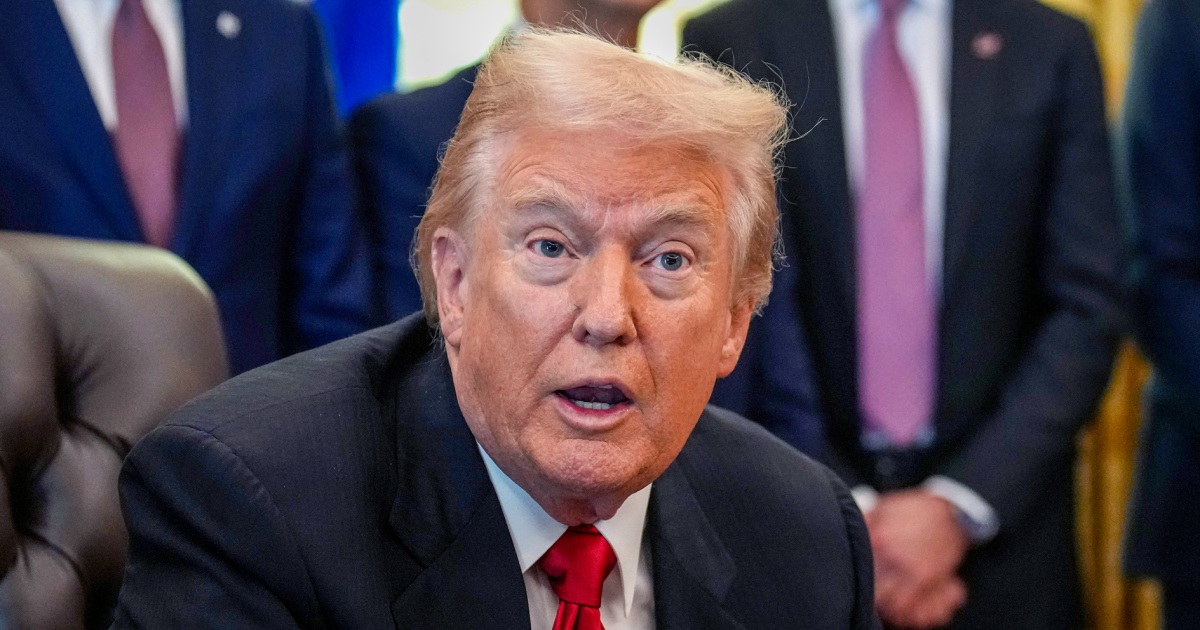
Nov. 11, 2025, 3:00 PM ESTBy Berkeley Lovelace Jr.As President Donald Trump touts new deals to cut the cost of blockbuster drugs like Wegovy and Zepbound, he’s barely mentioned Medicare’s drug price negotiation program — even though the government is expected to announce lower prices before the end of the month.The program, created under President Joe Biden’s Inflation Reduction Act of 2022, gave Medicare the authority to negotiate directly with drugmakers on some of the costliest medications. A Centers for Medicare and Medicaid Services (CMS) spokesperson said the agency is preparing to release the second round of negotiated prices by Nov. 30 — covering 15 drugs, up from 10 last year, and adding Ozempic and Wegovy to the list. The newly negotiated prices won’t take effect until 2027. Trump announces deal to lower cost of weight loss drug01:59The lack of attention has puzzled health policy experts, who say the program could play an important role in lowering prescription drug costs for millions of older adults in the U.S.About 1-in-5 adults say they’ve not filled a prescription because of cost, according to a poll from the nonpartisan health policy research group KFF.“Certainly, the flurry of announcements and lack of details [on negotiations] make things confusing,” said Dr. Benjamin Rome, a primary care physician and health policy researcher at Harvard Medical School. Trump’s approach to lowering drug prices has leaned heavily on executive orders and voluntary deals with drugmakers, rather than legislation. Last week, he announced agreements with Novo Nordisk and Eli Lilly — the makers of Wegovy and Zepbound, respectively — to lower prices for some doses in exchange for tariff relief and accelerated Food and Drug Administration review of new drugs. Several experts described the details as murky and questioned whether the agreements would translate into real savings for Americans. Trump has struck similar deals with Pfizer and Astrazenca.Rome said the Medicare negotiation program is seen as the steadier, more reliable path to lowering costs for Americans.Drugmakers can decline to participate — but doing so would likely require pulling their drugs from Medicare entirely, cutting them off from one of the nation’s largest markets. Several companies have challenged the negotiation program in court, but those lawsuits have so far been unsuccessful. “Although it’s great that the Trump administration wants to aggressively negotiate lower prices with pharmaceutical companies, these ad hoc negotiations seem to be more about announcing short-term political victories,” Rome said. “I would be very skeptical of relying solely on voluntary deals with drug manufacturers as a main policy for making medications more affordable to Americans,” Rome added. “By contrast, the IRA absolutely will save money for taxpayers through the negotiation process.”Despite the looming announcement, the White House has said little publicly about the negotiation program or how it fits into Trump’s broader push to lower drug prices.In an emailed statement, White House spokesperson Kush Desai said: “Democrats endlessly touted the Inflation Reduction Act, which ironically under Biden’s watch did little but increase Medicare premiums. The Trump administration is focused on results, and our historic drug pricing deals with global pharmaceutical giants are proof that we will continue to deliver meaningful change for the American people.”Last year, the Biden administration announced agreements to lower prices on 10 prescription drugs under Medicare, with those cuts set to take effect in 2026. The drugs included the blockbuster blood thinner Eliquis, along with several cancer and diabetes treatments. At the time, administration officials projected the negotiations would save Medicare enrollees $1.5 billion in out-of-pocket costs in the first year. Experts say the second round may have an even larger impact than last year’s since some of the drugs on the list — particularly Ozempic and Wegovy — are becoming the most widely used and most expensive in Medicare.The Congressional Budget Office, a nonpartisan government group that provides budget and economic information to Congress, projects that, because of negotiations, the net price of Ozempic and Wegovy will “fall substantially” beginning in 2027 — cutting Medicare’s spending on each patient who uses the drugs by one third. The CBO also expects that those lower prices are likely to put pressure on other GLP-1 drugs, including Mounjaro and Zepbound.Stacie Dusetzina, a health policy professor at Vanderbilt University in Nashville, Tennessee, said it’s possible the negotiations may have factored into Trump’s deal on Wegovy and Zepbound last week. When asked on a call with reporters whether Trump’s deal was related to the negotiations, senior administration officials insisted it was not. “We’re all eagerly awaiting the announcement of what prices have been negotiated,” Dusetzina said. “It could very well be that this is where the negotiations landed.”Other experts raised questions about how Trump’s deal fits with the negotiations — or whether the two efforts are even aligned at all. Tricia Neuman, executive director of the program on Medicare policy at KFF, said it’s “not clear how the recent White House announcement dovetails with the Inflation Reduction Act when it comes to negotiated prices for GLP-1s.”Rome said Trump’s deals are unlikely to interfere or undermine the negotiation process.“That process is very clearly spelled out by CMS and has been ongoing throughout the year and will repeat for another 20 drugs early next year,” he said. “I don’t think these side deals with Lilly and Novo will change that.” Neuman added that while the voluntary deals may be drawing more attention from the White House, they don’t replace the long term impacts of Medicare negotiations.“The IRA’s Medicare negotiations program is baked into the law, and is up and running, and could ultimately lead to lower prices for far more drugs over time,” she said. Berkeley Lovelace Jr.Berkeley Lovelace Jr. is a health and medical reporter for NBC News. He covers the Food and Drug Administration, with a special focus on Covid vaccines, prescription drug pricing and health care. He previously covered the biotech and pharmaceutical industry with CNBC.

admin - Latest News - November 11, 2025
admin
14 views 16 secs 0 Comments


As President Donald Trump touts new deals to cut the cost of blockbuster drugs like Wegovy and Zepbound, he’s barely mentioned Medicare’s drug price negotiation program.


Source link

TAGS:
PREVIOUS
Trump asks Supreme Court to overturn Carroll verdict
NEXT
Nov. 11, 2025, 1:35 PM EST / Updated Nov. 11, 2025, 3:06 PM ESTBy Allan Smith and Raquel Coronell UribeWhen President Donald Trump hosted Republican senators for lunch at the White House on Oct. 21, Sen. Bernie Moreno, R-Ohio, came prepared. Moreno, who was born in Colombia, has become a key voice on policy involving the Latin American nation — and one that’s deeply critical of the current left-wing president, Gustavo Petro. Two days before the lunch, Trump, at odds with Petro for months, posted on social media that Petro was “an illegal drug leader strongly encouraging the massive production of drugs” in Colombia. Trump said he was stopping all U.S. aid to the country and told reporters he would soon announce new tariffs on Colombia. Moreno wanted to encourage Trump to take a more targeted approach — directly aimed at Petro. To do so, the senator brought along a document titled “The Trump Doctrine For Colombia and the Western Hemisphere.” In addition to five policy ideas, the one-page outline featured large images of Petro and Nicolás Maduro, the president of Venezuela, in orange prison jumpsuits. The images appear to be generated by artificial intelligence. NBC News obtained the memo from a person familiar with the episode.Now that document is at the center of an even further strain in diplomatic relationships between Colombia and the U.S. On Sunday, the publication Cambio Colombia first reported on the existence of the document when it discovered that the White House had posted a photo from the Oct. 21 event showing James Blair, a deputy chief of staff, holding Moreno’s memo. Petro posted on X that he was recalling the Colombian ambassador to the U.S. for the second time in a month and demanding to know why he is being portrayed “as if I were a prisoner,” calling the print-out “a brutal disrespect” to his supporters and nation. And on Monday, Colombian Foreign Minister Rosa Villavicencio told journalists in Santa Marta that her government had “sent verbal notes to the United States through our diplomatic representation” to “request clarification regarding” Moreno’s memo.The episode also marks the latest chapter in the use of fake images in politics. The Trump administration has made extensive use of AI-generated images and videos in online political messaging, with the president himself often sharing them on social media. The White House directed NBC News to Moreno’s office for comment. Moreno’s office declined to comment.Sen. Bernie Moreno, R-Ohio, is a key voice on Republican policy toward Latin America.Daniel Heuer / Bloomberg via Getty Images fileMoreno, who was born in Bogota and immigrated to the U.S. as a child, is among a few lawmakers advocating on Colombia policy to the president. A Treasury Department official told NBC News that both Moreno and Sen. Lindsey Graham, R-S.C., who endorsed Trump’s call to impose new tariffs on the South American nation, have been backchanneling on Colombia to the White House for a while, with their advocacy culminating at the Rose Garden lunch in October. This person, who was granted anonymity to speak candidly, added that Secretary of State Marco Rubio has been heavily involved as well.Tensions between the two nations have risen in recent months with the U.S. building up its military deployment in the Caribbean in an effort to target Venezuela. U.S. forces have killed dozens aboard boats officials say are trafficking drugs into the U.S. as lawmakers in both parties have called for the Trump administration to share evidence to support its claims.Moreno’s memo called for the president to designate more cartels as foreign terrorist organizations; target Petro, his family and associates for further sanctions; and launch an investigation into Petro’s campaign finances, among other measures. The proposal did not include advocacy for new Colombian tariffs or the cutting off of aid to the country. It also did not call for the U.S. to engage in a regime-change effort.Moreno’s document is below. (NBC News added in the watermarks indicating the images are fake.) Three days after the lunch with senators, the Treasury Department announced sanctions against Petro, his family and a government official over allegations of involvement in the global drug trade, with Treasury Secretary Scott Bessent saying in a statement that Petro “has allowed drug cartels to flourish and refused to stop this activity.” Petro has strongly denied involvement with the drug trade and has said he will fight the sanctions in U.S. courts.Trump has yet to announce new tariffs on Colombia. And CNN reported last week that there has been no interruption yet to U.S. assistance to the country.Petro, a socialist, accused the U.S. of killing a fisherman last month in one of its attacks on a boat the U.S. claimed was involved in drug smuggling. The U.S. revoked Petro’s visa during the United Nations General Assembly in September after the Colombian leader spoke at a pro-Palestinian rally in New York and called for U.S. soldiers to resist Trump.Colombia’s President Gustavo Petro speaks in Bogota on Oct. 24.Ovidio Gonzalez / Colombian Presidency via AFP-Getty ImagesWriting for Time magazine, Petro on Sunday countered Trump’s claims, saying that his government had delivered “record cocaine seizures” and that the U.S. government’s support “was crucial in this fight.”“Whatever the attitudes of the current administration, I will continue to pursue a counter-narcotics and broader security policy that is in the interests of Colombians and Americans alike,” he wrote.Petro himself has called out Moreno as leading the charge against him. After the Trump administration announced the sanctions on him last month, Petro posted on X that Moreno’s “threat has come true.”Separately, Moreno pushed back on claims Petro made that he and Trump sought to overthrow him in a coup.“That’s 100% completely false,” Moreno wrote on social media last month. “The United States wants the people of Colombia to have a free and fair election, as scheduled, without any influence from outside agitators or narco traffickers.”Colombian officials who spoke with NBC News said they believed the country avoided new tariffs because of the advocacy of some Colombians in government and in business who are close to both Moreno and Trump-allied lawmakers in South Florida. Andrés Pastrana, who was the president of Colombia from 1998 through 2002 and aligned with the right, said Moreno and Republican Reps. Maria Elvira Salazar, Carlos Gimenez and Mario Diaz-Balart, all of Florida, have had “big influence” in convincing the Trump administration. He also said the U.S. should not equate all Colombians with Petro and his views, adding that imposing tariffs on the entire country could carry a significant “political risk” and help to “re-elect the left” by giving Petro the ability to tap into nationalistic fervor. Allan SmithAllan Smith is a political reporter for NBC News.Raquel Coronell UribeRaquel Coronell Uribe is a breaking news reporter. Julie Tsirkin and Michelle Acevedo contributed.
Related Post
September 28, 2025
2 dead, 8 injured in deadly Michigan church attack
September 30, 2025
Chicago man reunited with lost dog after ten years
October 29, 2025
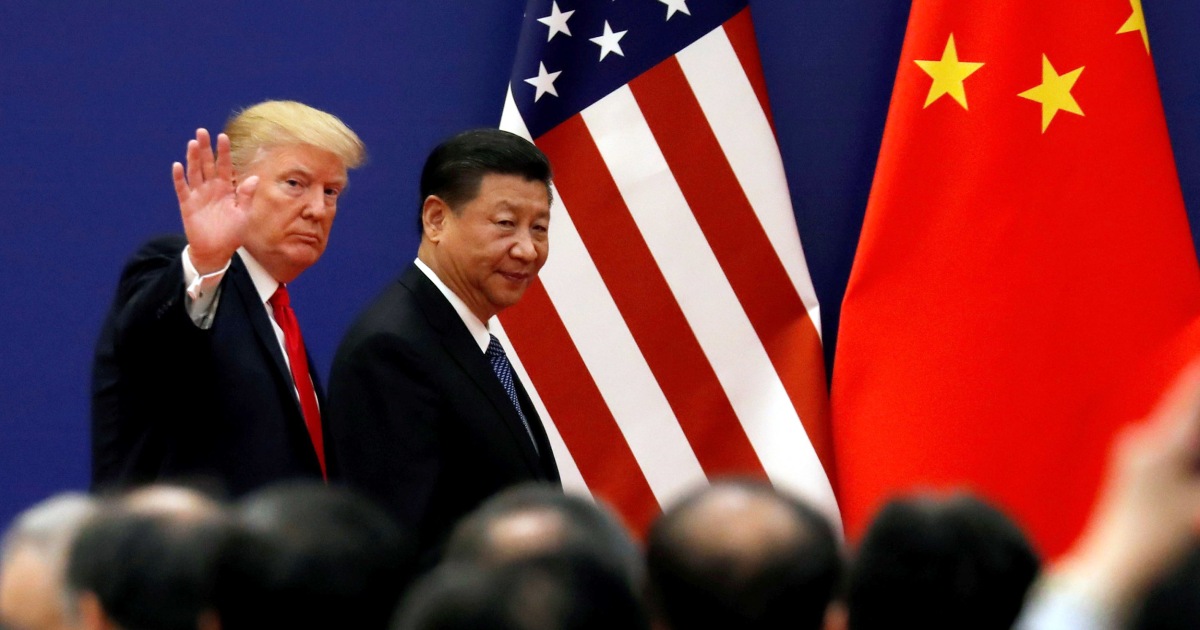
Oct. 28, 2025, 7:07 PM EDTBy Abigail Williams, Courtney Kube, Carol E. Lee and Katherine DoyleWASHINGTON — Some of President Donald Trump’s aides have advised him against shifting the U.S. position on independence for Taiwan to favor China, according to four people with knowledge of the discussions, ahead of his meeting with Chinese President Xi Jinping this week.The aides have privately expressed concern that Trump, who is pushing to reach a sweeping trade deal with China, may choose to ignore their advice, the people with knowledge of the discussions said. They said they worry that Trump could walk away from long-standing U.S. policy on Taiwan or more subtly shift the U.S. position by framing it with new language.“Everyone is holding their breath,” one of the people with knowledge of the discussions said.Stocks hit record highs over hopes of China trade deal00:47Administration officials have told Trump to expect Xi to seek a public declaration from him that the United States “opposes” Taiwan’s independence, the people with knowledge of the discussions said. Xi has for months pushed for a shift in the U.S. position on Taiwan from the current one, which is that the United States does “not support” its independence, to saying the United States “opposes” it.While many Americans might see that as a different way of saying the same thing, were Trump to say the United States opposes Taiwan’s independence or even that independence is not a good idea at this time, it would send shock waves across Asia and be seen as a huge gift to Xi.Openly expressing opposition to Taiwan’s independence would be seen as moving the United States from a neutral position on the issue to clearly standing on the side of China. For decades, U.S. administrations have adopted a policy of strategic ambiguity toward Taiwan, known as the “One China” policy, and presidents have taken the public position of not supporting its independence.A White House official told NBC News: “President Trump has repeatedly affirmed that his Taiwan policy has not changed. President Trump leads on all foreign policy — he always puts forward deals that put the American people first.”Asked what the Trump administration’s policy on Taiwan’s independence was, a senior State Department official said, “The policy on Taiwan hasn’t changed one bit.”“It’s as consistent as it’s been for decades,” the official said Monday.China sees democratic and self-ruled Taiwan as a breakaway province that must be reunited with the mainland by military force if necessary. Taipei rejects Beijing’s claims of sovereignty and seeks to maintain its de facto independence even if it is not formally recognized by most countries.“The Taiwan question is at the core of China’s core interests, and the first red line that cannot be crossed in China-US relations,” Chinese Embassy spokesperson Liu Pengyu said by email when he was asked for comment.“There is but one China in the world, Taiwan is an inalienable part of China’s territory. This is a consensus of the international community and a political commitment made by the U.S. to China,” Liu said.Taiwanese officials are also uneasy about the upcoming Trump-Xi meeting and have expressed their own concerns to State Department officials that Trump could abandon Taiwan to secure a win from the meeting, one of the people familiar with the discussions said.Asked by reporters about Taiwan’s apprehension, Secretary of State Marco Rubio brushed the concerns aside.“What people are worried about is we’re going to get some trade deal where we’re going to get favorable treatment on trade in exchange for walking away from Taiwan,” Rubio said Saturday en route to Asia for this week’s meetings. “No one is contemplating that.”Taiwan’s Foreign Affairs Ministry took to social media soon after, expressing its appreciation to Rubio for “reaffirming no one is contemplating walking away from Taiwan.”Abigail Williams, Courtney Kube, Carol E. Lee and Monica Alba reported from Washington and Katherine Doyle from Tokyo.Abigail WilliamsAbigail Williams is a producer and reporter for NBC News covering the State Department.Courtney KubeCourtney Kube is a correspondent covering national security and the military for the NBC News Investigative Unit.Carol E. LeeCarol E. Lee is the Washington managing editor.Katherine DoyleKatherine Doyle is a White House reporter for NBC News. Monica Alba contributed.
October 12, 2025
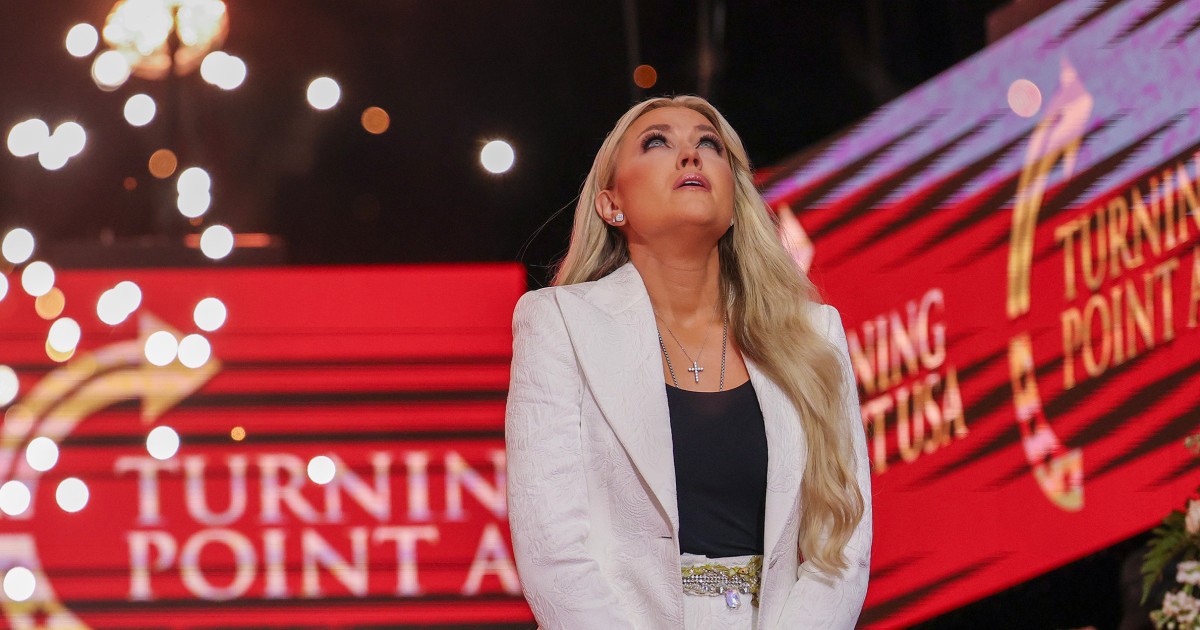
Oct. 11, 2025, 11:53 AM EDTBy Katherine DoyleAs Erika Kirk steps into a more public role following the death of her husband, Charlie, conservatives are watching closely to see whether she can expand the reach of Turning Point USA, the organization he co-founded for young conservatives.Whereas Charlie Kirk’s message resonated with young men, Republicans involved in campaigns hope Erika Kirk can bring in more young women, a demographic Republicans have struggled to win over.“If Erika could solve this, it is monumental,” said Harlan Hill, a Republican consultant. “It is potentially greater than anything Charlie did. And it’s exactly, I think, what Charlie would have wanted.” Kirk declined an interview request. The Republican Party has made some gains among young women voters, but it still faces a daunting picture, with the gap largest among younger voters. President Donald Trump closed his gap among young women from 35 percentage points in 2020 to 23 in 2024, shrinking Democrats’ lead with the group, NBC News exit polls showed. But a recent NBC News Decision Desk Poll found that Generation Z women are the most anti-Trump group across age and gender, with 74% disapproving of his job performance, compared with 26% who approve. By comparison, 53% of Gen Z men disapprove, while 47% approve. The gap highlights the challenge for Kirk and shows why Republicans may be eager for her to play a larger role in reaching young women. Turning Point has resumed public events with appearances from high-profile figures — many of them women — with conservative commentator Allie Beth Stuckey and reality television star Savannah Chrisley among the speakers scheduled over the coming weeks and months. Megyn Kelly and Alex Clark, a former morning show host in Indianapolis who hosts the Gifted Apothecary podcast, recently hosted events.Alex Bruesewitz, a Trump adviser and friend of the Kirks, said Erika herself is a gifted speaker and well-positioned to lead the organization through a period of uncertainty after the loss of Charlie Kirk.“I don’t think anyone is better suited to run Turning Point than Erika,” he said. “She was by Charlie’s side as he took it from a small organization to a behemoth, and Erika played no small role.”At Charlie Kirk’s memorial service in Arizona last month, Kirk said she was “united in purpose” with her late husband and vowed that the organization would continue to grow under her leadership, promising more speaking events and “thousands” of new chapters nationwide. “His passion was my passion, and now his mission is my mission,” she said. “Everything that Turning Point USA built — Charlie’s vision and hard work — we will make 10 times greater through the power of his memory.”’I want to support her’Kirk has offered clues about her own political stance, emphasizing forgiveness, framing much of her purpose through a spiritual lens. On an episode of “The Charlie Kirk Show,” her husband once teased that Erika was much more conservative than he was. “Not even close,” he said, responding to a listener’s question. “I am a moderate compared to Erika.”Kirk also took credit for nudging her husband further rightward. “​​Andrew always jokes that when you got married to me, you got more based,” she said, referring to Andrew Kolvet, a longtime friend and colleague of her husband’s who was the executive producer of his show.Becoming a mother made Kirk even more conservative, her husband suggested. She agreed: “One hundred percent. Which I didn’t think was possible. And a better wife.”Kirk’s embrace of motherhood, faith and marriage is intrinsic. The one time she joined “The Charlie Kirk Show” after her husband’s death, she styled her name with the prefix “Mrs.” Motherhood is a “launchpad,” not a limitation, she said this year. “It’s not a waste of your degree to raise children with wisdom, love and truth.” At a conference for young women, she called for a revival of “biblical womanhood.”Kirk’s personal story and traditional views have already resonated with some women.
Comments are closed.
Scroll To Top
  • Home
  • Travel
  • Culture
  • Lifestyle
  • Sport
  • Contact Us
  • Politics
© Copyright 2025 - Be That ! . All Rights Reserved