• Police seek suspects in deadly birthday party shooting
  • Lawmakers launch inquires into U.S. boat strike
  • Nov. 29, 2025, 10:07 PM EST / Updated Nov. 30, 2025,…
  • Mark Kelly says troops ‘can tell’ what orders…

Be that!

contact@bethat.ne.com


Be That ! Menu   ≡ ╳
  • Home
  • Travel
  • Culture
  • Lifestyle
  • Sport
  • Contact Us
  • Politics Politics
☰

Be that!

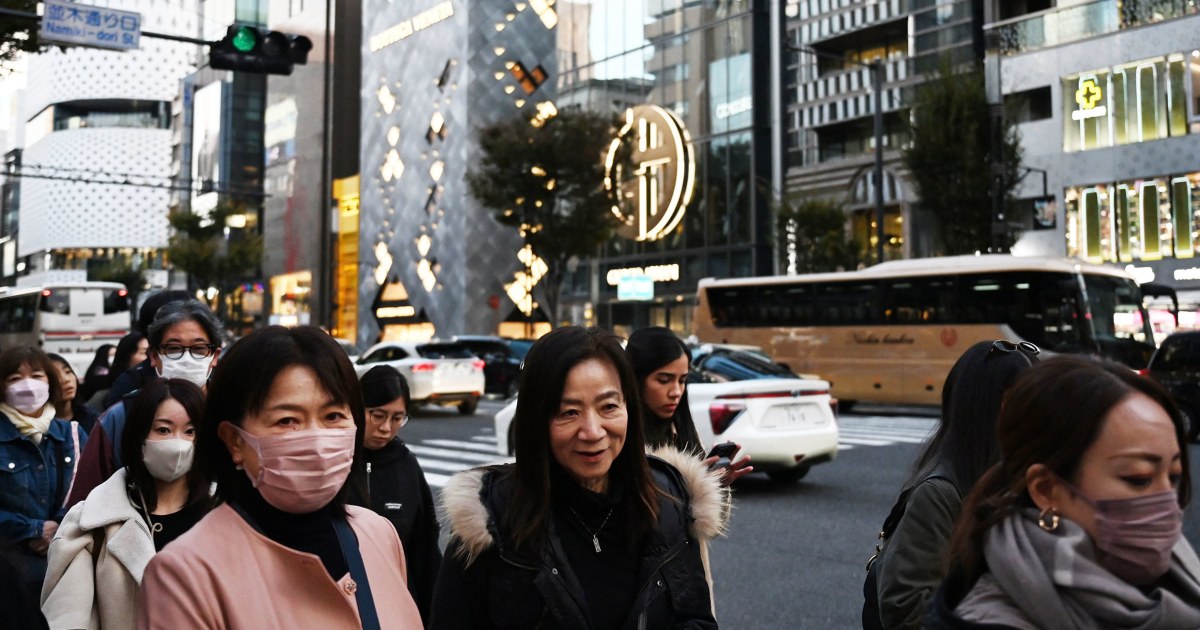
Nov. 12, 2025, 3:52 PM ESTBy Erika EdwardsAs flu season gets underway, global health experts are increasingly worried about a new strain of the virus that popped up in June — four months after the makeup of this year’s flu shots had been decided. The new strain, a version of H3N2, is causing outbreaks in Canada and the U.K., where health officials are warning about the early wave that’s sending people to the hospital. “Since it emerged, it’s rapidly spreading and predominating in some countries so far in the Northern Hemisphere,” Dr. Wenqing Zhang, head of the World Health Organization’s Global Respiratory Threats Unit, said Wednesday during a media briefing. The version of H3N2 that’s circulated worldwide this year “acquired 7 new mutations over the summer,” Antonia Ho, a consultant in infectious diseases at Scotland’s University of Glasgow, said in a media statement. That “means the virus is quite different to the H3N2 strain included in this year’s vaccine,” she said.The U.K. is heading “into what looks set to be a cruel winter, with flu cases being triple what they were this time last year,” the head of the U.K.’s National Health Service, James Mackey, said last week. It’s picking up in Canada, too, said Angela Rasmussen, a virologist at the University of Saskatchewan. H3N2 is generally thought to cause more illness and be worse for older adults than other strains. Japan is also experiencing an unusually early and harsh flu season that’s “unprecedented,” Rasmussen said. Japanese news outlet Nippon TV reported that as of Nov. 4, flu cases in Tokyo had surged to nearly six times the level seen at this time last year, according to the Japanese Ministry of Health, Labor and Welfare. More than 2,300 day cares and schools in the country were at least partially closed because of the outbreak, the outlet reported.“These are not good signs,” Rasmussen said. Is this flu strain already in the U.S.?H3N2 is an A strain of influenza. While there are plenty of anecdotal reports of people testing positive for flu A across the country, the insights stop there. The Centers for Disease Control and Prevention hasn’t provided a detailed, national report on flu activity since Sept. 26 because of the government shutdown.Even if it reopens in the coming days, Dr. William Schaffner, an infectious diseases expert at Vanderbilt University Medical Center in Nashville, Tennessee, said that the “hollowing out” of the CDC in the form of massive layoffs could further delay flu data collection and analysis. Earlier this year, the Department of Health and Human Services announced it would cut up to 10,000 full-time jobs in the public health sector. “We are going to be dependent on state laboratories and academic laboratories for these investigations and report them out,” Schaffner said. “The information will not be as comprehensive, centralized and as quickly analyzed and communicated from the CDC as we have had in previous years.”Will this year’s flu shot be helpful?Global health officials and drugmakers select which viral strain to include in fall flu vaccines for the Northern Hemisphere each year in February, based on which types are circulating in the Southern Hemisphere. This year’s flu shots protect against three strains of influenza, including two types of influenza A and one type of influenza B. The annual flu shot doesn’t prevent people from getting infected with the flu. It’s mainly used to lessen the severity of the illness. Last year, the vaccine was up to 55% effective in keeping adults with the flu out of the hospital. On Tuesday, health authorities in the U.K. published preliminary evidence that this year’s vaccine is up to 40% effective in preventing hospitalization among adults. Schaffner encouraged people to get the shot anyway. “All of the data over previous decades shows that even if there is not a close match, use of the vaccine continues to prevent hospitalizations, intensive care unit admissions and continues to help keep people out of the cemetery,” he said. Erika EdwardsErika Edwards is a health and medical news writer and reporter for NBC News and “TODAY.”

admin - Latest News - November 12, 2025
admin
13 views 16 secs 0 Comments


A flu strain that emerged over the summer is causing outbreaks in other countries. The CDC hasn’t provided any insights on what’s happening in the U.S. in weeks.


Source link

TAGS:
PREVIOUS
Pope Leo lists his four favorite movies
NEXT
Democrat Adelita Grijalva sworn in after 7-week delay
Related Post
October 8, 2025
Texas National Guard Troops Arrive Outside Chicago
October 29, 2025
Oct. 29, 2025, 5:00 AM EDTBy Sahil Kapur, Scott Wong and Brennan LeachWASHINGTON — The pain of a U.S. government shutdown is poised to intensify this week as the funding lapse nears a full month with no resolution in sight.A series of deadlines in the coming days could have negative consequences for ordinary Americans, cutting off food assistance for low-income Americans, raising health insurance premiums for millions on Obamacare and depriving air-traffic controllers, TSA agents and other federal workers of paychecks.Here are four ways the pain is about to hit Americans:Food assistance will be cut offSNAP benefits, formerly known as food stamps, are slated to dry up on Nov. 1 without congressional action, impacting an estimated 40 million low-income Americans across red and blue states.New York, Texas and Florida are each home to about 3 million SNAP beneficiaries, according to KFF, a nonpartisan research group.“This is the biggest pressure point that we’ve seen in 28 days,” said Republican Sen. Tommy Tuberville, whose state of Alabama has about 750,000 SNAP beneficiaries. “I think Democrats are getting a little bit tight right now. It’s their constituents — a lot of them — in some of these inner cities that are gonna need SNAP to survive … And they’re getting a lot of calls.” “A lot of people need to go back to work — a lot of young men that are on SNAP that should be working,” Tuberville added.We’d like to hear from you about how you’re experiencing the government shutdown, whether you’re a federal employee who can’t work right now, a person who relies on federal benefits like SNAP, or someone who is feeling the effects of other shuttered services in your everyday life. Please contact us at tips@nbcuni.com or reach out to us here.Sen. John Boozman, R-Ark., chairman of the Agriculture Committee that oversees SNAP, said millions of American families will be harmed if the government doesn’t reopen by Nov. 1.“It will make their lives more difficult. And, you know, the bottom line is, we need to quit holding these people hostage,” said Boozman, co-chair of the Hunger Caucus. “We have a clean CR. Sen. Schumer needs to open the government — that’s the solution to the problem.”Sen. Bernie Sanders, I-Vt., however, scoffed at the suggestion that SNAP benefits are a partisan pressure point.“Starving children will put pressure on members of Congress? Well, that’s a good moral position,” he said, while emphasizing that the Department of Agriculture has a $5 billion “emergency fund set aside for exactly this purpose” and argued it is obligated to use it to preserve SNAP benefits.Democratic leaders in 25 states and the District of Columbia on Tuesday sued USDA, arguing just that. They asked a federal judge to compel USDA to keep SNAP going as long as it has contingency funding. Some states are dipping into their own emergency funds to provide support for SNAP during the shutdown as well.Apart from SNAP, it’s unknown if the Trump administration will be able to find alternate funding for a critical nutrition program for women, infants and children (WIC), after Trump this month tapped into $300 million in tariff revenue to keep WIC running.And as of Nov. 1, Head Start — and the thousands of preschool children who depend on it — may be in limbo as money runs out for the popular program that provides free learning, health screenings and meals to young children from low-income families.Soaring health care costsOpen enrollment for the Affordable Care Act, or Obamacare, begins on Nov. 1, a month before subsidies that have helped keep premium costs low are set to expire. Insurers have set higher rates for 2026 in case those subsidies aren’t renewed, with some Americans seeing their premiums double or triple for next year.If Congress acts soon to extend the money, reversing the sticker shock for enrollees will be complicated, but insurers can find ways to lower the bills for them next year. Still, the parties do not appear close to a resolution.The central Democratic demand during the shutdown battle has been to extend those funds, which cost about $35 billion per year and cap insurance premiums for “benchmark” plans on the ACA exchanges at 8.5% of an enrollee’s income.Many Republicans say the money, which was initially passed in 2021 as part of the Covid pandemic relief, should expire.Democrats are reminding them that many of their constituents in red states would face skyrocketing premiums if the tax credits end.“The majority of benefits will go to people living in states that Trump won,” said Sen. Andy Kim, D-N.J. “I’m not thinking about this in terms of blue or red voters; I’m just trying to help as many people as possible. The Trump administration has shown such a deep disregard, even for people that voted for them.” Kim said the White House is treating programs like ACA and SNAP as “a political chip” rather than a lifeline for Americans.There’s also concern that some people will go without insurance rather than pay higher premium costs, putting greater strain on the U.S. health care system.#embed-20251002-shutdown-milestones iframe {width: 1px;min-width: 100%} Air traffic controllers and TSA agents miss full paychecksFederal workers are either furloughed or forced to work without pay for the duration of the shutdown. Tuesday marked the first time during this shutdown that certain “excepted” workers, such as TSA agents and air traffic controllers tasked with keeping the skies safe, missed a full paycheck.Previously, they had received partial paychecks, but this time their pay stubs showed $0.00.“I’m very concerned about air traffic controllers,” Sen. Susan Collins, R-Maine, the chair of the Appropriations Committee that writes federal funding bills. “I had two flights this Sunday and last Sunday averted at the last second. One of them actually touched down and then took back off. And in all the years that I’ve served in the Senate, I’ve never had that happen.”The longest government shutdown in U.S. history, spanning 34 days in late 2018 and early 2019, ended after air traffic controllers and TSA agents started calling in sick, severely threatening air travel. One of the biggest travel holidays of the year, Thanksgiving, is coming up in just a few weeks.Even fiscal conservatives who’ve fought to slash government spending argued that not paying air traffic controllers could have dangerous consequences when it comes to public safety.“I fly twice a week. I want my air traffic controller to be happy, well fed, not anxious, not nervous,” said Sen. Rand Paul, R-Ky., chairman of the Homeland Security and Governmental Affairs Committee, the only Republican who has voted against the GOP bill to reopen the government. “So I’m for paying our soldiers, paying our air traffic controllers, paying our employees — anybody that’s working ought to be paid.”Pay for troops is in fluxTwo weeks ago, the White House alleviated a major pain point in the shutdown by shifting money around to ensure active-duty military troops didn’t miss a paycheck. Trump directed Defense Secretary Pete Hegseth to find the money to pay the troops; the Pentagon reallocated billions of dollars from research and development programs to service member paychecks.On top of that, a private donor, whom The New York Times later identified as billionaire Timothy Mellon, contributed $130 million to help pay the troops. But that’s a drop in the bucket compared to the roughly $6.5 billion needed for the Pentagon to fund Friday’s paychecks.The Trump administration is now desperately searching for other funding streams to tap into. Vice President JD Vance told reporters at the Capitol on Tuesday that the White House has figured out a way to pay members of the military at the end of this week. But there are far from any guarantees. And what happens next month is unclear.”We believe that we can continue to pay the troops Friday,” Vance said after huddling with Senate Republicans over lunch.Sen. Kevin Cramer, R-N.D., a member of the Armed Services Committee, said that not being able to pay the troops would be “awful” and noted that it’s becoming increasingly difficult for the administration to identify other pots of money.“They can only do that for so long before they run out of funding pools,” Cramer said Tuesday. “I think the White House is doing everything that the White House should be doing, and they should be insisting on Democrats pushing the easy button and vote to reopen the government.”Sahil KapurSahil Kapur is a senior national political reporter for NBC News.Scott WongScott Wong is a senior congressional reporter for NBC News. Brennan LeachBrennan Leach is an associate producer for NBC News covering the Senate.
November 2, 2025
Los Angeles celebrates Dodgers win
November 7, 2025
'Mega detention centers': ICE considers buying large warehouses to hold immigrants
Comments are closed.
Scroll To Top
  • Home
  • Travel
  • Culture
  • Lifestyle
  • Sport
  • Contact Us
  • Politics
© Copyright 2025 - Be That ! . All Rights Reserved