• Police seek suspects in deadly birthday party shooting
  • Lawmakers launch inquires into U.S. boat strike
  • Nov. 29, 2025, 10:07 PM EST / Updated Nov. 30, 2025,…
  • Mark Kelly says troops ‘can tell’ what orders…

Be that!

contact@bethat.ne.com


Be That ! Menu   ≡ ╳
  • Home
  • Travel
  • Culture
  • Lifestyle
  • Sport
  • Contact Us
  • Politics Politics
☰

Be that!

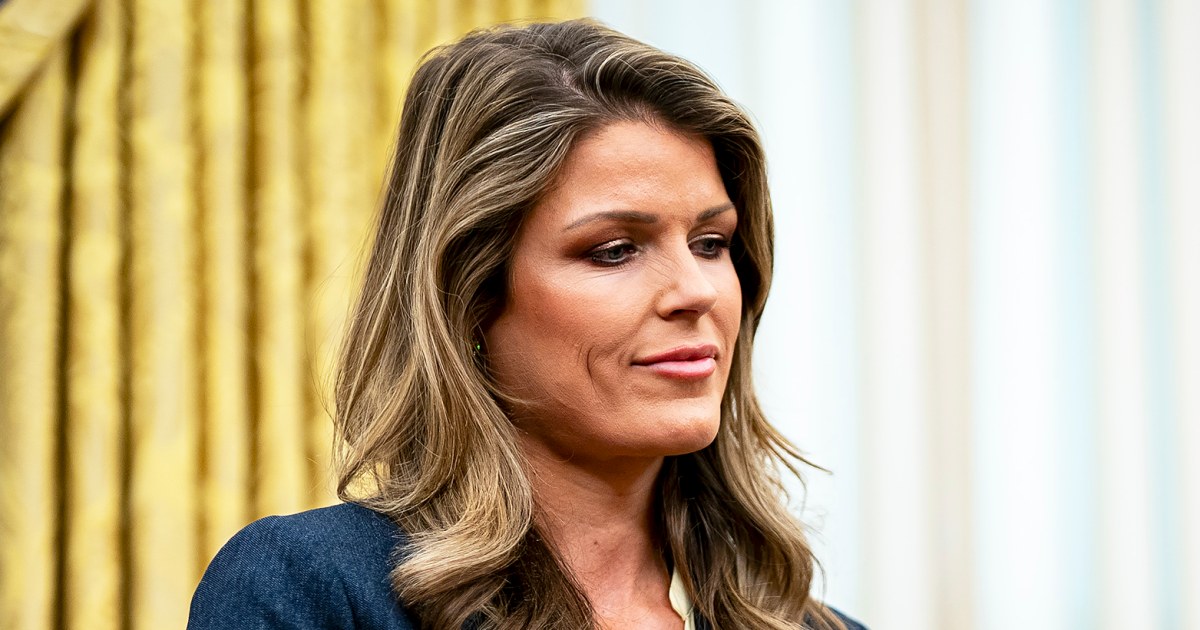
Nov. 13, 2025, 5:00 AM ESTBy Gary GrumbachALEXANDRIA, Va. — When acting U.S. Attorney Lindsey Halligan walks into federal court here in Virginia on Thursday morning, it will be Halligan — not the criminal defendants she hopes to prosecute — at the center of the court’s attention.Former FBI Director James Comey and New York Attorney General Letitia James, both frequent targets of President Donald Trump, filed separate motions in their respective cases, arguing that Halligan is unlawfully serving as acting U.S. attorney and therefore the indictments against them should be thrown out. In a rare joint hearing, attorneys for Comey and James will argue this together before U.S. District Judge Cameron Currie, who is traveling up from the District of South Carolina.Currie is hearing this joint oral argument session, not a judge from the Eastern District of Virginia, to avoid any potential intradistrict conflict of interest.Halligan, who was part of Trump’s legal team in the Mar-a-Lago classified documents case but has no prior prosecutorial experience, was sworn in to the job as interim U.S. attorney in one of the nation’s busiest federal court districts on Sept. 22. That’s three days after Erik Siebert, the U.S. attorney who had been serving in the role since Jan. 21, resigned after being pressured to indict Comey and James.The indictments against Comey and James came after Trump publicly urged Attorney General Pam Bondi to take action against Comey, James and another of the president’s adversaries, Sen. Adam Schiff, D-Calif. Comey and James both pleaded not guilty to their respective charges.“We can’t delay any longer, it’s killing our reputation and credibility,” the president wrote in a Sept. 20 Truth Social post. “JUSTICE MUST BE SERVED, NOW!!!”According to federal statute, individuals may only serve for 120 days after being appointed U.S. attorney, unless confirmed by the U.S. Senate before then. The Senate had not confirmed him, but district judges of the Eastern District of Virginia exercised their own independent appointment authority to legally retain Siebert as an interim U.S. attorney beyond the 120-day limit.It is that 120-day limit that James and Comey’s attorneys argue should not start back at zero with the appointment of Halligan.“If the Attorney General could make back-to-back sequential appointments of interim U.S. Attorneys, the 120-day period would be rendered meaningless, and the Attorney General could indefinitely evade the alternate procedures that Congress mandated,” Comey’s attorney Patrick Fitzgerald wrote in a motion to dismiss the indictment against his client.Comey was charged in late September with making a false statement to Congress during a September 2020 Senate Judiciary Committee hearing. Asked by Sen. Ted Cruz, R-Texas, about testimony he gave in 2017 asserting that he did not authorize the leak of information to the media about an FBI investigation into the Clinton Foundation, Comey said, “I stand by the testimony.”Trump first clashed with Comey during his first term over the then-FBI director’s handling of the federal investigation Trump campaign’s alleged ties to Russia. Comey was fired in May 2017 and has been an outspoken critic of Trump since then.The Justice Department laid out in court papers that it believes the indictment of Comey — signed only by Halligan and unsealed days before the five-year statute of limitations expired — should survive this challenge to Halligan’s appointment regardless of what Currie decides, because of U.S. Code 3288, the statute that governs this very issue.“Whenever an indictment or information charging a felony is dismissed for any reason after the period prescribed by the applicable statute of limitations has expired, a new indictment may be returned in the appropriate jurisdiction within six calendar months of the date of the dismissal of the indictment or information,” the statute reads in part.This six-month grace period, legal experts tell NBC News, may be the DOJ’s key to a continued prosecution of the former FBI director. The bank fraud charge that James, who sued Trump and his businesses for fraud in 2022, is facing is well within the 10-year statute of limitations.Bondi has taken steps in recent weeks to shore up Halligan’s position.On Oct. 31, Bondi issued a formal order retroactively appointing Halligan to the position of “special attorney” within the Department of Justice as of Sept. 22 — three days before Comey was indicted — and wrote, “Should a court conclude that Ms. Halligan’s authority as Special Attorney is limited to particular matters, I hereby delegate to Ms. Halligan authority as Special Attorney to conduct and supervise the prosecutions” of Comey and James.”Halligan is also facing several Bar Association complaints in Florida and Virginia, filed by the left-leaning watchdog group Campaign for Accountability.“Ms. Halligan’s actions appear to constitute an abuse of power and serve to undermine the integrity of the Department of Justice (DOJ) and erode public confidence in the legal profession and the fair administration of justice,” the complaint says.Several other U.S. attorneys appointed by Trump are also facing legal challenges to their appointments.In late September, a federal judge in Nevada ruled that acting U.S. Attorney Sigal Chattah should be disqualified from serving in that role due to violating the Federal Vacancies Reform Act.In August, a federal judge in New Jersey ruled that Alina Habba was “not lawfully holding the office of United States Attorney” due to the 120-day interim appointment expiration, and that her actions since July as the top federal prosecutor in New Jersey may be declared void.Gary GrumbachGary Grumbach is an NBC News legal affairs reporter, based in Washington, D.C.

admin - Latest News - November 13, 2025
admin
11 views 20 secs 0 Comments


When acting U.S. Attorney Lindsey Halligan walks into federal court here in Virginia on Thursday morning, it will be Halligan — not the criminal defendants she hopes to prosecute — at the center of the Court’s attention.


Source link

TAGS:
PREVIOUS
Northern lights visible across several states
NEXT
Nov. 13, 2025, 5:00 AM ESTBy Bridget Bowman, Ben Kamisar, Alexandra Marquez, Juhi Doshi, Owen Auston-Babcock and Maya RosenbergBilly Edmonson voted for President Donald Trump in 2024 because of his stances on border security, gun rights and the economy. One year after casting his ballot, Edmonson is finding it difficult to make ends meet. “Everything’s already so expensive. … That’s the worst thing about his presidency so far, is he promised things coming down and prices are not coming down. I make more money than I’ve ever made in my life right now, and it has, financially, been a struggle,” said Edmonson, a 35-year-old construction worker from Missouri. Edmonson recalled that Trump promised to start lowering prices on his first day in office. “It just doesn’t seem like there’s been a whole lot of focus on, ‘Hey, let’s get these prices down.’ It’s just been like, ‘Hey, prices are high because Biden did this.’ It’s like, well, Biden’s not in office anymore,” said Edmonson, a self-described independent, later adding, “It’s personally frustrating.” Edmonson is not alone. Nearly two-thirds (63%) of registered voters, including 30% of Republicans, said in the recent national NBC News poll that Trump has fallen short of their expectations on the cost of living and the economy. After being one of the big reasons why Trump won a return to the White House in 2024, Trump’s performance on the economy has become one of the big drags on his second term. While a number of Trump voters told NBC News in January that they’d give Trump a relatively long leash to improve the economy, the new interviews suggest that for some he’s running out of slack.“It just doesn’t seem like there’s been a whole lot of focus on, ‘Hey, let’s get these prices down.’ It’s just been like, ‘Hey, prices are high because Biden did this.’ It’s like, well, Biden’s not in office anymore.”Billy EdmonsonTrump himself has cast doubt on surveys showing Americans are anxious about the economy, telling Fox News this week, “I think polls are fake. We have the greatest economy we’ve ever had.” NBC News spoke to 18 Trump voters who participated in the most recent NBC News poll and said Trump had not met their expectations on the economy to explore how this group was thinking about Trump and experiencing the economy — and whether they were still committed to supporting his party. None regretted their vote for Trump last year, in many cases because of a deep frustration with Democrats. A handful said they’d be open to voting for Democrats in the future, though most planned to keep voting Republican. When it comes to the economy, many said the pain they’re feeling is real.“He and his advisers claim the country is going well, prices are going down, the tariffs are doing wonderfully,” Susan, a 66-year-old retiree from Nevada, said of Trump. (Several interviewees declined to share their last name when discussing politics, with some citing the nation’s polarized political atmosphere.) “But when you go to the store, the prices are up,” she added. Navigating high pricesDuring and after his 2024 campaign, Trump not only promised to halt inflation but to bring prices lower after several years of post-Covid growth. That promise, made even though overall consumer prices essentially never decrease over time, cuts to the core of some of his voters’ complaints. “It’s always hard to bring down prices when somebody else has screwed something up like [President Joe Biden] did,” Trump said during a news conference in January, weeks before being sworn in. “We’re going to have prices down. I think you’re going to see some pretty drastic price reductions.” Jeremiah, a 48-year-old Republican from Utah who works in the aerospace industry, has voted for Trump each time he ran for president and backed him last year because he saw Trump as a change agent. But he said Trump’s handling of the economy so far has been “mediocre.” “I was definitely hoping to see a lot of prices come back down, like gas for your car, diesel, utilities, groceries. I was hoping to see it all come back down and level out at least, but it’s not. It just keeps getting worse,” Jeremiah said. “I have a 20-year-old son and a 17-year-old daughter, and they can’t live on their own,” he later added. “My son’s a welder, and he makes $28 an hour, and he’s still not out on his own. Everything is just so overpriced. It’s ridiculous. When I graduated high school, I moved out and had a $300 a month apartment, piece of cake, 10 bucks an hour.” Edmonson, the Missouri construction worker, noted that he travels often for work. But motel and grocery prices have jumped, even for items like a can of soup, he said. And the high costs have him reconsidering his work on the road. “It’s almost getting to the point where it’s time for me to find something at home,” Edmonson said, later adding, “Because if I’m gonna sink, I might as well sink at home.” “I was surprised that the groceries haven’t went down. In fact, they keep going up.”Roxanne NovitPatty, a 70-year-old Republican retiree from Pennsylvania, blamed Trump for the country’s economic woes. Trump, she said, “has always been a very rich man. He’s never had to do anything his whole life. He’s never had to go shop. So, he has no idea what a true working person in their daily life has to do.” “I was surprised that the groceries haven’t went down. In fact, they keep going up. So that would be my biggest disappointment,” said Roxanne Novit, a 69-year-old retiree from Colorado and a self-described Republican. Susan, the Nevada retiree who is not registered with any party, said Trump’s handling of the economy “is not at all what I expected,” noting she was hopeful Trump would focus on “opening up mining and gasoline exploration.” “It seems like they’re moving a little slow on that because they’re spending all the time on the tariffs or making nice to the Chinese president or something like that,” Susan said. Giving him timeBut some voters were willing to give Trump some more time to turn things around, even among the subset who said they believe he’s fallen short. Overall, most Republicans still back Trump on the economy and other issues, according to the NBC News poll and other surveys.“I would like to see the economy turn up a little quicker, but everything takes time. You can’t expect it overnight,” said independent Robert Duran, 68, a retired law enforcement officer from Massachusetts. William Scheuer, a 68-year-old New Yorker, who said he voted for Trump in 2024 because he’s “old-fashioned” on things like social issues, agreed that Trump has been “falling a little short” on the economy, specifically noting prices. “Everything’s going up, it’s going up more than what the government is telling you,” he said, before adding he’s “confident [Trump] will” turn it around. “I would like to see the economy turn up a little quicker, but everything takes time. You can’t expect it overnight.”Robert DuranCraig Lovejoy, a 32-year-old Florida independent who works in pest control, said Trump is doing “better than many” presidents on addressing the economy. “I don’t think that one president will be all it takes to get things back on track, but I think we’re headed in the right direction,” Lovejoy said. Some voters were sympathetic to Trump’s tariff policies in particular, even as they were navigating higher prices. “The steak I used to buy that used to be like 40 bucks is now 80. I get it,” said Jason Olson, a 50-year-old small-business owner from South Carolina who typically backs Republicans. “And I know tariffs have raised prices on a lot of things as well. But I also understand the reason behind the tariffs are they want to bring industry back to the U.S.” Tim Fleming, a 42-year-old self-described libertarian who works in injection molding at a factory in Tennessee, agreed that Trump’s presidency has been “a little disappointing.” He raised frustrations about how Trump’s pledge not to tax overtime and tips was implemented as a tax deduction, so he and others won’t see the fruits of that until they file their taxes next year. “My overtime is still getting taxed; my bonuses are still getting taxed,” he said. “It was not what it was made out to be.” But he noted he believes he’s seen the direct fruits of Trump’s tariff push: the return of jobs in his county that had been offshored to Mexico. “The tariffs helped create a lot of jobs where I live,” Fleming said. Those comments come as the White House has tried to argue the administration is making important strides on affordability. “The president has done a lot that has already paid off in lower interest rates and lower inflation, but we inherited a disaster from Joe Biden and Rome wasn’t built in a day. We’re going to keep on working to make a decent life affordable in this country, and that’s the metric by which we’ll ultimately be judged in 2026 and beyond,” Vice President JD Vance wrote on X the day after Election Day.Down on DemocratsWhile several Trump voters raised concerns about the economy and high prices, none of the voters, who are largely Republicans or independents, said they regretted their choice last year. “I wouldn’t change my vote, but I’m not happy,” said Elliot Muegge, a 32-year-old farmer from Oklahoma. Amanda, a 48-year-old postal worker from Missouri, said she still finds it difficult to make a budget because of high food prices. But, she said, she thinks former Vice President Kamala Harris “would have been worse.” “I wouldn’t change my vote, but I’m not happy.”Elliot MueggeA self-described conservative, Amanda said she would be open to supporting a Democratic candidate in a future election, but “not a progressive, more like an old-school Democrat.” A handful of Trump voters also said they would be open to supporting Democrats in the future, depending on the candidate. But others said backing a Democrat was off the table. “I think that they pander to friend groups and minorities and they look silly doing it. It’s fake,” Fleming, of Tennessee, said. “I haven’t found a single Democrat” that inspires trust, said Lovejoy, of Florida. Edmonson, the Missouri construction worker, said it could be years before he considers supporting a Democratic candidate, noting his strong support for gun rights. “They just don’t care about people in general. They want to say they care about people, but that — to me, all they want is, is votes,” Edmonson said, noting he is still frustrated with Trump. “I don’t feel like I can vote for a Democrat candidate,” Edmonson said. “I feel like I don’t have a candidate really.”Still, others who are open to backing Democrats warn that the economic angst coursing through the country — which Trump used to his advantage amid anger at the Biden administration in 2024 — could translate to political losses for Republicans. “Did he not promise the American people — Day 1 — that prices were going to go down? We are now in Month 11 and things continue to rise,” said Patty, the 70-year-old Pennsylvanian. While she said she regularly votes Republican, she’s split her ticket in the past, and she said she likes her state’s Democratic governor, Josh Shapiro. “The Republican Party is in for a rude awakening, and I think it’s not a bad thing,” she added. Muegge, from Oklahoma, shared a similar sentiment about the economy hurting Trump’s political standing. While he doesn’t blame Trump specifically for the cost of living, he expressed frustration about how he “unfairly manipulates the markets with his social media presence.” He pointed to a recent conversation he had with his father, also a Republican. “He and I were having a conversation, and he said, ‘I hate Trump.’ And I was like, ‘Oh, you do, too? I thought I was alone on this island,’” he said. “I don’t know if other people are saying that quietly behind their own closed doors and then pounding their chest in public,” he said. “I just don’t know.”Bridget BowmanBridget Bowman is a national political reporter for NBC News.Ben KamisarBen Kamisar is a national political reporter for NBC NewsAlexandra MarquezAlexandra Marquez is a politics reporter for NBC News.Juhi DoshiJuhi Doshi is an associate producer with NBC News’ “Meet the Press.”Owen Auston-BabcockOwen Auston-Babcock is an intern at NBC News.Maya RosenbergMaya Rosenberg is a Desk Assistant based in Washington, D.C.
Related Post
October 29, 2025
Oct. 29, 2025, 5:00 AM EDTBy Sahil Kapur, Scott Wong and Brennan LeachWASHINGTON — The pain of a U.S. government shutdown is poised to intensify this week as the funding lapse nears a full month with no resolution in sight.A series of deadlines in the coming days could have negative consequences for ordinary Americans, cutting off food assistance for low-income Americans, raising health insurance premiums for millions on Obamacare and depriving air-traffic controllers, TSA agents and other federal workers of paychecks.Here are four ways the pain is about to hit Americans:Food assistance will be cut offSNAP benefits, formerly known as food stamps, are slated to dry up on Nov. 1 without congressional action, impacting an estimated 40 million low-income Americans across red and blue states.New York, Texas and Florida are each home to about 3 million SNAP beneficiaries, according to KFF, a nonpartisan research group.“This is the biggest pressure point that we’ve seen in 28 days,” said Republican Sen. Tommy Tuberville, whose state of Alabama has about 750,000 SNAP beneficiaries. “I think Democrats are getting a little bit tight right now. It’s their constituents — a lot of them — in some of these inner cities that are gonna need SNAP to survive … And they’re getting a lot of calls.” “A lot of people need to go back to work — a lot of young men that are on SNAP that should be working,” Tuberville added.We’d like to hear from you about how you’re experiencing the government shutdown, whether you’re a federal employee who can’t work right now, a person who relies on federal benefits like SNAP, or someone who is feeling the effects of other shuttered services in your everyday life. Please contact us at tips@nbcuni.com or reach out to us here.Sen. John Boozman, R-Ark., chairman of the Agriculture Committee that oversees SNAP, said millions of American families will be harmed if the government doesn’t reopen by Nov. 1.“It will make their lives more difficult. And, you know, the bottom line is, we need to quit holding these people hostage,” said Boozman, co-chair of the Hunger Caucus. “We have a clean CR. Sen. Schumer needs to open the government — that’s the solution to the problem.”Sen. Bernie Sanders, I-Vt., however, scoffed at the suggestion that SNAP benefits are a partisan pressure point.“Starving children will put pressure on members of Congress? Well, that’s a good moral position,” he said, while emphasizing that the Department of Agriculture has a $5 billion “emergency fund set aside for exactly this purpose” and argued it is obligated to use it to preserve SNAP benefits.Democratic leaders in 25 states and the District of Columbia on Tuesday sued USDA, arguing just that. They asked a federal judge to compel USDA to keep SNAP going as long as it has contingency funding. Some states are dipping into their own emergency funds to provide support for SNAP during the shutdown as well.Apart from SNAP, it’s unknown if the Trump administration will be able to find alternate funding for a critical nutrition program for women, infants and children (WIC), after Trump this month tapped into $300 million in tariff revenue to keep WIC running.And as of Nov. 1, Head Start — and the thousands of preschool children who depend on it — may be in limbo as money runs out for the popular program that provides free learning, health screenings and meals to young children from low-income families.Soaring health care costsOpen enrollment for the Affordable Care Act, or Obamacare, begins on Nov. 1, a month before subsidies that have helped keep premium costs low are set to expire. Insurers have set higher rates for 2026 in case those subsidies aren’t renewed, with some Americans seeing their premiums double or triple for next year.If Congress acts soon to extend the money, reversing the sticker shock for enrollees will be complicated, but insurers can find ways to lower the bills for them next year. Still, the parties do not appear close to a resolution.The central Democratic demand during the shutdown battle has been to extend those funds, which cost about $35 billion per year and cap insurance premiums for “benchmark” plans on the ACA exchanges at 8.5% of an enrollee’s income.Many Republicans say the money, which was initially passed in 2021 as part of the Covid pandemic relief, should expire.Democrats are reminding them that many of their constituents in red states would face skyrocketing premiums if the tax credits end.“The majority of benefits will go to people living in states that Trump won,” said Sen. Andy Kim, D-N.J. “I’m not thinking about this in terms of blue or red voters; I’m just trying to help as many people as possible. The Trump administration has shown such a deep disregard, even for people that voted for them.” Kim said the White House is treating programs like ACA and SNAP as “a political chip” rather than a lifeline for Americans.There’s also concern that some people will go without insurance rather than pay higher premium costs, putting greater strain on the U.S. health care system.#embed-20251002-shutdown-milestones iframe {width: 1px;min-width: 100%} Air traffic controllers and TSA agents miss full paychecksFederal workers are either furloughed or forced to work without pay for the duration of the shutdown. Tuesday marked the first time during this shutdown that certain “excepted” workers, such as TSA agents and air traffic controllers tasked with keeping the skies safe, missed a full paycheck.Previously, they had received partial paychecks, but this time their pay stubs showed $0.00.“I’m very concerned about air traffic controllers,” Sen. Susan Collins, R-Maine, the chair of the Appropriations Committee that writes federal funding bills. “I had two flights this Sunday and last Sunday averted at the last second. One of them actually touched down and then took back off. And in all the years that I’ve served in the Senate, I’ve never had that happen.”The longest government shutdown in U.S. history, spanning 34 days in late 2018 and early 2019, ended after air traffic controllers and TSA agents started calling in sick, severely threatening air travel. One of the biggest travel holidays of the year, Thanksgiving, is coming up in just a few weeks.Even fiscal conservatives who’ve fought to slash government spending argued that not paying air traffic controllers could have dangerous consequences when it comes to public safety.“I fly twice a week. I want my air traffic controller to be happy, well fed, not anxious, not nervous,” said Sen. Rand Paul, R-Ky., chairman of the Homeland Security and Governmental Affairs Committee, the only Republican who has voted against the GOP bill to reopen the government. “So I’m for paying our soldiers, paying our air traffic controllers, paying our employees — anybody that’s working ought to be paid.”Pay for troops is in fluxTwo weeks ago, the White House alleviated a major pain point in the shutdown by shifting money around to ensure active-duty military troops didn’t miss a paycheck. Trump directed Defense Secretary Pete Hegseth to find the money to pay the troops; the Pentagon reallocated billions of dollars from research and development programs to service member paychecks.On top of that, a private donor, whom The New York Times later identified as billionaire Timothy Mellon, contributed $130 million to help pay the troops. But that’s a drop in the bucket compared to the roughly $6.5 billion needed for the Pentagon to fund Friday’s paychecks.The Trump administration is now desperately searching for other funding streams to tap into. Vice President JD Vance told reporters at the Capitol on Tuesday that the White House has figured out a way to pay members of the military at the end of this week. But there are far from any guarantees. And what happens next month is unclear.”We believe that we can continue to pay the troops Friday,” Vance said after huddling with Senate Republicans over lunch.Sen. Kevin Cramer, R-N.D., a member of the Armed Services Committee, said that not being able to pay the troops would be “awful” and noted that it’s becoming increasingly difficult for the administration to identify other pots of money.“They can only do that for so long before they run out of funding pools,” Cramer said Tuesday. “I think the White House is doing everything that the White House should be doing, and they should be insisting on Democrats pushing the easy button and vote to reopen the government.”Sahil KapurSahil Kapur is a senior national political reporter for NBC News.Scott WongScott Wong is a senior congressional reporter for NBC News. Brennan LeachBrennan Leach is an associate producer for NBC News covering the Senate.
November 2, 2025
Here's the biggest news you missed this weekend
November 20, 2025
George W. Bush remembers his vice president Dick Cheney
September 23, 2025
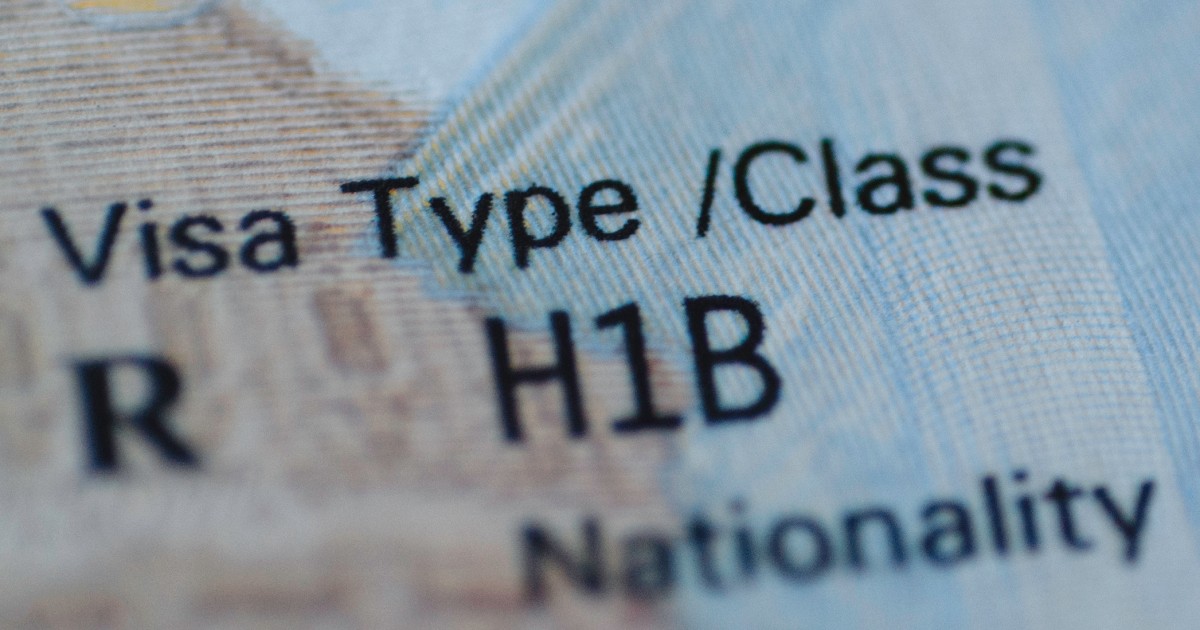
Sept. 23, 2025, 4:00 PM EDTBy Daniella Silva, Rob Wile and Nicole AcevedoAfter announcing a new $100,000 fee on H-1B visas, the Trump administration on Tuesday proposed overhauling the visa’s lottery selection process to prioritize higher-paid and higher-skilled foreign employees.The proposed policy changes could reignite the debate over the use of foreign labor by U.S. employers. The move comes as President Donald Trump has taken aim at H-1B visas, a program used widely by Big Tech and outsourcing companies to hire foreign workers, announcing Friday that companies would be required to pay a $100,000 fee with new applications submitted after Sept. 21. The administration on Tuesday targeted H-1B visa allocation, proposing a “weighted selection process” for when annual demand for the visas tops the 85,000 limit set by Congress, which it says has happened every year for more than a decade. The new process would replace the current lottery system that determines who gets to apply for those limited visa spots in favor of putting more weight on higher skilled and higher paid foreign workers, according to a proposed rule set to be published in the Federal Register on Wednesday. Under the current lottery rules, offers to apply for an H-1B visa are assigned at random. The Trump administration’s proposal would assign prospective employees to four different wage bands, with workers in the highest wage category being entered into the selection pool four times and those in the lowest wage category being entered into the selection pool once. The Department of Homeland Security stated in the proposal that the weighted system would better serve the visa program’s original intent and “incentivize employers to offer higher wages or higher skilled positions to H-1B workers and disincentivize the existing widespread use of the H-1B program to fill lower paid or lower skilled positions.”It said the proposed selection process would still maintain opportunities for employers to hire H-1B workers at “all wage levels.” ‘A strong signal’The H-1B visa program allows U.S. employers to temporarily hire skilled foreign workers in “specialty occupations” across health care, tech and finance industries, and other STEM-related fields.The two new proposed policies together send “a strong signal of the direction that the administration wants to go,” said Xiao Wang, CEO of Boundless Immigration, a company that offers services to people navigating the immigration process in the U.S.If adopted, the policies would benefit companies seeking to keep foreigners with specialized skills who studied at American universities in the U.S., as well as ensuring H-1B visas “disproportionately go to people who are deemed higher skilled, represented by higher wages and higher salary,” he said.Trump stated Friday that changes were needed in the visa system, saying it was designed to bring in temporary workers with “additive, high-skilled functions, but it has been deliberately exploited to replace, rather than supplement, American workers with lower-paid, lower-skilled labor.”For the last H-1B lottery round, which closed its registration in March, about 339,000 people applied. Of those, 120,141 applications were selected for the lottery, according to USCIS data.The proposal faces a 30-day public comment period before it is considered by the administration for a final rule, a process that could take months.If the changes are adopted, companies seeking to hire lower-wage workers from India and China for computer-related jobs appear likely to be among the most affected. For more than a decade, about 60% of H-1B workers approved every year have held computer-related jobs, according to Pew Research.Start-ups and smaller companies who cannot afford to pay their workers in the higher pay categories compared to major tech companies would also be impacted, Wang said.Deedy Das, a partner at Menlo Ventures venture capital group, said in a social media post that the latest proposal would hurt many tech companies.“Overall, it’s really bad for startups, early employees, helps IT consulting shops and can be easily gamed,“ Das wrote.Trump’s announcement of a new $100,000 fee on H-1B visas touched off a frenzy among current visa holders, the companies that employ them and countries around the world as they worked to understand the edict.Eventually, the White House clarified that it would be a one-time fee and apply only to new visa applicants. Trump said companies would have to pay the fee for new H-1B visa applications submitted after Sept. 21. That’s a steep rise from current fees, which are usually $2,000 to about $5,000.Both the fee and Tuesday’s proposal are likely to face challenges in court. A growing chorus on both the left and the right say an over-reliance on the visa by U.S. firms has put U.S.-born workers at a disadvantage. Commerce Secretary Howard Lutnick has called the H-1B visa program a “scam,” while the left-leaning Economic Policy Institute has claimed that some of the companies most reliant on H-1B visas, such as Amazon and Facebook’s parent, Meta, have also had sizable layoffs, though it did not cite evidence that the use of the visa and the layoffs are related.In the first half of 2025, Amazon received approval for more than 12,000 H-1B visas, while Meta received more than 5,000. Representatives for both companies did not immediately respond to requests for comment. Daniella SilvaDaniella Silva is a national reporter for NBC News, focusing on immigration and education.Rob WileRob Wile is a Pulitzer Prize-winning journalist covering breaking business stories for NBCNews.com.Nicole AcevedoNicole Acevedo is a national reporter for NBC News and NBC Latino.
Comments are closed.
Scroll To Top
  • Home
  • Travel
  • Culture
  • Lifestyle
  • Sport
  • Contact Us
  • Politics
© Copyright 2025 - Be That ! . All Rights Reserved