• Police seek suspects in deadly birthday party shooting
  • Lawmakers launch inquires into U.S. boat strike
  • Nov. 29, 2025, 10:07 PM EST / Updated Nov. 30, 2025,…
  • Mark Kelly says troops ‘can tell’ what orders…

Be that!

contact@bethat.ne.com


Be That ! Menu   ≡ ╳
  • Home
  • Travel
  • Culture
  • Lifestyle
  • Sport
  • Contact Us
  • Politics Politics
☰

Be that!

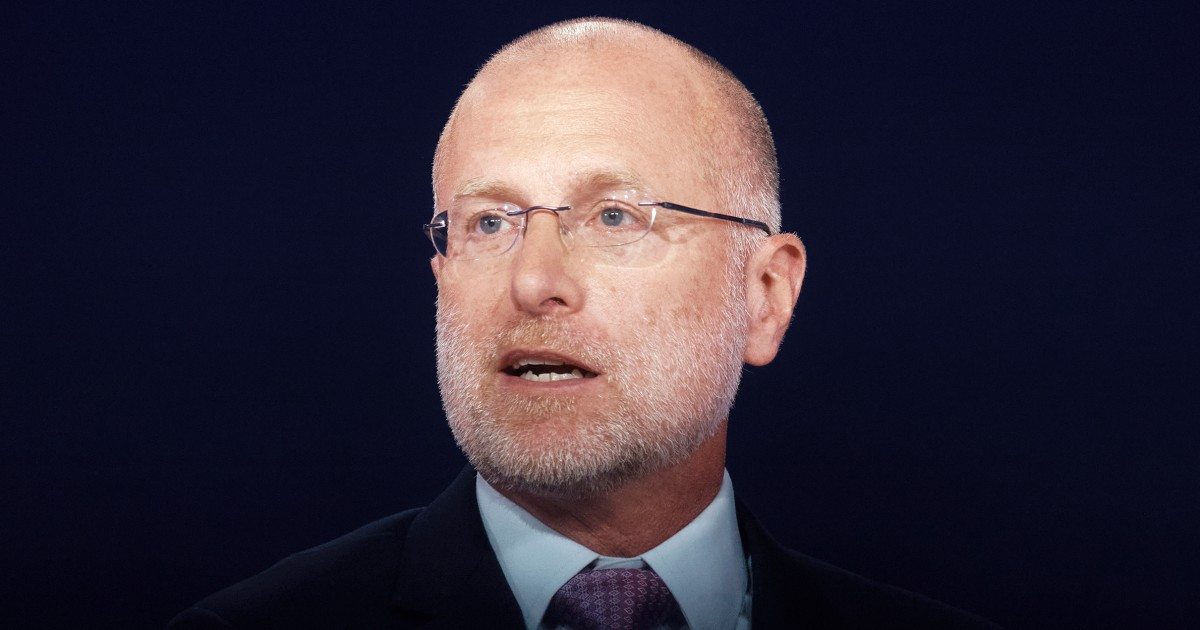
Nov. 13, 2025, 6:05 AM ESTBy Kevin CollierA bipartisan group of former Federal Communications Commission leaders has petitioned the agency to repeal the policy the Trump administration invoked in discussions surrounding Jimmy Kimmel at ABC and in the investigation of “60 Minutes” at CBS.The group — which includes five Republican and two Democratic former FCC commissioners, as well as several former senior staffers — calls for eliminating the agency’s longstanding “News Distortion” policy. The policy, according to the FCC’s website description, allows the agency to sanction broadcasters if “they have deliberately distorted a factual news report.”The policy is not codified, but grew out of a standard used by the FCC to evaluate broadcasters. It was rarely invoked for decades until this year, when President Donald Trump’s pick to lead the FCC, Brendan Carr, cited it in several high-profile disputes with networks his agency regulates.A representative for the FCC did not immediately respond to a request for comment. According to the FCC, invoking the policy “must involve a significant event and not merely a minor or incidental aspect of the news report,” and that “expressions of opinion or errors stemming from mistakes are not actionable.” The petition was filed on Thursday by the Protect Democracy Project, a legal nonprofit “dedicated to defeating the authoritarian threat.”Any interested person or group can petition a federal agency to create, adjust or repeal a rule, according to the Administrative Conference of the United States. But agencies are not required to use specific procedures when receiving or responding to petitions.If the FCC chair declines to act — for instance, by directing the FCC to invite public comment — Gigi Sohn, an advisor to the petition, said that would give the Protect Democracy Project a stronger basis for a lawsuit over the issue. Sohn was a longtime public advocate in telecommunications policy and counsel to Tom Wheeler, the chair of the FCC during President Barack Obama’s second term. She was nominated to serve as an FCC commissioner under President Joe Biden, but withdrew her candidacy after a wave of personal attacks. Sohn said that Carr’s use of the policy illustrates the risk of government overreach.“In the right hands, it could stop misinformation, disinformation, what have you. But the problem is, it’s never been used that way, and the FCC has other tools,” she said. “Right now, it’s being used as a cudgel. And this is not just about Chair Carr. This is about future chairs or commissioners who want to use this as a tool of censorship.”The petition cites several incidents that it says illustrate the policy’s potential for abuse.In February, the FCC invoked the policy in its investigations into CBS over allegations that the news program “60 Minutes” intentionally deceived its viewers with its editing of an interview with Vice President Kamala Harris. Before the investigation began, Trump sued CBS’s parent company, Paramount, for $20 billion over the interview. In July, the parties settled for $16 million.Paramount at the time was pursuing an $8 billion merger with Skydance Media, which required FCC approval. The agency approved it later that month.In a September interview with conservative influencer Benny Johnson, Carr said that local ABC affiliates could be in violation of the News Distortion policy if they continued to air Jimmy Kimmel Live after the host’s remarks about the assassination of conservative activist Charlie Kirk.In the episode, Kimmel criticized conservatives as “doing everything they can to score political points” from the killing.Licensed broadcasters that aired Kimmel risked “the possibility of fines or license revocations from the FCC if [they] continue to run content that ends up being a pattern of news distortion,” Carr said.ABC suspended Kimmel a few hours later. The network reinstated Kimmel the next week after substantial backlash, including from conservatives who criticized Carr. Ted Cruz, R-Texas called Carr’s remarks “dangerous as hell“ and Rand Paul, R-Ky. said they were “absolutely inappropriate.” Carr later denied his comments were intended as a threat.“What I spoke about last week is that when concerns are raised about news distortion there’s an easy way for parties to address that and work that out,” Carr said at the Concordia media summit in September. “In the main, that takes place between local television stations that are licensed by the FCC and what we call national programmers like Disney. They work that out, and there doesn’t need to be any involvement of the FCC.”But the former FCC chairs petitioning for the policy reversal say they took the comments as a threat.“Wielding the news distortion policy, the FCC has already opened or threatened to open investigations against private broadcasters due to disagreements with editorial decisions or statements made in a comedic monologue,” the petition said. “Because the FCC has no legitimate interest in correcting or punishing what it considers to be slanted news coverage, the news distortion policy lacks a meaningful function.”U.S. law, rooted in the First Amendment, generally prohibits the FCC from engaging in government censorship of speech.The FCC’s jurisdiction is limited to broadcast organizations like network television and radio stations, and cannot police cable news, newspapers or online-only news outlets. The agency didn’t immediately respond to a request for comment.The petition says it is not designed to overturn the “hoax” rule, which bans broadcasters from deliberately presenting wholly false information about a crime or catastrophe without a disclaimer that it’s fiction.The signatories of the petition include: Thomas Wheeler, a Democratic chair appointed by Barack Obama; Rachelle Chong, a Republican commissioner appointed by Bill Clinton; Alfred Sikes, a Republican chair appointed by George H.W. Bush; Republican Andrew Barrett and Democrat Ervin Duggan, both commissioners appointed by H.W. Bush; Mark Fowler, a Republican chair appointed by Ronald Reagan; and Dennis Patrick, a Republican commissioner appointed by Ronald Reagan.Kevin CollierKevin Collier is a reporter covering cybersecurity, privacy and technology policy for NBC News.

admin - Latest News - November 13, 2025
admin
11 views 13 secs 0 Comments


A group of former FCC leaders has petitioned the agency to repeal the policy the Trump administration invoked in discussions surrounding Jimmy Kimmel.


Source link

TAGS:
PREVIOUS
Nov. 13, 2025, 5:00 AM ESTBy Aria BendixOne of the most common viruses in the world could be the cause of lupus, an autoimmune disease with wide-ranging symptoms, according to a study published Wednesday.Until now, lupus was somewhat mysterious: No single root cause of the disease had been found, and there is no designated treatment for it. The research, published in the journal Science Translational Medicine, suggests that Epstein-Barr virus — which 95% of people acquire at some point in life — could cause lupus by driving the body to attack its own healthy cells.It adds to mounting evidence that Epstein-Barr is associated with multiple long-term health issues, including other autoimmune conditions. As this evidence stacks up, scientists have accelerated calls for a vaccine that targets the virus.“If we now better understand how this fastidious virus is responsible for autoimmune diseases, I think it’s time to figure out how to prevent it,” said Dr. Anca Askanase, clinical director of the Lupus Center at Columbia University, who wasn’t involved in the new research.In lupus patients, an autoimmune attack can result in extreme fatigue, joint pain and skin rashes. In rare cases, the disease may lead to fatal or life-threatening issues such as kidney damage, or weaken the immune system so the body can’t fight off infections.Scientists have long suspected a link between Epstein-Barr and lupus, but the exact connection had remained elusive. Dr. William Robinson, a co-author of the new study and chief of the division of immunology and rheumatology at Stanford University, said his new findings solve a major piece of that puzzle.“From our perspective, it’s the key, missing mechanistic link,” Robinson said. “We think it applies to all lupus cases,” he added. Hundreds of thousands of people in the U.S. are living with the disease.But Hoang Nguyen, assistant vice president of research at the Lupus Research Alliance, said it’s too soon to know if the mechanism is behind every case.“Although the evidence is intriguing and promising, more evidence is needed to demonstrate that the link to EBV applies to all lupus,” Nguyen said. The alliance is a private funder of lupus research and contributed grant funding to Robinson’s study.An infection withe Epstein-Barr virus does not necessarily cause symptoms, especially among children, though the virus is also the most common cause of mononucleosis (often referred to as mono).It’s primarily transmitted by saliva from kissing or sharing drinks, food, utensils or toothbrushes. After someone is infected, the virus lingers permanently in the body, where it usually remains inactive — though not always. The new study is not the first to tie Epstein-Barr to autoimmune issues. Past research has linked it to multiple sclerosis. Though not the sole trigger of MS, the virus may be part of a chain of events that leads to the disease. Robinson said a pathway similar to the one described in his new study could also lead to other autoimmune diseases like rheumatoid arthritis and Crohn’s disease, but more research is needed to tease that out. Of course, the vast majority of people who contract Epstein-Barr do not go on to get lupus, MS or any other autoimmune disease. Robinson said it’s possible that only certain strains of Epstein-Barr trigger autoimmune reactions.To determine the causal link between Epstein-Barr and lupus, Robinson and his co-authors focused on B cells — white blood cells that help fight off infections. Even in healthy individuals, Epstein-Barr lies dormant in a tiny portion of B cells. But those virus-containing B cells are far more prevalent in lupus patients, who have a 25 times higher share of them, according to the new research.The study also highlights a type of protein called antinuclear antibodies, which bind to the nucleus of cells and are one of the hallmarks of lupus. The researchers found that Epstein-Barr infects and reprograms B cells to produce antinuclear antibodies that attack the body’s own tissue, thereby causing lupus.Robinson said the findings go hand-in-hand with some other theories about what causes lupus. For instance, scientists suspect that a person’s genetics or hormones can predispose them to the disease, as well. A study published last year in the journal Nature also found that people with lupus have too much of a particular T cell — another type of white blood cell — that’s associated with cell damage and too little of another T cell associated with repair. Robinson said the pathway described in his study could activate that T cell response.The new research points to a few potential options for lupus treatment, according to Robinson, who is the co-founder of two drug development companies exploring treatments for autoimmune diseases.Many of the current medications given to ease lupus symptoms, such as corticosteroids, broadly focus on reducing inflammation. Robinson said future therapeutics could specifically target B cells infected with Epstein-Barr.But an Epstein-Barr vaccine — several of which are in clinical trials — could someday stop infections in the first place.“Vaccination to protect people against ever being infected by EBV would be the ultimate, fundamental solution,” Robinson said.Aria BendixAria Bendix is the breaking health reporter for NBC News Digital.
NEXT
80-year-old becomes oldest women to complete an Ironman triathlon
Related Post
October 17, 2025
Ace Frehley, Legendary Lead Guitarist of Kiss, Dies at 74
November 8, 2025
National Guard deployment to Portland blocked by judge
September 24, 2025
Sept. 24, 2025, 5:17 PM EDTBy Peter Nicholas and Dan De LuceWASHINGTON — President Donald Trump is suddenly bullish when it comes to Ukraine’s chances of repelling Russia’s invasion and regaining all its territory, yet the shift in rhetoric means little unless he is prepared to ramp up pressure on the Kremlin, diplomats and foreign officials say.Thus far, Trump hasn’t taken these essential steps, they added.Trump’s social media post Tuesday upended the conventional thinking about his view of the war, now in its fourth year. Back in February, he told Ukrainian President Volodymyr Zelenskyy that he didn’t have the “cards” in a peace negotiation and that his country was in “big trouble.”Now, Trump says that Russia is the one that is in “big economic trouble” and that its failure to swiftly conquer its smaller neighbor has revealed it to be a “paper tiger.”“After getting to know and fully understand the Ukraine/Russia Military and Economic situation and, after seeing the Economic trouble it is causing Russia, I think Ukraine, with the support of the European Union, is in a position to fight and WIN all of Ukraine back in its original form,” he wrote in his post Tuesday. “Russia has been fighting aimlessly for three and a half years a War that should have taken a Real Military Power less than a week to win,” Trump added. “This is not distinguishing Russia.”Trump’s aim in releasing the statement was to exert “maximum public pressure on Russia to get them to the table for a deal” to end the war, according to a senior Trump administration official.Next steps will depend on how Russia responds, said the official, who did not lay out any specific policy changes happening now.There are different ways to construe Trump’s statement. One is that he’s grown tired of Russian President Vladimir Putin’s persistence in shelling Ukraine and is prepared to step up coercive measures aimed at getting Russia to pull back.“Trump concluded Putin is not interested in peace,” Sen. Lindsey Graham, R-S.C., a Trump confidant, said in an interview Wednesday. Calling Trump’s post and his speech to the United Nations General Assembly a “game-changer,” Graham added, “There was a belief in Moscow that Trump is on their side, but the president made it clear that Ukraine will have all it needs as long as it needs.”Another interpretation is that Trump is done with what’s proved a futile effort to midwife a peace deal. Instead, Trump is leaving it to the combatants and European nations to resolve the war as best they can. “Good luck to all!” Trump wrote at the end of his post.Nothing in Trump’s post committed the U.S. to more aggressive action on Ukraine’s behalf. He did not say he would impose secondary sanctions on China for its economic support of Russia. Nor did he pledge to slap new sanctions on Russia. Rather, he said the U.S. would continue something it is already doing: selling weapons to NATO that the alliance is in turn supplying to Ukraine.Trump’s message was accurate in that he noted that Russia’s economy is under strain from international sanctions while endorsing Ukraine’s territorial integrity, said Evelyn Farkas, executive director of the McCain Institute think tank. But there was no indication that the president was ready to take measures bolstering Ukraine’s position, either by squeezing Russia or stepping up U.S. military aid to Ukraine, she said.“In terms of concrete action, that’s the missing thing,” Farkas said. “He hasn’t changed anything he’s doing.”Trump’s Truth Social post appears to reflect his growing frustration over what he sees as Russia’s intransigence, and his recognition of what European governments have been saying for some time: that Moscow is struggling to turn the tide in a grinding conflict.“But I don’t think he’s willing to do much about it,” one source close to Zelenskyy’s government said.In a further sign that America’s posture remains largely the same, there was no indication that the White House had notified allies or Ukraine that U.S. policy had changed, according to three Western officials and a source close to Ukraine. At present, allies do not anticipate that Trump’s new assessment will result in concrete action such as a weapons package for Ukraine, the sources said.One Western official, speaking on condition of anonymity, said the message to Europe seemed to be: “Over to you.”“I read it [Trump’s social media post] as him trying to back out of this whole thing,” said John Bolton, who was White House national security adviser in Trump’s first term and has become an outspoken critic of the president. “He’s not saying the U.S. is doing anything new or different from what it’s doing now, i.e., selling weapons and ammunition and things to Europe.”“This is not, ‘I’m going to sanction Russia. I’m going to arm Ukraine. I’m going to do this or that.’ This is, ‘I’m sure glad the Europeans and NATO are going to help out,’” Bolton added. (The FBI searched Bolton’s home last month as part of an investigation into classified records. An attorney for Bolton has said that the former official did not keep or store anything improper.)It would be a mistake to discount the import of Trump’s statement, others said. A president who has long called for warmer relations between Washington and Moscow is now publicly belittling Russia’s military machine. Those living in Russia’s shadow welcomed Trump’s affirmation of Ukraine’s sovereignty.“This is remarkable,” said Marko Mihkelson, chairman of the Estonian parliament’s Foreign Affairs Committee. “I see it probably as the first time that the U.S. president said that Ukraine should win the war and this victory means the liberation of the occupied territories.”One Western official whose country is a member of the so-called Coalition of the Willing that supports Ukraine said: “We have always been saying that Russia has been weaker than anyone thought. We have been saying they have been weakened by the sanctions and weaker than what some think and weaker than even Putin thinks. We fully agree with this analysis.”Heartening as Trump’s message was to Ukraine’s allies, an about-face could come at any point. Trump has a history of making pronouncements that don’t always hold up.Heading to a summit meeting with Putin in Alaska last month, Trump said he wanted a ceasefire. He emerged from the meeting with no ceasefire, saying the new goal was a broader peace agreement — an outcome that is not in sight. Moscow has expanded its drone and missile attacks on Ukrainian cities, killing a record number of civilians.Since taking office, Trump has threatened to impose new sanctions on Russia if it doesn’t negotiate in good faith, and issued two deadlines to Moscow that have come and gone without consequences.The president mentioned a new deadline on Tuesday at a bilateral meeting at the United Nations with Zelenskyy. When reporters asked Trump if he still trusts Putin, he said, “I’ll let you know in about a month from now.”Daniel Fried, a former U.S. ambassador to Poland and a fellow at the Atlantic Council think tank, said in an interview: “I’m pleased by the sentiment of support” for Ukraine.He added: “I don’t want to be snarky or cynical, but we’ve seen for many months Trump tiptoe up to the line of action, and then slide away from it.”“We see a lot of words from Trump. We need to see an actual decision.”Peter NicholasPeter Nicholas is a senior White House reporter for NBC News.Dan De LuceDan De Luce is a reporter for the NBC News Investigative Unit. Julie Tsirkin, Garrett Haake and Gordon Lubold contributed.
October 8, 2025
'Do I look sick to you?': Dolly Parton addresses health concerns in new video
Comments are closed.
Scroll To Top
  • Home
  • Travel
  • Culture
  • Lifestyle
  • Sport
  • Contact Us
  • Politics
© Copyright 2025 - Be That ! . All Rights Reserved