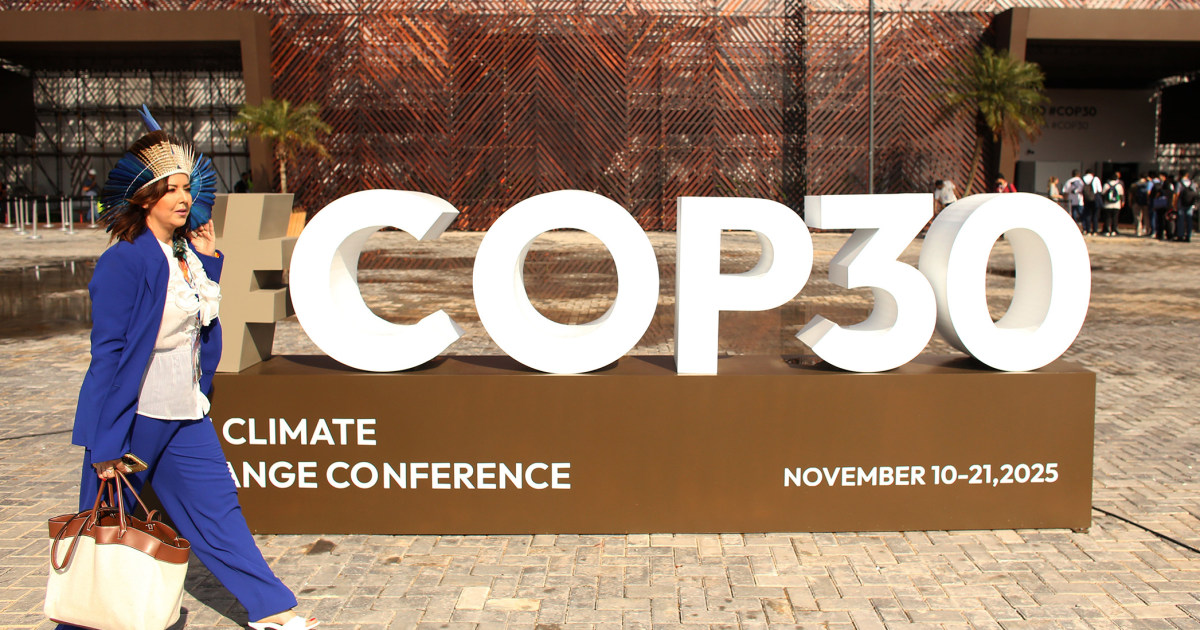
As the UN Climate Change Conference was happening in Brazil, the Trump administration released proposals to open up offshore drilling and roll back protections for wetlands and endangered animals.
Source link
Nov. 22, 2025, 6:45 AM ESTBy Denise ChowAs representatives from nearly 200 nations were wrapping up talks at the United Nations’ COP30 climate summit this week, the United States was not only absent, the Trump administration also introduced a series of sweeping proposals to roll back environmental protections and encourage fossil fuel drilling.The United Nations Climate Change Conference ended Friday in the Brazilian city of Belém, where delegates gathered to hammer out a roadmap to phase out fossil fuels, boost climate action and limit global warming.For the first time in the summit’s history, the U.S. — one of the top emitters of greenhouse gases — did not send a delegation. Instead, the Trump administration this week announced a plan to open up new oil drilling off the coasts of California and Florida for the first time in decades and proposed rule changes to weaken the Endangered Species Act and limit the Environmental Protection Agency’s authority to protect wetlands and streams.“These rules double down on the administration’s refusal to confront the climate crisis in a serious way and, in fact, move us in the opposite direction,” said Jessie Ritter, associate vice president of waters and coasts for the National Wildlife Federation, a conservation group.Indigenous people take part in a demonstration during the COP30 UN Climate Change Conference on Nov. 17.Pablo Porciuncula / AFP / Getty ImagesThe White House told NBC News Friday that this week’s “historic” announcements aim to “further President Trump’s American energy dominance agenda.”“President Trump is reversing government overreach, restoring energy security, and protecting American jobs by rolling back excessive, burdensome regulations and creating new opportunities to ‘DRILL, BABY, DRILL,’” White House spokesperson Taylor Rogers said in a statement. “President Trump serves the American people, not radical climate activists who have fallen victim to the biggest scam of the century.”Ritter said the new proposals signal to the world just how much the U.S. has stepped back from any meaningful climate action.“I doubt that this surprises folks who have been watching in the international arena,” she said. “But it’s unfortunate, given the example the U.S. sets and what our leadership, or lack thereof, emboldens other countries to do.”The Trump administration’s announcement on Thursday that it intends to open up roughly 1.27 billion acres of coastal U.S. waters for oil drilling drew bipartisan pushback.Although the American Petroleum Institute, a trade association for the oil and gas industry, hailed the program as a “historic step toward unleashing our nation’s vast offshore resources,” Sen. Rick Scott (R-Fla.) pushed to uphold the current moratorium on drilling, which Trump extended during his first term.“I have been speaking to @SecretaryBurgum and made my expectations clear that this moratorium must remain in place, and that in any plan, Florida’s coasts must remain off the table for oil drilling to protect Florida’s tourism, environment, and military training opportunities,” Scott wrote Thursday on X, referring to Interior Secretary Doug Burgum. Across the country, California Gov. Gavin Newsom wrote on X that “Donald Trump’s idiotic proposal to sell off California’s coasts to his Big Oil donors is dead in the water.” “We will not stand by as our coastal economy and communities are put in danger,” he said.The drilling directive came just three days after the Trump administration proposed major limits to the Clean Water Act of 1972 that would undo protections from pollution and runoff for most of the country’s small streams and wetlands. The rule would narrow the definition of which bodies qualify as “waters of the United States” under the act.If finalized, the changes would mean that the fewest freshwater resources would be under federal protection since the law was enacted, according to Jon Devine, who heads the water policy team at the Natural Resources Defense Council, an environmental advocacy group.“By EPA’s own estimate, only about 19% of the country’s wetlands would be protected against unregulated destruction and development if this were finalized,” Devin said.EPA Administrator Lee Zeldin during a cabinet meeting at the White House on Aug. 26.Aaron Schwartz / Bloomberg / Getty ImagesWetlands act as buffers against flooding by absorbing and storing water during extreme rainfall and other high runoff events. As the world warms, coastal and inland flooding is expected to become more frequent and severe.“Many of the places that we already have in the U.S. that are increasingly flood-prone due to climate change are going to be even more in harm’s way,” Devine said.Wetlands and streams also feed into other bodies of water that serve as critical drinking water supplies across the country, so critics fear the policy could make drinking water unsafe in some communities.The third major environmental rollback announced this week was a set of four rules that would erode protections under the Endangered Species Act of 1973. The proposed changes aim to make it easier to remove species classified as threatened or endangered and harder to add new protected species and their habitats to the list. The rules, if passed, would also allow the government to consider “economic impacts” in decisions to list or de-list species.Red wolves shown at the North Carolina Museum of Life + Science in 2017. Salwan Georges / The Washington Post / Getty Images fileTaken together, Ritter said, these three proposals are consistent with the Trump administration’s deregulatory agenda.“These decisions prioritize short-term gain, often for a few industries and special interests, at the expense of things that have been widely bipartisan and important issues for people for decades,” Ritter said.The impacts of the changes might not all be apparent right away, she added, but the scale of the long-term consequences could be immense.“It’s truly not an exaggeration that this is going to touch all Americans in some way,” she said. “Everything is connected, and it’s hubris to think that we can have these massive negative effects on our streams and wetlands, our animals, our coastal waters, without impacts to humans.”Denise ChowDenise Chow is a science and space reporter for NBC News.