• Police seek suspects in deadly birthday party shooting
  • Lawmakers launch inquires into U.S. boat strike
  • Nov. 29, 2025, 10:07 PM EST / Updated Nov. 30, 2025,…
  • Mark Kelly says troops ‘can tell’ what orders…

Be that!

contact@bethat.ne.com


Be That ! Menu   ≡ ╳
  • Home
  • Travel
  • Culture
  • Lifestyle
  • Sport
  • Contact Us
  • Politics Politics
☰

Be that!

Nov. 24, 2025, 5:00 AM ESTBy Lindsey LeakeAs you age, you gradually lose muscle mass and gain visceral body fat, a type of fat deep inside your body that surrounds your heart, kidneys and other organs. Now, scientists say the ratio of visceral fat to muscle can uncover clues about your brain health.People with higher muscle mass and a lower visceral fat-to-muscle ratio tend to have younger brains, according to research being presented next week at the annual meeting of the Radiological Society of North America.“We know that the age of a person, in terms of their appearance, might not match with their chronological age,” said senior study author Dr. Cyrus Raji. “Turns out, the age of their organs might not match their chronological age either.”One reason the findings are so important is because chronological age — and therefore an aging brain — is “by far” the top risk factor for developing Alzheimer’s disease and other forms of dementia, said Raji, an associate professor of radiology and neurology at the Mallinckrodt Institute of Radiology at the Washington University School of Medicine in St. Louis.“Risk of disease crosses organ systems,” Raji said. “Disease doesn’t just neatly respect the anatomical boundaries of one organ system.”Previous research, including Raji’s own, has studied the relationship between visceral fat and health outcomes such as brain volume loss, cognitive impairment and structural changes in the brain.The study involved 1,164 healthy people whose average chronological age was 55.17. About 52% were women and 39% were nonwhite. All underwent a whole-body MRI that looked at brain, fat and muscle tissue.To determine participants’ brain age, Raji and his colleagues used an algorithm that had been trained on the MRI scans of 5,500 healthy adults ages 18 to 89. The average brain age of study participants was 56.04 — older than their average chronological age. Researchers called this difference the “brain age gap.”The average brain age gap was 0.69 years, meaning participants’ brains looked slightly older than they should. However, this metric was not statistically significant.Just as higher muscle mass and a lower visceral fat-to-muscle ratio corresponded to a younger brain age, lower muscle mass and a higher visceral fat-to-muscle ratio corresponded to an older brain age.This link between body fat and brain age only held true for visceral fat, which is also known as hidden fat, active fat or deep belly fat. Subcutaneous fat, the layer of fat just below the skin’s surface, wasn’t associated with brain age, the study found.“Visceral fat, which is the really terrible fat, [is] linked to a higher rate of diabetes, insulin resistance, prediabetic states, high cholesterol,” Raji said. “That leads to a higher inflammatory state in the body, which over time affects the brain. That’s the main mechanism by which we believe obesity can affect risk for Alzheimer’s disease.”BMI reveals little of body compositionFrom a clinical perspective, the study results are on par with what Dr. Zhenqi Liu, the James M. Moss professor of diabetes at the University of Virginia School of Medicine, would expect.“When people are very young and healthy, they tend to have more muscle mass and they will have [a] younger brain age,” said Liu, who wasn’t involved in the research.Older adults, on the other hand, especially those living with chronic diseases such as diabetes or obesity, usually have lower muscle mass, Liu added. “I wouldn’t be surprised if their brain volume is decreased.”Even so, the study reinforces that muscle health is vital to overall health, Liu said.The limitations of body mass index, or BMI, as a measure of health are also on display in this research, Liu said. BMI is a standardized, nearly 200-year-old body fat metric calculated using your height and weight. But it’s fallen out of favor in recent years, namely because it doesn’t take into account how your fat — neither visceral nor subcutaneous — is distributed throughout your body.A BMI of 30 or higher falls into the obese category. For Raji, his latest work demonstrates how a low BMI could disguise poor brain health.“If you have more visceral fat and less muscle, you can have an older-looking brain,” Raji said. “That makes sense in terms of Alzheimer’s being a big risk factor — regardless of whatever the BMI would show.”Liu favors two other approaches to assessing body composition. The first is waist circumference. Measurements beyond 35 inches for women or 40 inches for men increase your risk of heart disease and Type 2 diabetes, according to the National Heart, Lung, and Blood Institute. The second metric is the waist-hip ratio, which involves dividing your waist circumference by your hip circumference. According to the World Health Organization, this ratio shouldn’t exceed 0.85 for women or 0.9 for men.Still, you can’t accurately measure your own visceral fat unless your doctor refers you for an MRI, which can assess the amount of fat under the skin and surrounding the organs. An elective full-body scan can cost up to $5,000.The good news is, there are steps you can take to increase muscle mass and lower visceral fat without spending a dime.How to build muscle and burn visceral fatIf it’s been ages since you’ve touched a dumbbell or gone for a long walk, fear not, said Siddhartha Angadi, a colleague of Liu’s and an associate professor of kinesiology at UVA’s School of Education and Human Development.“Anyone can exercise — regardless of their age,” said Angadi, who wasn’t involved in the research. “There’s excellent data across the lifespan, across the health span, across multiple diseases showing that exercise is incredibly safe.”Angadi recommends following the American College of Sports Medicine’s physical activity guidelines. At least twice a week, healthy adults 65 and younger are encouraged to do muscle-strengthening activities that work all major muscle groups.“Do 10 to 15 different exercises,” Angadi said. “You want to do one to three sets; in each set, you want to have eight to 12 reps. Use machines if you’re not familiar with resistance training, which is a fancy way of saying weightlifting.”Aerobic exercise is particularly effective at targeting visceral fat, Angadi said. The guidelines suggest 150 minutes of moderately intense aerobic activity every week.“There’s nothing that can reverse brain aging,” Angadi said. “You can just slow the rate of it.”Glenn Gaesser, a professor of exercise physiology at the Arizona State University College of Health Solutions, said baby steps can help build muscle and burn visceral fat.“A lot of people think that it takes a lot to produce some sort of health benefit from exercise, and that is not necessarily true,” said Gaesser, who wasn’t part of the study. “The biggest return on investment is with the initial few minutes of exercise.”For example, if you’re striving for the recommended 150 minutes of aerobics per week, your body will benefit most in those first 30 minutes, Gaesser said.“Same with resistance training,” Gaesser said. “A lot of people may not want a gym membership, they may not want to go and lift weights, but you can do resistance training even with the weight of your own body.”While Raji’s research doesn’t conclude that higher muscle mass and a lower visceral fat-to-muscle ratio guarantee better brain health, it spotlights the relationship between the brain and the musculoskeletal system, Gaesser said. When you work out, your muscles release chemical signals thought to positively influence the brain and other tissues.“This is why individuals who perform regular exercise tend to have lower risk of cognitive decline, dementia, Alzheimer’s and the like,” Gaesser said. “If you want a healthy brain, you need to have healthy muscle.”Gaesser added, “It’s not surprising that the single best predictor of whether or not you’re going to spend the last years of your life in a nursing home or assisted living is fitness.”Strength training crucial for healthy weight lossIn October, Michael Snyder turned 70, an age when muscle mass and strength are naturally in decline. He’s also taking a GLP-1 medication to help maintain a healthy weight.As GLP-1 usage has surged in recent years, so too has awareness of the decline in muscle mass that can accompany significant weight loss, said Snyder, the Stanford W. Ascherman professor of genetics at the Stanford University School of Medicine, who wasn’t part of the study.“If you’re on [GLP-1s], you should be strength training,” Snyder said. “I lift weights every day.”Dr. David D’Alessio, chief of the division of endocrinology, metabolism and nutrition at the Duke University School of Medicine, stressed that muscle loss isn’t unique to people taking GLP-1s.“If you lose weight by restricting calories — that is, going on a diet — or if you lose weight by bariatric surgery, or if you lose weight by taking Ozempic, you’re going to lose some fat mass and some lean mass,” said D’Alessio, who wasn’t involved in the study. “It’s going to be about 30% lean, 70% fat. About half of lean mass on these measures is muscle.”Even for people who aren’t trying to lose weight, strong muscles are necessary for a long, healthy life, Snyder said.“There’s a ton of interest in longevity these days,” Snyder said. “Everybody wants to live forever, and to do that, you’re going to want to keep your mass up.”Lindsey LeakeLindsey Leake is an award-winning health journalist and contributor to NBC News. She holds an M.A. in science writing from Johns Hopkins University, an M.A. in journalism and digital storytelling from American University and a B.A. from Princeton University.

admin - Latest News - November 24, 2025
admin
9 views 15 secs 0 Comments


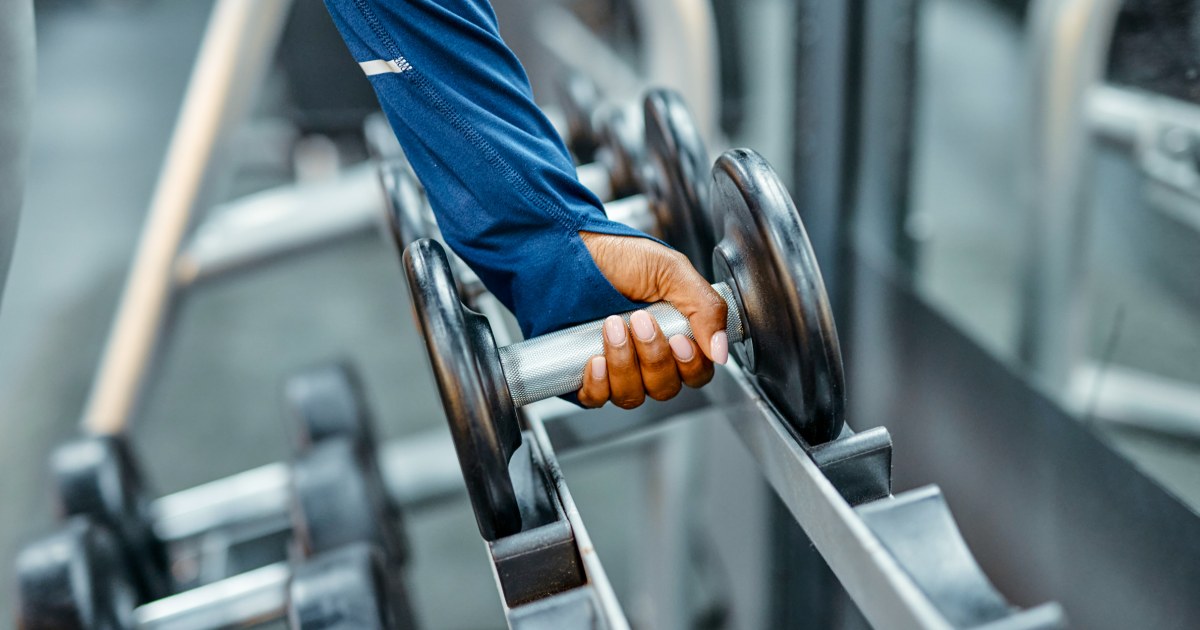
As you age, you lose muscle and gain visceral fat around your organs. Scientists say your visceral fat to muscle ratio may reveal clues about brain health.


Source link

TAGS:
PREVIOUS
U.S. lawmakers, allies voice concern over Trump’s Ukraine peace proposal
NEXT
Savewith a NBCUniversal ProfileCreate your free profile or log in to save this articleNov. 24, 2025, 5:00 AM ESTBy Brian CheungIn June, President Donald Trump’s two older sons held an event at Trump Tower where they touted a new made-in-the-USA mobile phone with an American flag on its back, plus a new wireless service called Trump Mobile.The phone was announced on the 10th anniversary of Trump’s presidential campaign launch and was the Trump brand’s first foray into mobile products and services. According to the initial announcement, the phone was supposed to be released in August.But three months later, there are no signs that the phone has become a reality.NBC News placed an order for a T1 phone in August, paying the $100 deposit for the purposes of tracking the $499 phone’s development.After confirming with the credit card company that the transaction was not fraudulent, NBC News received a confirmation email verifying the order.But the company provided no proactive updates after the order. NBC News made five separate phone calls to the Trump Mobile customer support line between September and November. At one point in October, the call operator promised a specific ship date: Nov. 13.That date passed without an update, and when NBC News followed up with the call center, an operator said the delivery would now be in the “beginning of December,” with no specific date.The operator cited the government shutdown as a reason for the delay, without further explanation.Trump Mobile launched the T1 phone in tandem with a number of phone service offerings, including a 5G service plan priced at $47.45 per month — a nod to the president’s terms. In addition to unlimited talk, text and data, the plan promised “telehealth services, including virtual medical care.”But since the original announcement, plans appear to be in flux. Quiet edits to the Trump Mobile website suggest that details around the phone’s design and production may have changed since it was announced.The Trump Mobile website has scrubbed any mention of a specific release month, but continues to collect $100 down payments on the promise of availability “later this year.”Neither Trump Mobile nor the Trump Organization responded to NBC News’ multiple requests for comment on when the phone would be released and why it’s delayed.When the company announced the phone in June, photos on the website promised a phone featuring an iPhone-like cluster of three cameras on its back.But in August, Trump Mobile’s X account posted, “The wait is almost over!” The post featured a photo of a supposed T1 phone with a completely different design, including more than three rear cameras.The Verge reported that the phone appeared to be a render of a Samsung Galaxy S25 Ultra. When phone case company Spigen noticed that the photo appeared to be a doctored image of a Samsung in one of its cases, the company suggested it would sue.NBC News has not been able to identify any lawsuit from Spigen, and the company has not responded to repeated requests for comment.In late June, the same month the phone was announced, the website removed any mention of “Made in the USA,” as was originally promised.Instead, the website now says the phone is “brought to life right here in the USA. With American hands behind every device,” and that the phone has “American-proud design.”The T1 phone has been met with skepticism since its unveiling. Smartphone industry insiders have suggested it’s nearly impossible to manufacture a “Made in the USA” smartphone on as quick a timeline as Trump Mobile has promised, and without some Chinese involvement.Todd Weaver, the founder and CEO of Purism, a Carlsbad, California-based company that manufactures the only U.S.-made smartphone on the market, said that when his company started, there was “no skilled labor” in the U.S. capable of manufacturing a phone, and “nobody [had] done it before.”He said that creating a chain of production that would allow for a made-in-the-USA label was time and labor-intensive.“We actually had to go over to China with our designs, to learn the process, the manufacturing process, to see what are all the steps,” Weaver said. He said it took him six years to take his Liberty Phone from idea to production, which Purism sells at a $2,000 price point.And even then, Liberty Phone isn’t entirely American-sourced, even if it is branded as “Made in the USA electronics.” Most of its materials come from the United States, Canada or Europe. Other parts like the chassis are made in different countries, including China and India, according to the company. While Trump Mobile customers wait for the T1, the company is offering other phones for sale, including refurbished iPhones (which are primarily produced in China) and devices from Samsung, a Korean company. Trump Mobile says that both devices are “brought to life right here in the USA.”Brian CheungBrian Cheung is a business and data correspondent for NBC News.Maya Huter contributed.
Related Post
November 3, 2025
Nov. 3, 2025, 5:00 AM ESTBy Erika EdwardsTaking melatonin for long periods of time could be a sign of underlying heart problems.Long-term use of the popular over-the-counter sleep aid has been linked to a higher risk of heart failure and early death in adults with insomnia, according to research released Monday.There’s no evidence that melatonin supplements themselves cause heart problems, the researchers said. But a need to take them on a regular basis to help with falling and staying asleep could be a signal that the body is experiencing cardiac issues.“Insomnia can increase blood pressure, stress hormones and inflammation,” said Dr. Ekenedilichukwu Nnadi, lead author of the new study and an internal medicine resident at SUNY Downstate/Kings County Primary Care in New York City.Nnadi and colleagues looked at five years of electronic health records from 130,828 adults, average age 56, finding that people who took melatonin regularly for at least a year were nearly twice as likely to develop heart failure compared to those who didn’t use the supplement, though the actual rates were relatively low: 4.6% of people in the melatonin group developed heart failure, compared to 2.7% among those who didn’t take melatonin.They were more than three times as likely to be hospitalized for the condition (19% versus 6.6%), and nearly twice as likely to die during the study period, compared to people who didn’t take melatonin regularly.It’s unclear, however, whether the data captured outcomes of all people in the U.S. who take melatonin long term. Researchers identified people as chronic users of melatonin based on medical records only — that is, if they’d been prescribed the supplement. In the U.S., the supplement is available over the counter and isn’t often reflected in medical records.“I caution people against drawing concrete conclusions based on this study alone,” said Dr. Nishant Shah, a preventive cardiologist at Duke University Medical Center in Durham, North Carolina, who wasn’t involved with the study. “But now that we have this observation, this is prime time to figure out whether there’s actually a direct association of harm with sleep agents. That would be practice-changing.”Nnadi’s research is scheduled to be presented in New Orleans at an upcoming meeting of the American Heart Association. It has not been published in a peer-reviewed journal.Heart failure occurs when the heart can’t pump enough oxygen-rich blood to the body’s organs for them to function properly. Nearly 7 million Americans have the condition, according to the Centers for Disease Control and Prevention.While the study found that long-term melatonin use was an indicator of potential heart problems — and not causing the problems itself — experts agreed more research is needed into the supplements’ possible side effects.“We have patients using all kinds of supplements without understanding the risks,” said Dr. Martha Gulati, a preventive cardiologist and the incoming director of the Davis Women’s Heart Center at Houston Methodist DeBakey Heart and Vascular Institute in Texas. “If there is harm from a supplement, it means the cost could be far more than simply expensive urine.” Gulati was not involved with the new study.Melatonin is a hormone made naturally by the body that helps regulate sleep and wake cycles. Synthetic versions, sold widely over the counter as dietary supplements, are marketed to help people fall asleep faster or overcome jet lag. Because supplements aren’t regulated by the Food and Drug Administration, doses and purity can vary widely among brands.Use of the supplement has increased in recent years. A 2022 Sleep Foundation survey found that up to 27% of U.S. adults take melatonin, as well as 4% of kids. The new study didn’t include children.People taking melatonin for sleep for more than a year should talk with their doctor, experts said.“People should be aware that it should not be taken chronically without a proper indication,” Marie-Pierre St-Onge, director of the Center of Excellence for Sleep & Circadian Research at Columbia University Irving Medical Center in New York, said in a press release. St-Onge was not involved with the new research.Erika EdwardsErika Edwards is a health and medical news writer and reporter for NBC News and “TODAY.”
October 10, 2025
Nobel Peace Prize awarded to Venezuela's Maria Corina Machado
October 19, 2025
Thieves steal jewels from the Louvre in daylight heist
October 1, 2025
Pope Leo questions what it means to be pro-life
Comments are closed.
Scroll To Top
  • Home
  • Travel
  • Culture
  • Lifestyle
  • Sport
  • Contact Us
  • Politics
© Copyright 2025 - Be That ! . All Rights Reserved