• Police seek suspects in deadly birthday party shooting
  • Lawmakers launch inquires into U.S. boat strike
  • Nov. 29, 2025, 10:07 PM EST / Updated Nov. 30, 2025,…
  • Mark Kelly says troops ‘can tell’ what orders…

Be that!

contact@bethat.ne.com


Be That ! Menu   ≡ ╳
  • Home
  • Travel
  • Culture
  • Lifestyle
  • Sport
  • Contact Us
  • Politics Politics
☰

Be that!

Nov. 25, 2025, 6:40 AM ESTBy Evan BushAs we age, the human brain rewires itself. The process happens in distinct phases, or “epochs,” according to new research, as the structure of our neural networks changes and our brains reconfigure how we think and process information.For the first time, scientists say they’ve identified four distinct turning points between those phases in an average brain: at ages 9, 32, 66 and 83. During each epoch between those years, our brains show markedly different characteristics in brain architecture, they say.The findings, published Tuesday in the journal Nature Communications, suggest that human cognition does not simply increase with age until a peak, then decline. In fact, the phase from ages 9 to 32 is the only time in life when our neural networks are becoming increasingly efficient, according to the research. During the adulthood phase, from 32 to 66, the average person’s brain architecture essentially stabilizes without major changes, at a time when researchers think people are generally plateauing in intelligence and personality. And in the years after the last turning point — 83 and beyond — the brain becomes increasingly reliant on individual regions as connections between them begin to wither away. “It’s not a linear progression,” said Alexa Mousley, a postdoctoral researcher associate at the University of Cambridge, who is the study’s lead author. “This is the first step of understanding the way the brain’s changing fluctuates based on age.” How AI is transforming healthcare across the country03:59The findings could help identify why mental health and neurological conditions develop during particular phases of rewiring.Rick Betzel, a professor of neuroscience at the University of Minnesota who was not involved in the research, said the findings are intriguing, but more data is needed to support the conclusions. The theories may not hold up to scrutiny over time, he said.“They did this really ambitious thing,” Betzel said of the study. “Let’s see where it stands in a few years.” For their research, Mousley and her colleagues analyzed MRI diffusion scans — which are essentially images of how water molecules move within the brain — from about 3,800 people from age 0 to age 90. The goal was to map the neural connections across the average person’s brain at different stages in life. In the brain, the bundles of nerve fibers that transfer signals are encapsulated in fatty tissue called myelin. Think of it like wiring or plumbing. Water molecules diffused in the brain tend to move in the direction of these fibers, rather than across them, meaning researchers can infer where the neural pathways are located. “We can’t crack open skulls … we rely on non-invasive approaches,” Betzel said of this type of neuroscience research. “What we’re trying to figure out is where these fiber bundles are at.” Based on the MRI scans, the new study maps the neural network of an average person across a lifespan, determining where connections are strengthening or weakening. The five “epochs” it describes are based on the neural connections the researchers observed. The first phase is from 0 to age 9, they suggest. The brain rapidly increases in gray and white matter; it prunes extra synapses and restructures itself. From ages 9 to 32, there is an extended period of rewiring. The brain is defined by rapid communication across the entire brain and efficient connections between different regions. Most mental health disorders are diagnosed during this time period, Mousely said: “Is there something about this second era of life, as we find it, that could lead people to be more vulnerable to the onset of mental health disorders?”From 32 to 66, the brain plateaus. It’s still rewiring itself, but less dramatically and more slowly. Then, from 66 to age of 83, the brain tends toward “modularity,” where the neural network is divided into highly connected subnetworks with less central integration. At age 83, connectivity declines further. Betzel said the theory described in the study likely jives with people’s lived experiences with aging and cognition. “It’s intuitively something we gravitate towards. I have two kids and they’re really young. I think all of the time, ‘I’m getting out of my toddler era,’” Betzel said. “Maybe the science ends up being there. But are those the exact right ages? I don’t know.” In the ideal version of a study like this, he added, the researchers would have MRI diffusion data for a large group of people, each of whom were scanned during every year of life from birth to death. But that wasn’t possible because the technology wasn’t available decades ago. Instead, the researchers combined nine different data sets containing neuroimaging from previous studies and attempted to harmonize them. Betzel said each of those data sets varies in quality and approach, and the effort to make them correspond with one another could wash away important variability, ultimately leading to bias in the results. Nonetheless, he said the authors of the paper are “thoughtful” and skilled scientists who did their best to control for that possibility. “Brain networks change over the lifespan — absolutely. Is it discrete such that there are five exact change points? I’d say stay tuned. It’s an interesting idea.”Evan BushEvan Bush is a science reporter for NBC News.

admin - Latest News - November 25, 2025
admin
8 views 6 secs 0 Comments


As we age, the human brain rewires itself.


Source link

TAGS:
PREVIOUS
Torrential rain causes deadly flooding in Thailand
NEXT
Likely tornado rips through Houston area
Related Post
November 6, 2025
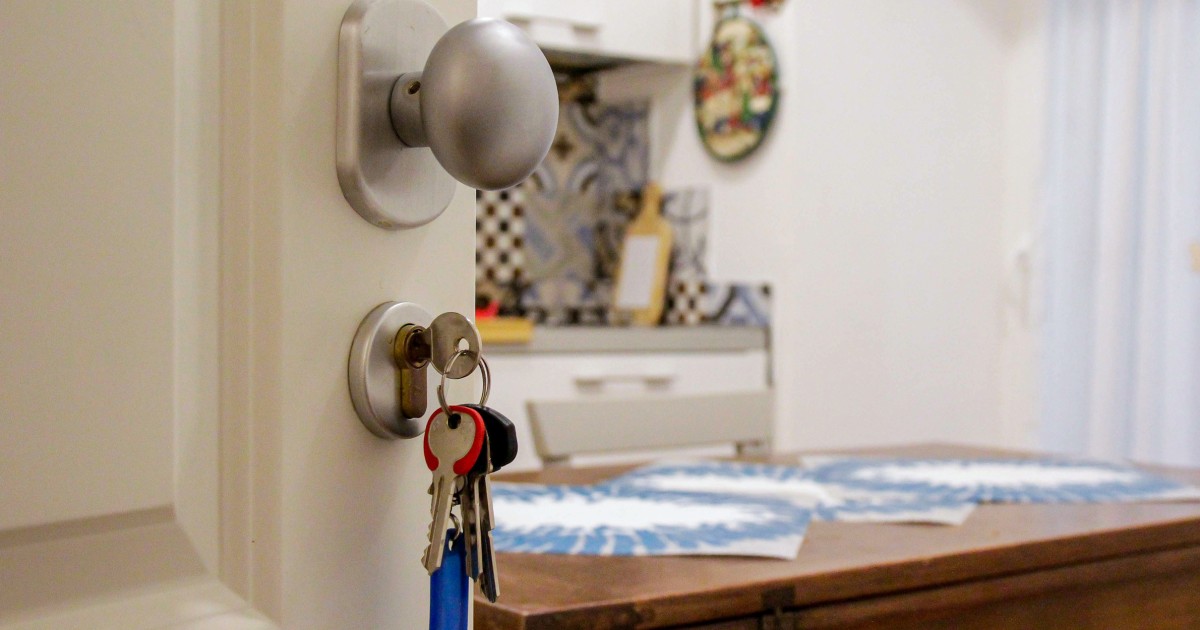
Nov. 6, 2025, 5:00 AM ESTBy Emily Lorsch and Vicky NguyenEver scroll through Instagram or TikTok and suddenly stop in your tracks because you see a beautiful apartment for rent for only $1,100 a month?The listing looks real … because it is. The real estate agent appears legitimate … because the person is real. But it’s only after you pay the “refundable” $350 application fee that you learn the truth: It’s a scam. “I knew it in my gut but I double checked everything, looked him up, my friend checked too … it all seemed so legitimate,” Jenny Diaz, 28, said. Earlier this year, Diaz landed a new job and was ready to live on her own. Her friend sent her an Instagram post — a video of what looked like the perfect Manhattan apartment. The profile had more than 27,000 followers, making it feel credible.“It’s so hard to find apartments. I was using all sorts of apps but they get taken so quickly. And then my friend alerted me to these videos she was seeing on IG of these great apartments for reasonable prices.”What happened next, NBC News learned, has become all too common for prospective renters across the country.Diaz said she and her friend messaged the poster, who claimed to be a real estate agent. She shared her personal information — name, move-in date, and income — and was told that paying the $350 refundable application fee would secure her a tour. But, she said, after she paid and received a confirmation email, follow-up messages went unanswered. That’s when reality hit.“They stopped responding to me and my heart just dropped. I knew it instantly and I couldn’t believe it,” she said.It’s a growing problem, according to the FBI. The bureau’s internet crime complaint center received more than 130 real estate complaints referencing social media sites, with losses of approximately $600,000 in just the first five months of this year. That’s compared to a total of 150 complaints last year with about $1.5 million in losses.These scams are sophisticated. Fraudsters use real agents’ names and license numbers. If questioned, they’ll send a doctored photo of a legitimate license or direct victims to fake company websites that look authentic, complete with agent photos and contact details.After NBC News spoke with a scammer posing as an agent for Keller Williams NYC and sent this website, the company confirmed that the agent and website are not affiliated with it. The company now has a consumer alert on its website warning visitors of such schemes. Compass’ Shane Boyle is one of the dozens of real estate brokers who these imposters are pretending to be. “I have a pit in my stomach looking at that. I mean, it’s horrible,” he said as he scrolled through online profiles using his name and personal photos. “Usually, I’m getting the angry phone call because they’ve done a little bit of Googling, and they’ve got then to my real account and to my real number, and they’ll start questioning me.”Boyle showed NBC News dozens of texts and emails from people who believed he deceived them. On his real social media accounts, he’s received furious comments such as, “You need to rot for what you’ve done.”“I try to block that out, actually. That’s gonna get me a bit emotional,” he said after reading through some of the comments. But it’s not just agents’ identities being hijacked — scammers are also stealing real video listings to lure in prospective renters.Mike Bussey, a Compass agent who runs Real NYC Apartments with more than 125,000 TikTok followers and nearly 50,000 Instagram followers, regularly posts virtual apartment tours. Those are the videos many of these scammers are using alongside names like Boyle’s to deceive people looking for a new home. “My mother had shown me the video and gone, ‘Mike, this is such a good deal, I’ll rent it myself.’ And I was like, ‘Mom, that’s not real.’ And she goes, ‘No, this is your voice. This is you.’ And I had to explain to her, ‘No, somebody is taking my videos, putting fake prices on them, and trying to scam people.’”In one case, a video of a $12,000-a-month apartment was reposted on a fake profile claiming it was being listed for $1,700 a month.“The thing that broke my heart is my mother’s a very intelligent person, so she fell for this. Imagine how many other people have fallen for this, and also she had assumed that I was trying to drum up more business by lying. So I can’t imagine how many people have thought that of me as well,” Bussey said. NBC News sent Meta and TikTok links to accounts on their platforms that appeared to be scams and both companies took those specific profiles down. TikTok told NBC News it proactively removed 97% of content that violated its guidelines on impersonation in the first quarter of this year. Meta says it uses automated and manual systems to block accounts that abuse the company’s standards, but that fraudsters are constantly changing their tactics.Bussey has reported more than 1,000 of his videos that were posted on fake TikTok and Instagram accounts — a task so time-consuming he had to hire someone to help get them taken down. Boyle says he, too, has been reporting these scams for years, but it’s a never-ending cycle.“Let’s say I put down one today. If I report it to whatever social media channel, maybe two goes up the next day. So it’s like it’s such a whack-a-mole situation.”If you are a renter, protecting yourself starts with vigilance. If a deal looks too good to be true, it probably is. Check the market rate, never pay someone you haven’t met in person, and don’t send money for an apartment you haven’t toured. Agents say that typically, an application fee will not be more than $50. Also, independently verify an agent’s contact information — don’t rely on the listing profile. And if you do fall victim, contact your bank, the platform and the FBI immediately.Emily LorschEmily Lorsch is a producer at NBC News covering business and the economy.Vicky NguyenVicky is an NBC News chief consumer investigative correspondent, anchor of NBC News Daily and New York Times best selling author of the new memoir “Boat Baby.” She reports for the Today show, Nightly News with Tom Llamas and NBC News Now. She graduated as valedictorian from the University of San Francisco. Vicky lives in New York with her husband and three daughters.
November 14, 2025
Police chase runaway pig on I-40 in New Mexico
November 4, 2025
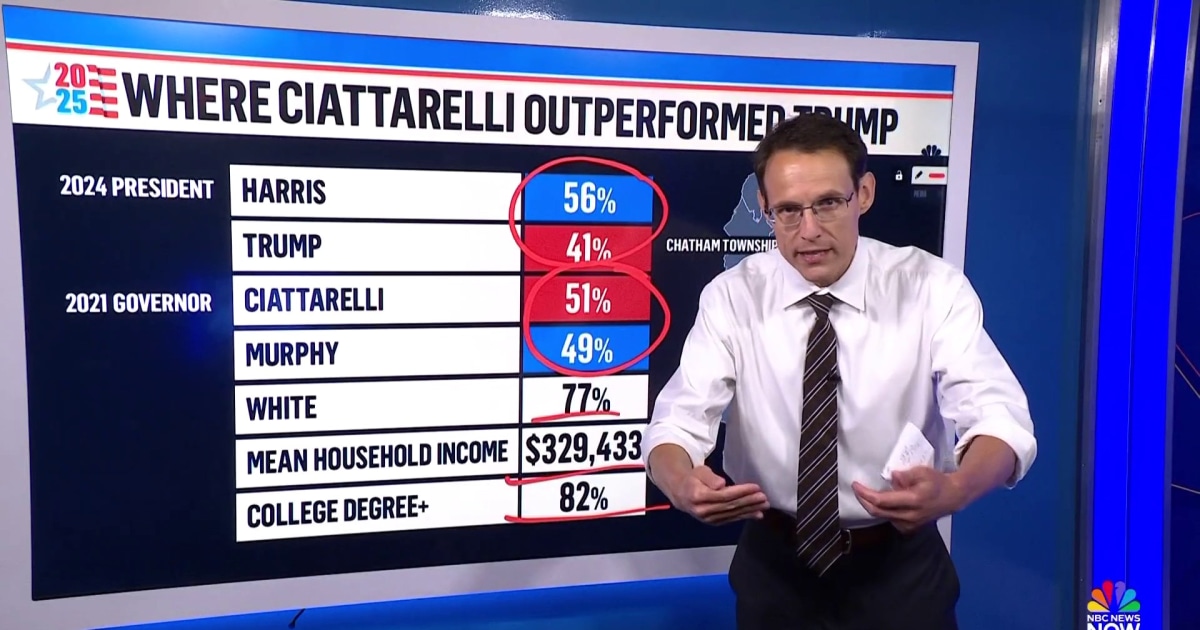
Kornacki: Trump & Ciattarelli's different paths to GOP gains in New Jersey
November 5, 2025
NTSB says footage shows left engine detaching from wing during takeoff before deadly UPS crash
Comments are closed.
Scroll To Top
  • Home
  • Travel
  • Culture
  • Lifestyle
  • Sport
  • Contact Us
  • Politics
© Copyright 2025 - Be That ! . All Rights Reserved