• Police seek suspects in deadly birthday party shooting
  • Lawmakers launch inquires into U.S. boat strike
  • Nov. 29, 2025, 10:07 PM EST / Updated Nov. 30, 2025,…
  • Mark Kelly says troops ‘can tell’ what orders…

Be that!

contact@bethat.ne.com


Be That ! Menu   ≡ ╳
  • Home
  • Travel
  • Culture
  • Lifestyle
  • Sport
  • Contact Us
  • Politics Politics
☰

Be that!

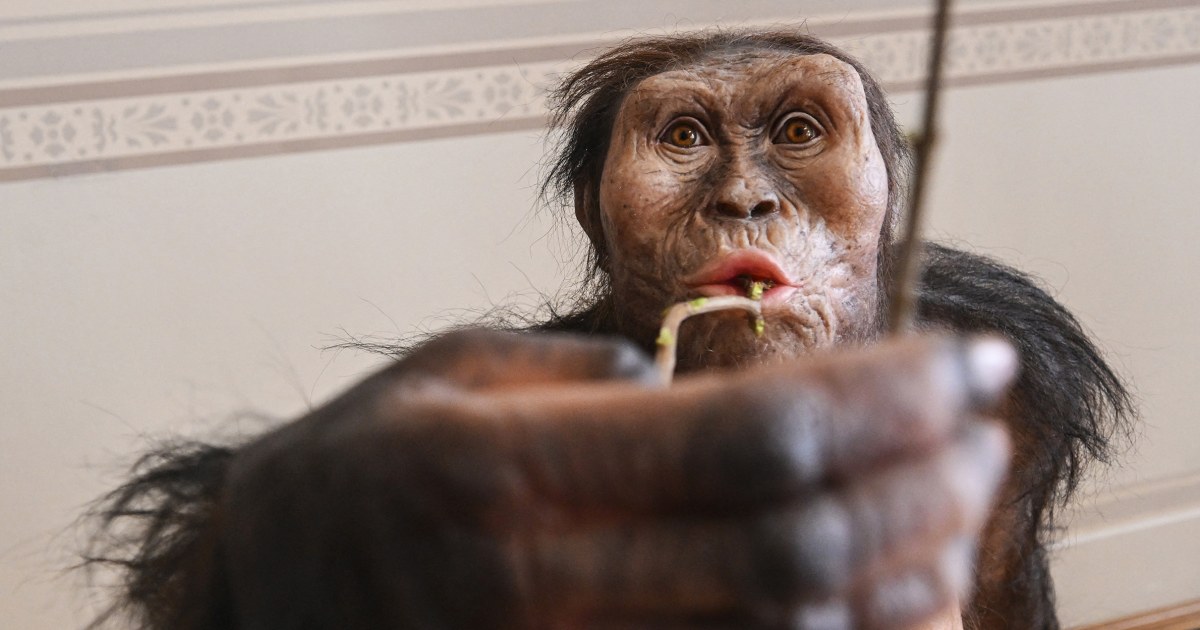
Nov. 27, 2025, 11:05 AM ESTBy Elmira AliievaIn the latest twist in human evolution, scientists have discovered that a mysterious foot found in Ethiopia belonged to a previously unknown ancient relative.Dated to around 3.4 million years ago, the species was likely similar to Lucy, an ancient human relative who lived in the area at around the same time, according to a study published Wednesday in the scientific journal Nature. But researchers found that the Burtele foot — named after the place in northeastern Ethiopia where it was discovered in 2009 — was unmistakably different.With an opposable big toe resembling a human thumb, the fossilized Burtele foot suggests its owner was a skilled climber, spending more time in the trees than Lucy, the study said.Elements of the Burtele foot, discovered in Ethiopia in 2009.Yohannes Haile-Selassie / Institute of Human Origins Arizona State via AFPFor decades, Lucy’s species was considered the ancestor of all later hominids — an ancient relative more closely related to humans, including Homo sapiens, than to chimpanzees.Scientists were unable to confirm the foot belonged to a new species until they were able to study new fossils, including a jawbone with 12 teeth, that were found at the same site.After identifying them as Australopithecus deyiremeda, they found the Burtele foot belonged to the same species.John Rowan, an assistant professor in human evolution at Britain’s University of Cambridge, said their conclusion was “very reasonable.”“Now we have much stronger evidence that, at the same time, there lived a closely related but adaptively distinct species,” Rowan, who was not associated with the study, told NBC News in an email Thursday.The study also looked at how these species shared the same environment. The research team, led by Yohannes Haile-Selassie from Arizona State University, concluded that the new species spent much of its time in the forest.Lucy, or Australopithecus afarensis, likely roamed the ground, the study said, before going on to suggest that the two species likely had different diets and used the landscape in different ways.Multiple examinations of the newly found teeth indicated that A. deyiremeda was more primitive than Lucy and likely relied on a diet of leaves, fruit and nuts, the study said.“These differences meant that they were unlikely to be directly competing for the same resources,” said Ashleigh L.A. Wiseman, an assistant research professor at the McDonald Institute for Archaeological Research, which is also based at the U.K.’s University of Cambridge.Highlighting the broader impact of this discovery on our understanding of evolution, Wiseman said in an email Thursday that the findings reminded us “that human evolution wasn’t a straight ladder with one species turning into the next.”Instead, she said, it should be viewed as a family tree with several so-called “cousins” alive at the same time, and each having a different way of surviving. “Did they interact? We will likely never know the answer to that question,” she added.Rowan also contended that as the number of well-documented human-related species grows, so do our questions about our ancestry. “Which species were our direct ancestors? Which were close relatives? That’s the tricky part,” he said. “As species diversity grows, so do the number of plausible reconstructions for how human evolution played out.”And Wiseman cautioned against making definitive species assignments, as those should rest on well-preserved parts of skull and fossils that belong to multiple associated individuals. While the new research strengthens the case for A. deyiremeda’s existence, she said, it “doesn’t remove all other alternative interpretations.”Elmira AliievaElmira Aliieva is an NBC News intern based in London.

admin - Latest News - November 27, 2025
admin
7 views 12 secs 0 Comments


Scientists have discovered that a mysterious foot found in Ethiopia belonged to a previously unknown ancient relative similar to Lucy.


Source link

TAGS:
PREVIOUS
Watch highlights of the Macy’s Thanksgiving Day Parade
NEXT
Nov. 27, 2025, 1:07 PM ESTBy Jennifer Jett, Peter Guo, Ed Flanagan and Jay GanglaniHONG KONG — Kan Shui-ying was home alone on Wednesday, watching television at her Hong Kong apartment while her husband and son were at work. It was around 3 p.m., she said, when she “smelled a strong burning odor.”She thought she might be boiling something, so she went to check.“I opened the window to see if there was anything,” Kan told NBC News. “Just then, a friend called me and said, ‘Wang Fuk Court is on fire!’”Grabbing only her phone, Kan went downstairs to see what was going on and found the fire was already “burning very fiercely.”“I thought I was just coming down to take a quick look,” she said, not realizing “that it was such a serious disaster.”Kan and her family are among hundreds who lost their homes in the fire at the high-rise housing complex in Hong Kong’s northern Tai Po district. At least 75 people are dead and dozens of others missing in the Chinese territory’s deadliest blaze in seven decades.Investigators are focusing on the bamboo scaffolding and mesh netting that surrounded the eight towers at Wang Fuk Court, seven of which were engulfed in flames. Three people from a contractor hired to carry out renovations have been arrested on suspicion of manslaughter, amid questions as to whether the building materials failed to meet safety standards and helped spread the fire.John Lee, Hong Kong’s top leader, said Thursday night that the blaze was now “largely under control.” He also said the city’s Development Bureau had met with industry representatives to discuss gradually replacing the city’s widely used bamboo scaffolding with metal.Bamboo scaffolding, a tradition with roots in ancient Chinese architecture, is an iconic part of Hong Kong, an international financial hub where skyscrapers are the norm. Bound together by nylon cords, the lattices are used for new construction as well as buildings under renovation.Construction workers with specialized training in bamboo scaffolding — known as “spidermen” — scramble hundreds of feet up the sides of gleaming buildings in Hong Kong, a densely populated city of 7.5 million people. The scaffolding is often covered in mesh safety nets in green and other colors to prevent debris from falling onto pedestrians below.
Related Post
September 30, 2025
Hegseth rails against 'fat generals' and calls for physical fitness standards
October 16, 2025
Trump to have another summit with Putin in Budapest
November 20, 2025
'Law and Order' actor stops a potential kidnapping
November 14, 2025
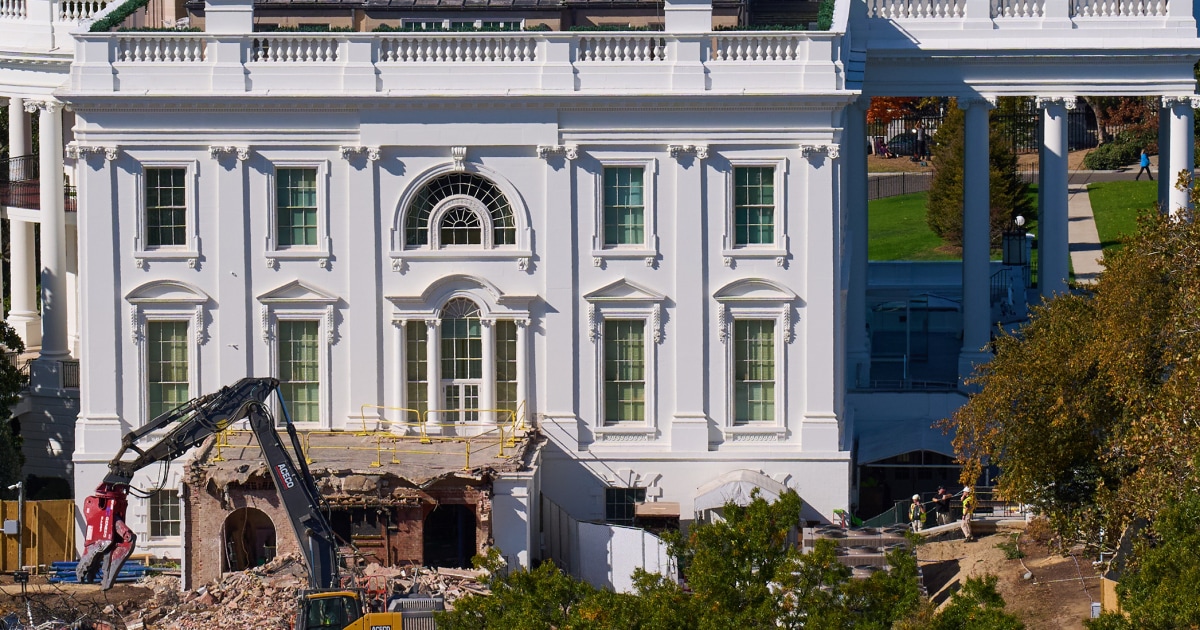
Nov. 14, 2025, 1:29 PM ESTBy Peter NicholasWASHINGTON — The East Wing that President Donald Trump tore down last month stood for decades.The ballroom he’s building in its place could be gone not long after the first wave of guests sit down for dinner, depending on the outcome of the 2028 presidential race.If elected, a Democratic president would have plenty to worry about aside from White House decor; war and peace can easily fill up a day. But a new president may face considerable pressure from within the Democratic fold to do something about a massive new ballroom forever linked to Trump.Already, prominent Democratic officials are workshopping ideas for repurposing the space in favor of something that’s decidedly un-Trump. If any of these come to fruition, the $300 million ballroom that Trump birthed could take on a function that he never intended.White House fires arts commission that reviews presidential construction projects02:51Should the ballroom be used as the president plans? “No way,” said Rep. Jamie Raskin, D-Md., who said he will consider a presidential bid if Democrats gain control of the House in the upcoming midterm elections. “This is a space that’s owned by the people and that serves the people,” Raskin said in an interview. “So, it should be used opposite of what Trump has in mind, which is for the American aristocracy and plutocracy to gather.”Rep. Ro Khanna of California, another Democrat viewed as a possible presidential candidate, said the ballroom should be used in a way that “celebrates and empowers forgotten Americans” as opposed to accommodating guests for glitzy state dinners.Letting the 90,000-square-foot structure remain a ballroom would only validate the means by which Trump built it: demolishing the East Wing without forewarning and bankrolling the project with private donations, Democratic officials suggested.At least one Democratic lawmaker wants the ballroom to meet its demise.“I don’t think it would be a bad idea to tear it down,” said Rep. Steve Cohen, D-Tenn.“It’s this gigantic blob there that’s Donald Trump,” he added.The White House declined to comment on the ballroom’s fate under future Democratic presidents.Trump has said that a ballroom will enable successors to hold large events in a convenient indoor space as opposed to herding guests onto the South Lawn under makeshift tents. For 150 years, presidents have wanted just this kind of solution, the White House contends.“I hope it remains a ballroom and hope that it’s tastefully and beautifully done so that future presidents will be proud to host honored guests there,” said Anita McBride, a member of the White House Historical Association board of directors and former chief of staff to first lady Laura Bush. “But what I mostly hope is that the new building includes offices for the Office of the First Lady, White House social office and White House Visitor Office,” McBride added. “Those offices serve the presidency in a unique and special way, welcoming all visitors to the People’s House.”Past presidents also faced public backlash for transforming the White House. Harry Truman was ridiculed for putting up a balcony that overlooks the South Lawn. A newspaper cartoon in 1948 depicted Truman standing on the balcony named for him and shouting, “Love me… love my balcony.”But no president has undertaken any exterior renovation on the ballroom’s scale, nor have many presidents proved as polarizing as Trump.That makes the ballroom an inviting target for Democratic candidates and officeholders alike. There’s little downside. A Washington Post-Ipsos poll of adults last month showed that 88% of Democrats and 61% of independents opposed the ballroom project.“It’s a metaphor for this administration — the recklessness to which he goes about things, the fact that he doesn’t believe in rules, he doesn’t believe they apply to him,” California Gov. Gavin Newsom, another potential Democratic candidate for president, said in an interview last month with NBC News “Meet the Press” moderator Kristen Welker.“So, you know, he’s a wrecking ball presidency,” Newsom said.Inertia is a potent force in life and in politics. A Democratic president with a mountain of promises to fulfill might conclude the easiest answer is to leave the ballroom alone, rather than spend time and money mothballing it. Newsom is no friend of Trump, but his office did not respond to a question about whether he’d like to see the ballroom razed.One Democratic candidate for Congress, Saikat Chakrabarti, suggested turning the ballroom into a Smithsonian-run museum. If elected, he said he will introduce a bill aimed at converting the ballroom into a museum focused on “corruption and autocracy.”The space would list the private companies that donated to the ballroom, said Chakrabarti, who is running for the San Francisco seat held by outgoing Rep. Nancy Pelosi, to “really put into the sunlight how this thing came to even be.” (Major companies that have contributed to Trump’s ballroom project include Amazon, Apple, Microsoft and Comcast Corp., the parent company of NBCUniversal, while the White House has said it is accepting other, anonymous donations.)On the campaign trail, Democratic candidates figure to propose creative alternatives for the ballroom. Raskin envisions a hybrid structure that could accommodate some dinner guests, but would also showcase exhibits devoted to America’s struggle to achieve full-fledged democracy.One side of the space would display the various attempts to “undermine and thwart popular democracy in American life,” starting with King George III during the Revolutionary War era and ending with Trump’s attempts to overturn the results of the 2020 election, Raskin said.He said he would name the space the “Democracy Matters Ballroom.”Khanna said the ballroom’s future should be decided by way of vox populi.“We need a White House that is not for the tech billionaires, but for forgotten Americans,” he said.“In that spirit, we should ask Americans — in rural communities, urban centers and hollowed-out factory towns — for their ideas of what to do with the space,” Khanna said.A Republican successor to Trump might be more apt to keep the ballroom, interpreting victory as a vindication of Trump’s policies and priorities.Then again, Trump’s tastes aren’t for everyone. He likes gold; he’s partial to grand, formal spaces. A GOP president with a different aesthetic might not be quite as besotted with a ballroom nearly twice the size of the White House proper.“The White House is a residence that symbolizes American democracy,” said Edward Lengel, former chief historian for the White House Historical Association. The ballroom, he said, makes the White House resemble something else: “a palace.”Peter NicholasPeter Nicholas is a senior White House reporter for NBC News.Megan Lebowitz and Natasha Korecki contributed.
Comments are closed.
Scroll To Top
  • Home
  • Travel
  • Culture
  • Lifestyle
  • Sport
  • Contact Us
  • Politics
© Copyright 2025 - Be That ! . All Rights Reserved