• Police seek suspects in deadly birthday party shooting
  • Lawmakers launch inquires into U.S. boat strike
  • Nov. 29, 2025, 10:07 PM EST / Updated Nov. 30, 2025,…
  • Mark Kelly says troops ‘can tell’ what orders…

Be that!

contact@bethat.ne.com


Be That ! Menu   ≡ ╳
  • Home
  • Travel
  • Culture
  • Lifestyle
  • Sport
  • Contact Us
  • Politics Politics
☰

Be that!

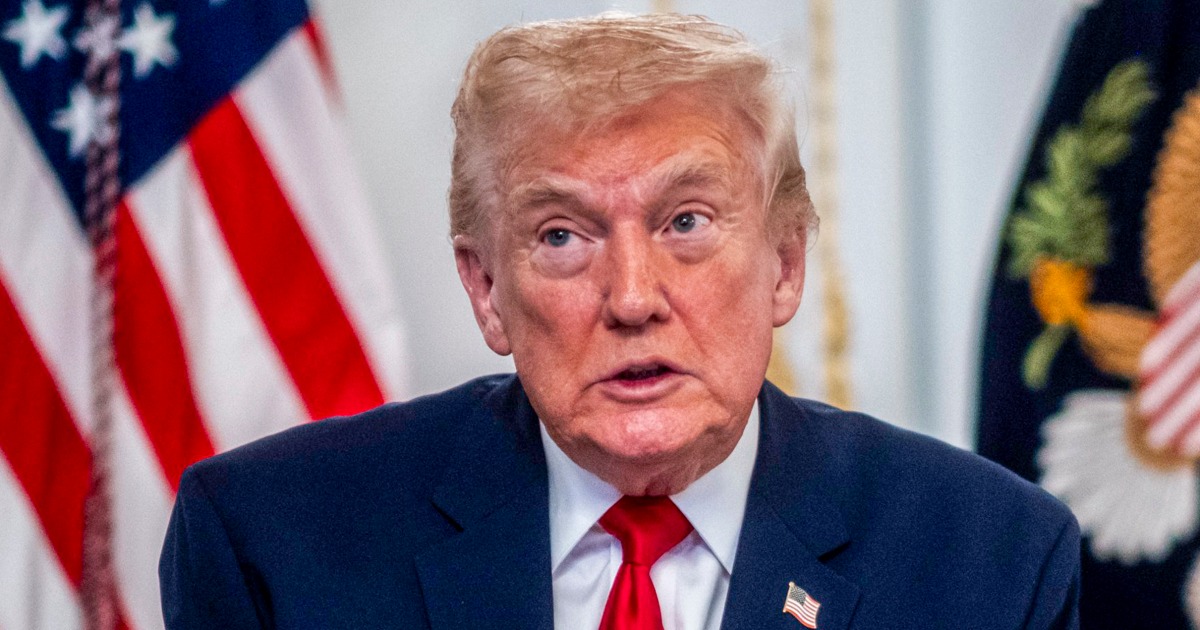
Nov. 29, 2025, 9:32 AM ESTBy Freddie ClaytonPresident Donald Trump said Saturday morning that Venezuela’s airspace should be considered “closed” as he weighs military action against the South American nation. “To all Airlines, Pilots, Drug Dealers, and Human Traffickers, please consider THE AIRSPACE ABOVE AND SURROUNDING VENEZUELA TO BE CLOSED IN ITS ENTIRETY,” Trump said in a post on Truth Social.There was no immediate response from Venezuela, which maintains authority over its own airspace, to the post. Flight-tracking data appeared to show a handful of planes still above the country on Saturday morning.A number of airlines began rerouting flights away from Venezuela’s airspace earlier this month, and the U.S. Federal Aviation Administration has issued a warning of “heightened military activity” in the area.On Wednesday, Venezuela’s civil aviation authority stripped take-off and landing rights from six commercial carriers it accused of “joining the actions of state terrorism promoted by the United States government and unilaterally suspending air commercial operations.”On Thursday, Trump said the U.S. could “very soon” begin targeting alleged Venezuelan drug traffickers on land, expanding operations that have so far focused on vessels in the Caribbean Sea.Trump says land strikes in Venezuela could start “very soon”02:03In Thanksgiving remarks to U.S. troops around the world, Trump thanked the Air Force’s 7th Bomb Wing for its work to “deter Venezuelan drug traffickers” and said “it’s about 85% stopped by sea … and we’ll be starting to stop them by land.”“Also, the land is easier, but that’s going to start very soon,” the president added, speaking from his Mar-a-Lago estate.For months, the president has intensified U.S. military presence in the region, ramping up pressure on Venezuela with strikes on alleged drug boats since early September. The military has carried out nearly two dozen known strikes on vessels they said were carrying drugs, killing at least 82 people.The USS Gerald R. Ford, a major aircraft carrier, arrived in the Caribbean last week, rounding out a buildup of U.S. military forces in the region that has not been seen for decades.The U.S. last week also designated the Cartel de los Soles, a group Washington alleges is run by Venezuelan President Nicolás Maduro, as a foreign terrorist organization.Maduro has denied having any ties to the drug trade and has accused the U.S. of “fabricating” a war against him.Freddie ClaytonFreddie Clayton is a freelance journalist based in London. Katherine Doyle contributed.
admin - Latest News - November 29, 2025
admin
6 views 13 secs 0 Comments


President Donald Trump said Saturday morning that Venezuela’s airspace should be considered “closed” as he weighs military action against the South American nation.


Source link

TAGS:
PREVIOUS
Nov. 29, 2025, 7:15 AM ESTBy Kevin CollierIdentity thieves have in recent years narrowed in on a particularly lucrative target: athletes on the verge of going pro.A report from the fraud detection company SentiLink found that NBA and NFL draft picks from a recent five-year period were far likelier than the average American to be victims of attempted financial fraud such as fake loans and credit cards taken out in their names.The figures have risen dramatically from 2020 through 2025. Of the NBA draft picks from that period, 20% saw suspicious credit activity such as credit card applications, and attempted auto and consumer lending loan applications. For NFL picks in the period, the figure was 15.2%. The national average is usually between 2-3%, the report found.The data only flags suspicious attempts to take out loans and does not track confirmed instances of identity theft.window.addEventListener(“message”,function(a){if(void 0!==a.data[“datawrapper-height”]){var e=document.querySelectorAll(“iframe”);for(var t in a.data[“datawrapper-height”])for(var r,i=0;r=e[i];i++)if(r.contentWindow===a.source){var d=a.data[“datawrapper-height”][t]+”px”;r.style.height=d}}});“Most draft prospects are young adults, typically 18–23 years old. This demographic often has limited credit histories, fewer active financial accounts, and inconsistent digital footprints,” the report found.“These characteristics make them ideal targets because fraudulent applications are less likely to trigger alerts associated with established credit behavior, and there is often less public information available to contradict a fraudulent application,” it said.The rise in identity fraud efforts around young athletes coincides with a national trend. While there are no comprehensive figures on how many Americans become victims each year, complaints to the Federal Trade Commission have risen nearly every year since it started tracking them in 2001, culminating in a record 6.5 million last year..James Lee, the president of the Identity Theft Resource Center, a nonprofit that helps Americans deal with identity theft, said young athletes make sense as targets.“Professional athletes who are early in their careers make for easy targets because they are highly visible, are suddenly wealthy, but may not have the same level of personal protection and life skills to avoid being taken advantage of by professional criminals,” said Lee, who was not involved in the study. Trying to open a credit card or take out a bank loan in another person’s name often require little more than some basic information about that person, such as their name, current address, birthday and family. It usually also requires a Social Security Number, but those are hacked and traded by cybercriminals so frequently that they’re relatively easy to acquire.Athletes competing to go pro are heavily scrutinized and generally see little expectation of privacy. Their names, ages and basic biographical and family information are widely plastered across sports websites, and they often publicly advertise on social media. And the fact that they are likely to frequently move among their home, college, training camps and the city where they’re drafted means they may be less likely to see mailed credit alerts.The attempts also echo a spate of home burglaries that have plagued both leagues in recent years, particularly targeting them while they’re playing in high-profile away games. Victims include NFL stars such as Patrick Mahomes, Travis Kelce and Shedeur Sanders and NBA stars such as Shai Gilgeous-Alexander and Luka Doncic. The FBI is helping investigate the break-ins for potential ties to international crime rings, NBC News reported last week. The agency did not respond when asked if it was also tracking identity thieves who target athletes.SentiLink works with banks and other financial services to flag suspicious transactions and has a massive database of credit activity. Researchers at the company looked at the 1,292 NFL players drafted from 2020 to 2024, as well as the 288 NBA players drafted in that same period, and compared them to national averages.David Maimon, SentiLink’s head of fraud insight and the lead researcher on the study told NBC News that the data does not indicate a widespread organized criminal conspiracy and seems more like a phenomenon of more amateur criminals trying to take advantage of newly famous young men. He declined to share the names of which players have been particularly targeted, citing confidentiality agreements.Most identity theft attempts are not made public. But they can be amateur and brazen, while others can use modern technology and manipulation techniques.Some loan applications ask for a person to record a live video and move their head to prove their identity. But that can be easily fooled, Maimon said. Athletes’ pictures are easy to find online and there are plenty of AI tools that can convincingly deepfake their heads turning, he noted. Jason Rivarde, the commander of public affairs at the Jefferson Parish Sheriff’s Office in Louisiana, said his office had arrested two people earlier this year for allegedly attempting to take out loans by posing as Cam Ward, Tennessee Titans quarterback and 2025 first overall draft pick, as well as his father. The pair were caught when an employee at a Jefferson County financial institution who had served them before recognized them trying to take out a loan in a third name, Rivarde said.The Wards and the Titans did not respond to requests for comment.The NBA and the NFL players unions both provide rookies with basic financial literacy training and recommend vetted financial advisers, spokespeople for the unions told NBC News.But it’s particularly hard for newly famous people to fully protect themselves from dogged identity thieves, especially if they have not yet hired advisers to handle their finances and closely watch their credit reports. Experts like Maimon say one of the best defenses is for everyone to keep their credit frozen, but that’s a tall order for an athlete who signs a major contract and is inclined to buy items that require a credit check, such as vehicles and property.Kevin CollierKevin Collier is a reporter covering cybersecurity, privacy and technology policy for NBC News.
NEXT
Trump administration vows for immigration changes
Related Post
September 25, 2025
Trump says World Cup sites will move if unsafe
November 16, 2025
Savewith a NBCUniversal ProfileCreate your free profile or log in to save this articleNov. 16, 2025, 7:56 AM ESTBy Lindsey LeakeDo you know what your hormone levels are? Should you?Your body is home to more than 50 hormones — chemical messengers that compose the endocrine system — and hormonal changes may reflect any number of medical conditions. For example, low levels of the pancreatic hormone insulin may indicate diabetes, while high levels of the stress hormone cortisol can play a role in obesity.But some hormones such as melatonin, which is important for sleep, naturally fluctuate throughout the day. Other hormonal changes are normal at different phases of life, such as a woman’s drop in the reproductive hormones estrogen and progesterone preceding menopause.Hormones are having a moment.The Food and Drug Administration announced Nov. 10 it was removing the black box warning on hormone replacement therapy for menopause. Agency leaders said the listed risks, including breast cancer, don’t outweigh the treatment’s long-term health benefits, such as reductions in bone fractures and cognitive decline.The news has sparked interest among women who may be candidates for the therapy. Dr. Mary Jane Minkin, a clinical professor of obstetrics, gynecology and reproductive sciences at the Yale School of Medicine, joked that her patients have since been “going wild.”In an age when over-the-counter hormone tests are a dime a dozen and supplements boast of alleviating hormonal imbalances, it can be tough to know whether you may need hormonal testing and treatment or are falling prey to marketing schemes.Dr. Jan Shifren, director of the Midlife Women’s Health Center at Massachusetts General Hospital, said women experiencing perimenopause, the years leading up to their final menstrual period, are a prime target for such “meno-profiteering” or “meno-washing,” the practice of selling pseudoscience for women during menopausal transition.“I actually never use the words ‘hormone imbalance’ with my patients,” Shifren said. “There are a lot of people out there marketing very expensive hormone testing — often not covered by insurance — these very large panels of multiple hormones that essentially tell us nothing.”The U.S. endocrine testing market, which encompasses hormone tests, has flourished since the pandemic, according to Grand View Research, an international consulting and market research firm. Its market size was about $4.1 billion in 2022 and is estimated to soar at a 7.7% compound annual growth rate from 2024 to 2030, mirroring global projections.While hospitals commanded the global endocrine testing market in 2023, commercial laboratories are expected to see the fastest annual growth through 2030, projections show.In the U.S., commercial labs such as Labcorp and Quest Diagnostics offer prescription-free options ranging from a single $49 test measuring the luteinizing hormone, which helps regulate the menstrual cycle, to an in-depth hormone panel exceeding $500.Numerous telehealth companies sell similar tests, which may involve blood, urine or saliva collection, with some approaching $1,000 per panel. HealthLabs.com, for example, offers a “comprehensive female hormone panel” that measures hormones including estrogens, thyroid hormones, testosterone and human growth hormone. The panel, which also includes tests for cholesterol, folic acid and vitamin B12, has a list price of $1,598 but was on sale for $799 as of Nov. 13.“I see women in my practice all the time who have spent $600 for an online consult, they’re spending $600 or $700 every few months for a very large panel of unnecessary hormone levels,” Shifren said. “Then when they come to see me, I don’t want to look at any of those levels. I want to talk to them about what’s bothering them, what their symptoms are.”Follow the symptoms, not hormone levelsPerimenopause typically begins between the ages of 45 and 55 and can last up to a decade. Menopause marks a single point in time, 12 months after a woman’s final period, followed by postmenopause for the rest of a woman’s life.More than 1 million women in the U.S. reach menopause each year, at age 52 on average, according to the National Institute on Aging.“Half of all people on this planet will go through menopause if they’re fortunate enough to live long enough,” Shifren said. “That’s an important time of life.”Tired of Feeling Tired? Why You May Need a Cortisol Reset04:28It can also be a time when quality of life diminishes for women experiencing symptoms, which may include hot flashes and night sweats, brain fog, mood swings, weight gain, painful sex, breast tenderness, incontinence, insomnia, vaginal dryness and irregular periods.When Minkin sees a patient in her 40s or 50s with such symptoms, treatment is the goal — no hormone testing needed.“In general, I try to discourage people [from testing] as much as possible,” Minkin said. “Particularly in the perimenopausal situation, hormones fluctuate all over the place.”Not to mention, Minkin said, even a premenopausal woman’s reproductive hormones vary widely throughout her cycle.Minkin also advises patients against purchasing hormone panels on their own.“My standard example is, if I have a patient who’s 53 years old … hasn’t had a period for three months and she’s up every night, sweating and not sleeping and not feeling good, and she wants her hormone levels tested,” Minkin said. “[I’d] say to her, ‘Please, go out and buy a dress with that money. I can tell you you’re perimenopausal.’”Similarly, older women don’t often benefit from sex hormone testing, Shifren said.“There’s absolutely no reason to check estradiol [a form of estrogen] or progesterone in a postmenopausal woman,” Shifren said. “We can tell them — before they spend any money — that those levels are low.”Who would benefit from hormone testing?When it comes to perimenopausal symptoms, age matters, said Dr. Shamita Misra, a clinical professor of family and community medicine at the University of Missouri School of Medicine.Menopause occurring between the ages of 40 and 45 is considered early, while reaching the milestone younger than 40 constitutes premature menopause. Roughly 5% of women hit early menopause naturally, as opposed to the condition being induced by surgical or other medical interventions, according to the federal Office on Women’s Health.Because early or premature menopause is associated with a higher risk of conditions including heart disease and osteoporosis, a patient under 40 reporting perimenopausal symptoms may benefit from hormone testing, Misra said.“Are we suspecting premature menopause, or is there any other endocrine problem?” Misra said. “We have to be open and not just focus on perimenopause. We have to also get [the patient’s] history.”On the other hand, if you’re of normal perimenopausal age and dealing with symptoms, don’t shy away from discussing any hormonal concerns you may have with your health care provider, Misra said. Shared, informed decision-making is your safest option.“Some women don’t talk candidly about their symptoms,” Misra said.If your doctor does recommend hormone testing, keep in mind that some medications, including birth control, may affect your levels.“You would have to be off birth control for 90 days — minimum three months — before your hormones get back to being at their baseline,” Misra said. “When a person is breastfeeding, for example, when a person is on oral contraception or some hormones already, it’s impossible to check for hormone levels accurately.”Risks from unnecessary hormone testingIt’s natural to be curious about hormone levels — reproductive or otherwise — whether you’re symptomatic or not, doctors say. Some of Dr. Debra Bell’s patients have told her they need data to feel comfortable about their health, even when she doesn’t need data to treat them.“My approach is, How will this test help us in our decision-making for your situation?” said Bell, director of education at the Osher Center for Integrative Health at the University of Washington School of Medicine. “It doesn’t always help.”But just because hormone testing isn’t typically beneficial for peri- and postmenopausal women doesn’t mean it’s harmless, Bell said. Cost is one such harm.“I know people who have maxed out their credit card for these kinds of things,” Bell said.Not all over-the-counter menopause diagnostics are pricey. For instance, pharmacy chains and big-box stores sell rapid menopause test sticks hovering around $30, sometimes less.The questions then become: How accurate are the results and who’s interpreting them?“If [a patient has] done the test, then I will interpret it for them,” Bell said. “A lot of times, what the test shows is what we might already presume based on the symptoms they’re having and what’s happening with their menstrual cycle.”Another danger in self-testing is self-treating one’s perceived hormone imbalance, Bell said. Unlike prescription medications, the FDA doesn’t approve herbal and dietary supplements for safety or effectiveness before they hit store shelves.Last year’s global menopause market was nearly $18 billion, Grand View Research reports, with dietary supplements carving out a 94% share.As a practitioner of integrative medicine, Bell is hardly antisupplement. But be sure to discuss any supplements you’re considering with your doctor, she said. Even supplements marketed as natural may be toxic depending on your lifestyle, medical history and other medications you’re on.Hot flash treatments in particular have a high placebo effect rate in clinical trials, about 30%-35%, Minkin estimated. For that reason, she said she has no problem with patients who claim that home remedies such as evening primrose oil provide symptom relief.“As long as it’s something that I know is pretty safe,” Minkin said. “[If] she says it’s arsenic, I’d say, ‘Probably not a good idea.’ So I have to look at the potential toxicity of what she might be using.”Minkin is thrilled that menopause, once taboo, is not only making headlines but also being celebrated — an “estrogen festival,” she called it. However, she warned that some wellness companies are crashing the party, hoping to make money off women in midlife.“For 20 years, we could attribute nothing to menopause; it was a dirty topic,” Minkin said. “But at this point, I think we’re leaning toward saying that everything is perimenopause, because perimenopause is very amorphous.”“You can’t test for it, really.”Lindsey LeakeLindsey Leake is an award-winning health journalist and contributor to NBC News. She holds an MA in Science Writing from Johns Hopkins University, an MA in Journalism and Digital Storytelling from American University and a BA from Princeton University.
November 12, 2025
Sean Duffy on controllers who took sick time
October 27, 2025
AI glasses can be a lifeline for the visually impaired
Comments are closed.
Scroll To Top
  • Home
  • Travel
  • Culture
  • Lifestyle
  • Sport
  • Contact Us
  • Politics
© Copyright 2025 - Be That ! . All Rights Reserved