• Police seek suspects in deadly birthday party shooting
  • Lawmakers launch inquires into U.S. boat strike
  • Nov. 29, 2025, 10:07 PM EST / Updated Nov. 30, 2025,…
  • Mark Kelly says troops ‘can tell’ what orders…

Be that!

contact@bethat.ne.com


Be That ! Menu   ≡ ╳
  • Home
  • Travel
  • Culture
  • Lifestyle
  • Sport
  • Contact Us
  • Politics Politics
☰

Be that!

Nov. 30, 2025, 6:00 AM ESTBy David CoxIn early 2023, Liana Shatova began taking low doses of an antidepressant to ease symptoms of a premenstrual disorder marked by mood swings, anxiety and depression. At first, the difference was remarkable for her. “I felt full of energy and could juggle multiple things at once,” said Shatova, 40, a business development manager from the Greater Boston area. Then, after around 18 months on the medication, she started to fear she was becoming emotionally numb.“My best friend’s mom died unexpectedly, everyone was in shock and sobbing, and I couldn’t cry at all,” said Shatova. “I just felt nothing.” When Shatova asked her doctor if she could stop taking the medication sertraline, an antidepressant better known by its brand name Zoloft, she said she was reassured that she was on the lowest prescribed dose and that coming off it wouldn’t be difficult.Initially all seemed well, but after a month, Shatova said she experienced her first bout of what would become chronic insomnia, followed by panic attacks. Other symptoms emerged, including night sweats, muscle and joint pain and mood swings that left her unable to work. She said her doctor told her that the symptoms were a relapse of her premenstrual dysphoric disorder, and suggested a different antidepressant. Shatova declined the new drug.Antidepressants, primarily SSRIs, or selective serotonin reuptake inhibitors, are some of the most widely prescribed medications in the United States, taken by tens of millions of adults. About twice as many women as men report using an antidepressant in the past 30 days, with antidepressant use highest among women aged 60 and older, according to government data.Side effects are a key reason people choose to go off their medication, but stopping the drugs can also lead to withdrawal symptoms, research indicates. Along with the growing awareness, a deprescribing movement is building up in the field of psychiatry, aimed at helping patients reduce or stop their medications when no longer considered necessary. In a recent large analysis published in The Lancet in November, researchers at King’s College London found that physical side effects, including quick weight gain, significantly increased heart rate or elevated blood pressure, may be more common than once thought, depending on the drug. The review analyzed results from 151 clinical trials and 17 reports from the Food and Drug Administration, involving about 30 different prescription drugs used to treat depression, anxiety, and bipolar and panic disorders. The researchers examined the effects of antidepressants on weight, blood glucose, total cholesterol, blood pressure and heart rate. They didn’t look at emotional changes experienced by patients such as Shatova, although the lead study author said it should be examined further in future studies. “Not all antidepressants are built the same when it comes to their physical health side effects,” said Dr. Toby Pillinger, an academic clinical lecturer at King’s College London, who led the study. “Up until recently, we’ve approached antidepressant prescribing with a one-size-fits-all policy, and I think we need to move away from that.”Separately, in August, psychiatry researchers in the U.K. found that serious withdrawal effects may be more common than previously suspected, especially with longer-term use, although the study was small with just 18% of participants responding to the survey. The results showed that among people who had been taking antidepressants for more than two years, 63% reported moderate or severe withdrawal effects, with a third describing withdrawal issues that lasted more than three months. Symptoms ranged from insomnia to confusion, electric sensations, muscle cramps, agitation, mood swings and derealisation or an alteration in the person’s perception of the world. Dr. Mark Horowitz, a clinical research fellow at University College London who led the withdrawal study, said other research has found that roughly a quarter of patients experience severe symptoms when they abruptly stop taking their medications, from burning pain in the skin or limbs, balance problems, ongoing panic attacks, and sound and light sensitivity. Abrupt cessation of antidepressants is not recommended, but research has found that withdrawal symptoms can occur even when people attempt to taper. A review of various existing studies published last year by a group of German psychiatrists concluded that as many as 1 in 3 antidepressant users will experience some kind of withdrawal symptoms, with severe symptoms occurring in 1 in 30 users. Dr. Joseph Goldberg, clinical professor of psychiatry at the Icahn School of Medicine at Mount Sinai in New York, said that antidepressants have long been known to cause “discontinuation symptoms,” mainly nausea and dizziness, particularly if stopped abruptly.It’s unclear why some patients have severe symptoms after stopping their medications. Some researchers, concerned by reports of antidepressant withdrawal, suggest that the underlying mechanisms are similar to those faced by people suffering from alcohol and opiate withdrawal. “Withdrawal symptoms tell you that your brain is trying to restore a balance that it was forced to change by the presence of a drug,” said David Cohen, professor of social welfare at the University of California Los Angeles. “I think it’s the best accepted explanation for why stopping any centrally active drug, whether its antidepressants, coffee or heroin, leads to some discomfort.”The challenge for psychiatrists is that the drugs, which are often prescribed along with therapy, do help many people, particularly in the short term. Dr. Jonathan Alpert, a psychiatry professor at Albert Einstein College of Medicine, said that anecdotes of extreme withdrawal do not reflect his own professional experience. In his practice, Alpert estimated that two-thirds of his patients have been on antidepressants for more than five years, and only a small handful had experienced protracted withdrawal symptoms lasting more than a few days.“There’s been this very inflated idea that it’s really difficult to come off psychiatric medications,” said Alpert. “Even though I respect people’s narratives of their own experience, it feels very different from what we see in clinical practice and research studies.”Goldberg also expressed skepticism as to whether antidepressants themselves are actually responsible for the symptoms being reported by patients. “If somebody, after years of treatment, develops some frankly rather peculiar and unexpected neurological problems, I’m not sure how confident one can attribute that to medicine,” he said. “Anything is possible. But I think we have to consider the more likely possibility that the thing they’re encountering may be unrelated.” More than a year after Shatova first attempted to taper off the medication, she said she’s still undergoing a painstaking process of tiny, gradual reductions to try to avoid exacerbating her symptoms. “I am still tapering and now at 0.835 mg of Zoloft, doing it very slowly and carefully,” she said. “My sleep has gotten better, but I still have windows and waves triggered by life stresses and hormonal fluctuations.” It’s important not to dismiss people’s experiences, Goldberg said, and anyone going through symptoms should undergo further testing. A past president of American Society of Clinical Psychopharmacology, Goldberg said that the organization is now completing new guidelines on deprescribing. The goal is to help doctors explain what to expect when stopping psychiatric medications so patients don’t self-taper without medical supervision.Alpert suggested analyzing different types of data stored in electronic health records to get insight into the characteristics of patients who have prolonged withdrawal symptoms. “Do they have abnormal MRIs or blood tests with inflammatory markers? Through looking at large datasets, it will be more possible to identify predictors of this subset of people who seem to have unusually prolonged symptoms.”Cohen feels that the field of psychiatry needs to speed up research. However, in the wake of the 43% cut to the National Institutes of Health annual budget proposed to Congress by the current administration, a figure which is equivalent to $20 billion per year, it is likely that such studies would need to be carried out by either U.K. or European researchers. “We need large, nonindustry funded trials to examine what happens when people stop antidepressants, using various tapering strategies and long enough follow-up,” Cohen said. “We need dozens of such trials now.”If you or someone you know is in crisis, call or text 988, or go to 988lifeline.org, to reach the Suicide & Crisis Lifeline. You can also call the network, previously known as the National Suicide Prevention Lifeline, at 800-273-8255, or visit SpeakingOfSuicide.com/resources.David CoxDavid Cox is a freelance journalist focusing on all aspects of health, from fitness and nutrition to infectious diseases and future medicines. Prior to becoming a full-time journalist, he was a neuroscientist attempting to understand how and why the brain goes wrong.

admin - Latest News - November 30, 2025
admin
4 views 15 secs 0 Comments


A “deprescribing” movement is building up in the psychiatry field, aimed at helping patients reduce or stop their antidepressants, especially SSRIs, when no longer considered necessary.


Source link

TAGS:
PREVIOUS
Nov. 30, 2025, 5:49 AM ESTBy Freddie ClaytonIsraeli attacks in Gaza have killed more than 70,000 people in over two years of war, according to the Palestinian Health Ministry, as the death toll continues to climb despite the ongoing ceasefire.Israel’s offensive in Gaza has killed at least 70,100 people since Hamas attacked Israel on Oct. 7 2023, which equates to more than 3% of the 2.3 million people living in the enclave. A further 170,983 people have been wounded.The World Health Organization has said that the numbers given by health officials in Gaza are reputable.A ceasefire between Israel and Hamas in Gaza remains in effect but has been tested by repeated outbreaks of violence, as Gaza’s residents face hunger, flooding and the onset of a bitter winter.Israeli fire killed two Palestinian children in the southern Gaza Strip on Saturday. The two brothers, aged 11 and 8, died when an Israeli drone struck close to a school sheltering displaced people in the town of Beni Suhaila, according to staff at Nasser Hospital, which received the bodies. The Israeli military said it killed two people who crossed into an Israeli-controlled area, “conducted suspicious activities” and approached troops. The statement didn’t mention children.Israeli strike on Gaza leaves 24 Palestinians dead, dozens wounded00:27Sunday’s grim milestone arrives more than two years after Hamas launched multipronged surprise attacks on Israel that left 1,200 people dead, with 240 people taken hostage by Hamas and other affiliated militant groups.An estimated 90% of Gaza’s population has been displaced since Oct. 7 2023, and more than 1.5 million people “urgently require emergency shelter assistance,” the United Nations’ migration agency IOM said last month.Walid Qabalan, a 53-year-old man, now lives with his family of nine in a small tent in the Al-Mawasi area west of Khan Younis. On the second day of the war, Walid, his wife, and their children were forced to flee their home in the city of Abasan, east of Khan Younis, after their home became too dangerous to reach.His daughter Amira, who is 13 and should be in eighth grade, instead spends her daily life keeping the family safe.“My days are spent making dough, waiting at the charity kitchen line, fetching water,” she told NBC News.Eleven-year-old Abrar, who should be in fifth grade, left school from the very first day of the war.They took our childhood,” she said. “Our playtime is gone, our home is gone, our memories are gone.”President Donald Trump’s Gaza peace plan was endorsed by a majority vote at the United Nations earlier this month, though world powers were still divided over whether it can convert the fragile ceasefire into the long-term solution that has eluded the Middle East.Designed to usher Gaza from rubble-strewn war zone into a new era, Trump’s plan would establish a “Board of Peace” to temporarily govern the territory and an International Stabilization Force taking over responsibility for maintaining the peace from the Israel Defense Forces currently occupying parts of the Gaza Strip.The proposal would be “phase two” of Trump’s 20-point plan first announced in September, “phase one” of which brought a prisoner and hostage exchange.Freddie ClaytonFreddie Clayton is a freelance journalist based in London. 
NEXT
Nov. 30, 2025, 5:00 AM ESTBy Nicole AcevedoThe shriek of whistles and a cacophony of cars honking have taken on new meaning on the streets of major U.S. cities in recent months — a warning to all those in earshot that immigration enforcement is nearby. The warning tactics from activists have become popular in cities recently targeted by Border Patrol immigration operations. In Los Angeles, Chicago and Charlotte, North Carolina, residents protested immigration enforcement actions and began coordinating street patrols, organizing neighborhood watch groups and recording videos of both immigration officers apprehending people and agents carrying out operations largely while masked and in unmarked vehicles. Community activists have denounced what they say are increasingly aggressive tactics by immigration agents as residents patrol and document immigration enforcement activity. Meanwhile, federal authorities have said community members’ actions have gotten in the way of immigration agents doing their job. Officers “will take legal and necessary steps to ensure their own safety and that of bystanders,” Department of Homeland Security spokesperson Tricia McLaughlin said. Heather Morrow, a protester in Charlotte, North Carolina, faces misdemeanor charges after prosecutors allege she blocked the entrance to a Department of Homeland Security facility’s parking lot; she was initially charged with felony assault of a federal officer, but it was dropped a week later at the request of the federal government. Joshua Long, another Charlotte resident who told NBC News he’d been verifying and documenting community reports of U.S. Border Patrol’s presence across the city as part of a local watch group, was also arrested on suspicion of assaulting a federal officer, an allegation he denies. Amid the arrests, as well as flaring tensions and clashes between communities and immigration agents, concerned residents who are afraid the Border Patrol might target their hometowns next are looking to grassroots efforts already adopted in other cities. Many are looking to create their own versions of rapid response teams that can safely monitor immigration enforcement in their communities. “Deportation raids are not new, but what we see in terms of scale and severity is very new, and it requires a whole new response from us regular people, as citizens, as neighbors,” Jill Garvey, a co-director of the pro-democracy group States at the Core, said during the first nationwide virtual “ICE WATCH” training session hosted with the help of community organizers from Chicago on Nov. 21. More than 500 people attended the online training session from dozens of cities, including New York; Memphis, Tennessee; Oakland, California; and New Orleans — where some expect immigration operations to begin in December. Different people expressed fear, heartbreak, anxiety and outrage over the current state of immigration enforcement and asked for tips, including how to adjust ICE Watch strategies to fit the needs of rural communities and how to monitor enforcement efforts around sensitive locations such as churches, schools or workplaces. The trainers told those attending that paying attention to details such as the number of agents at a specific location, what uniforms they’re wearing and the scope of their activity are key to effectively documenting immigration enforcement in their communities, understanding the tactics and identifying potential civil rights violations. The trainees were told to not touch or physically interact with agents and to keep a safe distance while documenting any immigration enforcement activity. McLaughlin told NBC News that “being near unlawful activities in the field does come with risks — though our officers take every reasonable precaution to mitigate dangers to those exercising their protected First Amendment rights. However, when faced with violence or attempts to impede law enforcement operations, our officers will take legal and necessary steps to ensure their own safety and that of bystanders, up to and including use of force.” She added that immigration authorities “clearly identify themselves as law enforcement while wearing masks to protect themselves from being targeted by highly sophisticated gangs” and other criminals at a time when assaults against agents have increased. Community efforts to monitor Immigration and Customs Enforcement operations started to solidify in June when the Border Patrol first began sustained immigration enforcement operations in Los Angeles and intensified in Chicago during a three-month immigration enforcement operation dubbed Operation Midway Blitz. The Border Patrol defended its use of tear gas and rubber bullets, which residents and local officials denounced.When asked if people who record immigration authorities or participate in neighborhood watch group should be worried about being targeted or arrested for engaging in these activities, McLaughlin stated, “This sure looks like obstruction of justice.” “When individuals broadcast the location of ICE, they are putting a target on the backs of officers,” she stated, “anyone who impedes, obstructs, or assaults law enforcement will be arrested and prosecuted.” Xavier T. de Janon, a criminal attorney in North Carolina who represents Morrow and Long, said several of his clients who participated in neighborhood watch efforts to keep tabs on Border Patrol as it conducted Operation Charlotte’s Web in the city of Charlotte are facing charges. Long, one of de Janon’s clients, said he was following a Border Patrol vehicle to verify community reports his neighborhood watch group received about its presence in Charlotte. At one point, Long said, he was trying to move his car out of the way in a dead-end street to allow agents’ SUVs to leave. Instead, the agents used their vehicles to try to box him in, he said. In an attempt “to pull myself out of a dangerous situation,” Long said, he drove forward, going up on a curb and around one of the SUVs trying to block him. The Border Patrol claimed Long skimmed the front of its vehicle, though “my car has no scratches on it,” he said. As the Border Patrol followed him, Long said, he dialed 911 and told dispatchers that agents were driving aggressively toward him. He said he kept driving and stopped the minute one of the SUVs began flashing its red and blue lights, fearing matters could worsen. Long said a Border Patrol agent opened his car door while he was pointing a gun, pulled him out, put him against the ground and handcuffed him. Long, who said he was compliant and did not resist, was placed in the back of an SUV and taken to an FBI office, where he was questioned. About six hours later, he was released with a federal citation for “simple assault on a federal officer,” a misdemeanor charge. Long’s court hearing is scheduled for May. “This was a CBP violent and unnecessary arrest for someone documenting,” de Janon said. Asked about Long’s arrest, McLaughlin stated, “While conducting an immigration enforcement operation near the intersection of Central Ave and Eastway Dr, Border Patrol arrested this US citizen for vehicular assault against a federal agent.” De Janon said that when federal agents sign up for enforcement roles, they accept the legal reality that they can be documented and that the public can access the information. “Unfortunately, we are living under a federal government that disagrees with this,” he said. “So there might be more risks in people just doing what they’re allowed to do and legally protected to do.” At the same time, the Department of Homeland Security also said there have been 238 reports of assaults against ICE agents this year, compared with 19 reports last year — signaling nationwide tension around immigration enforcement tactics. In the session, trainers emphasized the importance of conducting ICE Watch and street patrols in groups. “We’re safer when we stick together,” said Garvey, of States at the Core. She emphasized that neighborhood watch groups are for documenting immigration enforcement happening in communities and not about interference. “It is a nonviolent tactic,” she said. Nicole AcevedoNicole Acevedo is a news reporter for NBC News.
Related Post
November 26, 2025
Russia says leaked U.S. call is attempt to disrupt peace talks, warns no deal is near
October 15, 2025
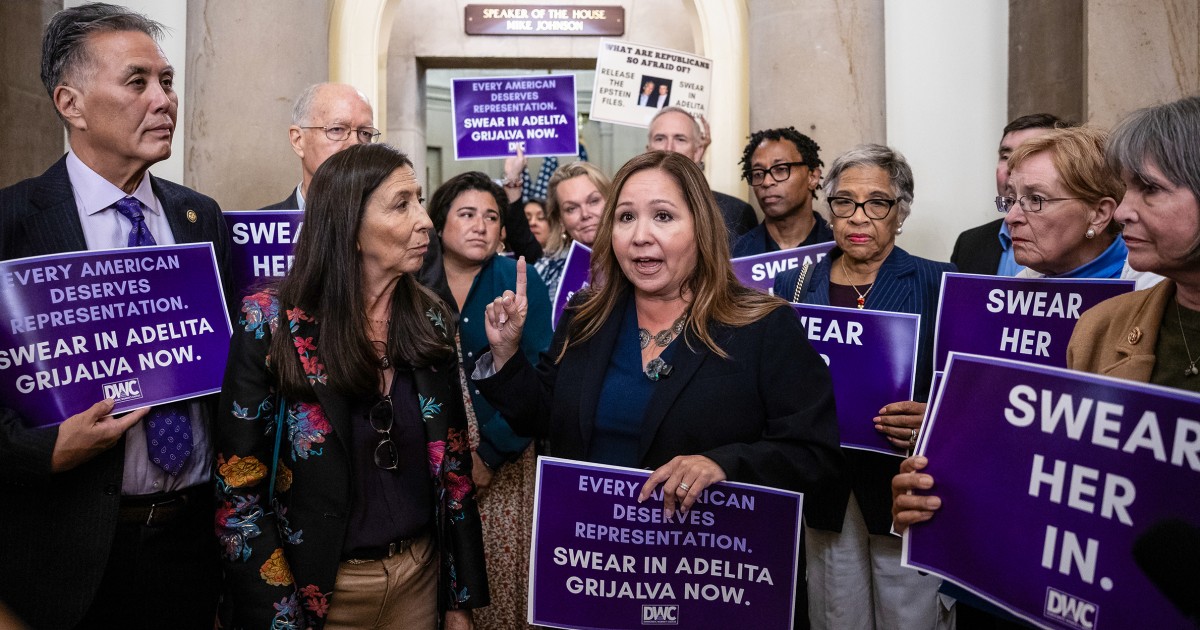
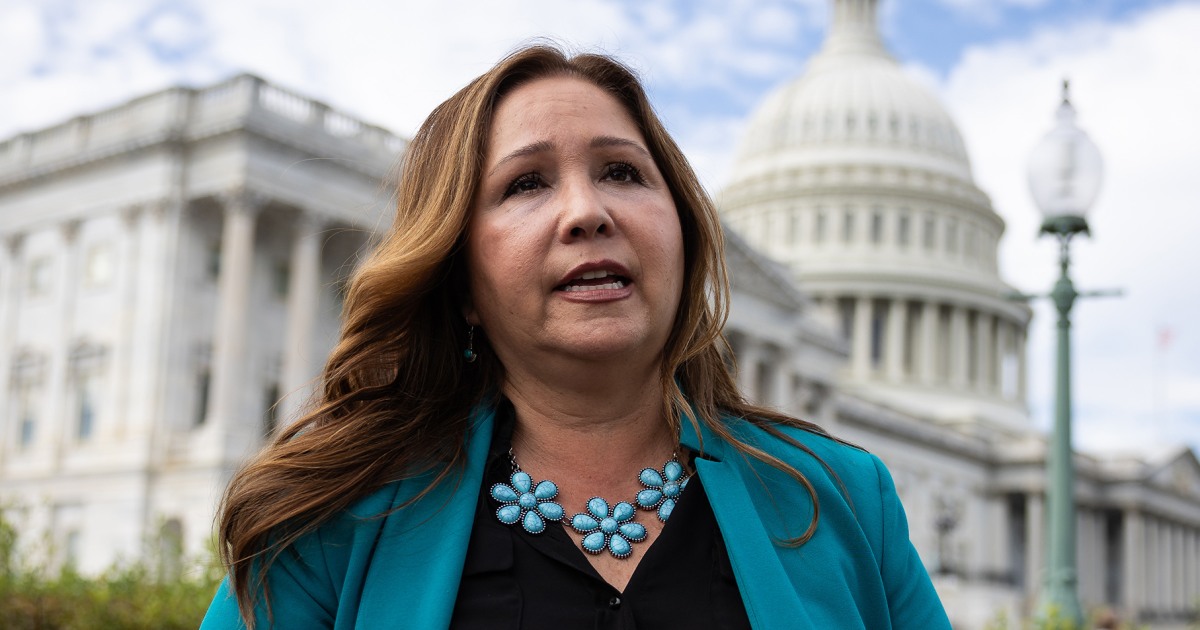
Savewith a NBCUniversal ProfileCreate your free profile or log in to save this articleOct. 15, 2025, 2:11 PM EDTBy Scott Wong, Gabrielle Khoriaty and Kyle StewartWASHINGTON — Democrats are ramping up pressure on House Speaker Mike Johnson to seat Rep.-elect Adelita Grijalva, staging a protest at his office, holding news conferences and threatening a lawsuit to try to get him to swear in the newest Democratic member of Congress.Grijalva won the Arizona House seat of her father, the late progressive leader Rep. Raul Grijalva, in a Sept. 23 special election. But the House has not been in session since her election as part of the stalemate over the government shutdown.While Grijalva has been in and around the Capitol complex waiting to take the oath, Johnson, R-La., has said for the past two weeks he won’t swear her in until the government reopens.House Dems march to demand Johnson swear in Grijalva00:56Once she is seated, Grijalva would bring the House to 219 Republicans and 214 Democrats. She is also expected to be the final signature needed to force a House vote to release the Justice Department’s Jeffrey Epstein files.Now, Democrats are trying new, more aggressive tactics to force Johnson to reverse course.On Tuesday night, Grijalva and members of the Democratic Women’s Caucus marched to Johnson’s office, chanting “Swear her in!” A U.S. Capitol Police officer briefly tried to stop lawmakers and could be seen on video getting into a short verbal altercation with Rep. Nanette Barragán, D-Calif. She claimed that the officer grabbed her, but a video only shows her pushing past an officer into the speaker’s foyer. Capitol Police did not immediately respond to a request for comment.In remarks outside Johnson’s office, Grijalva said she has heard “not one word” from the speaker.“I am a woman of color from Arizona, and 700,000 people deserve to have their voice heard, …” Grijlava said. “Let’s just be really clear, if I were a Republican, I would have already been sworn, and that is not acceptable. They’re afraid of me signing and being the 218th signer to the Epstein petition.”Johnson was not in the Capitol during the protest. But Arizona’s two Democratic senators — Ruben Gallego and Mark Kelly — verbally sparred with Johnson in the same spot just last week over his refusal to immediately seat Grijalva.Tuesday night’s protest came on the same day that top Arizona state officials certified the results of Grijalva’s election victory. And on Tuesday, Arizona Attorney General Kris Mayes, a Democrat, sent a letter to Johnson threatening to sue if he did not seat Grijalva or set a date to do so.“Failing to seat Ms. Grijalva immediately or to otherwise provide a reasonable explanation as to when she will be seated will prompt legal action,” Mayes wrote.She added: “You and your staff have provided ever-shifting, unsatisfactory, and sometimes absurd stories as to why Ms. Grijalva has not been sworn in. In a particularly worrisome comment, an aide connected the swearing-in and admission to the ongoing budget fight, suggesting that the House is trying to use Arizona’s constitutional right to representation in the House as a bargaining chip.”When asked about Mayes’ letter, Johnson said in a short statement, “The House will follow customary practice by swearing in Rep-elect Grijalva when the House is in legislative session.”Speaking to reporters Wednesday, Johnson accused Democrats of “playing political games” and disrespecting police by protesting at his office. “They stormed my office. Maybe you saw some of the video online that they themselves shared. … They berated a Capitol Police officer, screamed at him. He was just merely standing his post. It shows, again, their disdain for law enforcement, as we see all around the country … and it shows their desperation.”House Minority Leader Hakeem Jeffries, D-N.Y., Grijalva and other Democrats have pointed out that Johnson, in April, swore in two Florida Republicans — Rep. Jimmy Patronis and Randy Fine — shortly after their special elections, while the House was out of town.Johnson has argued it was because the pair of Floridians had family in Washington at the time, so he did it as a courtesy to accommodate visiting family members. He also told reporters Tuesday he wants to ensure Grijalva has “all the pomp and circumstance” of having a full chamber in session to witness her being sworn in.And the speaker has repeatedly said the delay has nothing to do with the effort to force a vote on the Epstein files.Following the Tuesday protest, Democrats in both the Arizona delegation and the Congressional Hispanic Caucus on Wednesday stood in front of the Capitol and again demanded he administer the oath of office.“I don’t need bells and whistles,” Grijalva said, rejecting the speaker’s explanation. “I don’t need pomp and circumstance. I just need to get to work for southern Arizona.”Kelly, the Arizona senator, noted he and his family live in Grijalva’s district, which extends along the southern border from Yuma to Tucson.“We currently do not have representation in the U.S. House of Representatives,” Kelly said, “and that is wrong.”Scott WongScott Wong is a senior congressional reporter for NBC News. Gabrielle KhoriatyGabrielle Khoriaty is a desk assistant in the NBC News Washington bureau.Kyle StewartKyle Stewart is a producer and off-air reporter covering Congress for NBC News, managing coverage of the House.Frank Thorp V contributed.
October 31, 2025
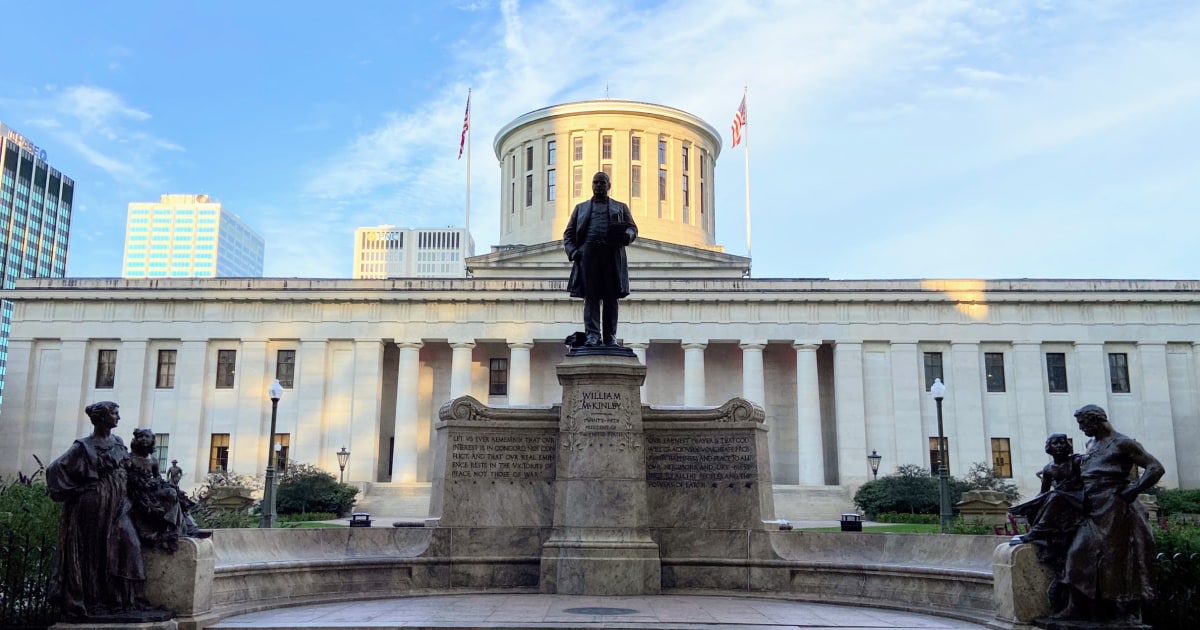
Savewith a NBCUniversal ProfileCreate your free profile or log in to save this articleOct. 30, 2025, 1:15 PM EDT / Updated Oct. 31, 2025, 12:05 PM EDTBy Jane C. TimmOhio Republican and Democratic lawmakers unanimously approved a new congressional map that would give a slight, but not overwhelming, boost to the GOP ahead of next year’s midterm elections.At a meeting Friday morning, members of the state’s bipartisan redistricting commission approved the proposed map, which was released on Thursday as part of an unexpected deal. The map shifted two Democratic-held districts to the right and one to the left while also maintaining 10 districts that favor Republicans and two that are Democratic strongholds. Punchbowl News was first to report details of the deal.Suzan DelBene, the chair of the Democratic Congressional Campaign Committee, said “this is not a fair map for Ohio voters,” but praised Democratic legislators for “negotiating to prevent an even more egregious gerrymander.”“This compromise keeps us on the path to taking back the House Majority and we’ll continue to win across Ohio because voters know it’s House Democrats who are fighting for them,” DelBene said in a statement. The new map came as a surprise to many observers. Democrats largely expected the constitutionally mandated redistricting commission to reach a stalemate, as it did in 2021. If the commission failed to settle on a new map ahead of the 2026 elections, responsibility for setting congressional boundaries would have fallen back to the Republican-controlled Legislature, which could have drawn an aggressively gerrymandered map. If that happened, Democrats had threatened to pursue a statewide referendum that could have resulted in voters blocking the map from going into effect.The map won’t be subject to a referendum, while Democrats avoided the worst-case scenario map. In negotiations, a source familiar with the negotiations said, Republicans showed Democrats a map that had the GOP controlling 13 of the state’s 15 districts. A voter referendum on such a map would have required Democrats to gather nearly 250,000 signatures in just 90 days, a difficult feat under any scenario, let alone during the holidays and Ohio’s winter months. Lawmakers on the redistricting commission faced some protests at Friday’s meeting. “Shame, shame on you all,” said members of the public who attended the meeting to offer comment. “You sold us out!”Ohio is represented in Congress by 10 Republicans and five Democrats. Democratic Reps. Greg Landsman and Marcy Kaptur would face more competitive districts under the new map, while Rep. Emilia Sykes’ district would become slightly more Democratic.After the bipartisan commission approved the map Friday, Kaptur and Sykes said they would run for re-election under the news district lines.”Let the Columbus politicians make their self-serving maps and play musical chairs, I will fight on for the people and ask the voters for their support next year,” Kaptur said in a post on X.Under the current lines, the Cook Political Report with Amy Walter rated Kaptur’s and Sykes’ seats as “toss ups” and Landman’s as “likely Democratic.”The emergence of Ohio’s new map proposal comes amid an unusually aggressive mid-decade redistricting cycle, kicked off by President Donald Trump, who has asked Republican-led states to draw new maps in an effort to shore up the party’s narrow U.S. House majority. Texas, Missouri and North Carolina have all drawn maps boosting Republicans, while California Democrats are asking voters to approve new district lines next week. Virginia Democrats took the first major step this week towards modifying their redistricting commission to allow them to redraw their state’s map next year, while Indiana GOP lawmakers are expected to soon consider a redistricting effort. Other states, including Louisiana, await a Supreme Court ruling they hope could open the door to redrawing their congressional maps next year, too.Jane C. TimmJane C. Timm is a senior reporter for NBC News.
October 22, 2025
Oct. 21, 2025, 5:38 PM EDT / Updated Oct. 21, 2025, 6:12 PM EDTBy Scott Wong and Kyle StewartWASHINGTON — Arizona Attorney General Kris Mayes on Tuesday filed a lawsuit to try to force House Speaker Mike Johnson to swear in Rep.-elect Adelita Grijalva, the Arizona Democrat who won her late father’s seat in a special election nearly one month ago.Johnson, R-La., has said he will seat Grijalva once Senate Democrats agree to reopen the government. But the two parties haven’t been talking for weeks, and there is no indication when the shutdown might end.House Dems march to demand Johnson swear in Grijalva00:56The lawsuit, which Mayes threatened in a letter to Johnson last week, argues that the speaker’s delay is depriving the 813,000 residents living in Arizona’s 7th District of congressional representation. It lists the state of Arizona and Grijalva herself as plaintiffs and the U.S. House, as well as the House clerk and sergeant at arms, as defendants.“Speaker Mike Johnson is actively stripping the people of Arizona of one of their seats in Congress and disenfranchising the voters of Arizona’s seventh Congressional district in the process,” Mayes said in a statement. “By blocking Adelita Grijalva from taking her rightful oath of office, he is subjecting Arizona’s seventh Congressional district to taxation without representation. I will not allow Arizonans to be silenced or treated as second-class citizens in their own democracy.”As he left the Capitol on Tuesday evening, Johnson blasted the Arizona lawsuit as “patently absurd.”Mayes, he said, has “no jurisdiction.”Grijalva and congressional Democrats have been holding news conferences on Capitol Hill, doing TV interviews and staging protests outside Johnson’s office to try to pressure the speaker to relent. But Mayes’ move escalates the standoff and gets the courts involved.House Minority Leader Hakeem Jeffries, D-N.Y., and other Democrats have argued that Johnson is delaying seating Grijalva because she represents the 218th — and final — signature on a discharge petition needed to force a House vote to compel the Justice Department to release all of its files related to the Jeffrey Epstein investigation.Johnson has repeatedly denied that the delay has anything to do with the Epstein files. The speaker has said he is happy to swear in Grijalva as soon as the government, now on the 21st day of the shutdown, reopens.And Johnson accused Mayes, a Democrat who is running for re-election in 2026, of seeking publicity following a public clash he had with Arizona’s two Democratic senators, Ruben Gallego and Mark Kelly, over the Grijalva issue earlier this month.“So, yet another Democrat politician from Arizona is trying to get national publicity. So now it’s the state AG, who’s going to sue me because … Rep.-elect Grijalva is not yet sworn in,” Johnson told reporters Monday.He said he is following what he called the “Pelosi precedent,” noting that then-Speaker Nancy Pelosi, D-Calif., took 25 days to administer the oath of office to then-Rep.-elect Julia Letlow, R-La. Letlow won a 2021 special election to fill the seat of her husband, who died of Covid complications days before he was set to be sworn into office. The House was out on recess following her election, amid the pandemic, and she was sworn in the week that it returned to session.“So I will administer the oath to [Grijalva], I hope, on the first day we come back to legislative session. I’m willing and anxious to do that,” Johnson told reporters in the Capitol.Grijalva handily won her special election on Sept. 23, 28 days ago, and just four days after the House voted to pass its short-term government funding bill and left town.Johnson continued: “In the meantime, instead of doing TikTok videos, she should be serving her constituents. She could be taking their calls. She could be directing them, trying to help them through the crisis that the Democrats have created by shutting down the government.”Grijalva is the daughter of former Rep. Raúl Grijalva, D-Ariz., a progressive power broker and former Natural Resources Committee chairman who died in March after serving more than two decades in the House.”There is so much that cannot be done until I am sworn in,” Grijalva said Tuesday at a news conference with Jeffries. “While we’re getting a lot of attention for not being sworn in, I’d rather get the attention for doing my job.”Once she is sworn in, Grijalva is expected to quickly sign the bipartisan discharge petition — led by Reps. Thomas Massie, R-Ky., and Ro Khanna, D-Calif. — which would allow them to bypass Johnson’s leadership team and force a vote on releasing the Epstein files.For months, the Epstein issue has been a nagging headache for both Johnson and President Donald Trump. Many of the president’s MAGA supporters have called for transparency and the release of all of the documents related to the case. On Tuesday, Johnson pointed out that the House Oversight Committee is investigating the matter and has released more than 43,000 pages of documents from DOJ and the Epstein estate. “The bipartisan House Oversight Committee is already accomplishing what the discharge petition, that gambit, sought — and much more,” Johnson, standing alongside Oversight Chairman James Comer, R-Ky., said Tuesday. In an interview in the Capitol, Khanna said Johnson should just swear Grijalva in and hold the vote on the Epstein files because the issue is not going away.“They gotta swear in Adelita Grijalva. I don’t know why they’re delaying the inevitable. They’re kind of hoping this story dies and they get it out of the front pages, but then it comes roaring back once we get the votes,” Khanna told NBC News. “I wish we could just swear Adelita Grijalva in and have a vote on the release of the Epstein files.”Democrats are expected to win another vacant House seat in the coming weeks. On Nov. 4, voters will choose someone to fill the vacancy left by the unexpected death in March of Rep. Sylvester Turner, D-Texas, who represented a heavily Democratic district.If Democrats prevail in that special election, it would trim the GOP majority in the House to 219-215 and mean Johnson could only lose a single GOP defection on any vote.Scott WongScott Wong is a senior congressional reporter for NBC News. Kyle StewartKyle Stewart is a producer and off-air reporter covering Congress for NBC News, managing coverage of the House.Julie Tsirkin and Gabrielle Khoriaty contributed.
Comments are closed.
Scroll To Top
  • Home
  • Travel
  • Culture
  • Lifestyle
  • Sport
  • Contact Us
  • Politics
© Copyright 2025 - Be That ! . All Rights Reserved