• Lava spills as Hawaii's Kilauea resumes eruptions
  • Protesters smear food on the case of the…
  • National Guard member 'slowly healing' after shooting
  • Dec. 6, 2025, 12:18 PM ESTBy Mirna Alsharif…

Be that!

contact@bethat.ne.com


Be That ! Menu   ≡ ╳
  • Home
  • Travel
  • Culture
  • Lifestyle
  • Sport
  • Contact Us
  • Politics Politics
☰

Be that!

Dec. 3, 2025, 4:42 PM ESTBy Steve KopackPresident Donald Trump on Wednesday said his administration would “reset” fuel efficiency standards for passenger cars in an effort to put a lid on rising auto prices, as the administration battles inflation and an affordability crisis.The previous rules, which sought to lower carbon emissions, “put tremendous upward pressure on car prices,” Trump said in the Oval Office.The president is under political pressure to address affordability concerns after Democrats swept major races last month, fueled by voters’ frustration with rising prices. Overall inflation, as measured by the consumer price index, has risen every month since Trump announced sweeping tariffs on imported goods, including automobiles and car parts, among other items. Food prices have also been rising this year. In early November, the White House announced cuts to dozens of tariffs in a move aimed at cutting food prices.The average new vehicle price in October surged to an all-time high, above $50,000 for the first time ever, according to Kelley Blue Book. However, KBB said that “despite higher prices, retail sales continue to maintain a healthy pace.” “The $20,000-vehicle is now mostly extinct, and many price-conscious buyers are sidelined or cruising in the used-vehicle market,” Cox Automotive analyst Erin Keating said in October.The Department of Transportation says the proposal will “save the American people $109 billion” or $1,000 on the average cost of a new vehicle, but it’s unclear how fast prices could fall. The updated standards still must go through a formal rulemaking process before being finalized, likely in 2026.The proposed change “will also revive the beating heart of American manufacturing and unshackle the nation’s automotive industry,” the department and the National Highway Traffic Safety Administration said.It would also roll back efficiency mandates raised by the Biden administration.”The announcement today is a shift in long-term fuel economy targets for model year 2031 vehicles,” said Mark Schirmer, Cox Automotive’s director of industry insights communications.”Those targets are being lowered, which may change automaker long-term strategy and product development plans and pricing, but will have little impact on prices near term,” he said.The administration also said it would reclassify crossover vehicles and small SUVs as passenger automobiles instead of light trucks, removing what it called a “market distortion that existed for decades.”President Donald Trump alongside lawmakers and automotive executives in the Oval Office.Andrew Caballero-Reyonds / AFP via Getty ImagesTrump was joined at the White House for the announcement by executives from Detroit’s “Big Three” — Stellantis CEO Antonio Filosa, Ford Motor Company CEO Jim Farley and John Urbanic, executive plant director of General Motors’ Orion assembly factory in Michigan.Stellantis is the European parent company of the Chrysler, Dodge, Jeep and Ram car brands.In statements, all three of the companies praised the move. Stellantis said it would “re-align … standards with real world market conditions,” while Ford said “we can make real progress on carbon emissions and energy efficiency while still giving customers choice and affordability.””This is a win for customers and common sense,” Ford’s Farley added.General Motors said it has “long advocated for one national standard that upholds customer choice and provides the auto industry long-term stability.”The Chevy and Cadillac maker added that it remains “committed to offering the best and broadest portfolio of electric and gas-powered vehicles on the market.”Shares of Ford and GM stock closed about 1% higher Wednesday. Stellantis’ stock jumped 4.7%.Steve KopackSteve Kopack is a senior reporter at NBC News covering business and the economy.

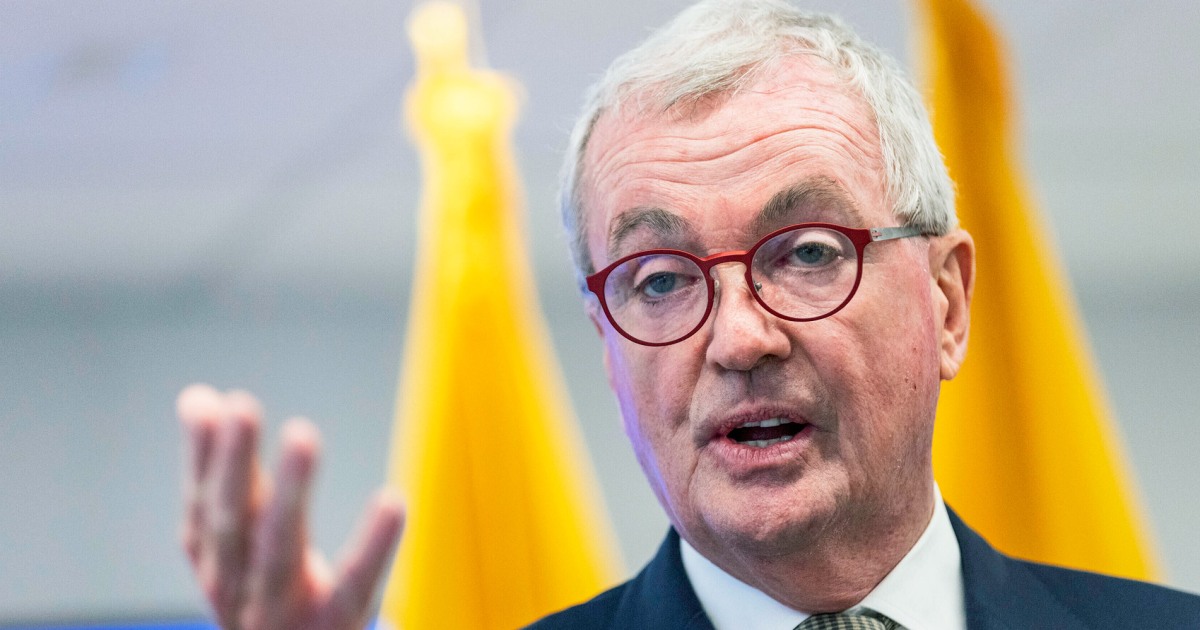
admin - Latest News - December 3, 2025
admin
7 views 14 secs 0 Comments


President Donald Trump said his administration would “reset” fuel efficiency standards for passenger cars in an effort to put a lid rising auto prices.


Source link

TAGS:
PREVIOUS
Dec. 3, 2025, 4:42 PM ESTBy Kayla SteinbergIf you order products from abroad this holiday season, you could end up with an unwanted surprise: a pricey tariff bill.This is the first holiday shopping season since the Trump administration made a major change to customs rules, extending tariffs and customs fees to low-value packages that had long been exempt.Since the new policies went into effect in late August, shoppers have reported being hit with surprise tariff charges on everything from rugs and computers to vitamins — sometimes costing hundreds of dollars.Now, as the busiest shopping season of the year gets underway, the stakes are high for both consumers and retailers. The National Retail Federation estimates that U.S. holiday sales will top $1 trillion for the first time this season, and Adobe Analytics expects shoppers will spend a record $253.4 billion online this holiday season. Shoppers who buy gifts from overseas should be prepared to pay tariffs before they can put their presents under the tree. And those who dispute an unexpected tariff bill should be ready for a potentially monthslong back-and-forth with major shippers — while late fees pile up.The $657 tariff billBonnie Hardy-Compagno thought she’d be paying a standard 15% import duty from Europe when she ordered $431 worth of skincare products in late August that were shipped from Belgium.Instead, when her package arrived via UPS in September, she was told that she owed customs charges and fees that were more than the items were worth.“I was very shocked when it showed up and the delivery driver was like, ‘This is going to be $657 to collect your package,’” said Hardy-Compagno. Hardy-Compagno refused her package of skincare products and reached out to UPS for clarification.The end of the “de minimis” tariff exemption for small packages has inundated shippers like UPS with customs paperwork for shipments that didn’t used to require it. Michael Nagle / Bloomberg via Getty Images fileAccording to forms and emails she received from UPS, the shipping company said the face creams and serums she ordered had triggered a 200% tariff because they contained aluminum that was either from Russia or from an unknown country, as well as a separate 50% steel tariff.“It is chaos trying to get it resolved,” she said. “I’ve been calling at least once a week for two months. I have been emailing.”“They finally sent me a form to fill out about quantities of aluminum in the product, which I have no idea,” she continued. “If you go look at the product to pull up ingredients, it’s just the ingredients that’s in the skincare product.”Last month, UPS sent her another invoice for a $65 late fee. She said the company had also sent the bill to collections.“At this point, I’m like, ‘It would have been cheaper for me to fly to Paris,’” Hardy-Compagno said.Ripple effects around the world For nearly a century, low-value packages have been allowed to enter the United States duty-free, under what’s known as the “de minimis” exemption. Since 2016, that threshold value has been $800.But this summer, President Donald Trump ended the exemption, saying it had been used to bring illegal drugs, including fentanyl, into the United States. Starting Aug. 29, low-value packages shipped to individuals have been subject to the same tariffs and fees as large commercial shipping imports. The change is part of a bigger push by the Trump administration to reshape global trade with a constantly shifting mix of blanket tariff rates on U.S. trade partners and separate tariffs on specific products and materials. The president has said his tariff-based economic policy will boost domestic manufacturing and improve the U.S. economy in the long run. But in the meantime, American businesses and consumers are paying a price.Many U.S. retailers have decided to raise their prices to account for these higher import costs. Some international businesses have stopped shipping to the United States altogether, saying it’s not financially feasible to pay big tariffs in order to ship small items. And several major companies — including Costco, cosmetics giant Revlon and eyeglasses maker EssilorLuxottica — have sued the Trump administration over the tariffs.Chaos at customsThe new requirements for smaller packages have caught consumers in a customs nightmare.Thousands of packages every week are getting stuck in customs limbo at global shipping hubs across the country. UPS, the world’s largest courier, has told some customers that it has been “disposing of” their packages.Packages that do make it through customs clearance and to customers can still arrive with the hefty tariff price tags. And shipping companies typically tack on additional processing fees, too.A UPS worker delivers packages in New York City on Dec. 1.Bess Adler / Bloomberg via Getty ImagesThe factors influencing a shipment’s eventual tariff charges include “where it comes from, what it’s made out of, and what the finished product is classified as,” said John Pickel, vice president of supply chain policy at the National Foreign Trade Council.But these questions are more complicated than they sound.In a statement to NBC News, UPS said, in part: “UPS’s brokers are highly trained and use sophisticated technology to ensure accuracy in calculating the appropriate duty and fees due. If you feel there is an error in the calculation of the duty and taxes assessed to your U.S. import shipment, you can contact the UPS Billing group by using the number listed on your UPS billing invoice or contact the UPS Post Entry Department.”“Our agents are working hard to address every customer’s inquiry as recent tariff policy changes have led to a significant rise in the number of brokerage-related inquiries,” UPS added.How to avoid surprise tariffsRetail experts advise anyone planning to order products from abroad this holiday season to be careful.“If you are ordering overseas, the first thing that I would do is search for that item elsewhere to see if they have a U.S. warehouse, another retailer,” said Trae Bodge, a shopping expert at truetrae.com. “It makes me very nervous to be ordering overseas right now, because it’s kind of all up in the air,” she said. “But if you must have that item and it’s only available overseas, read the fine print, especially at checkout.”Consumers should be on the lookout for labels indicating “delivery duty paid,” or DDP. This typically means shipping costs have been included in the final price of the item. Bodge also recommended searching for any mention on retailers’ websites of tariffs, taxes, shipping fees or other charges.Shoppers can also check to see if the websites list where items are shipping from and reach out to retailers directly for any clarification or additional details.Kayla SteinbergKayla Steinberg is a producer at NBC News covering business and the economy.Vicky Nguyen and Isa Morales contributed.
NEXT
New images reveal Jeffrey Epstein's private island
Related Post
October 27, 2025
Oct. 27, 2025, 2:49 PM EDTBy Bridget BowmanRecent public polling in the New Jersey governor’s race has shown Democratic Rep. Mikie Sherrill leading Republican Jack Ciattarelli by varying degrees. Like many campaigns in the last decade, President Donald Trump and voter perceptions of his performance have loomed over this race.But Sherrill’s lead also appears to be tied to how voters in New Jersey view another politician: Democratic Gov. Phil Murphy. Kornacki: Trump & Ciattarelli’s different paths to GOP gains in New Jersey03:36Polls conducted in recent weeks have not tested Murphy’s job approval rating, but a Fox News survey conducted Oct. 10-14 found 47% of voters had a favorable view of the two-term governor, while 49% had an unfavorable view of him. Sherrill led Ciattarelli in that survey by 5 points, within the poll’s margin of error. In the handful of public polls that did test Murphy’s job approval during the fall campaign, the three surveys that showed Murphy with an approval rating in the high 40s also saw Sherrill build bigger leads. In two surveys putting Murphy’s job approval at 35%, including one that was conducted for Ciattarelli’s campaign, the gubernatorial results showed a tied or near-tied race — the best results Ciattarelli has enjoyed in the whole campaign.The shift depending on Murphy’s approval rating underscores how views of the current two-term administration could be a key factor in the race.Ciattarelli has tied Sherrill to Murphy and cast himself as the candidate representing change in the race, placing blame for the state’s woes on Murphy and Democrats, who control the state Legislature. “Politicians like Mikie Sherrill and Phil Murphy just don’t get it,” Ciattarelli says in one recent TV ad. “They’re making New Jersey unaffordable, especially for the middle class. We need a change.” Sherrill, meanwhile, has also put some distance between herself and Murphy on the issue of the state’s rising electricity costs, while also casting herself as a candidate who will bring change to state government. “Make no mistake, I’ll also fight Trenton to bring down costs for families,” Sherrill said in a recent debate.Five recent publicly released surveys, all of them conducted in September, measured both Murphy’s standing and the governor’s race in New Jersey. A Fox News survey and a poll from the education group Yes Every Kid both found Sherrill up 7 points, with support from 48% of respondents, while a Quinnipiac survey from mid-September found Sherrill up 8 points, at 49%. Sherrill’s lead in the Fox News survey was outside the poll’s 3-point margin of error, while her leads in the other two surveys were just inside those margins of error. Murphy’s approval rating in those three polls: 47% or 48%.The outlier so far among independent surveys has been one from Emerson College Polling/PIX11/The Hill, which showed the race tied, with both Sherrill and Ciattarelli at 43%, within the survey’s margin of error of plus or minus 3.1 points.Beyond the top-line results, a key difference separating the Emerson poll from others was Murphy’s approval rating, which that poll measured at 35%, more than 10 points lower than the other surveys.As polls show different pictures of Murphy’s approval rating, Trump’s approval rating has remained in the low 40s, with each of the September surveys finding Trump’s approval at 41%.Sherrill has tried to capitalize on that in her advertising, linking Trump to Ciattarelli, who has the president’s endorsement. Democrats are betting that voters’ opposition to Trump will drive them to the polls in November and boost Sherrill in the race. Ciattarelli, meanwhile, has largely praised the president while also brushing off Democratic attacks by arguing that Trump does not affect local issues like property taxes. Meanwhile, both candidates were asked in a recent debate to grade Murphy’s administration, and Sherrill gave the two-term governor a B.“There’s things like paying for the pensions, the nine increases in our credit rating that I like,” Sherrill said. “But overall I think there’s ways Trenton could do a lot better, being much more responsive to people. I’m going to have a culture shift in Trenton. I’m going to make sure we have more accountability in government, driving down costs for people,” Sherrill added, also calling for more action to address housing costs and rail infrastructure. Ciattarelli gave Murphy an F, calling Murphy’s tenure “the worst governorship of our lifetime.” “Take a look at what’s happened in New Jersey. We have an affordability crisis because of property taxes, electricity rate, housing and child care. We have a public education crisis because we watered down the public school curriculum. We have a public safety crisis because we don’t let our local police do their jobs. And we have an overdevelopment crisis in our suburban communities because of high-density housing. It’s been a failure across the board,” Ciattarelli said.Wherever Murphy’s approval rating is, his standing appears to be significantly better than former GOP Gov. Chris Christie’s after his two terms in office.A Fox News survey conducted in October 2017 found 21% of New Jersey voters viewed Christie favorably, while 77% viewed him unfavorably. The survey did not test Christie’s job approval. Bridget BowmanBridget Bowman is a national political reporter for NBC News.
November 25, 2025
Likely tornado rips through Houston area
November 25, 2025
The world has a new largest city
September 30, 2025
Nicole Kidman and Keith Urban separate after 19 years
Comments are closed.
Scroll To Top
  • Home
  • Travel
  • Culture
  • Lifestyle
  • Sport
  • Contact Us
  • Politics
© Copyright 2025 - Be That ! . All Rights Reserved