• Crowd goes wild at 'Silent Night' basketball game
  • Lava spills as Hawaii's Kilauea resumes eruptions
  • Protesters smear food on the case of the…
  • National Guard member 'slowly healing' after shooting

Be that!

contact@bethat.ne.com


Be That ! Menu   ≡ ╳
  • Home
  • Travel
  • Culture
  • Lifestyle
  • Sport
  • Contact Us
  • Politics Politics
☰

Be that!

Dec. 4, 2025, 11:00 AM ESTBy Evan BushWhen the Black Death swept through Europe beginning in 1347, the plague wiped out more than half of the continent’s population, upending societies and interrupting wars. New research suggests that a volcanic eruption or multiple eruptions, unknown to Europe’s inhabitants, most likely catalyzed the pandemic’s arrival on the continent’s shores.The theory, described in a study published Thursday in the journal Communications Earth & Environment, suggests the eruptions set off a series of events that enabled the fleas that spread the plague to proliferate in Europe. The eruptions dimmed global temperatures for a few years, causing a sudden climate shift that affected harvests in Europe. With crops failing and fears of starvation rising, some wealthy Italian city-states like Florence and Venice imported grain from elsewhere in the world. And on those ships most likely came plague-infected fleas. The actions of Florence’s leaders prevented mass starvation — tens of thousands of famine refugees migrated there, and the city was able to feed them in addition to its own citizens. But the imports unwittingly ushered in a pandemic.City leaders were proud of their accomplishment in providing enough food for so many people, said Martin Bauch, an author of the new study and a medieval historian at the Leibniz Institute for the History and Culture of Eastern Europe in Germany. “They couldn’t have an idea of what danger was there,” he said. The research offers a historical example of the way that changes in the climate can alter human societies and animal ecosystems in hard-to-predict ways and with incredible downstream consequences. Researchers have debated and chased details of the plague’s origin and spread for decades, but this study is the first to outline in detail the potential role of a volcanic eruption. Previous research has suggested climate shifts could be responsible for introductions of the plague at various points in history, but most studies were vague about it, according to Henry Fell, a postdoctoral researcher at the University of Nottingham and the University of York in England.“This paper, I think, is really good for being quite specific on the mechanism that’s driving it,” said Fell, who was not involved in the study but has studied the Black Death and climate change. “We can see grain trade increasing from these ports, and the cause of it is climate.”Volcanic eruptions can cool the planet by injecting forms of sulfur into the stratosphere, which reduces the amount of sunshine that can reach Earth’s surface.“It literally blocks out some of the sun that leads to cooling,” Fell said.The effect can last several years after significant eruptions. To understand 14th century volcanic activity for the new study, researchers reviewed tree ring records, data from ice cores and written historical observations. All three lines of evidence agreed: A cooling period and a Mediterranean famine from 1345 to 1347 preceded and coincided with the plague’s emergence in Europe. The team studied the chemical composition of ice cores in Greenland and Antarctica, since layers of ice in polar regions can trap chemicals from when snow originally fell, offering a kind of timeline. They found that the year 1345 had the 18th-strongest signal for sulfur in the last 2,000 years. The amount of material injected into the stratosphere that year exceeded the best recent example of that dynamic, the Mount Pinatubo injection of 1991. Meanwhile, tree rings dating to the same period have biological stains called “blue rings” that indicate stress and a likely cold spell. The blue rings appear consecutively, an extreme rarity.Finally, written accounts from the time in present-day China, Japan, Germany, France and Italy report less sunshine and an increase in cloudiness, the study says. The researchers could not pinpoint which particular volcano or volcanoes erupted in 1345. But they did determine the region of the world: “​This must be a tropical eruption,” Bauch said.The reason: Ice cores from both of Earth’s poles had roughly equal measures of volcanic sulfate. Historical records show reports of crop failures and high prices for wheat during that cool period, with severe famine in large parts of Spain, southern France, Italy, Egypt and the eastern Mediterranean, according to the new study. At the time, Italian city-states were wealthy, Bauch said, and had developed storage systems for grain and huge trade networks established over centuries. But as famine deepened, their options dwindled. “They really start to realize in 1347, ‘We have to import from the Black Sea. That’s the last place where they still have enough grain for our needs,’” Bauch said. “Of course, they’re not aware of how the plague gets to them,” he added. “I have records from Venice in 1349, and they’re really satisfied, and they say, ‘Look, in the last famine, the Black Sea grain really saved us, and that worked very well.’” Bauch said he suspects that the plague most likely would have reached Europe eventually but that the events initiated by the volcanic eruptions were likely to have accelerated the process. As much as 60% of the population died in parts of Europe from 1347 to 1353, making it one of the deadliest periods in history. Past research on the plague’s origins has relied on written accounts, archaeological evidence and even genetic clues. In 2022, scientists found DNA evidence of the bacterium that causes the plague in bodies buried in modern-day Kyrgyzstan — far east of Europe. Grave markers indicate that many of those killed were buried in 1338 and 1339 (about a decade before the plague hit Europe) and that they died of “pestilence.” Yersinia pestis bacteria, which cause bubonic plague in animals and humans, are usually transmitted by the bites of infected rat fleas.BSIP / Universal Images Group via Getty ImagesThe same research group also discovered that marmots living today in the Tian Shan mountain range near the burial site carry a closely related strain of the bacterium, which is a clue that the Black Death could have emerged in that location before it spread elsewhere. The new study could explain what happened next, Fell said, adding that he thought the authors made a convincing argument that a volcano was to blame. After the plague first exploded in Europe, it re-emerged for centuries, reshaping human history. “In a European context, it’s so important to our history,” Fell said. “Any study where you’re looking at a long time period across Europe, there’ll be a plague.”Evan BushEvan Bush is a science reporter for NBC News.


admin - Latest News - December 4, 2025
admin
7 views 16 secs 0 Comments


A study suggests that a volcanic eruption around 1345 cooled the climate, leading to crop failures. On the ships that carried grain to fill the gap came plague-carrying fleas.


Source link

TAGS:
PREVIOUS
Dec. 4, 2025, 11:09 AM ESTBy Sahil KapurWASHINGTON — Senate Minority Leader Chuck Schumer, D-N.Y., said Thursday that Democrats will force a vote next week on a bill to extend expiring Affordable Care Act tax credits and prevent health insurance premiums from skyrocketing for millions of Americans.Schumer said it will be a “clean” three-year extension of the enhanced ACA funds that first passed in 2021, designed to cap premiums for an average marketplace plan to 8.5% of income, and he said “every single Democrat will support it.”Schumer’s legislation is all but guaranteed to fail, as many GOP senators want the ACA funds to expire, arguing that the Covid-era subsidies were meant to be temporary and are no longer needed.Hopes fade in Congress for a health care deal before premiums are expected to soar03:08“Republicans have one week to decide where they stand: Vote for this bill and bring health care costs down, or block this bill and send premiums skyrocketing,” Schumer said on the floor. “That’s what’s at stake when we vote next week. It’s going to be one of the most important votes we take.”The vote is the product of a promise that Senate Majority Leader John Thune, R-S.D., made to Democrats in discussions to end the record-long government shutdown last month. Thune reiterated Tuesday that the Senate will vote next week on any bill Democrats propose — but it will require 60 votes to pass, meaning at least 13 Republicans would need to support it.Some Republicans say they’re open to extending the ACA funding with modifications and stricter limits, but the two sides have failed to reach an agreement. And Republican demands for tougher abortion restrictions tied to any ACA funds have been dismissed as a nonstarter by Democrats.Still, the issue has deep political ramifications, with costs expected to soar for millions of Americans on the ACA marketplaces. Democrats see it as a potent weapon to use in their campaigns for the 2026 elections if no solution is reached.Schumer previewed his party’s message on the floor, calling his bill the “only path” to preventing insurance costs from rising significantly next month.“People back home will be watching what Republicans do, and the American people are running out of time before January 1,” he said. “Make no mistake, our bill is the last chance Republicans will get before Jan. 1 to prevent premiums from skyrocketing.”Thune did not mention health care during his floor speech Thursday, but told reporters two days earlier, after a GOP meeting, that it is still a work in progress. Republicans have proposed a variety of ideas to extend, redirect or end the ACA funds, but lack consensus internally about the way forward.“Conversations continue,” Thune told reporters Tuesday. “I don’t think, at this point, we have a clear path forward.”Sahil KapurSahil Kapur is a senior national political reporter for NBC News.Brennan Leach and Gabrielle Khoriaty contributed.
NEXT
Government accountability office opens investigation into FHFA chief Bill Pulte
Related Post
November 6, 2025
Trump announces deal with Novo Nordisk and Eli Lilly
December 6, 2025
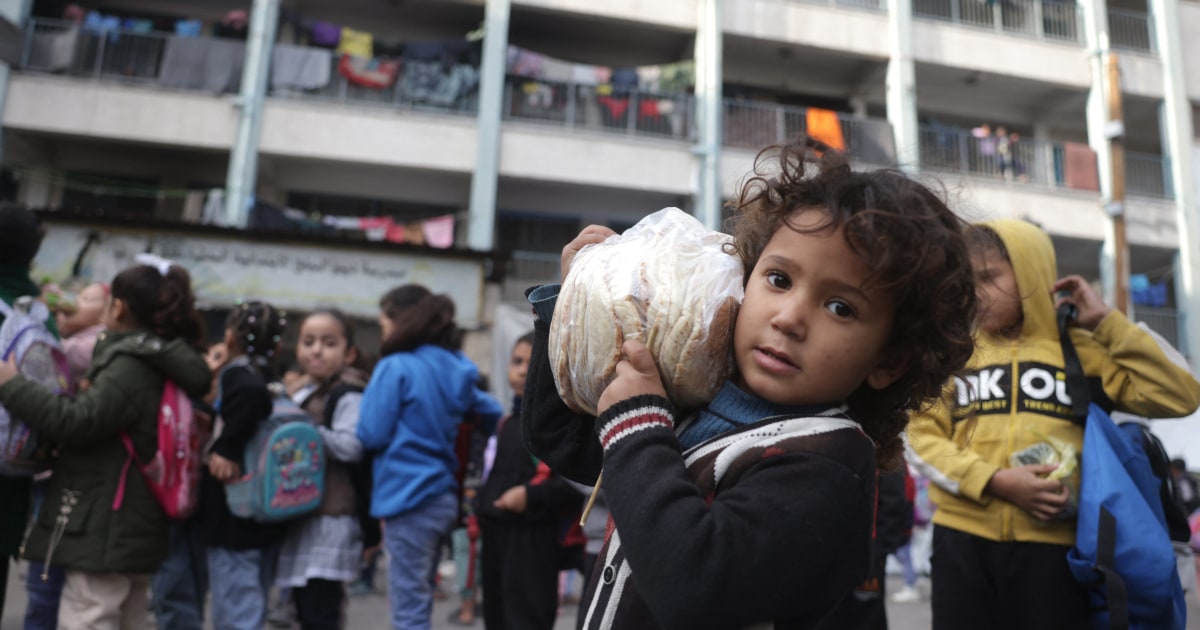
Dec. 6, 2025, 10:35 AM ESTBy Freddie ClaytonThe body of just one Israeli hostage remains in Gaza, nearing the fulfillment of a key plank of President Donald Trump’s 20-point ceasefire plan for the enclave, but major hurdles exist to a planned second phase.Doubts remain over whether negotiators can overcome those outstanding obstacles, even as they face renewed pressure to advance into phase two — a step intended to prevent any return to the high levels of violence that preceded the ceasefire.Trump noted last week that phase two would commence “pretty soon,” without giving a more specific timetable. Axios reported on Thursday that the White House is hoping to announce the second phase before Christmas, and unveil the new governance structure for the enclave, citing two U.S. officials and a Western source directly involved in the process.Phase two of Trump’s plan calls for the establishment of a new governing mechanism in Gaza, the disarmament of Hamas, and the formation of an international stabilization force, known as the ISF, that would take over responsibility from the Israel Defense Forces currently occupying parts of the Gaza Strip. Qatari Prime Minister Sheikh Mohammed bin Abdulrahman al-Thani, whose country has played a key role in a series of international negotiations, said Saturday that discussions were at a “critical” moment. Mediators were working jointly to push the next phase of the ceasefire forward, he said during a panel at the Doha Forum conference in Qatar.”A ceasefire cannot be completed unless there is a full withdrawal of Israeli forces, (until) there is stability back in Gaza, people can go in and out, which is not the case today,” he said.Egypt’s Foreign Minister Badr Abdelatty told the conference that the International Stabilization Force was needed “as soon as possible on the ground,” while Norway’s Foreign Minister Espen Barth Eide said measures must be put in place this month, warning the current ceasefire “cannot hold for many more weeks in its current phase.”As the international community hopes for progress, the ceasefire’s trajectory so far underscores both its fragile gains and its persistent vulnerabilities.A Palestinian girl walk to a classroom, as displaced adults sit near hanging laundry watching, at the UNRWA Deir al-Balah Joint School, west of Deir al-Balah, in the central Gaza Strip on Dec. 6.Bashar Taleb / AFP – Getty ImagesSince the ceasefire came into effect on 10 October, 20 living hostages and the remains of 27 others have been returned to Israel. The body of the final hostage, Ran Gvili, a 24-year-old police officer killed during Hamas’ Oct. 7, 2023 attack, has yet to be recovered despite a weeks-long search effort. Israeli authorities have steadily released Palestinian prisoners and detainees — both living and dead — as part of the exchange. Israel has repeatedly said all hostages must be returned before a phase two deal, with Prime Minister Benjamin Netanyahu this week stressing the need for an “intensive and immediate effort” to complete the commitment.Israel agreed to halt its assault on the Gaza Strip during the ceasefire, but flare-ups and violence have persisted, with Israeli strikes killing more than 350 people since the ceasefire began, taking the death toll in the enclave beyond 70,000, according to Palestinian Health Ministry figures.The first phase also included a commitment to expand the flow of aid into Gaza, but U.N. experts say the number of trucks permitted to enter has never reached the agreed target of 600 per day.Israel said Gaza’s Rafah crossing in the south will soon reopen to allow Palestinians to enter Egypt, but it will not reopen the crossing in both directions — another commitment under the deal — until Gvili’s remains are returned.And as phase one stutters along, analysts warn that phase two presents a host of complex challenges, from security arrangements to competing governance demands, that could slow or even stall the process.Negotiators are “trying to square circles that simply cannot be squared,” said Dr H.A. Hellyer, a senior associate fellow at the Royal United Services Institute, a defense and security think tank in London.He wondered whether an international stabilization force could really dismantle Hamas, a target Israel was unable to achieve through its two years of a “brutal” military operation. While Trump’s peace plan stipulates that Hamas will disarm, the group has reasserted control of Gaza during the first phase of the ceasefire and shown no immediate signs of disarmament.Disarming Hamas through military intervention is “not exactly something that any other power is going to be interested in,” he told NBC News. And when it comes to Gaza’s governance, Hellyer added, “Trump can create his board of peace,” referring to the group that would sit atop Gaza’s governing structure under Trump’s plan, but “you can’t simply enforce this stuff on the ground without cooperation from the population, unless you just want to turn it into a new type of occupation.”Israeli ambassador says he’s ‘very hopeful but concerned’ about ceasefire holding06:32Turkey’s Foreign Minister Hakan Fidan said on Saturday that negotiations over the Gaza stabilization force remain ongoing, including its mandate and rules of engagement, and that its main objective should be to separate Israelis and Palestinians along the border.”Thousands of details, questions are in place,” Fidan said. “I think once we deploy ISF, the rest will come.”But Fawaz Gerges, professor of international relations at the London School of Economics, echoed Hellyer’s concerns, noting that so far, “no state has agreed to support its forces into Gaza and potentially and ultimately get into confrontation with Hamas.”Gerges also feared that “we will never see the actual implementation of what phase two is supposed to be,” adding it was “an illusion” to call what’s happening in Gaza a ceasefire, “because the Palestinians, particularly civilians, continue to be killed on a daily basis.””Even though the humanitarian situation of the Palestinians has improved a bit, it’s still catastrophic,” he said.Freddie ClaytonFreddie Clayton is a freelance journalist based in London. Reuters and The Associated Press contributed.
November 4, 2025
King Charles Knights David Beckham for Career, Service to Charity
October 29, 2025
Trump says U.S. is prepared to supply aid to Jamaica
Comments are closed.
Scroll To Top
  • Home
  • Travel
  • Culture
  • Lifestyle
  • Sport
  • Contact Us
  • Politics
© Copyright 2025 - Be That ! . All Rights Reserved