• 20 million under winter weather alerts as heavy…
  • Hegseth vows more U.S. boat strikes as Pentagon…
  • Dec. 6, 2025, 6:47 PM ESTBy Courtney Kube,…
  • Dec. 6, 2025, 6:00 AM ESTBy Mithil AggarwalHONG…

Be that!

contact@bethat.ne.com


Be That ! Menu   ≡ ╳
  • Home
  • Travel
  • Culture
  • Lifestyle
  • Sport
  • Contact Us
  • Politics Politics
☰

Be that!

Dec. 4, 2025, 2:47 PM ESTBy Aria Bendix and Erika EdwardsIn a chaotic meeting Thursday rife with misinformation, the CDC’s vaccine advisory panel — whose members Health Secretary Robert F. Kennedy Jr. fired in June and replaced with a group that has largely expressed skepticism of vaccines — once again delayed an expected vote on hepatitis B vaccines.Because of disagreements and confusion over the voting language, the Centers for Disease Control and Prevention’s panel, formally known as the Advisory Committee on Immunization Practices, decided to push the vote to Friday morning instead of holding it Thursday afternoon as scheduled. The committee had previously tabled a September vote on the hepatitis B vaccine schedule.The meeting was, in numerous ways, a radical departure from past practices. Typically, the ACIP evaluates new vaccines or new indications for them, not shots that have been administered in the same way for decades.The CDC has for 34 years recommended that all newborns get a first dose of the hepatitis B vaccine within 24 hours of birth. But the panel is considering whether to roll back that guidance and instead suggest that women who test negative for hepatitis B decide in consultation with a health care provider whether their baby should get the dose at birth. If adopted, that recommendation would go against widespread consensus among public health experts, who before the meeting issued loud pleas not to change the hepatitis B vaccination schedule. On Thursday, the advisory panel convened in the CDC’s broadcast studio, under bright lights and in front of large television cameras, instead of its typical conference room — giving the appearance of a televised show rather than a scientific discussion. When asked about the new venue, Andrew Nixon, a spokesperson for the Department of Health and Human Services, said it was meant to “accommodate increased public interest in the committee.” The unruly proceedings featured a barrage of misleading claims and cherry-picked data.Several presenters and panel members claimed there was limited evidence of the hepatitis B vaccine’s safety or efficacy, ignoring decades of evidence to the contrary. At past meetings, the CDC’s medical experts have presented data on the risks of a given disease and the safety and efficacy of vaccines that target it. But the presentations Thursday were instead given by two anti-vaccine activists and a climate scientist who has written for an anti-vaccine publication.The meeting was the most blatant example to date of how far the panel has strayed from its original mission to consider who should get vaccines — and when — based on a complete scientific analysis of the risks and benefits.In a presentation on safety, anti-vaccine activist Mark Blaxill — who was recently hired at the CDC — suggested that symptoms identified in babies who got the hepatitis B vaccine, such as fatigue, weakness, diarrhea or irritability were “possibly connected” to swelling of the brain, or encephalitis.Dr. Cody Meissner, the only ACIP member who has previously served on the committee, pushed back: “That is absolutely not encephalitis,” he said. “That’s not a statement that a physician would make. They are not related to encephalitis, and you can’t say that.”By early afternoon, multiple members of the committee expressed confusion over what they were voting on and pointed to issues with the voting language.“Perhaps this was written by the department of redundancy department,” quipped ACIP member Dr. Joseph Hibbeln, a psychiatrist and neuroscientist.The panel’s chair, Dr. Kirk Milhoan, was not present for the decision to postpone the hepatitis B vote. Vice chair Dr. Robert Malone said Milhoan was “about to jump on a plane to go to Asia and would not be available, I believe, for [the discussion] tomorrow.”Committee member Dr. Robert Malone at Thursday’s meeting.Megan Varner / Bloomberg via Getty ImagesDr. Jason Goldman, president of the American College of Physicians, commented during the meeting that the proceedings amounted to “political theater.”“You are wasting taxpayer dollars by not having scientific, rigorous discussion on issues that truly matter,” Goldman said. “The best thing you can do is adjourn the meeting and discuss vaccine issues that actually need to be taken up.”Sen. Bill Cassidy, R-La., said on X before the meeting began that the advisory panel is “totally discredited” and “not protecting children.” Cassidy, a liver doctor who treated patients with hepatitis B, chairs the Senate’s health committee and cast a key vote in favor of confirming Kennedy as health secretary.Hepatitis B is an incurable infection that can lead to liver disease, cancer and death. The virus can be transmitted from mother to child during delivery, and not all pregnant women get tested for it. So public health experts say that delaying the shots could lead to more infections.The prevailing medical consensus is that hepatitis B vaccines are overwhelmingly safe, based on decades of real-world data. A CDC analysis of children born from 1994 to 2023 estimated that hepatitis B vaccination prevented more than 6 million infections and nearly 1 million hospitalizations. In addition to its vote on hepatitis B vaccines Friday, the CDC advisory panel is also expected to discuss the entire childhood immunization schedule, as well as the presence of aluminum salts found in many childhood vaccines, which help boost the immune response and reduce the number of required doses.Both are hot-button topics among anti-vaccine activists, who often argue that children receive too many vaccines and that aluminum salts in them increases the risk of autoimmune conditions or neurodevelopmental disorders. Neither claim is supported by scientific evidence.Aaron Siri, an anti-vaccine lawyer who has represented Kennedy, is expected to give a presentation Friday. Siri has advocated for the Food and Drug Administration to revoke its approval of the polio vaccine. It was his presence on the ACIP agenda that provoked Cassidy’s ire.In response to Cassidy’s post on X, which singled Siri out, Siri fired back in his own post, challenging Cassidy to a long-form debate.Aria Bendix reported from New York City, and Erika Edwards reported from CDC Headquarters in Atlanta.Aria BendixAria Bendix is the breaking health reporter for NBC News Digital.Erika EdwardsErika Edwards is a health and medical news writer and reporter for NBC News and “TODAY.”

admin - Latest News - December 4, 2025
admin
23 views 13 secs 0 Comments


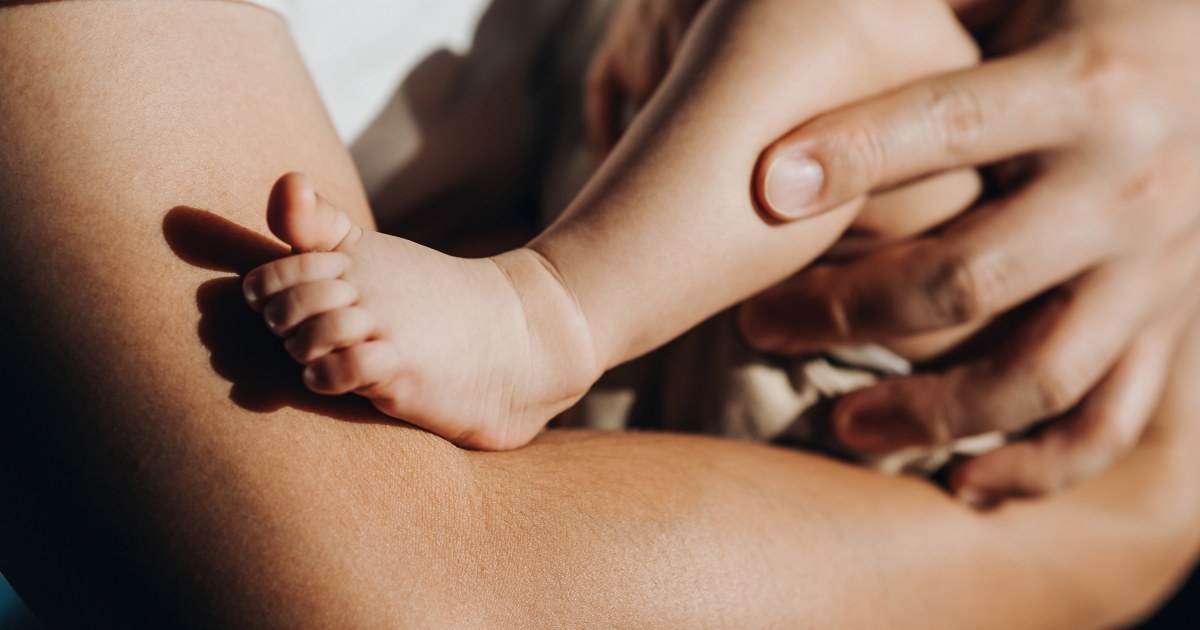
The CDC’s vaccine advisory panel once again delayed an expected vote on hepatitis B vaccines, after a chaotic meeting rife with misinformation.


Source link

TAGS:
PREVIOUS
Who could the United States face in the 2026 World Cup?
NEXT
Dec. 4, 2025, 12:58 PM EST / Updated Dec. 4, 2025, 1:32 PM ESTBy Jonathan Allen and Peter AlexanderPresident Donald Trump will travel to Pennsylvania on Tuesday to tout his economic agenda as polls consistently show Americans are concerned about their financial outlooks.In an October survey by NBC News, nearly two-thirds of respondents said they believed Trump was failing to fulfill his promises to bring down costs and supercharge the economy.White House officials insist that the president’s policies have bolstered the economy and that he is trying to undo damage done by his predecessor, Democrat Joe Biden. But the trip to Pennsylvania, which a White House official said would be in the northeast part of the state, serves as a subtle acknowledgment that Trump has not sold that case to the American public as effectively as he would like.“It’s more of a narrative thing than it is a substantive thing. With the trip coming up here, it’s more to reiterate or underscore, ‘Guys, we’ve been working on this since Day 1,’” said the White House official, who spoke on the condition of anonymity to provide a candid assessment of the president’s strategy. “That’s not changing anytime soon.”Republicans in Congress are increasingly expressing fears that the GOP’s tenuous grip on the House could easily slip away in next year’s midterm elections if the squeeze many Americans are feeling from inflation, interest rates and a tightening job market is not rectified.“Dozens of members and senators have been voicing concerns for several months to anyone that will listen,” said one Republican strategist who is working on midterm campaigns. The strategist spoke on the condition of anonymity to avoid angering the White House.The administration’s message on the economy has been inconsistent, with White House aides often highlighting policies they say are helping the economy and the president sometimes calling affordability a “con job” or a “hoax.” The White House official said that when Trump questions the validity of an affordability crisis, he means that Democrats are blaming him for problems that are “entirely of their own making.”On Wednesday, Trump said he would roll back fuel efficiency standards in a push to bring down prices for cars. His aides also point to policies such as “baby bonds” and efforts to cut prescription drug prices as examples of his commitment to helping Americans make ends meet.Still, the decision to venture into a politically competitive part of the country to talk about the economy shows a new sensitivity to voter perceptions about the current state of the economy and the future. Democrats who won gubernatorial races in Virginia and New Jersey last month — and a Democratic candidate who lost a House special election by a narrower-than-expected margin — homed in on affordability as the key issue in their races. And the out-of-power party shows no sign of letting up on a drumbeat of criticism that Trump is failing to meet the economic moment.With subsidies for the Affordable Care Act set to expire at the end of the year, the Democratic Congressional Campaign Committee — the House Democrats’ political arm — is hitting vulnerable members of the GOP for potentially adding to the woes of millions of Americans.“The clock is ticking for Congress to take action on fixing the Republican health care crisis, but the so-called moderates are refusing to act,” DCCC spokesperson Justin Chermol said in a statement Thursday. “These phonies will be held accountable for their cruelty next year.”Jonathan AllenJonathan Allen is a senior national politics reporter for NBC News. Peter AlexanderPeter Alexander is chief White House correspondent for NBC News.
Related Post
October 15, 2025
A 4,270-year-old human skull has been found in Indiana
November 20, 2025
Savewith a NBCUniversal ProfileCreate your free profile or log in to save this articleNov. 20, 2025, 5:00 AM ESTBy Mackenzie Mays, Bloomberg Law and Jon SchuppeThis article was published in partnership with Bloomberg Law.Dozens of pregnant women who are jailed, often for petty crimes, are miscarrying or giving birth in excruciating pain into cell toilets and on filthy jail floors. Their babies are suffering infections and long-lasting health issues. Some die. Bloomberg Law and NBC News analyzed federal lawsuits and found at least 54 pregnant women or their families alleged severe mistreatment or medical neglect in county jails from 2017 to 2024. The catastrophes they describe signal a much larger problem, since filing a federal lawsuit is difficult, experts said.Most of the women in these cases were arrested on nonviolent charges that included probation violations, theft and drug possession. They were housed in jails, largely intended for short-term detention as criminal cases unfold, not prisons, which are for punishment after convictions. Here is a look at their cases: #embed-20250630-prison-births iframe {width: 1px;min-width: 100%}There’s no way to be certain whether the pregnancy complications the women experienced occurred because of their time behind bars. About 10% to 20% of known pregnancies end in miscarriage. Stillbirths occur in about 1 out of 175 births. But unsanitary conditions and limited access to prenatal care, medical providers and critical medication are factors that can affect a healthy birth or contribute to preterm labor.Read more here. Methodology: The 54 cases in this article are drawn from more than 200,000 civil rights and prisoner-related complaints filed in federal district court from Jan. 1, 2017, to Dec. 31, 2024. Reporters identified relevant cases by searching nine civil nature of suit codes declared by the plaintiffs, as well as keyword searching the text of complaints to identify terms such as “baby,” “mother” and “jail.” Pro se cases, in which people choose to represent themselves rather than hire attorneys, were largely excluded. The team also used Anthropic’s Claude Sonnet 3.5 to summarize complaints and OpenAI’s GPT-4o to answer questions including “Does this case involve harm to a pregnant person?” Reporters reviewed each of the potential cases and included them if they met the following criteria: The pregnant woman was housed in a facility that primarily incarcerates pretrial detainees and there were allegations of harm to the woman or her pregnancy while she was under the care of that facility.Mackenzie Mays, Bloomberg LawMackenzie Mays is an investigative reporter at Bloomberg Law. Jon SchuppeJon Schuppe is an enterprise reporter for NBC News, based in New York. Taylor Nichols, Bloomberg Law, Holly Barker, Bloomberg Law, Diana Dombrowski, Bloomberg Law, Andrew Wallender, Bloomberg Law, K. Sophie Will, Bloomberg Law, Madelyn Lang, Toby Lyles and Kathy Park contributed.
September 22, 2025
Sept. 22, 2025, 11:20 AM EDTBy Edwin Flores, Morgan Radford and Aaron FrancoYou’ve heard of pickleball, the wildly popular sport that’s gone mainstream. But now there’s padel — another racket sport that’s surging in popularity and one that has strong Latino roots.“It’s a sport that always keeps you on your toes,” said Roy Tabet, a professional padel player and a coach at Reserve Padel, one of the biggest luxury padel brands in the U.S., with clubs in Miami and New York. Tabet said he had played tennis his whole life but started finding it repetitive.“I started playing padel and I immediately felt the passion. The hype for the game was real,” he said in an interview with the “TODAY” show’s Morgan Radford.Morgan Radford and Santiago Gomez at Padel Haus in the Dumbo neighborhood of Brooklyn, N.Y.NBC NewsPadel got its start in Acapulco, Mexico, in 1969 when Enrique Corcuera, a Mexican businessman, was trying to build a makeshift tennis court in his backyard. He didn’t have enough space and chose to make a smaller version — the very first padel court — with a distinguishing feature: It was surrounded by an almost 10-foot wall.The sport would eventually grow and spread internationally. It’s now described as the fastest-growing sport worldwide. The International Padel Federation says padel is played in more than 140 countries around the world with about 30 million amateur players.Currently in the U.S., there are over 100,000 amateur players, according to PadelUSA, an online marketplace for padel equipment, but the number of padel courts has been increasing.The sport’s growing popularity has even captured the attention of athletes and celebrities like Eva Longoria, Derek Jeter, Jimmy Butler and Adam Levine.“It’s like pickleball but kind of a little cooler,” Levine told Jimmy Fallon in April on “The Tonight Show.” “It’s super fun,” the singer added, explaining he was first introduced to the sport by Michael Bublé, his fellow coach on “The Voice,” when they were vacationing together in Mexico.Padel differs from other racket sports in that the court is about one-third the size of a tennis court and is typically surrounded by a glass or mesh wall. The ball can be hit off the walls and even from outside the court, as players can exit the court through a door to return the ball. Players must have a teammate, as the sport can only be played in doubles.A big draw, fans say, is the community it fosters as well as the game’s fast pace.“What got me hooked is the community. I feel like I met a lot of my best friends here, so coming to see them specifically turned into my love for playing padel,” Rachel Kuan, who’s now a customer experiences employee at Reserve Padel, told “TODAY.” Santiago Gomez, who fell in love with the game while growing up in Acapulco, founded Padel Haus, a sprawling padel social and cultural hub located in New York City — and among the first dedicated padel courts in the U.S. Padel Haus has since opened more courts across the New York City area as well as in Atlanta, Nashville and Denver.“A lot of Latinos were first — they were the first ones to come because they play the sport at home,” Gomez said.“Americans didn’t know about the sport when we first opened in 2022,” he said. “And then after that, a lot of tennis players, former tennis players, former squash players — Americans — came and tried it for the first time and they fully converted to padel.”Gomez estimates that about 70% of Padel Haus’ members are from the U.S. while the remaining 30% hail from other countries. The growth has increased so significantly that there’s now a waitlist for people looking to sign up.Fast pace ‘keeps you hooked’In addition to the social aspect of the game, Gomez said it’s addictive because of how fast-paced it can get compared to other racket sports.“[In tennis], a ball passes you, your mind is wired to think that the point is over. But here, given the wall’s in the back, you can still save the point. So you feel like a hero when you’re catching a ball that you couldn’t catch in tennis,” Gomez said.“You’re still in the game, and that gives you [a] big dopamine rush and that’s what keeps you hooked.”Mexican tennis player Yola Ramirez competing in the women’s singles tournament at the Wimbledon Tennis Championships in London, on July 1,1959.Evening Standard / Hulton Archive/Getty Images fileThe International Padel Federation is working on getting the sport included in the 2032 Olympics. But for some like Marnie Perez-Ochoa, whose grandmother Yola Ramirez was a former professional tennis player from Mexico and grandfather built Padel courts for professional tournaments in Acapulco, the game has also become a point of cultural pride.“The power of sport is so prevalent — it’s just now getting started in the States. You see it in Mexico. It already boomed in Europe — Spain in particular. So I’m really excited to see where it’s going to go in the States. And I think it’s really beautiful that it started in Mexico,” Perez-Ochoa said.Edwin FloresEdwin Flores was a former reporter and video producer based in Anaheim, California. Morgan RadfordAaron Franco
October 23, 2025
'The fraud is mind-boggling': Patel details arrests in gambling-related investigation
Comments are closed.
Scroll To Top
  • Home
  • Travel
  • Culture
  • Lifestyle
  • Sport
  • Contact Us
  • Politics
© Copyright 2025 - Be That ! . All Rights Reserved