• Protesters smear dessert on the Crown Jewel's case
  • Dec. 6, 2025, 11:26 AM ESTBy Alexandra MarquezThe…
  • Supreme Court to hear birthright citizenship case
  • Dec. 6, 2025, 10:35 AM ESTBy Freddie ClaytonThe…

Be that!

contact@bethat.ne.com


Be That ! Menu   ≡ ╳
  • Home
  • Travel
  • Culture
  • Lifestyle
  • Sport
  • Contact Us
  • Politics Politics
☰

Be that!

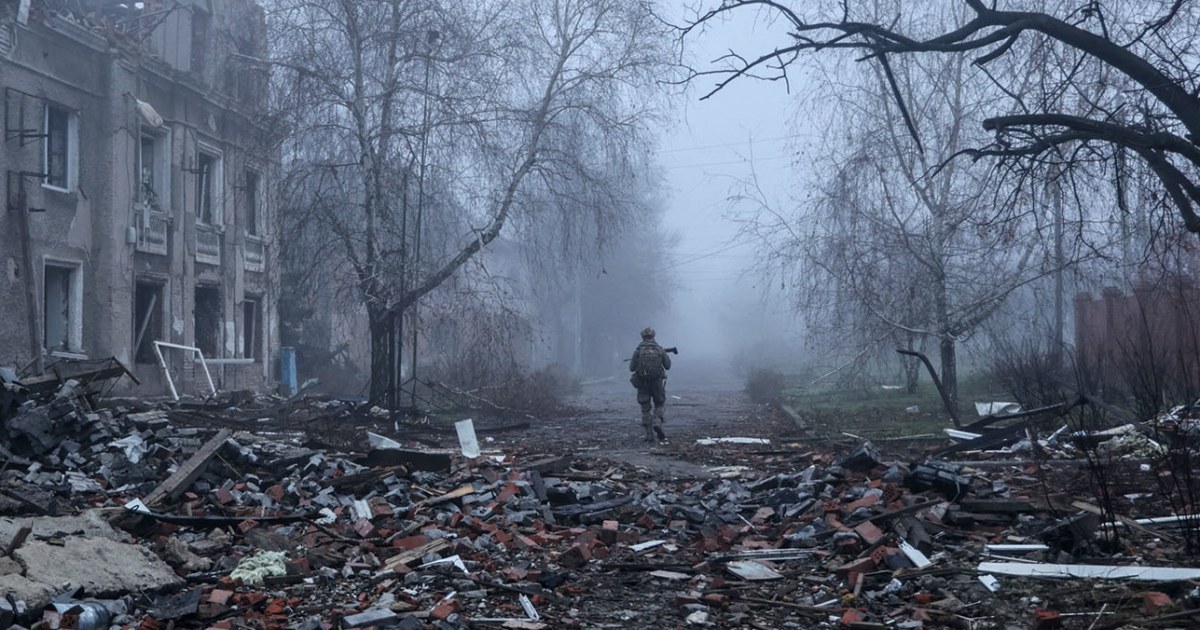
Dec. 6, 2025, 4:45 AM ESTBy Alexander SmithLONDON — Europe faces “crunch time” on the war in Ukraine, a former European president told NBC News, as the continent battles internal division, Russian threats and open hostility from the United States. Leaders on the continent are feeling “genuine fear and distrust regarding the United States,” Toomas Hendrik Ilves, who led Estonia for a decade until 2016, told NBC News in an interview Thursday. But he also warned that Europe’s internal division “ultimately shows the weakness” of the bloc, and he feared what might happen “unless we start getting our act together.”His comments came hours before European powers held urgent negotiations Friday on how to keep Ukraine’s war effort alive and before President Donald Trump published his National Security Strategy that spelled out in black and white Washington’s dissatisfaction toward many of its partners across the pond.Trump had already left Europe out of this week’s negotiations between his envoy Steve Witkoff, son-in-law Jared Kushner and Russian President Vladimir Putin. Finding itself sidelined, the European Union is trying to formulate its own proposal: using frozen Russian assets to fund Ukraine’s war effort. Even that, however, is facing opposition from Belgium, fearing Russian retaliation.Russia’s President Vladimir Putin meets with U.S. special envoy Steve Witkoff and Jared Kushner at the Kremlin on Tuesday.Kristina Kormilitsyna / Pool / AFP – Getty ImagesPutin on Thursday reiterated his goal to take eastern Ukraine “by force” unless his unwavering demands are met. He spoke after his predecessor, the hawkish Dmitry Medvedev, said using Russian money to aid Ukraine would be tantamount to a “casus belli” — or an act justifying war — a common Kremlin refrain of his during the 45-month conflict.“It’s crunch time, I think, for Ukraine and for Europe,” said Ilves, who served two stints as foreign minister before taking Estonia’s top job.For Europe, this is about more than just Ukraine; they worry any peace that favors Putin will embolden him to attack and meddle elsewhere on the continent, which has seen an uptick in drone incursions and cyberattacks over the past year. His war machine is making slow progress on the battlefield but suffering heavy casualties. Kyiv, meanwhile, is running low on money and resources, while suffering a manpower shortage and facing allegations of governmental corruption.

admin - Latest News - December 6, 2025
admin
3 views 14 secs 0 Comments


Europe faces “crunch time” on the war in Ukraine, a former European president said, as it battles internal division, Russian threats and U.S. hostility.


Source link

TAGS:
PREVIOUS
Dec. 6, 2025, 5:00 AM ESTBy Melanie Zanona, Sahil Kapur and Jonathan AllenWASHINGTON — Congressional Republicans are starting to publicly and privately sound the alarm about their party’s disjointed strategy to address Americans’ affordability concerns, with some growing increasingly frustrated with President Donald Trump’s sometimes cavalier attitude toward the subject.While Republicans say the high cost of living is a problem they inherited from President Joe Biden, many GOP lawmakers still think their party needs to sharpen its own message and platform ahead of the midterms — or else it could cost them their tenuous majorities in Congress.“If we don’t do that, we would be morons, because the economy is very much on people’s minds,” Rep. Tony Gonzales, a Texas Republican, told NBC News. Democrats “failed to really hammer the economy, and it cost them the election,” he added. “If we as Republicans fail to do the same, it wouldn’t surprise me if we had a similar turnout.”Nearly two dozen Republican senators, House members, strategists and congressional aides shared their concerns about their party’s handling of affordability in interviews with NBC News. Another six acknowledged the issue but said the party will settle on the right strategy to address it.Their comments come after Democrats have secured wins in many of this year’s elections, with voters citing economic concerns, and as Trump has dismissed the issue as a Democratic “hoax,” rhetoric that has privately frustrated some Republicans.Voters in key swing states raise concerns over high prices and affordability12:31Even some of the most MAGA Republicans are calling for a pivot. Sen. Josh Hawley, R-Mo., said it’s not enough to fix the message: He said Republicans can only improve their standing by delivering real results to lower costs and grow wages.“People aren’t dumb,” Hawley said. “They know when they go to the grocery store what it costs and what it doesn’t. They know what their rent costs. They know what their prescription drugs cost. And all of that stuff is too high. And they can’t afford it. And they know that. So we’ve got to deliver.”Some Republicans have voiced their concerns to GOP leaders in private conversations, phone calls and meetings, according to two Republican lawmakers with direct knowledge of the discussions. One of those lawmakers said they also delivered a similar message to White House aides.And at least one House Republican — Rep. Jeff Van Drew of New Jersey — said he directly raised the issue with Trump during a call last week, though they were primarily focused on health care costs, which are set to skyrocket if Congress doesn’t act before the end of this year.“Dozens of members and senators have been voicing concerns for several months to anyone that will listen,” said a Republican strategist who works with congressional candidates. “Senior White House aides have been a part of many of those discussions. Whether those aides have ever relayed the level of consternation to the president, that’s the unknown.”Georgia Rep. Marjorie Taylor Greene, who was one of Trump’s top allies in Congress until recently, has been among the vocal Republicans complaining that Trump has spent too much time on foreign policy and not enough on domestic issues like the cost of living. Her frustrations led to a public falling-out with the president, which prompted her to announce she’ll resign next month.The public and private warnings come as Republicans have grown increasingly nervous about Trump’s standing and the broader political environment. Trump’s 36% approval rating in the latest Gallup poll, the lowest mark in his second term, alarmed some in the GOP.“I do think there’s challenges in a midterm year with our party in power,” Rep. Don Bacon, R-Neb., who represents a swing district and is retiring after this term, said in an interview. “It’s always hard. And then, you know, the president’s poll numbers today were 36% in Gallup, and I don’t think our side should ignore that.”The Gallup poll found Trump’s approval declining significantly among Republicans and independents. Trump’s handling of the economy — long a strength for him — was at just 36% approval, while his handling of health care and the federal budget were at 30% and 31%, respectively. “I think there’s red flags, and our party should take that threat serious,” Bacon said.The results of a special election in Tennessee this week, where the Republican candidate prevailed by 9 points in a district Trump carried by 22 points just last year, have also fueled the GOP’s anxiety. Multiple voters who spoke with NBC News cited the cost of living as a top concern that drove them to the polls in that race.“It’s certainly a wake-up call that the Democrats are gonna be ready to go, and we need to pick up our game on the issues that matter,” Rep. Scott DesJarlais, a Tennessee Republican, told NBC News. “It’s always the economy, but health care has been put on the front burner, and we need to address that.”The Republican candidate in the race, Rep. Matt Van Epps, even acknowledged the issue during his victory speech in Nashville on Tuesday night.“Together we’ll bring down the cost of living,” he said. “I’m tired of too many Republicans ceding affordability to Democrats.”Republican leaders urge calmRepublican leaders have sought to calm members by assuring them that Americans will start to feel better about the economy once key provisions from Trump’s tax law fully kick in next year, such as no tax on tips or overtime and an increase for the child tax credit.Pressed by NBC News on whether Republicans are doing enough to address affordability concerns among Americans, Speaker Mike Johnson said his message to everybody is to “relax.”“We are exactly on the trajectory of where we’ve always planned to be. Steady at the wheel, everybody, it’s going to be fine,” Johnson said. “Our best days are ahead of us. Americans are going to be feeling a lot better in the early part of next year.”But one senior House Republican, granted anonymity to share their views more candidly, believes it would be a mistake to rely on their mega law to assuage affordability concerns, arguing “no one in America knows what’s in that bill.”This lawmaker also complained that Johnson wasted almost two precious months of their majority — time they could have used to pass more cost-of-living bills or find a health care solution — by keeping the House out of session during the government shutdown. The speaker has defended his strategy, arguing it helped keep the pressure on Senate Democrats to fold, which they ultimately did.“There’s no key kind of strategic messaging about these major wins in the ‘one big, beautiful bill,’” the senior House Republican said. “This is a blown majority.”Trump, meanwhile, has repeatedly called affordability a “hoax,” a “con job” and a “scam” by Democrats, to the consternation of some Republicans. In an interview with NBC News this week, Vice President JD Vance said that Trump “certainly understands that prices got way too high” but that Democrats are blaming his administration for not immediately solving “affordability problems caused by Democrats.”“The hoax is the idea that it’s our fault and not the Democrats’ fault. And I do think that’s a totally bulls— narrative,” Vance said. Johnson made a similar point.A White House official insisted that the president’s policies have bolstered the economy, pointing to fuel standards and lowering drug prices among the policies that show the president’s ongoing commitment to affordability.But there are signs the White House knows it needs to show more sensitivity to voters’ perceptions about the economy. Next week, Trump will travel to northeast Pennsylvania — in a competitive area of the battleground state — to tout his economic agenda.“We’re now cleaning up what they still don’t have any actual solutions for,” the White House official said, referring to Democrats. “It’s more of a narrative thing than a substantive thing. With the trip coming up here, it’s more to reiterate or underscore that we’ve been working on this since Day 1. That’s not changing anytime soon.”On Capitol Hill, House GOP conference Chairwoman Lisa McClain, of Michigan, told Republicans during a closed-door meeting this week that leadership plans to stay laser-focused on passing bills to tackle costs and vowed to stay on message on the issue, according to two GOP sources in the room. Directly following that meeting, she then touted the GOP’s “affordability agenda” during a weekly press conference and highlighted low gas prices.Republicans also received a presentation during a Republican Study Committee lunch this week from Trump’s pollster, Tony Fabrizio, who advised them to focus on topics like reducing drug prices when talking about health care and to be cognizant of voters’ feelings about the economy, according to attendees.“Part of the message from Fabrizio is just identifying things that people relate to. They don’t want to hear about frivolous things. They want to hear about what things that affect them,” said Rep. Doug LaMalfa, R-Calif., who delivered a floor speech on affordability on Thursday.Changing how voters ‘feel’One of the challenges for Republicans is that while things like gas and egg prices are on the decline, many Americans are still feeling the squeeze from inflation, interest rates and a tightening job market. The Biden administration similarly struggled with whether and how to address voters’ sour perceptions about the economy while some key economic indicators were improving. The reality is, it’s difficult to tell voters how they should feel.“The economy has to feel better, and feeling better sometimes is subjective,” said Rep. Ryan Zinke, R-Mont., who was Trump’s interior secretary in his first term.Zinke says that in order for that to happen, interest rates need to come down and tariffs need to actually result in trade deals. Trump’s tariffs have contributed to the high prices and been another source of consternation inside the GOP.Another challenge is that a major piece of Trump’s tax law was just an extension of the current tax rates, meaning voters won’t feel much of a difference. Rep. Dan Crenshaw, R-Texas, thinks his party needs to do a better job reminding voters what would have happened if Republicans hadn’t acted.“We do need to say that a lot more, and remind people, ‘Do you know you were about to lose thousands of dollars of your paycheck, and we stopped it?’” he told NBC News.Yet it’s far from clear Republicans have an agenda that can meaningfully ease the pain voters feel — at least in the coming year.Sen. Rand Paul, R-Ky., said hopes that prices will come down are misplaced, at least as long as the U.S. keeps adding trillions in debt each year.“For prices to actually go down — people kind of misinterpret this — we’d have to actually have deflation,” he said. “And what we have is less inflation. So it’s better that prices go up 2% a year than 9%. … But it’s not like slowing down inflation all of a sudden means you go to the grocery store and it’s less. It means it’s just not going up as rapidly, which isn’t that satisfying.”Sen. Jon Husted, R-Ohio, who faces voters next year, cited “permitting reform” first when asked what Congress should do to lower costs. He said that would make it easier to build utility lines and generate energy.“Things like that, that we have control over, are on the agenda,” he said. “They’re just not yet accomplished, and they need to get accomplished.”Hawley has pitched his new plan to allow out-of-pocket spending on insurance premiums to be deducted from taxes and to create a $25,000 deduction for medical expenses. He said he’d also like to pursue a cap on prescription drug spending and raise the federal minimum wage, a cause opposed by most Republicans.Johnson has also promised to hold a vote on a health care proposal before the end of the year. But it’s unclear whether Republicans will be able to get a health care bill to Trump’s desk, especially before Affordable Care Act subsidies expire in January.If the GOP doesn’t pass an alternative and the ACA tax credits expire — which looks almost certain to happen at this point — that means millions of Americans’ health care premiums will surge next year.“It is frustrating. It’s a big deal,” Van Drew said, when asked about the prospect of his party letting the ACA subsidies expire. “Affordability, it’s the new buzzword now. And I think the thing that we can do the most immediately right now is the health care issue.”Melanie ZanonaMelanie Zanona is a Capitol Hill correspondent for NBC News.Sahil KapurSahil Kapur is a senior national political reporter for NBC News.Jonathan AllenJonathan Allen is a senior national politics reporter for NBC News.
NEXT
Russia Launches Drone Strike on Ukraine as Talks Continue
Related Post
September 23, 2025
Secret Service agents dismantle system used to convey assassination threats
September 24, 2025
Is leucovorin an effective treatment for autism? Here's what research shows
November 29, 2025
Nov. 29, 2025, 9:32 AM ESTBy Freddie ClaytonPresident Donald Trump said Saturday morning that Venezuela’s airspace should be considered “closed” as he weighs military action against the South American nation. “To all Airlines, Pilots, Drug Dealers, and Human Traffickers, please consider THE AIRSPACE ABOVE AND SURROUNDING VENEZUELA TO BE CLOSED IN ITS ENTIRETY,” Trump said in a post on Truth Social.There was no immediate response from Venezuela, which maintains authority over its own airspace, to the post. Flight-tracking data appeared to show a handful of planes still above the country on Saturday morning.A number of airlines began rerouting flights away from Venezuela’s airspace earlier this month, and the U.S. Federal Aviation Administration has issued a warning of “heightened military activity” in the area.On Wednesday, Venezuela’s civil aviation authority stripped take-off and landing rights from six commercial carriers it accused of “joining the actions of state terrorism promoted by the United States government and unilaterally suspending air commercial operations.”On Thursday, Trump said the U.S. could “very soon” begin targeting alleged Venezuelan drug traffickers on land, expanding operations that have so far focused on vessels in the Caribbean Sea.Trump says land strikes in Venezuela could start “very soon”02:03In Thanksgiving remarks to U.S. troops around the world, Trump thanked the Air Force’s 7th Bomb Wing for its work to “deter Venezuelan drug traffickers” and said “it’s about 85% stopped by sea … and we’ll be starting to stop them by land.”“Also, the land is easier, but that’s going to start very soon,” the president added, speaking from his Mar-a-Lago estate.For months, the president has intensified U.S. military presence in the region, ramping up pressure on Venezuela with strikes on alleged drug boats since early September. The military has carried out nearly two dozen known strikes on vessels they said were carrying drugs, killing at least 82 people.The USS Gerald R. Ford, a major aircraft carrier, arrived in the Caribbean last week, rounding out a buildup of U.S. military forces in the region that has not been seen for decades.The U.S. last week also designated the Cartel de los Soles, a group Washington alleges is run by Venezuelan President Nicolás Maduro, as a foreign terrorist organization.Maduro has denied having any ties to the drug trade and has accused the U.S. of “fabricating” a war against him.Freddie ClaytonFreddie Clayton is a freelance journalist based in London. Katherine Doyle contributed.
October 29, 2025
GM to cut thousands of jobs in Michigan, Tennessee and Ohio
Comments are closed.
Scroll To Top
  • Home
  • Travel
  • Culture
  • Lifestyle
  • Sport
  • Contact Us
  • Politics
© Copyright 2025 - Be That ! . All Rights Reserved