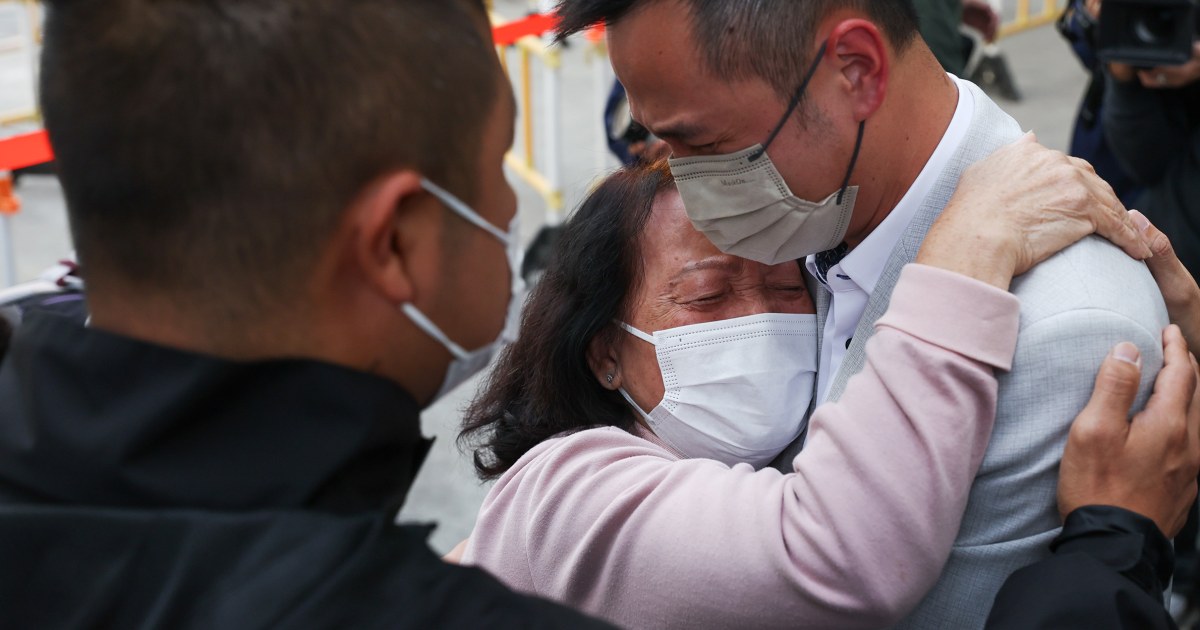
• Dec. 6, 2025, 12:18 PM ESTBy Mirna Alsharif…
  • Protesters smear dessert on the Crown Jewel's case
  • Dec. 6, 2025, 11:26 AM ESTBy Alexandra MarquezThe…
  • Supreme Court to hear birthright citizenship case

Be that!

contact@bethat.ne.com


Be That ! Menu   ≡ ╳
  • Home
  • Travel
  • Culture
  • Lifestyle
  • Sport
  • Contact Us
  • Politics Politics
☰

Be that!

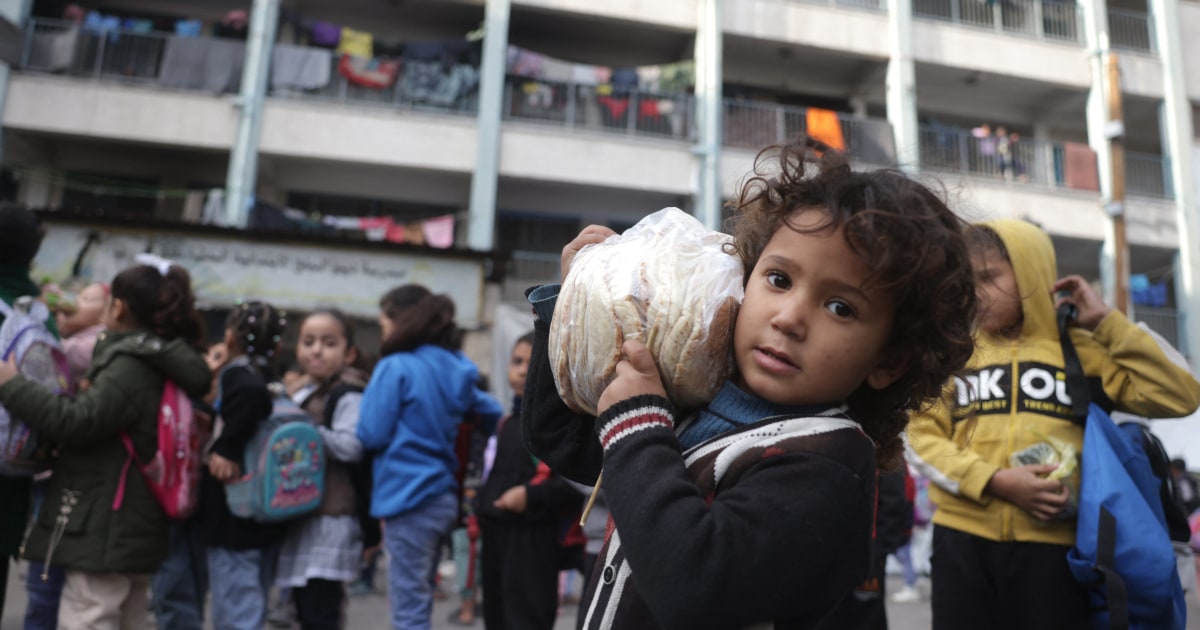
Dec. 6, 2025, 10:35 AM ESTBy Freddie ClaytonThe body of just one Israeli hostage remains in Gaza, nearing the fulfillment of a key plank of President Donald Trump’s 20-point ceasefire plan for the enclave, but major hurdles exist to a planned second phase.Doubts remain over whether negotiators can overcome those outstanding obstacles, even as they face renewed pressure to advance into phase two — a step intended to prevent any return to the high levels of violence that preceded the ceasefire.Trump noted last week that phase two would commence “pretty soon,” without giving a more specific timetable. Axios reported on Thursday that the White House is hoping to announce the second phase before Christmas, and unveil the new governance structure for the enclave, citing two U.S. officials and a Western source directly involved in the process.Phase two of Trump’s plan calls for the establishment of a new governing mechanism in Gaza, the disarmament of Hamas, and the formation of an international stabilization force, known as the ISF, that would take over responsibility from the Israel Defense Forces currently occupying parts of the Gaza Strip. Qatari Prime Minister Sheikh Mohammed bin Abdulrahman al-Thani, whose country has played a key role in a series of international negotiations, said Saturday that discussions were at a “critical” moment. Mediators were working jointly to push the next phase of the ceasefire forward, he said during a panel at the Doha Forum conference in Qatar.”A ceasefire cannot be completed unless there is a full withdrawal of Israeli forces, (until) there is stability back in Gaza, people can go in and out, which is not the case today,” he said.Egypt’s Foreign Minister Badr Abdelatty told the conference that the International Stabilization Force was needed “as soon as possible on the ground,” while Norway’s Foreign Minister Espen Barth Eide said measures must be put in place this month, warning the current ceasefire “cannot hold for many more weeks in its current phase.”As the international community hopes for progress, the ceasefire’s trajectory so far underscores both its fragile gains and its persistent vulnerabilities.A Palestinian girl walk to a classroom, as displaced adults sit near hanging laundry watching, at the UNRWA Deir al-Balah Joint School, west of Deir al-Balah, in the central Gaza Strip on Dec. 6.Bashar Taleb / AFP – Getty ImagesSince the ceasefire came into effect on 10 October, 20 living hostages and the remains of 27 others have been returned to Israel. The body of the final hostage, Ran Gvili, a 24-year-old police officer killed during Hamas’ Oct. 7, 2023 attack, has yet to be recovered despite a weeks-long search effort. Israeli authorities have steadily released Palestinian prisoners and detainees — both living and dead — as part of the exchange. Israel has repeatedly said all hostages must be returned before a phase two deal, with Prime Minister Benjamin Netanyahu this week stressing the need for an “intensive and immediate effort” to complete the commitment.Israel agreed to halt its assault on the Gaza Strip during the ceasefire, but flare-ups and violence have persisted, with Israeli strikes killing more than 350 people since the ceasefire began, taking the death toll in the enclave beyond 70,000, according to Palestinian Health Ministry figures.The first phase also included a commitment to expand the flow of aid into Gaza, but U.N. experts say the number of trucks permitted to enter has never reached the agreed target of 600 per day.Israel said Gaza’s Rafah crossing in the south will soon reopen to allow Palestinians to enter Egypt, but it will not reopen the crossing in both directions — another commitment under the deal — until Gvili’s remains are returned.And as phase one stutters along, analysts warn that phase two presents a host of complex challenges, from security arrangements to competing governance demands, that could slow or even stall the process.Negotiators are “trying to square circles that simply cannot be squared,” said Dr H.A. Hellyer, a senior associate fellow at the Royal United Services Institute, a defense and security think tank in London.He wondered whether an international stabilization force could really dismantle Hamas, a target Israel was unable to achieve through its two years of a “brutal” military operation. While Trump’s peace plan stipulates that Hamas will disarm, the group has reasserted control of Gaza during the first phase of the ceasefire and shown no immediate signs of disarmament.Disarming Hamas through military intervention is “not exactly something that any other power is going to be interested in,” he told NBC News. And when it comes to Gaza’s governance, Hellyer added, “Trump can create his board of peace,” referring to the group that would sit atop Gaza’s governing structure under Trump’s plan, but “you can’t simply enforce this stuff on the ground without cooperation from the population, unless you just want to turn it into a new type of occupation.”Israeli ambassador says he’s ‘very hopeful but concerned’ about ceasefire holding06:32Turkey’s Foreign Minister Hakan Fidan said on Saturday that negotiations over the Gaza stabilization force remain ongoing, including its mandate and rules of engagement, and that its main objective should be to separate Israelis and Palestinians along the border.”Thousands of details, questions are in place,” Fidan said. “I think once we deploy ISF, the rest will come.”But Fawaz Gerges, professor of international relations at the London School of Economics, echoed Hellyer’s concerns, noting that so far, “no state has agreed to support its forces into Gaza and potentially and ultimately get into confrontation with Hamas.”Gerges also feared that “we will never see the actual implementation of what phase two is supposed to be,” adding it was “an illusion” to call what’s happening in Gaza a ceasefire, “because the Palestinians, particularly civilians, continue to be killed on a daily basis.””Even though the humanitarian situation of the Palestinians has improved a bit, it’s still catastrophic,” he said.Freddie ClaytonFreddie Clayton is a freelance journalist based in London. Reuters and The Associated Press contributed.
admin - Latest News - December 6, 2025
admin
1 view 20 secs 0 Comments


The body of just one Israeli hostage remains in Gaza, nearing the fulfillment of a key plank of President Donald Trump’s 20-point ceasefire plan for the enclave, but major hurdles exist to a planned second phase


Source link

TAGS:
PREVIOUS
Dec. 6, 2025, 8:00 AM ESTBy Jing Feng and Maya HuterAmerican small businesses are trimming their payrolls, just as the busy holiday shopping season ramps up. Companies with fewer than 50 employees shed 120,000 jobs in November, according to data from payroll processing giant ADP. The sharp drop comes just ahead of a month that, for many small businesses, is the most pivotal sales period of the year.“The labor market is not weak but it is weakening, and the first to crack is small establishments,” ADP chief economist Nela Richardson said on a conference call Thursday. She noted that high inflation, wavering consumer spending, tariffs and broader economic uncertainty have all contributed to the pressure on smaller businesses. But the data doesn’t capture the whole story for small business owners, many of whom are agonizing over how to do right by employees they care deeply about, and still keep the lights on. Cautious consumers While some small businesses are actively laying off workers, as the November data showed, others are making more subtle personnel decisions, such as pausing new hiring or simply not replacing workers who leave. “Those little changes at the margin are actually adding up,” said ADP’s Richardson.Hanna Scholz is president of Bike Friday, a manufacturer of custom bicycles in Eugene, Oregon. She said that while she has not had to lay off any employees, her total headcount has fallen this year by three, down from 24 to 21 because some long-time employees left for health reasons. Scholz pointed to weaker consumer demand as the primary reason behind her decision not to replace them.Bike Friday, a manufacturer of custom bicycles in Eugene, OreGoogle mapsScholz says her American customers are pulling back on spending as uncertainty around the rising cost of living weighs on them. Meanwhile, sales to her smaller — but generally more affluent — group of customers in Asia have remained strong. “If there’s uncertainty, it’s normal human behavior to slow down big purchase decisions… And bikes are not seen as totally essential,” she said.Consumer confidence fell sharply in November, with the Conference Board registering its lowest metric in seven months. Survey respondents cited inflation, tariffs and the government shutdown as factors contributing to their growing anxiety about their economic outlook. For Scholz, not replacing the three workers who left has enabled her to partially offset the weaker U.S. demand.At the very least, she said, “it slows the bleeding.”Soaring costsStuart Leventhal, owner of Down to Earth Living, a decor and furniture store in Pomona New York, is also facing a drop in customer demand. He says shoppers have been more cautious with their spending decisions recently. And while they’re still buying, they are often opting for fewer pieces or pushing their purchases into next year. But softer consumer spending is only one of several challenges facing Leventhal’s small business. Holding on to his beloved, long-time employees, he said, has come at a steep price: Sharply lower profits.Leventhal estimated that he’s taken a 10% cut in profitability this year, rather than let go of any of his workers.“We’re a good employer and we like to protect our people,” said Leventhal.Down to Earth Living, a decor and furniture store in Pomona, N.Y.Google mapsBut Down to Earth Living is also facing another cost it didn’t have to worry about this time last year: Shouldering part of the added tariff costs for its largely imported inventory, rather than passing them on directly to consumers.”We can’t take much more than we’re absorbing now,” he said.The rising costs of importing merchandise and materials with new tariffs is taking a toll on businesses across the country, both large and small. But small businesses tend to have much less of a financial cushion to absorb them.On the other side of the country from Leventhal’s furniture shop, Lacie Carroll-Marsh has seen the cost of imported products soar this year at her Snohomish, Washington craft candle company, Malicious Women.The candle jars and packaging she uses are imported from Taiwan, where there is now a 20% customs tariff tacked on the their wholesacost.The soy wax she uses is produced in the U.S., but Carroll-Marsh now pays nearly 12% more for her wax than she did last year. A distributor told her that part of the reason for this was a severe labor shortage on soy farms caused by the deportation and departure of immigrant farm workers.Since taking office in January, President Donald Trump has overseen an unprecedented crackdown on undocumented immigrants. He has also moved to restrict legal immigration.More than 527,000 undocumented immigrants have been deported from the U.S. this year, according to data through October from the Department of Homeland Security. Another 1.6 million immigrants have left the United States voluntarily since January, the department estimates.The exact number of farmworkers who have been deported or have chosen to leave the country is difficult to pin down, because many of these workers move seasonally and get paid under the table. But as of 2022, more than 40% of hired crop farmworkers were undocumented, according to the Department of Agriculture.The toughest choicesCarroll-Marsh has owned and operated Malicious Women since 2017. But so far this year, she’s had to lay off 17 out of her 31 employees. “Most of my employees have been with me, five, six, seven years,” she said. “I know their kids. We’ve gone camping together. We have Christmases together. And it hurts. There’s tears on both sides.” Carroll-Marsh pays her employees an average of $24 an hour, and some make up to $30. She doesn’t want to pay them any less. “In order to get good employees and keep good employees, we have to pay them,” she said.In addition to hourly wages, the health insurance costs that Carroll-Marsh pays to cover her employees are going to become “completely out of reach” next year, she said. Snohomish, Wash., craft candle company, Malicious Women.Google maposStarting in February, her monthly contribution per employee is going to jump from $728 to $1,400.Affordable Care Act subsidies in place since the Covid-19 pandemic are set to expire on December 31, following a prolonged government shutdown over the issue. This means health insurance premiums for millions of Americans will spike in the new year. Unless sales dramatically recover in the coming months, Carroll-Marsh said she may have to lay off three more employees. “We are on a skeleton crew,” she said. “Every single member of my retail team is working at the warehouse.”Blame gamesAs small businesses struggle around the country, policymakers and advocacy groups in Washington are eager to blame the other side for the growing economic pain.The Main Street Alliance, a liberal-leaning network of 30,000 small-business owners, said Trump and his fellow Republicans are responsible for the difficult conditions for small businesses. “Trade wars, healthcare cuts, and tax breaks for big corporations have left Main Street businesses struggling to hire and grow,” Richard Trent, the group’s executive director, told NBC News. The White House and Trump administration officials, meanwhile, say the bad news for small businesses is a temporary blip, not a long term trend.“President Trump promised to bring prosperity back to Main Street with an America First agenda that benefits every small business, just as he did in his first term,” said White House spokeswoman Taylor Rogers. “In addition to slashing regulations and lowering energy costs, the Trump administration signed the largest Working Families Tax Cut in history to unleash unprecedented growth for small businesses with a permanent 20% small business tax deduction and full expensing of equipment investments.”President Donald Trump delivers remarks on reciprocal tariffs as Secretary of Commerce Howard Lutnick holds a chart during an event in the Rose Garden entitled “Make America Wealthy Again” at the White House on April 2.Brendan Smialowski / AFP – Getty ImagesCommerce Secretary Howard Lutnick dismissed the idea that tariffs were a cause of small businesses’ shrinking payrolls.“The democratic shutdown hurt the numbers. And then remember, as you deport people, that’s going to suppress private job numbers of small businesses,” he said in an interview Thursday on CNBC’s “Squawk on the Street.”“I think this is just a near term event,” said Lutnick, referring to the job losses at small businesses. “You’ll see, as the numbers come through over the next couple of months, you’ll see that all pass. And next year, the numbers are going to be fantastic,” he said.Jing FengJing Feng is a producer at NBC News covering business and the economy. Maya HuterMaya Huter is an associate producer at NBC News covering business and the economy.
NEXT
Supreme Court to hear birthright citizenship case
Related Post
October 30, 2025
Former teacher testifies about being shot by 6-year-old
November 10, 2025
Senators reach tentative deal to end the government shutdown
November 27, 2025
Nov. 27, 2025, 1:07 PM ESTBy Jennifer Jett, Peter Guo, Ed Flanagan and Jay GanglaniHONG KONG — Kan Shui-ying was home alone on Wednesday, watching television at her Hong Kong apartment while her husband and son were at work. It was around 3 p.m., she said, when she “smelled a strong burning odor.”She thought she might be boiling something, so she went to check.“I opened the window to see if there was anything,” Kan told NBC News. “Just then, a friend called me and said, ‘Wang Fuk Court is on fire!’”Grabbing only her phone, Kan went downstairs to see what was going on and found the fire was already “burning very fiercely.”“I thought I was just coming down to take a quick look,” she said, not realizing “that it was such a serious disaster.”Kan and her family are among hundreds who lost their homes in the fire at the high-rise housing complex in Hong Kong’s northern Tai Po district. At least 75 people are dead and dozens of others missing in the Chinese territory’s deadliest blaze in seven decades.Investigators are focusing on the bamboo scaffolding and mesh netting that surrounded the eight towers at Wang Fuk Court, seven of which were engulfed in flames. Three people from a contractor hired to carry out renovations have been arrested on suspicion of manslaughter, amid questions as to whether the building materials failed to meet safety standards and helped spread the fire.John Lee, Hong Kong’s top leader, said Thursday night that the blaze was now “largely under control.” He also said the city’s Development Bureau had met with industry representatives to discuss gradually replacing the city’s widely used bamboo scaffolding with metal.Bamboo scaffolding, a tradition with roots in ancient Chinese architecture, is an iconic part of Hong Kong, an international financial hub where skyscrapers are the norm. Bound together by nylon cords, the lattices are used for new construction as well as buildings under renovation.Construction workers with specialized training in bamboo scaffolding — known as “spidermen” — scramble hundreds of feet up the sides of gleaming buildings in Hong Kong, a densely populated city of 7.5 million people. The scaffolding is often covered in mesh safety nets in green and other colors to prevent debris from falling onto pedestrians below.
November 8, 2025
Nov. 7, 2025, 5:00 PM ESTBy Sara MonettaMalnourished and dehydrated people are crawling through the desert on their elbows and knees in constant terror of being caught by fighters from Sudan’s paramilitary Rapid Support Forces (RSF), humanitarian organizations have warned.The journey from the RSF-controlled city of el-Fasher to the town of Tawila is just 30 miles, but nonetheless perilous as gunmen rove around, robbing people, taking them hostage and in some cases slaughtering them by the dozen, the organizations say.Under international pressure, the RSF said Thursday that it was willing to engage in a U.S.-brokered humanitarian ceasefire. But the Sudanese military, which it has been fighting since April 2023, has yet to agree to a truce, and the State Department has said it is still working to get both parties to agree to a pause in the fighting amid warnings from the humanitarian organizations that the northeast African nation is returning to its genocidal past.While talks are ongoing, eyewitness accounts, videos shared to social media and an analysis of satellite imagery that has shown pools of blood visible from space have revealed the scale of the killing in the region and the increasing use of drone strikes by both sides as they seek to gain an advantage on the battlefield.Images of a former children’s hospital in el-Fasher show the appearance of new disturbed earth from Oct. 30, top left, to Nov. 3, bottom right.Yale Humanitarian Research Lab / VantorHanaa Abdullah Musa said RSF fighters detained her brother at one of several checkpoints she came across as she made her way to Tawila, which is home to hundreds of thousands of displaced people.“They drove him to some place,” she told NBC News in a voice note on Thursday. “Later in the evening, they told us they would bring him back, but they never did.”NBC News has asked the RSF for comment on Musa’s testimony.Musa, 20, said she had no choice but to keep moving toward Tawila after fighters took her phone and money at a previous checkpoint.She was one of only about 6,000 people to make it to the town from el-Fasher since the RSF takeover, according to humanitarian organizations working there, all of whom have expressed growing alarm about the paramilitary group’s activity in Sudan’s North Darfur.“Every single person who has arrived in Tawila has one or multiple members of their family that they cannot account for,” according to Shashwat Saraf, the country director for the Norwegian Refugee Council, a humanitarian organization that provides aid to displaced people.
Comments are closed.
Scroll To Top
  • Home
  • Travel
  • Culture
  • Lifestyle
  • Sport
  • Contact Us
  • Politics
© Copyright 2025 - Be That ! . All Rights Reserved