• Dec. 13, 2025, 10:11 AM ESTBy Freddie ClaytonTripoli’s…
  • Angry fans invade field in India after Messi…
  • Two U.S. soldiers and an interpreter killed in…
  • Dec. 13, 2025, 6:54 AM ESTBy Doha MadaniWith…

Be that!

contact@bethat.ne.com


Be That ! Menu   ≡ ╳
  • Home
  • Travel
  • Culture
  • Lifestyle
  • Sport
  • Contact Us
  • Politics Politics
☰

Be that!

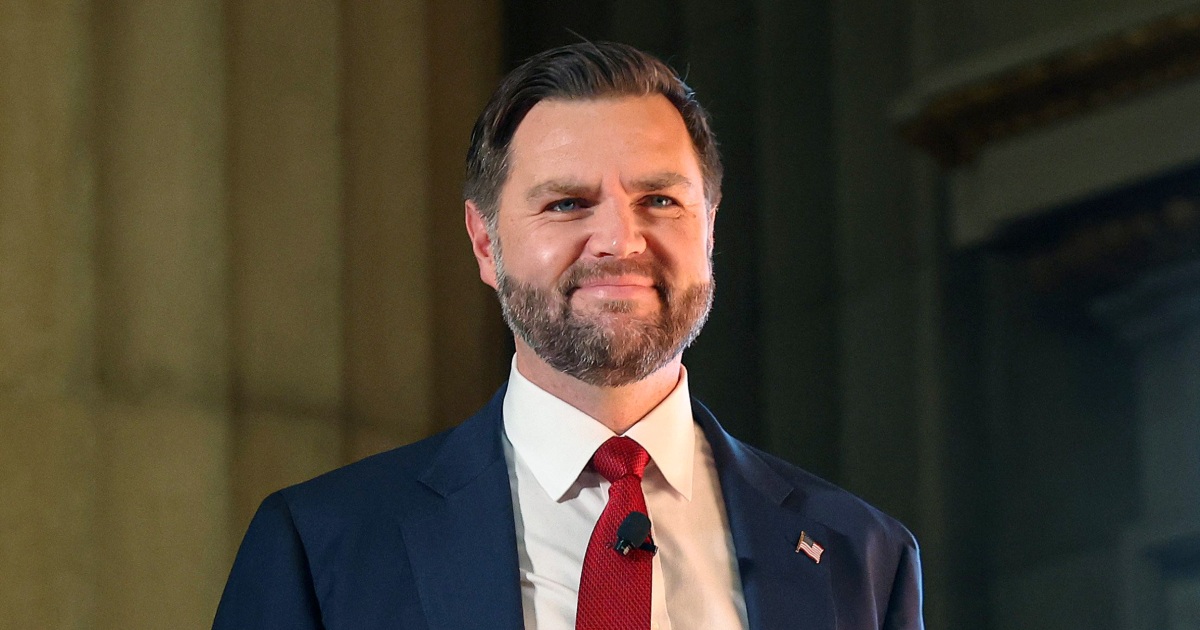
Dec. 9, 2025, 5:00 AM ESTBy Lawrence HurleyWASHINGTON — A high-stakes challenge to campaign finance restrictions being heard by the Supreme Court on Tuesday has the potential to fizzle because of Vice President JD Vance’s reluctance to reveal whether he will run for office in 2028.That, at least, is what one of the lawyers will tell the justices during the oral argument, which concerns limits on how much party committees can spend in coordination with candidates.The Supreme Court’s conservative majority has long been skeptical of campaign finance restrictions on free speech grounds, and Republicans have often brought challenges against them.Vance, who was among those challenging the spending limits in the case before the court this week, has been equivocal about his plans in various public remarks, most recently in an interview with NBC News last week.Roman Martinez, whom the court appointed to defend the restrictions when the Trump administration announced it would not do so, says the case is moot, meaning it should be dismissed and the current restrictions should remain in place. One of Martinez’s key arguments, outlined in court papers, is that Vance, who originally challenged the regulations when he was a Senate candidate, no longer has a stake in the case because he is not currently a candidate, nor has he announced any intention to be one in the future.”Vice President’s Vance’s claim is now moot because he has repeatedly stated that he has no concrete plan in place to run for any particular office in 2028,” Martinez said in an email.Because the government switched sides and is now supporting the challengers, “no one had any incentive” to point out the problems he has raised, Martinez added.Martinez also argues that the National Republican Senatorial Committee, the National Republican Congressional Committee and former Rep. Steve Chabot, R-Ohio, all involved in the legal challenge, have no grounds to maintain the lawsuit, either.Vance is walking a delicate line as a presumptive heir to President Donald Trump, who faces a constitutional bar to seeking a third term, while also serving as his vice president.Asked in the recent NBC News interview under what scenario he would not run for president in 2028, Vance refused to take a firm position.Vance has said before that “the politics will sort themselves out” about a future run if the Trump administration does a good job.But he indicated it is too soon to make that call, saying “I don’t really think so” when he was asked whether the politics have, indeed, sorted themselves out.”I try to not wake up and ever think, ‘What does this mean for my future?’ I always try to think, ‘How can I do a good job right now,’ right?” he added. “And that’s one of the reasons why I’ve tried to steer away from the 2028 conversation, because, yeah, like, it’s out there, obviously. It’s something that could happen. It’s something that might not happen. But I never want the focus on the future to come at the expense of this job.”Noel Francisco, the lawyer arguing for the Republican challengers, who did not respond to a request for comment, addressed Martinez’s arguments in a brief filed last week.Francisco rejected the contention that Vance’s recent remarks mean the case is moot, saying Martinez would need to “prove Vance does not plan to campaign for federal office again.”Martinez “has come nowhere close to doing so,” he added.”To the contrary, all available evidence … indicates that Vance will again run for federal office,” Francisco wrote.A Vance spokeswoman did not respond to a request for comment on the case.The restrictions at issue in the case were first enacted in 1971, but similar limits on rampant spending in elections have been undermined by subsequent court rulings, including the 2010 Citizens United v. FEC decision, which paved the way for unlimited independent expenditures by outside groups. Such spending by outside groups is not at issue in Tuesday’s case, which is focused on party committees.Under the current law, a party can make unlimited independent expenditures in support of a candidate, but there are limits on how much it can spend in coordination with a candidate. That can include hiring a venue or fundraising consultants or paying for a candidate’s travel.The current limit varies based on the voting-age population in specific House or Senate elections; it can be as much as almost $4 million for Senate races and $127,000 for at-large House seats.The parties in the case, including Vance and the GOP’s campaign committees supporting candidates for Congress, seek to eliminate those caps altogether.A ruling in favor of Republicans would be likely to benefit their candidates more because Democrats have typically fared better in fundraising than the average Republican, meaning GOP candidates rely more on coordinated party expenditures.As a result of the Trump administration’s change of position, the Federal Election Commission has sided with the challengers, saying it now agrees the restrictions violate the Constitution’s First Amendment.In addition to appointing Martinez, the court also allowed the Democratic National Committee to intervene in the case in defense of the restrictions.Lawrence HurleyLawrence Hurley is a senior Supreme Court reporter for NBC News. Henry J. Gomez and Ben Kamisar contributed.
admin - Latest News - December 9, 2025
admin
6 views 12 secs 0 Comments


A campaign finance case before the Supreme Court may hinge on Vice President JD Vance’s equivocation on running for president in 2028.


Source link

TAGS:
PREVIOUS
Dec. 8, 2025, 5:00 PM ESTBy Lindsey LeakeDespite previous excitement around a potential link between GLP-1 drugs and a reduced risk of cancer, new research suggests the popular medications “probably have little or no effect” on a person’s risk of developing one of the 13 obesity-related cancers.The findings, published Monday in the Annals of Internal Medicine, may seem counterintuitive, said co-author Dr. Cho-Han Chiang, who conducted the study earlier this year as an internal medicine resident at Mount Auburn Hospital, a Harvard Medical School teaching hospital in Cambridge, Massachusetts.“GLP-1 can make people lose weight, and so, if obesity increases the risk of cancer, then, hypothetically speaking, losing weight through GLP-1 may actually reduce the risk of developing cancer,” said Chiang, now a medical oncology fellow at the Northwell Health Cancer Institute in New York. “That was the excitement in this whole research of GLP-1 and cancer risk.”Accordingly, previous research had suggested the drugs — which include Ozempic and Zepbound — may help lower cancer risk. For example, a 2024 study published in the journal JAMA Network Open showed that people with Type 2 diabetes who took GLP-1s had significantly reduced risks of 10 obesity-related cancers. However, that study was observational, Chiang said, meaning it analyzed existing patient data rather than performed a clinical trial. The patients who took GLP-1s may have had access to better health care and a lower risk of cancer to begin with, he said.Chiang and his colleagues, on the other hand, reviewed 48 randomized controlled trials with a combined 94,245 patients who had Type 2 diabetes, overweight or obesity. Of those, more than 51,000 took a GLP-1 medication, while nearly 43,000 took a placebo. Patients were observed for a median follow-up period of 70 weeks.Researchers focused on the 13 types of obesity-related cancers identified by the International Agency for Research on Cancer Working Group and their possible links to GLP-1 drugs, with varying levels of statistical certainty.Researchers found, with moderate certainty, that GLP-1 drugs had little or no effect on the risk of developing four types of obesity-related cancers: breast, kidney, thyroid and pancreatic cancers.World Health Organization recommends GLP-1 drugs for obesity02:43The findings were similar for eight other obesity-related cancers — liver, gallbladder, colorectal, ovarian, endometrial, esophageal, meningioma (a tumor of the brain lining) and multiple myeloma (blood cell cancer) — but with low certainty. The effect of GLP-1s on the risk of gastric cancer was “very uncertain,” the authors wrote.“It’s not that GLP-1 does not reduce the risk of cancer; I don’t think we can make that conclusion from our study,” Chiang said. “I would say GLP-1 [drugs] probably do not increase the risk of cancer. It’s a little different.”Longer-term studies neededThe new study has two major limitations, Chiang said. One is that none of the nearly 50 trials his team analyzed was designed to measure cancer outcomes.Dr. Kandace McGuire, chief of breast surgery at the Massey Comprehensive Cancer Center at Virginia Commonwealth University, said that might explain the counterintuitive nature of the findings.“When you take a bunch of studies that weren’t looking at cancer risk and you throw them together, sometimes you find things that are contrary to what you would hypothesize,” said McGuire, who wasn’t involved in the research. “Some of that may be just the makeup of the studies, rather than the actual data itself.”“From a cancer prevention perspective, I think more data is needed,” Chiang said, noting that there’s also a lack of data on GLP-1 usage among patients who already have cancer.Another limitation of the research was its relatively brief follow-up period of under a year and a half.Patients prescribed GLP-1s should be monitored for far longer, particularly for slow-growing diseases like breast and thyroid cancers, McGuire said.“You really don’t know when in somebody’s lifetime they’re going to have a clinically significant cancer,” McGuire said. “While you may not effect a difference in the first two to three years, you may effect a difference five, 10 years down the road with continued use” of GLP-1s.Can GLP-1s increase risk of some cancers?The Food and Drug Administration cautions people with personal or family history of a rare form of thyroid cancer, medullary thyroid carcinoma, against taking certain GLP-1 medications. However, such boxed warnings stem from decade-old rodent research, Chiang said.“Once there’s an association with a drug, it’s hard to repel that,” he said.Findings in human studies have been mixed, according to Dr. Bassel El-Rayes, deputy director of the O’Neal Comprehensive Cancer Center at the University of Alabama at Birmingham. One study, for instance, found an association between GLP-1s and increased risk of thyroid cancer, but only within the first year of medication use. El-Rayes said he finds the results of Chiang’s research promising.“This study gives us more reassurance about using these drugs in the treatment of things like obesity and Type 2 diabetes,” said El-Rayes, who wasn’t involved with the study. “There are questions left unanswered, like, Could it be protective against cancer? Could there be a small increase of risk that we’re not recognizing yet?”He added, “The patients who are using the drugs at this moment are safer than what we thought before this paper came out.”Still, El-Rayes cited tobacco-related cancers as an example of the need for longer-term GLP-1 research.“If you were to look at people who smoked for one year, you may not see a big impact of tobacco use,” he said. “You need to follow them up for a longer time to really see the effects of tobacco on cancer development.”“Of course,” he added, “we’re not saying that GLP-1 [drugs] are as risky as using tobacco. We’re not saying that at all.”Dr. Susan Wolver, a colleague of McGuire’s, directs the Medical Weight Loss Program at VCU Health. She said that when she counsels patients on the benefits and risks of GLP-1 drugs, cancer isn’t typically top of mind.“Nobody comes to me and says, ‘I’d like to go on some medication to reduce my cancer risk,’” said Wolver, who wasn’t involved in the research. “They’re going on these medications to lose weight, to improve their diabetes, their sleep apnea, their heart failure — all their obesity-related conditions, but not cancer.”Wolver praised the thoroughness of Chiang’s research, noting that it broke down analyses by factors such as GLP-1 type, including older versions of the drug that were approved more than a decade ago.Because GLP-1 drugs are relatively young — the FDA didn’t approve Wegovy and Zepbound for weight loss until 2021 and 2023, respectively — physicians and scientists have much to learn of their long-term effects on the body, Wolver said. Even so, the observed benefits of GLP-1s, such as improved blood pressure and reduced odds of heart failure, outweigh known risks, she said.“I am relieved with the findings of this study that there does not appear to be any increased cancer signals,” Wolver said, “but I am also not dismayed that there was no reduction in the development of cancer or metastases, because I think we just didn’t have a long enough time.”Lindsey LeakeLindsey Leake is an award-winning health journalist and contributor to NBC News. She holds an M.A. in science writing from Johns Hopkins University, an M.A. in journalism and digital storytelling from American University and a B.A. from Princeton University.
NEXT
Dec. 9, 2025, 5:00 AM ESTBy Mahalia DobsonCan children and teenagers be forced off social media en masse? Australia is about to find out.More than 1 million social media accounts held by users under 16 are set to be deactivated in Australia on Wednesday in a divisive world-first ban that has inflamed a culture war and is being closely watched in the United States and elsewhere.Social media companies will have to take “reasonable steps” to ensure that under-16s in Australia cannot set up accounts on their platforms and that existing accounts are deactivated or removed.Australian officials say the landmark ban, which lawmakers swiftly approved late last year, is meant to protect children from addictive social media platforms that experts say can be disastrous for their mental health. “With one law, we can protect Generation Alpha from being sucked into purgatory by predatory algorithms described by the man who created the feature as ‘behavioral cocaine,’” Communications Minister Anika Wells told the National Press Club in Canberra last week.While many parents and even their children have welcomed the ban, others say it will hinder young people’s ability to express themselves and connect with others, as well as access online support that is crucial for those from marginalized groups or living in isolated parts of rural Australia. Two 15-year-olds have brought a legal challenge against it to the nation’s highest court. Supporters say the rest of the world will soon follow the example set by the Australian ban, which faced fierce resistance from social media companies.“I’ve always referred to this as the first domino, which is why they pushed back,” Julie Inman Grant, who regulates online safety as Australia’s eSafety Commissioner, said at an event in Sydney last week.Schoolboys use their mobile phones in Melbourne, Australia, in November 2024.William West / AFP via Getty ImagesSocial media companies will be responsible for enforcing the ban, paying fines of up to 49.5 Australian dollars (about $32 million) for serious or repeated breaches. Children and parents will not be punished for any infringements. Instagram, YouTube, TikTok, Facebook, X, Snapchat and Reddit are all set to be age-restricted under the law, according to a list shared by the eSafety Commissioner. All of the platforms have said they will comply, and some have taken action before the ban even takes effect, with Meta saying last month that it would start closing Instagram, Threads and Facebook accounts on Dec. 4.The ban has broad support in Australia, where a YouGov poll last year found that 77% of respondents were in favor of it. Supporters say it will encourage children to prioritize in-person interactions, boosting their social skills.“Social media is a misnomer,” said Jen Hummelshoj, 45, mother of 12-year-old Nina. “The apps want kids to be focused on their phone and not their friends.”Nina does not have a phone or any social media accounts. She supports the ban’s intent, arguing that social media is an overpowering distraction for young people.“When I’m trying to chat to someone, they might say, ‘Just a minute,’ and they’re doing something on social media,” she said in a phone interview from Canberra.According to a national study the Australian government commissioned this year, 96% of children ages 10 to 15 use social media. Seven out of 10 of them have been exposed to harmful content and behavior, including misogynistic material, fight videos and content promoting eating disorders and suicide.One in 7 also reported having experienced grooming-type behavior from adults or older children, and more than half said they had been the victims of cyberbullying.William Young, 14, said most social media platforms, in their current form, were unsafe for children, citing Snapchat as an example.“You can friend anyone without knowing who they are. It deletes messages after they’ve sent. … It’s just not a good platform,” he said in a phone interview from Perth.He implored the affected platforms to “do right” by young people and prioritize making their platforms safer.The platforms say they share that goal and insist that the ban will actually make young users less safe.“Disconnecting teens from their friends and family doesn’t make them safer — it may push them to less safe, less private messaging apps,” Snap said in a statement last month.New study shows taking a smartphone break improves overall health04:39The platforms also argue that young users may turn to new, unregulated apps that push them into darker corners of the internet or may try to circumvent the ban by using virtual private networks, or VPNs, which Australian teenagers do not dispute.“Young people are going to find another way around it,” Chloe Song, 14, said in a Zoom interview from Melbourne. “Strict parents create, like, sneaky kids.”She said she and her peers would benefit more from better digital literacy programs in their schools.“The next generation is in our hands,” said Chloe, who is a member of Project Rockit, a youth-driven Australian movement against bullying, hate and prejudice. If young people are blocked from social media, “we just don’t learn the life skills and we don’t learn the experience of going through and knowing what’s safe and what’s not,” she said.Susan Grantham, a social media researcher at Griffith University in Brisbane, described the ban as a “step in the right direction” but not a solution on its own.“Social media is not going away. Instead, we need to create well-balanced digital citizens,” she said.What rankles many young Australians about the ban is what Noah Jones described as a lack of consultation on “legislation that specifically affects us.”Noah, 15, one of two teenagers suing the Australian government over the ban, said he and his peers have “solutions to all the negatives of social media.” “If we just got asked, we all could’ve worked it out,” he said in emailed comments.Noah argues the ban will deny young people freedom of political communication, an implied right in Australia’s constitution, and deprive them of an essential educational tool.“Do you want 15-year-old boys to have no clue about consent? Do you want teenagers who don’t know about the dangers of vaping? Both topics I’ve learned about on social media,” he said.Wells, the communications minister, said that the center-left government would not be intimidated by legal challenges and that it “remains steadfastly on the side of parents.”Others are relieved by the ban, including Aalia Elachi and her father, Dany.Dany Elachi said Aalia’s behavior changed within days of her receiving a smartphone at age 10.“We found that she retreated into her room, into her own private world, her own private space, and we didn’t think that was, in the long run, going to be healthy for her,” he said in a phone interview from Sydney.When the phone malfunctioned after a couple of months, Aalia’s parents never replaced it.Now 16, Aalia will be able to legally use social media, but she has never had any accounts and said that is not about to change.“I’m still as tech literate as the next 16-year-old. I just don’t have TikTok or Instagram eating up hours of my childhood every day,” Aalia told lawmakers in the state of New South Wales last month.“Having firm boundaries around social media hasn’t made my life smaller,” she said. “My hope is over the next few years, I won’t be the exception, but the norm.”Mahalia Dobson
Related Post
September 29, 2025
Trump to attend Pete Hegseth's gathering of generals
October 22, 2025
Pocket watch owned by Titanic passenger up for auction
November 26, 2025
Coast Guard rescues family stranded at sea
November 3, 2025
Only survivor of Air India crash speaks out
Comments are closed.
Scroll To Top
  • Home
  • Travel
  • Culture
  • Lifestyle
  • Sport
  • Contact Us
  • Politics
© Copyright 2025 - Be That ! . All Rights Reserved