• How the Trump administration is reacting to Syria…
  • ‘We will retaliate’: Trump blames ISIS for attack…
  • 'We will retaliate’: Trump responds to deaths of…
  • Dec. 13, 2025, 10:11 AM ESTBy Freddie ClaytonTripoli’s…

Be that!

contact@bethat.ne.com


Be That ! Menu   ≡ ╳
  • Home
  • Travel
  • Culture
  • Lifestyle
  • Sport
  • Contact Us
  • Politics Politics
☰

Be that!

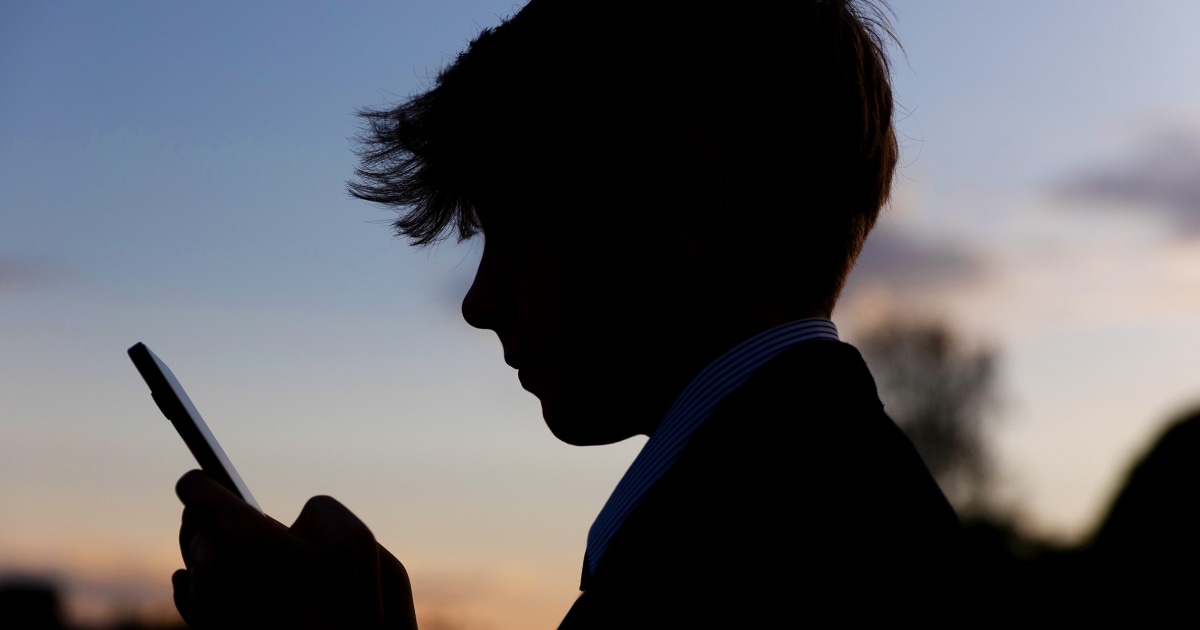
Dec. 9, 2025, 5:00 AM ESTBy Mahalia DobsonCan children and teenagers be forced off social media en masse? Australia is about to find out.More than 1 million social media accounts held by users under 16 are set to be deactivated in Australia on Wednesday in a divisive world-first ban that has inflamed a culture war and is being closely watched in the United States and elsewhere.Social media companies will have to take “reasonable steps” to ensure that under-16s in Australia cannot set up accounts on their platforms and that existing accounts are deactivated or removed.Australian officials say the landmark ban, which lawmakers swiftly approved late last year, is meant to protect children from addictive social media platforms that experts say can be disastrous for their mental health. “With one law, we can protect Generation Alpha from being sucked into purgatory by predatory algorithms described by the man who created the feature as ‘behavioral cocaine,’” Communications Minister Anika Wells told the National Press Club in Canberra last week.While many parents and even their children have welcomed the ban, others say it will hinder young people’s ability to express themselves and connect with others, as well as access online support that is crucial for those from marginalized groups or living in isolated parts of rural Australia. Two 15-year-olds have brought a legal challenge against it to the nation’s highest court. Supporters say the rest of the world will soon follow the example set by the Australian ban, which faced fierce resistance from social media companies.“I’ve always referred to this as the first domino, which is why they pushed back,” Julie Inman Grant, who regulates online safety as Australia’s eSafety Commissioner, said at an event in Sydney last week.Schoolboys use their mobile phones in Melbourne, Australia, in November 2024.William West / AFP via Getty ImagesSocial media companies will be responsible for enforcing the ban, paying fines of up to 49.5 Australian dollars (about $32 million) for serious or repeated breaches. Children and parents will not be punished for any infringements. Instagram, YouTube, TikTok, Facebook, X, Snapchat and Reddit are all set to be age-restricted under the law, according to a list shared by the eSafety Commissioner. All of the platforms have said they will comply, and some have taken action before the ban even takes effect, with Meta saying last month that it would start closing Instagram, Threads and Facebook accounts on Dec. 4.The ban has broad support in Australia, where a YouGov poll last year found that 77% of respondents were in favor of it. Supporters say it will encourage children to prioritize in-person interactions, boosting their social skills.“Social media is a misnomer,” said Jen Hummelshoj, 45, mother of 12-year-old Nina. “The apps want kids to be focused on their phone and not their friends.”Nina does not have a phone or any social media accounts. She supports the ban’s intent, arguing that social media is an overpowering distraction for young people.“When I’m trying to chat to someone, they might say, ‘Just a minute,’ and they’re doing something on social media,” she said in a phone interview from Canberra.According to a national study the Australian government commissioned this year, 96% of children ages 10 to 15 use social media. Seven out of 10 of them have been exposed to harmful content and behavior, including misogynistic material, fight videos and content promoting eating disorders and suicide.One in 7 also reported having experienced grooming-type behavior from adults or older children, and more than half said they had been the victims of cyberbullying.William Young, 14, said most social media platforms, in their current form, were unsafe for children, citing Snapchat as an example.“You can friend anyone without knowing who they are. It deletes messages after they’ve sent. … It’s just not a good platform,” he said in a phone interview from Perth.He implored the affected platforms to “do right” by young people and prioritize making their platforms safer.The platforms say they share that goal and insist that the ban will actually make young users less safe.“Disconnecting teens from their friends and family doesn’t make them safer — it may push them to less safe, less private messaging apps,” Snap said in a statement last month.New study shows taking a smartphone break improves overall health04:39The platforms also argue that young users may turn to new, unregulated apps that push them into darker corners of the internet or may try to circumvent the ban by using virtual private networks, or VPNs, which Australian teenagers do not dispute.“Young people are going to find another way around it,” Chloe Song, 14, said in a Zoom interview from Melbourne. “Strict parents create, like, sneaky kids.”She said she and her peers would benefit more from better digital literacy programs in their schools.“The next generation is in our hands,” said Chloe, who is a member of Project Rockit, a youth-driven Australian movement against bullying, hate and prejudice. If young people are blocked from social media, “we just don’t learn the life skills and we don’t learn the experience of going through and knowing what’s safe and what’s not,” she said.Susan Grantham, a social media researcher at Griffith University in Brisbane, described the ban as a “step in the right direction” but not a solution on its own.“Social media is not going away. Instead, we need to create well-balanced digital citizens,” she said.What rankles many young Australians about the ban is what Noah Jones described as a lack of consultation on “legislation that specifically affects us.”Noah, 15, one of two teenagers suing the Australian government over the ban, said he and his peers have “solutions to all the negatives of social media.” “If we just got asked, we all could’ve worked it out,” he said in emailed comments.Noah argues the ban will deny young people freedom of political communication, an implied right in Australia’s constitution, and deprive them of an essential educational tool.“Do you want 15-year-old boys to have no clue about consent? Do you want teenagers who don’t know about the dangers of vaping? Both topics I’ve learned about on social media,” he said.Wells, the communications minister, said that the center-left government would not be intimidated by legal challenges and that it “remains steadfastly on the side of parents.”Others are relieved by the ban, including Aalia Elachi and her father, Dany.Dany Elachi said Aalia’s behavior changed within days of her receiving a smartphone at age 10.“We found that she retreated into her room, into her own private world, her own private space, and we didn’t think that was, in the long run, going to be healthy for her,” he said in a phone interview from Sydney.When the phone malfunctioned after a couple of months, Aalia’s parents never replaced it.Now 16, Aalia will be able to legally use social media, but she has never had any accounts and said that is not about to change.“I’m still as tech literate as the next 16-year-old. I just don’t have TikTok or Instagram eating up hours of my childhood every day,” Aalia told lawmakers in the state of New South Wales last month.“Having firm boundaries around social media hasn’t made my life smaller,” she said. “My hope is over the next few years, I won’t be the exception, but the norm.”Mahalia Dobson
admin - Latest News - December 9, 2025
admin
6 views 7 secs 0 Comments


Can children and teenagers be forced off social media en masse?


Source link

TAGS:
PREVIOUS
Dec. 9, 2025, 5:00 AM ESTBy Lawrence HurleyWASHINGTON — A high-stakes challenge to campaign finance restrictions being heard by the Supreme Court on Tuesday has the potential to fizzle because of Vice President JD Vance’s reluctance to reveal whether he will run for office in 2028.That, at least, is what one of the lawyers will tell the justices during the oral argument, which concerns limits on how much party committees can spend in coordination with candidates.The Supreme Court’s conservative majority has long been skeptical of campaign finance restrictions on free speech grounds, and Republicans have often brought challenges against them.Vance, who was among those challenging the spending limits in the case before the court this week, has been equivocal about his plans in various public remarks, most recently in an interview with NBC News last week.Roman Martinez, whom the court appointed to defend the restrictions when the Trump administration announced it would not do so, says the case is moot, meaning it should be dismissed and the current restrictions should remain in place. One of Martinez’s key arguments, outlined in court papers, is that Vance, who originally challenged the regulations when he was a Senate candidate, no longer has a stake in the case because he is not currently a candidate, nor has he announced any intention to be one in the future.”Vice President’s Vance’s claim is now moot because he has repeatedly stated that he has no concrete plan in place to run for any particular office in 2028,” Martinez said in an email.Because the government switched sides and is now supporting the challengers, “no one had any incentive” to point out the problems he has raised, Martinez added.Martinez also argues that the National Republican Senatorial Committee, the National Republican Congressional Committee and former Rep. Steve Chabot, R-Ohio, all involved in the legal challenge, have no grounds to maintain the lawsuit, either.Vance is walking a delicate line as a presumptive heir to President Donald Trump, who faces a constitutional bar to seeking a third term, while also serving as his vice president.Asked in the recent NBC News interview under what scenario he would not run for president in 2028, Vance refused to take a firm position.Vance has said before that “the politics will sort themselves out” about a future run if the Trump administration does a good job.But he indicated it is too soon to make that call, saying “I don’t really think so” when he was asked whether the politics have, indeed, sorted themselves out.”I try to not wake up and ever think, ‘What does this mean for my future?’ I always try to think, ‘How can I do a good job right now,’ right?” he added. “And that’s one of the reasons why I’ve tried to steer away from the 2028 conversation, because, yeah, like, it’s out there, obviously. It’s something that could happen. It’s something that might not happen. But I never want the focus on the future to come at the expense of this job.”Noel Francisco, the lawyer arguing for the Republican challengers, who did not respond to a request for comment, addressed Martinez’s arguments in a brief filed last week.Francisco rejected the contention that Vance’s recent remarks mean the case is moot, saying Martinez would need to “prove Vance does not plan to campaign for federal office again.”Martinez “has come nowhere close to doing so,” he added.”To the contrary, all available evidence … indicates that Vance will again run for federal office,” Francisco wrote.A Vance spokeswoman did not respond to a request for comment on the case.The restrictions at issue in the case were first enacted in 1971, but similar limits on rampant spending in elections have been undermined by subsequent court rulings, including the 2010 Citizens United v. FEC decision, which paved the way for unlimited independent expenditures by outside groups. Such spending by outside groups is not at issue in Tuesday’s case, which is focused on party committees.Under the current law, a party can make unlimited independent expenditures in support of a candidate, but there are limits on how much it can spend in coordination with a candidate. That can include hiring a venue or fundraising consultants or paying for a candidate’s travel.The current limit varies based on the voting-age population in specific House or Senate elections; it can be as much as almost $4 million for Senate races and $127,000 for at-large House seats.The parties in the case, including Vance and the GOP’s campaign committees supporting candidates for Congress, seek to eliminate those caps altogether.A ruling in favor of Republicans would be likely to benefit their candidates more because Democrats have typically fared better in fundraising than the average Republican, meaning GOP candidates rely more on coordinated party expenditures.As a result of the Trump administration’s change of position, the Federal Election Commission has sided with the challengers, saying it now agrees the restrictions violate the Constitution’s First Amendment.In addition to appointing Martinez, the court also allowed the Democratic National Committee to intervene in the case in defense of the restrictions.Lawrence HurleyLawrence Hurley is a senior Supreme Court reporter for NBC News. Henry J. Gomez and Ben Kamisar contributed.
NEXT
New economic warning signs surface despite record holiday shopping
Related Post
September 21, 2025
Erika Kirk says she forgives her husband’s shooter
October 1, 2025
Oktoberfest closed due to a bomb threat
September 21, 2025
Friend says Charlie Kirk died instantly
October 11, 2025
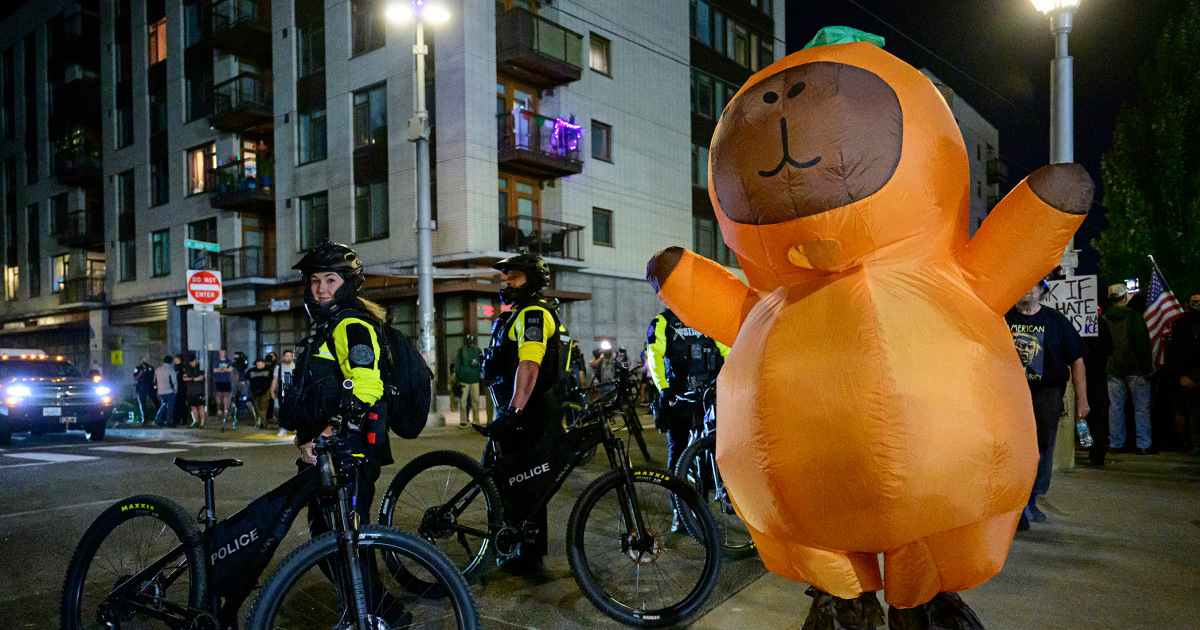
Oct. 11, 2025, 8:00 AM EDTBy Alicia Victoria LozanoPORTLAND, Ore. — A small group of federal agents in camouflage and face masks watched from atop the immigration processing center Thursday night as a unicorn, peacock, dinosaur and raccoon danced to Cher’s “If I Could Turn Back Time.” Across the street, the self-proclaimed frog brigade — three adults in inflatable amphibian costumes — posed for photos and bounced around in unison. A small group of counterprotesters nearby shouted, “We love you, ICE!”Similar scenes outside the Immigration and Customs Enforcement building south of downtown Portland have been playing out for weeks as people protest President Donald Trump’s mass deportation efforts and the deployment of more than 200 National Guard troops to Oregon’s largest city to protect federal property.The absurdity of adults dancing in inflatable costumes during anti-ICE demonstrations is meant to display community joy, protesters say, and helps to dispel the Trump administration’s narrative that Portland is a crime-ridden “war zone,” a characterization local and state leaders say is false.Plus, the costumes provide protection from gas and other toxins deployed by federal agents, protesters say.“If you’re going to make it silly and say that we’re evil, we’re going to make it silly by showing how evil you are,” said Brooks Brown, of Vancouver, Washington, who passed out 30 inflatable costumes Thursday night to anyone who wanted to get it on “Operation Inflation.”A protester in a frog costume in front of federal officers Monday outside the ICE building in Portland.Stephen Lam / San Francisco Chronicle / Getty ImagesNot without its civic challenges, the greater Portland area has some 7,000 homeless residents, and simple assaults have increased 8% from the time last year, but homicides have dropped 50% and aggravated assaults 4% in the same period, according to police and city data, and overall crime has held steady.Protester Jack Dickinson, known locally as the Chicken Man, first donned his chicken costume in June during Trump’s military parade in Washington. He said he wanted to counter the show of force with farce.As immigration raids accelerated across the country and the administration appeared to fixate on Portland’s protests, the chicken costume took on new meaning, he said.“This is an unacceptable betrayal of the American democracy,” Dickinson said, referring to federalized forces deployed in Democratic-led cities like Chicago and Los Angeles. “ICE is kind of the perfect example of the cruelty with which they are implementing their agenda, and it’s just not something we can sit by and let happen.”The costume strategy appears to be working. Demonstrators have attracted attention from international media outlets in France, Australia and England.California Gov. Gavin Newson, a Democrat and a frequent target of Trump’s verbal and online jabs, seized on the movement to mock the administration on social media.“Portland is war ravaged! SEND IN THE CALIFORNIA (???) NATIONAL GUARD!” he posted this week on X with a video of a unicorn, raccoon and dinosaur dancing outside the immigration building.Despite the costumed antics, the Trump administration stuck to its depiction of the protesters on Thursday during a federal appeals court hearing challenging a judge’s order barring the Guard from being sent to Portland. The panel has not made a decision yet.Department of Justice attorney Eric McArthur called protesters “violent people” who hurled rocks at federal agents, lit fires on the street and blocked cars.“The president is entitled to say enough is enough and bring in the National Guard to reinforce the regular forces,” he added.Federal officials pointed to the three-week closing of the ICE building from mid-June to early July because of damage to windows, security cameras and other parts of the building, allegedly caused by protesters.Protesters have blamed the ongoing federal presence for civil unrest, saying the toxins being used against them are causing health concerns in the residential neighborhood.Speaking before a panel of federal judges Thursday, Senior Assistant Oregon Attorney General Stacy Chaffin said the administration’s portrayal of Portland was “untethered from reality.”Protests in Portland outside the ICE facility on Thursday.Alicia Lozano / NBC NewsAs lingering toxins from tear gas lobbed by federal officers caused people to clear their throats and wipe their stinging eyes Thursday night outside the ICE building, protesters said they were skeptical the Trump administration would follow a court order that was not in its favor.Brown and other demonstrators pulled a cart filled with 30 inflatable costumes and began passing them out to protesters, turning the gathering into a kind of night circus as a raccoon, polar bear and axolotl bounded toward the ICE building.Brown said he created an Operation Inflation website in one night this week after seeing federal police confront protester Seth Todd, otherwise known as “Toad” because of the costume he wears. Brown said he immediately began selling inflatable costumes from the site, adding that the operation is not funded or backed by any outside organization.Brown said he grew up learning about the deadly Kent State shooting in 1970, when four unarmed students were killed and another nine wounded by members of the Ohio National Guard. Operation Inflation is his attempt to de-escalate tensions between protesters and federal officers.Protests in Portland outside the ICE facility on Oct. 9.Alicia Lozano / NBC News“People should be able to protest. They should have their voices heard,” he said between coughs from the tainted air.Dressed as Tigger from “Winnie the Pooh,” Portland resident Joy Wilson marveled at the masked agents staring down at her. She said she usually reads a book during demonstrations to highlight the peace and calm of Portland’s resistance movement, and Thursday night marked her first time attending a protest in costume.But after witnessing federal agents pepper spray Todd in the respiratory hole of his inflatable suit on Oct. 4 in an act that was caught on video and posted to social media, Wilson said she decided to show solidarity because the frog has become a symbol of nonviolent protest.“People sometimes wonder, ‘What can I do’” to protest, Wilson said. “This makes it so accessible.”Wilson’s husband, Kevin, who was wearing regular clothes, stood nearby, carefully picking out more costumes to order online for demonstrators. Their teenage daughter and her friends passed out pizza slices to the demonstrators.“Should I go with the unicorn?” he mused before selecting a range of animals, including a lobster, a shark and a bear.“I already ordered a squirrel,” Wilson confessed with a grin.Alicia Victoria LozanoAlicia Victoria Lozano is a California-based reporter for NBC News focusing on climate change, wildfires and the changing politics of drug laws.
Comments are closed.
Scroll To Top
  • Home
  • Travel
  • Culture
  • Lifestyle
  • Sport
  • Contact Us
  • Politics
© Copyright 2025 - Be That ! . All Rights Reserved