• Dec. 15, 2025, 6:01 AM ESTBy Rohan NadkarniSunday’s…
  • Vigil held for victims of Brown University shooting
  • Crowd gathers to mourn victims of Bondi Beach…
  • Dec. 15, 2025, 5:00 AM ESTBy Peter NicholasFEASTERVILLE,…

Be that!

contact@bethat.ne.com


Be That ! Menu   ≡ ╳
  • Home
  • Travel
  • Culture
  • Lifestyle
  • Sport
  • Contact Us
  • Politics Politics
☰

Be that!

Dec. 11, 2025, 5:00 AM ESTBy Jane C. TimmINDIANAPOLIS — Indiana state senators will decide the fate of a Republican-drawn congressional map Thursday, settling a divisive, monthslong clash between GOP lawmakers who have resisted the redistricting push and President Donald Trump, who has urged them to forge ahead. The proposed map, which the state House passed last week, would dismantle Indiana’s two Democratic-held districts, the latest front in Trump’s national campaign to shore up the GOP’s slim House majority in next year’s midterm elections. Republicans in Texas, North Carolina and Missouri have answered Trump’s call, passing new maps designed to net the party additional seats, but Indiana lawmakers were hesitant to join the unusual mid-decade redistricting fight for months. Republican leaders in the state Senate have said repeatedly there aren’t enough votes in the chamber to pass the legislation, despite public and private entreaties from the White House. Trump, Vice President JD Vance and other national Republicans have been pressuring lawmakers in the state through phone calls, in-person visits in Indiana and Washington and social media posts, threatening to back primary challengers to those who oppose the map.Trump specifically called out Rodric Bray, the Republican leader of the state Senate, Wednesday night on Truth Social. “Anybody that votes against Redistricting, and the SUCCESS of the Republican Party in D.C., will be, I am sure, met with a MAGA Primary in the Spring,” Trump wrote. “Rod Bray and his friends won’t be in Politics for long, and I will do everything within my power to make sure that they will not hurt the Republican Party, and our Country, again.”It has become an “all hands on deck” effort among Republicans in Washington to get Indiana lawmakers on board, according to a senior GOP leadership source familiar with the matter. House Speaker Mike Johnson, R-La., and members of his leadership team have been calling state lawmakers to urge them to support the new map. Top Republicans in Washington believe the vote is going to be close, but they think they are within striking distance, saying they have at least 20 solid “yes” votes as they continue to work other holdouts, the source said. Republicans will need the support of at least 25 members of the 50-person Legislature for the map to pass. Republican Lt. Gov. Micah Beckwith has the ability to break a tie. The saga took an alarming turn in recent weeks, with at least 11 elected Republicans in Indiana facing violent threats and swatting attempts, which are when someone makes a false police report in an attempt to instigate a frightening police response.“They’re kind of like ‘I’m going to firebomb your house in the middle of the night and kill you and anyone else in there as you come running out.’ There’s a number of those; I got three in one day,” said Sen. Michael Crider, the Republican majority whip, who has said he will vote against the bill and has faced such threats. Crider, who worked in law enforcement, said he taught his colleagues how to alert their local police to try to head off swatting attempts. “This is my 14th year, and I’ve not seen this kind of tactics,” he said.Sen. Dan Dernulc, another Republican who has come out against the legislation, said he has received the same pipe bomb threat as Crider, which particularly alarmed his wife. He was swatted twice, and pizzas have repeatedly been sent to his home, another intimidation tactic. He said police have stationed a squad car outside his home to ensure his and his family’s safety.“It doesn’t affect the way I’m going to vote,” he told NBC News. “But it’s still unnerving. I don’t want to be killed.”Demonstrators at a rally against redistricting at the Indiana Statehouse in Indianapolis.Kaiti Sullivan / Bloomberg via Getty Images fileState Sen. Greg Goode, a Republican who has been singled out by Trump on social media but has not said how he will vote, was also the victim of a swatting attempt. Someone claiming to be Goode told police he’d murdered his wife and child, prompting an alarming police response.”My front door was kicked in. I had weapons pointed directly at me. I am so grateful that I was home. My wife and son were in the basement getting Christmas decorations,” he said. Goode said that he has a “pretty good idea” of how he’ll vote but that he intends to keep listening to debate until the final vote. “I believe that I owe it to my colleagues to keep an open mind,” he said.The bill passed out of the Senate Elections Committee on Monday after hours of debate and public testimony, much of it in opposition to the new map.Sen. Mike Gaskill, the Republican who sponsored the bill in the chamber, acknowledged to his colleagues that the fight has been unsavory.”Political gerrymandering isn’t comfortable, I understand that, but it’s the environment that we’re in,” he said. “This is a very small part that we can play in rebalancing the scales on a national basis.”In conversations across the Statehouse, lawmakers seemed weary and rattled by the monthslong political fight and its consequences.Many thought Bray’s announcement last month that there wasn’t enough support to pass the map would be the end of it. Now, they hope Thursday’s vote will settle the issue.“I think that’s the point,” said Megan Robertson, who leads an environmental group, Indiana Conservation Voters, that has been spending and mobilizing against the redistricting bill. “They just feel like they have to vote on it on the floor, because otherwise it’s never going to end.”Jane C. TimmJane C. Timm is a senior reporter for NBC News.Melanie Zanona contributed.

admin - Latest News - December 11, 2025
admin
8 views 13 secs 0 Comments


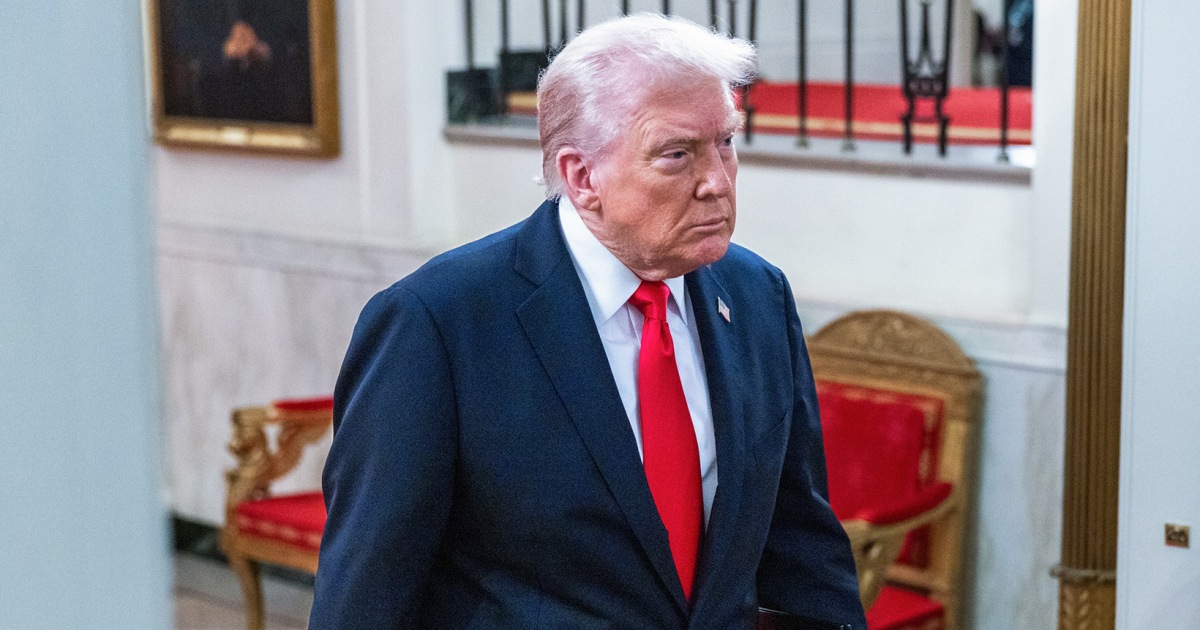
Trump has been pressuring Indiana Republican lawmakers for months to pass new district lines that would boost the party in next year’s midterms.


Source link

TAGS:
PREVIOUS
North Dakota highway rollover crash caught on camera
NEXT
Possible DUI crash injures nine students in California
Related Post
October 17, 2025
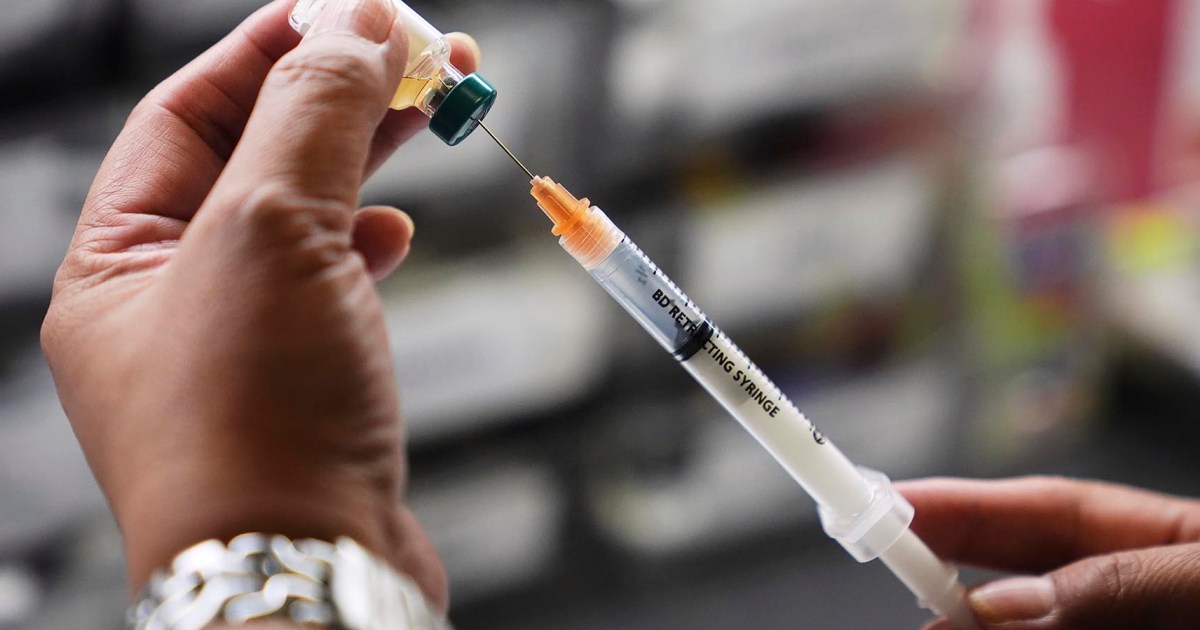
Oct. 17, 2025, 2:50 PM EDTBy Erika EdwardsSouth Carolina’s measles outbreak has grown to 15 cases, state health officials reported Friday, a small increase from a few days ago. The new cases are among those who’d been exposed to the virus at school, but developed symptoms in quarantine. It’s not known if they’re adults or children, but 139 students are still currently in quarantine in the state.”We are fortunate that those we have identified as being exposed to measles are complying with our guidance to quarantine for the period that they could not expose others,” Dr. Linda Bell, epidemiologist for South Carolina, said in a statement to NBC News. Those who aren’t vaccinated against measles are recommended to stay home, away from others for a 21-day quarantine. That’s how long it can take to develop measles symptoms — high fever, red eyes and a rash — after being exposed.”We recognize that quarantining is challenging for families and communities, and we continue to strongly encourage getting vaccinated, which would make quarantining unnecessary due to the MMR vaccine’s proven effectiveness for decades,” Bell said, referring to the measles-mumps-rubella shot.As measles keeps popping up in some pockets of the United States, the possibility of being exposed to the highly contagious virus continues. At least 1,596 measles cases have been confirmed in 2025, according to data from the Centers for Disease Control and Prevention, but it’s unclear how many people have been asked to quarantine. In Ohio, where five cases in the central part of the state have been reported within the last 2½ weeks, quarantine for 122 people was expected to end Friday. A 1-year-old had to be hospitalized for several days after developing pneumonia. The quarantine disruptions are prompting some pushback in the affected communities. “For many in our community, they’re frustrated, like, ‘Why don’t you just get your kid vaccinated?’” Dr. Mysheika Roberts, health commissioner for Columbus, Ohio, said in an interview. Measles exposures, including one at an early childhood learning center late last month, triggered the 21-day quarantine, she said.“When you make a decision not to vaccinate your child or to delay the vaccination, you’re not just impacting your child and your household. You can be impacting that entire community,” Roberts said. “It’s a ripple effect that I don’t think the average individual who makes this decision understands.”In the Minneapolis-St. Paul area, 118 kids are now back in school after they were exposed to an outbreak of 20 measles cases. Their quarantine ended Wednesday, according to a spokesman for the Minnesota Health Department. Still, public health officials are bracing for future outbreaks. “We actually anticipate that more cases may occur,” Bell said during a media briefing Thursday. “The measles virus won’t be contained within schools, within school districts or by county lines.”“My concern is that this is going to keep happening, that this is going to be our new normal,” Roberts said.Children who have been given the MMR vaccine don’t have to quarantine if exposed. Two doses, given around age 1 and again around age 5, are 97% effective in preventing measles infections, according to the CDC. Erika EdwardsErika Edwards is a health and medical news writer and reporter for NBC News and “TODAY.”
October 7, 2025
Oct. 7, 2025, 5:37 PM EDTBy The Politics DeskWelcome to the online version of From the Politics Desk, a newsletter that brings you the NBC News Politics team’s latest reporting and analysis from the White House, Capitol Hill and the campaign trail.In today’s edition, Steve Kornacki digs into why a blue wave doesn’t appear to be materializing (yet) for Democrats in next year’s midterm elections. Plus, the government shutdown stretches into a 7th day. Sign up to receive this newsletter in your inbox every weekday here.— Adam WollnerThe signs of a blue wave aren’t there like they were in Trump’s first termAnalysis by Steve KornackiThe blue wave that interrupted President Donald Trump’s first term could be seen coming from far away. This time around, the signs are not so clear.By the fall of 2017, Trump’s first year in office, Democrats had opened a sizable advantage in the generic congressional ballot. On this day in 2017, according to the Real Clear Politics polling average, the Democratic lead was 7.8 points. It’s a margin that would more or less hold over the ensuing year, culminating in a 40-seat gain in the 2018 midterms that gave Democrats control of the House.Today, by contrast, the RCP average has Democrats up by only 3 points in the generic ballot. This comes even as Trump’s overall job approval rating sits in the low- to mid-40s — similar to his first term — and as he continues to accrue negative ratings for his handling of the economy and inflation.Views of Trump’s opposition, though, look very different today than they did eight years ago. In the run-up to the 2018 midterms, Democrats fared consistently — and significantly — better than the Republicans on party image. This time around, it’s a different story.Earlier this year, Democrats registered their lowest positive rating in the history of our NBC News poll, which dates back more than three decades. Similar findings have emerged in other surveys. A significant factor is self-identified Democrats expressing unfavorable views of their own party. This internal frustration — combined with other data that shows these voters want a more confrontational posture from their party’s leaders — helps explain why Democrats in Washington have embraced a government shutdown.This also raises the question of what other new tactical or ideological steps Democratic leaders may take to appease their base — and whether the wider electorate will be receptive to them. In Trump’s first term, independents took a less negative view of Democrats than Republicans. Now, it’s more of a wash.Of course, to win back the House next year, Democrats don’t need a wave; a net gain of just three seats will do the trick. But Republicans may end up effectively raising that number to the high single digits through mid-decade redistricting efforts. Typically, the opposition party can count on a midterm boost by serving as the protest vehicle for whatever dissatisfaction voters want to express with the White House. But in today’s atmosphere of intense polarization, there may be some voters who want to express their displeasure with the opposition party, too.Shutdown, Day 7: Trump dials up the pressure as MTG breaks with her party on ObamacareThe White House raised the stakes of the government shutdown as it entered its seventh day with a draft memo arguing that furloughed federal workers are not entitled to back pay, White House press secretary Karoline Leavitt told NBC News.The memo, first reported by Axios, comes despite the Office of Personnel Management’s own September guidance, which said federal workers will receive retroactive pay after the shutdown lifts.The memo also clashes with a 2019 law that requires back pay for federal workers. The law, called the Government Employee Fair Treatment Act of 2019, says all federal employees, whether furloughed or deemed essential and working without pay, must receive back pay after a shutdown ends.Asked about the White House’s position on back pay, President Donald Trump told reporters, “I would say it depends on who we’re talking about.” Trump also likened the shutdown to a “kamikaze attack“ by Democrats.The idea of denying back pay prompted some intraparty backlash, with Sen. Thom Tillis, R-N.C., calling it a “horrible message” and a “bad strategy.”Speaking of GOP divisions: Rep. Marjorie Taylor Greene, R-Ga., broke with her party by calling for action on expiring Obamacare subsidies to avoid premium hikes, Sahil Kapur reports. In a long post on X, Greene, the far-right MAGA firebrand, made it clear she was not in Congress when the 2010 law passed.“Let’s just say as nicely as possible, I’m not a fan,” she wrote. “But I’m going to go against everyone on this issue because when the tax credits expire this year my own adult children’s insurance premiums for 2026 are going to DOUBLE, along with all the wonderful families and hard-working people in my district.” “Not a single Republican in leadership talked to us about this or has given us a plan to help Americans deal with their health insurance premiums DOUBLING!!!” Greene added.Asked by our colleague Ryan Nobles about Greene’s comments, House Speaker Mike Johnson, R-La., said she doesn’t sit on the committees of jurisdiction and “she’s probably not read in on some of that.” He added that “everybody’s entitled to their opinion,” but “not everyone knows everything.” At the airport: Flight delays across the U.S. stretched into a second day as the Federal Aviation Administration braced for more airport staffing shortages amid the shutdown, Matt Lavietes and Corky Siemaszko write. Maya Rosenberg and Jay Blackman also note that federal funding for air travel in rural areas will run out Sunday if the shutdown continues. In the states: Some governors are drawing on state funds to keep popular national parks open for tourists, Raquel Coronell Uribe reports. 🗞️ Today’s other top stories⚖️ SCOTUS watch: The Supreme Court appeared poised to back a free speech challenge to a Colorado law that bans conversion therapy aimed at young people questioning their sexual orientations or gender identities in a case likely to have national implications. Read more →🪑 On the hot seat: Attorney General Pam Bondi faced questions from senators about National Guard deployments and immigrant arrests in U.S. cities, the indictment of former FBI Director James Comey, and files related to Jeffrey Epstein. Read more →🇨🇦 Oh, Canada: Trump said there’s “mutual love” but “natural conflict” between the U.S. and Canada as he met with Canadian Prime Minister Mark Carney at the White House. Read more →📱 Sprint to November: In the final weeks of the Virginia governor’s race, Republican Winsome Earle-Sears is attempting to tie Democrat Abigail Spanberger to the uproar over the violent texts that surfaced from the Democratic nominee for attorney general in the state. Read more →🗳️ If it’s Tuesday: Voters are heading to the polls for a special primary election to fill former Rep. Mark Green’s seat in Tennessee’s deep-red 7th District. Trump stepped in at the last minute with an endorsement of Matt Van Epps, the former commissioner of the state Department of General Services. Read more →➡️ Explainer: Trump suggested numerous times this week that he could invoke the sweeping presidential powers granted by the Insurrection Act “if necessary.” Here’s what that is →That’s all From the Politics Desk for now. Today’s newsletter was compiled by Adam Wollner.If you have feedback — likes or dislikes — email us at politicsnewsletter@nbcuni.comAnd if you’re a fan, please share with everyone and anyone. They can sign up here. The Politics Desk    
November 19, 2025
NYC mayor-elect Zohran Mamdani to keep Jessica Tisch as NYPD commissioner
October 25, 2025
Oct. 25, 2025, 9:19 AM EDTBy Katherine DoyleKUALA LUMPUR— President Donald Trump arrives in Malaysia on Sunday for his first visit to Asia since returning to office, a three-nation tour through Malaysia, Japan and South Korea that is expected to culminate in a meeting with Chinese President Xi Jinping, as tensions between the world’s two biggest economies tick higher.“The first message is Trump the peacemaker. The second is Trump the moneymaker,” said Victor Cha of the Center for Strategic and International Studies. “And then, of course, with the meeting with China, I think what everybody’s expecting is that there’s probably not going to be a big trade deal, but there will be an effort to de-escalate or put a pause on the situation.”Trade is expected to dominate the week. Aboard Air Force One on Friday, Trump said he would subsidize U.S. farmers if he did not reach a deal with China, and that he planned to discuss the ongoing Russia-Ukraine war with Xi, saying he’d like to see China “help us out.”The president also suggested he was angling for a meeting with North Korean Leader Kim Jong Un, even as the White House has said that no meeting is planned. “You know, they don’t have a lot of telephone service,” Trump said, before urging reporters to “put out the word.” In Kuala Lumpur, Trump is scheduled to meet with Malaysian Prime Minister Anwar Ibrahim before attending a working dinner of the Association of Southeast Asian Nations leaders. Malaysia, this year’s ASEAN chair, has set “Inclusivity and Sustainability” as the summit theme. The White House said Trump will also join a signing ceremony for a peace agreement between Cambodia and Thailand, whose deadly border conflict he has claimed credit for helping to resolve. During his first term, Trump attended the annual ASEAN summit only once.Sandwiched between the summit in Kuala Lumpur and South Korea’s Asia-Pacific Economic Cooperation conference, Trump will pay an official visit to Japan, his fourth, for talks with the new Prime Minister Sanae Takaichi and an audience with Japanese Emperor Naruhito.Takaichi, a conservative protege of the late Shinzo Abe, has pledged to raise defense spending to 2% of GDP by March, two years ahead of schedule, a target likely to draw praise from Trump, who has pressed for allies to spend more. She has also raised the idea of revisiting the U.S.-Japan trade deal announced in July. Trump and Abe forged a close personal relationship during his first term, before Abe’s assassination in 2022. Trump will also meet with business executives and visit American troops while in Japan, a country that hosts more U.S. service members than any other in the world.In South Korea on Wednesday, Trump is slated to address business leaders at APEC, hold a bilateral meeting with the president, and attend a leaders’ dinner that evening.Topping the agenda at every stop is trade, with negotiators still ironing out the details of pacts with South Korea and Japan and taking steps towards agreements with China and Malaysia. U.S. and Chinese delegations are meeting in Malaysia over the weekend ahead of Trump’s arrival in Kuala Lumpur.“It’s not the U.S. president coming to Asia to meet the multilateral schedule; it’s the U.S. president coming to Asia and then bending the multilateral schedule around his schedule,” said Cha, noting Trump is skipping the U.S.–ASEAN leaders meeting, the East Asia Summit, and formal APEC sessions. Even so, Cha said regional leaders are eager to engage.“Everybody still wants to cut a deal with the U.S. president,” he said. “They all want tariff relief, and they will try to make a deal to achieve that.”Central to the trip is Trump’s anticipated meeting with Xi in South Korea on Thursday, though Beijing has not yet confirmed the session. Top officials from the U.S. and China are sitting down in Malaysia on Saturday to find a way forward after Trump threatened new tariffs of 100% on Chinese goods and other trade limits starting on November 1 in response to China’s expanded export controls on rare earth minerals and related technologies. Trump has said he plans to raise fentanyl, accusing China of failing to curb the flow of precursor chemicals, and a senior administration official said China’s purchases of Russian oil will also be on the table. Trump said he also expects to discuss Taiwan. “We have a lot to talk about with President Xi, and he has a lot to talk about with us,” Trump said Friday, adding he expects “a good meeting” even as he has intermittently threatened to call it off over trade frictions, including soybean purchases.Both leaders want the optics and tactical aspect of this meeting to go well, a person familiar with the meeting planning said. Analysts urged caution about what a leader-level encounter can deliver. “During Trump’s first term, high-level exchanges with China did not prevent him from later taking a harder line,” said Sun Chenghao, a fellow at Tsinghua University’s Center for International Security and Strategy. “So the symbolic value of summit diplomacy should not be overstated.”Earlier this week, a senior administration official pushed back on speculation that Trump could reprise his 2019 encounter with North Korean leader Kim Jong Un, when he made a surprise visit to the demilitarized zone that separates the two Koreas in an effort to revive nuclear talks that had collapsed. Trump said before leaving Washington on Friday that he “would like” to meet with Kim, but was unsure whether it would happen on this trip. Kim says he will negotiate only if the U.S. recognizes North Korea as a nuclear power, and has only further strengthened his weapons programs since Trump’s first term. “I think they are sort of a nuclear power,” Trump seemed to acknowledge as he began his journey to Asia on Friday, perhaps paving the way for a possible meeting. “They’ve got a lot of nuclear weapons. I’ll say that.”Katherine DoyleKatherine Doyle is a White House reporter for NBC News. Carol E. Lee, Jennifer Jett, Peter Guo, Arata Yamamoto and Stella Kim contributed.
Comments are closed.
Scroll To Top
  • Home
  • Travel
  • Culture
  • Lifestyle
  • Sport
  • Contact Us
  • Politics
© Copyright 2025 - Be That ! . All Rights Reserved