• Officials hope to bring forth charges in Brown…
  • Trump speaks about a weekend of violence across…
  • Special Report: Trump speaks on shootings at Brown…
  • One survivor told mayor active shooter drills helped…

Be that!

contact@bethat.ne.com


Be That ! Menu   ≡ ╳
  • Home
  • Travel
  • Culture
  • Lifestyle
  • Sport
  • Contact Us
  • Politics Politics
☰

Be that!

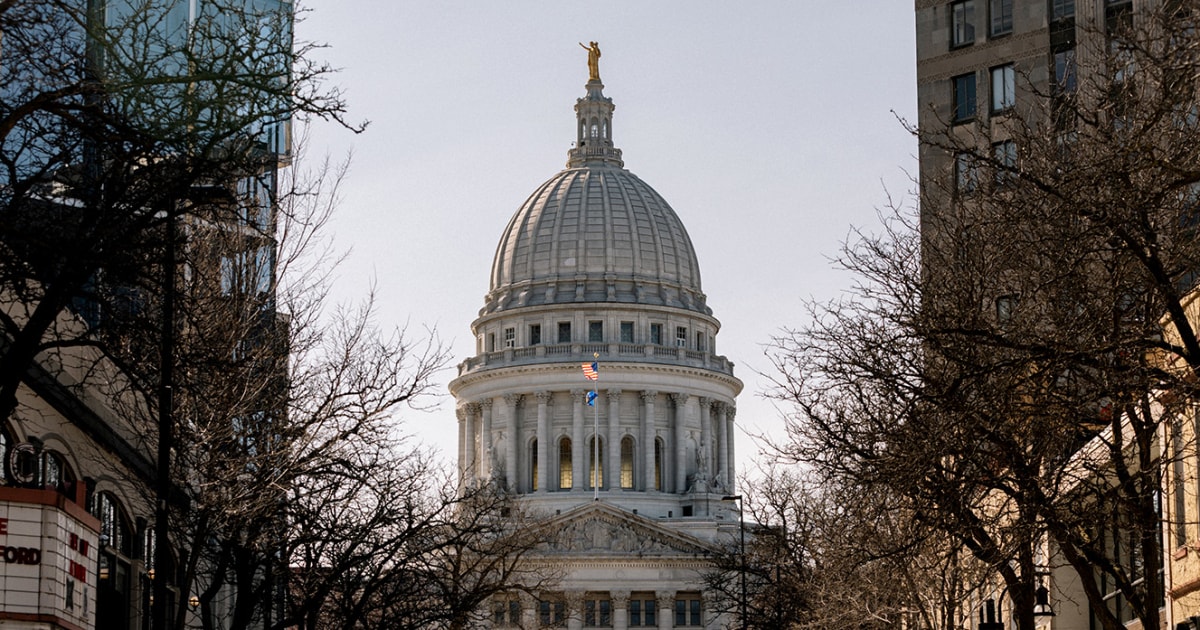
Dec. 12, 2025, 5:00 AM ESTBy Adam EdelmanWisconsin has quietly emerged as the latest front in the national redistricting fight — and a never-before-used legal process seems likely to determine the state’s congressional lines in the midterm election. The saga unfolding in the critical Midwestern battleground has the potential to put more districts in play for Democrats ahead of next year’s midterms. But unlike in other states that have redrawn their congressional maps mid-decade in recent months, the push toward a new map in Wisconsin is now hinging on a little-known law the GOP-controlled state Legislature enacted 14 years ago.Days before Thanksgiving, the Wisconsin Supreme Court ordered a pair of three-judge panels to oversee two lawsuits that allege that the state’s current congressional map is unconstitutional and seek a redraw. Both panels will meet for the first time Friday for initial hearings. And Friday’s opening moves are only the latest steps in a long, complex path. Earlier this year, the Wisconsin Supreme Court rejected a pair of suits seeking a redraw of the state’s eight congressional districts — the second time in as many years that the court had dismissed such an effort. Those decisions sparked surprise among many court-watchers in the state. Liberals had regained their majority on the technically nonpartisan bench in an expensive and headline-making election in 2023 and retained the majority in an even more expensive 2025 race. Many Democrats believed that it was only a matter of time before the high court’s liberal majority allowed a redistricting case against the state’s maps to move forward.But, in July, just two weeks after the state Supreme Court’s most recent rejection of the redistricting case, two parties filed fresh cases in Dane County Circuit Court — a lower state court — making the same arguments about the maps. Those cases effectively triggered a process created by state Republicans and signed into law by then-Republican Gov. Scott Walker in 2011, which requires the state Supreme Court to appoint a judicial panel to hear cases related to redistricting.In an 5-2 order issued Nov. 25, the state Supreme Court explained that it had utilized that process and assembled two panels — one to hear each congressional redistricting case. One conservative justice joined the court’s four liberals, touching off an unprecedented undertaking in the purple state.In interviews with NBC News, nonpartisan experts on Wisconsin law and legal processes explained that even though the process hadn’t been used before in Wisconsin, the notion of a panel of three judges drawn from different courts convening over a redistricting case wasn’t unusual. In fact, it was modeled after federal statues requiring that a similar panel be arranged to hear most redistricting cases.“Yes, it’s the first time a three-judge panel for a redistricting action has happened in Wisconsin state court. But a three-judge panel for redistricting challenges or Voting Rights Act challenges are what happens in federal court,” said Bree Grossi Wilde, the executive director of the nonpartisan State Democracy Research Initiative at the University of Wisconsin Law School. “This is how redistricting battles played out in federal court.”Grossi Wilde said that while she expected political criticism to mount, she emphasized that the process itself is not a novel solution created by a liberal-controlled Supreme Court.“This isn’t a procedure that the [state] Supreme Court crafted to meet this particular moment,” she said. “This is a legislative procedure that the Supreme Court is required to follow.”However, the process, the venue for the cases, and the accelerated timeline for review of these cases has led many court-watchers in Wisconsin to believe that there’s a high chance the state could have new maps in place before the midterms — and that they’d be all but certain to advantage Democrats compared to the current map, in which Republicans currently hold six of eight seats.But it still might be difficult to do in the allotted time: The filing window in Wisconsin for candidates running for Congress and other offices opens in April, with a June 1 deadline.“If you look at the judges on these panels, where they come from, who appointed them, it’s a biased panel. Call a spade a spade,” said Brandon Scholz, an independent political strategist in Wisconsin. “This is a partisan, political move by what’s supposed to be a nonpartisan court. It really seems like a push to have two partisan panels in place to determine redistricting on a congressional level.”One of the panels comprises three judges who all endorsed liberal Supreme Court Judge Susan Crawford during her campaign earlier this year. The other panel had two judges who endorsed Crawford.The process has already faced criticism from conservatives on the state Supreme Court and Republicans throughout the state. The court’s two conservative justices who opposed implementing the process in the latest order blasted the use of the panels in blistering opinions, specifically slamming their counterparts on the bench for picking the judges on them.“Today, my colleagues — disregarding the United States Constitution, the Wisconsin Constitution, and fundamental legal principles — approve a collateral attack of our court’s decision by a panel of circuit court judges, unsupported in the law,” conservative Justice Annette Ziegler wrote in an opinion.“Handpicking circuit court judges to perform political maneuvering is unimaginable,” she added. “Yet, my colleagues persist and appear to do this, all in furtherance of delivering partisan, political advantage to the Democratic Party.”Elected Republicans have criticized the court decision, too.”These folks care about one thing: power,” GOP Rep. Derrick Van Orden, whose 3rd District would likely be affected in a new map, posted on X after the ruling.In a statement to NBC News, Wisconsin Democratic Party Chair Devin Remiker accused the GOP of “throwing a temper tantrum because they lost their state Supreme Court majority, which had been vital in rigging the rules in the Republicans’ favor.””Now, Wisconsin Republicans are being forced to play in a far more fair and impartial system where they don’t have a judiciary to stack the deck for their candidates,” Remiker said.Attorneys challenging the current congressional map in one of the cases said that it was a normal legal course to try a suit with a lower court after being rejected by a state Supreme Court.“We followed the normal course — which is to bring a regular lawsuit in the lower court which is how often lawsuits typically proceed,” said Abha Khanna, an attorney with Democratic-aligned firm Elias Law Group, which filed one of the cases before a panel.But many political figures in the state see the current process as a counter to Republican efforts in states like Texas to gain seats in their own redistricting fights ahead of 2026.“There is a rush to change Wisconsin’s lines,” Scholz said. “And it’s because this has become a national story — everyone got all jazzed up over the summer. And the truth is there is a real opportunity for Democrats and for the liberals on the court, to possibly change those lines. So this is where we are.”Adam EdelmanAdam Edelman is a politics reporter for NBC News.
admin - Latest News - December 12, 2025
admin
6 views 17 secs 0 Comments


Wisconsin has quietly emerged as the latest front in the national redistricting fight — and a never-before-used legal process seems likely to determine the state’s congressional lines in the midterm election.


Source link

TAGS:
PREVIOUS
Officers rescue man dangling from roof in Florida
NEXT
Skydiver dangles from plane after parachute gets tangled
Related Post
December 10, 2025
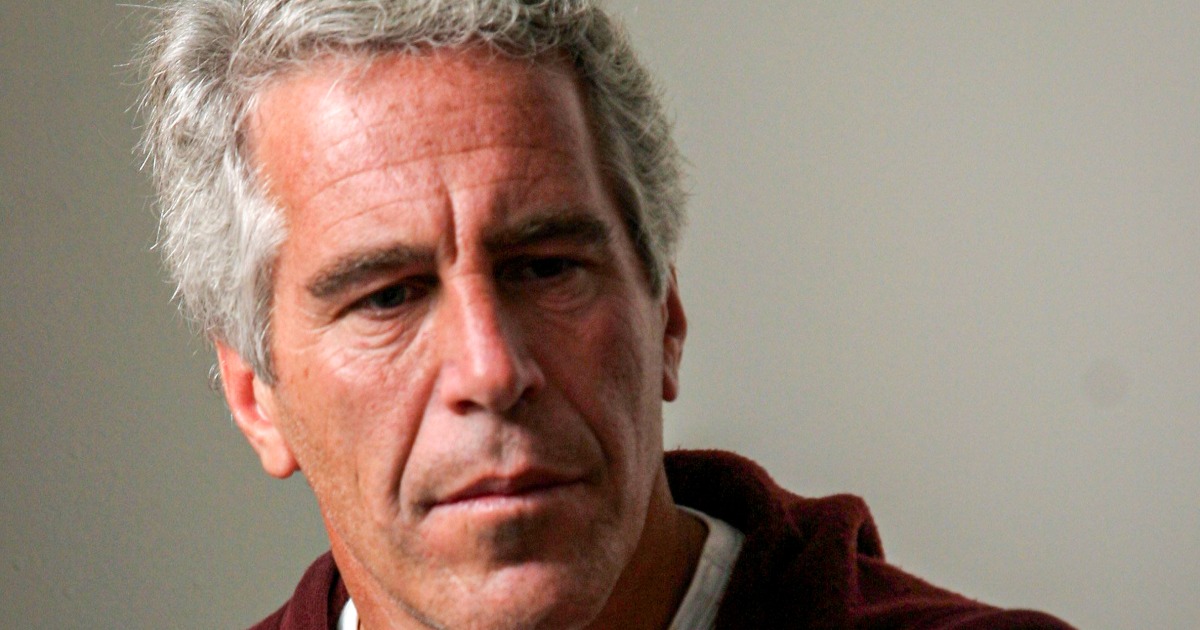
New York judge orders release of Jeffrey Epstein grand jury records
October 4, 2025
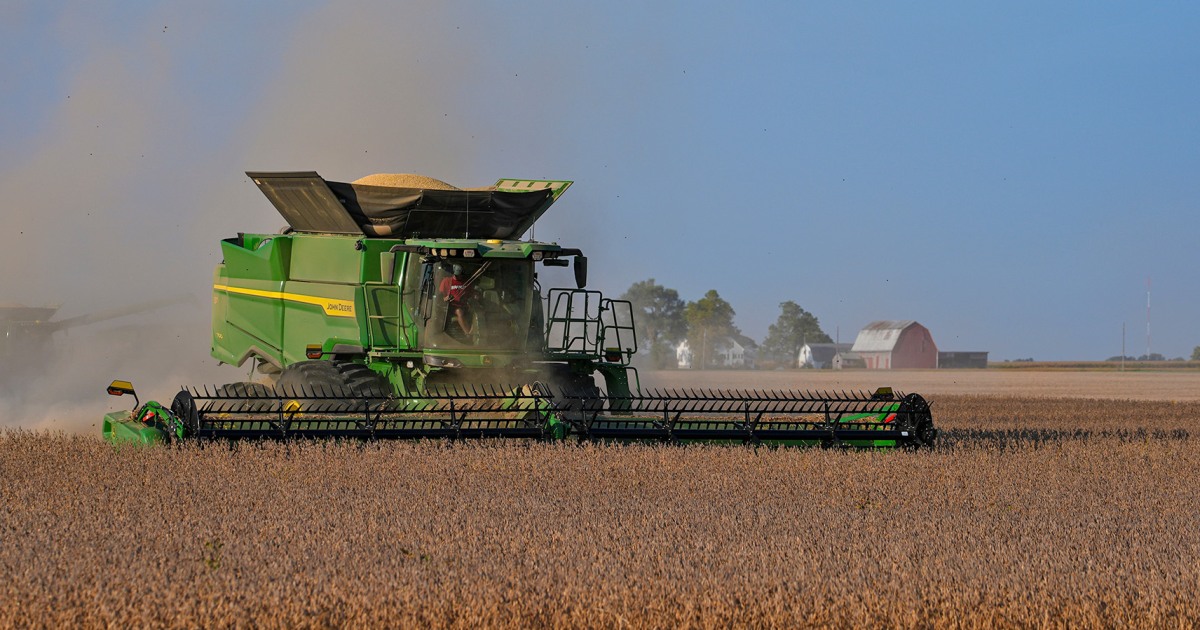
Savewith a NBCUniversal ProfileCreate your free profile or log in to save this articleOct. 4, 2025, 7:30 AM EDTBy Steve KopackThe humble soybean is the latest flashpoint in the Trump administration’s campaign to reshape global trade.Used in everything from animal feed to fuel, soybeans regularly rank among the most valuable U.S. agricultural exports, towering over higher-profile crops like corn and cotton. More than $30 billion worth of American soybean products were exported in fiscal year 2024, according to the U.S. Department of Agriculture.For American soybean farmers, their top overseas market has long been China, which bought around a third of the export crop — approximately $12 billion worth of American soybean products — in the last calendar year, USDA data shows.But not anymore.As President Donald Trump’s trade war leaves U.S.-China relations somewhere between frosty and openly hostile, America’s soybean farmers appear to be an early casualty.An embargo in all but nameSo far, China has not purchased any U.S. soybeans during this year’s main harvest period, with sales falling to zero in May. This has pushed many American farmers reliant on soybeans nearly to the breaking point. It has also complicated the Trump administration’s plans to provide billions in foreign economic aid to Argentina. Buenos Aires recently sold more than 2.5 million metric tons of soybeans to Beijing, after briefly suspending its export tax on the soy products. Chinese President Xi Jinping in Beijing on Tuesday.Greg Baker / AFP – Getty ImagesU.S. officials blame China for the looming crisis facing American soybean producers. “It’s unfortunate the Chinese leadership has decided to use the American farmers, soybean farmers in particular, as a hostage or pawn in the trade negotiations,” Treasury Secretary Scott Bessent said Thursday on CNBC.Farmers view the situation differently, however. They want Trump to reach a trade deal with China that ends the unofficial embargo on soybeans. But instead, what they see is the White House preparing to bail out one of their chief rivals for the Chinese export market.“The frustration is overwhelming,” American Soybean Association President Caleb Ragland said in a recent statement.Meanwhile, China — the world’s biggest buyer of soybeans —indicated last week that it won’t resume U.S. purchases unless more Trump tariffs are lifted. “As for soybean trade, the U.S. side should take proactive steps to remove relevant unreasonable tariffs, create conditions for expanding bilateral trade, and inject more stability and certainty into global economic development,” Commerce Ministry spokesperson He Yadong told reporters in Beijing.Emergency relief is comingThe Trump administration will announce new support for farmers, “especially the soybean farmers,” on Tuesday, Bessent said.“We’re also going to be working with the Farm Credit Bureau to make sure that the farmers have what they need for the next planting season,” he added.Bessent personally owns as much as $25 million worth of farmland in North Dakota that produces corn and soybeans, according to his recent financial disclosures.He said soybeans would be a topic of discussion at the upcoming meeting between Trump and Chinese President Xi Jinping in South Korea, on the sidelines of the Asia-Pacific Economic Cooperation forum later this month.Mark German loading soybeans into a truck in Dwight, Ill., in August.Scott Olson / Getty Images fileTrump is also aware of the impact his trade policies are having on American farmers, starting with soybean growers.“The Soybean Farmers of our Country are being hurt because China is, for ‘negotiating’ reasons only, not buying,” the president posted Wednesday on Truth Social.“We’ve made so much money on Tariffs, that we are going to take a small portion of that money, and help our Farmers,” Trump added.The question is whether this aid will come soon enough to save this year’s massive harvest of soybeans.At the center of the firestorm is Agriculture Secretary Brooke Rollins, who warned this week that “this moment of uncertainty in the farm economy is real.” Speaking on Fox Business Network, she emphasized that Trump has long supported U.S. farmers.Secretary of Agriculture Brooke Rollins outside the White House on Tuesday.Aaron Schwartz / Sipa USA via AP“President Trump and Secretary Rollins are always in touch about the needs of our farmers, who played a crucial role in the President’s November victory,” the White House said in a statement Thursday. “He has made clear his intention to use tariff revenue to help our agricultural sector, but no final decisions on the contours of this plan have been made.”The Argentina factorThe current U.S.-China stalemate over soybean exports is also complicating another American foreign policy conundrum: what to do about Argentina’s faltering economy.As U.S. soybean exports to China screech to a halt, Argentina’s farmers jumped at the opportunity to sell China their own soybeans. From their perspective, a potential U.S. economic aid package has nothing to do with their soybean exports, and everything to do with the personal and political alliance between Trump and libertarian President Javier Milei. Milei was the first foreign leader to visit Trump after his 2024 election victory, and he has become a familiar face at U.S. political events attended by the president’s MAGA supporters.At a Conservative Political Action Conference outside Washington, D.C. in February, Milei gifted then-Department of Government Efficiency chief Elon Musk a red chainsaw. Musk then waved it around onstage, calling it “the chainsaw for bureaucracy.” Elon Musk holding a chainsaw onstage at a CPAC conference in Oxon Hill, Md., in February.Andrew Harnik / Getty ImagesEight months later, Milei’s popularity with voters has plunged, raising doubts about the future of his market-friendly economic reforms and strict austerity measures.Local elections in early September dealt a blow to Milei’s party, triggering massive turmoil in Argentina’s stock and currency markets. A few weeks after the market plunge, Bessent announced on social media that the U.S. was prepared to deploy billions of dollars to support the South American country.A presidential delegation from Buenos Aires is expected to visit the White House next week to finalize the U.S. foreign aid deal.This has infuriated the soybean farmers. “U.S. soybean prices are falling, harvest is underway, and farmers read headlines not about securing a trade agreement with China, but that the U.S. government is extending $20 billion in economic support to Argentina while that country drops its soybean export taxes to sell 20 shiploads of Argentine soybeans to China in just two days,” Ragland said.President-elect Donald Trump with Argentine President Javier Milei at the America First Policy Institute gala at Mar-a-Lago in November.Carlos Barria / Reuters fileMeanwhile, Milei has also secured a currency swap line for Argentina from China, a situation that gives pause to some in Washington. In response, Milei has said Argentina will maintain its mutually beneficial trade and economic relationship with China. Tensions inside the Trump administration over China, Argentina and the soybean farmers broke into the open last week.While attending the U.N. General Assembly, Bessent received a text message from a contact labeled “BR.”“We bailed out Argentina yesterday … and in return, the Argentine’s removed their export tariff on grains, reducing their price, and sold a bunch of soybeans to China at a time when we would normally be selling to China,” read the message, widely presumed to come from Rollins.“Soy prices are dropping further because of it. This gives China more leverage on us,” the message concluded.Spokespeople for Bessent and Rollins did not respond to questions about the text message exchange.
November 13, 2025
Nov. 13, 2025, 5:00 AM ESTBy Aria BendixOne of the most common viruses in the world could be the cause of lupus, an autoimmune disease with wide-ranging symptoms, according to a study published Wednesday.Until now, lupus was somewhat mysterious: No single root cause of the disease had been found, and there is no designated treatment for it. The research, published in the journal Science Translational Medicine, suggests that Epstein-Barr virus — which 95% of people acquire at some point in life — could cause lupus by driving the body to attack its own healthy cells.It adds to mounting evidence that Epstein-Barr is associated with multiple long-term health issues, including other autoimmune conditions. As this evidence stacks up, scientists have accelerated calls for a vaccine that targets the virus.“If we now better understand how this fastidious virus is responsible for autoimmune diseases, I think it’s time to figure out how to prevent it,” said Dr. Anca Askanase, clinical director of the Lupus Center at Columbia University, who wasn’t involved in the new research.In lupus patients, an autoimmune attack can result in extreme fatigue, joint pain and skin rashes. In rare cases, the disease may lead to fatal or life-threatening issues such as kidney damage, or weaken the immune system so the body can’t fight off infections.Scientists have long suspected a link between Epstein-Barr and lupus, but the exact connection had remained elusive. Dr. William Robinson, a co-author of the new study and chief of the division of immunology and rheumatology at Stanford University, said his new findings solve a major piece of that puzzle.“From our perspective, it’s the key, missing mechanistic link,” Robinson said. “We think it applies to all lupus cases,” he added. Hundreds of thousands of people in the U.S. are living with the disease.But Hoang Nguyen, assistant vice president of research at the Lupus Research Alliance, said it’s too soon to know if the mechanism is behind every case.“Although the evidence is intriguing and promising, more evidence is needed to demonstrate that the link to EBV applies to all lupus,” Nguyen said. The alliance is a private funder of lupus research and contributed grant funding to Robinson’s study.An infection withe Epstein-Barr virus does not necessarily cause symptoms, especially among children, though the virus is also the most common cause of mononucleosis (often referred to as mono).It’s primarily transmitted by saliva from kissing or sharing drinks, food, utensils or toothbrushes. After someone is infected, the virus lingers permanently in the body, where it usually remains inactive — though not always. The new study is not the first to tie Epstein-Barr to autoimmune issues. Past research has linked it to multiple sclerosis. Though not the sole trigger of MS, the virus may be part of a chain of events that leads to the disease. Robinson said a pathway similar to the one described in his new study could also lead to other autoimmune diseases like rheumatoid arthritis and Crohn’s disease, but more research is needed to tease that out. Of course, the vast majority of people who contract Epstein-Barr do not go on to get lupus, MS or any other autoimmune disease. Robinson said it’s possible that only certain strains of Epstein-Barr trigger autoimmune reactions.To determine the causal link between Epstein-Barr and lupus, Robinson and his co-authors focused on B cells — white blood cells that help fight off infections. Even in healthy individuals, Epstein-Barr lies dormant in a tiny portion of B cells. But those virus-containing B cells are far more prevalent in lupus patients, who have a 25 times higher share of them, according to the new research.The study also highlights a type of protein called antinuclear antibodies, which bind to the nucleus of cells and are one of the hallmarks of lupus. The researchers found that Epstein-Barr infects and reprograms B cells to produce antinuclear antibodies that attack the body’s own tissue, thereby causing lupus.Robinson said the findings go hand-in-hand with some other theories about what causes lupus. For instance, scientists suspect that a person’s genetics or hormones can predispose them to the disease, as well. A study published last year in the journal Nature also found that people with lupus have too much of a particular T cell — another type of white blood cell — that’s associated with cell damage and too little of another T cell associated with repair. Robinson said the pathway described in his study could activate that T cell response.The new research points to a few potential options for lupus treatment, according to Robinson, who is the co-founder of two drug development companies exploring treatments for autoimmune diseases.Many of the current medications given to ease lupus symptoms, such as corticosteroids, broadly focus on reducing inflammation. Robinson said future therapeutics could specifically target B cells infected with Epstein-Barr.But an Epstein-Barr vaccine — several of which are in clinical trials — could someday stop infections in the first place.“Vaccination to protect people against ever being infected by EBV would be the ultimate, fundamental solution,” Robinson said.Aria BendixAria Bendix is the breaking health reporter for NBC News Digital.
December 6, 2025
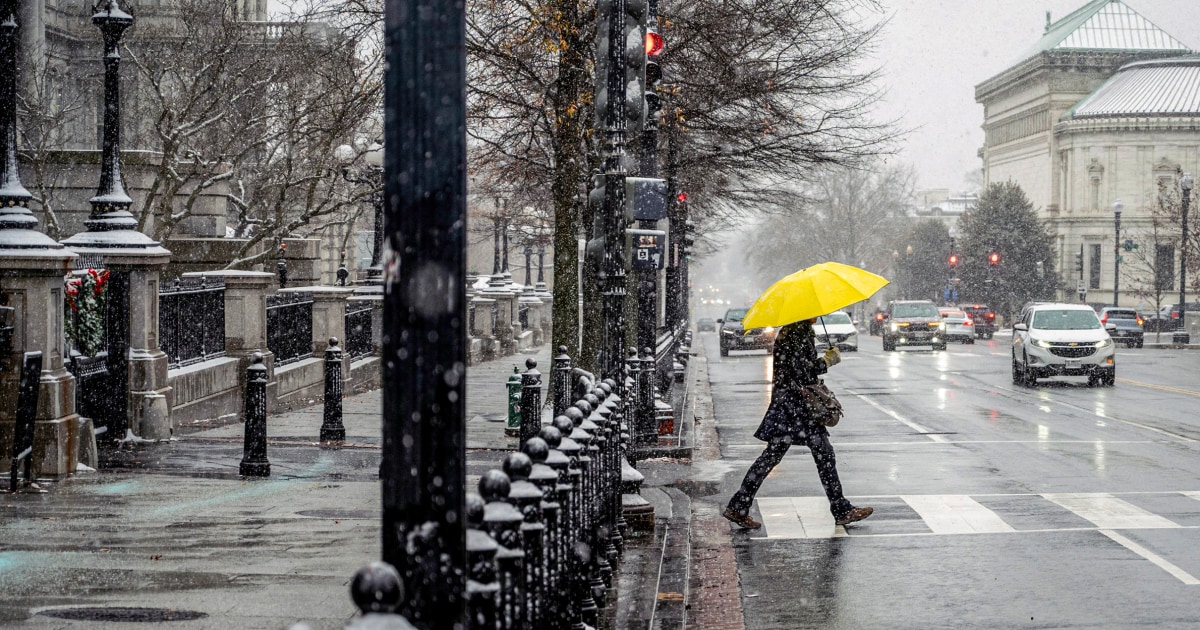
Dec. 6, 2025, 12:18 PM ESTBy Mirna Alsharif and Christine RappAround 19 million people across the West and Midwest are under winter alerts as heavy snow and strong winds sweep through the regions.On Saturday morning, snow showers were scattered over parts of the northern Plains and Rockies, from Montana to the Dakotas. This precipitation is expected to persist through the day, with snow gradually shifting into Iowa and Minnesota by the afternoon.By Saturday night, a burst of snow and wintry mix will shift into Illinois, Missouri and Wisconsin. This quick blast of winter weather will affect the area, including Chicago, through the overnight hours.The snow will extend into parts of Michigan, Indiana and Ohio while lingering over Illinois on Sunday morning. This system will move relatively quickly, reaching the interior Northeast by Sunday night.Snow showers will linger over the region through Sunday night before tapering off Monday morning.The highest snow totals will target the mountains, where parts of Wyoming, Utah, Montana and Colorado could see an additional 5 to 12 inches, with up to 20 inches possible in some areas. The snow combined with 60 mph wind gusts will make mountain travel very difficult through the weekend.Forecasters expect 2 to 5 inches of snow across a swath of the Midwest from the Dakotas through Lake Michigan, including Chicago. Around 6 to 8 inches of snow will be possible over Iowa.Totals across the interior Northeast will be minor, with most seeing a dusting of up to 1 inch. Forecasters expect 2 to 4 inches over western New York.Cold air mass takes holdTemperatures will remain on the cooler side for the Rockies, the Plains, the Northeast and parts of the Southeast on Saturday afternoon, with highs 5 to 20 degrees below average. Daytime highs will range from the single digits in the northern Plains, to the 20s to 50s across the Midwest, Southeast and Northeast.Overnight lows will dip below zero across the northern Plains, and as low as the 10s to 20s across the Midwest, Rockies, Appalachians and Northeast. Despite the chill, no record lows are forecast for Saturday.On Sunday, the bulk of cold air will sit over the Plains, with daytime highs 10 to 25 degrees below average. This will especially affect Minnesota, the Dakotas and Iowa, where highs will stay in the single digits and teens.Active week in the NorthwestA series of strong Pacific storms fueled by an atmospheric river will bring a risk of widespread flooding to parts of Washington and Oregon through the week.Flood alerts will go into effect for the western half of these states, including Seattle and the Oregon cities of Portland and Eugene starting Sunday night and lasting through Friday. Rounds of heavy rain will affect the region over the next week, bringing 2 to 6 inches of rain, with up to 10 inches possible in some areas.Snow levels in this region will climb above 6,000 to 7,500 feet. Prolonged threats include landslides, burn scar flash flooding and coastal flooding.Mirna AlsharifMirna Alsharif is a breaking news reporter for NBC News.Christine RappChristine Rapp is a meteorologist for NBC News.
Comments are closed.
Scroll To Top
  • Home
  • Travel
  • Culture
  • Lifestyle
  • Sport
  • Contact Us
  • Politics
© Copyright 2025 - Be That ! . All Rights Reserved