• 2016: Rob Reiner talks movie inspired by son's…
  • Rob Reiner's son arrested in connection with parents'…
  • Suspects seen testing bombs for New Year’s terror…
  • Brian Walshe found guilty of killing his wife…

Be that!

contact@bethat.ne.com


Be That ! Menu   ≡ ╳
  • Home
  • Travel
  • Culture
  • Lifestyle
  • Sport
  • Contact Us
  • Politics Politics
☰

Be that!

Dec. 12, 2025, 9:49 AM ESTBy Elmira AliievaWith climate change steadily dismantling the icy habitat essential to their existence, new research suggests polar bears are rapidly rewiring their own genetics in a bid to survive.The species is being forced to adapt to the harsher reality of a warming Arctic, in what scientists believe is the first documented case of rising temperatures driving genetic change in a mammal.Researchers from the University of East Anglia in Britain say these findings, published Friday in the journal Mobile DNA, offer a rare glimmer of hope for the species.”Polar bears are still sadly expected to go extinct this century, with two-thirds of the population gone by 2050,” Alice Godden, who is the lead author of the study, told NBC News. “I believe our work really does offer a glimmer of hope — a window of opportunity for us to reduce our carbon emissions to slow down the rate of climate change and to give these bears more time to adapt to these stark changes in their habitats.”Building on earlier University of Washington research, Godden’s team analyzed blood samples from polar bears in northeastern and southeastern Greenland. In the slightly warmer south, they found that genes linked to heat stress, aging and metabolism behaved differently from those in northern bears.“Essentially this means that different groups of bears are having different sections of their DNA changed at different rates, and this activity seems linked to their specific environment and climate,” Godden said in a university press release.She said this shows, for the first time, that a unique group of one species has been forced to “rewrite their own DNA,” adding that this process can be considered “a desperate survival mechanism against melting sea ice.” The Arctic Ocean has repeatedly experienced record-high temperatures in the past few years, National Oceanic and Atmospheric Administration (NOAA) monitoring data shows.Researchers say warming ocean temperatures have reduced vital sea ice platforms that the bears use to hunt seals, leading to isolation and food scarcity. This led to genetic changes as the animals’ digestive system adapts to a diet of plants and low fats in the absence of prey, Godden told NBC News. “Food availability is a real problem for these bears — everywhere, but most prominently in the south,” she said. “This may suggest their body shape and composition is also changing in response to their warmer environments.” The lead researcher said that her team decided to focus on the southern group of bears because the area’s warmer climate serves as a glimpse of what is to come for other bear populations later this century if current trends in climate change continue.The International Union for Conservation of Nature estimates there are currently about 26,000 polar bears worldwide. Scientifically known by its Latin name Ursus maritimus, meaning “sea bear,” the animals are listed as vulnerable on the IUCN Red List of Threatened Species, meaning they are considered to be facing “a high risk of extinction in the wild.” The study “does not mean that polar bears are at any less risk of extinction,” Godden said, though the discovery may “provide a genetic blueprint for how polar bears might be able to adapt quickly to climate change.”Godden added: “We all must do more to mitigate our carbon emissions to help provide and extend this window of opportunity to help save this wonderful vital species.”Elmira AliievaElmira Aliieva is an NBC News intern based in London.


admin - Latest News - December 13, 2025
admin
7 views 16 secs 0 Comments


With climate change steadily dismantling the icy habitat essential to their existence, new research suggests polar bears are rapidly rewiring their own genetics in a bid to survive


Source link

TAGS:
PREVIOUS
Race to rescue people trapped in Washington floods
NEXT
Dec. 13, 2025, 5:15 AM ESTBy Jana Kasperkevic and Melinda YaoThe Fighting Irish take a stand, McDonald’s launches a holiday hit, and the Golden Globes’ new category snubs a major player. Test your knowledge of the week in news, and take last week’s quiz here.#embed-20251212-news-quiz iframe {width: 1px;min-width: 100%}Jana KasperkevicWeekend Director of Platforms, NBCMelinda YaoI am an intern for NBC News’ Data / Graphics team.Richie Duchon, Lara Horwitz, Kaylah Jackson, Keira Ferretti and Jeremy Mikula contributed.
Related Post
October 24, 2025
Hegseth says U.S. struck alleged Tren de Aragua boat
October 15, 2025
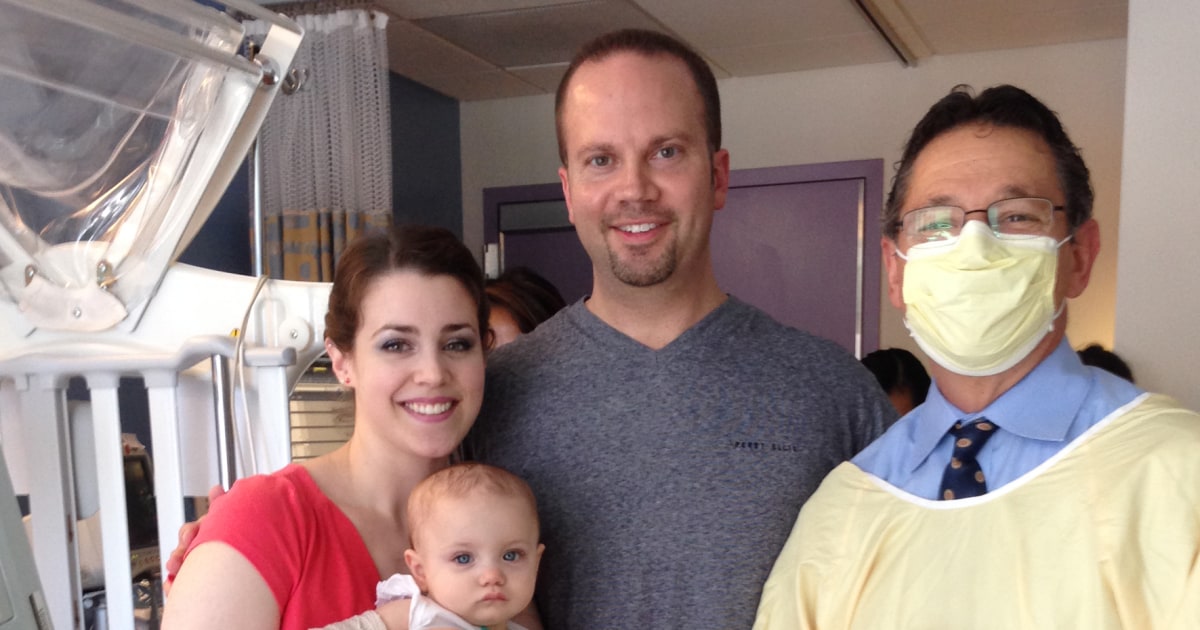
Savewith a NBCUniversal ProfileCreate your free profile or log in to save this articleOct. 15, 2025, 5:08 PM EDTBy Kaitlin SullivanTwo months after she was born, Eliana Nachem got a cough that wouldn’t go away. Three weeks later, she also started having runny stool, prompting a visit to her pediatrician. Eliana didn’t have allergies or a gastrointestinal condition; instead, tests pointed to a problem with her immune system. At 4 months old, Eliana received her diagnosis: severe combined immunodeficiency, or SCID. Babies born with the extremely rare disease do not develop the cells required for a functioning immune system. Every germ becomes a potentially fatal threat and to stay healthy, children with the condition must live in a completely sterile environment. Without treatment, kids usually do not live past their second birthday.“I expected the worst, then I immediately went into research mode,” Eliana’s father, Jeff Nachem, said. The Nachems also got to work turning their home into a germ-free fortress, rehoming their pets, never opening the windows and opening the doors to outside as sparingly as possible. Eliana was kept inside, and on the rare instance when visitors came by, the family had disposable gowns, gloves and masks for them to wear. (SCID is sometimes referred to as “bubble boy disease.”) Eliana also started on a temporary therapy that replaced a missing enzyme in her body, called adenosine deaminase (ADA).In the midst of the strict protocol, they learned about a clinical trial in Los Angeles — 2,600 miles from their home in Fredericksburg, Virginia — that could help their daughter live a normal life.Jeff, Caroline and Eliana Nachem with Dr. Donald Kohn before Eliana’s gene therapy for ADA-SCID.Courtesy Caroline NachemScientists have identified about 20 gene variants that cause SCID. Eliana’s form of the disease, ADA-SCID, is diagnosed in fewer than 10 children born in the U.S. each year. (Under 100 babies are diagnosed with any form of SCID in a given year.)In 2014, when she was just 10 months old, Eliana was one of 62 children enrolled in a clinical trial for a gene therapy for ADA-SCID. In a study published Wednesday in the New England Journal of Medicine, researchers followed up on the results of that Phase 2 clinical trial. The update reported that all 62 kids, who received the treatment from 2012 to 2019, are alive today. In 59 of them, including Eliana, the gene therapy completely restored immune function, without requiring any additional treatment — a success rate of 95%.“This is one of the most successful gene therapy trials for an ultra-rare genetic disease that we have,” said Dr. Talal Mousallem, an associate professor of pediatrics at the Duke University School of Medicine. He was not involved with the trial. Correcting stem cellsThe treatment begins with doctors harvesting stem cells from the patient’s own bone marrow. These stem cells are purified in a lab, and then modified using an inactivated form of the virus that causes HIV. Instead of carrying the human immunodeficiency virus, this version carries the ADA gene that people with ADA-SCID are missing, reinserting the gene into the stem cell DNA. Before the customized treatment is reinfused back into the patient, they must undergo chemotherapy to get rid of the body’s existing stem cells and make room for the new ones. Once back in the body, the cells — which no longer carry the virus, just the gene it left behind — get to work building an immune system over the next year.“It’s a one-time delivery vehicle that takes the gene into the DNA of the stem cell, so every time it divides to make other cells, those cells carry that ADA gene,” said Dr. Donald Kohn, a pediatric bone marrow transplant physician at UCLA’s Broad Stem Cell Research Center, who led the trial. A less risky optionGene therapy clinical trials are underway for four subtypes of SCID, but the standard of care is still a bone marrow transplant, which builds an immune system using stem cells from a donor. The treatment can be risky and side effects further down the line.It’s ideal for bone marrow transplants to occur between siblings — who share about half of the same DNA — but two siblings only have about a 25% chance of being a match. In most cases, the donor is not a sibling, which introduces the risk that the donor’s immune cells will attack the recipient’s body, a phenomenon called graft-versus-host disease.The risk of graft-versus-host means kids who receive functioning stem cells from another person have to be on immunosuppressant drugs following the transplant, which keep the foreign cells from attacking their immune system.“Which slows down the progress, because you are suppressing the immune system while also trying to build an immune system,” Kohn said. People also have to undergo much higher doses of chemotherapy before receiving a donor bone marrow transplant than they do before undergoing gene therapy. “There can be effects [later in life] from being treated with chemotherapy, including growth, endocrine or fertility effects,” said Dr. Whitney Reid, an attending physician in the division of allergy and immunology at Children’s Hospital of Philadelphia, who was not involved in the trial. With gene therapy, “you can give those patients much lower doses of chemotherapy and there is a much lower chance of rejection,” she said. Eliana “was able to go from living in isolation to being able to go to preschool and go swimming in a public pool and play on a playground, and do all the things that every other kid gets to do,” her father said. Courtesy Caroline Nachem Having another therapy for ADA-SCID is particularly important, Reid added. Changes in the ADA gene cause toxins to build up in clumps of white blood cells called lymphocytes. This can cause hearing loss and learning difficulties as kids get older. Unlike other types of SCID, “it doesn’t only affect the immune system,” Reid said. Mousallem, of Duke University, said he hopes the success of this trial will open the door to gene therapies for other rare diseases that often go untreated, as well as SCID caused by other gene variants. “The data is great for ADA-SCID, and it is our hope that one day this becomes the standard of care,” he said. Eliana turns 12 years old next week and loves going to dance classes.“It’s amazing that she was able to go from living in isolation to being able to go to preschool and go swimming in a public pool and play on a playground, and do all the things that every other kid gets to do,” her father said. Eliana still undergoes testing twice a year to make sure her immune system hasn’t weakened. So far, so good.“We think it’s a lifelong therapy,” Kohn said. “Some of these kids are now 15 years old and are living normal lives. We treated them when they were little babies and now they’re going to prom.”Kaitlin SullivanKaitlin Sullivan is a contributor for NBCNews.com who has worked with NBC News Investigations. She reports on health, science and the environment and is a graduate of the Craig Newmark Graduate School of Journalism at City University of New York.
November 24, 2025
US and Ukraine Signal Progress in New Talks to End Russia's War
October 22, 2025
White House disputes Sean Combs pardon story
Comments are closed.
Scroll To Top
  • Home
  • Travel
  • Culture
  • Lifestyle
  • Sport
  • Contact Us
  • Politics
© Copyright 2025 - Be That ! . All Rights Reserved