• Exams were taking place near the site of…
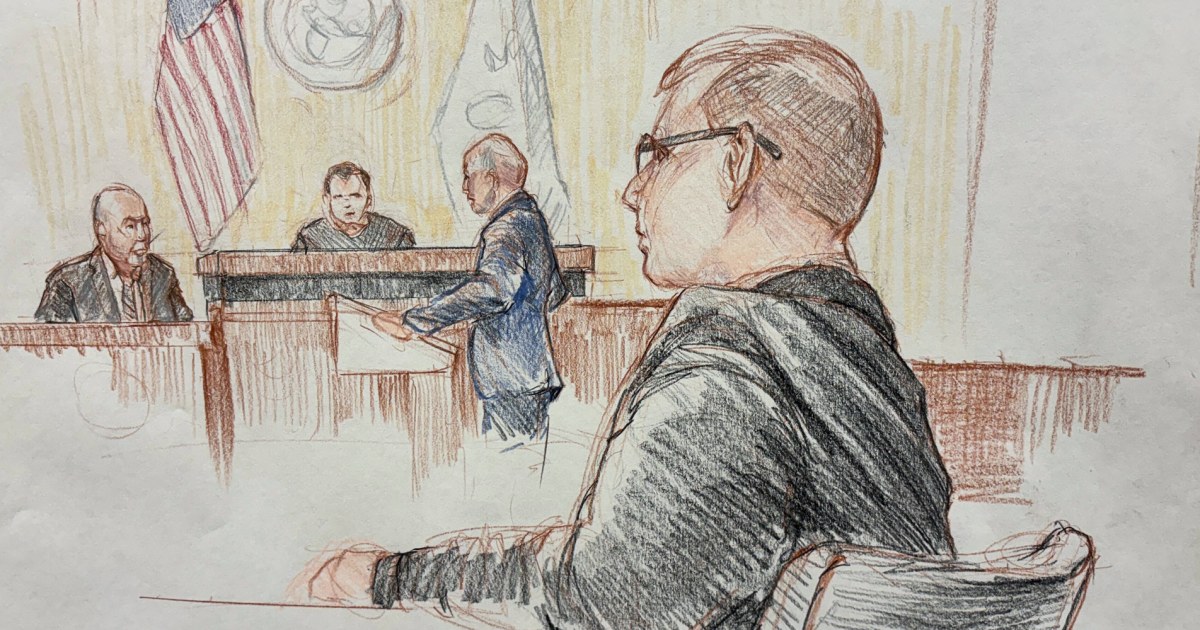
  • Police say shooter at Brown University was 'dressed…
  • Arctic temperatures, snow and flooding sweep across the…
  • Trump vows retaliation after two U.S. soldiers and…

Be that!

contact@bethat.ne.com


Be That ! Menu   ≡ ╳
  • Home
  • Travel
  • Culture
  • Lifestyle
  • Sport
  • Contact Us
  • Politics Politics
☰

Be that!

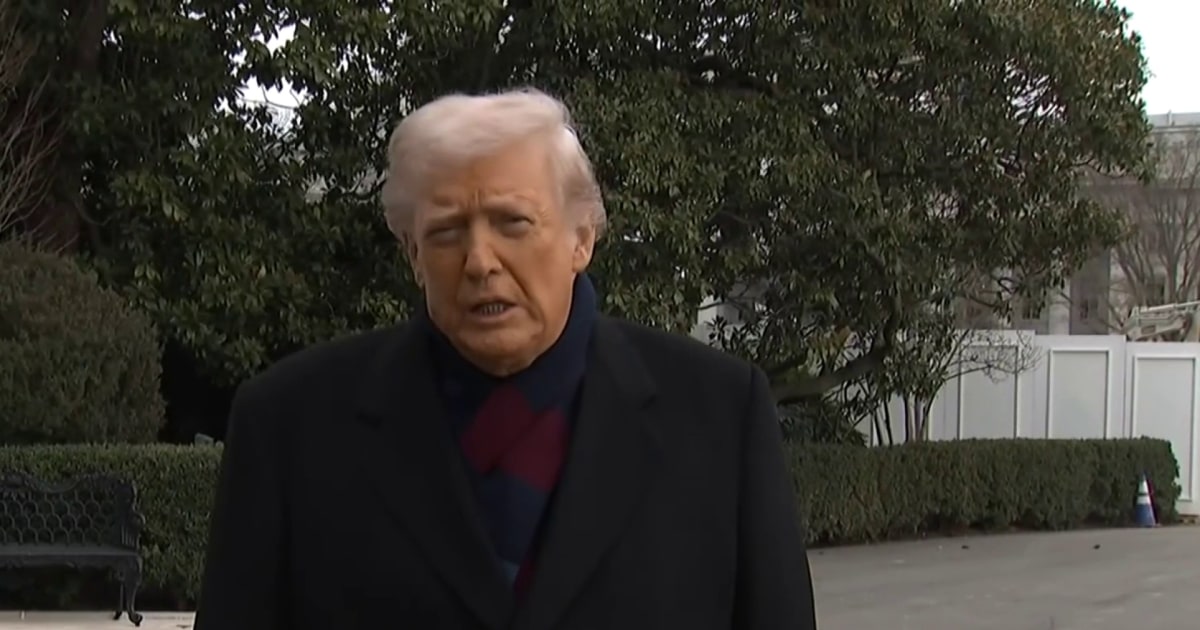
'We will retaliate’: Trump responds to deaths of U.S. soldiers and interpreter in Syria
admin - Latest News - December 13, 2025
admin
5 views 26 secs 0 Comments


President Donald Trump told reporters the U.S. planned to “retaliate” after two U.S. Army soldiers and a civilian U.S. interpreter were killed in an attack in Palmyra, Syria. NBC News’ Raf Sanchez reports on how Syria’s new regime will cooperate with the U.S. 


Source link

TAGS:
PREVIOUS
Dec. 13, 2025, 10:11 AM ESTBy Freddie ClaytonTripoli’s Red Castle museum has reopened for the first time since the 2011 uprising that toppled Moammar Gadhafi, unveiling a trove of treasures that span millennia, from ancient mummies to relics of Libya’s turbulent and fascinating history. Formerly known as As-Saraya Al-Hamra, the fortress that houses the museum has long been a central landmark in Libya’s capital, Tripoli. It houses an extensive collection of artifacts tracing 5,000 years of history, from prehistoric times through to Libya’s Roman, Greek and Islamic eras. Collections include Islamic art and architecture as well as objects from Italian colonial rule, World War II and Libya’s independence, with galleries dedicated to the prehistoric period and ancient Libyan tribes, such as the Garamantes.“The reopening of the National Museum is not just a cultural moment but a live testimony that Libya is building its institutions,” Abdulhamid al-Dbiebah, prime minister of the Government of National Unity, said at a ceremony on Friday awash with fireworks at the site.The museum closed in February 2011 during the NATO-backed uprising against Gadhafi, as anti-government protesters in the northeastern city of Benghazi began calling for the leader to step down and for the release of political prisoners. As protests intensified, demonstrators took control of Benghazi and unrest spread to Tripoli, with the Libyan government using lethal force against demonstrators. When rebels launched their first attack on the Libyan capital in August that year, a group of armed men were reported to have entered the national museum, incorrectly believing it to conceal the entrance of a secret government tunnel. The museum’s artifacts were largely left intact, though a 1960s Volkswagen Beetle belonging to Gadhafi was among the regime-linked objects vandalized.Gadhafi was eventually toppled with the help of an international coalition that included the U.S.Renovations for the museum, built in the 1980s and opened by Gadhafi, began in March 2023 by the Tripoli-based GNU.The reopening of the national museum indicates a recovery in the country’s cultural sector, despite unresolved political dynamics. The country remains divided between administrations in the west and east that have not had a unified budget in more than a decade.But with a planned election on the horizon in 2026, Hager Ali, a research fellow at the German Institute for Global and Area Studies, said the museum’s opening carries a political message.The reopening is “kind of like a proof of concept of the western government that they are stable, especially in the forerun of elections,” she told NBC News on Saturday, referring to the GNU. “There really isn’t anything that isn’t political right now in Libya,” she added. “This is very much a kind of a symbol that everyone can get behind.”Since renovations began, Libya has recovered 21 artifacts that were smuggled out of the country after Gadhafi’s fall, notably from France, Switzerland and the United States, the chairman of the board of directors of the antiquities department, Mohamed Farj Shakshoki, told Reuters ahead of the opening.Libya houses five UNESCO World Heritage sites, which in 2016 were all declared “endangered” due to instability and conflict.The historic town of Ghadames in western Libya was among the sites under threat, but conservation work spearheaded by the Managing Libya’s Cultural Heritage project led to the site being officially removed from UNESCO’s List of World Heritage in Danger in July.Freddie ClaytonFreddie Clayton is a freelance journalist based in London. Reuters contributed.
NEXT
‘We will retaliate’: Trump blames ISIS for attack in Syria
Related Post
October 29, 2025
Sean Grayson found guilty of murder in the death of Sonya Massey
October 2, 2025
What the early polls say about the shutdown
November 13, 2025
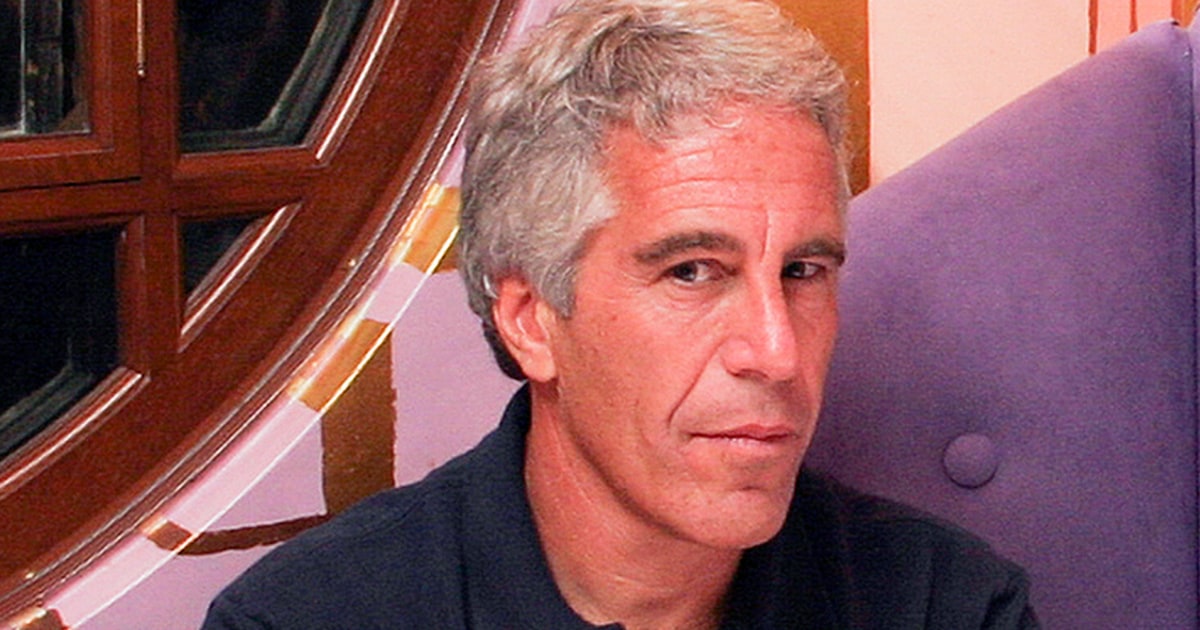
Nov. 13, 2025, 4:50 PM ESTBy Daniel ArkinThorbjørn Jagland, the former prime minister of Norway, needed insight into President Donald Trump’s thinking. Mohamed Waheed Hassan, the former president of the Maldives, wanted guidance on high-level government finances. Larry Summers, the former treasury secretary, sought advice on his relationship with a woman. Michael Wolff, the journalist and bestselling author, seemed to be looking for a medical referral — a “colonoscopy man,” to be precise.When some of the world’s most influential people required outside input, they went to Jeffrey Epstein, the disgraced financier and convicted sex offender who cultivated an elite social circle that at one time included Trump, former President Bill Clinton and the British royal formerly known as Prince Andrew.The more than 20,000 pages of documents released by House lawmakers this week contain a voluminous record of Epstein’s email exchanges with boldface names in the overlapping worlds of government, finance and media. The emails, which were reviewed by NBC News reporters, illustrate Epstein’s vast social network and paint a portrait of him as a go-to for counsel on all manner of subjects, from big-picture political strategy in the Trump era to more trivial concerns.The messages are sure to add to the intrigue around Epstein, who died by suicide in 2019 while awaiting trial on sex-trafficking charges. He has become a fixture of American politics owing to his ties to Trump, who has vehemently denied any wrongdoing and says he ended their friendship sometime in the 2000s. The documents are also likely to renew questions about why so many powerful people continued to associate with Epstein even after he pleaded guilty in 2008 to two prostitution charges in Florida state court.Epstein appears to have embraced his reputation as a font of wisdom. In the typo-strewn, sometimes jarringly informal emails, he presents himself to his interlocutors as an authority on Trump’s mindset and negotiating tactics. (NBC News is quoting from the messages verbatim, typos included.)“He understood trump after our conversations. it is not complex. he must be seen to get something its that simple,” Epstein said to Jagland, referring to conversations with Vitaly Churkin, Russia’s former ambassador to the United Nations.Jagland, Norway’s former prime minister, looked to Epstein as a valuable resource as he attempted to get acquainted with the first Trump administration.In an email in late February 2017, a month after Trump’s first inauguration, Jagland asked Epstein if he could pay him a visit in the French city of Strasbourg, the seat of the European Parliament. “I really need to understand more about Trump and what’s going on in the American society,” Jagland wrote.Jagland at the time was the secretary-general of the Council of Europe, an international organization focused on human rights and the rule of law on the continent. He could not be reached for comment on Thursday, and the Council of Europe did not immediately respond to a request for comment Thursday.Four years earlier, Epstein got a message in his inbox from Hassan, the president of the Maldives. “Jeffrey,” the Maldivian leader wrote, “Need your advice.” Hassan relayed that his finance minister had informed him about an “anonymous funds manager who is willing to deposit 4 billion dollars” in the South Asian country’s coffers.Hassan seemed nervous about the generous offer. “I don’t feel I have enough information on this. I don’t know who is this funds manager,” he wrote in part. He was eager for Epstein’s take. “What do you think I should do. … Does this sound all ridiculous to you. I have a strange feeling about this whole thing.”Epstein’s reply was blunt: “this from a fraud web site, your mimister will get upset that you dont want to at least try, what do we have to lose , always the pitch.”Hassan did not immediately respond to a request for comment Thursday.Yet not all the emails released by the House on Wednesday concern weighty matters of foreign and monetary policy. Epstein carried on lighthearted email correspondences with high-profile friends in the U.S., including Summers, a former president of Harvard University who served in the Clinton and Obama administrations.Epstein and Summers traded emails regularly; the House lawmakers’ cache includes messages sent in 2017, 2018 and 2019. In one email dated March 16, 2019, Summers — a professor at Harvard — describes a conversation he had with an unnamed woman.“I said what are you up to. She said ‘I’m busy’. I said awfully coy u are,” Summers wrote to Epstein. He said in closing: “Tone was not of good feeling. I dint want to be in a gift giving competition while being the friend without benefits.”Epstein replied with his perspective on Summers’ dynamic with the woman: “shes smart. making you pay for past errors. ignore the daddy im going to go out with the motorcycle guy, you reacted well.. annoyed shows caring., no whining showed strentgh.”Summers did not immediately respond to a request for comment Thursday. He has been previously quoted as saying that he felt regret for “my past associations with Mr. Epstein.”The emails show that Wolff, a reporter and the author of four books about Trump, regularly offered advice of his own to Epstein.In an exchange dated Dec. 15, 2015, the night of a televised debate in the Republican presidential primary, Wolff gave Epstein a “heads up” — CNN was “planning to ask Trump tonight about his relationship with you.” Epstein replied: “If we were able to craft an answer for him, what do you think it should be?”Wolff’s counsel: “I think you should let him hang himself.”“If he says he hasn’t been on the plane or to the house, then that gives you a valuable PR and political currency. You can hang him in a way that potentially generates a positive benefit for you, or, if it really looks like he could win, you could save him, generating a debt,” Wolff added.Trump was not asked about his relationship with Epstein during that debate, according to a CNN transcript. Wolff did not respond to multiple requests for comment this week.Epstein was on hand to answer Wolff’s questions, too. “Who is your colonoscopy man?” Wolff wrote to Epstein on May 30, 2017. Epstein replied with the doctor’s name and Wolff arrived at a realization. “His son was in my son’s class at Collegiate,” Wolff said, referring to an all-boys private school in Manhattan.In an appearance on a podcast Wednesday, The Daily Beast’s Joanna Coles asked Wolff whether he attempts to “suck up” to powerful people to make them believe he’s “on their side.” In response, Wolff said in part: “Am I acting? Am I playacting? Am I playing a role? The answer is yes. That’s what a journalist, a writer, in that situation does.”It remains unclear whether the people who came to Epstein with their questions and concerns necessarily acted on his advice. But some of the emails illustrate the gratitude they felt for his counsel.“Thank you,” Hassan, the former president of the Maldives, wrote in response to Epstein’s financial guidance. “You are my savior. I will do exactly what you said.”Daniel ArkinDaniel Arkin is a senior reporter at NBC News.Kate Reilly contributed.
October 15, 2025
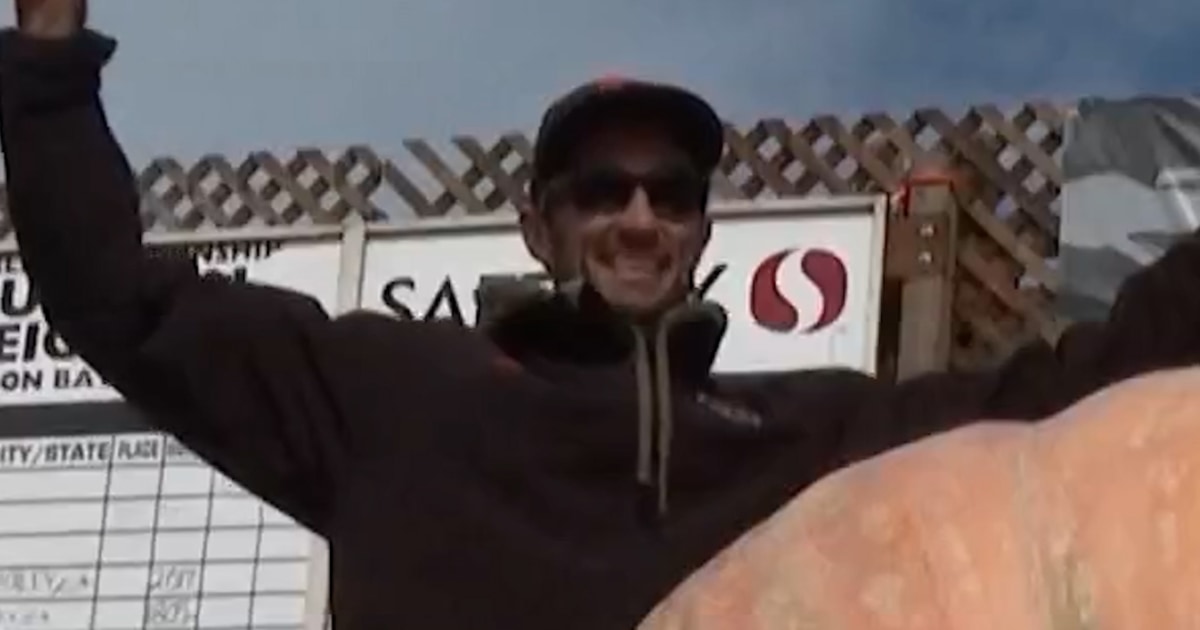
2,300-pound pumpkin wins first prize in California
Comments are closed.
Scroll To Top
  • Home
  • Travel
  • Culture
  • Lifestyle
  • Sport
  • Contact Us
  • Politics
© Copyright 2025 - Be That ! . All Rights Reserved