• Rob Reiner's daughter says she is 'in shock'
  • Director Rob Reiner and wife found stabbed to…
  • Rob Reiner and wife found dead of apparent…
  • Person of interest in Brown University shooting to…

Be that!

contact@bethat.ne.com


Be That ! Menu   ≡ ╳
  • Home
  • Travel
  • Culture
  • Lifestyle
  • Sport
  • Contact Us
  • Politics Politics
☰

Be that!

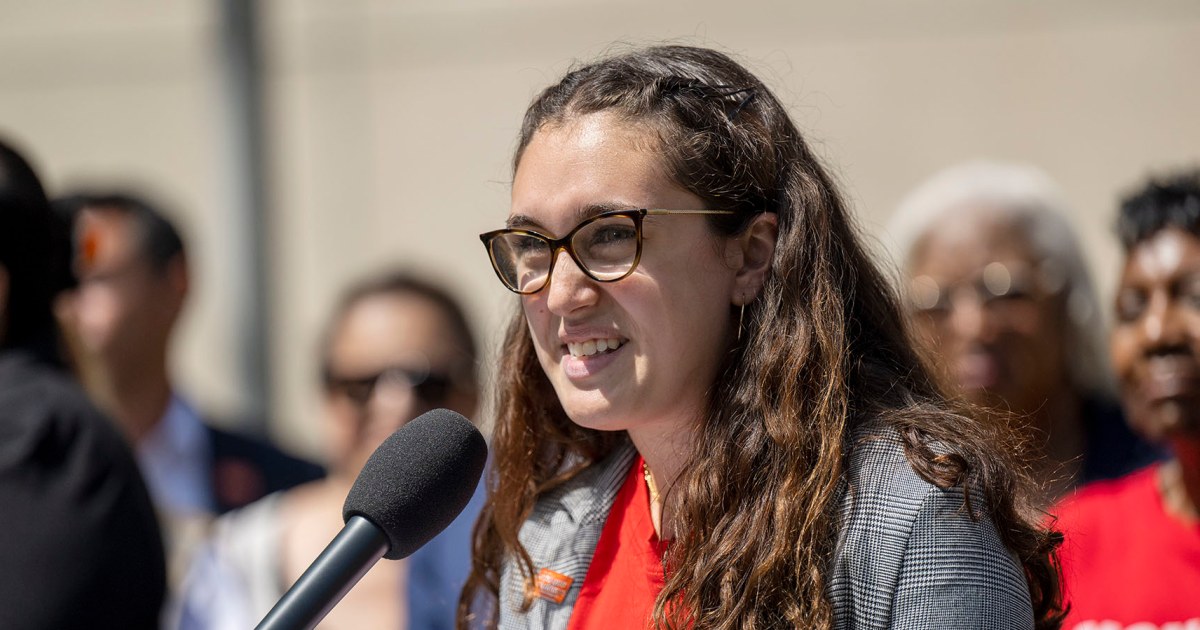
Dec. 14, 2025, 2:52 AM ESTBy Dennis Romero and Sophie ComeauAmid the scores of fearful and worried students following Saturday’s shooting at Brown University were two who have been here before.Mia Tretta, 21, was shot following the 2019 mass shooting at Saugus High School, about 40 miles north of Los Angeles. A 16-year-old boy carried out that attack, killing two, including Tretta’s best friend, and injuring three before fatally shooting himself. Zoe Weissman, 20, attended Westglades Middle School, adjacent to Marjory Stoneman Douglas High School in Parkland, Florida, when a former student opened fire at the latter, killing 17 in 2018.Follow live updates hereNeither Tretta nor Weissman expected to experience a mass shooting again.“No one in this country even assumes it’s going to happen to them,” Tretta said. “Once it happens to you, you assume or are told it will never happen again, and obviously that is not the case.”At Brown on Saturday, an unidentified gunman killed two students and injured another nine before fleeing. He remains at large.Weissman said she was at her dorm when a friend called to say students were running away from a campus building and a shooting was likely underway. She stayed put and said she has remained at her dorm room since she first heard the news.“At first, I was panicked,” Weissman, a sophomore pre-med student, said in a phone interview. “Once I knew a little more and I didn’t feel there was imminent danger, I felt numb — exactly how I did when I was 12.”Tretta, a junior, said she chose Brown because she believed its smaller size would translate to greater safety. But the trauma of her injury followed her to Brown even before Saturday’s attack. She said she can’t enter a library on campus alone for fear that another shooting could happen.Both students have turned fear into anger and are outspoken about gun violence.Weissman has become an activist calling for greater gun regulation. When she was 16, she was president of March for Our Lives in Parkland, a chapter of the group co-founded by Marjory Stoneman Douglas High School shooting survivor David Hogg.“I’m angry that I thought I’d never have to deal with this again, and here I am eight years later,” Weissman said.Weissman said the activism helps her heal, and her experience draws attention to gun regulation.“I think the fact this is my second shooting can be very impactful for people,” she said. “When people put a face to something, they care a lot more.”Tretta said the day she was shot in 2019 changed her life forever. “I have not been the same person I was that day ever again,” she said, “and I assume it won’t be any different for the students at Brown.”Dennis RomeroDennis Romero is a breaking news reporter for NBC News Digital.Sophie ComeauSophie Comeau is an associate booking producer with NBC News.Phil Helsel contributed.
admin - Latest News - December 14, 2025
admin
3 views 12 secs 0 Comments


Amid the scores of fearful and worried students following Saturday’s shooting at Brown University were two who have been here before


Source link

TAGS:
PREVIOUS
Police release video of possible Brown University shooter
NEXT
One suspect in custody in Brown University shooting
Related Post
November 10, 2025
New deal emerges on Capitol Hill that could end government shutdown
November 4, 2025
Nov. 4, 2025, 1:05 PM ESTBy Scott Wong, Lillie Boudreaux, Frank Thorp V and Ryan NoblesWASHINGTON — As the 35-day government shutdown ties for the longest in American history on Tuesday, senators predicted that the impasse could end this week.“I’m pretty confident,” said Sen. Markwayne Mullin, R-Okla.After weeks without any movement, bipartisan talks among rank-and-file members have been picking up, leading to the first public signs of optimism that the shutdown could soon end.Mullin said that some Democrats had privately indicated last week that they were willing to vote for the short-term Republican spending bill that would reopen the government through Nov. 21. But, Mullin said, Senate Minority Leader Chuck Schumer, D-N.Y., had instructed them to wait until after Tuesday’s elections so they wouldn’t depress turnout from the liberal base that has been urging the party to hold the line. Schumer’s office had no immediate comment.”I think there’s a possibility we could do it tomorrow night … but more than likely Thursday,” said Mullin, who regularly speaks with President Donald Trump, Democrats and his former House colleagues.Centrist Republican Sen. Mike Rounds of South Dakota, who has taken part in some of the bipartisan talks on how to get the government reopened, agreed, repeatedly saying he’s “optimistic” the shutdown could end this week. And Sen. Eric Schmitt, R-Mo., also pointed to Tuesday’s elections in Virginia, New Jersey, New York and California as a key factor that could shake loose a solution to the impasse.“After the elections come and go, I think the Democrats will reveal what this was about all the time, which was a political play. They want to keep their base upset, try to blame Republicans, even though they voted over 13 times now to continue to shut down the government,” Schmitt told reporters. “So my guess is that later this week, we’ll end up funding the government as Republicans had proposed 35 days ago.”Democrats, however, have dismissed the GOP argument that reopening the government will all hinge on the election, with Sen. Chris Murphy of Connecticut mocking it as “cynical galaxy brain thinking.”Republicans need just five more Democrats in the Senate to break with their leadership and vote for a continuing resolution or CR to reopen the government. On Sept. 26, the GOP-controlled House had passed a clean CR to fund the government through Nov. 21. But Senate Democrats opposed it, insisting that any bill to fund the government must also address health insurance subsidies that will expire at the end of this year, raising premiums for millions. Tuesday marked the 14th time that Democrats voted to block the House bill in the Senate.But with Nov. 21 and the Thanksgiving holiday fast approaching, there is now a need for Congress to pass a longer CR — possibly into the new year — to give bipartisan negotiators a longer runway to craft spending bills for the fiscal year that began on Oct. 1.#embed-20251002-shutdown-milestones iframe {width: 1px;min-width: 100%} Senate Appropriations Committee Chairman Susan Collins, whose panel is responsible for writing spending bills, said Monday night she is “very cautiously hopeful that it will be resolved by the end of this week.”“There have been a lot of conversations on both sides of the aisle and across the aisle, and across the chambers,” the Maine Republican said, “and I do believe that we are finally making progress.”Collins cited a level of “specificity” in the talks that had not been there in previous negotiations but admitted “it’s too soon to declare that this nightmare of a shutdown is over.”The Appropriations chair supports a new CR to keep the government funded through Dec. 19, which she said would pressure Congress to reach a spending deal right before the holidays.We’d like to hear from you about how you’re experiencing the government shutdown, whether you’re a federal employee who can’t work right now, a person who relies on federal benefits like SNAP, or someone who is feeling the effects of other shuttered services in your everyday life. Please contact us at tips@nbcuni.com or reach out to us here.It’s a well-worn tactic for forcing a funding deal, but it’s drawn opposition from many in the GOP in recent years. On Tuesday morning, House Speaker Mike Johnson, R-La., said he opposed setting a deadline in December, warning that it could entice lawmakers to pass a massive omnibus spending package, rather than individual funding bills that are more carefully crafted to address spending.He said he would back a CR that funds the government into January — a timeline endorsed by Florida Sen. Rick Scott and other Republicans.“I am not a fan of extending it to December because, let’s be frank, a lot of people around here have PTSD about Christmas omnibus spending bills,” Johnson told reporters. “We don’t want to do that. It gets too close, and we don’t want to have that risk. We’re not doing that. We’re not doing that, but too many people have concern. I think putting it into January makes sense.”But there are no bipartisan negotiations happening at the leadership level with Schumer and House Minority Leader Hakeem Jeffries, D-N.Y., about a longer-term CR.Across the aisle, some rank-and-file Democrats are hopeful for a breakthrough as the shutdown approaches the five-week mark on Wednesday. But they’re not sharing the GOP’s confidence that it will all be over by week’s end.Democrats have been demanding that Trump and other GOP leaders come to the table to negotiate extending the expiring Affordable Care Act subsidies. So far, Republicans have refused and say Democrats need to vote to reopen the government first before any substantive health care talks can take place.“There seems to be some indication of a thaw, but I see no immediate solution on the horizon,” said Sen. Richard Blumenthal, D-Conn. “Talks are a good thing, but so far, I sense no willingness on the part of Republicans to really assure the American people that health care insurance will be guaranteed.”Speaking on the Senate floor Tuesday, Schumer said Democrats are fighting to lower health care costs at a time when 24 million Americans on Obamacare are facing sticker shock due to uncertainty about the expiring subsidies.“Never have American families faced a situation where their healthcare costs are set to double— double in the blink of an eye,” Schumer said.“The biggest beneficiaries of these enhanced premium tax credits are red states. Millions of people in Texas, Florida. Republicans seem ready to tell their own constituents back home: screw you, I would rather cut taxes for billionaires — that’s what’s going on,” Schumer said. “Democrats are going to keep pushing to get these tax credits extended.”Scott WongScott Wong is a senior congressional reporter for NBC News. Lillie BoudreauxLillie Boudreaux is a desk assistant at NBC News.Frank Thorp VFrank Thorp V is a producer and off-air reporter covering Congress for NBC News, managing coverage of the Senate.Ryan NoblesRyan Nobles is chief Capitol Hill correspondent for NBC News.Gabrielle Khoriaty contributed.
November 22, 2025
Khashoggi's wife calls Trump remarks 'disgusting'
December 8, 2025
Trump: Netflix-Warner Bros. deal ‘could be a problem'
Comments are closed.
Scroll To Top
  • Home
  • Travel
  • Culture
  • Lifestyle
  • Sport
  • Contact Us
  • Politics
© Copyright 2025 - Be That ! . All Rights Reserved