• Police seek suspects in deadly birthday party shooting
  • Lawmakers launch inquires into U.S. boat strike
  • Nov. 29, 2025, 10:07 PM EST / Updated Nov. 30, 2025,…
  • Mark Kelly says troops ‘can tell’ what orders…

Be that!

contact@bethat.ne.com


Be That ! Menu   ≡ ╳
  • Home
  • Travel
  • Culture
  • Lifestyle
  • Sport
  • Contact Us
  • Politics Politics
☰

Be that!

Looking to invest more in their friendships, some are opening shared bank accounts

admin - Latest News - September 21, 2025
admin
47 views 6 mins 0 Comments


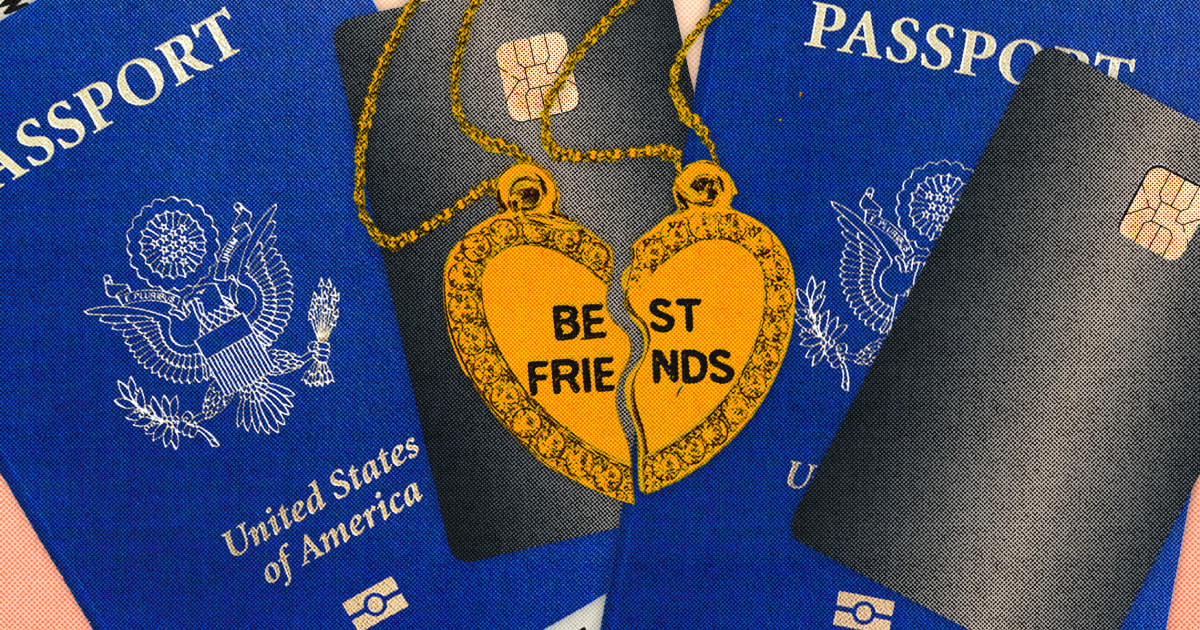
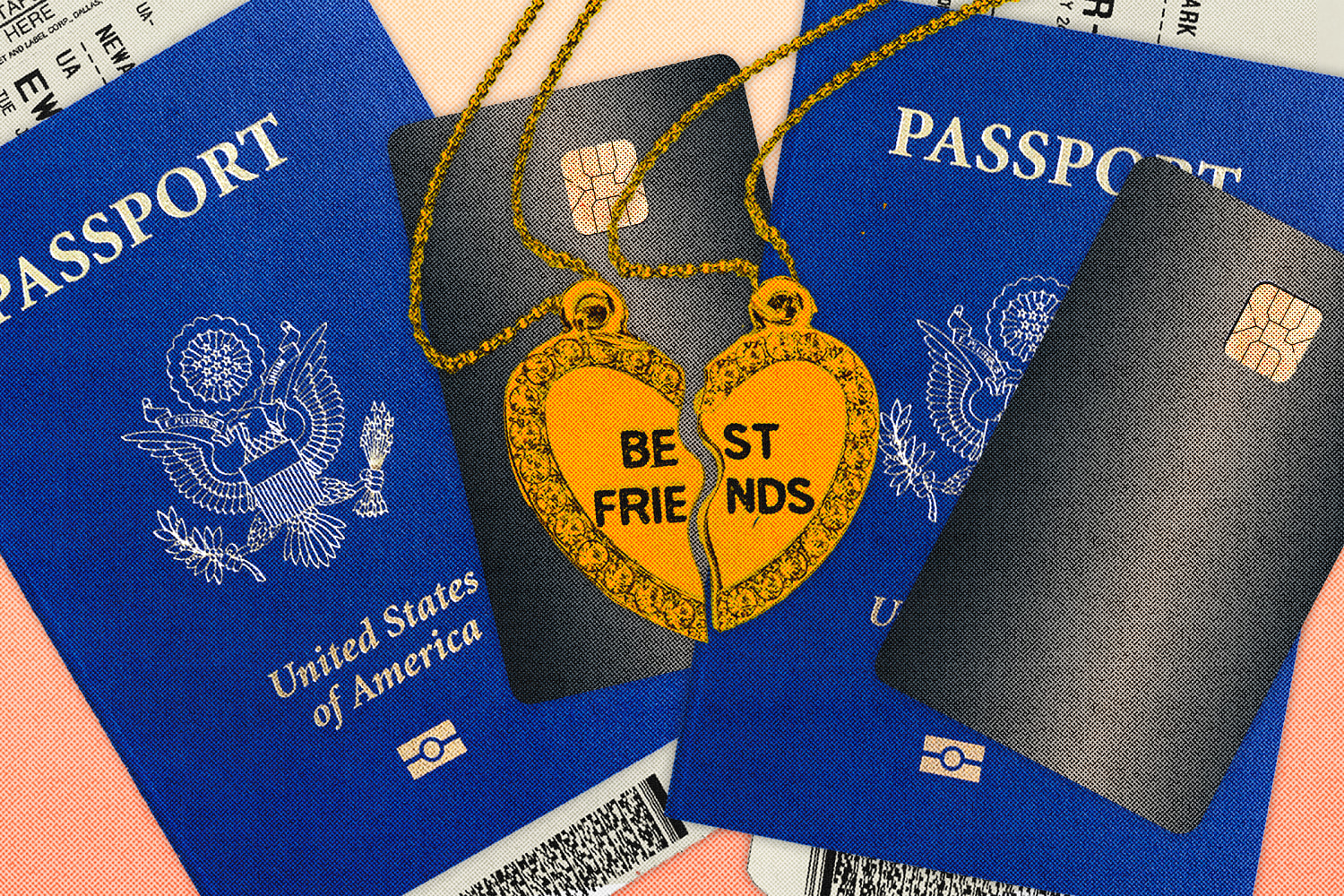
A novel way to maintain strong friendships? Creating a joint bank account.

That’s the advice Madison Machen received last year while chatting with her seat-mate on a flight to New York. The woman was on her way to meet her best friend on one of their periodic trips. The trip, she told Machen, was funded by her joint account with the friend.

“I loved the concept so much, I went home and I called my best friend and I was like, I think we need to do this,” Machen said.

Six months later, the Austin, Texas, resident and her friend Kim had saved over $1,000 in their joint Cash App account. Next up: A trip celebrating their 20th friendship anniversary next May, Machen said, hopefully in the south of France.

“It’s fun for us, because we can do little wagers, almost like a swear jar,” Machen said. “I’m training for a marathon right now, and one of my goals was, if I skip my long run, or if I skip any of my runs, I have to put in $5.”

Machen is among the handful of people on TikTok who have gone viral after posting videos about how this money-saving strategy has also been a friendship saver.

The trend is a sharp contrast from the popularity of “Buy Now, Pay Later” incentives, which allow consumers to delay paying for their purchases. But BNPL loans can lead to people falling behind on their repayments, The Associated Press reported last month.

In a world where most people tend to make financial decisions in isolation, practicing “financial intimacy” with friends can also help strengthen those relationships, according to Alyssa Davies, author of the book “Financial First Aid: Essential Tools for Confident, Secure Money Management.”

“When we start to approach money in creative and fun ways like this, it makes money less intimidating, overwhelming, and there’s way more transparency,” said Davies, who goes by the username mixedupmoney on Instagram. “It becomes a lot easier to spend intentionally when you have this accountability with people that you trust and love.”

Tori Dunlap, a content creator known by the username herfirst100K, who offers tools to help Gen Z and Millennial women with financial decisions, stressed that the rise in popularity of joint accounts is due to consumers looking for flexibility when it comes to spending.

“They don’t want to feel the pain of a big purchase all at once,” she said.

But some of the videos about the trend, which quickly picked up hundreds of thousands of views, have also garnered some scrutiny from people who question whether making an account could actually put friendships at risk.

Dunlap said she believes the biggest risk in entering this type of arrangement with friends is trust.

“Everyone on the account typically has equal access, which means one person could withdraw funds without permission,” she said. “If someone loses their job, goes through a breakup, or just changes their mind, it can get messy quickly.”

In order to avoid a potentially messy situation, Dunlap said it’s best to set clear expectations for everyone involved, whether by having a conversation or having everyone sign a written agreement.

“Agree ahead of time how much everyone’s putting in, how it’ll be used, and what happens if someone backs out,” she said.

Financial content creator Taylor Price, known as pricelesstay online, also warned that, in addition to friendship drama, setting up a joint savings account with friends can come with financial risk.

“Joint account holders are equally liable for overdrafts and fees,” she said. “If one person has credit issues, it could impact everyone’s banking relationship.”

Although Price warns against creating shared accounts, especially with friends, she recommends using individual sinking funds. This budgeting strategy involves setting aside a small amount of money regularly to save for a future expense.

“When it’s time to book, everyone pays their share from their own fund,” Price said. “You get the same result without risking your friendships or your money.”

However, Kim Brindell said that having a shared account has helped her friend group in Australia pay for everything, from flights to hotels and meals, on their trips. It’s also allowed them to avoid conflicts over splitting costs, she said.

“Even with apps that track spending these days, this is another layer of ease, not having to think about grabbing your phone to note things down as you buy a round of drinks,” Brindell, who also posted about the trend on TikTok, said.

Their group began by setting up automatic transfers of just $10 a week to their shared account.

“We’ve now had a girls’ trip every year for three years, which is a first in our group, and most of us have been friends for more than 20 years,” she said. “It’s definitely made an impact in how we prioritize quality time together as friends.”

Source link

TAGS:
NEXT
Rhode Island sheriffs’ retirement account woes bring scrutiny to their state-run plan
Related Post
September 26, 2025
Sept. 26, 2025, 5:37 PM EDTBy Courtney Kube, Gabe Gutierrez and Katherine DoyleWASHINGTON — U.S. military officials are drawing up options to target drug traffickers inside Venezuela, and strikes within that country’s borders could potentially begin in a matter of weeks, four sources told NBC News.Those sources are two U.S. officials familiar with the planning and two other sources familiar with the discussions. They spoke on the condition of anonymity because they were not authorized to discuss the plans publicly.Striking inside Venezuela would be another escalation in the Trump administration’s military campaign against alleged drug targets and its stance toward Venezuela’s government.In recent weeks, the U.S. military struck at least three boats from Venezuela allegedly carrying narco-traffickers and drugs that could threaten Americans, President Donald Trump said on Truth Social. The administration has not provided evidence that drugs were on all of those boats. But an official in the Dominican Republic, alongside one from the U.S. Embassy there, did say at a press conference Sunday that drugs were found in the water after one strike.Strikes inside Venezuela could happen in the next several weeks, but the president has not approved anything yet, the four people said. Two of them and an additional official familiar with the discussions said that the United States’ recent military escalation is in part a result of Venezuelan President Nicolás Maduro not doing enough, in the administration’s view, to stop the flow of illegal drugs out of his country.The plans being discussed primarily focus on drone strikes against drug trafficking groups’ members and leadership, as well as targeting drug labs, the four sources said.Asked for comment, the White House referred NBC News to this previous statement from the president: “We’ll see what happens. Venezuela is sending us their gang members, their drug dealers and drugs. It’s not acceptable.” The Pentagon declined to comment.President Donald Trump said on Sept. 2 that the U.S. had carried out a strike in the southern Caribbean against a drug-carrying vessel that departed from Venezuela and was operated by the Tren de Aragua gang.@realDonaldTrump via Truth SocialSome Trump administration officials are disappointed that the United States’ military escalation does not appear to have weakened Maduro’s grip on power or prompted any significant response, the official familiar with the discussions said. The White House has faced more pushback on the strikes against the drug boats than it anticipated, prompting the administration to think carefully about next steps, the official familiar with the discussions said.That includes discussions between the U.S. and Venezuela through Middle Eastern leaders serving as intermediaries, NBC News has learned. According to a senior administration official, Maduro has spoken to those intermediaries about concessions he would be willing to make to remain in power. The senior administration official would not specify which countries are acting as intermediaries beyond saying that they are allies.Trump is “prepared to use every element of American power to stop drugs from flooding into our country and to bring those responsible to justice,” the senior administration official said.The Venezuelan government did not immediately respond to a request for comment. Maduro has previously denied any role in drug trafficking and has repeatedly alleged that the U.S. is trying to force him from power.Asked about the possibility of U.S. strikes within his country, Anibal Sanchez Ismayel, a Venezuelan political analyst, told NBC News in a WhatsApp message, “An attack on Venezuelan soil would have consequences from diplomatic protests to an increase in political persecutions of those they classify as collaborators, to further uniting the population with the need to defend sovereignty reaffirmed.”The official familiar with discussions and another source familiar with the administration’s thinking believe the U.S. striking inside Venezuela would not be surprising given other recent events.The U.S. has deployed at least eight ships with more than 4,000 personnel to the waters in the region recently and sent F-35 fighter jets to Puerto Rico, according to the U.S. military.“You don’t move that many resources down there without looking at all options,” the source familiar with the administration’s thinking said.That is especially true because keeping thousands of U.S. military forces, ships and aircraft in the area could begin to impact deployments elsewhere.“You can’t keep that kind of firepower in the Caribbean forever,” one of the sources familiar with the discussions said.In 2020, during Trump’s first term, the Justice Department indicted Maduro on drug trafficking charges. The Trump administration has accused Maduro of working with cartels that it says are sending cocaine, fentanyl and gang members to the U.S. The administration recently increased a U.S. reward for Maduro’s arrest to $50 million. Venezuela is not a significant cocaine producer, but is considered a major departure point for flights carrying the drug elsewhere. It is not believed to be a source for illegal fentanyl brought into the U.S., most of which comes from Mexico.Trump administration officials have not ruled out regime change as another aim of these military operations, and they have increased pressure on Maduro himself. NBC News previously reported that the administration’s goal, according to the source familiar with its thinking, is to force Maduro to make rash decisions that could ultimately lead to him being ousted without American boots on the ground.Secretary of State Marco Rubio has been one of the voices championing regime change, according to the source familiar with the administration’s thinking.Earlier this month Maduro sent a letter to Trump about opening a dialogue, according to a social media post by the Venezuelan government. White House press secretary Karoline Leavitt confirmed Trump received the letter but condemned it.“Frankly, I think there were a lot of lies that were repeated by Maduro in that letter, and the administration’s position on Venezuela has not changed,” Leavitt said at a White House press briefing Monday. “We view the Maduro regime as illegitimate, and the president has clearly shown that he’s willing to use any and all means necessary to stop the illegal trafficking of deadly drugs from the Venezuelan regime into the United States of America.”The U.S. has continued to coordinate with Venezuela on some matters, including on continuing deportation flights, the official familiar with the discussions said. There have been 54 such flights through last Friday, that official said.Ric Grenell, who serves as the special presidential envoy for special missions, has been in routine communication with Trump and continues to push diplomacy with Venezuela as an option, according to the same official as well as a source familiar with the negotiations.Courtney KubeCourtney Kube is a correspondent covering national security and the military for the NBC News Investigative Unit.Gabe GutierrezGabe Gutierrez is a senior White House correspondent for NBC News.Katherine DoyleKatherine Doyle is a White House reporter for NBC News. Erika Angulo contributed.
November 24, 2025
Jimmy Cliff, reggae legend and Jamaican icon, has died at 81
October 25, 2025
Oct. 24, 2025, 5:06 PM EDTBy Katherine Doyle and Matt DixonWASHINGTON — As soon as Donald Trump took office for his second term, he began using his clemency power at a steady clip. It started with the pardons of the roughly 1,500 criminal defendants charged in the Jan. 6, 2021, attack on the U.S. Capitol, and continued each month, with more pardons or commutations. At the end of May, he had issued 73 clemency actions, not including all the Jan. 6 defendants. Trump once called the power to pardon “a beautiful thing.”“You got to get it right,” he told reporters during his first term. But after May, the pardons stopped. Four people familiar with discussions around pardons told NBC News that top White House officials became concerned about attempts from outsiders to profit from the clemency process, and two of those people said the White House paused on Trump issuing pardons in order to get more control over matters. These people, like others in this story, were granted anonymity to speak candidly. Another factor has been the president’s crowded agenda, which included foreign and domestic priorities, one of those people said. Two senior White House officials said chief of staff Susie Wiles, who has played a central role in reviewing pardons, became more outspoken after reports emerged that lobbyists and consultants were advertising themselves as offering access to Trump’s pardon authority for steep prices. Those officials said Wiles pushed back hard against these efforts and tightened the process to distance it from those attempting to broker influences. While it’s legal to engage lobbyists on these issues, Wiles didn’t like the look. That meant making clear to those on the outside that she would not tolerate people trying to profit from the clemency process, one of the senior White House officials said. “Chief of staff Wiles does not mess around, especially when it comes to outsiders wrongly tossing around proximity to the president to gain fortune and favor,” this person said.Urgency grew after Bloomberg reported in August that two intermediaries seeking to cash in on a burgeoning pardon economy were floating a plan to Roger Ver, a man known as Bitcoin Jesus for his early crypto evangelism, to secure a presidential pardon for him in exchange for $30 million. The White House denied any knowledge of the plan to Bloomberg. The report set off alarms inside the White House, the two White House officials and two others familiar with the discussions told NBC News. Last week, Ver reached a deferred prosecution agreement to resolve the federal tax charges brought against him. He has not yet been granted a pardon.In late May, NBC News also reported that some lobbyists had received proposals as high as $5 million to press cases before the president. More recently, an associate of former Sen. Bob Menendez, who is accused of bribing the senator with gold bars, paid $1 million to a Washington lobbyist with ties to Trump to help secure clemency, three sources told NBC New York. Lobbying disclosure filings described the payment as for “executive relief.”Fred Daibes hired lobbying firm with ties to President Trump02:08Clemency actions picked up again this month. Last week, Trump commuted the seven-year prison sentence of former New York Rep. George Santos, with the timing of the move surprising even some close allies. Trump granted another pardon this week, for Changpeng Zhao, the founder and former CEO of crypto currency exchange Binance, who had previously pleaded guilty to enabling money laundering. Binance has ties to World Liberty Financial, which has administered many of the Trump family’s crypto projects. A pardon was not certain; Zhao’s lawyers had received conflicting signals, at times believing it would happen and other times not, a person familiar with the discussions said. In confirming Zhao’s pardon, which was first reported by The Wall Street Journal, White House press secretary Karoline Leavitt said Zhao had been unfairly prosecuted by then-President Joe Biden’s administration, declaring that “[t]he Biden Administration’s war on crypto is over.”The Zhao pardon came after Trump met with Wiles and White House Counsel David Warrington on Monday again to review a new slate of candidates. The senior White House official said more people are poised for relief once the president has an opportunity to sign them. A person familiar with the discussions said that now, Wiles “is at least controlling the timing” of pardons.Others seeking relief from the president include Pras Michel, a member of the Fugees who was convicted in 2023 in a foreign lobbying and campaign finance case, according to one of the people familiar with the discussions. This person said they believe Michel is likely to receive a pardon once the president’s signings pick back up again.According to the two senior White House officials, clemency requests are received and reviewed by the White House counsel’s office, with Warrington briefing Wiles before the two meet with Trump to present a slate of candidates for the president’s consideration. Alice Johnson, who became a prominent advocate for criminal justice reform after Trump commuted her life sentence during his first term and now serves as the president’s “pardon czar,” advises the process, focusing on drug-related cases, among others, one of the officials said. The Justice Department also sends pardon requests to the White House counsel. Trump’s pardons have faced plenty of criticism, including, at times, from his own allies. Santos was released from prison this week after serving just months into his seven-year sentence. Last year, he pleaded guilty to charges of committing wire fraud and aggravated identity theft. His short time in political life was plagued by accusations of campaign finance violations and lying about his qualifications. Republican lawmakers who voted to expel Santos from Congress spoke out after Trump commuted Santos’ sentence.“The President has the discretion to commute sentences for people convicted of federal crimes. In this case, Santos willingly pled guilty to these crimes and then complained about having to serve his sentence,” Rep. Andrew Garbarino, R-N.Y., said. “The victims of his crimes still have not been made whole, including the people he stole from and the voters he defrauded. He has shown no remorse. The less than three months that he spent in prison is not justice.”George Santos speaks out for first time since prison release01:02Presidents largely have unchecked pardon power, and past presidents have also faced criticism for using it to assist allies. Biden received blowback, including from many Democrats, for issuing pre-emptive pardons for his family on his way out of office. But Trump has issued far more pardons at a consistent pace, with many going to allies or well-connected individuals. After Trump pardoned a Virginia sheriff convicted of bribery, who was a supporter of the president, Trump’s pardon attorney, Ed Martin, posted on X: “No MAGA left behind.”“Policy-wise, Trump is one of the few presidents who tried to commit to doing these pardons regularly,” one of the sources familiar with the discussions said. This person and another close to the White House said they expected the process to resume with pardons issued on symbolic dates — Juneteenth, July 4, Labor Day or before the start of the government shutdown — but it never did. The delay was not strictly due to concerns around conflicts of interest, one of the senior White House officials said, but also the president’s lack of signing time. Trump’s clemency decisions have included well-known figures and political allies — such as former reality television stars Todd and Julie Chrisley, as well as former Illinois Gov. Rod Blagojevich, who was once a contestant on Trump’s “Celebrity Apprentice” TV show — and people whose cases revisit questions about political persecution and fairness — including a group of anti-abortion protesters and Devon Archer, a former business partner of Hunter Biden who spoke out against the former president’s son. Marc Osler, a law professor at the University of St. Thomas School of Law in Minnesota who is an expert on clemency, said every president favors certain types of cases. With Barack Obama, it was narcotics defendants, and with Trump, it’s white-collar cases. “What merits examination is the process being used right now. Like Biden at the end of his term, Trump appears to be using an informal, closed and opaque process to evaluate petitioners (or those like George Santos who did not even file a petition), while ignoring the thousands of people who followed the rules and submitted a clemency petition through the pardon attorney,” Osler said. “I agree with Trump that the old evaluation system for clemency needed to be demolished; but now it needs to be remade into something accessible, fair, transparent and lasting.”Leavitt said that “the Trump White House takes this process and responsibility extremely seriously.” “Each clemency request is intensely vetted and reviewed, and President Trump ultimately makes every clemency decision,” she added. After speculation rose this week, the White House said there have not been discussions of clemency for Sean “Diddy” Combs, who was convicted in July on two counts of transportation to engage in prostitution but was acquitted on more damning charges of racketeering and sex trafficking. Combs’ lawyers have previously told NBC News they have been pursuing a pardon for their client.“There’s been no paper pushed on it,” one of the White House officials said, referring to the formal vetting process required for clemency applications. Trump has occasionally declined to go forward on recommended cases, a senior White House official said, and sometimes requests additional information before making a final decision. The president has been outspoken granting clemency to those he believes were treated unfairly by the justice system, and seekers have found success in drawing attention to their treatment. When Trump commuted Santos’ sentence, he remarked on the “long stretches of time” the former congressman had spent in solitary confinement, saying Santos, “by all accounts, has been horribly mistreated.”Recognizing Trump’s instincts for what he views as deliverance, one of the people familiar with discussions expressed hope that Trump would not extend similar leniency to Combs, who was convicted on two counts of transportation to engage in prostitution. On Oct. 3, a federal judge sentenced Diddy to 50 months in prison.“I hope he doesn’t pardon Diddy,” this person said. “But I could see him doing it because he might think he’s served enough.” Katherine DoyleKatherine Doyle is a White House reporter for NBC News. Matt DixonMatt Dixon is a senior national politics reporter for NBC News, based in Florida.Melanie Zanona contributed.
November 12, 2025
Jimmy Kimmel shares memories of bandleader, close friend Cleto Escobedo III
Comments are closed.
Scroll To Top
  • Home
  • Travel
  • Culture
  • Lifestyle
  • Sport
  • Contact Us
  • Politics
© Copyright 2025 - Be That ! . All Rights Reserved