
• Police seek suspects in deadly birthday party shooting
  • Lawmakers launch inquires into U.S. boat strike
  • Nov. 29, 2025, 10:07 PM EST / Updated Nov. 30, 2025,…
  • Mark Kelly says troops ‘can tell’ what orders…

Be that!

contact@bethat.ne.com


Be That ! Menu   ≡ ╳
  • Home
  • Travel
  • Culture
  • Lifestyle
  • Sport
  • Contact Us
  • Politics Politics
☰

Be that!

Autism: Study finds slightly higher risk of diagnosis in areas with more lithium in drinking water, but experts say more research is needed

admin - Latest News - September 22, 2025
admin
40 views 7 mins 0 Comments


CNN
 — 

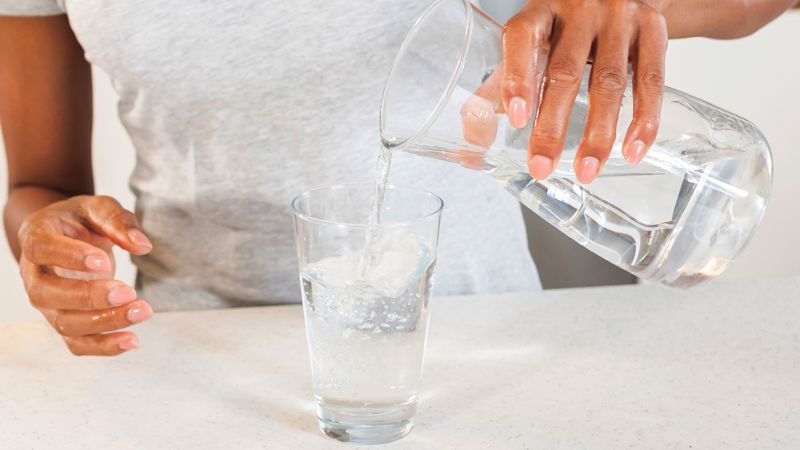
A new study found a moderately higher risk of autism spectrum disorder in children born to pregnant people exposed to tap water with higher levels of lithium, but experts caution that this association does not show a direct link between the two.

About 1 in 36 children in the US is diagnosed with autism spectrum disorder (ASD) each year, according to data from the US Centers for Disease Control and Prevention.

Scientists still don’t know the exact cause of autism, a developmental disorder. Genetics may be a factor, but some have been looking at potential environmental causes, too.

Cases may be on the rise, but that is also unclear. One study published this year on cases in the New York-New Jersey area found that autism diagnosis rates tripled among certain age groups between 2000 and 2016. A 2021 report found similar increases in cases, but the CDC says the increased number of cases is most likely linked to more doctors screening for the condition.

Lithium is an alkali metal that can be found naturally in some food and ground water. It’s used in batteries, grease and air conditioners, as well as in the treatment of bipolar disorder and some blood disorders. Its levels in US drinking water are not regulated, according to the US Geological Survey.

A new study, published Monday in the journal JAMA Pediatrics, found a small association between lithium and autism diagnosis in Denmark, where the researchers say the level of lithium in drinking water is similar to that in American water systems.

The researchers checked a database of people with psychiatric disorders for children born between 2000 and 2013 to find information on 8,842 cases of ASD and 43,864 participants who did not have ASD. They then measured the concentration of lithium in 151 public waterworks that served more than half of the Danish population and mapped out where pregnant people lived in relation.

As lithium levels in water increased, there was a modest increased risk of an ASD diagnosis. Specifically, compared with people at the lowest exposure level, those who had the second and third highest exposure during pregnancy had a 24% to 26% higher risk of ASD diagnosed in children. The group with the highest exposure had a 46% higher risk than those at the lowest level of exposure.

The researchers could not tell how much water the pregnant people drank, but they picked Denmark in part because residents there consume some of the lowest amounts of bottled water in Europe.

Experts say it’s important to note that the research can’t show that lithium exposure leads directly to an autism diagnosis.

Further study is required, said study co-author Dr. Beate Ritz, a professor of neurology in the David Geffen School of Medicine at UCLA, and a professor of epidemiology and environmental health at the UCLA Fielding School of Public Health.

“Any drinking water contaminants that may affect the developing human brain deserve intense scrutiny,” Ritz said in a news release. She added that the research would need to be replicated in other countries to look for a similar connection.

The implications of the findings are complex as far as public health policy is concerned, according to an editorial published alongside the study. Lithium levels in water, at concentrations that the study associated with a potential ASD risk, have also been linked with health benefits such as lower rates of hospitalization for psychiatric disorders and suicide.

“If all these of associations are valid, the wisdom of Solomon will be required to develop guidelines for lithium in drinking water that are maximally protective of the entire population,” wrote Dr. David C. Bellinger, a professor of neurology and psychology at Harvard Medical School. “Until the basic biology of ASD is better understood, it will be difficult to distinguish causal from spurious associations.”

Dr. Max Wiznitzer, director of the Rainbow Autism Center at University Hospitals Rainbow Babies and Children’s Hospital in Cleveland, points to other research on the effects of lithium on pregnant people who take it for mental health disorders. Those studies – which look at people exposed to much higher levels than are found in drinking water – do not show a connection with autism spectrum disorder.

“It’s an interesting association, but causation is definitely not proven,” said Wiznitzer, who was not involved in the new research. “We have to see if there’s a viable and biologically plausible mechanism by which a small amount of lithium in the water supply can somehow do this, yet pharmacologic dosing of lithium in women with bipolar disorder has not been reported to be causing increased risk of ASD.”

Other studies have also suggested connections between ASD and environmental exposures to things like pesticides, air pollution and phthalates. But none of them points to any of these factors as a direct cause of the disorder.

A link between environmental exposure and ASD is hard to prove, Wiznitzer said. With research showing that increased exposure to air pollution raises the risk of giving birth to a child with ASD, for example, he often wonders whether pollution is the determining factor or if it’s just the populations who live in more polluted areas.

“There’s a lot of speculation about about environmental factors, but how many of them are truly causally associated?” Wiznitzer said. “We are bombarded with a variety of environmental stressors in our everyday lives. We have to figure out how to basically safely navigate them, and this is probably not one that’s high on our list.”


Source link

TAGS:
PREVIOUS
Angel Reese defends gesture directed towards Caitlin Clark after LSU national title win; calls out double standard after being ‘unapologetically’ her
NEXT
Israeli military veterans, a backbone of protest movement, vow to keep demonstrating
Related Post
November 4, 2025
Missing California hunter found after nearly 3 weeks
October 10, 2025
Trump administration says federal worker layoffs 'have begun' amid government shutdown
October 29, 2025
Jamaican police assess damage from Hurricane Melissa
September 27, 2025
Sept. 27, 2025, 5:30 AM EDTBy Berkeley Lovelace Jr.For people who rely on certain prescription drugs, including weight loss, asthma and cancer medications, President Donald Trump’s post announcing 100% tariffs on foreign brand-name drugs offers little clarity on when — or if — medications might see price hikes. “Starting October 1st, 2025, we will be imposing a 100% Tariff on any branded or patented Pharmaceutical Product, unless a Company IS BUILDING their Pharmaceutical Manufacturing Plant in America,” Trump said on Truth Social late Thursday. “‘IS BUILDING’ will be defined as, ‘breaking ground’ and/or ‘under construction.’ There will, therefore, be no Tariff on these Pharmaceutical Products if construction has started.”Experts say Trump’s post raises a lot of questions. Here are five major ones. What drugs will be impacted?Trump’s post doesn’t specify whether brand-name drugmakers with an existing U.S. plant would be exempt, whether that exemption would include all their products, or whether it would only be for the drugs manufactured at the U.S. site. Novo Nordisk and Eli Lilly, makers of the weight loss drugs Wegovy and Zepound, respectively, have announced plans to invest in U.S. manufacturing. But it’s unclear if their intent to invest will warrant an exemption. On Tuesday, Lilly announced plans for a $6.5 billion manufacturing facility in Houston that will produce Zepbound and its other GLP-1 drug, Mounjaro, following a recent commitment to build a $5 billion plant near Richmond, Virginia. Novo Nordisk, a Danish company, said in June it would spend $4.1 billion to construct a second GLP-1 fill-finish plant in Clayton, North Carolina.AstraZeneca, which makes the asthma drug Symbicort, also announced in July that it will invest $50 billion over the next five years to expand its research and development and manufacturing footprint in the U.S. Many other popular brand-name drugs, however, are primarily manufactured overseas, particularly in Europe, said Rena Conti, an associate professor at Boston University’s Questrom School of Business.Botox, made by Allergen, and the cancer drug Keytruda from drugmaker Merck are made in Ireland. (Keytruda’s manufacturing has increasingly moved to the United States in recent years, but it’s not clear if that would earn an exemption from Trump’s tariffs.)Others, including some for blood and lung cancers, as well as vaccines, are made in places like India and China, Conti said. “I think what’s most at risk here are branded products that come from China and India,” she said. The E.U. and Japan already have trade agreements in place that cover pharmaceuticals, she added, and it’s unclear whether the new tariff will supersede that. Will patients see prices increase?Only 1 in 10 of the prescriptions filled in the U.S. are for brand-name drugs; the vast majority are for generics, which are much cheaper and will not be affected by these tariffs. Whether patients see price increases will depend on how many drugmakers receive exemptions — and on whether companies choose to pass those costs on to patients at the pharmacy counter, said Dr. Aaron Kesselheim, a professor of medicine at Harvard Medical School. ​​“Ultimately, tariffs are taxes on patients,” Kesselheim said, “and to the extent that drug companies see increases in cost due to tariffs, they will pass those costs on to patients.”Some companies may decide not to pass the costs along. So far, the 15% tariffs on imports from the E.U. haven’t translated into big price hikes for U.S. patients, Conti noted. To be sure, a 100% tariff would be far more costly for a company. Price hikes may not start right away, as drugmakers find out whether they qualify for an exemption. There also might be a lag since U.S. law prevents drugmakers from increasing the price of drugs faster than inflation.“What if you’re doing updates to the plant you currently have? What if you’re planning a facility? Do those count?” Kesselheim said. “It’s all very ambiguous.”Some patients may not notice additional price hikes at all, given how costly brand-name drugs already are in the U.S., said Arthur Caplan, the head of the Division of Medical Ethics at NYU Langone Medical Center in New York City. “I can certainly predict that some patients will immediately feel price increases that will shock them on some of these drugs,” Caplan said.Could insurers absorb the costs?Insurers and middlemen, known as pharmacy benefit managers, could try to negotiate drugmakers or absorb some of the tariff-related costs, Caplan said.It’s more likely, however, that they’d pass it on to patients in the short term, potentially in the form of a larger copay, he said.It’s not only patients with private insurance that should be worried about price hikes, Kesselheim said. Those who get their drugs covered through government health programs could also see price increases.“The government is the largest purchaser of prescription drugs in the market, through Medicare, Medicaid and the VA, so it’s really the government or government payers that are going to see the largest impact on price increases,” he said. Will tariffs spur more U.S. drug manufacturing?It’s unlikely, Kesselheim said. The decision to build a plant “is a complicated and expensive one” that requires several regulatory hurdles and years of planning.Conti noted that by the time new manufacturing plants are completed, Trump would likely be out of office.“It is somewhere between two years and five years to get new production facilities built,” she said, “and it can be in the millions of dollars depending on whether the product that you’re making is a small molecule drug or a biologic.”Even putting money back into an existing plant isn’t quick.“If you want to switch a line or retool a factory to make a product, then we’re talking about somewhere between 18 to 36 months to do that,” Conti said, “because you have to show the U.S. regulator that you can make it at this factory at scale, and the product is what it says it is, or is high quality and meets the quality standards of the U.S.”In a statement, Alex Schriver, a spokesperson for the trade group the Pharmaceutical Research and Manufacturers of America, said “most innovative medicines prescribed in America are already made in America” and companies continue to invest in the U.S.“Tariffs risk those plans because every dollar spent on tariffs is a dollar that cannot be invested in American manufacturing or the development of future treatments and cures,” Schriver said. “Medicines have historically been exempt from tariffs because they raise costs and could lead to shortages.”What about shortages?If Trump keeps his focus solely on brand-name drugs, U.S. patients are unlikely to face shortages, Kesselheim said.“Their profits are just so, so far beyond this tariff cost that they could probably be OK or raise the prices of the drugs,” he said. “They would probably not stop production as a result.”But that excludes, he added, some smaller companies who may make niche brand-name products and may not have the resources to take on the extra costs. If tariffs extend to generics, the risk is far greater, Caplan added. Unlike brand-name drugs, generic drugs are typically sold at close to the cost they’re made, he said, which makes it difficult for companies to justify the cost of building a new facility. They’d likely be forced to walk away from production or close their plants altogether.Berkeley Lovelace Jr.Berkeley Lovelace Jr. is a health and medical reporter for NBC News. He covers the Food and Drug Administration, with a special focus on Covid vaccines, prescription drug pricing and health care. He previously covered the biotech and pharmaceutical industry with CNBC.
Comments are closed.
Scroll To Top
  • Home
  • Travel
  • Culture
  • Lifestyle
  • Sport
  • Contact Us
  • Politics
© Copyright 2025 - Be That ! . All Rights Reserved