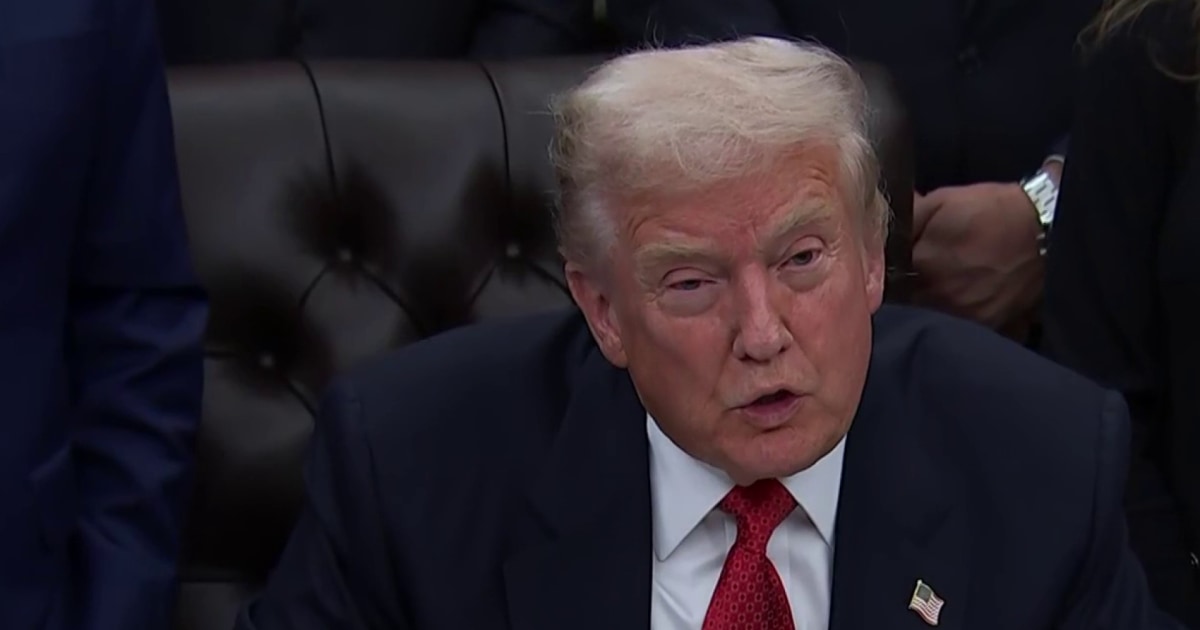
• Police seek suspects in deadly birthday party shooting
  • Lawmakers launch inquires into U.S. boat strike
  • Nov. 29, 2025, 10:07 PM EST / Updated Nov. 30, 2025,…
  • Mark Kelly says troops ‘can tell’ what orders…

Be that!

contact@bethat.ne.com


Be That ! Menu   ≡ ╳
  • Home
  • Travel
  • Culture
  • Lifestyle
  • Sport
  • Contact Us
  • Politics Politics
☰

Be that!

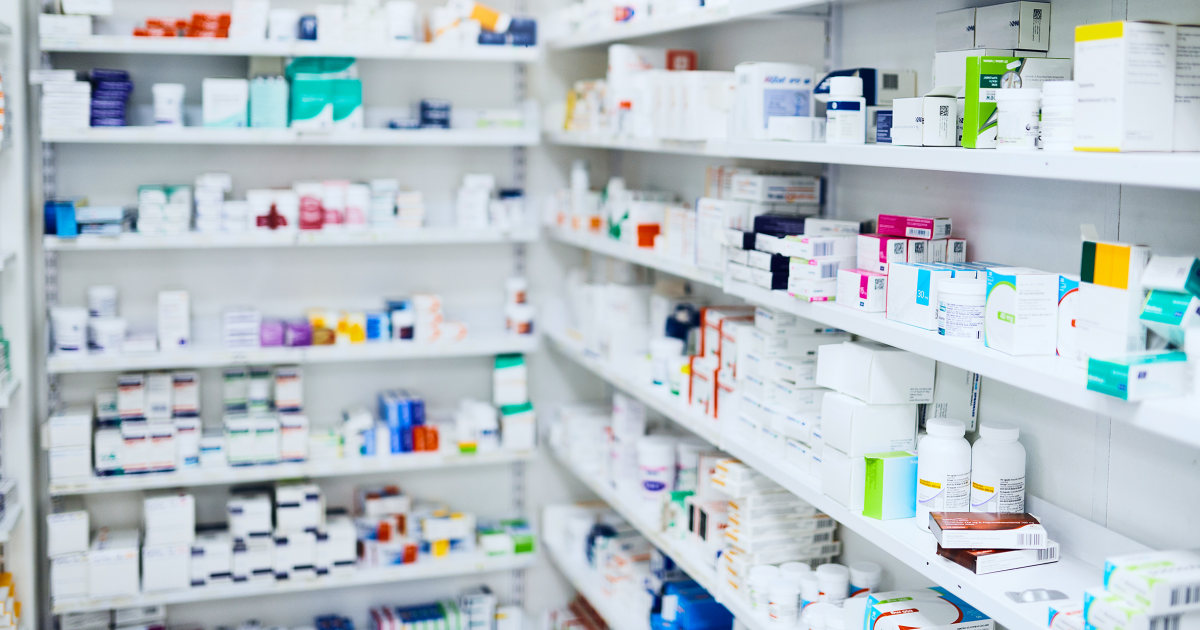
Sept. 27, 2025, 5:30 AM EDTBy Berkeley Lovelace Jr.For people who rely on certain prescription drugs, including weight loss, asthma and cancer medications, President Donald Trump’s post announcing 100% tariffs on foreign brand-name drugs offers little clarity on when — or if — medications might see price hikes. “Starting October 1st, 2025, we will be imposing a 100% Tariff on any branded or patented Pharmaceutical Product, unless a Company IS BUILDING their Pharmaceutical Manufacturing Plant in America,” Trump said on Truth Social late Thursday. “‘IS BUILDING’ will be defined as, ‘breaking ground’ and/or ‘under construction.’ There will, therefore, be no Tariff on these Pharmaceutical Products if construction has started.”Experts say Trump’s post raises a lot of questions. Here are five major ones. What drugs will be impacted?Trump’s post doesn’t specify whether brand-name drugmakers with an existing U.S. plant would be exempt, whether that exemption would include all their products, or whether it would only be for the drugs manufactured at the U.S. site. Novo Nordisk and Eli Lilly, makers of the weight loss drugs Wegovy and Zepound, respectively, have announced plans to invest in U.S. manufacturing. But it’s unclear if their intent to invest will warrant an exemption. On Tuesday, Lilly announced plans for a $6.5 billion manufacturing facility in Houston that will produce Zepbound and its other GLP-1 drug, Mounjaro, following a recent commitment to build a $5 billion plant near Richmond, Virginia. Novo Nordisk, a Danish company, said in June it would spend $4.1 billion to construct a second GLP-1 fill-finish plant in Clayton, North Carolina.AstraZeneca, which makes the asthma drug Symbicort, also announced in July that it will invest $50 billion over the next five years to expand its research and development and manufacturing footprint in the U.S. Many other popular brand-name drugs, however, are primarily manufactured overseas, particularly in Europe, said Rena Conti, an associate professor at Boston University’s Questrom School of Business.Botox, made by Allergen, and the cancer drug Keytruda from drugmaker Merck are made in Ireland. (Keytruda’s manufacturing has increasingly moved to the United States in recent years, but it’s not clear if that would earn an exemption from Trump’s tariffs.)Others, including some for blood and lung cancers, as well as vaccines, are made in places like India and China, Conti said. “I think what’s most at risk here are branded products that come from China and India,” she said. The E.U. and Japan already have trade agreements in place that cover pharmaceuticals, she added, and it’s unclear whether the new tariff will supersede that. Will patients see prices increase?Only 1 in 10 of the prescriptions filled in the U.S. are for brand-name drugs; the vast majority are for generics, which are much cheaper and will not be affected by these tariffs. Whether patients see price increases will depend on how many drugmakers receive exemptions — and on whether companies choose to pass those costs on to patients at the pharmacy counter, said Dr. Aaron Kesselheim, a professor of medicine at Harvard Medical School. ​​“Ultimately, tariffs are taxes on patients,” Kesselheim said, “and to the extent that drug companies see increases in cost due to tariffs, they will pass those costs on to patients.”Some companies may decide not to pass the costs along. So far, the 15% tariffs on imports from the E.U. haven’t translated into big price hikes for U.S. patients, Conti noted. To be sure, a 100% tariff would be far more costly for a company. Price hikes may not start right away, as drugmakers find out whether they qualify for an exemption. There also might be a lag since U.S. law prevents drugmakers from increasing the price of drugs faster than inflation.“What if you’re doing updates to the plant you currently have? What if you’re planning a facility? Do those count?” Kesselheim said. “It’s all very ambiguous.”Some patients may not notice additional price hikes at all, given how costly brand-name drugs already are in the U.S., said Arthur Caplan, the head of the Division of Medical Ethics at NYU Langone Medical Center in New York City. “I can certainly predict that some patients will immediately feel price increases that will shock them on some of these drugs,” Caplan said.Could insurers absorb the costs?Insurers and middlemen, known as pharmacy benefit managers, could try to negotiate drugmakers or absorb some of the tariff-related costs, Caplan said.It’s more likely, however, that they’d pass it on to patients in the short term, potentially in the form of a larger copay, he said.It’s not only patients with private insurance that should be worried about price hikes, Kesselheim said. Those who get their drugs covered through government health programs could also see price increases.“The government is the largest purchaser of prescription drugs in the market, through Medicare, Medicaid and the VA, so it’s really the government or government payers that are going to see the largest impact on price increases,” he said. Will tariffs spur more U.S. drug manufacturing?It’s unlikely, Kesselheim said. The decision to build a plant “is a complicated and expensive one” that requires several regulatory hurdles and years of planning.Conti noted that by the time new manufacturing plants are completed, Trump would likely be out of office.“It is somewhere between two years and five years to get new production facilities built,” she said, “and it can be in the millions of dollars depending on whether the product that you’re making is a small molecule drug or a biologic.”Even putting money back into an existing plant isn’t quick.“If you want to switch a line or retool a factory to make a product, then we’re talking about somewhere between 18 to 36 months to do that,” Conti said, “because you have to show the U.S. regulator that you can make it at this factory at scale, and the product is what it says it is, or is high quality and meets the quality standards of the U.S.”In a statement, Alex Schriver, a spokesperson for the trade group the Pharmaceutical Research and Manufacturers of America, said “most innovative medicines prescribed in America are already made in America” and companies continue to invest in the U.S.“Tariffs risk those plans because every dollar spent on tariffs is a dollar that cannot be invested in American manufacturing or the development of future treatments and cures,” Schriver said. “Medicines have historically been exempt from tariffs because they raise costs and could lead to shortages.”What about shortages?If Trump keeps his focus solely on brand-name drugs, U.S. patients are unlikely to face shortages, Kesselheim said.“Their profits are just so, so far beyond this tariff cost that they could probably be OK or raise the prices of the drugs,” he said. “They would probably not stop production as a result.”But that excludes, he added, some smaller companies who may make niche brand-name products and may not have the resources to take on the extra costs. If tariffs extend to generics, the risk is far greater, Caplan added. Unlike brand-name drugs, generic drugs are typically sold at close to the cost they’re made, he said, which makes it difficult for companies to justify the cost of building a new facility. They’d likely be forced to walk away from production or close their plants altogether.Berkeley Lovelace Jr.Berkeley Lovelace Jr. is a health and medical reporter for NBC News. He covers the Food and Drug Administration, with a special focus on Covid vaccines, prescription drug pricing and health care. He previously covered the biotech and pharmaceutical industry with CNBC.

admin - Latest News - September 27, 2025
admin
31 views 21 secs 0 Comments


For people who rely on certain prescription drugs, including weight loss, asthma and cancer medications, President Donald Trump’s post announcing 100% tariffs on foreign brand-name drugs offers little clarity on when — or if — medications might see price hikes.


Source link

TAGS:
PREVIOUS
Savewith a NBCUniversal ProfileCreate your free profile or log in to save this articleSept. 27, 2025, 5:00 AM EDTBy Allan Smith, Sahil Kapur and Shannon PettypieceDemocrats were swept out of power last year as they suffered political pain from rising costs. Now, President Donald Trump is overseeing stubborn inflation, a slowing job market and anxiety over his tariffs, and Democrats are determined to make his party pay the price.With the 2026 midterm cycle on the horizon, the economy is shaping up to once again play a dominant role. Democrats are keenly aware that what sunk them last time could be their ticket back to power.Trump’s own daring promise is complicating the situation for his party after he told voters in 2024, “When I win, I will immediately bring prices down, starting on Day 1.”That’s a message Democrats will be emphasizing.“He’s promised us this golden age. It’s not happening,” said Rep. Don Beyer, D-Va., a member of the U.S. Congress Joint Economic Committee. “He promised the renewal of all his manufacturing jobs — not happening. Promised tariffs could restore all this stuff — not happening at all.”Economic anxiety is high. The August jobs report showed only 22,000 new jobs — a paltry total compared to recent years. Prices on a variety of goods and services rose more than expected in August, with year-over-year inflation growing to 2.9%, the highest rate since January.The cost of household staples like coffee and beef are soaring even as the rise in food prices has slowed from the decades-high inflation seen in 2022. Overall, grocery prices were up 2.7% in August compared to a year earlier, the biggest increase in two years. Electricity costs are rising, too, driven in part by the growth of AI data centers. The August NBC News poll found that 45% of voters said rising costs are their top economic concern.Trump has sought to reshape much of the economy, with sweeping tariffs, large tax cuts and pressure on the Federal Reserve and private companies. That formula has coincided with some bright spots Trump and his allies have promoted: The stock market has seen substantial gains, in part because of the AI boom that Trump’s administration has sought to bolster. U.S. gross domestic product grew at a 3.8% annual pace between April and June after shrinking earlier this year, the Department of Commerce said in its second upward revision on Thursday.Yet his opponents say that the president is now trying to shift attention away from the topic. At a White House event on Monday about autism, Trump discouraged reporters from talking about the economy.“Let’s just make it on this subject,” Trump said, referring to the autism announcement. “I’d rather not talk about some nonsense on the economy. I will say this: The economy is unbelievable.”The headwinds have cut into what was long one of Trump’s advantages: Voters trusted him to strengthen the economy. It was a dynamic that helped boost his campaign with voters who were angry with price increases under President Joe Biden and wanted a return to Trump’s pre-Covid economy.Recent polls show voters have soured on Trump’s handling of the economy. A Fox News poll this month found that 52% of voters believe the administration has made the economy worse — the same number who said in January the Biden administration was doing so. Trump’s performance on cost of living was his worst issue, with 67% of voters disapproving. What’s more, 63% disapprove of his handling of tariffs, and 60% of his economic efforts.Now, Democrats are seeking to unify around an economic message they think can bring together their fractured party as they reel from a loss to Trump. But Republicans expressed confidence that once their “big, beautiful bill” starts to sink in, and as uncertainty around tariffs dies down, economic sentiment will turn in their favor.Michigan state Sen. Mallory McMorrow, a Democratic Senate candidate, said she’s hearing economic concerns “all over the state right now.”“I’m hearing this most acutely with young people, people who might have recently graduated from college, have degrees, who just cannot find a job right now, and [are] certainly feeling the tightening economy, but also the impacts of AI,” McMorrow said, adding that she is telling people: “This is not a global pandemic that we’re in right now. This is also not a recession like we saw in 2007-09. The inflation that we are seeing right now is entirely man-made, and it’s caused by Donald Trump.”’Waiting and seeing’There are other potential problems for Republicans.Consumer spending is holding steady but being driven by the top 10% of earners. Young men — a population that played a huge role in Trump’s victory — have been hit hard in the slowing job market. Labor Department data showed initial jobless claims for the week ending Sept. 6 jumped by 263,000 — the most since October 2021 — though initial jobless claims fell to 218,000 for the week ending Sept. 20.Americans’ view of capitalism is falling too. A Gallup survey this month showed 54% of Americans hold a positive view of the economic system, the lowest level the poll has recorded.“There is a big cohort of people who voted for Donald Trump because they really, sincerely believed that he was going to bring down the price of their daily necessities,” Sen. Brian Schatz, D-Hawaii, said. “And almost everything is significantly more expensive.”Sen. Cynthia Lummis, R-Wyo., said it’s too early to grade Republicans’ performance on lowering costs because “the economy doesn’t move on a dime.” But she acknowledged that they need to make tangible progress by the 2026 midterms.“The problem right now is the people who are doing well, the people who are consuming the most, are the very wealthy,” Lummis said. “It is the middle class and lower middle class that is not buying because their salaries aren’t keeping up with inflation or interest rates are too high to buy a home. They’re treading water, and so we have to focus on the middle class in order to alleviate concerns about a bad outcome in the 2026 elections.”The White House argued that the economy is in better shape than other measures indicate, pointing to wage increases, a lower rate of inflation than in Biden’s term, a job market they say favors native-born workers, and surging stocks, among other measures.“Joe Biden’s reckless policies destroyed the economy, but President Trump is fixing it in record time to usher in the Golden Age of America — inflation has cooled, wages are on the rise, real consumer spending rose in July, manufacturing jobs are being reshored, and over half a million good-paying jobs have been created in the private sector,” White House spokesperson Taylor Rogers said, adding that Americans “will continue to feel economic relief in the months ahead as … massive tax cuts, deregulation, and energy dominance continue to materialize.”The White House has also highlighted a major revision this month from the Bureau of Labor Statistics showing job growth was much slower than originally reported between April 2024 and March 2025, saying it shows slower job growth dates back to Biden. Trump fired the head of the BLS — and nominated a MAGA ally in her place — after a particularly weak July jobs report.There has been a steep decline in the immigrant workforce under Trump’s aggressive deportation agenda. Vice President JD Vance and other conservatives have said the exodus of foreign-born workers can explain the weaker job growth, but that it creates more employment opportunities for native-born Americans. The Economic Policy Institute, a left-leaning think tank, argued Trump’s job market has been worse for U.S.-born workers, pointing to BLS data showing an increased unemployment rate among this group.Jared Bernstein, chair of the Council of Economic Advisers under Biden, said he sees the economy “slowing in ways that are concerning” and warned of the potential for stagflation.“Employers and businesses are in a bit of a hiring freeze and investment freeze,” Bernstein said. “They’re sitting on their hands, waiting and seeing what’s going to come of the trade war, the deportations, the chaos, the Federal Reserve badgering, the DOGE cuts. It’s all unsettling for businesses who like a much calmer environment as a backdrop.”Fed cuts interest rates citing “risks” to jobs market01:44In a move Trump long pushed for, the Federal Reserve last week cut interest rates by 0.2 percentage points. In his news conference after lowering interest rates, Fed Chair Jerome Powell tied the cut directly to issues in the labor market.“You see people who are sort of more at the margins, and younger people, minorities are having a hard time finding jobs,” Powell said.He added that the economy is being bolstered by “unusually large amounts of economic activity through the AI build-out and corporate investment.” And he said that while consumer spending numbers exceeded expectations, they appear skewed toward high earners.“So it’s not a bad economy or anything like that,” Powell said, adding: “But from a policy standpoint … of what we’re trying to accomplish, it’s challenging to know what to do.”Trump’s tariffsMuch of the existing economic uncertainty has centered on the president’s tariff agenda. The dust appears to be more settled now: Some tariffs have been lowered, new trade agreements have been reached with key partners, and a number of categories, including some electronics, have been exempted.A White House official said uncertainty on passage of the “big, beautiful bill” and on tariffs has “largely been resolved.”“You can now plan around what the tariff rate is going to be,” this person said. “We’re not in flux anymore.”So far, Trump’s vow to bring manufacturing jobs back to the U.S. has yet to materialize, with industry continuing to cut back on the number of workers. The U.S. lost 12,000 manufacturing jobs in August amid a wider slowdown in the labor market, according to BLS data. The Trump administration has pointed to manufacturing investments, noting factories can’t open overnight.Trump’s tariffs have weighed on manufacturing companies now having to pay tariffs on steel and aluminum imports, along with imported machinery and parts. Companies have also continued to ramp up automation, requiring fewer workers to make the same amount of goods.Federal Reserve data released Sept. 16 showed a mixed picture for the manufacturing sector last month, with factory production ticking up in August after declining in July. The increase was driven by a rebound in auto production while other areas, like companies making machinery and metal products, saw declines.Steve Moore, a senior economic adviser to Trump in his first term, believes the economy is in a good spot, pointing to similar data points as the White House. But he cautioned that “at some point, some of these [tariff] costs are going to be passed down to consumers, no question about it,” though he said the country could still see benefits down the road.There is an economic uncertainty that has the president and his allies concerned: a case before the Supreme Court that could lead to his tariffs being overturned. Moore said the White House is “very keyed into” the case.“I think it’s going to be disruptive,” Moore said if the court overturns the tariffs. “And I don’t think anybody really knows what would happen. Will they have to return the money to the people who paid that? Will they pay the taxes? And what happens to trade deals? It would be havoc.”’You can’t fool people on the economy’Democrats want to frame a straightforward economic argument for the midterm elections: Trump promised to lower prices immediately upon taking office, and yet costs are rising.“What we must do is not just compare this economy to Biden’s,” Beyer said, “but compare it to what Trump said he was going to do.”In a memo marking Trump’s first six months in office, the Democratic National Committee mentioned lowering prices as the top promise Trump had broken upon taking office. A memo this month from the Bipartisan Cost Coalition, an anti-Trump group launched by former aides to Biden and President George W. Bush, said 2026 candidates “can succeed in this environment by having the courage to challenge Trump’s dishonest narratives and draw a line between chaos and the rising cost of living.”Sen. Mike Rounds, R-S.D., said GOP prospects in 2026 will turn on whether they can sell Trump’s “big, beautiful bill” and improve voters’ confidence in their finances.Republicans are eager to promote the bill’s new tax cuts and credits, including tax breaks on overtime and tipped wages as well as expensing and deduction provisions they believe will encourage new investment in the U.S. and grow the job market.“It’s going to depend on whether or not we can actually see the benefits and get the information on the benefits out about what the reconciliation package did,” Rounds said.So far, Trump himself has not taken to the trail to promote the landmark legislation, though Vice President JD Vance has been visiting key battlegrounds to do so.The legislation’s cuts to health insurance programs already threaten hundreds of thousands of jobs. This month, a hospital chain in Virginia announced a consolidation it said is in part necessitated by “the One Big Beautiful Bill Act and the resulting realities for healthcare delivery.”A Republican operative working on Senate races said Trump’s legislative package will give business leaders certainty on taxes over the next few years. But this person was mindful of how the job market looks now, particularly for younger voters struggling to find entry-level jobs.“Trump realizes that you really need to gas this thing up to get people hiring and get confidence in the market,” this person said. “So it’s not an overnight switch that the president could flip to get people hiring young men into the economy.”A Washington Post-Ipsos poll conducted this month found that while just 40% of voters approved of Trump’s handling of the economy, Republicans still held a 7-point edge over Democrats on which party voters trust more on the issue.Pennsylvania’s new Democratic Party Chairman Eugene DePasquale said he wants to get Keystone State Democrats to “focus like a laser” on economic issues.“But it’s one thing to have people be upset about Trump,” DePasquale said. “It’s another thing for them to vote for us. … We’ve also got to show we’re listening and putting real ideas on the table to try to win him back.”Moore said Republicans will need “to remind people of how bad things were under Biden” while framing the president’s signature legislation not as a tax cut but as a job creation bill.“Look, you can’t fool people on the economy,” Moore said. “People know what’s going on. They know what it costs to buy groceries. They know what jobs are available. When Biden was saying, ‘Oh, [inflation is] transitory,’ and so on, it didn’t fool people. So these policies have to be shown to be working.”Allan SmithAllan Smith is a political reporter for NBC News.Sahil KapurSahil Kapur is a senior national political reporter for NBC News.Shannon PettypieceShannon Pettypiece is senior policy reporter for NBC News.
NEXT
Sept. 27, 2025, 7:30 AM EDTBy Jared PerloNEW YORK — The United States clashed with world leaders over artificial intelligence at the United Nations General Assembly this week, rejecting calls for global oversight as many pushed for new collaborative frameworks.While many heads of state, corporate leaders and prominent figures endorsed a need for urgent international collaboration on AI, the U.S. delegation criticized the role of the U.N. and pushed back on the idea of centralized governance of AI.Representing the U.S. in Wednesday’s Security Council meeting on AI, Michael Kratsios, the director of the Office of Science and Technology Policy, said, “We totally reject all efforts by international bodies to assert centralized control and global governance of AI.”The path to a flourishing future powered by AI does not lie in “bureaucratic management,” Kratsios said, but instead in “the independence and sovereignty of nations.”While Kratsios shot down the idea of combined AI governance, President Donald Trump said in his speech to the General Assembly on Tuesday that the White House will be “pioneering an AI verification system that everyone can trust” to enforce the Biological Weapons Convention.“Hopefully, the U.N. can play a constructive role, and it will also be one of the early projects under AI,” Trump said. AI “could be one of the great things ever, but it also can be dangerous, but it can be put to tremendous use and tremendous good.”.In a statement to NBC News, a State Department spokesperson said, “The United States supports like-minded nations working together to encourage the development of AI in line with our shared values. The US position in international bodies is to vigorously advocate for international AI governance approaches that promote innovation, reflect American values, and counter authoritarian influence.”The comments rejecting collaborative efforts around AI governance stood in stark contrast to many of the initiatives being launched at the General Assembly.On Thursday, the U.N. introduced the Global Dialogue on AI Governance, the U.N.’s first body dedicated to AI governance involving all member states. U.N. Secretary-General António Guterres said the body would “lay the cornerstones of a global AI ecosystem that can keep pace with the fastest-moving technology in human history.” Speaking after Guterres, Nobel Prize recipient Daron Acemoglu outlined the growing stakes of AI’s rapid development, arguing that “AI is the biggest threat that humanity has faced.”But in an interview with NBC News, Amandeep Singh Gill, the U.N.’s special envoy for digital and emerging technologies, told NBC News that the United States’ critical perception of the U.N.’s role in international AI governance was misconstrued.“I think it’s a misrepresentation to say that the U.N. is somehow getting into the regulation of AI,” Gill said. “These are not top-down power grabs in terms of regulation. The regulation stays where regulation can be done in sovereign jurisdictions.”Instead, the U.N.’s mechanisms “will provide platforms for international cooperation on AI governance,” Gill said.In remarks immediately following Kratsios’ comments, China’s Vice Minister of Foreign Affairs Ma Zhaoxu said, “It is vital to jointly foster an open, inclusive, fair and nondiscriminatory environment for technological development and firmly oppose unilateralism and protectionism.”“We support the U.N. playing a central role in AI governance,” Ma said.One day after Kratsios’ remarks at the Security Council, Spanish Prime Minister Pedro Sánchez seemed to push back on Kratsios and gave full-throated support for international cooperation on AI and the U.N.’s role in AI governance.“We need to coordinate a shared vision of AI at a global level, with the U.N. as the legitimate and inclusive forum to forge consensus around common interests,” Sánchez said. “The time is now, when multilateralism is being most questioned and attacked, that we need to reaffirm how suitable it is in addressing challenges such as those represented by AI.”Reacting to the week’s developments, Renan Araujo, director of programs for the Washington, D.C.-based Institute for AI Policy and Strategy, told NBC News that “no one wants to see a burdensome, bureaucratic governance structure, and the U.S. has succeeded in starting bilateral and minilateral coalitions. At the same time, we should expect AI-related challenges to become more transnational in nature as AI capabilities become more advanced.”This is not the first time the U.N. has addressed AI, having passed the Global Digital Compact last year. The compact laid the foundation for the AI dialogue and for an independent international scientific panel to evaluate AI’s abilities, risks and pathways forward. Guterres announced that nominations to this panel are now open.While Thursday’s event marked the launch of the global dialogue and panel, the dialogue will have its first full meeting in Geneva in summer 2026, in tandem with the International Telecommunication Union’s annual AI for Good summit. The dialogue’s exact functions and first actions will be charted out over the coming months.Jared PerloJared Perlo is a writer and reporter at NBC News covering AI. He is currently supported by the Tarbell Center for AI Journalism.
Related Post
November 4, 2025
Nov. 4, 2025, 6:06 PM EST / Updated Nov. 4, 2025, 6:35 PM ESTBy Phil HelselA UPS plane with three crew members aboard crashed as it was taking off late Tuesday afternoon in Louisville, Kentucky, officials said.UPS Flight 2976 crashed around 5:15 p.m. local time after departing Louisville Muhammad Ali International Airport, the Federal Aviation Administration said.”At this time, we have not confirmed any injuries/casualties,” UPS said in a statement.A spokesperson for Louisville Mayor Craig Greenberg said injuries had been reported. “It crashed on takeoff. Multiple injuries,” the spokesperson, Allison Martin, said in a message.Kentucky Gov. Andy Beshear asked for prayers for the plane’s pilots and crew. “The situation is serious. Please pray for the families affected. I’m headed to Louisville now,” he said on X. The plane, a McDonnell Douglas MD-11, was headed to Honolulu, the FAA said.Video from the scene showed a fire and black smoke rising from an area appearing to be near the tarmac. Police encourage people in areas north of the airport to the Ohio River to shelter in place.Greenberg said in a phone interview with NBC affiliate WAVE of Louisville that the plane’s fuel load was causing the fire on the ground.“All of our emergency resources are on the scene right now,” he said.UPS has a large presence in Louisville. UPS Air Operations is headquartered in the city, where it also has its main hub.UPS began its overnight air service with its main hub at the airport, known by the letters SDF, in 1982. UPS is the biggest employer in the Louisville area, with around 25,000 people working for the company there. There are around 400 flights arriving and departing each day at its hub, the city says on its website.The FAA said it would investigate, along with the National Transportation Safety Board.This is a developing story. Please check back for updates.Phil HelselPhil Helsel is a reporter for NBC News.Madison Lambert and Insiya Gandhi contributed.
November 13, 2025
Trump takes aim at Democrats after end to government shutdown
September 27, 2025
Sept. 26, 2025, 11:54 PM EDTBy Phil HelselHurricane Humberto grew to a Category 4 storm Friday and is expected to strengthen further, forecasters said, but it is predicted to stay out to sea and far from the U.S. East Coast.The storm, one of two weather systems in the Atlantic, had maximum sustained winds of 145 mph around 11 p.m., the National Hurricane Center said in an update. There were no coastal watches or warnings late Friday. The forecast track shows a predicted path northwest and then north and northeast, passing between the U.S. East Coast and Bermuda, according to the hurricane center.Tropical storm moves towards Southeastern U.S.03:07A second disturbance is expected to strengthen to a tropical storm and could affect the U.S. Potential Tropical Cyclone 9 was northwest of Cuba late Friday and was expected to become a tropical storm over the weekend, the hurricane center said.”The system is expected to be at or near hurricane intensity when it approaches the southeast U.S. coast early next week, where there is a risk of storm surge and wind impacts,” the center said in a forecast discussion late Friday. A tropical storm warning was in place for the Central Bahamas and a tropical storm watch was in place for parts of the northwest Bahamas, the agency said Friday.Maximum sustained winds for that storm were 35 mph Friday night, it said. A tropical storm has sustained winds of 39 to 73 mph.The disturbance could bring up to a foot of rain for eastern Cuba and 4 to 8 inches of rain to the Bahamas.It is forecast to move north next to Florida’s Atlantic coast and toward South Carolina by Monday and Tuesday, according to the hurricane center’s map of its possible track.”There is significantly more uncertainty in the track forecast after day 3, but at the very least it appears that the system will slow down considerably and perhaps even stall near the coast of South Carolina,” the agency said in the forecast discussion.Phil HelselPhil Helsel is a reporter for NBC News.
November 22, 2025
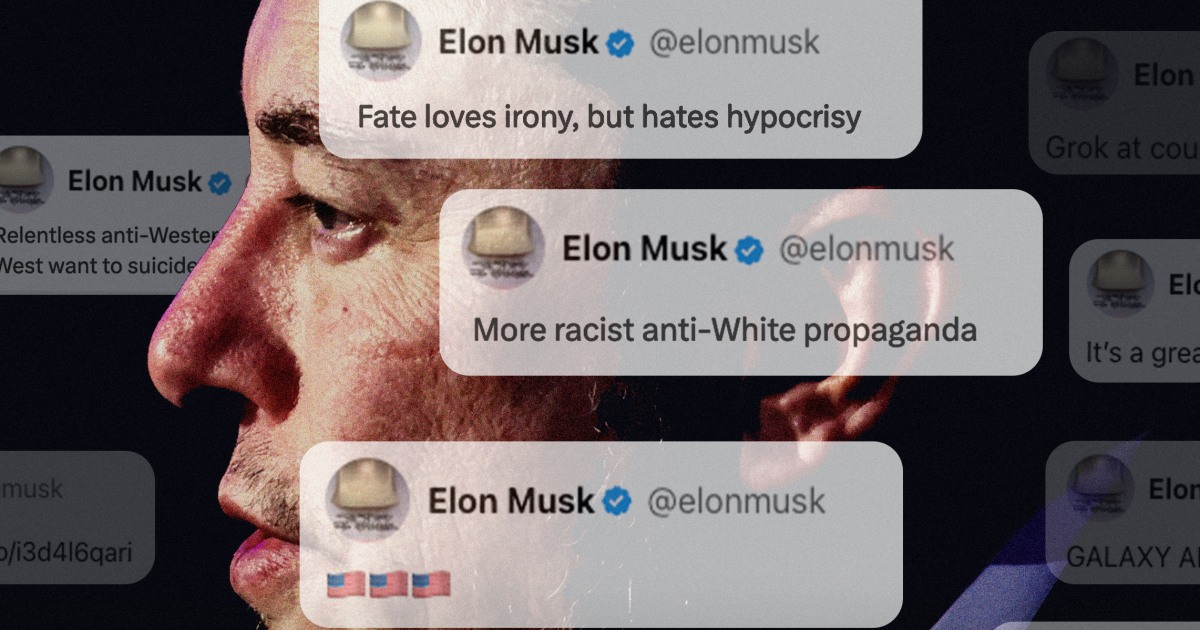
Savewith a NBCUniversal ProfileCreate your free profile or log in to save this articleNov. 22, 2025, 5:30 AM ESTBy David IngramElon Musk can’t stop posting about the political fringe.In recent weeks, the world’s wealthiest person used X to post about immigrants to Britain, saying they will cause the country’s collapse. He posted about examples of violent crime in Minnesota and South Carolina — where he does not live — and about judges in California and New York he believes are too lenient. Musk also smeared trans people, complained about Black-on-white crime, stoked fear about the end of civilization and shared his thoughts about the race of child actors.Musk posted about all those topics and more in a recent one-month period, during which NBC News tracked and analyzed all of his posts for an in-depth look at where the tech billionaire focuses his attention online.Musk left his role in the second Trump administration in May to focus on his companies, and since then he has continued to share a torrent of content on his social media site. Between Sept. 17 and Oct. 17, Musk posted, replied to or shared content 1,716 times on his X account — about 55 times a day, on average.Some of his messages invoke extreme ideas, like the antisemitic “great replacement” conspiracy theory, which says there is a top-down plot organized by Jewish people to replace the white populations of the United States and Europe with nonwhite people. Musk backed the same false theory two years ago, causing a backlash among X advertisers. Though he later said he was “aspirationally Jewish” and not antisemitic, he continues to share the conspiracy theory. He also shared the baseless conspiracy theory that the FBI staged the Jan. 6, 2021, attack on the U.S. Capitol.An NBC News analysis of his online activity shows that while Musk may have shifted some of his day-to-day attention back to his companies, his public presence on X is a mix of promoting his business and weighing in on issues that are typically the focus of the far right.Nearly half of his posts, 49%, during the period reviewed by NBC News were about politically charged topics. NBC News classified a post as political if it related to a government official, a political commentator or a policy debate.Musk’s presence on X serves to maintain his political influence as he considers whether and how to become involved in the 2026 midterms or the presidential campaign that will follow.Musk did not respond to a request for comment on the NBC News analysis.“He can make himself inescapable,” said Thad Kousser, a political science professor at the University of California, San Diego.“Regardless of his links at any time to Donald Trump or to Democrats, he still has the potential to capture eyeballs and thus potentially votes,” he said.About 41% of his posts during the same time period were about his companies. His AI startup, xAI, was his most frequent business topic, coming up in 21% of his posts. He touched on automaker Tesla in about 11% of posts and on rocket company SpaceX about 6% of the time.Taken together, the posts offer a near real-time look at what is on the mind of one of the richest and most powerful people in the world as he oversees buzzy companies that fulfill major government contracts or move markets as part of the “magnificent seven.” This month, Tesla shareholders approved a new CEO pay package that could be worth up to $1 trillion if the company meets a series of benchmarks. Musk counts more than 229 million followers on X, and his posts regularly get millions of views.“He’s not just the wealthiest person alive. He’s also one of the most influential, even if he has no formal role in government,” said Rob Lalka, a business professor at Tulane University who studies the tech industry’s impact on politics.“He’s both really good at spotting what will soon be trending and also being one of the people who is defining that in this cultural moment,” he said.During the month that NBC News analyzed, Musk engaged with ideas on the fringe of politics, including an unapologetic attitude toward past British colonialism and a proposed nationwide purge of judges based on a Central American precedent. In an offhand remark, he appeared to claim Mars as legal territory of the United States.“That is not what most average people are sitting around spending their time on, especially in an economy where real wages are not great,” Lalka said. “Most Americans are worried about the price of eggs right now.”Musk, who said he voted for Democrats in 2016 and 2020, has shifted sharply to the right in recent years. During last year’s campaign, he aligned himself with Trump, made appearances in key swing states and poured more than $290 million into Republican efforts. He then joined Trump’s administration as a White House adviser and the head of Trump’s Department of Government Efficiency (DOGE).Musk’s foray into government was rough. He repeatedly clashed with other Trump administration officials over the extent of his authority, DOGE did not drastically affect the federal budget deficit, and the cuts it did make have been blamed by public health researchers for hundreds of thousands of deaths worldwide.Tesla, where he is CEO, became a political target, and shares of the company took a beating. In May, he said he was leaving the administration to spend his time at Tesla and limit any more government work to a day or two a week. When he left the White House, Tesla investors cheered.With his White House stint in the rearview mirror, Musk said in September that he was “burning the midnight oil” at work, with weekend meetings related to Tesla and xAI as he crisscrossed the country to visit employees in person.“Daddy is very much home,” he wrote on Sept. 15.Musk also took to his social media platform. One in eight of his posts in the month NBC News reviewed were about crime — slightly more than the share devoted to Tesla — even as crime rates continued to fall. In a Gallup poll in October, only 6% of Americans listed crime as the most important problem facing the country.His posts were often targeted at influencing current events. In early October, before Trump decided against sending federal troops to San Francisco, Musk helped to fuel a narrative that crime was out of control in the city. He posted about crime there 13 times over two days, despite San Francisco experiencing the fewest homicides since 1954.“I think he is mostly speaking to people who already agree with him,” said Darren Linvill, a co-director of Clemson University’s Media Forensics Hub. “He’s not necessarily persuading anyone to come join him. But that still serves a function to maintain his influence and presence as a political actor.”Musk has gone after judges and prosecutors who he said were too lenient. He posted about judges 52 times, including twice when he called for the wholesale removal of “corrupt” judges and cited purges in El Salvador as a model for the United States.Often, Musk focused on cases where the criminal defendants were Black, immigrants or both, and where the victims were white, appearing to play into narratives about interracial crime that are common in conservative media. Experts say there is no evidence of a migrant-driven crime wave, and most violent crime occurs between a victim and a perpetrator of the same race, according to Justice Department survey data.In the 31 days that NBC News analyzed, Musk posted about violent crime every day but two.Immigration was the second-most frequent political topic on Musk’s mind. About 8% of his posts touched on the subject, often aligning with the Trump administration’s own harsh language. He shared immigration-related posts from Vice President JD Vance four times, from the official White House account twice and from White House deputy chief of staff Stephen Miller once. Musk also accused officials in Democratic-led cities of “treason” for resisting immigration enforcement.Musk’s opposition to immigration was global, criticizing politicians in Europe and Asia for allowing in migrants. He warned that mass immigration would “destroy Japan” and lead to “the end of Britain.” Musk, a native South African who became a U.S. citizen in 2002, is an immigrant himself.Joan Donovan, an assistant professor of journalism and emerging media studies at Boston University, said Musk’s frequent posts related to the decline of Western civilization are a thinly veiled callout to racial politics.“This is, of course, a dog whistle about white identity politics and for people who are expressly proud of being white and unapologetic about their own beliefs in white supremacy,” she said.She said that Musk’s embrace of fringe topics, such as a purge of judges, is the kind of content that used to be confined to the internet’s darkest corners.“It’s really reflective of some of the grossest places on Reddit or the type of posting you’d see on 4chan. It’s become a reality-distortion machine,” she said.But lately, racist rhetoric has been surging in the open, with white nationalists such as Nick Fuentes finding more mainstream footing on Musk’s X and in other venues.Race was a major theme in Musk’s posts. Musk, or those whose posts he shared, often depicted Black people in a negative light, and they often did so regardless of the topic at hand.Photos of Black criminal defendants appear to get Musk’s attention. Forty-one times during the month — more than once a day, on average — Musk shared or replied to a post that had an image of a Black person charged with a crime.He posted about alleged Black criminals in Florida, Germany, Minnesota, New York, North Carolina and elsewhere, and in many of the cases the defendants were charged with harming white victims. Sometimes, Musk would include an ominous warning such as, “He will kill again.” One post from another user, the actor James Woods, had eight photos: four Black defendants and four white victims. Woods wrote: “Sad.” Musk replied: “Yes.”Once, when an account denounced six amendments to the U.S. Constitution, including the post-Civil War 15th Amendment, which guarantees the right to vote regardless of race, and the 19th Amendment, which guarantees the right to vote regardless of sex, Musk responded with the “tears of joy” emoji. And on five occasions, Musk replied to or shared content from two accounts that regularly post white supremacist views.There were six posts where Musk portrayed Black people in a positive light: two from a Black influencer saying that Democrats had failed Black Americans, and four posts in which Black people praised conservative influencer Charlie Kirk after his death.Musk spent a lot of time posting about perceived enemies: About 1 in 5 of his posts during the month, or 21%, fell into that category, which for Musk included the news media, civil rights organizations, Hollywood, OpenAI and numerous people who identify as transgender.Beyond politics, one of Musk’s frequent topics is himself. About 6% of his posts during the month referenced his own quotes, videos of interviews he has given or other bits of his life story and the mythology surrounding it. Sometimes he engages in conversation with accounts such as @ElonClipsX, @muskonomy or @muskosophy.When the account @muskosophy posted a quote of his in September — “You don’t have a soul, you are a soul” — Musk responded, “Yes.”David IngramDavid Ingram is a tech reporter for NBC News.Bruna Horvath contributed.
Comments are closed.
Scroll To Top
  • Home
  • Travel
  • Culture
  • Lifestyle
  • Sport
  • Contact Us
  • Politics
© Copyright 2025 - Be That ! . All Rights Reserved