• Police seek suspects in deadly birthday party shooting
  • Lawmakers launch inquires into U.S. boat strike
  • Nov. 29, 2025, 10:07 PM EST / Updated Nov. 30, 2025,…
  • Mark Kelly says troops ‘can tell’ what orders…

Be that!

contact@bethat.ne.com


Be That ! Menu   ≡ ╳
  • Home
  • Travel
  • Culture
  • Lifestyle
  • Sport
  • Contact Us
  • Politics Politics
☰

Be that!

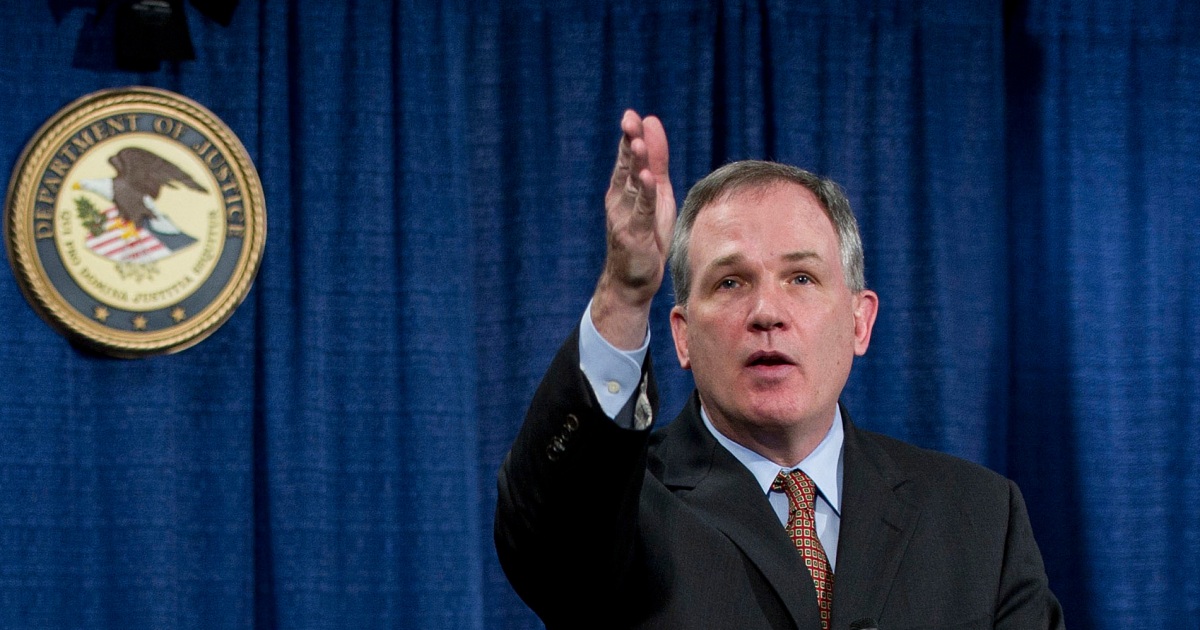
Sept. 27, 2025, 12:27 PM EDTBy Natasha KoreckiCHICAGO — In the run-up to former FBI Director James Comey’s indictment, there was no question who would step up to represent him.Friend and former colleague Patrick Fitzgerald, who served as U.S. attorney in Chicago for over a decade, would spring from retirement to be his man.Nationally, Fitzgerald is best known for his role as special prosecutor in the investigation into a CIA leak that brought charges against I. Lewis “Scooter” Libby.But to Chicago, Fitzgerald is something of a legend. The George W. Bush appointee left an indelible legacy as a scrupulous, hard-charging prosecutor who disrupted the kinds of crooked backroom deals that were long a trademark of Illinois politics.Over his nearly 12-year tenure as U.S. attorney for the Northern District of Illinois, his prosecutions took down the Chicago mob, put two consecutive governors — one Republican, one Democratic — behind bars and won a conviction against a top donor to Barack Obama just as Obama was running for the White House. He jailed longtime “untouchables” in Chicago and Springfield political circles while prosecuting international cases, including a Hamas funding scheme and major terrorism cases.Still in the Chicago area, Fitzgerald retired as a top partner at the law firm Skadden, Arps, Slate, Meagher & Flom two years ago and was enjoying spending more time with his family while doing some teaching. He’s entering the national spotlight to be Comey’s attorney out of longtime loyalty to a dear friend, those close to him say.But he’s potentially embarking on what could become a political firestorm. President Donald Trump made clear in his own social media post that he wanted his attorney general to bring charges against Comey.“Comey implicitly trusts Pat Fitzgerald. They’ve been best friends, or really good friends, for years,” said Robert Grant, former FBI special agent in charge of the Chicago office at the time Fitzgerald served as U.S. attorney. “They’re that close, and he also has a tremendous amount of respect for Pat.”When Fitzgerald landed in Chicago in 2001, he was dubbed “Eliot Ness with a Harvard Law degree.” But before that, he was the first to bring a case against Osama bin Laden — in 1996 — years before bin Laden masterminded the Sept. 11, 2001, terrorist attacks. It was one-term Illinois Republican Sen. Peter Fitzgerald (no relation) who recommended Patrick Fitzgerald for the post, at the time saying he wanted someone to lead the office who was unassailable and unafraid to root out public corruption.“Pat was out of central casting to be the incorruptible guy that was in aggressive pursuit of the facts and dispensing justice and vindicating the public’s right for honest government,” said Patrick Collins, a former federal prosecutor who led the case against former Gov. George Ryan, a Republican.“As a line assistant who was intensely involved in a prosecution and worked in an office that had a reputation for prosecuting without fear or favor, having Pat Fitzgerald as your boss — he had your back,” he added. “We always knew that cases would rise or fall on the facts.”Fitzgerald’s and Comey’s personal styles couldn’t be more different. For years, Comey has publicly clashed with Trump, who fired him during his first White House term. Most controversially, Comey held a news conference days before the 2016 presidential election to disclose new findings of an investigation into Hillary Clinton’s emails. Comey also frequently posts on social media — including a video on the day of his indictment vowing to take on Trump.Comey responds to indictment saying ‘I’m innocent’00:57For his part, Fitzgerald is unassuming and does not relish being in the limelight, those close to him say. Fitzgerald, an Amherst College and Harvard Law graduate, had “a steel-trap mind” when they worked together, Grant said, describing a photographic memory that would allow him to rattle off cellphone numbers of defendants years after prosecuting a case. But his demeanor was shaped by humble beginnings in Brooklyn, where he grew up the son of a hotel doorman.“There’s a little bit of hubris you see in Comey that you don’t see in Pat,” Grant said. “When you first meet Pat, he’s so down-to-earth that you don’t realize what a brilliant mind there is behind that genial exterior. Whoever that prosecutor is, she’s up against a damn good lawyer.”Lindsey Halligan, the new interim U.S. attorney in the Eastern District of Virginia, presented the case to secure Comey’s indictment on her own, according to a source familiar with the grand jury proceedings in Alexandria, Virginia, on Thursday. A senior Justice Department official told NBC News that career prosecutors in Halligan’s office sent her a memo saying they believed probable cause did not exist to secure the indictment.Trump tapped Halligan — who has no prosecutorial experience but was on his defense team in the Mar-a-Lago classified documents case — after the previous acting U.S. attorney left the position under pressure from the president to prosecute Comey.When he gained national exposure for prosecuting Libby, Fitzgerald became something of a media darling. He was sometimes referred to jokingly as “prosecutie,” according to one of his friends, and in 2005, much to his dismay at the time, he was named in People magazine’s “sexiest men alive” issue.The straight-laced prosecutor appeared visibly uncomfortable when reporters asked him about the designation at a news conference.“I almost enjoy going back to the leak questions I can’t answer,” he said at the time. “I played a lot of practical jokes on people for a lot of years, and they all got even at once. OK, new topic.”Fitzgerald’s investigations during his time in Chicago broke open a seminal case against the criminal organization known as the Chicago Outfit. Dubbed “Operation Family Secrets,” his office brought sweeping charges against more than a dozen mobsters and exposed evidence of 18 previously unsolved murders dating back decades. He also dug into Chicago City Hall, then under the longtime grip of Mayor Richard M. Daley. A massive investigation into an illicit trucking operation sent dozens to prison and exposed the underbelly of city corruption.Fitzgerald had plenty of detractors.Many of their criticisms stemmed from one of the highest-profile cases to come of his office: the prosecution of then-Gov. Rod Blagojevich. The yearslong investigation culminated in the stunning 2008 arrest of a sitting governor. Though several of his aides were already convicted of related crimes, Blagojevich, a Democrat, spoke openly on the phone — with the FBI listening — about how he could extract a personal benefit in exchange for naming the successor to what was then Obama’s vacant Senate seat.In one of the best-known lines of the case, Blagojevich was recorded relishing a potential payout from using his power as governor to name the next U.S. senator: “I’ve got this thing, and it’s f—–g golden.”Blagojevich was also later convicted of trying to shake down a children’s hospital executive for a $25,000 campaign contribution in exchange for an increase to pediatric reimbursement rates, as well as holding up action on a horse-racing bill while he illegally sought a $100,000 campaign contribution.In laying out the charges on the day of the governor’s arrest, Fitzgerald declared Blagojevich was on a “public corruption spree” that would make “Lincoln roll over in his grave.”Fitzgerald faced criticism for making extrajudicial remarks and potentially prejudicing a jury. For years, Blagojevich assailed Fitzgerald for bringing the weight of the office against him. Trump first commuted Blagojevich’s sentence, then pardoned him earlier this year.Then there was the Libby case, which involved extensive travel to Washington, D.C., while managing the Chicago office and its myriad blockbuster cases. According to law enforcement officials who worked under him, he never dropped the ball back home. At the same time, Fitzgerald drew national attention as he handled the investigation, which sought to uncover who leaked the identity of Valerie Plame Wilson, a covert CIA agent.At one point in the case, New York Times reporter Judith Miller was jailed for refusing to disclose her sources. Fitzgerald took heat from conservatives who called him overzealous in attempting to notch a conviction against Libby, who had served as then-Vice President Dick Cheney’s chief of staff. Bush commuted Libby’s 30-month sentence, and in 2017, Trump pardoned him, saying he had heard Libby was treated unfairly.In a statement at the time, Fitzgerald defended the prosecution, saying Libby “lied repeatedly and blatantly about matters at the heart of a criminal investigation concerning the disclosure of a covert intelligence officer’s identity.”Those who worked with Fitzgerald in Chicago defended him as zealously apolitical, noting he served under presidents of both parties. They held up his body of work as evidence he was no friend to those on either side of the aisle.“I worked with him for nine years. I have no idea if he’s a Republican or a Democrat, and it quite frankly never came up. He’s entirely about justice and doing the right thing,” said Eric Sussman, a defense attorney who worked as an assistant U.S. attorney under Fitzgerald.Sussman prosecuted a corruption case against onetime media baron Conrad Black, another high-profile defendant sent to prison in that era after he was convicted of diverting proceeds from his newspaper sales for his personal use. Like with Blagojevich, Trump would eventually pardon Black.“Pat really professionalized the office and made sure that everyone underneath him operated with the same professionalism, integrity and commitment to doing the right thing in Justice,” Sussman added. “That carried over not just to the attorneys in the office, but to how people in Chicago perceived him and perceived the office that he ran.”Natasha KoreckiNatasha Korecki is a senior national political reporter for NBC News.
admin - Latest News - September 27, 2025
admin
33 views 15 secs 0 Comments


In the run-up to former FBI Director James Comey’s indictment, there was no question who would step up to represent him: Patrick Fitzgerald, Comey’s longtime friend.


Source link

TAGS:
PREVIOUS
Sept. 27, 2025, 4:52 PM EDTBy Tim Stelloh, Katie Wall and Erick MendozaAt least four people are dead after torrential rainfall and flooding in Arizona that officials described Saturday as catastrophic.Three of the deaths were in the small community of Globe, Gila County emergency manager Carl Medford told NBC News.Additional details about the deaths were not immediately available. Medford said that search-and-rescue teams were still looking for people.Authorities in Scottsdale said they recovered the body of a man near a vehicle that had been submerged in floodwaters. A spokesperson for the city’s police department identified him Saturday as Ander Polanco, 38.Polanco’s family had reported him missing Friday, the police department said in a statement. His body was found Saturday morning after the waters receded.The National Weather Service said that between 1 and 2 inches of rain fell across much of the metropolitan Phoenix area Friday. The city’s airport recorded 1.6 inches — the highest single-day total in seven years, the agency said.Video from the community of Miami, east of Phoenix, showed what appeared to be large hail and a road submerged in raging floodwaters. The weather service said that hail larger than an inch was seen across the region.Other video showed self-driving vehicles apparently stuck in floodwaters at Phoenix’s airport.Officials in the nearby community of Globe declared a state of emergency during a council meeting Saturday. Council members described the damage as devastating.“This is something that we could never even imagine, and here we are living it,” council member Freddy Rios said.Rios said the extent of the damage was unclear. In a statement earlier, the city said its historic downtown was unsafe, with compromised buildings and hazardous chemicals and debris, including propane tanks.Another council member, Mike Stapleton, described residents who were trapped and climbing on roofs. He said he heard an account of a pregnant woman swimming out of a flooded restaurant.Tim StellohTim Stelloh is a breaking news reporter for NBC News Digital.Katie WallErick Mendoza
NEXT
Sept. 27, 2025, 5:07 PM EDTBy Cristian SantanaThe internet’s “Blinking Guy” is trading his meme fame for miles this weekend.Drew Scanlon will ride 102 miles across the San Francisco Bay Area on Saturday to raise funds for multiple sclerosis research.Scanlon said his nearly 10-year cycling mission has raised more than $250,000 for the disease, inspired by friends affected by MS.Despite having one of the most famous faces on the planet, Scanlon said he is not often recognized on the street. His fame comes not from anything he’s posted or said online, but from something intrinsically human: blinking. The meme originated during his time at the video game website Giant Bomb, when a co-worker made a joke during a livestream and Scanlon’s reaction — a simple blink — was captured.“I don’t know who clipped it out or when or why,” Scanlon told NBC News in a phone interview Friday, the day before the Waves to Wind 2025 charity bike ride in the Bay Area.“It was actually about a four-year gap between when the video actually aired and [when the] meme took off.”To say the meme “took off” might be an understatement. One version of Scanlon’s blinking face has been viewed more than 6 billion times on Giphy alone, plastered in chat rooms, text messages and social media posts. “You know when something like this happens It can be kind of bewildering,” he says.On the road, Scanlon is more known as “the guy who raises all that meme money” for MS, he said.He and his charity biking group, the Big El West, have focused on raising awareness and funds for the neurological disease, which affects 2.8 million people globally. Women are twice as likely as men to develop MS, which can cause vision problems, weakness and difficulty walking, according to the National Institutes of Health.“It’s nice to have found this outlet, and it’s great to see that it continues to resonate with people,” Scanlon said.Cristian SantanaCristian Santana is an Emmy-nominated Journalist at NBC News covering crime, technology and domestic issues.Follow on Bluesky 
Related Post
September 30, 2025
Indonesian school collapse leaves one person dead
November 6, 2025
Demonstrators protest against opening of Shein store
October 2, 2025
Oct. 2, 2025, 5:00 AM EDTBy Tom WinterCurrent and former police leaders, citing rising threats of violence, are expressing alarm over a“disturbing rise in rhetoric” in the U.S. and calling for the criminal prosecution of “individuals, including elected and public figures, who incite violence or contribute to a climate that fosters targeted attacks.” In an unusual step, the International Association of Chiefs of Police, one of the country’s largest police associations, recently passed a resolution condemning the “incitement of violence.” “There has been a disturbing rise in rhetoric from political and community leaders that has contributed to acts of violence against law enforcement officers, elected officials, and members of the public,” the association states in the document. “The IACP urges political and community leaders to exercise restraint, responsibility, and thoughtfulness in their public statements, recognizing the influence their words have on public behavior and safety.”Former police leaders expressed alarm in interviews, warning that the number of threats to the public, schools, political leaders and law enforcement was the highest they had seen in their careers. “The level of vitriol is at a spot that I’ve never observed in my entire career,” former St. Paul, Minnesota Police Chief Todd Axtell told NBC News. “It’s having devastating impacts on community and police departments and law enforcement agencies throughout the country.”Ed Davis, who served as Boston police commissioner during the Boston Marathon bombings, said the threat levels are unprecedented and law enforcement agencies lack the resources to both counter rising threats and conduct traditional policing.“I talk to my colleagues around the country frequently, and we’re just astounded … that we find ourselves in this situation,” Davis said in an interview. “And everybody’s looking for guidance or leadership on this, and there just doesn’t seem to be any right now.”Both men are members of IACP, a U.S.-based nonprofit organization of top police executives with more than 35,000 members in the U.S. and chapters in over 170 countries. In late August, the organization passed the resolution to draw public attention to the problem and highlight the dangers of incendiary rhetoric and individuals who might act on it. “Society must recognize that there are individuals who are vulnerable, easily manipulated, and dangerously impressionable,” the group said in its resolution. “And that when public figures or other influential individuals spread hate, words have consequences, and in the wrong hands, they can become weapons.”Call for prosecutionsThe association also urged law enforcement officials to enforce existing laws to combat the problem. “The IACP calls for the enforcement of criminal sanctions against individuals, including elected and public figures, who incite violence or contribute to a climate that fosters targeted attacks.”Legal experts say law enforcement agencies can charge individuals with violating laws that bar making specific violent threats against people, groups, or institutions, if certain criteria are met. Local prosecutors can use state laws banning terroristic threats and federal prosecutors can charge individuals with making interstate threats.The group emphasized that they are not trying to restrict political speech in any way, noting that free speech is “a cornerstone of democratic society.”Then-Boston Police Commissioner Ed Davis walks down Mascot Street in Mattapan after meeting with investigators where a body was found in the backyard of a home in November 2010.John Tlumacki / Boston Globe via Getty Images fileOne police leader, who spoke on condition of anonymity and is a member of the IACP, said, “I will tell you that we have more people dedicated to threat investigation and protected missions than any time in our 90-year history of this organization.”A second police commander agreed. “The drumbeat has picked up,” they said.The two said that threats of violence have spread from being primarily received by elected officials and political figures to a broader group including CEOs, health care providers, housing administrators, educators and, in particular, judges.These threats are on top of the day-to-day policing work that these agencies must contend with, along with more traditional threats such as mass shootings at schools and threats from terrorist organizations, they said.One police executive, who spoke on condition of anonymity, said he had a simple message for politicians: Their words have impact. “This isn’t a political matter; this is, ‘Stop the speech that’s causing people to radicalize and take action,’” the police executive said. “‘Because, whether you believe it or not, they believe you’re talking to them.’”Concerns on the groundNBC News also spoke to two leaders of statewide police agencies in noncoastal states with hundreds of staff and large Democratic and Republican populations. The two leaders, who spoke on condition of anonymity, said they have personally investigated active-shooter incidents and dealt with rising threats to politicians and public employees.They were granted anonymity so they could freely discuss the challenges they face as law enforcement officials and their recommendations, given an environment where people who publicly criticize threats of violence are then routinely threatened themselves. They said norms regarding free speech and threats of violence had changed.“It was almost like, before, people knew where the line was to avoid saying the things that are illegal,” said one police commander, referring to the past. “And now it doesn’t seem that anybody really cares about what they say.”Then-St. Paul Police Chief Todd Axtell at a news conference, in St. Paul, Minn., on June 13, 2019.John Autey / Pioneer Press via AP fileOne of the statewide leaders said he has over 100 investigators in his state focused exclusively on school threats to educators and possible mass shooters at schools.Many of the cases, police say, have a significant mental health component.“I can’t think of the last one that we charged that didn’t go down a mental health competency road,” one of the officials said.The variety of threats police are trying to counter is widening, officials said, as crime continues to rise. One official described the duties he faced on the anniversary of the 9/11 attacks. “What’s different about today is, in one day we went to an active shooter, I’m protecting dignitaries that are going to high-profile events because it was 9/11,” he said. “I’m in pursuit of a stolen car with shots fired, and that’s all within 15 minutes of each other.”The official said that investigating threatening speech online, for example, pulls police away from public safety duties. “We’re now investing people, resources and time to go down and try to find what, in many times, ends up being a keyboard warrior.”’Vacuum of leadership’One of the law enforcement officials in active duty said they were sounding an alarm because other community leaders have not spoken up enough about the rising threat. “I think this is a vacuum of leadership,” he said, adding: “Policing has the opportunity, if not the responsibility, to stand up.” He added that their goal was to work with leaders from other parts of society and communities. “We want to come to the table and be a part of facilitating that more thoughtful discourse in and teach people, or at least show people, that you can actually disagree and argue with each other without weapons.”“People are mad,” the official added, “and there’s not a voice to quiet it right now.”“It’s not just about policy, it’s about tone,” said Axtell, the former St. Paul police chief. “And if we want to turn down the temperature in our communities, leaders at every level must take responsibility for the words they use and the impact those words have.”Davis, the former Boston police commissioner, called for restraint and accountability from public officials.“I think the challenge is for public officials across the nation not to get caught up in the back-and-forth and be the adult in the room when these things start to happen,” Davis said. “I think public officials should be stressing that almost every person who does something outrageous like this is held accountable for it.”Tom WinterTom Winter is NBC’s National Law Enforcement and Intelligence Correspondent.
September 30, 2025
Trump: 'There are two N-words and you can't use either'
Comments are closed.
Scroll To Top
  • Home
  • Travel
  • Culture
  • Lifestyle
  • Sport
  • Contact Us
  • Politics
© Copyright 2025 - Be That ! . All Rights Reserved