• Police seek suspects in deadly birthday party shooting
  • Lawmakers launch inquires into U.S. boat strike
  • Nov. 29, 2025, 10:07 PM EST / Updated Nov. 30, 2025,…
  • Mark Kelly says troops ‘can tell’ what orders…

Be that!

contact@bethat.ne.com


Be That ! Menu   ≡ ╳
  • Home
  • Travel
  • Culture
  • Lifestyle
  • Sport
  • Contact Us
  • Politics Politics
☰

Be that!

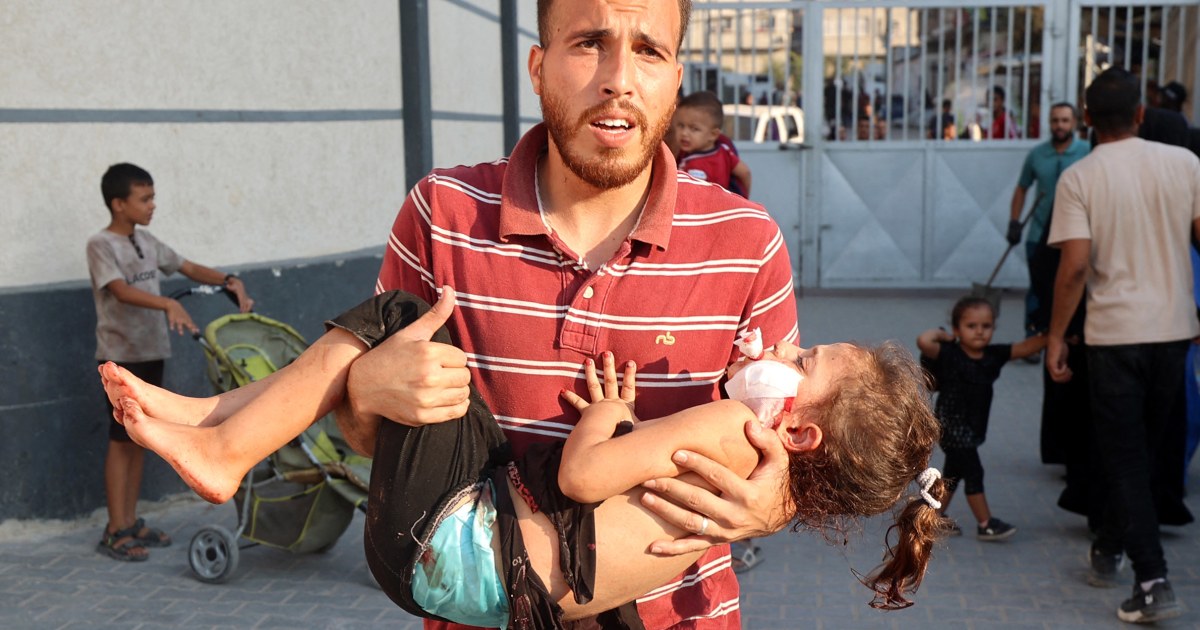
Oct. 1, 2025, 10:10 AM EDTBy Chantal Da SilvaMore than 150 American doctors, nurses and other medical workers who volunteered in Gaza over the past nearly two years on Wednesday called on the Trump administration to end its support for Israel’s war in the besieged enclave.In a letter addressed to President Donald Trump and shared exclusively with NBC News, the 152 American health workers who volunteered in Gaza described their experiences and called on the administration to end the U.S.’ “military, economic and diplomatic support” for Israel’s offensive.A wounded child is brought to Al-Awda Hospital in the central Gaza Strip last month.Eyad Baba / AFP via Getty Images“This is the right thing to do, and we believe it is required under both American and international law,” states the letter from doctors who have volunteered in Gaza with organizations including Médecins Sans Frontières, or Doctors Without Borders, MedGlobal, the International Medical Corps and others.“Everybody that goes over there is horrified by what they see,” Dr. Feroze Sidhwa, a trauma surgeon based in Stockton, California, who organized the letter, told NBC News in a phone interview. “And you know, most of us know that it’s mostly American weapons that are being used.” Dr. Feroze Sidhwa, center, assists with a surgery in Gaza.According to health officials in the enclave, Israeli forces have killed more than 65,000 Palestinians since the Oct. 7, 2023, Hamas-led terrorist attack on Israel that killed 1,200 people and resulted in about 250 kidnapped. The U.S. approved at least $17.9 billion in security assistance for Israeli military operations in Gaza and elsewhere from Oct. 7, 2023 through September 2024, according to estimates from Brown University’s Costs of War Project.“It’s very strange to know that your government is sending the weapons that you’re pulling out of kids’ faces,” Sidhwa added, noting the U.S.’ role as Israel’s closest ally and biggest arms supplier. The letter, which was sent to Trump’s office Wednesday by email and physically mailed the same day, comes two days after the president unveiled a peace plan alongside Israeli Prime Minister Benjamin Netanyahu that he said could bring an end to the war in Gaza and see hostages held there released.Hamas has signaled it will respond to the peace plan soon. If the group which has run Gaza since 2007 rejects it, Trump warned, Israel would have U.S. backing to “finish the job of destroying the threat of Hamas.”Dr. Kathleen Gallagher, a general and acute care surgeon in Grand Forks, North Dakota, and a signatory of the letter, left Gaza a few days ago after spending more than three weeks there. The U.S. Army veteran of the wars in Afghanistan and Iraq who has also worked in Ukraine, said that what she witnessed in Gaza was “far and above the worst, just the worst thing I’ve ever seen.”A Palestinian man cradles a body after Israeli attacks in Gaza City last month. Khames Alrefi / Anadolu via Getty ImagesNothing prepared her for “just the absolute scale of destruction” and the “scope of the displacement,” she said. Malnutrition appeared widespread, while every day Nasser Hospital where she spent most of time was flooded with the wounded and the dead. The hunger crisis in Gaza spiraled this past year under Israel’s offensive and aid blockade, with the world’s leading authority on hunger declaring famine in areas of the enclave’s north in August.Gallagher said nearly half of the patients she treated were gunshot victims. She added almost all of them had been struck while seeking aid. Those shot were “disproportionately young males” with injuries often including single shots to the head and “lots of very accurate neck shots.” A boy injured in an attack on Nuseirat camp being treated at Al-Awda Hospital last month.Moiz Salhi / Anadolu via Getty ImagesIn one case, she said, a 6-month-old girl was brought to the facility after being shot as her mother tried to get aid. The baby did not survive. Gallagher said around 45% of the patients she saw had suffered “explosive injuries.” Dr. Thaer Ahmad, an emergency physician, another signatory, said doctors and other medical workers spent the past nearly two years treating patients with a health care system under relentless attack — and with scarce supplies with limited aid coming in.“They’ve tried to serve their people in just this absolutely heroic way, but they’ve been targeted this entire time,” he said in a phone interview. Palestinians mourn after an Israeli attack on Gaza City on Sept. 2.Saeed M. M. T. Jaras / Anadolu via Getty ImagesOf Gaza’s 36 hospitals, none are fully functioning, with 14 providing partial services, according to World Health Organization data. Meanwhile, the wider health system, including ambulances and field hospitals, have been attacked more than 780 times, with more than 1,500 health workers killed, according to the United Nations.Israel says Hamas uses hospitals and medical centers for military activities, including as “command and control” hubs, opening them to attack. Hamas has denied doing so, while humanitarian groups and the U.N., have said that Israel has not provided sufficient evidence to substantiate its claims. The letter’s signatories also said they had never seen “any type of Palestinian militant activity” in Gaza’s hospitals or other health care facilities during their combined more than 460 weeks working within the health system. Sidhwa said he was aware of just one U.S. doctor having treated someone who appeared to be a combatant at one point, but said that did not suggest activity within the hospital.Sidhwa, who also organized multiple letters to the Biden administration, said he was hopeful the voices of more than 150 American medical workers who have experienced Israel’s offensive on the ground would have some impact on the Trump administration, despite Washington’s stalwart support for Israel and its offensive.“Most of the doctors that come back think it’s traumatic,” Sidhwa said. “But for me, it’s not the death and the guts.” “It’s really just knowing that we’re responsible for it.”Chantal Da SilvaChantal Da Silva reports on world news for NBC News Digital and is based in London.
admin - Latest News - October 1, 2025
admin
27 views 15 secs 0 Comments


More than 150 American doctors, nurses and other medical workers who volunteered in Gaza called on the Trump administration to end its support for Israel‘s war.


Source link

TAGS:
PREVIOUS
Outer Banks Homes Fall Into Ocean From Heavy Surf
NEXT
Supreme Court allows the Fed's Lisa Cook to stay in office for now as Trump pushes to fire her
Related Post
November 8, 2025
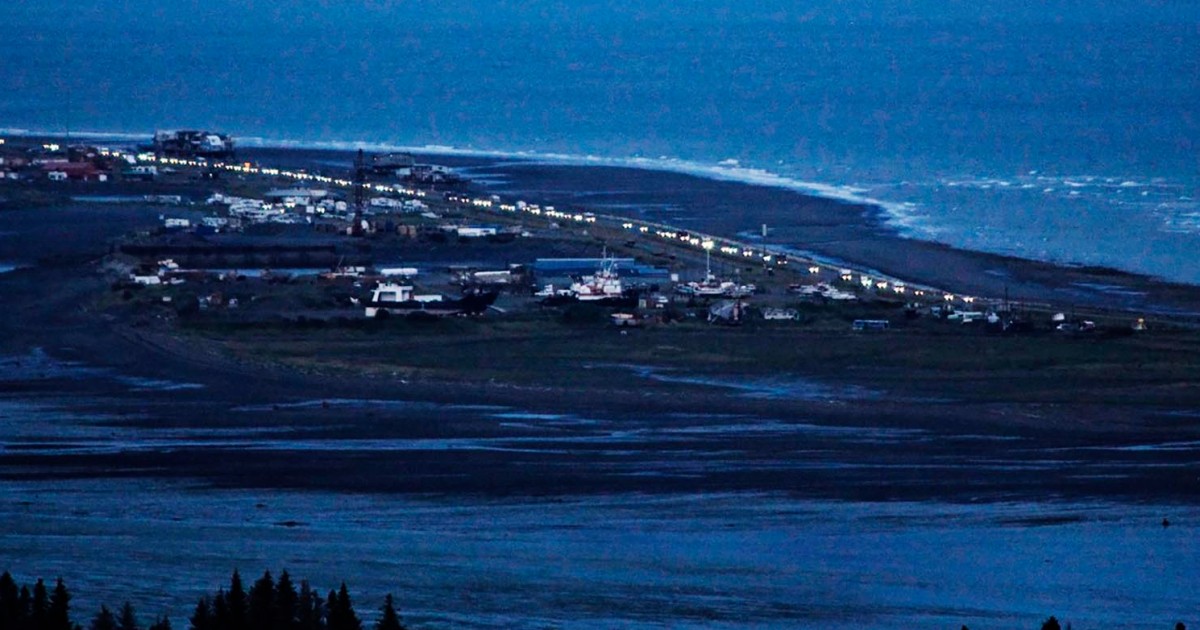
Nov. 8, 2025, 6:00 AM ESTBy Evan BushNine seismic stations in Alaska are set to go dark this month, leaving tsunami forecasters without important data used to determine whether an earthquake will send a destructive wave barreling toward the West Coast. The stations relied on a federal grant that lapsed last year; this fall, the Trump administration declined to renew it. Data from the stations helps researchers determine the magnitude and shape of earthquakes along the Alaskan Subduction Zone, a fault that can produce some of the most powerful quakes in the world and put California, Oregon, Washington and Hawaii at risk. Losing the stations could lead Alaska’s coastal communities to receive delayed notice of an impending tsunami, according to Michael West, the director of the Alaska Earthquake Center. And communities farther away, like in Washington state, could get a less precise forecast.“In sheer statistics, the last domestic tsunami came from Alaska, and the next one likely will,” he said.It’s the latest blow to the U.S.’ tsunami warning system, which was already struggling with disinvestment and understaffing. Researchers said they are concerned that the network is beginning to crumble. “All the things in the tsunami warning system are going backwards,” West said. “There’s a compound problem.”The U.S. has two tsunami warning centers — one in Palmer, Alaska, and the other in Honolulu — that operate around-the-clock making predictions that help emergency managers determine whether coastal evacuations are necessary after an earthquake. The data from Alaska’s seismic stations has historically fed into the centers.Both centers are already short-staffed. Of the 20 full-time positions at the center in Alaska, only 11 are currently filled, according to Tom Fahy, the union legislative director for the National Weather Service Employees Organization. In Hawaii, four of the 16 roles are open. (Both locations are in the process of hiring scientists, Fahy said.)Additionally, the National Oceanographic and Atmospheric Administration has decreased funding for the National Tsunami Hazard Mitigation Program, which pays for the majority of states’ tsunami risk reduction work. The agency provided $4 million in 2025 — far less than the $6 million it has historically offered. “It’s on life support,” West said of the program. A tsunami evacuation route sign in Bolinas, Calif.Stephen Lam / San Francisco Chronicle via Getty Images fileOn top of that, NOAA laid off the National Weather Service’s tsunami program manager, Corina Allen, as part of the Trump administration’s firing of probationary workers in February, according to Harold Tobin, the Washington state seismologist. Allen, who had recently started at the agency, declined to comment via a spokesperson for her new employer, the Washington State Department of Natural Resources. These recent cuts have played out amid the Trump administration’s broader efforts to slash federal spending on science and climate research, among other areas. NOAA fired hundreds of workers in February, curtailed weather balloon launches and halted research on the costs of climate and weather disasters, among other cuts. Most of the seismic stations being shut down in Alaska are in remote areas of the Aleutian Islands, West said. The chain extends west from the Alaskan Peninsula toward Russia, tracing an underwater subduction zone. KHNS, a public radio station in Alaska, first reported the news that the stations would be taken offline.A NOAA grant for about $300,000 each year had supported the stations. The Alaska Earthquake Center requested new grant funding through 2028, but it was denied, according to an email between West and NOAA staffers that was viewed by NBC News. Kim Doster, a NOAA spokeswoman, said the federal agency stopped providing the money in 2024 under the Biden administration. In the spring, the University of Alaska Fairbanks ponied up funds to keep the program going for another year, believing that the federal government would ultimately cover the cost, said Uma Bhatt, a University of Alaska Fairbanks professor and associate director of the research institute that administered the grant. But new funds never materialized.“The loss of these observations does not prevent the Tsunami Warning Center from being able to carry out its mission,” Doster said. “The AEC [Alaska Earthquake Center] is one of many partners supporting the National Weather Service’s tsunami operations, and NWS continues to use many mechanisms to ensure the collection of seismic data across the state of Alaska.”The White House did not respond to a request for comment. West said the Alaska Earthquake Center provides the majority of data used for tsunami warnings in the state. The grant that supported the nine seismic stations also funded a data feed with information from the center’s other sensors, according to West. The national tsunami warning centers will no longer have direct access to the feed. West said the stations on the Aleutian Islands cover a huge geographic range. “There’s nothing else around,” he said. “It’s not like there’s another instrument 20 miles down the road. There’s no road.” The plan is to abandon the stations later this month and leave their equipment in place, West added. Tobin, in Washington state, said he worries that the closures “could delay or degrade the quality of tsunami warnings.” “This is a region that’s sparsely monitored. We kind of need to have a stethoscope on this region,” he said, adding: “These programs are in the background until a big, terrible event happens.”The Alaska-Aleutian subduction zone is one of the most active faults in the world and has produced significant tsunamis in the past. In 1964, a tsunami produced by a magnitude-9.2 earthquake killed 124 people, including 13 in California and five in Oregon, according to NOAA. Most of the California deaths were in Crescent City, where a 21-foot wave destroyed 29 city blocks, according to the city’s website.Tsunami experts said the stations in the Aleutian Islands are critical in quickly understanding nearby earthquakes. The closer a quake is to a sensor, the less uncertainty about a subsequent tsunami.NOAA’s tsunami warning centers aim to put out an initial forecast within five minutes, West said, which is critical for local communities. (A strong earthquake in the Aleutian Islands could send an initial wave into nearby Alaskan communities within minutes.) The only data available quickly enough to inform those initial forecasts comes from seismic signals (rather than tide gauges or pressure sensors attached to buoys).The warning centers then put out a more specific forecast of wave heights after about 40 minutes. Daniel Eungard, the tsunami program lead for the Washington Geological Survey, said that not having the Alaska sensors would create more uncertainty about the heights of waves expected, complicating decisions about whether to evacuate along the Washington coastline.“We try not to over-evacuate,” he said, adding that it costs time, money and trust if warnings prove unnecessary.How a massive quake off Russia sent tsunami waves across the Pacific02:55Over the last year, the national tsunami warning centers have had their hands full. A magnitude-7.0 earthquake near Cape Mendocino, California, triggered tsunami alerts along the state’s coast in December. In July, a magnitude-8.8 quake off Russia’s Kamchatka peninsula prompted a widespread alert along the U.S. West Coast. The peninsula is just west of the Aleutian Islands. NOAA helped build many of the seismic stations that have been part of the Alaska Earthquake Center’s network. But West said the agency has decreased its support over the past two decades; nine NOAA-built stations were decommissioned in 2013. “It’s now or never to decide whether or not NOAA is part of this,” he said. “What I really want to do is spark a discussion about tsunami efforts in the U.S. and have that not be triggered by the next devastating tsunami.”Evan BushEvan Bush is a science reporter for NBC News.
September 22, 2025
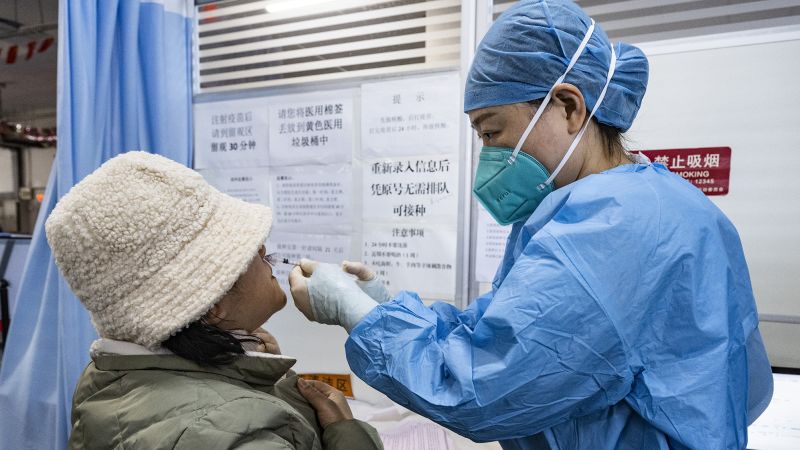
A new approach to a Covid-19 nasal vaccine shows early promise
September 27, 2025
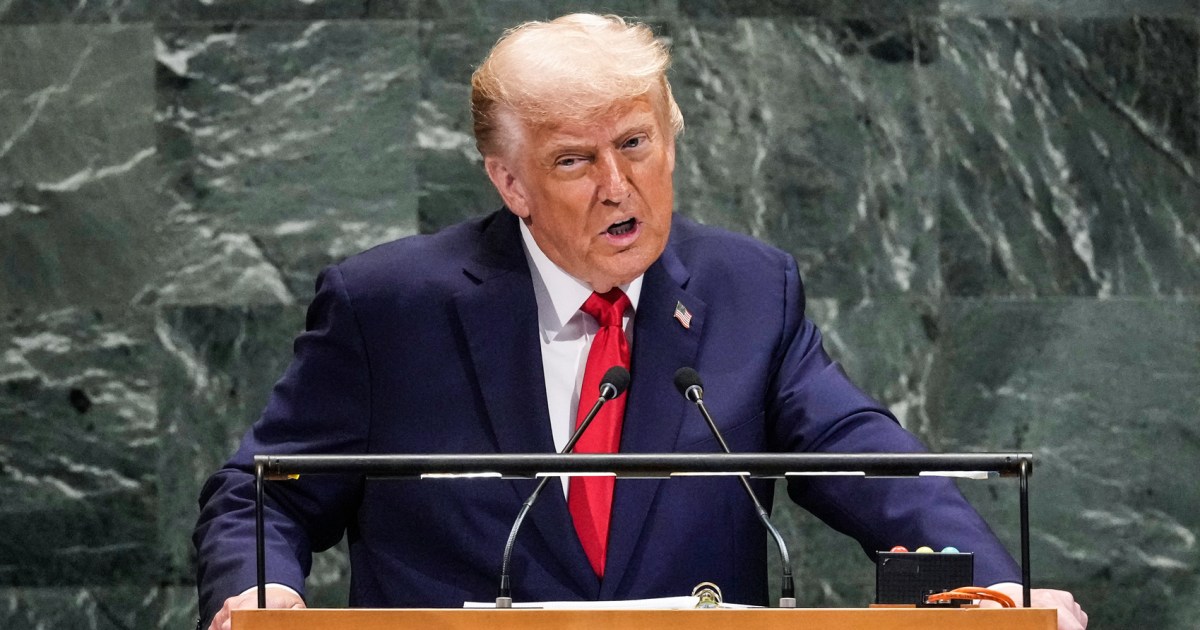
Sept. 27, 2025, 7:30 AM EDTBy Jared PerloNEW YORK — The United States clashed with world leaders over artificial intelligence at the United Nations General Assembly this week, rejecting calls for global oversight as many pushed for new collaborative frameworks.While many heads of state, corporate leaders and prominent figures endorsed a need for urgent international collaboration on AI, the U.S. delegation criticized the role of the U.N. and pushed back on the idea of centralized governance of AI.Representing the U.S. in Wednesday’s Security Council meeting on AI, Michael Kratsios, the director of the Office of Science and Technology Policy, said, “We totally reject all efforts by international bodies to assert centralized control and global governance of AI.”The path to a flourishing future powered by AI does not lie in “bureaucratic management,” Kratsios said, but instead in “the independence and sovereignty of nations.”While Kratsios shot down the idea of combined AI governance, President Donald Trump said in his speech to the General Assembly on Tuesday that the White House will be “pioneering an AI verification system that everyone can trust” to enforce the Biological Weapons Convention.“Hopefully, the U.N. can play a constructive role, and it will also be one of the early projects under AI,” Trump said. AI “could be one of the great things ever, but it also can be dangerous, but it can be put to tremendous use and tremendous good.”.In a statement to NBC News, a State Department spokesperson said, “The United States supports like-minded nations working together to encourage the development of AI in line with our shared values. The US position in international bodies is to vigorously advocate for international AI governance approaches that promote innovation, reflect American values, and counter authoritarian influence.”The comments rejecting collaborative efforts around AI governance stood in stark contrast to many of the initiatives being launched at the General Assembly.On Thursday, the U.N. introduced the Global Dialogue on AI Governance, the U.N.’s first body dedicated to AI governance involving all member states. U.N. Secretary-General António Guterres said the body would “lay the cornerstones of a global AI ecosystem that can keep pace with the fastest-moving technology in human history.” Speaking after Guterres, Nobel Prize recipient Daron Acemoglu outlined the growing stakes of AI’s rapid development, arguing that “AI is the biggest threat that humanity has faced.”But in an interview with NBC News, Amandeep Singh Gill, the U.N.’s special envoy for digital and emerging technologies, told NBC News that the United States’ critical perception of the U.N.’s role in international AI governance was misconstrued.“I think it’s a misrepresentation to say that the U.N. is somehow getting into the regulation of AI,” Gill said. “These are not top-down power grabs in terms of regulation. The regulation stays where regulation can be done in sovereign jurisdictions.”Instead, the U.N.’s mechanisms “will provide platforms for international cooperation on AI governance,” Gill said.In remarks immediately following Kratsios’ comments, China’s Vice Minister of Foreign Affairs Ma Zhaoxu said, “It is vital to jointly foster an open, inclusive, fair and nondiscriminatory environment for technological development and firmly oppose unilateralism and protectionism.”“We support the U.N. playing a central role in AI governance,” Ma said.One day after Kratsios’ remarks at the Security Council, Spanish Prime Minister Pedro Sánchez seemed to push back on Kratsios and gave full-throated support for international cooperation on AI and the U.N.’s role in AI governance.“We need to coordinate a shared vision of AI at a global level, with the U.N. as the legitimate and inclusive forum to forge consensus around common interests,” Sánchez said. “The time is now, when multilateralism is being most questioned and attacked, that we need to reaffirm how suitable it is in addressing challenges such as those represented by AI.”Reacting to the week’s developments, Renan Araujo, director of programs for the Washington, D.C.-based Institute for AI Policy and Strategy, told NBC News that “no one wants to see a burdensome, bureaucratic governance structure, and the U.S. has succeeded in starting bilateral and minilateral coalitions. At the same time, we should expect AI-related challenges to become more transnational in nature as AI capabilities become more advanced.”This is not the first time the U.N. has addressed AI, having passed the Global Digital Compact last year. The compact laid the foundation for the AI dialogue and for an independent international scientific panel to evaluate AI’s abilities, risks and pathways forward. Guterres announced that nominations to this panel are now open.While Thursday’s event marked the launch of the global dialogue and panel, the dialogue will have its first full meeting in Geneva in summer 2026, in tandem with the International Telecommunication Union’s annual AI for Good summit. The dialogue’s exact functions and first actions will be charted out over the coming months.Jared PerloJared Perlo is a writer and reporter at NBC News covering AI. He is currently supported by the Tarbell Center for AI Journalism.
September 21, 2025
DHS designates Kirk memorial as its highest rating
Comments are closed.
Scroll To Top
  • Home
  • Travel
  • Culture
  • Lifestyle
  • Sport
  • Contact Us
  • Politics
© Copyright 2025 - Be That ! . All Rights Reserved