• Police seek suspects in deadly birthday party shooting
  • Lawmakers launch inquires into U.S. boat strike
  • Nov. 29, 2025, 10:07 PM EST / Updated Nov. 30, 2025,…
  • Mark Kelly says troops ‘can tell’ what orders…

Be that!

contact@bethat.ne.com


Be That ! Menu   ≡ ╳
  • Home
  • Travel
  • Culture
  • Lifestyle
  • Sport
  • Contact Us
  • Politics Politics
☰

Be that!

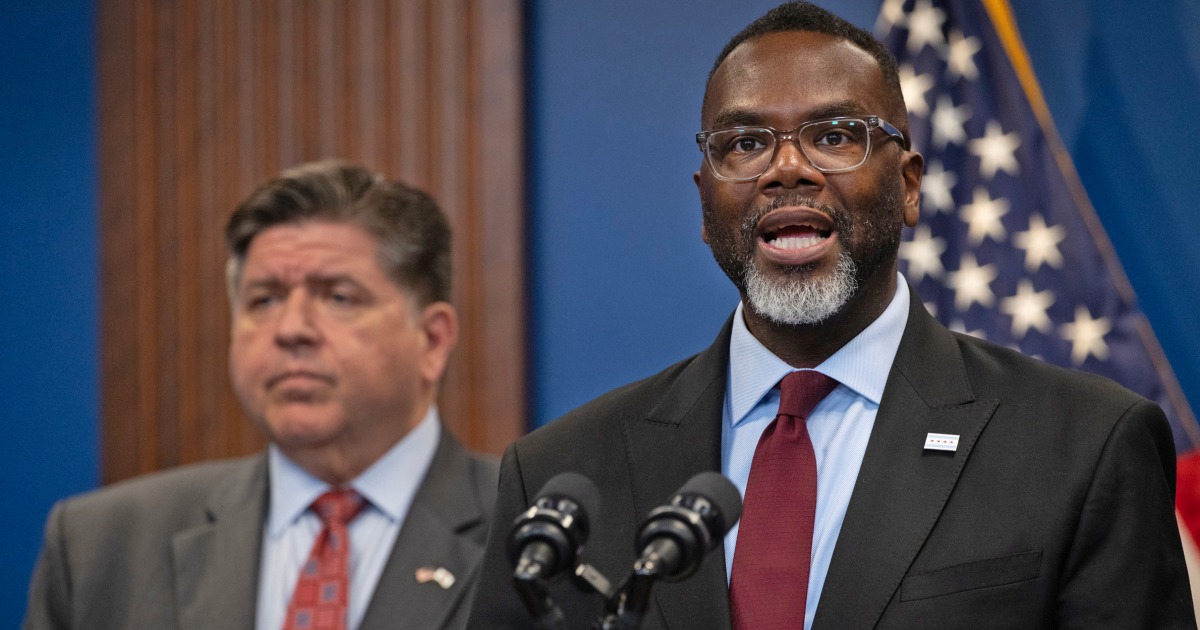
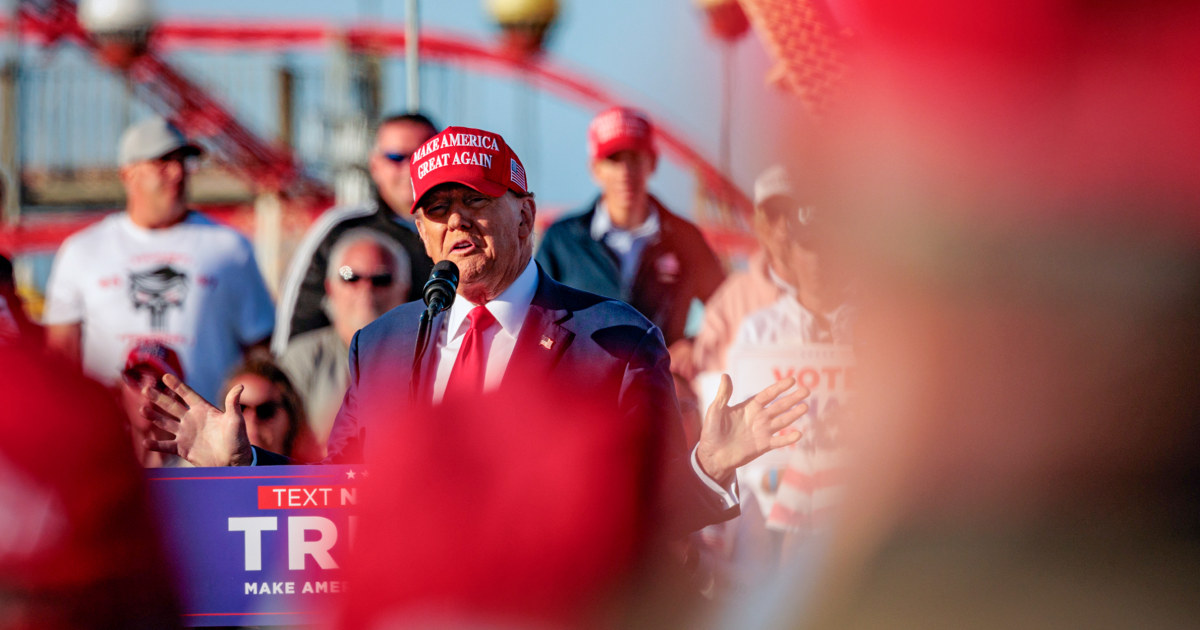
Oct. 8, 2025, 9:14 AM EDT / Updated Oct. 8, 2025, 2:06 PM EDTBy Megan LebowitzPresident Donald Trump said in a post to Truth Social on Wednesday that Chicago Mayor Brandon Johnson and Illinois Gov. JB Pritzker “should be in jail” in an escalation of his conflict with the two Democratic officials.”Chicago Mayor should be in jail for failing to protect Ice Officers!” he said in the post. “Governor Pritzker also!”The president’s post comes a day after Texas National Guard troops arrived in Illinois, despite the Democrats’ fierce opposition. Trump has threatened for weeks to send troops to Chicago as part of a crime-fighting and immigration effort, and Democrats have slammed his push as overreach and a political stunt.Reached for comment, White House spokesperson Abigail Jackson said that “JB Pritzker and Brandon Johnson have blood on their hands” and accused them of having “stood idly by while innocent Americans fall victim to violent crime time and time again.”She argued that “instead of taking action to stop the crime, these Trump-Deranged buffoons would rather allow the violence to continue and attack the President for wanting to help make their city safe again.”The statement did not address NBC News’ questions about what crimes the president believes Johnson and Pritzker and whether the White House planned to try to have federal agents arrest them.Texas National Guard troops arrive outside Chicago02:11Pritzker responded to the president in a post to X, saying, “I will not back down.”“Trump is now calling for the arrest of elected representatives checking his power,” he said in the post. “What else is left on the path to full-blown authoritarianism?”Later, Pritzker told reporters that Trump is “a coward.””He likes to pretend to be a tough guy,” Pritzker said of the president. “Come and get me.”Reached for comment, Johnson said that “this is not the first time Trump has tried to have a Black man unjustly arrested.”“I’m not going anywhere,” he added.On Monday, Illinois sued in an attempt to prevent the White House from deploying federalized troops to Chicago. A judge scheduled a hearing on the case for Thursday and declined to sign a temporary restraining order, which would have blocked the administration as the case proceeds in court. The president’s comments come as protests across Immigration and Customs Enforcement have rippled across the country as the administration ramped up efforts to detain and deport migrants. The White House has previously argued that deploying the National Guard is necessary to “protect federal assets and personnel” and prevent “attacks on law enforcement.”Trump first deployed the National Guard to Los Angeles, over Gov. Gavin Newsom’s objections, after protests broke out in response to immigration raids. The president then ordered the National Guard to the streets of D.C., painting it as an effort to fight crime. The administration is also trying to send federalized National Guard troops from California to Portland, Oregon, but a judge granted a temporary restraining order this week to block the move as the case is considered in court. A Pentagon spokesperson had said that the troops would have worked to “support U.S. Immigration and Customs Enforcement and other federal personnel performing official duties, including the enforcement of federal law, and to protect federal property.” In Chicago, a frequent target of the president, Johnson signed an executive order on Monday in an effort to block immigration agents from using city property during their operations in Chicago. “We will not tolerate ICE agents violating our residents’ constitutional rights nor will we allow the federal government to disregard our local authority,” Johnson said in a press release marking the so-called “ICE Free Zone” executive order. Pritzker has emerged as a leading critic of the Trump administration as his state faces the president’s ire. Trump has compared Chicago to a “war zone,” and Pritzker said Sunday in an interview on CNN’s “State of the Union” that “they’re just making this up.””Then what do they do? They fire tear gas and smoke grenades, and they make it look like it’s a war zone,” Pritzker said on Sunday, appearing to refer to federal agents. “And they, you know, get people on the ground are, frankly, incited to want to do something about it, appropriately.”In recent days, Pritzker also said that he believed that Trump should be removed from office. “There is something genuinely wrong with this man, and the 25th Amendment ought to be invoked,” he said, referring to a process for removing the president from office.On Tuesday, Pritzker was asked during an event whether he believed he could be arrested. “I’m asking any of you to come visit me in the gulag in El Salvador,” Pritzker joked, referring to the prison where the Trump administration has deported some immigrants.House Speaker Mike Johnson did not say whether he believed Mayor Johnson and Pritzker should be jailed when asked by NBC News about Trump’s post. “Should they be in prison? Should the mayor of Chicago and the governor of Illinois be in prison?” Johnson responded. “I’m not the attorney general. I’m the Speaker of the House, and I’m trying to manage the chaos here. I’m not following the day-to-day on that.”Trump has repeatedly threatened legal action against some of his political opponents, including former FBI Director James Comey and New York Attorney General Letitia James. Last month, he urged Attorney General Pam Bondi in a post to Truth Social to not “delay any longer,” slamming his political opponents and writing, “JUSTICE MUST BE SERVED, NOW!!!”Comey was indicted days later and is set to be arraigned on Wednesday. Megan LebowitzMegan Lebowitz is a politics reporter for NBC News.Natasha Korecki and Julie Tsirkin contributed.
admin - Latest News - October 8, 2025
admin
23 views 12 secs 0 Comments


President Donald Trump said in a post to Truth Social on Wednesday that Chicago Mayor Brandon Johnson and Illinois Gov.


Source link

TAGS:
PREVIOUS
Trump administration officials seriously discussing invoking Insurrection Act, sources say
NEXT
Oct. 7, 2025, 5:17 PM EDTBy Gary Grumbach and Dareh GregorianPresident Donald Trump suggested numerous times this week that he could invoke the sweeping presidential powers granted by the Insurrection Act “if necessary.””It’s been invoked before,” Trump told reporters Tuesday, adding, “We want safe cities.”Using the Insurrection Act was something Trump repeatedly suggested he might do in his first term, although he never actually did.A spokeswoman for the White House, Abigail Jackson, said in a statement Tuesday that the president has “exercised his lawful authority to protect federal officers and assets. President Trump will not turn a blind eye to the lawlessness plaguing American cities.”Here’s a look at what the Insurrection Act is, and what it would enable the president to do.What is the Insurrection Act?While the military is generally barred from being deployed for domestic law enforcement without congressional authorization, the Insurrection Act gives the president power to deploy the U.S. military domestically and to federalize National Guard troops during specific circumstances.It was signed into law by President Thomas Jefferson in March 1807.Has it ever been used before?Many times, but not in decades.George Washington used an earlier version of the law to stamp out the Whiskey Rebellion in 1792.President George H.W. Bush was the last to use it during the deadly 1992 Los Angeles riots, following a request from the city’s Democratic mayor and the state’s Republican governor.What can trigger the use of the Insurrection Act?While one justification for invoking the act is clear — that the president can take action if asked to do so by a governor or a Legislature — the other standards mentioned in the statute are broad and vague, giving the president wide latitude.“Whenever the President considers that unlawful obstructions, combinations, or assemblages, or rebellion against the authority of the United States, make it impracticable to enforce the laws of the United States in any State by the ordinary course of judicial proceedings, he may call into Federal service such of the militia of any State, and use such of the armed forces, as he considers necessary to enforce those laws or to suppress the rebellion,” the statute reads.Another section says the president, “by using the militia or the armed forces, or both,” shall “take such measures as he considers necessary to suppress, in a State, any insurrection, domestic violence, unlawful combination, or conspiracy” if it “hinders the execution of the laws of that State, and of the United States within the State,” or if it “opposes or obstructs the execution of the laws of the United States or impedes the course of justice under those laws.”The statutes don’t define the terms, essentially leaving it up to the president to determine what constitutes an insurrection or rebellion, and when it’s been quelled.A 2022 review from the Brennan Center, a progressive policy group, called that provision “so bafflingly broad that it cannot possibly mean what it says, or else it authorizes the president to use the military against any two people conspiring to break federal law.”How does Trump define insurrection?The president — who was impeached on a charge of inciting insurrection on Jan. 6, 2021 — has indicated he has a low bar for what he considers insurrection, but has also said he doesn’t believe the criteria to use the act have been met.Trump mentioned the word insurrection — which the Encyclopaedia Britannica defines as “an organized and usually violent act of revolt or rebellion against an established government or governing authority” — five times on Monday.”Portland is on fire. Portland’s been on fire for years. And not so much saving it — we have to save something else, because I think that‘s all insurrection, really criminal insurrection,” Trump said at one point in the Oval Office on Monday. He told Newsmax later in the day that the situation in Portland was “pure insurrection.”Earlier in the day, he said he’d invoke the act “if it was necessary. So far it hasn’t been necessary but we have an Insurrection Act for a reason. If I had to enact it, I’d do that. If people were being killed and courts were holding us up, or governors or mayors were holding us up, sure I’d do that. I want to make sure that people aren’t killed.”Speaking to reporters on Tuesday, he broadened his definition, saying “these Democrats are like insurrectionists” because they opposed his “big beautiful bill.”How would using the Insurrection Act be different from what Trump is already doing?The Insurrection Act gives the military more freedom to perform law enforcement duties, such as conducting searches and making arrests.When Trump deployed the National Guard and the Marines in Los Angeles amid protests over his immigration policies, they were publicly assigned a more limited role, focused on protecting federal buildings and activities.A federal judge in California last month found they actually did more than that, and violated the Posse Comitatus Act of 1878, which prohibits the president from using the military as a domestic police force without approval from Congress or under special circumstances — such as an invocation of the Insurrection Act.“The evidence at trial established that Defendants systematically used armed soldiers (whose identity was often obscured by protective armor) and military vehicles to set up protective perimeters and traffic blockades, engage in crowd control, and otherwise demonstrate a military presence in and around Los Angeles,” U.S. District Judge Charles Breyer wrote in his ruling.“In short, Defendants violated the Posse Comitatus Act,” he said.The administration is appealing the ruling and an appeals court has put the ruling on hold while the case proceeds.Gary GrumbachGary Grumbach is an NBC News legal affairs reporter, based in Washington, D.C.Dareh GregorianDareh Gregorian is a politics reporter for NBC News.Tara Prindiville contributed.
Related Post
October 13, 2025
Oct. 13, 2025, 5:00 AM EDTBy Adam NoboaNew Jersey delivered some of the nation’s most dramatic coalition shifts in the 2024 presidential election. Now, those shifts are setting the table for this year’s hard-fought governor’s race — and big questions nationally about where communities like these are going in future elections.For starters, President Donald Trump’s 2024 surge among nonwhite voters in the New York City metro area caught much of the political world by surprise. But questions remain about whether Republicans can sustain this coalition long term.An analysis of municipal-level election results in New Jersey, coupled with data from the U.S. Census Bureau, provides a detailed demographic and geographic snapshot of where Democrats and Republicans have grown their support fastest in recent elections. By examining changes since 2012 — the most recent presidential election without Trump on the ballot — a clear picture of shifting party coalitions emerges.Support for Trump has exploded in densely populated, heavily nonwhite, formerly industrial cities like Paterson, Perth Amboy and Passaic in the New York City metro area. Republican growth that was slowly developing since 2012 surged dramatically in 2024.Meanwhile, Democratic candidates have found growing strength in New Jersey’s shore towns, affluent suburbs populated by college-educated professionals, and places popular with retirees.These communities will become crucial laboratories going forward, testing whether this 12-year political realignment can outlast Trump.But the picture will be far from clear, and different political characters often encourage different political results. Republican Jack Ciattarelli’s previous bid for New Jersey governor in 2021 produced a tight race — but he did it with a coalition that looked much different than the one that would emerge for Trump in 2024.The biggest question heading into future elections is whether these shifts represent a durable transformation of state (and national) politics or merely a Trump-specific phenomenon. These communities provide a testing ground for the answer.The biggest shifts toward DemocratsBiggest shifts since 2012More than half of this nearly all-residential beach town of 331 people, located 2 miles south of the final stop on NJ Transit’s Jersey Shore train line, work in finance or management jobs. The population that works from home is also well above the state average: 45% for Mantoloking, compared to 13% statewide. The mean household income was $484,326, and the average sale price of the 10 homes sold in this borough in 2024 was $4.8 million.It’s still Republican territory, but not to nearly the same extent it was pre-Trump, exemplifying shifts among wealthier and more educated voters.This location is perhaps most famous to New Jerseyans for its eponymously named shopping center, The Mall at Short Hills. Originally opened in 1961 with the tagline “5th Avenue in the Suburbs,” the mall and the area around it have grown into that aspirational billing.Today, Short Hills has a mean household income of $512,637, the second highest in the state. Among residents 25 and older, 60% hold advanced degrees, the highest share for any place of its size in the state. Asian residents make up 38% of the population, with half of them being Indian American.Biggest shifts since 2016This is another small beach town, the farthest you can get down the Jersey Shore — at the southern tip of the Jersey peninsula. Nearly all the shops and dining are in the larger Cape May city, 10 minutes to the east, but this mostly residential community has a high population of older individuals, with a median age of 70.9. Home values are $1.4 million, among the top 10 places in South Jersey.Located on the banks of the Delaware River in western New Jersey, Frenchtown is a quaint river town and popular day trip destination known for its art galleries and boutiques. The 70-mile Delaware and Raritan Canal trail, which begins just north of town, is popular with pedestrians and bikers alike. A narrow bridge connects Frenchtown to rural Bucks County, Pennsylvania — itself a perennially important county in Pennsylvania politics.One in 10 residents in Frenchtown are involved in “arts, design, entertainment, sports, and media occupations,” the second highest concentration in the state. (In recent years, “Eat, Pray, Love” author Elizabeth Gilbert lived and owned a store in town.) Among adult residents, 41% are white with college degrees or higher, above the 27% average for New Jersey overall.Biggest shifts since 2020Avalon has long been an affluent shore town: Ed McMahon would often talk up his weekends there on “The Tonight Show with Johnny Carson.” Avalon now has the state’s fifth-oldest population, with a median age of 74.1. The average sale price of a home in Avalon last year was $2.8 million.A retirement community in South Jersey, this planned development was under active buildout from 1971 to 1986. Leisuretowne has grown to 2,255 homes, and the current median age is now 72.5.The biggest shifts toward RepublicansBiggest shifts since 2012This largely industrial neighborhood is tucked underneath the Gov. Alfred E. Driscoll Bridge, one of the widest in the world at 15 lanes. Its accessibility to the Garden State Parkway, I-95 and the Outerbridge Crossing, connecting New Jersey to New York, make this particularly attractive to large distribution-based companies. FedEx hosts a distribution center here, as does Wakefern Food Corp., best known for its ShopRite subsidiary.Once a primarily Polish and Hungarian neighborhood, it has seen the third-highest Latino population growth in the state over the past two decades, going from 38% of the population in 2000 to 71% of the population in 2020. The mean household income here is $91,696, below the statewide figure of $140,299.A brand-new, 5-acre waterfront park opened earlier this year in this compact town on the Passaic River — a major step in revitalizing this industrial area in Newark’s shadow. The Clark Thread Company, once the nation’s largest thread-maker, had a large campus here, with the property as the primary area tagged for redevelopment.Two-thirds of the population in East Newark is Hispanic/Latino. Majorities do not hold U.S. citizenship and speak Spanish at home, according to census data. It has the largest Peruvian population and fifth-largest Ecuadorian population by share in the U.S.Biggest shifts since 2016Home of the sixth-largest Latino population in the state, 73% of Passaic’s 70,000 residents are of Hispanic or Latino origin. Passaic also boasts the state’s largest Mexican population. The high-immigrant town is firmly working-class: 33% of its adult population hasn’t graduated high school, compared to 9% statewide.Heading south from downtown and toward the Passaic Park neighborhood, you will find a large Orthodox Jewish population. While official numbers about religious adherents aren’t kept at the municipal level, Passaic would likely have one of the top populations of Orthodox Jews in New Jersey. The Brook Haven Mall, which bills itself as “largest kosher shopping mall in the U.S.,” opened its doors in 2021, a testament to the size of the Jewish population in the immediate area.New Jersey’s fourth-largest city, Elizabeth is an active transit hub for the New York metropolitan area. The city hosts parts of Newark Liberty International Airport, one of the region’s three major airports, and Port Newark-Elizabeth Marine Terminal, one of the world’s busiest container ports. The Goethals Bridge also links Elizabeth directly to Staten Island, making it a key connector between New Jersey and New York City.Like the population of East Newark, more than half of the population here was not born in the United States, and nearly two-thirds of the residents here are Spanish speakers.Biggest shifts since 2020The unique clay bedrock of Perth Amboy made it a capital of East Coast terra-cotta production at the turn of the 19th century. Terra-cotta-detailed facades decorate buildings around town, and the work of the Perth Amboy Terra Cotta Company became a staple of the elegant skyscrapers built in Manhattan at the time, from the Woolworth Building to the Flatiron Building. The Great Depression caused a sudden evaporation of the terra-cotta industry, and the ensuing decades have reinvented Perth Amboy.The city is now 81% Latino, the third-highest share of any place in the state. Half its Latino population is of Dominican origin, among the highest concentrations anywhere in the country.New Jersey’s third-largest city is a melting pot. It has the largest Dominican population outside New York City and Lawrence, Massachusetts, and its Little Lima neighborhood represents the largest Peruvian population outside of Peru. Paterson’s mayor declared the city the U.S. “capital of Palestine” on account of its large Palestinian population, too, and its broader Muslim population probably accounts for at least a third of the city’s makeup.At the same time, Paterson is a city in transition, with a quarter of its population living in poverty, per census data, and some of the highest crime rates in the state on a per capita basis.Adam NoboaAdam Noboa is a producer at NBC News with Steve Kornacki.
October 7, 2025
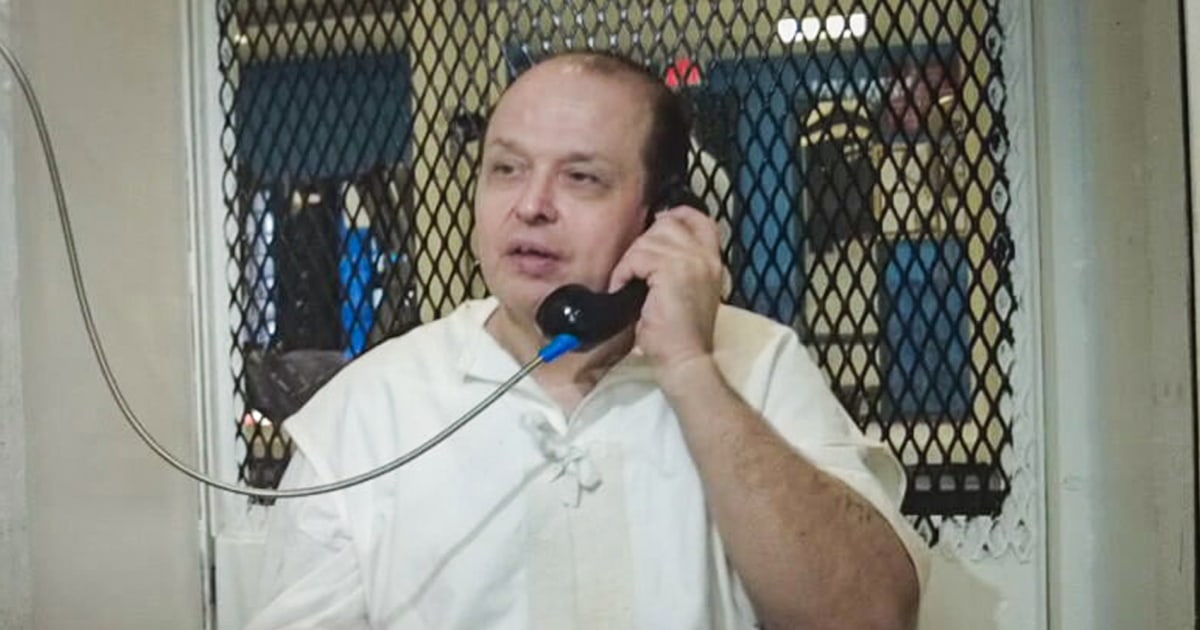
Oct. 7, 2025, 6:57 PM EDTBy Dan Slepian, Nick McElroy and Erik OrtizLawyers for Robert Roberson, the condemned man on Texas’ death row who faces execution next week, say the first episode of a “Dateline” podcast about his case contains “highly relevant” evidence that highlights judicial misconduct and supports their petition for a new trial.The ongoing claim before the Texas Court of Criminal Appeals seeks to halt Roberson’s Oct. 16 execution for the 2002 death of his 2-year-old daughter, Nikki. If executed by lethal injection, Roberson, 58, would be the first person put to death in the United States in a case of “shaken baby syndrome.”For more on this case, listen to episodes of the “Dateline” podcast “The Last Appeal”In a filing Monday, Roberson’s lawyers wrote that an interview with Nikki’s maternal grandfather conducted by “Dateline” anchor Lester Holt is “directly relevant to the judicial misconduct claim,” which alleges a “serious violation of Mr. Roberson’s fundamental right to a trial before an impartial tribunal — and before a tribunal that appears impartial.”“It’s shocking that we are discovering the truth about this glaring, undisclosed evidence of bias only by chance, from a podcast, days before Robert is scheduled to be executed for a tragedy that has been mislabeled as a crime,” Gretchen Sween, a lawyer for Roberson, said in a statement.Robert Roberson with his daughter Nikki.Courtesy Roberson familyIn January 2002, Roberson and Nikki fell asleep in their East Texas home and he later awoke, he said, after he heard a sound and found Nikki had fallen out of bed, according to court documents.Later that morning, when Roberson discovered his daughter was unconscious and her lips were blue, he rushed her to an emergency room.Within three days, a detective arrested Roberson on a capital murder charge.For the initial episode of “The Last Appeal” podcast, which was released Monday, Holt interviewed Larry Bowman, Nikki’s maternal grandfather.Bowman identified Anderson County Judge Bascom Bentley as the judiciary official who called the hospital, directing them to contact the Bowmans for permission to authorize removing Nikki from life support.“Matter of fact, Judge Bentley told ’em we were the parents,” Bowman said.But Roberson’s lawyers say the Bowmans did not have that authority, and Roberson had custody of Nikki and was appointed her sole conservator in November 2001, about two months before she died.Roberson had been a single father caring for Nikki after her mother lost custody because of personal issues.In addition to Bentley providing false information to the hospital, which allowed Nikki to be removed from life-sustaining care, according to the latest filing, he was the judge who signed Roberson’s arrest warrant based on the “shaken baby syndrome” diagnosis and then presided over all but one proceeding in Roberson’s criminal trial.Roberson’s lawyers say Bentley’s involvement in the early stages of Roberson’s case are material to their larger claims of judicial misconduct that they say tainted his trial.“Any objective member of the public, with knowledge of the new facts, would reasonably believe that Judge Bentley had prejudged Mr. Roberson’s guilt and, animated by that presumption of guilt, improperly circumvented the law governing parental rights and the guarantees of due process and thus should have recused himself from presiding over Mr. Roberson’s criminal case to preserve the appearance of impartiality,” the court filing says. “Judge Bentley’s failure to do so caused structural error and requires a new trial.”Robert Roberson.NBC NewsBentley died in 2017. The Texas Attorney General’s Office, which is now overseeing the prosecution against Roberson, did not immediately respond to a request for comment. The office of Texas Gov. Greg Abbott declined to be interviewed for the “Dateline” podcast.Roberson was nearly put to death a year ago, but a bipartisan group of Texas lawmakers used their legislative power to help block his execution in a last-minute maneuver.State Attorney General Ken Paxton vowed to press ahead with a execution date, and has previously said Roberson murdered his daughter by “beating her so brutally that she ultimately died.”In filings this year, Roberson’s legal team has argued that there is new evidence of his innocence and that the medical and scientific methods used to convict him of so-called shaken baby syndrome, in which a child is shaken so violently that the action causes head trauma, have since been largely discredited.His team also claims that judicial officials in Anderson County, where a jury sentenced him to death in 2003, violated Roberson’s constitutional rights.Aside from the request in front of the Texas Court of Criminal Appeals, Roberson filed a separate plea this month with the Fifth Circuit Court of Appeals for a stay of execution so that he could file a new legal challenge claiming his imprisonment is illegal because of “overwhelming evidence that he was convicted using discredited ‘science.’” That appeal is also ongoing.Previous attempts to stop Roberson’s execution have been unsuccessful, including as it relates to a 2013 “junk science” law in Texas that allows prisoners to potentially challenge convictions based on advances in forensic science.While doctors and law enforcement concluded that Nikki suffered blunt-force trauma and was shaken, Roberson’s defense team says a new understanding of “shaken baby syndrome” shows that other medical conditions can be factors in a child’s death, as it believes was the case with Nikki.Dan SlepianDan Slepian is an award-winning investigative producer and a veteran of “Dateline: NBC.” Nick McElroyNick McElroy is an associate producer for NBC News’ “Dateline.”Erik OrtizErik Ortiz is a senior reporter for NBC News Digital focusing on racial injustice and social inequality.
September 22, 2025
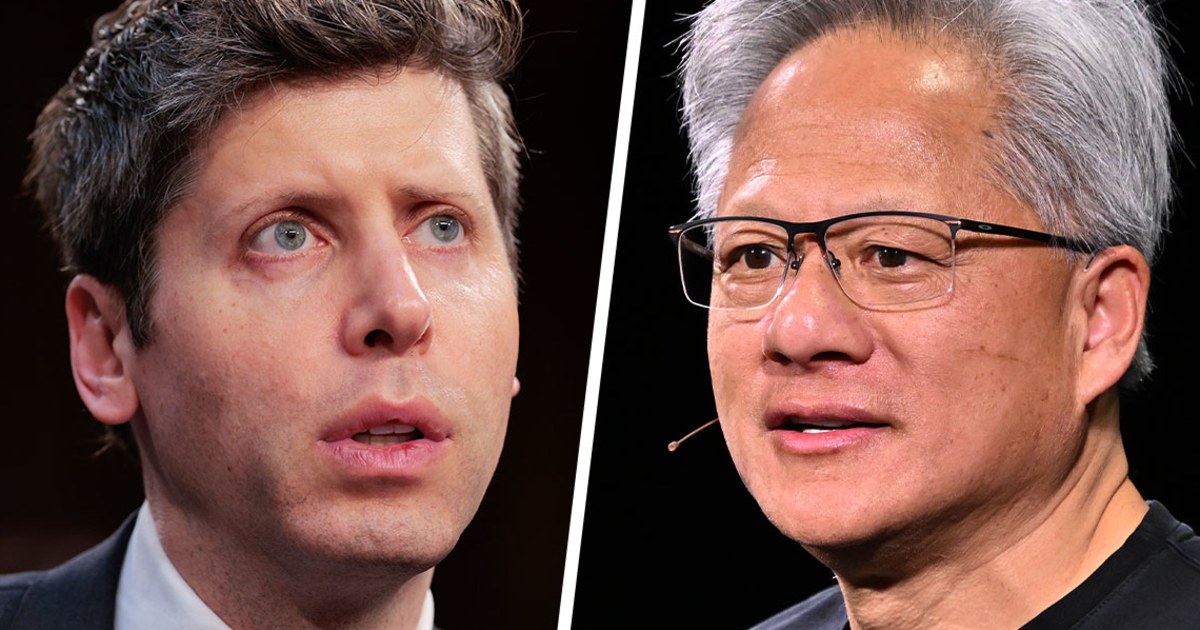
Chipmaker Nvidia to invest $100 billion in OpenAI
November 20, 2025
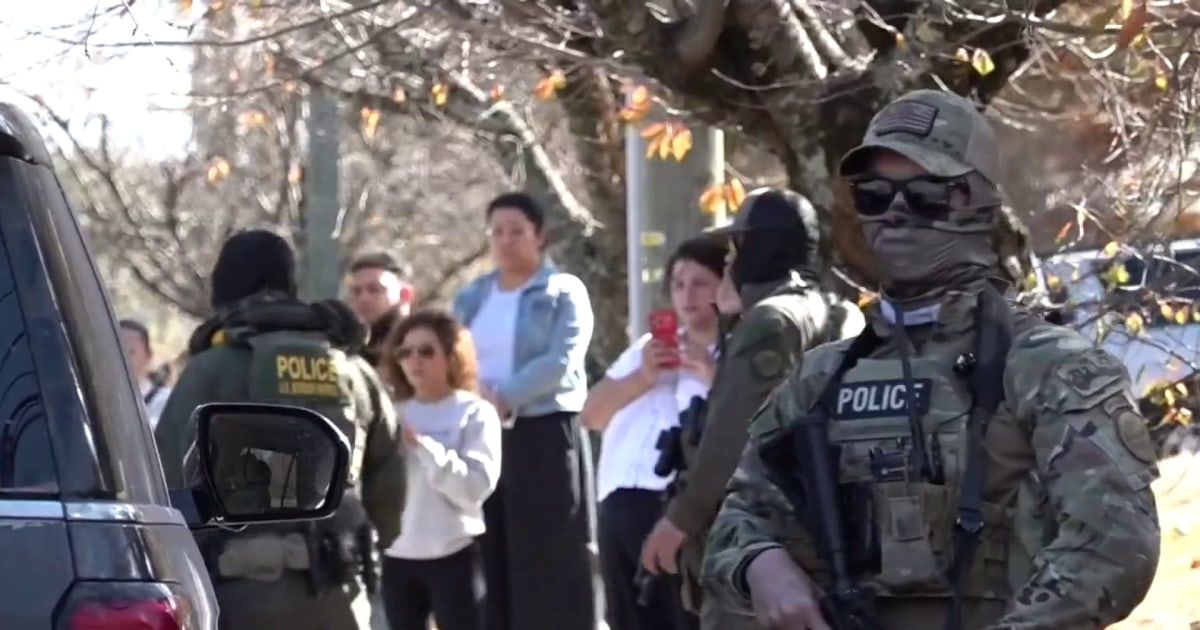
Border patrol agents preparing to leave Charlotte after immigration raids
Comments are closed.
Scroll To Top
  • Home
  • Travel
  • Culture
  • Lifestyle
  • Sport
  • Contact Us
  • Politics
© Copyright 2025 - Be That ! . All Rights Reserved