• Police seek suspects in deadly birthday party shooting
  • Lawmakers launch inquires into U.S. boat strike
  • Nov. 29, 2025, 10:07 PM EST / Updated Nov. 30, 2025,…
  • Mark Kelly says troops ‘can tell’ what orders…

Be that!

contact@bethat.ne.com


Be That ! Menu   ≡ ╳
  • Home
  • Travel
  • Culture
  • Lifestyle
  • Sport
  • Contact Us
  • Politics Politics
☰

Be that!

Oct. 16, 2025, 5:46 PM EDT / Updated Oct. 16, 2025, 6:01 PM EDTBy Aria BendixPresident Donald Trump on Thursday announced two policy changes aimed at making in vitro fertilization more affordable — a long-awaited follow-up to his pledges to require health insurers to cover IVF services and to an executive order aimed at lowering the cost of fertility treatments.However, the announcement was not a new rule that insurers must cover IVF. Rather, the Trump administration said that the White House has negotiated with two specialty pharmacies and a drug manufacturer to lower the cost of a commonly prescribed fertility drug that stimulates the ovaries to produce eggs.Additionally, the administration announced forthcoming guidance from the Labor, Treasury, and Health and Human Services departments that will help employers offer fertility benefits outside of major medical health insurance plans, the same way they offer dental, vision or life insurance. “We want to make it easier for all couples to have babies, raise children and start the families they have always dreamed about,” Trump said at a briefing in the Oval Office. The bulk of Thursday’s announcement focused on discounted fertility medications from drugmaker EMD Serono, which is part of the pharmaceutical giant Merck. The company said it would make its IVF drugs available at a lower cost through TrumpRx, a direct-to-consumer website operated by the federal government, starting in early 2026. “We are proud to announce that Americans will have access to our leading IVF therapies for an 84% discount off list prices,” Libby Horne, head of U.S. fertility at EMD Serono, said.Most IVF patients in the U.S. pay out of pocket for treatment, according to KFF, a nonprofit research group. Among the discounted drugs is a commonly used medication called Gonal-f, which some IVF patients take in the form of daily injections for roughly one or two weeks.Lab staff prepare small petri dishes, each holding several embryos, for cells to be extracted from each embryo to test for viability in Houston in 2024.Michael Wyke / AP fileSenior administration officials said the specialty pharmacies involved in the deal, CVS Specialty and Express Scripts’ Freedom Fertility — which they estimated account for more than 80% of the distribution of Gonal-f — agreed to reduce their expenses associated with the drug’s handling.“Upwards of 40% of the cost of IVF comes from the specialty drugs used for this treatment. Reducing these costs can have a significant impact on affordability and access,” Dr. Roger Shedlin, CEO of the fertility benefits company WIN, said in a statement.Trump’s announcement came after months of relative silence from the White House on which policies it was considering to expand IVF access. The executive order he issued in February had called for recommendations for “protecting IVF access and aggressively reducing out-of-pocket and health plan costs for IVF treatment.” Trump received a list of those recommendations in May.The new deal is part of Trump’s broader effort to bring the cost of prescription drugs in the U.S. more in line with the lowest prices charged in other wealthy countries — what’s known as the “most favored nation” pricing model.The White House has not yet negotiated lower prices on IVF drugs from other manufacturers.Sean Tipton, chief advocacy and policy officer at the American Society for Reproductive Medicine, which represents IVF providers, called the announcement a “crucial first step,” but said it still doesn’t go far enough to boost affordability.“One executive action cannot, on its own, ensure that every patient who needs IVF — which for some represents the only option to have a child — can access it,” he said.For now, senior administration officials said, medications made by EMD Serono will be discounted on TrumpRx at varying levels depending on a buyer’s income. Patients earning below 550% of the federal poverty level will be eligible for the more significant discount, the officials said.Trump campaigned last year on expanding IVF access, referring to himself at the time as the “father of IVF.” However, some conservatives and anti-abortion groups see IVF as unethical because the process often involves discarding embryos that have genetic issues or aren’t needed. The Washington Post reported in August that the administration had veered away from the idea of an IVF coverage requirement for health insurers.EMD Serono is seeking approval from the Food and Drug Administration for another fertility drug, Pergoveris, which is approved in Europe but not the U.S. Administration officials said on Thursday the FDA intends to give that application priority review status, which would expedite the process.Aria BendixAria Bendix is the breaking health reporter for NBC News Digital.

admin - Latest News - October 16, 2025
admin
23 views 16 secs 0 Comments


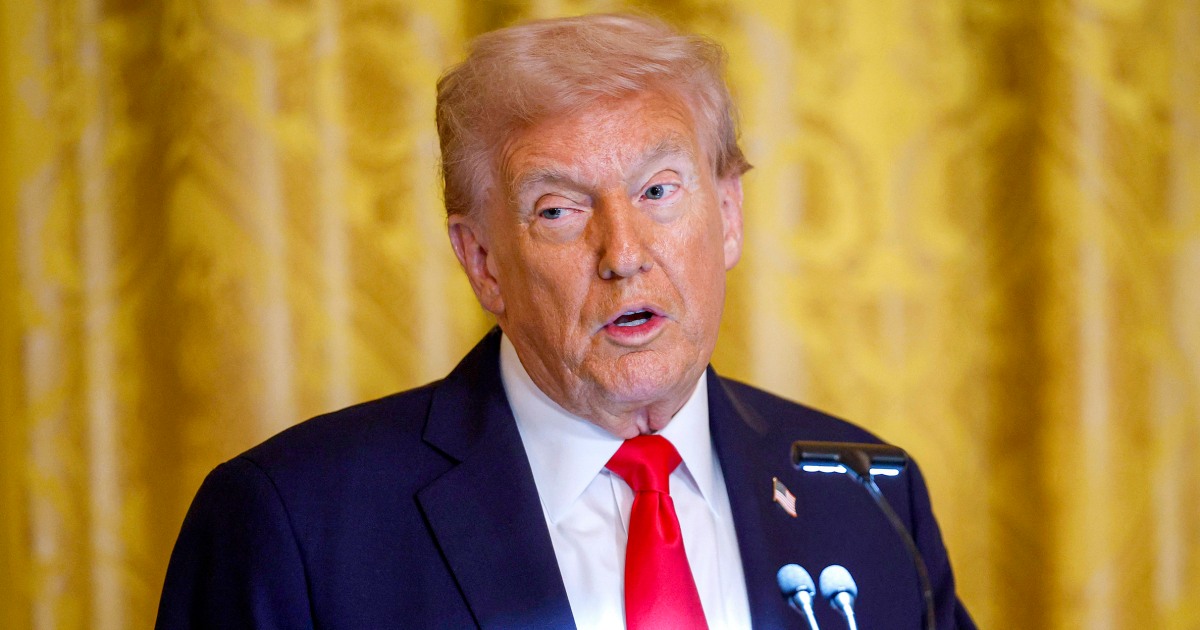
President Donald Trump announced a deal with the maker of a common IVF drug, which pledged to sell its fertility medications at a discount through the direct-to-consumer TrumpRx website.


Source link

TAGS:
PREVIOUS
Oct. 16, 2025, 5:00 AM EDTBy Ben KamisarOne thing is certain in New York City’s race for mayor: There’s no love lost between the top candidates, Democratic nominee and state Assemblyman Zohran Mamdani and former Democratic governor-turned-independent Andrew Cuomo. And as the two prepare to face off in their first general election debate Thursday, along with Republican nominee Curtis Sliwa, a review of the tape from Mamdani and Cuomo’s two Democratic primary debates shows how they have positioned themselves in diametric opposition to each other — and as the answer for voters seeking to address the other’s shortcomings.To Cuomo, the almost 34-year-old Mamdani is a young man in a hurry whose lack of experience should disqualify him from leading America’s largest city. Not only that, Cuomo considers Mamdani to be the face of a wing of the Democratic Party that he believes is leading the whole organization astray on issues from support for Israel to economic policy. To Mamdani, Cuomo is the manifestation of a broken Democratic Party establishment, a root cause of the affordability crisis at the center of his entire campaign, and a politician who has lost the public trust after being accused of sexual misconduct, allegations Cuomo denies. Andrew Cuomo says he ‘learned to be more careful’ after harassment allegations but has no regrets01:24Perhaps no exchange typifies the pair’s disdainful dynamic than one from the NY1/Spectrum News primary debate in early June, when both men were asked about their experience. Cuomo responded by arguing that “inexperience is dangerous” before taking Mamdani head on. “He’s never dealt with a City Council, he’s never dealt with the Congress, he’s never dealt with the state legislature, he’s never negotiated with a union, he’s never built anything, he’s never dealt with a natural emergency, he’s never dealt with a hurricane, with a flood,” Cuomo said. “He’s never done any of the essentials, and now you have Donald Trump on top of all of that — and he’s never dealt with what I think is the greatest national threat that we face, in this president. To put a person in this seat at this time with no experience is reckless and dangerous.”Mamdani was ready with a laundry list of his own, as well as a dig at a rival who spent much of the primary campaign — and his time on the debate stage — incorrectly pronouncing his name as “Mamdami.”“To Mr. Cuomo: I have never had to resign in disgrace; I’ve never cut Medicaid, I’ve never stolen hundreds of millions of dollars from the MTA, I’ve never hounded the 13 women who credibly accused me of sexual harassment, I’ve never sued for their gynecological records and I have never done those things because I am not you,” Mamdani replied. “And furthermore, the name is Mamdani: M–A-M-D-A-N-I. You should learn how to say it, because we’ve gotta get it right,” he said.A direct foilAs the two men staked out their lanes in the Democratic primary, each constantly invoked the other to explain their theory of the case. Kicking off the first primary debate, which was hosted by NBC 4 New York, Mamdani’s first answer laid out his pitch to enact progressive policies by freezing rent-stabilized apartment costs, making city buses free and enacting universal child care — all while framing his platform in diametric opposition to Cuomo, at that point the longtime polling front-runner. “I will pay for this by taxing the 1%, the billionaires and the profitable corporations that Mr. Cuomo cares more about than working-class New Yorkers,” Mamdani said. When asked how he’d turn his policy proposals into enacted reality, Mamdani attacked Cuomo again, arguing that in the state Legislature, he successfully “overcame” the objections of “a governor then who didn’t want to raise taxes on billionaires and corporations. That was then-Gov. Cuomo.” Cuomo has taken a similar path, repeatedly contrasting his experience as a former governor and federal housing secretary to Mamdani’s, contending that his younger opponent is all flash, no substance by comparison. “Mr. Mamdani is very good on Twitter with videos, but he actually produces nothing,” Cuomo said during that same debate. And at the second debate, Cuomo framed himself as the only candidate on the stage with a record of translating plans into action. “Everyone has a plan — they had a plan to build LaGuardia Airport, nobody did it until I did it. They had a plan to build the new Moynihan train station, but nobody could do it until I did it. They had a plan to finish the Second Avenue Subway, but nobody could do it until I could do it. Now we have plans to build affordable housing, and we do need hundreds of thousands of units,” Cuomo said. “It’s one thing to have a plan. It’s another thing to have the ability to do it. And that’s where New York City has fallen down time and time again,” Cuomo continued.Regrets, they have fewThe NBC4 debate moderators asked the Democratic primary candidates to share the biggest regret of their political careers. Like most of the candidates on the stage, both Cuomo and Mamdani delivered self-serving answers, and each focused on the other candidate in sharing their faux regret. “One of my regrets is having trusted leaders within our own party, leaders like Andrew Cuomo, because what we’ve seen is that kind of leadership has delivered us to this point where we are under attack by an affordability crisis on the inside and a Trump administration on the outside,” Mamdani said. “Democrats are tired of being told by leaders from the past we should continue to simply wait our turn, continue to simply trust when we know that’s the very leadership that got us to this point,” Mamdani said.Cuomo’s response took a similar tack, at least in terms of political strategy, saying his regret was that “the Democratic Party got to a point where we allowed Mr. Trump to get elected, that we’ve gotten to a point where the rhetoric has no connection to reality, where a person who has served in government for several years, only passed three bills, believes they have the experience and credentials to run the greatest city on Earth — and that the Democratic Party seems OK with that.” The two candidates’ symbiotic toxic relationship has been so obvious that it sometimes led to them breaking the fourth wall to acknowledge the dynamic. During the NY1 debate, each mayoral candidate was given the opportunity to ask an opponent a question. Cuomo asked an allied candidate a pointedly critical question about Mamdani.When Mamdani initially sought to continue a previous back-and-forth instead of taking the opportunity to ask his question of another candidate, it caused the debate’s moderators to press pause. “Wait, who are you going to ask your question to?” one of the debate’s moderators asked Mamdani.“I feel like most people would have known I’m going to ask Andrew Cuomo a question,” Mamdani replied. “I knew,” Cuomo chimed in.Ben KamisarBen Kamisar is a national political reporter for NBC News
NEXT
Ace Frehley, legendary Kiss guitarist, dies at 74
Related Post
October 13, 2025
Freed Israeli hostage Matan Zangauker embraces mother
October 30, 2025
Inside Zohran Mamdani’s private influencer briefing
September 22, 2025
Inside haggis: The secrets of Scotland’s national dish
October 2, 2025
Oct. 2, 2025, 10:41 AM EDTBy Raquel Coronell Uribe and Megan LebowitzThe federal government shut down Wednesday after lawmakers left the Capitol without passing a funding bill.Agencies and departments each have their own operational procedures during a shutdown, and they have issued guidance about what to expect as the money runs out.Here’s what’s happening as the shutdown continues.Will federal workers be paid during a shutdown? What about layoffs?No, federal workers will largely not be paid during a shutdown. Employees who are considered essential must still report to work, although they will not be paid until the government reopens.Furloughed and essential employees will receive back pay after a shutdown ends.President Donald Trump and members of Congress, however, are continuing to receive paychecks during a shutdown. Their pay is constitutionally protected.White House press secretary Karoline Leavitt told reporters Wednesday that layoffs would be “imminent.” Office of Management and Budget Director Russell Vought also told House Republicans during the day that federal employees would begin to be fired in “one to two” days, according to sources. On Thursday, Trump said in a Truth Social post that he would meet with Vought to decide which “Democrat Agencies” the OMB director “recommends to be cut, and whether or not those cuts will be temporary or permanent.”Trump, like other Republican leaders, blamed Democratic leaders in Congress for the shutdown and warned them about the impact, writing, “I can’t believe the Radical Left Democrats gave me this unprecedented opportunity.”How does a shutdown affect the military?The majority of veteran benefits and military operations will continue to be funded regardless of the shutdown. However, pay for military and civilian workers will be delayed until a funding deal is reached, forcing them to continue their duties without compensation.Military personnel on active duty, including active guard reserves, remain on duty, but no new orders may be issued except for extenuating circumstances — such as disaster response or national security. Some National Guard members serving through federal funding could have their orders terminated unless performing an essential duty.Ahead of the shutdown, the Department of Veterans Affairs said it expected 97% of its employees to work, though regional offices would be closed. Some death benefits, such as the placement of permanent headstones at VA cemeteries, and ground maintenance, are expected to cease. Communication lines, including hotlines, emails, social media and responses to press inquiries, are expected to be affected a well.The Army and Navy said in social media posts that they will provide “limited updates” on their websites during the shutdown. The Air Force and Space Force said their websites are “not being updated.” How is air travel affected?Air traffic control services will continue, allowing more than 13,000 air traffic controllers to work through a shutdown — but without pay until the government is funded again. Other essential services are also still occurring, such as the certification and oversight of commercial airplanes and engines, and limited air traffic safety oversight.Still, the Department of Transportation has stopped other activities, including the hiring and field training of air traffic controllers, facility security inspections, and support for law enforcement.The National Air Traffic Controllers Association said in a statement Wednesday that shutdowns “reduce the safety and efficiency of the National Airspace System (NAS) and erode the layers of safety that allow the flying public to arrive safely and on-time to their destinations.””During a shutdown, critical safety support staff are furloughed, and support programs are suspended, making it difficult for air traffic controllers and other aviation safety professionals to perform at optimum levels,” the group said.Will Social Security checks still go out?Social Security benefits, considered mandatory under law, continue regardless of a shutdown, so recipients can expect to continue receiving their payments. However, the Social Security Administration could face a furloughed workforce. Fewer workers could mean that processing new Social Security applications could be delayed.How does the shutdown affect the Department of Health and Human Services?The Department of Health and Human Services — home to agencies such as the Centers for Medicare and Medicaid Services, the Centers for Disease Control and Prevention, and the Food and Drug Administration — said in its contingency plan that it expects more than 32,000 of its nearly 80,000 workers to be furloughed during the shutdown.HHS said “excepted activities” will continue, offering as an example responses to pandemic, flu and hurricanes. Additionally, the National Institutes of Health is still conducting research and clinical services necessary to protect human life and government property.But research contracts and grants to external organizations, such as universities, are now frozen, and NIH will not admit new patients to its research hospital unless medically necessary. HHS also said it will not process Freedom of Information Act requests during a shutdown.How is the FDA affected?The FDA will continue certain exempt activities, including drug and medical device reviews and recalls, monitoring and response of foodborne illnesses and the flu, pursuing some investigations when the agency believes the public is at risk, and screening food and medical products imported to the U.S.The agency warned it will end its ability to monitor the use of new ingredients in animal food, and thus will not be able to ensure that meat, milk and eggs of livestock are safe for the public to eat. Long-term food safety initiatives are also expected to be stop during the shutdown.The FDA is not processing new drug applications and medical device submissions. The agency warned it will not support staff that oversee protection of unsafe or ineffective drugs unless it is an imminent threat.Are students able to get loans for school?The Department of Education continues to disburse student aid through Pell Grants and Federal Direct Student Loans — assistance that goes to nearly 10 million students at 5,400 schools, the department said.Borrowers still need to make their loan payments during a shutdown, the memo added.In the first week of a government shutdown, the department said it would furlough about 95% of staff who don’t work on federal student aid. The department is also halting new grant-making activities during a lapse in funding.What is the impact on the CDC?The CDC will continue to monitor and respond to disease outbreaks, but it will be hampered in providing the public with health-related information, its contingency plan said.The agency also won’t be able to provide state and local health departments with guidance on issues like preventing opioid overdoses, HIV and diabetes.Certain other operations are also being halted, including responses to inquiries about public health issues and the analysis of surveillance data for certain diseases, the Department of Health and Human Services said.The department also said ahead of the shutdown that slightly more than a third of the staff at the CDC and the Agency for Toxic Substances and Disease Registry will continue working during the shutdown.How are nutritional programs for the the poor and women and children affected?The Supplemental Nutrition Assistance Program, also known as food stamps, and the Special Supplemental Nutrition Program for Women, Infants and Children (WIC) will continue to provide benefits during the shutdown “subject to the availability of funding,” according to the Department of Agriculture’s contingency plans posted Tuesday afternoon.The document added that a May letter from the Office of Management and Budget previously committed funds for SNAP for October, ensuring the programs would run through that month. It added that SNAP has multiyear contingency funds available, but did not specify how long those funds would last.However, the Department of Agriculture, which houses WIC, said in a letter to state agency directors of the program on Wednesday saying they would not receive their next funding allocation as a shutdown continues. The nonprofit group National WIC Association warned that a shutdown that lasts longer than one or two weeks could cause “devastating disruptions” for people who rely on the program. Will national parks stay open?A National Park Service contingency plan released Tuesday night said parks remain partially open during the shutdown.Open-air sites — such as park roads, outlooks, trails and some memorials — remain accessible to the public. Restrooms remain open, and trash is still being collected.The National Park Service advised, however, that emergency services will be limited.Buildings that require staffing, such as visitor centers or sites like the Washington Monument, are closed. The agency said it will not issue new permits during a shutdown, either. The National Park Service’s contingency plan said certain excepted activities would continue during a shutdown, including trying to suppress active fires, sewage treatment operations and the protection of borders and coasts. Can I still go to Smithsonian museums or the National Zoo in Washington, D.C.?The Smithsonian Institution’s museums and National Zoo — major draws for visitors to the nation’s capital — said Tuesday afternoon that they will use funds from the previous year to remain open to the public at least through Oct. 6.An FAQ page on the zoo’s website said animals at the zoo and the Smithsonian’s Conservation Biology Institute will continue to be fed and cared for, but animal cams will no longer broadcast.Raquel Coronell UribeRaquel Coronell Uribe is a breaking news reporter. Megan LebowitzMegan Lebowitz is a politics reporter for NBC News.
Comments are closed.
Scroll To Top
  • Home
  • Travel
  • Culture
  • Lifestyle
  • Sport
  • Contact Us
  • Politics
© Copyright 2025 - Be That ! . All Rights Reserved