• Police seek suspects in deadly birthday party shooting
  • Lawmakers launch inquires into U.S. boat strike
  • Nov. 29, 2025, 10:07 PM EST / Updated Nov. 30, 2025,…
  • Mark Kelly says troops ‘can tell’ what orders…

Be that!

contact@bethat.ne.com


Be That ! Menu   ≡ ╳
  • Home
  • Travel
  • Culture
  • Lifestyle
  • Sport
  • Contact Us
  • Politics Politics
☰

Be that!

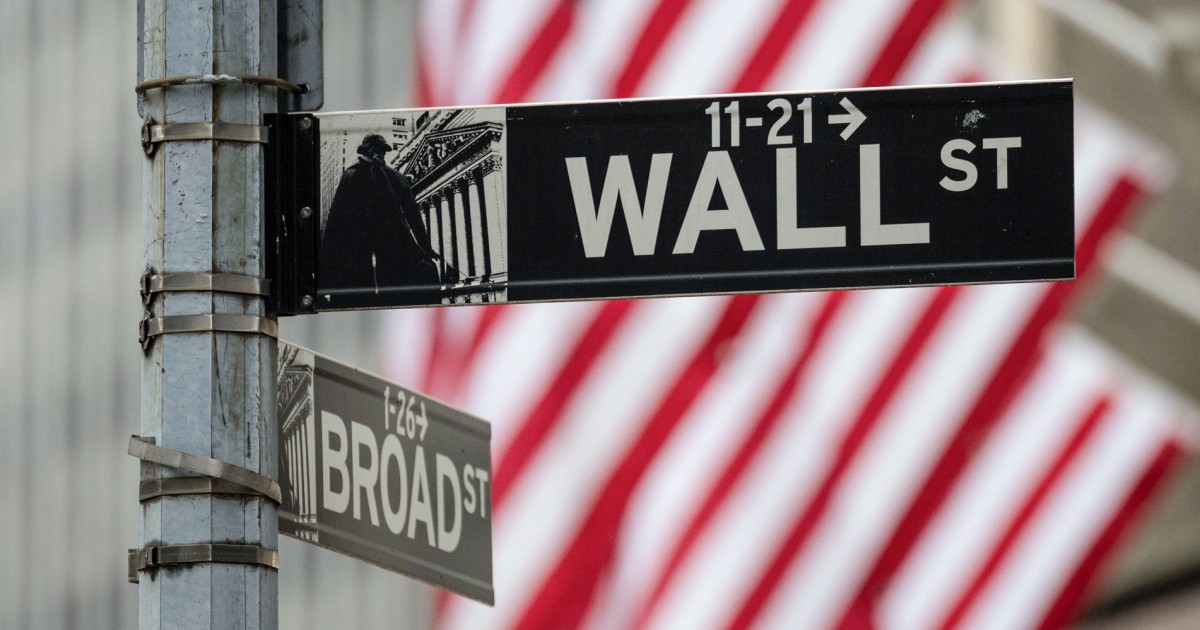
Oct. 17, 2025, 5:00 AM EDTBy Rob WileThe torrent of billion-dollar investment announcements related to artificial intelligence has raised fears that the economy is sitting on a bubble that, if popped, could send it into a tailspin. Some on Wall Street aren’t buying it. In a note to clients published Thursday titled “AI Spending Is Not Too Big,” Goldman Sachs economist Joseph Briggs made the case that the billions being spent on building out data centers — known as capital expenditures, or “capex” — remains sustainable.In short: Briggs believes AI applications are leading to real productivity gains that will help boost companies’ bottom lines. Meanwhile, the cost of the computing processing needed to power those applications justifies the billions in spending, assuming the sophistication of the applications continues to improve. In total, Briggs expects U.S. companies to generate as much as $8 trillion in new revenue thanks to AI. “The key takeaway from our analysis is that the enormous economic value promised by generative AI justifies the current investment in AI infrastructure and that overall levels of AI investment appear sustainable as long as companies expect that investment today will generate outsized returns over the long run,” Briggs wrote. Other key Wall Street players have echoed his assessment. This week, JPMorgan Chase CEO Jamie Dimon compared AI to the internet, which led to its own “dot com” bubble but ultimately created real economic and societal impact. “You can’t look at AI as a bubble, though some of these things may be in the bubble. In total, it’ll probably pay off,” Dimon said at a conference hosted by Fortune. Predictions about the economic impact of AI continue to run the gamut, from only a modest bump in productivity to the end of all jobs as we know them. Evidence of current effects so far is mixed, though the roster of companies citing AI or automation as a reason for job cuts — whether they actually intend to meaningfully increase its use — continues to grow.Amid all those variables, AI’s biggest impact has arguably been on stock returns. Despite some recent drawdowns, major U.S. stock indexes continue to sit near all-time highs, thanks largely to gains from tech companies participating in the AI boom. Peloton turns to AI in hope of boosting slumping sales03:41On Thursday, tech stocks got another lift when chip manufacturer Taiwan Semiconductor Manufacturing Co. (TSMC) reported record profits and soaring revenues. TSMC is the main supplier of semiconductors for Nvidia — the most valuable publicly traded company in the world — and it also counts Apple, Qualcomm and AMD as clients. “Our conviction in the megatrend is strengthening, and we believe the demand for semiconductors will continue to be very fundamental as a key enabler of AI applications,” TSMC Chief Executive C.C. Wei told analysts on an earnings call. Briggs of Goldman didn’t offer a direct comment about whether his analysis means AI-related stocks themselves have room to run. And there are growing signs that many investors now believe that whatever AI’s broader economic payoff is, stock valuations have become stretched. In its latest weekly investor sentiment survey, the American Association of Individual Investors found bullish sentiment had dipped below its historical average of 37.5% for the first time in five weeks, with 55% of respondents agreeing “stocks in general are overvalued.” Briggs did warn that some of the companies whose shares have had the greatest run-ups so far won’t necessarily be the ones who end up reaping the greatest overall returns from the AI revolution.“The ultimate winners from infrastructure builds are determined by a complex set of factors including timing, regulation, and market competition,” he wrote. Eventually, Briggs said, computing costs will decrease, meaning some proportion of the current AI spending boom will look overdone in hindsight. But given a 15% boost to productivity, a slower adoption timeline and other factors, current spending levels on AI investment are sound, he added. “While investment should eventually moderate as the AI investment cycle moves beyond the build phase and declining hardware costs dominate, the technological backdrop still looks supportive for continued AI investment,” he wrote.Jim Cramer, host of CNBC’s “Mad Money,” had a similar assessment this week, comparing the current AI moment to the dawn of the railroad age. “I am telling you, this is just the beginning,” he said. While not every company riding the wave will survive, the build-out itself changed the economy forever, he said, and “once the losers got wiped out, the winners won big.” Rob WileRob Wile is a Pulitzer Prize-winning journalist covering breaking business stories for NBCNews.com.
admin - Latest News - October 17, 2025
admin
20 views 17 secs 0 Comments


The torrent of billion-dollar investment announcements related to artificial intelligence has raised fears that the economy is sitting on a bubble that, if popped, could send it into a tailspin.


Source link

TAGS:
PREVIOUS
Kilauea volcano erupts on Hawaii's Big Island
NEXT
U.S. strikes suspected Venezuelan cartel boat
Related Post
October 7, 2025
Marjorie Taylor Greene breaks with GOP on Obamacare
September 22, 2025
A snowboarder got buried upside down in snow. See skier’s quick reaction.
September 23, 2025
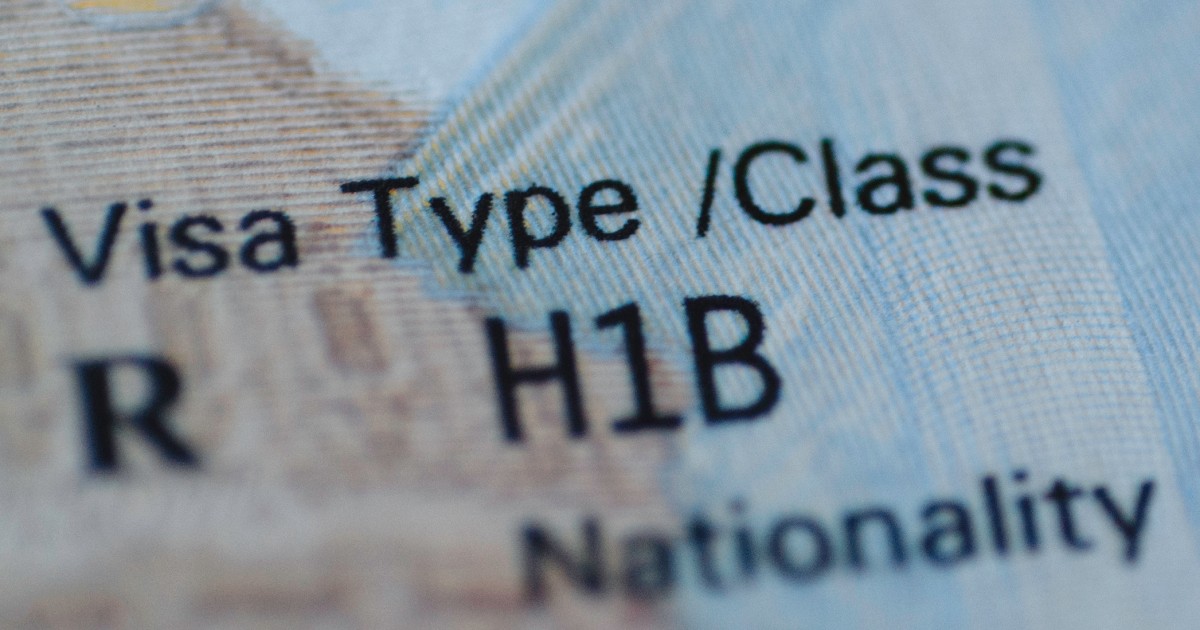
Sept. 23, 2025, 4:00 PM EDTBy Daniella Silva, Rob Wile and Nicole AcevedoAfter announcing a new $100,000 fee on H-1B visas, the Trump administration on Tuesday proposed overhauling the visa’s lottery selection process to prioritize higher-paid and higher-skilled foreign employees.The proposed policy changes could reignite the debate over the use of foreign labor by U.S. employers. The move comes as President Donald Trump has taken aim at H-1B visas, a program used widely by Big Tech and outsourcing companies to hire foreign workers, announcing Friday that companies would be required to pay a $100,000 fee with new applications submitted after Sept. 21. The administration on Tuesday targeted H-1B visa allocation, proposing a “weighted selection process” for when annual demand for the visas tops the 85,000 limit set by Congress, which it says has happened every year for more than a decade. The new process would replace the current lottery system that determines who gets to apply for those limited visa spots in favor of putting more weight on higher skilled and higher paid foreign workers, according to a proposed rule set to be published in the Federal Register on Wednesday. Under the current lottery rules, offers to apply for an H-1B visa are assigned at random. The Trump administration’s proposal would assign prospective employees to four different wage bands, with workers in the highest wage category being entered into the selection pool four times and those in the lowest wage category being entered into the selection pool once. The Department of Homeland Security stated in the proposal that the weighted system would better serve the visa program’s original intent and “incentivize employers to offer higher wages or higher skilled positions to H-1B workers and disincentivize the existing widespread use of the H-1B program to fill lower paid or lower skilled positions.”It said the proposed selection process would still maintain opportunities for employers to hire H-1B workers at “all wage levels.” ‘A strong signal’The H-1B visa program allows U.S. employers to temporarily hire skilled foreign workers in “specialty occupations” across health care, tech and finance industries, and other STEM-related fields.The two new proposed policies together send “a strong signal of the direction that the administration wants to go,” said Xiao Wang, CEO of Boundless Immigration, a company that offers services to people navigating the immigration process in the U.S.If adopted, the policies would benefit companies seeking to keep foreigners with specialized skills who studied at American universities in the U.S., as well as ensuring H-1B visas “disproportionately go to people who are deemed higher skilled, represented by higher wages and higher salary,” he said.Trump stated Friday that changes were needed in the visa system, saying it was designed to bring in temporary workers with “additive, high-skilled functions, but it has been deliberately exploited to replace, rather than supplement, American workers with lower-paid, lower-skilled labor.”For the last H-1B lottery round, which closed its registration in March, about 339,000 people applied. Of those, 120,141 applications were selected for the lottery, according to USCIS data.The proposal faces a 30-day public comment period before it is considered by the administration for a final rule, a process that could take months.If the changes are adopted, companies seeking to hire lower-wage workers from India and China for computer-related jobs appear likely to be among the most affected. For more than a decade, about 60% of H-1B workers approved every year have held computer-related jobs, according to Pew Research.Start-ups and smaller companies who cannot afford to pay their workers in the higher pay categories compared to major tech companies would also be impacted, Wang said.Deedy Das, a partner at Menlo Ventures venture capital group, said in a social media post that the latest proposal would hurt many tech companies.“Overall, it’s really bad for startups, early employees, helps IT consulting shops and can be easily gamed,“ Das wrote.Trump’s announcement of a new $100,000 fee on H-1B visas touched off a frenzy among current visa holders, the companies that employ them and countries around the world as they worked to understand the edict.Eventually, the White House clarified that it would be a one-time fee and apply only to new visa applicants. Trump said companies would have to pay the fee for new H-1B visa applications submitted after Sept. 21. That’s a steep rise from current fees, which are usually $2,000 to about $5,000.Both the fee and Tuesday’s proposal are likely to face challenges in court. A growing chorus on both the left and the right say an over-reliance on the visa by U.S. firms has put U.S.-born workers at a disadvantage. Commerce Secretary Howard Lutnick has called the H-1B visa program a “scam,” while the left-leaning Economic Policy Institute has claimed that some of the companies most reliant on H-1B visas, such as Amazon and Facebook’s parent, Meta, have also had sizable layoffs, though it did not cite evidence that the use of the visa and the layoffs are related.In the first half of 2025, Amazon received approval for more than 12,000 H-1B visas, while Meta received more than 5,000. Representatives for both companies did not immediately respond to requests for comment. Daniella SilvaDaniella Silva is a national reporter for NBC News, focusing on immigration and education.Rob WileRob Wile is a Pulitzer Prize-winning journalist covering breaking business stories for NBCNews.com.Nicole AcevedoNicole Acevedo is a national reporter for NBC News and NBC Latino.
November 12, 2025
'Substantial' tariff relief on coffee and bananas are coming soon, treasury secretary says
Comments are closed.
Scroll To Top
  • Home
  • Travel
  • Culture
  • Lifestyle
  • Sport
  • Contact Us
  • Politics
© Copyright 2025 - Be That ! . All Rights Reserved