• Police seek suspects in deadly birthday party shooting
  • Lawmakers launch inquires into U.S. boat strike
  • Nov. 29, 2025, 10:07 PM EST / Updated Nov. 30, 2025,…
  • Mark Kelly says troops ‘can tell’ what orders…

Be that!

contact@bethat.ne.com


Be That ! Menu   ≡ ╳
  • Home
  • Travel
  • Culture
  • Lifestyle
  • Sport
  • Contact Us
  • Politics Politics
☰

Be that!

Oct. 19, 2025, 7:00 AM EDTBy Margaret HethermanBorn into Victorian tradition in 1866, Alice Austen enjoyed a position in Staten Island society that gave her freedom to pursue what she dubbed “the larky life,” a whirlwind of fashionable gatherings and mischief that challenged social norms. But it was the gift of a wooden box camera from her uncle — and a chance meeting in the Catskills — that set the course for how Austen would be remembered beyond Gilded days: as one of America’s earliest and most adventurous women photographers and for her relationship with Gertrude Tate, which spanned more than half a century.Though her father abandoned her mother when she was an infant, Austen enjoyed a luxurious lifestyle with extended family in their home called Clear Comfort, overlooking the coastline of the New York City borough of Staten Island. She perfected imagery of her natural surroundings, social doings and “the sporting society set” in a darkroom fashioned from a closet. Her photos serve as a portal to the Gilded Age, with images of the annual regatta, boathouse bathers, charity balls and lawn tennis, a sport newly open to women who were too restricted by corsets to actually run for the ball.A self-portrait of Alice Austen on the front porch of Clear Comfort in 1892.Courtesy Collection of Alice Austen HouseWhen cycling took off, so did Austen, similarly constrained by long skirts that could catch in the spokes; even so, with heavy camera equipment mounted on her bicycle, she ferried to Manhattan, where she famously documented turn-of-the-century urban life, enshrining the likes of street sweepers, rag pickers, egg sellers and messengers to gelatin print — producing her 1896 “Street Types of New York” portfolio.As adept at arranging portraiture as igniting flash powder over a night bloom of flowering cactus, Austen also delighted in making gender-bending exposures of female friends. Nicknamed “The Darned Club,” they posed in undergarments with cigarettes, men’s suits with fake mustaches and together in bed in Victorian nighties.“She was in a period where she and her friends were really embracing this concept of the ‘New Woman,’” said Victoria Munro, executive director of the Alice Austen House, the original Austen residence, which also serves as a museum and exhibition space.“She created clubs with these new activities that women were able to do, unchaperoned by men — and they were safe spaces for her and her circle of women friends who were, many of them lesbian, able to be together and have fun and really celebrate,” Munro said. “There was also a certain amount of freedom in the 1880s and 1890s, because women weren’t yet considered to even have a sexuality … so they weren’t even suspected of this kind of perceived bad behavior.”


admin - Latest News - October 19, 2025
admin
21 views 15 secs 0 Comments


Photographer Alice Austen broke from convention to capture New York City street life through a Victorian lens — and to share 55 years with her partner, Gertrude Tate.


Source link

TAGS:
PREVIOUS
Sabrina Carpenter hosts 'SNL' as Domingo sketch returns
NEXT
Tourists evacuated from the Louvre after robbery
Related Post
November 20, 2025
Trump approves peace plan between Russia and Ukraine, senior official says
November 15, 2025
Nov. 15, 2025, 5:00 AM ESTBy Alexandra MarquezDemocrats were knocked back on their heels in 2024 by the party’s erosion of support among young men. They were gratified to see improvement with that group in key elections earlier this month.In between, the party has been on a mission to stop its erosion among young voters, launching research efforts, piloting different styles of communication and elevating new voices. And it has already come to one important conclusion, according to interviews in October with a range of people on the left working on the issue: The solution to Democrats’ struggle to appeal to young men won’t come from one national figure who will instantly, magically draw them in.“If not Trump, then who? And the question for the Democratic Party that I think is one of the challenges we have right now is, we don’t have a great answer for that,” Amanda Litman, the founder and executive director of Run for Something, a group that recruits young Democratic candidates for downballot races, told NBC News. “I don’t think Chuck Schumer and Hakeem Jeffries have the answer to that,” she added, referring to the Senate and House minority leaders respectively.But while Democrats may not have one leading figure they can rely on to recruit young male voters, one overarching belief is that they do have popular policies that — if communicated well and in the right spaces — could put the party on a path to victory with young voters.“I don’t think that there is a lack of popularity with Democratic policies. It’s a lack of the ability to appropriately communicate those policies in a way that actually breaks through and resonates with these voters, right?” Danielle Butterfield, the executive director of Priorities USA, told NBC News. “We know that we are always going to be the party that has a more favorable, popular stance on health care and health care costs. The question is, do voters know that, and are we talking about it in places where they’re actually spending time?”The power of the ‘manosphere’In the year since the presidential election, Democrats have aimed to learn why their messaging to young men failed in 2024 and how to fix it.Some, like former Democratic Rep. Colin Allred, who was a collegiate and professional football player in the NFL before running for office, say it’s because Democrats alienated young men with their messaging.“If you listen to many Democratic speeches over the last few years, and you kind of listen to the recitation of policies, if you’re a young man listening into that, you might think that none of those were directed towards you. And I think that was a mistake,” Allred, who is running for Senate again in Texas next year after losing to GOP Sen. Ted Cruz last year, told NBC News.“What I’ve seen is that if somebody agrees with you on policy, but thinks that you don’t understand them, their culture, what they’re going through and where they come from, then they’re still not going to want to support you,” he added.One place that young male voters found a sense of community and culture, Democrats say, is in the loose collection of podcasts often dubbed the “manosphere.”These podcasts — hosted by comedians such as Joe Rogan, Theo Von, Tim Dillon and Andrew Schulz — often make “you feel like you’re not alone,” Litman said.“It’s funny, often very funny. It’s a little subversive or often very subversive. It feels intimate. You get to know the hosts over the course of hours and hours of conversation: their lives and their, their personalities and their quirks, and I think that is really special. Like, the parasocial relationship can be very powerful,” she added.Litman’s conclusions about the power of these podcasts are backed up by a Priorities USA research project called Warbler, which works to understand voters’ online habits and media consumption.“One of the things I think that we were struck by in the research that we did is, people are looking for long-form , by and large,” said Jeff Horwitt from Hart Research, a Democratic polling firm that partnered with Priorities USA on some of the research. (Horwitt and his firm also partner with a Republican polling outfit on the NBC News poll.) “They want a conversational back and forth. They want to learn something new rather than be told something old.”Butterfield added that media consumption behavior among young voters is “fundamentally different” than even a decade ago.“We were teaching our candidates to, like, ‘Get in and get out,’ ‘Say what you need to say, and let that voter move on,’ because their attention spans are like goldfish,” she said.Now, Butterfield added, “that’s actually not the case. If you can get their attention, you’ll have their attention, right? It’s not about a lack of, a lack of eyeballs.”A Priorities poll of 5,000 voters conducted in September found that while a majority — 66% — of voters who reported listening to or watching certain “manosphere” podcasts in the past month voted for Trump in 2024, there was still a bright spot for Democrats in the research: an emerging break with Trump among this cohort.Of those “manosphere” Trump voters, 8% said they now disapproved of his performance as president, while 7% said they would vote for a Democrat on a generic congressional ballot.Meanwhile, some “manosphere” podcasters have broken with Trump on issues such as deportations, Israel’s war in Gaza and the Jeffrey Epstein files in recent months.Still, Butterfield warned, Democrats can’t take these cracks in Trump’s coalition as an automatic sign of support for Democrats.“We’re not going to just earn back all of these voters right away just because of their opposition to Trump. We’re going to have to make sure we are offering an alternative point of view, alternative policies that solve their economic anxieties, visions for the future, etc.,” she said.“That’s going to be the difference between an okay midterm and a really amazing midterm,” Butterfield continued, adding: “We’re not going to just get by on people hating Trump alone. We’ll get far-ish, but not as far as we need to go.”In last week’s New Jersey and Virginia elections, for example, Democratic Govs.-elect Mikie Sherrill and Abigail Spanberger won by larger-than-expected margins and made gains among young men in both states, exit polls show. But those margins among young men were still in line with their overall margins of victory, among an age group in which Democrats for years ran up the score compared to the overall electorate.‘Message, messenger and medium’ are the keysIn some ways, Democratic strategists and candidates say, the solution to their party’s concerns about its performance among young men — or at least the start of it — is as easy as just appearing on these podcasts and in other male-friendly spaces.It’s something several potential 2028 presidential candidates have already dabbled in. In April, former Transportation Secretary Pete Buttigieg sat for a nearly three-hour-long interview with the hosts of “Flagrant.” In July, California Gov. Gavin Newsom, a Democrat, participated in a four-hour-long podcast taping of the “Shawn Ryan Show.” Both these podcasts hosted Trump in 2024.The problem with this strategy, Litman pointed out, is that not all Democratic leaders are comfortable with appearing on such programs.“You shouldn’t force it, but for the leaders who are capable of having those kinds of conversations, I think they should absolutely go into those environments and be a little bit risk averse or a little bit risk tolerant, rather,” she said.“It’s both message, messenger and medium — it’s all of the above,” Litman added later.One 2025 election winner who embraced this strategy was New York City Mayor-elect Zohran Mamdani, who gained popularity on TikTok, appeared on popular social media shows like “Subway Takes,” and joined the “manosphere” podcast “Flagrant.”Allred cited these “manosphere” podcasts as one place more Democrats should be going, but said there are local spaces with the same informal, intimate environment — like high school football games — that many of his fellow Democrats should feel comfortable in but don’t.“I think that in the Democratic Party, there’s almost been a reluctance to engage in things like football, and I don’t really get that. I don’t think you have to be the biggest fan of it to know that this is a place where the community is gathering and people are having, at least for me, these are some of the realest conversations I have in the entire week,” he said.Appearing in these spaces would go a long way “in terms of people seeing us, not as, kind of, elite ivory tower policy wonks,” Allred added. “At a football game, you can have the same conversation about policy. It might be a little bit less wonkish, but it’ll be more authentic … I think it’s what most people are looking for in their leaders.”Looking ahead to 2026 and 2028, Butterfield said that a priority “is making sure that we’re not sticking out like sore thumbs in these kind of ‘entertainment-first’ spaces.”“I think that your ability to authentically communicate in these spaces should be a requirement to be a good candidate in today’s world, right?” she added. “We need to be holding our candidates to a high standard of electability, such that if you can’t come across as yourself on social media, maybe we need to pick a different candidate.”Alexandra MarquezAlexandra Marquez is a politics reporter for NBC News.
October 31, 2025
DHS spokeswoman responds to report of ICE agents wearing Halloween masks in L.A.
October 23, 2025
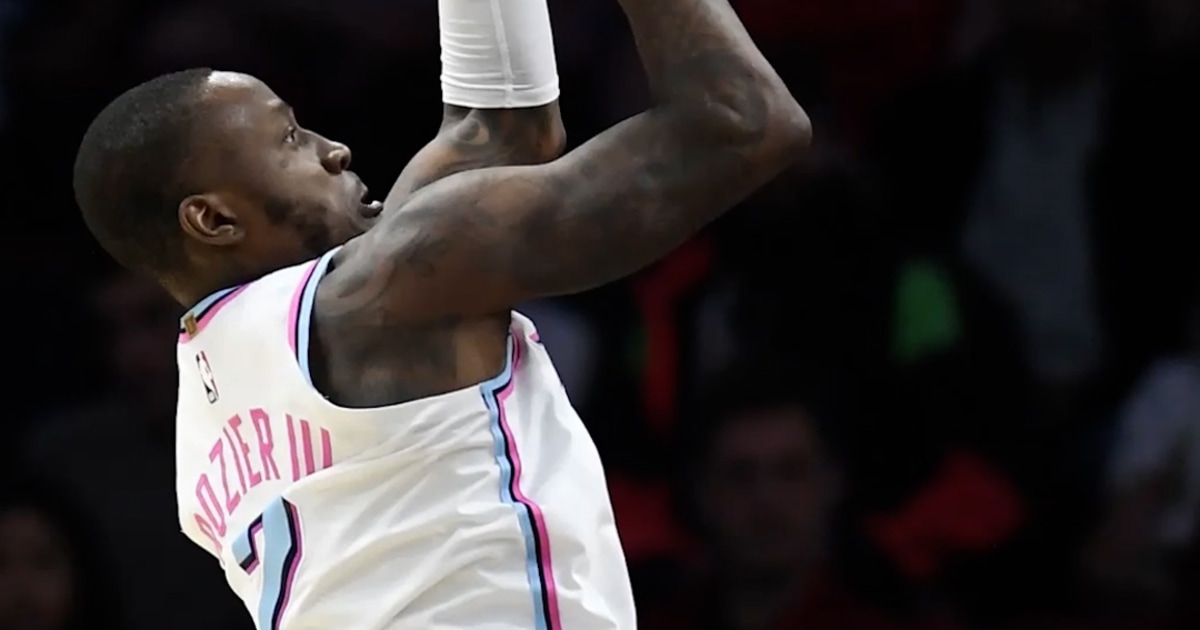
Inside the federal case that ensnared Terry Rozier
Comments are closed.
Scroll To Top
  • Home
  • Travel
  • Culture
  • Lifestyle
  • Sport
  • Contact Us
  • Politics
© Copyright 2025 - Be That ! . All Rights Reserved