• Police seek suspects in deadly birthday party shooting
  • Lawmakers launch inquires into U.S. boat strike
  • Nov. 29, 2025, 10:07 PM EST / Updated Nov. 30, 2025,…
  • Mark Kelly says troops ‘can tell’ what orders…

Be that!

contact@bethat.ne.com


Be That ! Menu   ≡ ╳
  • Home
  • Travel
  • Culture
  • Lifestyle
  • Sport
  • Contact Us
  • Politics Politics
☰

Be that!

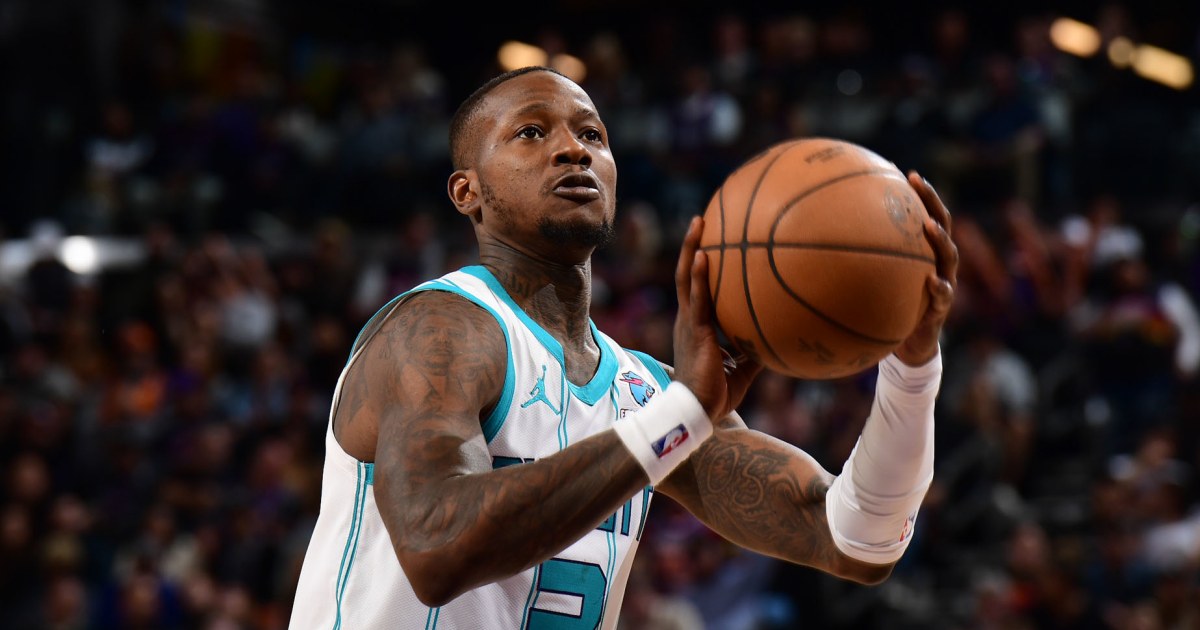
Oct. 27, 2025, 2:55 PM EDTBy Minyvonne Burke and David K. LiThe federal case against NBA guard Terry Rozier — accused of faking an injury during a game to tip off bettors — has exposed what sports medicine experts say is an unforeseen blind spot.Do teams have any other choice but to trust players to tell the truth about how they feel?“If the player says he can’t go in the first quarter, he doesn’t go,” former Dallas Mavericks team physician Tarek Souryal told NBC News last week. “We can’t see pain. You can see swelling. You can see bruising. You can see a cut. But you can’t see pain.”Rozier, 31, was charged Thursday with conspiracy to commit wire fraud and money laundering.Federal prosecutors allege he feigned a right foot injury while playing for the Charlotte Hornets during a March 23, 2023, game in New Orleans, after telling a friend beforehand he planned to bench himself early. The friend then sold that “non-public information” to bettors, according to the indictment. Rozier, now with the Miami Heat, has denied any wrongdoing. His attorney, Jim Trusty, said his client “is not a gambler” and “looks forward to winning this fight.”The case has renewed scrutiny on how the NBA verifies injuries and whether the rise of legalized sports betting has made players’ health status the newest vehicle of inside information.A fateful night in New OrleansRozier logged 35.3 minutes per game in 2022-23 for Charlotte but, on that late-March evening in New Orleans, he lasted for just 9½ minutes of action.After hitting a jumper from the free-throw line with about 6 ½ minutes left in the first period, Rozier hobbled and grabbed at his right foot in distress.Rozier did not appear to land awkwardly when he hit that jumper or show any other discomfort in the moment ahead of the shot.Federal prosecutors claimed that Rozier was actually feigning that injury in front of an arena full of paying, unsuspecting fans. Behind the scenes, Rozier’s friend had raked in tens of thousands of dollars from selling the information, according to the indictment.About a week later, the friend drove to Rozier’s Charlotte home so they could count the money, prosecutors said.In an internal memo sent Monday to all 30 NBA teams, the league said it was reviewing policies on injury reporting and how personnel are trained. It was also looking into ways to enhance “internal and external integrity monitoring programs,” the memo, obtained by NBC News, read. The NBA previously said it investigated unusual activity around the Hornets-Pelicans game but “did not find a violation of NBA rules.” The league said it is cooperating with the U.S. Attorney’s Office for the Eastern District of New York.NBA Commissioner Adam Silver said Friday he was “deeply disturbed” by the allegations.“There’s nothing more important to the league and its fans than the integrity of the competition,” Silver said. “And so I had a pit in my stomach. It was very upsetting.”The NBA insists, though, that there was documentation of Rozier’s injury 2½ years ago.“Any assertion that the NBA had anything to do with Terry Rozier not playing games following his departure from the game on March 23, 2023, is categorically false,” according to a league statement. “Per team doctors, Rozier had a real foot injury confirmed with an MRI.”Rozier’s indictment was part of a broader probe that also charged Portland Trail Blazers coach Chauncey Billups and former player and coach Damon Jones in a separate mob-linked poker cheating scheme.How are injuries assessed?The NBA says that teams “must report information concerning player injuries, illnesses, other medical conditions, or rest for all games [by] 5 p.m. local time the day before a game.”In addition, the policy says, teams must “designate a participation status and identify a specific injury, illness, other medical condition, or other reason for any player whose participation in the game may be affected for any reason.”But Souryal said there is “no league-wide rule on how injuries are assessed.” “Each team does it different. Every doctor does it different,” he said. Trainers are the first to evaluate a player, but the athlete has the “ultimate last say” on whether he plays, Souryal added.Art Caplan, who heads the division of medical ethics at New York University, said team doctors have no way to independently verify claims of pain during a game.“‘Pete’ comes off the court and says my heel hurts or my knee is killing me, you take that seriously on the spot as something that he’s telling the truth,” Caplan said. “In that setting of sports, the athlete’s complaint literally drives what happens.”Who has the ‘ultimate last say’?Souryal said athletic trainers are typically the first to evaluate an injured player. Depending on the severity of the injury, the team physician will be notified to do another evaluation and order any necessary testing, Souryal said.“If it happens on the court, then you evaluate him on the court, you get him to the locker room, you evaluate him again in the locker room,” he said. “But if it’s one of those things where ‘Player X’ is complaining of hamstring pain, that’s something that can be assessed during halftime or after the game. There is no protocol.”Souryal said that most teams follow the same “chain of command,” except when a player says he’s injured to the point where he cannot play in a game.Even if an X-ray shows no signs of a serious injury, Souryal said the player “has the ultimate last say” on whether he hits the court.While the allegations against Rozier have led to speculation about his injury, Souryal said he does not think the Hornets could have done anything differently.“We always have to take the player’s word as medical staff, and given the time and the setting and the situation, I don’t know that anything differently could have been done by the team or the staff,” he said.Rozier was placed on immediate leave from the Miami Heat following his arrest. ‘Injuries’ play role in gamesmanshipFaking an injury isn’t completely foreign to big-time sports, though it’s usually done for competitive edge and not to throw a game or prop wager.Modern offenses in pro and major college football often run high-tempo attacks, prompting some defenders to feign injury just to slow down an opponent’s pace.In late 2022, the NFL went as far as to threaten teams with heavy fines and lost draft picks to stop the practice.In college football last month, the Atlantic Coast Conference fined Syracuse $25,000 for feigning injuries in a victory over Clemson.The role of gambling in NBARozier’s case isn’t the first time an NBA player has been accused of consorting with gamblers since a landmark 2018 Supreme Court ruling opened the floodgates to legalized sports wagering.In 2024, the league banned Toronto Raptors forward Jontay Porter alleging that he bet on games, passed on information to gamblers and claimed illness to influence a wager.The NBA said its investigation found that Porter had engaged in widespread gambling, against league rules.It alleged that he “disclosed confidential information” about his own health status to an individual he knew to be an NBA bettor” before a March 20, 2024, game.Porter claimed to suffer from an illness during the game and played only three minutes, the league said.“When sports gambling first came into sports … I always thought that how injuries are handled was going to be a potential problem,” Souryal, the former Mavs team doctor, said.An $80,000 online bet that he would underperform was placed ahead of that game, which would have paid out $1.1 million. The conspicuously large amount led to the wager’s being “frozen” and “not paid out,” the NBA said.Rozier’s attorney, Trusty, insists his client has done nothing wrong and accused federal authorities of grandstanding.“We got a trophy hunt, so we’re going to fight it,” Trusty said.Minyvonne BurkeMinyvonne Burke is a senior breaking news reporter for NBC News.David K. LiSenior Breaking News ReporterPhil Helsel, Doha Madani and Rohan Nadkarni contributed.
admin - Latest News - October 27, 2025
admin
16 views 18 secs 0 Comments


The federal case against NBA guard Terry Rozier — accused of faking an injury during a game to tip off bettors — has exposed what sports medicine experts say is an unforeseen blind spot


Source link

TAGS:
PREVIOUS
Sean 'Diddy' Combs is scheduled to be released from prison in May 2028
NEXT
Oct. 27, 2025, 2:49 PM EDTBy Bridget BowmanRecent public polling in the New Jersey governor’s race has shown Democratic Rep. Mikie Sherrill leading Republican Jack Ciattarelli by varying degrees. Like many campaigns in the last decade, President Donald Trump and voter perceptions of his performance have loomed over this race.But Sherrill’s lead also appears to be tied to how voters in New Jersey view another politician: Democratic Gov. Phil Murphy. Kornacki: Trump & Ciattarelli’s different paths to GOP gains in New Jersey03:36Polls conducted in recent weeks have not tested Murphy’s job approval rating, but a Fox News survey conducted Oct. 10-14 found 47% of voters had a favorable view of the two-term governor, while 49% had an unfavorable view of him. Sherrill led Ciattarelli in that survey by 5 points, within the poll’s margin of error. In the handful of public polls that did test Murphy’s job approval during the fall campaign, the three surveys that showed Murphy with an approval rating in the high 40s also saw Sherrill build bigger leads. In two surveys putting Murphy’s job approval at 35%, including one that was conducted for Ciattarelli’s campaign, the gubernatorial results showed a tied or near-tied race — the best results Ciattarelli has enjoyed in the whole campaign.The shift depending on Murphy’s approval rating underscores how views of the current two-term administration could be a key factor in the race.Ciattarelli has tied Sherrill to Murphy and cast himself as the candidate representing change in the race, placing blame for the state’s woes on Murphy and Democrats, who control the state Legislature. “Politicians like Mikie Sherrill and Phil Murphy just don’t get it,” Ciattarelli says in one recent TV ad. “They’re making New Jersey unaffordable, especially for the middle class. We need a change.” Sherrill, meanwhile, has also put some distance between herself and Murphy on the issue of the state’s rising electricity costs, while also casting herself as a candidate who will bring change to state government. “Make no mistake, I’ll also fight Trenton to bring down costs for families,” Sherrill said in a recent debate.Five recent publicly released surveys, all of them conducted in September, measured both Murphy’s standing and the governor’s race in New Jersey. A Fox News survey and a poll from the education group Yes Every Kid both found Sherrill up 7 points, with support from 48% of respondents, while a Quinnipiac survey from mid-September found Sherrill up 8 points, at 49%. Sherrill’s lead in the Fox News survey was outside the poll’s 3-point margin of error, while her leads in the other two surveys were just inside those margins of error. Murphy’s approval rating in those three polls: 47% or 48%.The outlier so far among independent surveys has been one from Emerson College Polling/PIX11/The Hill, which showed the race tied, with both Sherrill and Ciattarelli at 43%, within the survey’s margin of error of plus or minus 3.1 points.Beyond the top-line results, a key difference separating the Emerson poll from others was Murphy’s approval rating, which that poll measured at 35%, more than 10 points lower than the other surveys.As polls show different pictures of Murphy’s approval rating, Trump’s approval rating has remained in the low 40s, with each of the September surveys finding Trump’s approval at 41%.Sherrill has tried to capitalize on that in her advertising, linking Trump to Ciattarelli, who has the president’s endorsement. Democrats are betting that voters’ opposition to Trump will drive them to the polls in November and boost Sherrill in the race. Ciattarelli, meanwhile, has largely praised the president while also brushing off Democratic attacks by arguing that Trump does not affect local issues like property taxes. Meanwhile, both candidates were asked in a recent debate to grade Murphy’s administration, and Sherrill gave the two-term governor a B.“There’s things like paying for the pensions, the nine increases in our credit rating that I like,” Sherrill said. “But overall I think there’s ways Trenton could do a lot better, being much more responsive to people. I’m going to have a culture shift in Trenton. I’m going to make sure we have more accountability in government, driving down costs for people,” Sherrill added, also calling for more action to address housing costs and rail infrastructure. Ciattarelli gave Murphy an F, calling Murphy’s tenure “the worst governorship of our lifetime.” “Take a look at what’s happened in New Jersey. We have an affordability crisis because of property taxes, electricity rate, housing and child care. We have a public education crisis because we watered down the public school curriculum. We have a public safety crisis because we don’t let our local police do their jobs. And we have an overdevelopment crisis in our suburban communities because of high-density housing. It’s been a failure across the board,” Ciattarelli said.Wherever Murphy’s approval rating is, his standing appears to be significantly better than former GOP Gov. Chris Christie’s after his two terms in office.A Fox News survey conducted in October 2017 found 21% of New Jersey voters viewed Christie favorably, while 77% viewed him unfavorably. The survey did not test Christie’s job approval. Bridget BowmanBridget Bowman is a national political reporter for NBC News.
Related Post
November 5, 2025
Mamdani says Democrats will leave ‘mediocrity’ behind
November 5, 2025
Savewith a NBCUniversal ProfileCreate your free profile or log in to save this articleNov. 5, 2025, 4:14 PM ESTBy Camila Bernal and David DouglasMinutes before a 10-hour surgical procedure, 8-year-old Olivia Olson sat on a hospital bed grinning. With quiet confidence she explained why the operation was so important to her.“I think I look beautiful, and I don’t really care what other people think of me,” Olivia said. “I just want to get a big ear so people don’t bully me in the future.”Olivia was born with a rare congenital condition, microtia, that prevents the development of the outer ear. Fewer than 200,000 people in the U.S. have microtia, according to the National Institutes of Health. Olivia’s right ear developed normally, but her left was never fully formed. Her parents, Annie and Dave Olson, of Oro Valley, Arizona, knew from birth she would need surgery to reconstruct her ear. But up until the day of the operation last month, their insurance provider, Anthem Blue Cross and Blue Shield, had repeatedly refused to approve coverage for the procedure with the surgeon the Olsons wanted to use. Dr. Sheryl Lewin holds up the 3D-printed ear implant to Olivia’s right ear. The implant would become her left ear.Courtesy David OlsonOnly a handful of doctors in the U.S. regularly perform the operation Olivia needed. Most of them — including Dr. Sheryl Lewin, a pediatric craniofacial plastic surgeon in private practice based in Torrance, California — were out of network for the Olsons. “The anatomy of an ear, it’s very complex, lots of detail, shadows, highlights, etc., so just physically recreating something that complex is very difficult. It’s rare to have a surgeon that specializes in it,” Lewin said. “If you don’t have a lot of experience, you’re going to end up with a lot of problems with this complicated of a surgery.”The family chose Lewin after years of research. They believed her reconstruction method, which involved using a 3D-printed implant to rebuild the ear, was best for Olivia. (Another technique involves using the patient’s rib cartilage to reconstruct the ear.)“We got a denial letter, and it was literally like a stab in the heart,” said Annie Olson. “We’re like, what are we going to do now?”The family requested what’s known as a “gap exception,” which allows a patient to use in-network benefits for an out-of-network provider. The request was initially denied; instead, Anthem gave them a list of six in-network doctors, the Olsons said. NBC News reached out to all six. Not a single one said they performed the surgery.If you are dealing with bills that seem to be out of line or a denial of coverage, care or repairs, whether for health, home or auto, please email us at Costofdenial@nbcuni.com.“Very few programs really offer somebody enough surgical time experience to when they leave the program and go out in private practice, where they’ll feel comfortable enough to do this kind of surgery,” said Dr. Arturo Bonilla, a pediatric microtia reconstructive surgeon in San Antonio. “It’s very specialized.”Bonilla, who performs the rib-graft method for reconstructing ears, said he regularly requests gap exceptions for his patients — and while sometimes requests need to be appealed, they’re almost always approved by all insurers, including Anthem Blue Cross and Blue Shield. “Rarely will we get somebody that says, ‘No, we’re still not going to approve it,’” he said.The Olsons debated canceling the surgery but ultimately decided to keep the date and shield Olivia from the challenges they faced paying for it. Lewin prepares the 3D-printed ear in the operating room.NBC Nightly NewsAfter multiple appeals and denials, the Olsons fundraised, borrowed money from family members and turned to credit cards. But that was not enough. Eventually, Dave Olson pulled a huge portion of the surgery’s roughly $100,000 cost from his 401(k).He said he didn’t hesitate to take the money out of his retirement fund. “It is my responsibility as a parent to make sure that my kids have everything they need,” he said.“If we knew that this was going to be the outcome, we would have been responsible people and started saving since the day she was born, versus finding out last minute, and then also having to be penalized because of pulling out of your 401(k) early,” Annie Olson said.NBC News reached out to Anthem a couple days before Olivia’s surgery and was waiting for a complete response. On the day of the surgery, with Olivia on the operating table, the Olsons finally received word that Anthem would grant the gap exception — a change the Olsons attributed to NBC News’ involvement.“We went through literally what felt like a battle every day, day in and day out,” Dave Olson said. “Then at the 11th hour during the surgery, you say they’re gonna cover it. It’s like, what? Like, why? Why? Why now?”In a statement to NBC News nearly two weeks after Olivia’s surgery, Anthem Blue Cross and Blue Shield said: “We are happy that the member was able to receive the treatment she needed. Even though the member’s plan does not cover out-of-network providers when an in-network provider is available, we were able to make a unique one-time exception to ensure her care was not delayed.”Lewin shows Olivia her new ear for the first time.NBC Nightly NewsLewin, who performs about 120 microtia surgeries a year, said that in 2025, getting denials overturned and getting gap exceptions approved for microtia surgery has been a lot more challenging. She said in 2024, more than 90% of her Anthem patients’ gap exceptions were approved, or denied and overturned. In 2025, with the exception of Olivia, none of her Anthem patients have been approved.“It’s just become kind of a very slow trend that’s very much peaked in the last year,” Lewin said. “It’s been rough, and we’ve had to work much harder to get a negotiation agreed upon.”Anthem Blue Cross and Blue Shield didn’t respond to questions about Lewin’s claim that her patients have been denied gap exceptions this year. However, it said it is reaching out to Lewin to offer a potential in-network arrangement.The financial details for Olivia’s case are still being finalized, but she said she is already excited for the future.“When it’s fully recovered, I’m gonna be like, ‘OK, that was just a short little bump,’ and then I’ll just go on with the rest of my life,” she said.Camila Bernal David DouglasDavid Douglas is a supervising producer for NBC News based in Los Angeles.
September 29, 2025
Trump, Hill leaders meet with no breakthrough to prevent government shutdown 
November 24, 2025
Nov. 24, 2025, 3:54 PM EST / Updated Nov. 24, 2025, 4:12 PM ESTBy Steve KopackStocks rallied on Monday as investors digested fresh comments from top Fed officials and AI companies rebounded from last week.The S&P 500 ended the day higher by 1.6%. The Nasdaq Composite wrapped the trading day up 2.7%, its best day since May. The S&P 500 came within striking distance of achieving the same feat earlier in the session.The rally came after two top Fed officials voiced support for an interest rate cut at the central bank’s next rate-setting meetings, slated for Dec. 9 and 10.Mary Daly, president of the Federal Reserve Bank of San Francisco, told The Wall Street Journal that she supported lowering rates due to the “vulnerable” labor market. While Daly is not a current voting member of the Fed’s Open Market Committee,” she has rarely taken a public position at odds with Fed Chair Jerome Powell,” the Journal noted.Federal Reserve Governor Christoper Waller, who has a permanent vote on interest rates, also voiced concern about the labor market on Fox Business Network. “My concern is mainly [the] labor market in terms of our dual mandate,” Waller said. “So I’m advocating for a rate cut at the next meeting.” While Waller has been advocating for a cut for months, his and Daly’s views come as markets try to work out how the upcoming Fed meeting will go. In recent days, markets viewed a rate cut as unlikely amid a wave of cautious comments from Fed officials. That all changed on Friday, when New York Fed President John Williams signaled his support for a cut and sent the chance of a rate cut soaring to around 60%. Williams also serves as vice chair of the Fed’s rate-setting committee.New company aims to integrate AI with human work03:09As of Monday afternoon, odds of a cut sat above 85%, according to the CME Group’s FedWatch, which tracks bets that traders place in the futures market on where they see interest rates going.Markets are closely tracking Fed officials because lower interest rates tend to lower borrowing costs, boosting corporate profits and therefore stock market returns.Meanwhile, a sharp rebound in megacap tech stocks also pushed indexes higher. Apple and Nvidia rose around 2%, Amazon shares jumped 2.5% and Alphabet shares surged 6.3%. Last week, Alphabet’s Google division announced a new AI model called Gemini 3.Chipmakers for AI devices and services also saw broad enthusiasm. Broadcom traded higher by more than 11% while Micron jumped 8% and AMD popped 5.5%. Steve KopackSteve Kopack is a senior reporter at NBC News covering business and the economy.
Comments are closed.
Scroll To Top
  • Home
  • Travel
  • Culture
  • Lifestyle
  • Sport
  • Contact Us
  • Politics
© Copyright 2025 - Be That ! . All Rights Reserved