• Police seek suspects in deadly birthday party shooting
  • Lawmakers launch inquires into U.S. boat strike
  • Nov. 29, 2025, 10:07 PM EST / Updated Nov. 30, 2025,…
  • Mark Kelly says troops ‘can tell’ what orders…

Be that!

contact@bethat.ne.com


Be That ! Menu   ≡ ╳
  • Home
  • Travel
  • Culture
  • Lifestyle
  • Sport
  • Contact Us
  • Politics Politics
☰

Be that!

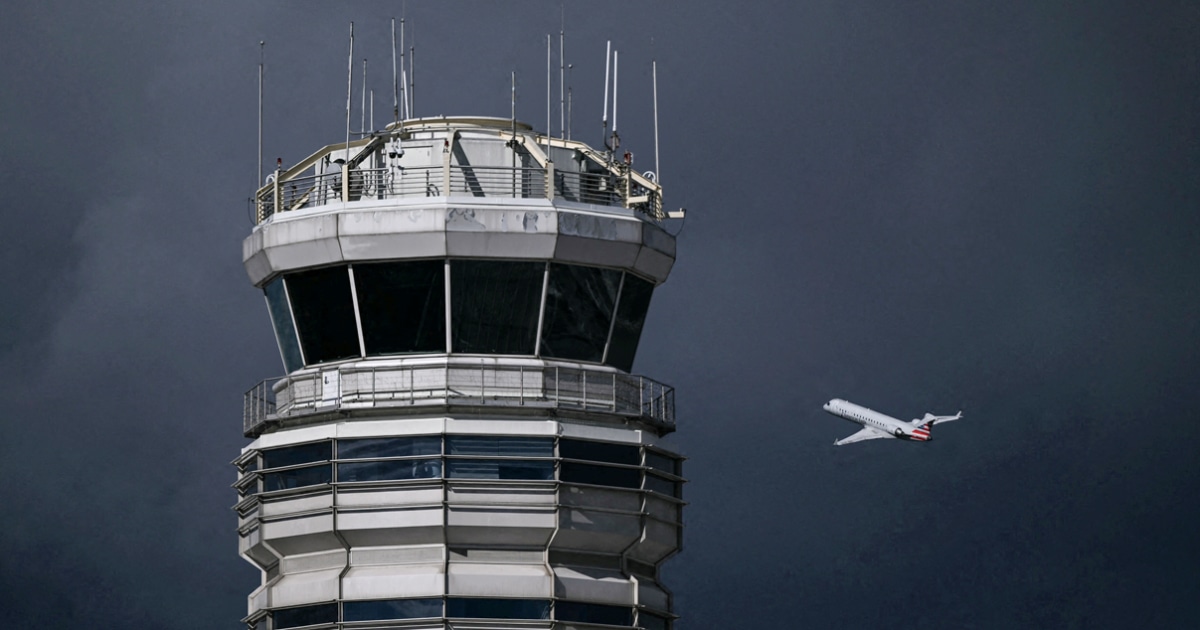
Oct. 28, 2025, 2:28 PM EDTBy Rebecca Cohen, Jay Blackman and Tom CostelloAs the government shutdown drags on, federal employees who support the country’s airports, such as air traffic controllers and Transportation Security Administration workers, say they are still in the dark about when they will next be paid. On Tuesday, workers received their first zero-dollar paycheck, reflecting two weeks of unpaid work amid the ongoing government shutdown. During the nearly monthlong shutdown, these individuals, whose roles are deemed essential, have been required to show up for work without the promise of a paycheck at the end of a standard pay period. Their last payout was a partial paycheck that included funds for time worked in September before the shutdown that began Oct. 1. Also Tuesday, controllers took matters into their own hands, pushing back on the work the government is demanding of them by handing out leaflets that describe the impact of the shutdown on aviation workers and how people can contact their members of Congress to call for the shutdown to end. The actions were scheduled to take place at nearly 20 airports nationwide. “We are here to ensure that the flying public is safe every time they get on an airplane. We have to be 100% focused, 100% of the time,” Pete LeFevre, an air traffic controller out of Washington Dulles International Airport, said in an interview with NBC News. “And all we’re looking for is to be relieved of the financial uncertainty that comes with the government shutdown, and we’d like to be paid as soon as possible.”While these federal employees will eventually receive back pay when the government shutdown ends, thanks to a 2018 law, the uncertainty of when that will be has air traffic controllers taking up side gigs to stay afloat. Some of these workers are now driving for DoorDash or Uber after their grueling work schedules, prompting a few to call in sick due to the job’s stress and the extra hours off the clock. The air traffic control industry is understaffed, and current controllers had already been working six-day weeks, 10-hour shifts, before the shutdown. “They should never work a side job, that they should never get off a night shift and then go wait tables,” Nick Daniels, president of the National Air Traffic Controllers Association, said at a news conference Tuesday at LaGuardia Airport in New York. Transportation Secretary Sean Duffy said at the Tuesday news conference that he has been encouraging controllers to go to work and “do really important work for our country,” while acknowledging the unease of working without assured pay. “They can’t make it without two paychecks,” Duffy said of controllers, adding later, “controllers and those other critical employees need our government to be open and they need to be paid.”He acknowledged that there have been “less problems” in the airspace this time around compared with prior shutdowns, due to his asking controllers to go to work. LeFevre added that the lack of pay adds another layer of stress to the already high-stress position. “It’s uncomfortable,” he said. “We do our best to leave all of our stress and worry at the door, but financial stress is challenging and it’s unique and it’s different, and it’s permeating.”The air traffic controller made clear that flying is still safe, and that his colleagues are working to ensure safety in the skies — something Duffy also called out during the news conference. Duffy has previously said that if there aren’t enough controllers to handle the workload on any given day, flights will be delayed and canceled to mitigate risk. Within the U.S., 2,109 flights had been delayed as of 1 p.m., according to flight tracking website FlightAware. At least 118 flights had been canceled. It was not immediately clear whether those delays and cancellations were a direct result of controllers calling out of work due to the shutdown. But the lack of immediate pay is also having a notable impact on real people in their lives outside the office. LaShanda Palmer, a TSA worker and the president of Local 333, which represents Philadelphia and Wilmington Airport TSA employees, said this is the “most trying” shutdown she’s been through in her 23 years in the industry.”We’re all one step away from being out on the street right about now,” Palmer told NBC News. “I have officers calling me honestly. They don’t have money for gas, they don’t have money to get child care, they don’t have food. It is extremely hard this go around. It’s hard to get help.” She said she’s in a similar situation, with a mortgage payment due Saturday that she isn’t sure how she’ll pay — her bank account is in the negative, and her bank keeps hitting her with overdraft fees. “The oath that I took, nothing has came down on our watch, and I don’t think people even consider that,” Palmer said. “We’re doing what we’re supposed to do, we should get our check.”Rebecca CohenRebecca Cohen is a breaking news reporter for NBC News Digital.Jay BlackmanJay Blackman is an NBC News producer covering such areas as transportation, space, medical and consumer issues.Tom CostelloTom Costello is an NBC News correspondent based in Washington, D.C.  
admin - Latest News - October 28, 2025
admin
15 views 20 secs 0 Comments


As the government shutdown drags on, federal employees who support the country’s airports, such as air traffic controllers and Transportation Security Administration workers, say they are still in the dark about when they will next be paid.


Source link

TAGS:
PREVIOUS
Hegseth says U.S. struck four alleged drug boats
NEXT
Netanyahu orders 'powerful' strikes on Gaza
Related Post
November 25, 2025
Nov. 25, 2025, 6:40 AM ESTBy Evan BushAs we age, the human brain rewires itself. The process happens in distinct phases, or “epochs,” according to new research, as the structure of our neural networks changes and our brains reconfigure how we think and process information.For the first time, scientists say they’ve identified four distinct turning points between those phases in an average brain: at ages 9, 32, 66 and 83. During each epoch between those years, our brains show markedly different characteristics in brain architecture, they say.The findings, published Tuesday in the journal Nature Communications, suggest that human cognition does not simply increase with age until a peak, then decline. In fact, the phase from ages 9 to 32 is the only time in life when our neural networks are becoming increasingly efficient, according to the research. During the adulthood phase, from 32 to 66, the average person’s brain architecture essentially stabilizes without major changes, at a time when researchers think people are generally plateauing in intelligence and personality. And in the years after the last turning point — 83 and beyond — the brain becomes increasingly reliant on individual regions as connections between them begin to wither away. “It’s not a linear progression,” said Alexa Mousley, a postdoctoral researcher associate at the University of Cambridge, who is the study’s lead author. “This is the first step of understanding the way the brain’s changing fluctuates based on age.” How AI is transforming healthcare across the country03:59The findings could help identify why mental health and neurological conditions develop during particular phases of rewiring.Rick Betzel, a professor of neuroscience at the University of Minnesota who was not involved in the research, said the findings are intriguing, but more data is needed to support the conclusions. The theories may not hold up to scrutiny over time, he said.“They did this really ambitious thing,” Betzel said of the study. “Let’s see where it stands in a few years.” For their research, Mousley and her colleagues analyzed MRI diffusion scans — which are essentially images of how water molecules move within the brain — from about 3,800 people from age 0 to age 90. The goal was to map the neural connections across the average person’s brain at different stages in life. In the brain, the bundles of nerve fibers that transfer signals are encapsulated in fatty tissue called myelin. Think of it like wiring or plumbing. Water molecules diffused in the brain tend to move in the direction of these fibers, rather than across them, meaning researchers can infer where the neural pathways are located. “We can’t crack open skulls … we rely on non-invasive approaches,” Betzel said of this type of neuroscience research. “What we’re trying to figure out is where these fiber bundles are at.” Based on the MRI scans, the new study maps the neural network of an average person across a lifespan, determining where connections are strengthening or weakening. The five “epochs” it describes are based on the neural connections the researchers observed. The first phase is from 0 to age 9, they suggest. The brain rapidly increases in gray and white matter; it prunes extra synapses and restructures itself. From ages 9 to 32, there is an extended period of rewiring. The brain is defined by rapid communication across the entire brain and efficient connections between different regions. Most mental health disorders are diagnosed during this time period, Mousely said: “Is there something about this second era of life, as we find it, that could lead people to be more vulnerable to the onset of mental health disorders?”From 32 to 66, the brain plateaus. It’s still rewiring itself, but less dramatically and more slowly. Then, from 66 to age of 83, the brain tends toward “modularity,” where the neural network is divided into highly connected subnetworks with less central integration. At age 83, connectivity declines further. Betzel said the theory described in the study likely jives with people’s lived experiences with aging and cognition. “It’s intuitively something we gravitate towards. I have two kids and they’re really young. I think all of the time, ‘I’m getting out of my toddler era,’” Betzel said. “Maybe the science ends up being there. But are those the exact right ages? I don’t know.” In the ideal version of a study like this, he added, the researchers would have MRI diffusion data for a large group of people, each of whom were scanned during every year of life from birth to death. But that wasn’t possible because the technology wasn’t available decades ago. Instead, the researchers combined nine different data sets containing neuroimaging from previous studies and attempted to harmonize them. Betzel said each of those data sets varies in quality and approach, and the effort to make them correspond with one another could wash away important variability, ultimately leading to bias in the results. Nonetheless, he said the authors of the paper are “thoughtful” and skilled scientists who did their best to control for that possibility. “Brain networks change over the lifespan — absolutely. Is it discrete such that there are five exact change points? I’d say stay tuned. It’s an interesting idea.”Evan BushEvan Bush is a science reporter for NBC News.
November 21, 2025
Trump's economy approval rating sinking in new poll 
November 9, 2025
Tornado in southern Brazil kills at least six people
November 10, 2025
Drone video shows flooding in Philippines
Comments are closed.
Scroll To Top
  • Home
  • Travel
  • Culture
  • Lifestyle
  • Sport
  • Contact Us
  • Politics
© Copyright 2025 - Be That ! . All Rights Reserved