• Police seek suspects in deadly birthday party shooting
  • Lawmakers launch inquires into U.S. boat strike
  • Nov. 29, 2025, 10:07 PM EST / Updated Nov. 30, 2025,…
  • Mark Kelly says troops ‘can tell’ what orders…

Be that!

contact@bethat.ne.com


Be That ! Menu   ≡ ╳
  • Home
  • Travel
  • Culture
  • Lifestyle
  • Sport
  • Contact Us
  • Politics Politics
☰

Be that!

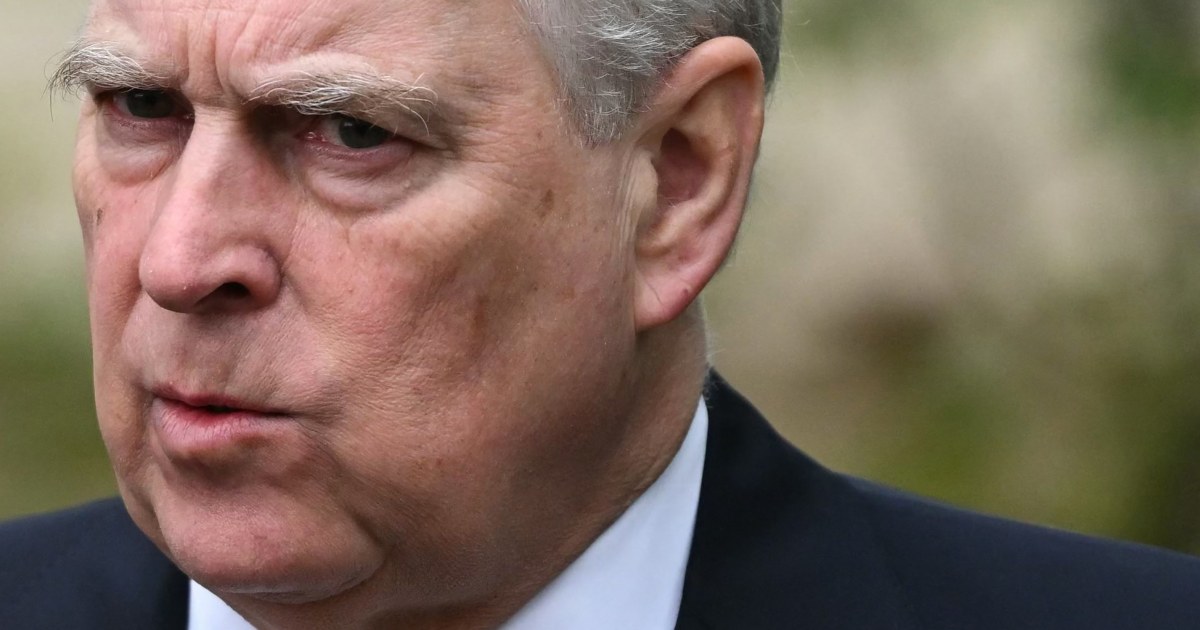
Savewith a NBCUniversal ProfileCreate your free profile or log in to save this articleNov. 1, 2025, 8:29 AM EDTBy Freddie ClaytonDemocrats investigating Jeffrey Epstein have intensified their calls for Britain’s former prince, Andrew Mountbatten Windsor, to answer their questions about his links to the disgraced financier, days after King Charles stripped his younger brother of his title.The calls for Andrew to testify came as new emails emerged showing he suggested a “catch-up” with Epstein just months after the notorious pedophile was released from prison.Several Democratic members of the House Oversight Committee told the BBC that Andrew should voluntarily testify before Congress. Rep. Suhas Subramanyam, D-Va., said Saturday that if the former prince “wants to do right by the victims, he will come forward,” noting that his name had been mentioned “many times” in survivors’ accounts. Fellow committee member Rep. Raja Krishnamoorthi, D-Ill., urged Andrew to “come and testify and tell us what you know” during a Friday interview, while Rep. Stephen Lynch, D-Mass., said Andrew’s testimony might be “helpful in getting justice” for survivors.Committee member Rep. Ro Khanna, D-Calif., echoed the calls in an interview with The Guardian newspaper, saying Andrew “should be called to testify.” No Republicans on the committee have publicly called for Andrew to testify, and no formal subpoena has been issued.New emails between Andrew and Epstein released on Friday in unsealed court documents have added to the scrutiny.In April 2010, less than a year after Epstein’s release from prison for soliciting minors, Andrew wrote that it would be “good to catch up in person.” Epstein had proposed that Andrew meet American banker Jes Staley in London, but Andrew replied that he would be out of the country and might “drop by” New York later in the year.“I’ll look and see if I can make a couple of days before the summer,” he wrote.Andrew and Epstein were pictured together in New York’s Central Park in December 2010, a meeting Andrew had previously said was to end their friendship.That account was challenged last month when the Mail on Sunday and the Sun on Sunday newspapers published another email reported to have been sent by Andrew to Epstein in 2011, not verified by NBC News.”We are in this together,” the newspapers reported that the email read. “Play some more soon.”Andrew, who just two weeks ago announced he would relinquish the use of his Duke of York title, was on Thursday formally stripped of it as well as his status as a prince, and effectively evicted from the 30-room mansion where he has lived for more than 20 years.Pressure mounted following the posthumous publication of late Epstein survivor Virginia Giuffre’s posthumous memoir, which details her allegations that Andrew had sex with her on multiple occasions. Andrew reached a legal settlement with Giuffre for an undisclosed amount in February 2022 after she filed a civil case against him in a New York court accusing him of sexually assaulting her when she was 17 years old. He has repeatedly denied having met her and previously denied that a photograph of the two of them is real.Prince William will head to Brazil next week for an awards ceremony for his multi-million-dollar environmental prize, hoping to refocus attention away from his uncle Andrew and one of the most bruising royal scandals in recent history.The British heir will visit some of Rio de Janeiro’s most famous landmarks on what will be his first Latin American trip.Freddie ClaytonFreddie Clayton is a freelance journalist based in London. 
admin - Latest News - November 1, 2025
admin
16 views 20 secs 0 Comments


Democrats investigating Jeffrey Epstein have intensified their calls for Britain’s former prince, Andrew Mountbatten Windsor, to answer their questions about his links to the disgraced financier, days after King Charles stripped his younger brother of his title


Source link

TAGS:
PREVIOUS
Oct. 31, 2025, 7:00 AM EDTBy Rebecca CohenIt’s time to fall back again.The clock will strike 1 a.m. twice Sunday as daylight saving time once again comes to an end.Here’s what you need to know about daylight saving time and why the United States changes clocks twice a year.When does daylight saving time end?Daylight saving time started March 9 and ends Sunday.Unlike in the spring, when we lose an hour and the clocks skip the 2 o’clock hour entirely, we will gain an extra hour Sunday, with clocks jumping from 1:59 a.m. back to 1 a.m.The sun will also start setting earlier across the United States as we head into the late fall and winter.How long does standard time last?Standard time across the United States will remain, as will earlier sunsets and darker evenings, until spring rolls around and daylight saving time starts once again. That means daylight saving time will begin again next year March 8 and end Nov. 1. Why do we observe daylight saving time?The practice, established by the Standard Time Act in 1918, according to the Astronomical Applications Department of the U.S. Naval Observatory, is an effort to extend the daylight hours we have in the summertime by pushing off sunset an extra hour.Daylight saving time, a contested idea after it was passed, was quickly repealed in 1919, becoming a local matter. It was re-enacted during the early days of World War II and observed from 1942 to 1945, according to the department.After the war, the implementation of daylight saving time varied from state to state until the Uniform Time Act was passed in 1966, standardizing the dates of daylight saving time but allowing local exemptions if states or localities didn’t want to participate.According to the Astronomical Applications Department, the standardized start and end dates have been changed throughout the years, but since 2007, daylight saving time has started the second Sunday in March and ended the first Sunday in November.Which states don’t observe?Hawaii and most of Arizona don’t observe daylight saving time and therefore don’t change their clocks twice a year, according to the Astronomical Applications Department.The U.S. territories of American Samoa, Guam, Puerto Rico, the U.S. Virgin Islands and the Northern Mariana Islands also observe permanent standard time, according to the National Conference of State Legislatures.Do other countries do this?No. Most countries observe some version of “summer time,” according to the department, not all of them on the same schedule as the United States. Most of the countries in the Northern Hemisphere that observe daylight saving time are in Europe and North America.Some Southern Hemisphere countries also observe some version of daylight saving time, but below the equator, the seasons are swapped, so the start and end dates of their “summer time” are reversed from ours.According to the Pew Research Center, only about a third of all countries observe daylight saving time. About half of all countries observed it at one point but no longer do.What efforts have been made to end the practice?The Senate passed the Sunshine Protection Act in 2022, which would make daylight saving time permanent year-round, but the bill didn’t advance in the House. A version of the bill introduced in the Senate in January didn’t advance.Almost all states have considered legislation to stay on standard or daylight saving time, and 19 states have passed bills or resolutions to implement it year-round in the last seven years, according to the National Conference of State Legislatures. But because federal law doesn’t allow for year-round daylight saving time, the states would have to wait for Congress to pass the bill to make the change.What do health experts say?Some studies suggest that observing daylight saving time year-round could reduce the number of traffic accidents and the amount of crime.But a number of experts aren’t in favor of permanent daylight saving time. That’s because the sun should reach the highest point in the sky at noon, according to sleep experts, which is known as solar time.Sleep experts prefer the back-and-forth of the clocks to permanent daylight saving time. When people wake up in darkness, hormones like cortisol might be higher, which might make people feel sleepier, Dr. Kin Yuen, a sleep medicine specialist at the University of California, San Francisco, and a fellow at the American Academy of Sleep Medicine, said in 2022.Then, because the sun is out later, people might go to sleep later during daylight saving time, which can delay the body’s production of melatonin.Rebecca CohenRebecca Cohen is a breaking news reporter for NBC News Digital.
NEXT
Nov. 1, 2025, 5:30 AM EDTBy Erika EdwardsHILDALE, Utah — Few people talk about vaccinations here. Not to outsiders, anyway.By and large, the people who live in Hildale, as well as in neighboring Colorado City, just across the state border in Arizona, are fiercely private. High walls surround many of the homes to avoid the prying eyes of strangers.Measles got in anyway. As of Friday, 161 cases had been confirmed in Utah and Arizona, the bulk concentrated right along the border in the twin towns collectively known as Short Creek. Eleven people — eight in Utah and three in Arizona — were hospitalized.Short Creek, a community that straddles Hildale, Utah and Colorado City, Arizona, has endured the brunt of a current measles outbreak.Ray Farmer / NBC NewsIt’s now become the site of the second largest measles outbreak in the U.S. this year, behind the outbreak that extended from West Texas into New Mexico, which sickened at least 862 people and killed three. Two were young girls. Vaccination rates have fallen precipitously in both outbreak areas in recent years and, from the outside, the two have similarities. Both outbreaks took hold in communities that are deeply skeptical of government intervention and mainstream medicine. And both outbreaks largely impacted people with strong ties to religious sects: Mennonites in West Texas and (mostly former) members of the Fundamentalist Church of Jesus Christ of Latter-day Saints (FLDS) in Short Creek. But the Short Creek community is also grappling with its recent past — one of polygamy, child removal and a cultlike leader now imprisoned for the sexual assault of minors. “We had so much trauma,” said Donia Jessop, the mayor of Hildale and a former FLDS member. “Getting kids vaccinated or a booster was not the first thing on our mind.”The Church of Jesus Christ of Latter-day Saints outlawed polygamy more than 100 years ago. Some members, however, continued to believe that multiple wives benefited men in the afterlife and broke away, becoming the FLDS. One of the places where members settled was Short Creek.Jessop fondly recalls growing up in the 1970s and ‘80s in the tight-knit community with two moms and scores of brothers, sisters and cousins who were her best friends.“I had an ideal childhood,” she said. “I was guaranteed a spanking or a meal from any mom in town, because we were raised like a village.” Donia Jessop, mayor of Hildale, Utah, said residents are increasingly getting vaccinated amid the measles outbreak.Ray Farmer / NBC NewsBut polygamy was and is illegal. The practice prompted two federal government raids in Short Creek — one in 1953 and another in 2008. Both times, government officials forcibly took children away from their families temporarily in an attempt to determine whether kids were being abused or neglected. Children were returned, but the trauma endured. “That made a lot of us FLDS kids very scared of police officers,” said Gloria Steed, who was 14 years old during the 2008 raid. “Afterward, we were extremely hesitant about being told what to do.”Steed said her mother was born around the time of the 1953 raid and grew up with anti-government and, in turn, anti-vaccine tendencies. “It really impacted her faith and trust in the systems,” said Steed, who wasn’t vaccinated as a child. Still, there was never a specific religious mandate against the shots, Jessop said. She was vaccinated as a child. (No major religions expressly oppose vaccinations.)Things changed, Jessop and other former FLDS members said, in 2002. That’s the year Warren Jeffs, the now-incarcerated cultlike leader, became their prophet. An FLDS prophet is considered to be the direct voice of God. He often has dozens of wives.Briell Decker, Jeffs’ 65th wife, said he spread lies about immunizations. He “said that vaccines are bad and have stuff in them that makes it so you can’t have children,” Decker, who has since left the FLDS lifestyle, said. The ability to procreate and have lots and lots of babies is critical to keep the community going, Decker and other former members said.A handout provided by the FBI featuring Warren Jeffs on an FBI Ten Most Wanted poster. Handout by Federal Bureau of Investigation via Getty ImagesJeffs exerted more control over the Short Creek community than previous prophets, ex-FLDS members said. He took ownership of their land and homes, they said, even reassigning wives and children to different husbands and fathers, breaking apart families and stripping them of the ability to contact one another. Jessop, who wasn’t mayor when Jeffs was prophet, also said that Jeffs restricted access to the town’s medical clinics for people he deemed unworthy before shutting the health care system down altogether. Jeffs was on the FBI’s Most Wanted List before he was arrested in 2006. He is serving life in prison for sexual assault of minors within the FLDS community. Wounds from the Jeffs’ era in Short Creek run deep. The area has had to work to re-establish the basics: running water, schools and a health care system, including routine medical checkups. With so much to put back together, making sure kids were caught up on vaccines fell on the list of priorities, Jessop said. While there are two medical clinics in Short Creek, businesses touting natural and herbal remedies have emerged as a popular stand-in for medical care. At Paty’s Place, a popular health food store in the area, a store employee said some folks had come in to seek advice for treating measles. The store’s owner, Paty LeBaron, did not respond to NBC News’ requests for comment, but wrote on Facebook that she has never “made claims about knowing how to cure measles” and encouraged people “to seek reliable, science-based medical advice from qualified healthcare professionals regarding measles or any other serious health condition.”Paty’s Place in Hildale, Utah is a popular health and wellness store within the Short Creek community.Ray FarmerA similar phenomenon was seen in West Texas: In the city of Seminole, parents of children sick with measles flocked to Health 2 U for cod liver oil, an unproven remedy touted by Health Secretary Robert F. Kennedy Jr.The Covid pandemic made efforts to get routine health care back up and running even more difficult, said Aaron Hunt, a public health expert with the Utah State University Extension Program.“Parents are trying to do what they think is best for their child,” Hunt said, “but since Covid, they’ve been exposed to a lot of misinformation.”That makes moms and dads fearful of even rare side effects of vaccines, said Hunt, who works with health care providers across Utah to help them battle vaccine misinformation. (The drop in vaccinations hasn’t just opened the door to measles; whooping cough is also spreading throughout the state.)“You want to have honest conversations with people and give them the power to make their own decisions for them and their families,” Hunt said. But now that measles is spreading through the Short Creek community, folks appear to be embracing vaccines. Jessop, the Hildale mayor, said there’s been a “sharp rise” in vaccinations since the outbreak began.David Heaton, a spokesperson for the Southwest Utah Public Health Department, said the area saw a 14% increase in vaccinations during July through September of this year, compared to the same time period in 2024. A spokesperson for the Arizona Department of Health Services, however, said current MMR vaccination rates are on par with 2024.window.addEventListener(“message”,function(a){if(void 0!==a.data[“datawrapper-height”]){var e=document.querySelectorAll(“iframe”);for(var t in a.data[“datawrapper-height”])for(var r,i=0;r=e[i];i++)if(r.contentWindow===a.source){var d=a.data[“datawrapper-height”][t]+”px”;r.style.height=d}}});The spread of the virus isn’t contained to the Short Creek area. In the past few weeks, measles exposures have also been reported in the Utah towns of St. George and Hurricane. On Wednesday, Salt Lake County public health officials said it had a probable case, but couldn’t confirm it because the person in question refused to be tested. Becky Goimarac lives in St. George, about 45 miles from Hildale. Her teenage son was exposed to the virus at a high school cycling event in Park City, Utah, in August. That was the first indication of a measles outbreak in the state. “I personally wasn’t concerned because my kids are vaccinated,” Goimarac said. “I was more sad that we even have to worry about any of that kind of stuff.”Steed, the former FLDS member who is now 31, remembers being sick with whooping cough and chickenpox as a child. But she still has reservations about the shots meant to prevent those illnesses.“I don’t trust the system,” Steed said. “I feel like the doctors are pushing too many vaccines too soon.” The Centers for Disease Control and Prevention, along with the American Academy of Pediatrics, maintains that the childhood vaccine schedule is scrupulously researched to offer the most robust protection in the fewest amount of shots. Still, Steed allowed her 9-year-old son, Jhonde, to get a few of the shots that she felt were most important so he wouldn’t have to suffer like she did. “I thought that anything I got as a kid, I would be doing my son a favor to get those,” she said. In addition to the chickenpox and whooping cough vaccines, Jhonde got one dose of the measles-mumps-rubella vaccine as a baby. Two doses are recommended for 97% protection. Gloria Steed and her 9-year-old son, Jhonde. Both got MMR shots once the measles outbreak began.Courtesy of Gloria SteedWhen the measles outbreak began in Short Creek in late summer, Steed got the MMR shot because she was on a journey to become a surrogate mother. Measles during pregnancy is a strong risk factor for miscarriage or preterm birth. Jhonde got his second MMR dose the same day, Steed said, based on her trust of local doctors and nurses who also grew up in Short Creek. Steed sees firsthand the benefit of MMR vaccines as the outbreak has grown in her community. “The vaccines are working. It’s been a blessing to see that,” she said. “It really comes down to having doctors and nurses willing to listen to the individual experiences of the patients, instead of always trying to pressure them into something because they think that they’re better or smarter,” Steed said. “The medical field can be a bit like a cult, you know.”Erika EdwardsErika Edwards is a health and medical news writer and reporter for NBC News and “TODAY.”Jason Kane and Marina Kopf contributed.
Related Post
October 6, 2025
Illinois Governor holds briefing on National Guard deployment to Chicago
October 22, 2025
Savewith a NBCUniversal ProfileCreate your free profile or log in to save this articleOct. 22, 2025, 1:58 PM EDTBy Berkeley Lovelace Jr.Ginny Murray says she and her husband, Chaz, are out of options for health insurance. In January, their premiums are expected to rise higher than they’ve ever gone up before, putting the cost out of reach. The Arkansas couple plan to drop their coverage, betting their savings will be enough if unexpected illness strikes.“Our plan is to keep putting the money we’re already paying towards health care in savings,” said Murray, whose insurance is covered through the Affordable Care Act, “and really just hoping that we don’t have a stroke or we don’t have a heart attack.”They’re part of a broader shift taking shape as enhanced subsidies for ACA premiums are set to expire at the end of the year. Without them, many Americans could see their monthly premiums double or even triple next year, a spike that’s forcing people to rethink what they can afford — or whether health insurance is even worth it. Next year will be the biggest premium increase since the ACA took effect, said Art Caplan, the head of the medical ethics division at NYU Grossman School of Medicine in New York City. Open enrollment for ACA plans begins next month, and there is no data yet on how many people plan on dropping their coverage. However, the Congressional Budget Office projects nearly 4 million will drop their health insurance for next year if the subsidies expire. The issue has paralyzed Washington, where Democrats say they won’t vote to reopen the government unless the tax credits are extended.For Murray, 48, the math simply doesn’t work. A truck driver, she was injured in a work accident 2 ½ years ago and is still receiving workers’ compensation, unable to work full time. Her husband, also a truck driver, continues to drive as an independent owner-operator.The couple’s monthly premium is around $1,500; with the subsidies, it comes down to around $450. But the state regulators approved a 26% rate increase for their insurer, which means their premiums will rise by at least $400 next year. The cost could more than triple if the subsidies expire.“What other choice do we have?” Murray said. ‘A catastrophic event’Choosing to go uninsured isn’t new. Before the ACA became law in 2010, millions of Americans made similar choices — often with devastating financial consequences, said Dr. Adam Gaffney, a critical care physician and assistant professor at Harvard Medical School. From 2010 to 2023, the rate of people going uninsured fell from around 16% — about 48 million people — to 7.7%, according to data from the Center on Budget and Policy Priorities, a nonpartisan research group. Meanwhile, enrollment in ACA plans has grown from 8 million people in 2014 to a record 24.3 million people in 2025, thanks in part to the enhanced subsidies, according to the health policy research group KFF. “Unless you are extraordinarily rich, it is effectively not possible to save enough money to cover the costs of a serious illness or major trauma,” Gaffney said. “For the uninsured, medical debt and bankruptcy is just one major illness or injury away.” That reality is compounded by the fact that many Americans don’t have much of a financial cushion, said JoAnn Volk, co-director of Georgetown University’s Center on Health Insurance Reforms.In 2024, roughly 37% of adults said they would struggle to cover a $400 emergency expense, according to the Federal Reserve. And for those who do manage to build a large emergency fund, the balance often pales in comparison to what a common medical procedure could cost, Volk said. window.addEventListener(“message”,function(a){if(void 0!==a.data[“datawrapper-height”]){var e=document.querySelectorAll(“iframe”);for(var t in a.data[“datawrapper-height”])for(var r,i=0;r=e[i];i++)if(r.contentWindow===a.source){var d=a.data[“datawrapper-height”][t]+”px”;r.style.height=d}}});“I’m sure people plan to save the money,” Volk said, “but [I’m] not sure how many can do so, and I expect they don’t know how much they’ll need for some common procedures if they have to pay out of pocket, let alone a catastrophic event or unexpected diagnosis.”‘It’s only gotten worse’D’nelle Dowis, of Denver, knows how quickly an unexpected medical expense can add up. She recalls how her father’s appendectomy in the 1990s was a huge financial burden for her family. “It was a big thing for our family having to deal with that,” Dowis said. “So, there’s some kind of childhood fears wrapped up in this.” Still, Dowis and her husband, Christopher, plan to drop their ACA coverage for next year and put that money into a high-yield savings account. The Denver couple, both in their 40s, run a web development business together — which Dowis says they were only able to start due to the safety net the ACA provided. They pay about $600 a month in premiums, but that could jump to $1,300 next year. D’nelle and Christopher Dowis and their two dogs.Courtesy of Dowis familyKeeping their coverage would mean cutting back on care for their two aging dogs, both of whom have cancer, as well as putting less money toward their retirement savings and holiday travel to visit family. “We’d be cutting down on other things that I see as necessities, and I’m not sure if, at this point in my 40s, I’m necessarily willing to do that or not,” Dowis said. Both she and her husband are healthy, which makes going without coverage feel manageable for now. “I am exceptionally frustrated and there’s a level of anger to it,” Dowis said. “We’ve had 15 years now to try to solve this problem, and it’s only gotten worse.” Claire Esparros, 34, said she has the same “psychological, mental, emotional breakdown” every year when it’s time to renew her ACA coverage and face the new monthly rate.Esparros, a New York City-based freelance photographer, has no major health problems and mostly uses her coverage for the basics — annual physicals and the occasional sick visit. But she said her plan hasn’t offered much peace of mind.“It’s horrible insurance,” she said. She has a so-called catastrophic plan, which carries a deductible of nearly $10,000. “The only reason I have it is if something truly horrible happens.”Next year, though, she’s planning to let it go. Her monthly premium is set to triple from about $300 to $900 — and she said she can no longer justify the cost.Instead of setting up a savings account like the Murrays and Dowises, Esparros is exploring health care co-ops, which pool money among members to cover medical expenses.Caplan, of NYU Grossman School of Medicine, said co-ops, sometimes called community-based self-insurance, can be cheaper and more flexible — especially for healthy people — but they aren’t regulated under the ACA. That means they may not cover certain medical bills and are subject to bankruptcy from a single expensive case. “It is a ‘Put your faith in your neighbor’ idea,” he said.Esparros has been looking into two options and said so far she hasn’t heard of any major drawbacks. “It feels more personal and safe,” she said.Berkeley Lovelace Jr.Berkeley Lovelace Jr. is a health and medical reporter for NBC News. He covers the Food and Drug Administration, with a special focus on Covid vaccines, prescription drug pricing and health care. He previously covered the biotech and pharmaceutical industry with CNBC.Geet Jeswani and Jiachuan Wu contributed.
September 30, 2025
Trump teases ‘irreversible’ actions during shutdown
November 17, 2025
U.S. carries out deadly strike on alleged drug trafficking boat
Comments are closed.
Scroll To Top
  • Home
  • Travel
  • Culture
  • Lifestyle
  • Sport
  • Contact Us
  • Politics
© Copyright 2025 - Be That ! . All Rights Reserved