• Police seek suspects in deadly birthday party shooting
  • Lawmakers launch inquires into U.S. boat strike
  • Nov. 29, 2025, 10:07 PM EST / Updated Nov. 30, 2025,…
  • Mark Kelly says troops ‘can tell’ what orders…

Be that!

contact@bethat.ne.com


Be That ! Menu   ≡ ╳
  • Home
  • Travel
  • Culture
  • Lifestyle
  • Sport
  • Contact Us
  • Politics Politics
☰

Be that!

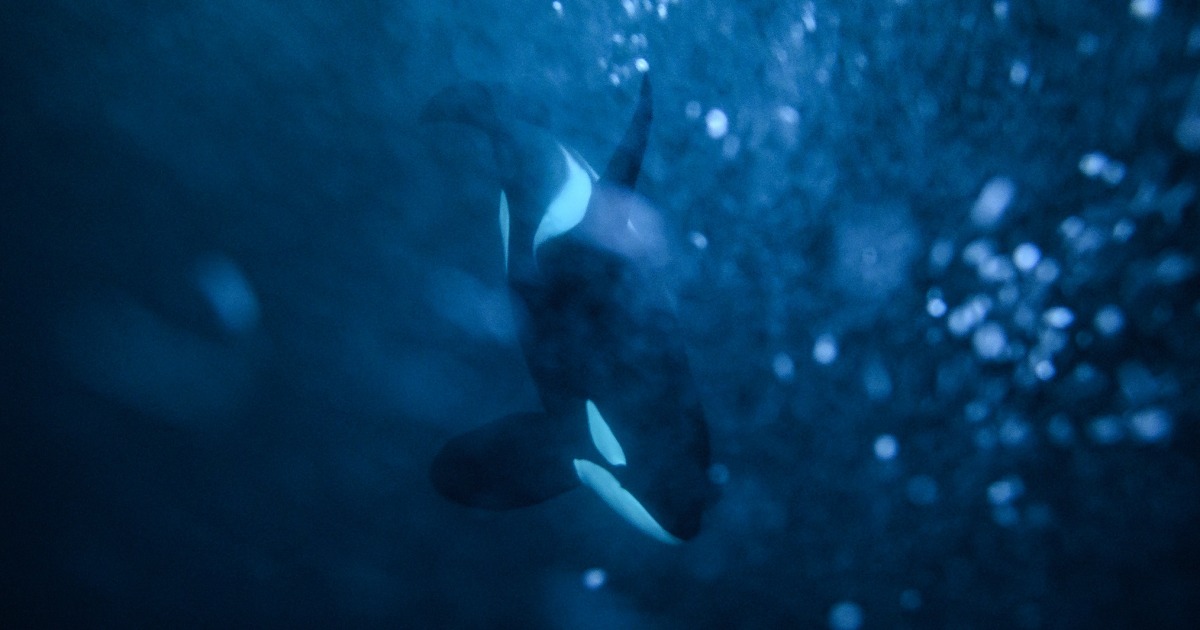
Nov. 3, 2025, 12:00 AM ESTBy Evan BushSome orcas have a taste for liver — specifically, the livers of great white sharks. Videos taken by scientists in Mexico reveal how the crafty whales manage to snag bites of the apex predators’ fatty organs. Researchers filmed two orca hunts in the Gulf of California — one in 2020 and another in 2022. They show the pods attacking young great white sharks by flipping them on their backsides to stun them, then slicing their sides open to extract their livers. The team published the findings of their video studies in the journal Frontiers in Marine Science on Monday. In one of the videos, all members of the pod share the pink liver fat while the rest of the shark’s body sinks into the ocean’s depths. During the hunt, a sea lion lurks, seemingly trying to sneak away with a free meal. But the orcas blow bubbles, apparently to deter the pest. Erick Higuera-Rivas, a marine biologist and documentarian who filmed the hunts from a boat nearby, said he didn’t immediately recognize the significance of the footage until he went to edit it.“I saw in the monitor that the shark had the liver hanging out on the side, already popped off. And a few minutes later, they came up with the liver in their mouth,” said Higuera Rivas, who coauthored the study. “I was surprised that it could be a great white. I was not believing it.”Heather Bowlby, a research scientist with Fisheries and Oceans Canada who was not involved in the research, said the footage offered a compelling reminder that even top predators must watch their backs. “We’re so conditioned to thinking of white sharks as the top of the food chain,” she said. “It is always amazing to be reminded they are prey.” Higuera-Rivas and his fellow researchers said the hunts appear to be the work of the same group of orcas, which they’ve named the “Moctezuma pod.” The pod frequents the waters off of Baja California and only hunt elasmobranchs — sharks and whales. Higuera-Rivas has been following the pod for more than a decade and filming their behavior, and he’s observed how the whiles adapt their behavior to whatever species the group is targeting. The only prior evidence that orcas hunt great white sharks comes from South Africa, where they have been preying on the sharks for years and extracting their livers, leaving shark carcasses to wash up on the beach. Alison Towner, a marine biologist at Rhodes University who has studied the phenomenon in South Africa, said the behavior in Mexico is similar but not identical. The orcas in Mexico have been preying upon young sharks, whereas those in South Africa have primarily targeted adults. The orca groups likely learned the behavior independently, Towner said. “Seeing this behaviour in Mexico suggests that specific orca groups have developed their own strategies for hunting sharks,” she said via email. “The same organ is targeted, but the handling technique differs slightly from what we’ve documented in South Africa, which points to group-specific learning.” The new study shows that the orcas in Mexico have identified a weakness that makes great white sharks vulnerable. “When it flips the shark upside down, it forces the shark to get into the state that is called tonic immobility,” said Francesca Pancaldi, a coauthor of the study and a shark researcher at the Instituto Politécnico Nacional Centro Interdisciplinario de Ciencias Marinas. “They freeze. It’s like a catatonic state. They just don’t do anything.” The liver is a fatty and nutritious organ that takes up about one-fourth of a sharks’ body, she added, which provides “a lot of energy.”Researchers in both South Africa and Mexico agreed that the behavior is not likely new for orcas. Rather, it’s new to scientists, who can now witness and document these hunts more easily because of improvements in drone technology. “I think it’s been going on for centuries. It’s just that it’s not easy to observe something like this,” Pancaldi said.It’s possible, though, that changes to the climate have increased the interaction between great white sharks and the Moctezuma pod, she added. “We actually are seeing more presence of great white sharks in the Gulf of California in the last 10 years,” Pancaldi said, adding that the species is responsive to changes in ocean temperatures during climate patterns like El Niño. In South Africa, scientists took notice of orca attacks on great white sharks about a decade ago, Towner said. The attacks sent the sharks fleeing from the normal spots where they feed, rest and reproduce, called aggregation grounds. “IRepeated predation has caused white sharks to abandon former core aggregation sites entirely,” Towner said. “Many sharks have likely moved offshore or into less monitored regions, which reshapes the coastal ecosystem.” After the sharks left their hangouts, populations of cape fur seal and sevengill sharks climbed. That subsequently caused a crash in those species’ main prey — like small fish and small sharks — according to research published in Frontiers in Marine Science earlier this year.Towner said just two adult male orcas, named Port and Starboard, have been behind repeated attacks on the white sharks in South Africa. The attacks have put pressure on great white sharks, which are slow to grow and reproduce, and it’s possible that could happen in Mexico, too, if the behavior becomes more frequent, she said. Evan BushEvan Bush is a science reporter for NBC News.

admin - Latest News - November 3, 2025
admin
16 views 17 secs 0 Comments


A pod of orcas off the coast of Mexico have attacked great white sharks by flipping them on their backs to stun them, then slicing them open to eat their livers.


Source link

TAGS:
PREVIOUS
Trump says immigration raids ‘haven’t gone far enough’
NEXT
Trump: Immigration enforcement raids 'haven't gone far enough'
Related Post
October 2, 2025
No end in sight after first day of federal government shutdown
September 26, 2025
Sept. 26, 2025, 2:33 PM EDTBy Aria BendixPresident Donald Trump on Friday gave a string of unproven medical advice about Tylenol and childhood vaccines, some of which directly contradicted guidance from his administration’s own health agencies under the leadership of Robert F. Kennedy Jr.The comments, posted to Trump’s Truth Social platform, echoed his previous remarks at a Monday press briefing where he announced that the Food and Drug Administration was warning doctors not to prescribe acetaminophen — the active ingredient in Tylenol — to pregnant women, claiming it may be tied to autism in children. The bulk of scientific research has not identified such a link.Trump again said Friday on Truth Social that pregnant women should not use Tylenol “unless absolutely necessary,” adding that young children should not take Tylenol “for virtually any reason.” The FDA warning applies to pregnant women, not children, and says Tylenol can be given during pregnancy in cases of high fever, when the fever may pose a health risk to the fetus. Trump’s comments also are inconsistent with those of Vice President JD Vance, who during an interview with NewsNation on Wednesday advised pregnant women to “follow your doctor” when it comes to taking acetaminophen.Trump does not have a medical or scientific background. The responsibility for setting vaccine or drug use recommendations falls to federal health agencies, not the White House.The president’s position on vaccines has wavered over the years. At times, he has encouraged their use and touted his first administration’s developing Covid vaccines at the beginning of the pandemic. However, his decision to appoint Kennedy, a longtime anti-vaccine activist, as health secretary and his recent spreading of vaccine misinformation have raised alarms in the scientific community. At the White House event on acetaminophen last week, Trump seemed to offer his most emphatic support to date of Kennedy’s agenda, which has included commissioning a probe into the causes of autism. Trump embarked on a tangent about how children receive too many vaccines, echoing a common talking point among vaccine skeptics.“They pump so much stuff into those beautiful little babies,” he said. “It’s a disgrace.”The Department of Health and Human Services deferred comment to the White House. A White House official said Trump was amplifying the latest HHS guidance urging people to exercise caution before taking pharmaceuticals.Trump also wrote Friday that kids should get hepatitis B shots at age 12 or older, which goes against guidance from the Centers for Disease Control and Prevention. The agency says the first dose of the three-dose series should be given within 24 hours of birth because hepatitis B can be transmitted from mother to child during delivery. The CDC’s vaccine advisory panel had been considering delaying the shot until at least one month after birth — not until age 12 — but tabled the vote last week. Children can be infected at any age through contact with the bodily fluids of a person with hepatitis B. The incurable infection can lead to liver disease, cancer and death. Doctor, medical reporter fact-check Trump announcement on acetaminophen and autism14:31Trump also said Friday that the measles, mumps and rubella (MMR) vaccine should be broken up into three shots and not “mixed” — even though the shots have been combined since 1971 and aren’t made individually. And he recommended taking the “chicken p” vaccine — presumably a reference to the chickenpox vaccine — separately. Pediatricians commonly administer the chickenpox vaccine and MMR vaccine separately, though a combination shot is available to reduce the number of shots babies receive and increase the chances that kids will get all of their vaccinations. The CDC advisory committee voted last week not to recommend that combination vaccine for small children due to an increased risk of febrile seizures (seizures prompted by fevers that tend to resolve quickly). Doctors have known about the risk for years, and many public health experts viewed the committee’s decision last week as taking choice away from parents. The vote did not change the CDC’s recommended vaccine schedule: Kids should get vaccinated for measles, mumps and rubella twice — once at 12 to 15 months and again at 4 to 6 years, per the agency. Chickenpox vaccines can be given at the same doctor’s visit. Combination MMR and chickenpox vaccines can still be given to older kids, since there is no evidence of an increased risk of febrile seizure in this age group. Trump advised people on Friday to “take vaccine in five separate medical visits,” though it is unclear whether he was referring to specific shots or the childhood immunization schedule. The American Academy of Pediatrics recommends seven well-child visits (when babies typically receive their shots) in the first year of life. However, not every doctor or parent follows that schedule to the letter, and the CDC offers ranges in which childhood immunizations can be administered.Aria BendixAria Bendix is the breaking health reporter for NBC News Digital.Monica Alba and Alana Satlin contributed.
November 16, 2025
Glen Powell invites UPS guy to ‘SNL’ debut
October 30, 2025
Pet monkey escapes its owner in Texas Halloween store
Comments are closed.
Scroll To Top
  • Home
  • Travel
  • Culture
  • Lifestyle
  • Sport
  • Contact Us
  • Politics
© Copyright 2025 - Be That ! . All Rights Reserved