• Police seek suspects in deadly birthday party shooting
  • Lawmakers launch inquires into U.S. boat strike
  • Nov. 29, 2025, 10:07 PM EST / Updated Nov. 30, 2025,…
  • Mark Kelly says troops ‘can tell’ what orders…

Be that!

contact@bethat.ne.com


Be That ! Menu   ≡ ╳
  • Home
  • Travel
  • Culture
  • Lifestyle
  • Sport
  • Contact Us
  • Politics Politics
☰

Be that!

Nov. 5, 2025, 5:00 AM ESTBy Rob WileThe Supreme Court on Wednesday will start weighing the legality of tariffs that have raised costs on clothing and toys from China, cars and trucks from Canada and Mexico, liquor from Europe, and much more.Yet even if the justices rule against the duties, implemented by President Donald Trump on a country-by-country basis, analysts argue there’s no guarantee that things will return to normal for consumers and businesses. “The removal of [country-specific] tariffs would open the door for trade policy uncertainty to rise again,” analysts with Oxford Economics research group said in a note published Tuesday. That uncertainty, the note added, could end up delaying hiring and business investment — something that could further drag down an already-ailing labor market. The tariffs are being challenged by five small businesses that believe Trump illegally used emergency powers to bypass Congress and impose the duties. The businesses, which include a wine importer, a pipe and fittings company, and a bicycle importing firm, allege they are facing significant financial burdens as a result of the tariffs. “Genova Pipe is dependent on imports to continue its manufacturing operations,” attorneys for the businesses said in their suit, referring to the fittings firm. “The tariffs will directly increase the cost of raw materials, manufacturing equipment, and resale goods imported from abroad by Genova Pipe.”Other businesses have also said tariffs are hurting them. On Monday, the Institute for Supply Management’s manufacturing index held in contraction territory for the eighth-straight month — with many respondents to its survey saying tariffs are weighing on their outlooks.“Tariffs continue to be a large impact to our business,” an unidentified machinery firm said in the survey. “The products we import are not readily manufactured in the U.S., so attempts to reshore have been unsuccessful. Overall, prices on all products have gone up, some significantly.”Yet there remains debate about the direct impact of the tariffs so far, many of which were enacted in August. Analysts with Bank of America found that prices for 101 commonly purchased items on Walmart.com had increased an average of roughly 3.4% between April and October — with toys in particular, many of which are made in China, seeing the biggest hit. However, they said the effect on consumers has been less than what one would expect if the costs of tariffs were being fully passed through to consumers. Businesses, they said, seem to be absorbing significant levels of the costs. In a statement to NBC News, the Yale Budget Lab, a policy think tank, likewise said that the effects of the tariffs “have been somewhat muted so far.”Still, it added, tariffs are weighing on the economy in other ways.“There’s no clear evidence that increased tariffs are responsible for the slowdown in job growth seen in recent months, although broader policy uncertainty is undoubtedly playing a role,” the lab said. “In general, we would expect to see the effects of tariffs to phase in over time as businesses modify their decisions to hire and/or invest.”While large and small companies alike have been facing cost pressures from tariffs, smaller ones have likely taken an outsize hit. Bigger companies have more capital and resources to help them mitigate higher costs. Small businesses, though, were more likely to fall into a category of firms facing import tariff increases exceeding 25 percentage points, according to an August study by the Atlanta Federal Reserve.“Small importers may be relatively more constrained in their ability to weather higher trade costs or switch suppliers, and, as a result, might experience defaults and bankruptcies,” the analysis found.A ruling against the tariffs would likely lower the cost burden to businesses and consumers. But the economy could face turmoil if the court demands the administration refund tariff revenues. Country-specific duties totaled approximately $89 billion through August, according to government data. In addition to the logistical challenge of sending refund checks to whoever paid the duties to U.S. officials, some analysts believe refunds could heat up economic activity — albeit with risks. A ruling against Trump may end up boosting consumer inflation pressures, Bank of America analysts said in a note published last week. The Trump administration has already signaled it would attempt to use different legal authorities to reimpose the duties. Treasury Secretary Scott Bessent has suggested Trump would tap another statute, established in 1930, that would allow him to impose tariffs of up to 50% on countries that discriminate against U.S. commerce. “You should assume that they’re here to stay,” Bessent said in an interview in September. The Oxford Economics analysts, meanwhile, have said they would be “unlikely to change our broader outlook for tariffs” even if the court decides against Trump. Bessent said he plans to attend Wednesday’s arguments at the high court.Rob WileRob Wile is a Pulitzer Prize-winning journalist covering breaking business stories for NBCNews.com.


admin - Latest News - November 5, 2025
admin
16 views 12 secs 0 Comments


The Supreme Court weighs the legality of tariffs that have raised costs on clothing, toys, cars, liquor and much more.


Source link

TAGS:
PREVIOUS
Nov. 5, 2025, 5:00 AM ESTBy Lawrence HurleyWASHINGTON — President Donald Trump’s signature economic policy comes under Supreme Court scrutiny Wednesday as the justices weigh whether he has the authority to impose sweeping tariffs on imports under a law designed for use during a national emergency.The Supreme Court has a 6-3 conservative majority that has regularly backed Trump on various contentious cases since he took office in January, but many legal observers think the tariffs dispute is a close call.The consequences are huge for Trump and the economy at large, with Americans increasingly anxious amid signs that the tariffs are contributing to, rather than alleviating, higher costs.A new NBC News poll found that 63% of registered voters believe Trump is failing to live up to expectations on the economy, after he ran on lowering prices, in part, through tariffs. Other recent polls show a majority of Americans oppose the tariffs, which disproportionately burden small businesses.Trump reaches trade war truce with China01:49The legal question is whether a 1977 law called the International Emergency Economic Powers Act, or IEEPA, which allows the president to regulate imports when there is an emergency, extends to the power to impose global tariffs of unspecified duration and breadth.The Constitution states that the power to set tariffs is assigned to Congress. IEEPA, which does not specifically mention tariffs, says the president can “regulate” imports and exports when he deems there to be an emergency, which occurs when there is an “unusual and extraordinary threat” to the nation.Until Trump began his second term in January, no president had ever used the law to tariff imports. Lower courts ruled against the Trump administration, with both sides asking the Supreme Court to issue a definitive ruling.Trump has made clear how important this case is to him and his economic plan, repeatedly warning of drastic consequences if the court strikes down his tariffs. He had even suggested he would go in person to Wednesday’s oral arguments, becoming the first president to do so. He later backed off that idea, but Treasury Secretary Scott Bessent has said he plans to attend.“If a President was not able to quickly and nimbly use the power of Tariffs, we would be defenseless, leading perhaps even to the ruination of our Nation,” Trump said in a characteristic Truth Social post Sunday.But even if he were to lose at the Supreme Court, Trump has levied other tariffs under different laws that would survive. And his administration has been looking at other ways of imposing tariffs, although those methods are more limited.The court is hearing the case on an expedited basis, meaning a ruling could be issued in short order. It has consolidated two underlying challenges brought by small businesses and a coalition of states.V.O.S. Selections Inc., a wine and spirits importer, Plastic Services and Products, a pipe and fittings company, and two companies that sell educational toys are among the businesses that sued.The high-stakes case puts the spotlight on a court that was skeptical of President Joe Biden’s unilateral use of executive power, including his attempt to forgive billions of dollars in student loan debt. The court blocked that proposal, citing what has been called the “major questions doctrine.”Under that theory, embraced by the conservative majority in recent years, a president cannot impose a broad policy with huge impacts on society and the economy unless Congress passes a law that specifically allows for it.The challengers said in court papers that the justices do not even need to reach the “major questions” question, noting that the text of IEEPA does not grant any power to impose tariffs.They pointed out that other laws, including the Trade Act, specifically grant the president the authority to levy tariffs in some form.Even if Trump could, in theory, use IEEPA for tariffs, there is no emergency that would warrant invoking it now, they added.Solicitor General D. John Sauer, representing the Trump administration, argued in his brief that the law is written in such a way to give broad powers to the president, including over tariffs.The tariffs are necessary because of “country-killing trade deficits,” he added, echoing Trump’s dire language.The cases concern two sets of tariffs. One is country-by-country or “reciprocal” tariffs, which range from 34% for China to a 10% baseline for the rest of the world. The other is a 25% tariff Trump imposed on some goods from Canada, China and Mexico for what the administration said was their failure to curb the flow of fentanyl.Other tariffs implemented using different legal authorities, such as 50% steel and aluminum tariffs on all other worldwide trading partners, are not at issue in the case before the court.As of the end of August, IEEPA tariffs had raised about $89 billion, according to the latest data available from U.S. Customs and Border Protection. If the Supreme Court overturns those tariffs, the government would then face demands from businesses that it pay back that revenue.Lawrence HurleyLawrence Hurley is a senior Supreme Court reporter for NBC News. Gary Grumbach , Steve Kopack and Rob Wile contributed.
NEXT
Nov. 5, 2025, 6:33 AM ESTBy Owen Auston-BabcockDemocrats Christian Menefee and Amanda Edwards advanced to a runoff in a special congressional election in Texas, NBC News projects, as a crowded field vied to fill the late Rep. Sylvester Turner’s deep-blue seat.The race saw 16 candidates, including seven Democrats, five Republicans, three independents and one Green Party member, face off in a heavily Democratic district that includes downtown Houston and parts of surrounding Harris County.Follow the election live hereMenefee is the county attorney for Harris County, becoming the first Black person to hold that office after unseating three-term incumbent Vince Ryan. Edwards is an attorney and nonprofit founder who served on the Houston City Council for four years.There was no primary election to determine each party’s top picks: Instead, every candidate appeared on the same ballot, with the two candidates with the most votes advancing to a runoff if no one got a majority.Texas Gov. Greg Abbott has yet to set a date for the runoff election, which is expected to take place in January.The 18th District has had a Black representative for more than 50 years, starting with Barbara Jordan in 1973, largely as a result of the Voting Rights Act and 1972 redistricting that empowered Black voters.Turner, the former Houston mayor who died in March, two months after being elected to represent the district, won the seat in November by more than 20 points. The late Rep. Sheila Jackson Lee, also a Democrat, held the seat for almost ten years until her death in July 2024, after winning her party’s primary for reelection.House Minority Leader Hakeem Jeffries, D-N.Y., threatened in April to sue Abbott for delaying Tuesday’s election. Five days later, Abbott set a date. The seat has been vacant for eight months, and the runoff winner will serve the remainder of Turner’s term, ending in January 2027.Owen Auston-BabcockOwen Auston-Babcock is an intern at NBC News.
Related Post
October 6, 2025
CDC updates guidance on who should receive Covid vaccines
November 5, 2025
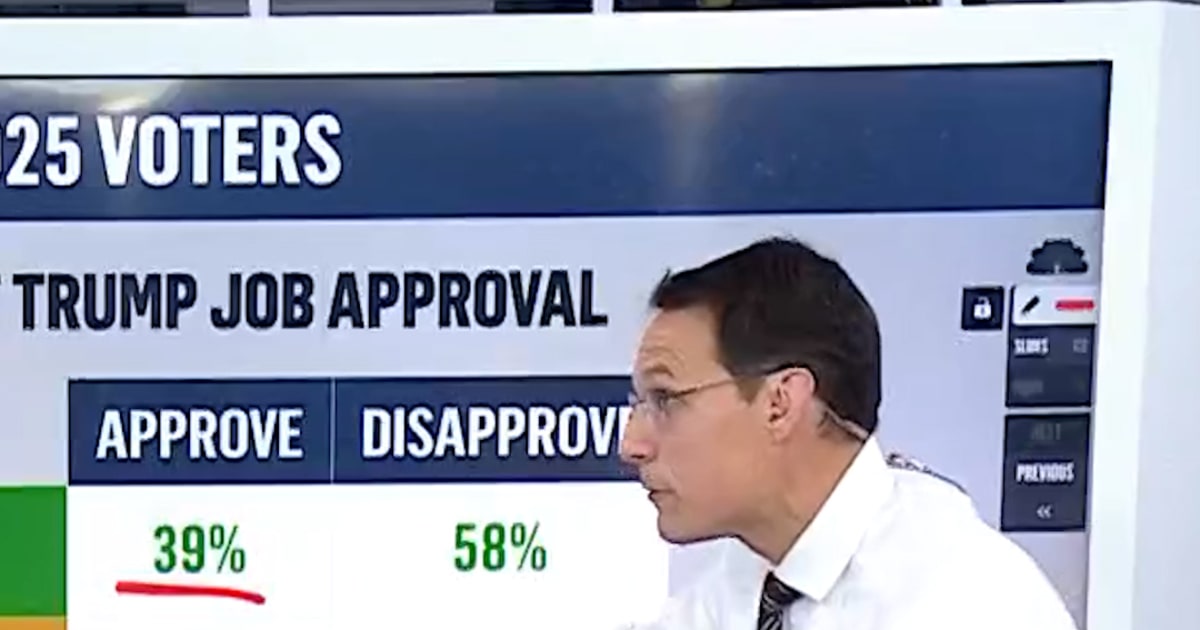
Kornacki: This data could be ominous for GOP in 2026
November 14, 2025
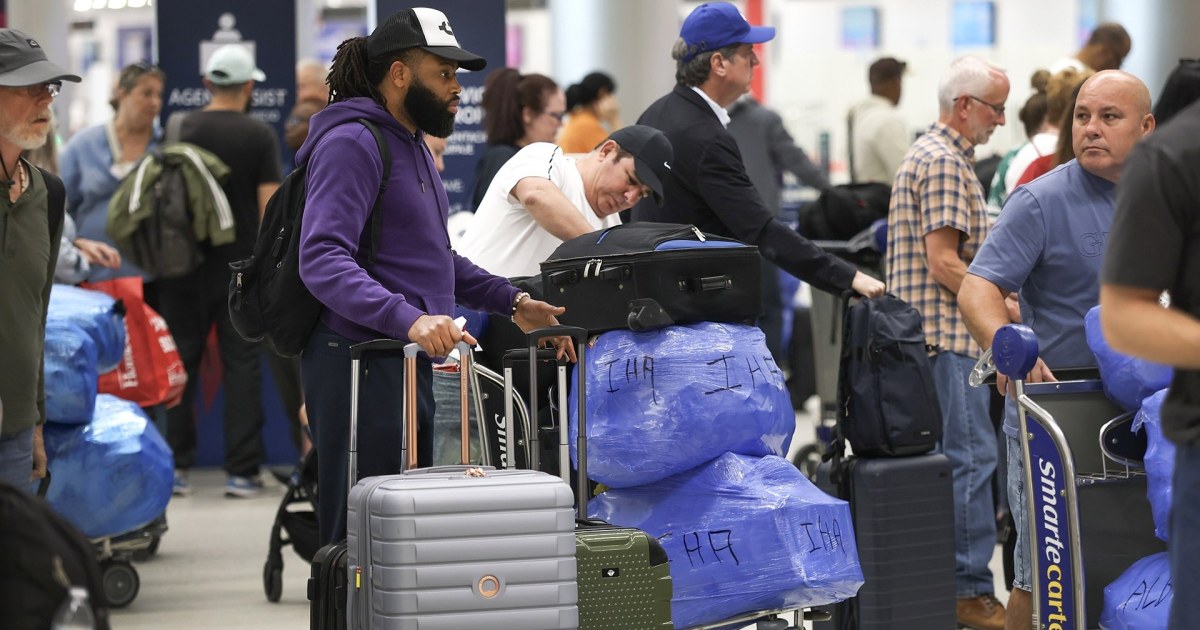
Air Travel Disruptions Continue Despite Government Shutdown
October 3, 2025
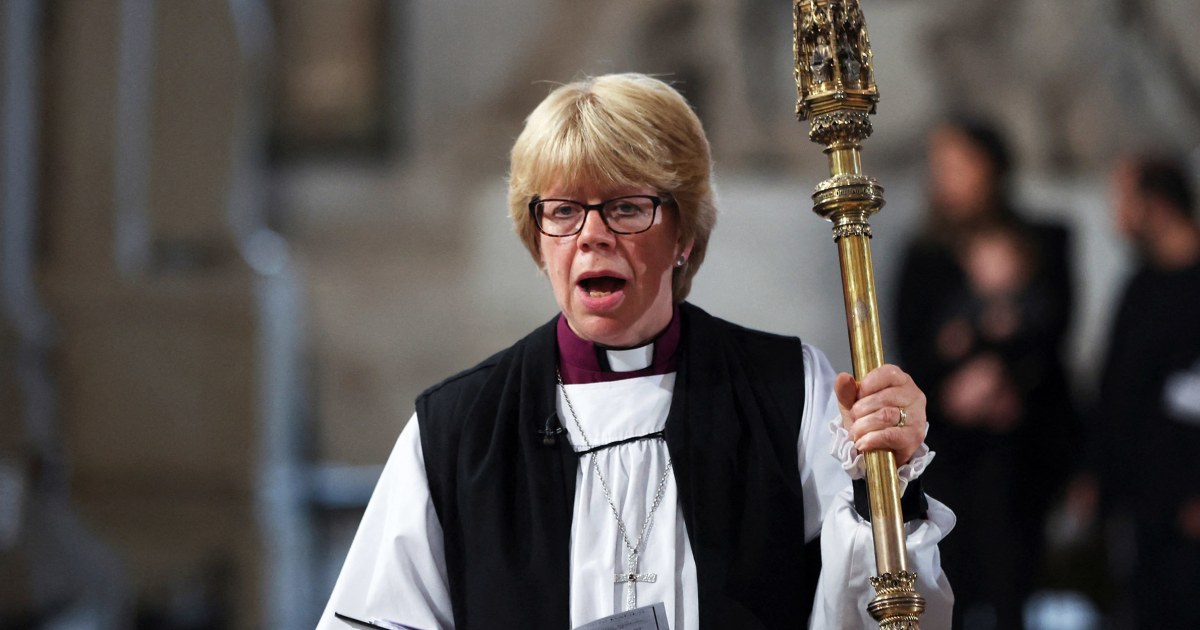
Savewith a NBCUniversal ProfileCreate your free profile or log in to save this articleBy Jamie GrayLONDON — A woman has been named to the post of Archbishop of Canterbury for the first time in the history of the Church of England. The Bishop of London, Sarah Mullally, will be installed into the church’s most senior role in March 2026. Mullally is the first female Archbishop of Canterbury to be chosen since women were allowed to become bishops in 2014. As the spiritual leader of the Church of England, the Archbishop of Canterbury heads a global Anglican community of around 85 million people, across 165 countries.In a statement following her appointment, Mullally said: “As I respond to the call of Christ to this new ministry, I do so in the same spirit of service to God and to others that has motivated me since I first came to faith as a teenager.” “At every stage of that journey, through my nursing career and Christian ministry, I have learned to listen deeply — to people and to God’s gentle prompting — to seek to bring people together to find hope and healing.” Mullally’s appointment comes 11 months after the previous archbishop, Justin Welby, resigned after a damning report into his handling of the case of a prolific child abuser associated with the church. British Prime Minister Keir Starmer welcomed Mullally’s appointment, saying she would play “a key role in our national life.”“The Church of England is of profound importance to this country. Its churches, cathedrals, schools, and charities are part of the fabric of our communities,” he said in a statement.Jamie GrayJamie Gray is a senior desk editor for NBC News based in London. 
Comments are closed.
Scroll To Top
  • Home
  • Travel
  • Culture
  • Lifestyle
  • Sport
  • Contact Us
  • Politics
© Copyright 2025 - Be That ! . All Rights Reserved