7 views

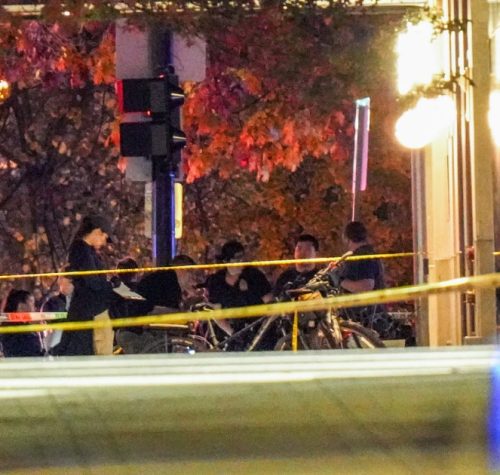
Nov. 27, 2025, 2:37 AM EST / Updated Nov. 27, 2025, 12:32 PM ESTBy Jennifer Jett, Peter Guo, Ed Flanagan and Jay GanglaniHONG KONG — The deadly inferno that tore through a high-rise housing estate in Hong Kong killed at least 83 people, authorities said, with dozens of residents still feared trapped on upper floors.Authorities arrested three people and launched a criminal investigation into the blaze, the Chinese territory’s deadliest in seven decades, which firefighters have been battling for more than 24 hours.The fire at Wang Fuk Court in the northern district of Tai Po is nearly extinguished, said Derek Armstrong Chan, the deputy director of Hong Kong Fire Services, in an update early Friday local time.Firefighters were still searching the building for residents trapped by the intense heat and thick smoke that was pouring out of the complex on Thursday, and Chan said debris and scaffolding falling from upper floors had complicated rescue efforts. At least 72 people were injured in the fire.A 48-year-old woman named Cindy, who declined to give her full name for privacy reasons, said she grew up in Wang Fuk Court and felt “very sad” and “helpless” to see her parents’ home completely burned down.Cindy told NBC News on a sidewalk across from the affected buildings that her family managed to escape and was now safe. “I really hope there are survivors. I’m wishing for a miracle to happen,” she added. “No one in the world can sleep now.”

Hong Kong police have arrested three people after a massive fire tore through a high-rise housing complex, leaving at least 83 people dead in the city’s deadliest blaze in three.
TAGS:
6 views

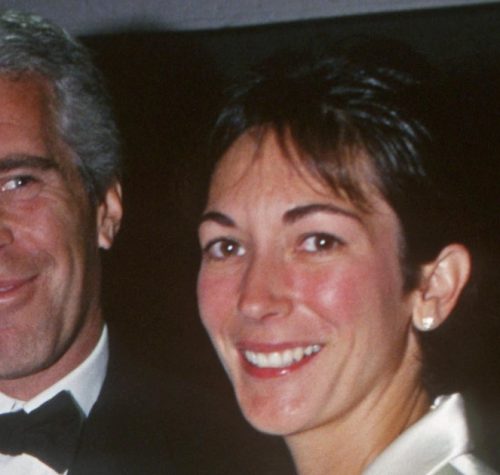
Nov. 27, 2025, 1:59 PM ESTBy Katherine DoyleA federal judge is pressing the Justice Department to explain how it will protect the identities of Jeffrey Epstein’s victims after lawyers said that dozens of survivors’ names appeared unredacted in documents released by Congress, prompting what they described as “widespread panic.”Judge Richard Berman of the U.S. District Court for the Southern District of New York on Wednesday night requested a detailed description of the materials the government intends to release and an explanation of how it will safeguard the privacy of victims, including through redactions. Berman, who oversaw the trafficking case against Epstein, attached a letter from attorneys Bradley Edwards and Brittany Henderson that calls for strict privacy protections in future releases.The House Oversight Committee’s public release of more than 20,000 documents caused “widespread panic” among Epstein’s survivors, the lawyers wrote.Newly released emails bring Trump’s relationship with Epstein back into spotlight02:20Edwards and Henderson, who represent hundreds of Epstein’s victims, urged the Justice Department to redact all victims’ names in any future materials sent to Congress or made public. They also asked for a private meeting with the DOJ to share a list of more than 300 victims they represent so that federal officials can protect against further disclosures.The lawyers said dozens of victims’ names appeared unredacted in the cache of documents and emails from the Justice Department released this month, turning the release into a new source of concern for victims who had sought to maintain their anonymity.“[T]ransparency CANNOT come at the expense of the privacy, safety, and protection of sexual abuse and sex trafficking victims, especially these survivors who have already suffered repeatedly,” the lawyers wrote. According to the letter, some victims warned that releasing their names would put them in physical danger. Several told their lawyers that they had been approached on the street by reporters, including one who said she was confronted while standing with her nine-year old son, according to the letter.The lawyers pointed to one document released by the Justice Department that they said listed the names of “at least 28 victims … including individuals who were minor children at the time of the abuse,” as well as women granted protection in the same legal jurisdiction “as a result of grave public safety concerns.”“This type of negligence by the government to a survivor is just unable to comprehend,” one alleged victim wrote in a document included in the court filing. “I don’t understand how this is possible.”“I have been unable to mentally and emotionally function or sleep,” said another.A third questioned, “I thought the government had promised to redact our names and identifying material. I don’t understand how this is happening again.”Virginia Giuffre’s family reacts to House vote on Epstein files08:08In their letter, Edwards and Henderson said some survivors fear the Justice Department “intentionally exposed their names” when it released thousands of unredacted files tied to Epstein’s case to Congress this year.“These women now beg this Court and beg the United States Department of Justice to allow them to choose to remain protected,” the attorneys said.While Epstein’s estate also failed to redact some names, the lawyers said they believed these to be “genuine mistakes.”The lawyers also accused the DOJ of creating a “perpetual distraction” through the release of grand jury materials tied to Epstein co-conspirator Ghislaine Maxwell, arguing that the documents provide little meaningful information and are being used as a diversion.The Justice Department did not immediately respond to a request for comment Thursday.Berman presided over the government’s 2019 case against Epstein before the disgraced financier and sex offender died in jail while awaiting trial.The letter from Edwards and Henderson comes after President Donald Trump signed a bill on Nov. 19 directing the DOJ to release its Epstein files. The president, who for months argued against passing the legislation, has continued to call the push to release the files part of a “hoax.”Congress passed the Epstein Files Transparency Act, which directs Attorney General Pam Bondi to release all unclassified records tied to Epstein within 30 days, while withholding or redacting material that could jeopardize a federal investigation. It is still not known exactly when or how the files will ultimately be released.Some victims have criticized the attempts to unseal the grand jury testimony, saying those attempts have disregarded victims’ repeated calls for privacy.Katherine DoyleKatherine Doyle is a White House reporter for NBC News.

Lawyers representing hundreds of victims said dozens of their names appeared unredacted in files from DOJ and Epstein’s estate released by Congress this month.

Source link

TAGS:
5 views

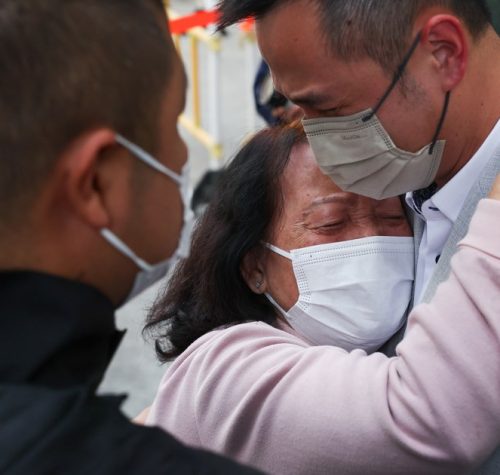
Nov. 27, 2025, 1:07 PM ESTBy Jennifer Jett, Peter Guo, Ed Flanagan and Jay GanglaniHONG KONG — Kan Shui-ying was home alone on Wednesday, watching television at her Hong Kong apartment while her husband and son were at work. It was around 3 p.m., she said, when she “smelled a strong burning odor.”She thought she might be boiling something, so she went to check.“I opened the window to see if there was anything,” Kan told NBC News. “Just then, a friend called me and said, ‘Wang Fuk Court is on fire!’”Grabbing only her phone, Kan went downstairs to see what was going on and found the fire was already “burning very fiercely.”“I thought I was just coming down to take a quick look,” she said, not realizing “that it was such a serious disaster.”Kan and her family are among hundreds who lost their homes in the fire at the high-rise housing complex in Hong Kong’s northern Tai Po district. At least 75 people are dead and dozens of others missing in the Chinese territory’s deadliest blaze in seven decades.Investigators are focusing on the bamboo scaffolding and mesh netting that surrounded the eight towers at Wang Fuk Court, seven of which were engulfed in flames. Three people from a contractor hired to carry out renovations have been arrested on suspicion of manslaughter, amid questions as to whether the building materials failed to meet safety standards and helped spread the fire.John Lee, Hong Kong’s top leader, said Thursday night that the blaze was now “largely under control.” He also said the city’s Development Bureau had met with industry representatives to discuss gradually replacing the city’s widely used bamboo scaffolding with metal.Bamboo scaffolding, a tradition with roots in ancient Chinese architecture, is an iconic part of Hong Kong, an international financial hub where skyscrapers are the norm. Bound together by nylon cords, the lattices are used for new construction as well as buildings under renovation.Construction workers with specialized training in bamboo scaffolding — known as “spidermen” — scramble hundreds of feet up the sides of gleaming buildings in Hong Kong, a densely populated city of 7.5 million people. The scaffolding is often covered in mesh safety nets in green and other colors to prevent debris from falling onto pedestrians below.

Bamboo scaffolding is still a common sight in the Chinese territory, but may be phased out after the devastating Wang Fuk Court blaze.

Source link

TAGS:
6 views

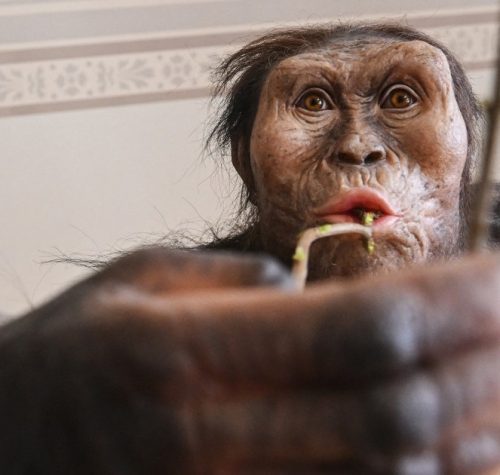
Nov. 27, 2025, 11:05 AM ESTBy Elmira AliievaIn the latest twist in human evolution, scientists have discovered that a mysterious foot found in Ethiopia belonged to a previously unknown ancient relative.Dated to around 3.4 million years ago, the species was likely similar to Lucy, an ancient human relative who lived in the area at around the same time, according to a study published Wednesday in the scientific journal Nature. But researchers found that the Burtele foot — named after the place in northeastern Ethiopia where it was discovered in 2009 — was unmistakably different.With an opposable big toe resembling a human thumb, the fossilized Burtele foot suggests its owner was a skilled climber, spending more time in the trees than Lucy, the study said.Elements of the Burtele foot, discovered in Ethiopia in 2009.Yohannes Haile-Selassie / Institute of Human Origins Arizona State via AFPFor decades, Lucy’s species was considered the ancestor of all later hominids — an ancient relative more closely related to humans, including Homo sapiens, than to chimpanzees.Scientists were unable to confirm the foot belonged to a new species until they were able to study new fossils, including a jawbone with 12 teeth, that were found at the same site.After identifying them as Australopithecus deyiremeda, they found the Burtele foot belonged to the same species.John Rowan, an assistant professor in human evolution at Britain’s University of Cambridge, said their conclusion was “very reasonable.”“Now we have much stronger evidence that, at the same time, there lived a closely related but adaptively distinct species,” Rowan, who was not associated with the study, told NBC News in an email Thursday.The study also looked at how these species shared the same environment. The research team, led by Yohannes Haile-Selassie from Arizona State University, concluded that the new species spent much of its time in the forest.Lucy, or Australopithecus afarensis, likely roamed the ground, the study said, before going on to suggest that the two species likely had different diets and used the landscape in different ways.Multiple examinations of the newly found teeth indicated that A. deyiremeda was more primitive than Lucy and likely relied on a diet of leaves, fruit and nuts, the study said.“These differences meant that they were unlikely to be directly competing for the same resources,” said Ashleigh L.A. Wiseman, an assistant research professor at the McDonald Institute for Archaeological Research, which is also based at the U.K.’s University of Cambridge.Highlighting the broader impact of this discovery on our understanding of evolution, Wiseman said in an email Thursday that the findings reminded us “that human evolution wasn’t a straight ladder with one species turning into the next.”Instead, she said, it should be viewed as a family tree with several so-called “cousins” alive at the same time, and each having a different way of surviving. “Did they interact? We will likely never know the answer to that question,” she added.Rowan also contended that as the number of well-documented human-related species grows, so do our questions about our ancestry. “Which species were our direct ancestors? Which were close relatives? That’s the tricky part,” he said. “As species diversity grows, so do the number of plausible reconstructions for how human evolution played out.”And Wiseman cautioned against making definitive species assignments, as those should rest on well-preserved parts of skull and fossils that belong to multiple associated individuals. While the new research strengthens the case for A. deyiremeda’s existence, she said, it “doesn’t remove all other alternative interpretations.”Elmira AliievaElmira Aliieva is an NBC News intern based in London.

Scientists have discovered that a mysterious foot found in Ethiopia belonged to a previously unknown ancient relative similar to Lucy.

Source link

TAGS: