22 views

Oct. 22, 2025, 10:11 PM EDTBy Rich Schapiro and Morgan CheskyThe first video “Richard LA” posted to TikTok appeared on Aug. 21, 2024. “Accident at 27th and San Pedro,” he wrote in Spanish under video clips showing two damaged cars and paramedics pushing a man on a gurney into an ambulance. “2 people were taken to the hospital.”“Richard LA” was actually Carlitos Ricardo Parias, 44, a father of two living in southern Los Angeles. His TikTok feed soon filled with similar clips. A fire at a home on 36th and Trinity streets. A car crash on 29th Street and Maple Avenue. His audience grew steadily over the ensuing months. And his clips were consumed even more widely when he began to focus his camera on the Immigration and Customs Enforcement raids roiling Los Angeles. Multiple videos he posted this month got more than 50,000 views. “He has risen to become this very credible, respected and admired citizen journalist,” said Angelina Dumarot, a spokesperson for Los Angeles City Council member Curren Price. “He did it with a lot of love and a lot of passion and in a very courageous way.”But there was something many didn’t know: Parias was an undocumented immigrant himself, according to federal authorities. And on Tuesday, he was targeted by federal agents trying to arrest him in an immigration proceeding, leading to a chaotic confrontation in downtown Los Angeles.”Parias was the subject of an administrative immigration arrest warrant and had avoided capture before,” prosecutors said.After having watched Parias walk out of his home and drive off around 8:45 a.m., agents boxed in his Toyota Camry, federal prosecutors say. The agents left their vehicles and ordered Parias out of his car. But he instead drove forward and backward, striking two of the law enforcement vehicles, according to prosecutors.When an agent tried to break the Camry’s driver’s side window, prosecutors said, Parias drove “more aggressively.” Plumes of smoke began to billow from the vehicles, apparently because of the spinning tires, prosecutors said. With the agents fearing Parias could hit them with his Camry or dislodge it from between their vehicles, one opened fire, prosecutors said. Parias was struck in the elbow, and a deputy marshal was hit in the hand, according to prosecutors. A witness who arrived as the agents were wrestling Parias out of his car said it felt like a “little war zone.”“The man was clearly in a lot of pain,” said the witness, who spoke on the condition of anonymity.Parias, who is charged with assault on a federal officer, was still in the hospital Wednesday, postponing his first court hearing. Immigration attorney Carlos Jurado speaks to the media in front of Dignity Health California Hospital Medical Center in Los Angeles on Sunday.Keith Birmingham / MediaNews Group/Pasadena Star-News via Getty ImagesHis immigration attorney, Carlos Jurado, told NBC News that he tried to speak to his client Tuesday night but was barred from doing so. Jurado said they had a brief conversation by phone Wednesday morning.“He was confused as to his medical condition, as to the severity of his injuries, and he was confused as to what was going on,” Jurado said.A spokesperson for the U.S. attorney’s office in Los Angeles said she wasn’t privy to Parias’ medical condition and doesn’t know when his first appearance will be.An ICE spokesperson didn’t immediately respond to a request for comment. Parias was an unlikely social media star. A native of Puebla, Mexico, he was working in construction before he embarked on a path as a citizen journalist. “His car was full of tools,” said Jose Ugarte, a deputy chief of staff to Price, the City Council member. “He said it was kind of tough these days to find work.”So he turned to recording videos of the goings-on in his neighborhood and posting them to social media. He often went live at crime or accident scenes, calmly narrating the events playing out in front of him.Unlike some citizen journalists, Parias would steer clear of interfering with law enforcement or engaging in confrontations of any kind, according to Ugarte and others familiar with his work. Parias started becoming well-known in the tight-knit, heavily Latino district where he lived. But not all of his good deeds were broadcast on social media. A neighbor said Parias’ once tracked down her husband to alert him that their car window was left down.“He didn’t have to do that,” said the neighbor, who spoke on the condition of anonymity over fears of being targeted by federal agents. “He’s just a very good person,” she added.In August, Price’s office presented Parias with a certificate of recognition in honor of his “unwavering commitment to keeping the South LA community informed, empowered and protected.”Ugarte said Parias shed tears when he was presented with the certificate at a neighborhood park, with his teenage son looking on. News of his shooting and arrest shocked and saddened many who had come to rely on his reports, according to the staffers in Price’s office.“The whole community is shaken up,” Dumarot said. “This feels very targeted, and not for the right reasons.”Ugarte said it wasn’t uncommon for Parias to reach out about incidents in the neighborhood. Their last exchange, Ugarte said, came Sept. 26, when Parias sent him an urgent message.“Jose, there is a fire on 55th and Avalon,” it read. “Please send the fire department as soon as possible.”Ugarte said he called the fire department and was told it was on its way. When he checked TikTok, he saw that Parias had gotten there first and was already recording. Rich Schapiro Rich Schapiro is a reporter with the NBC News national security unit.Morgan CheskyMorgan Chesky is a correspondent for NBC News.

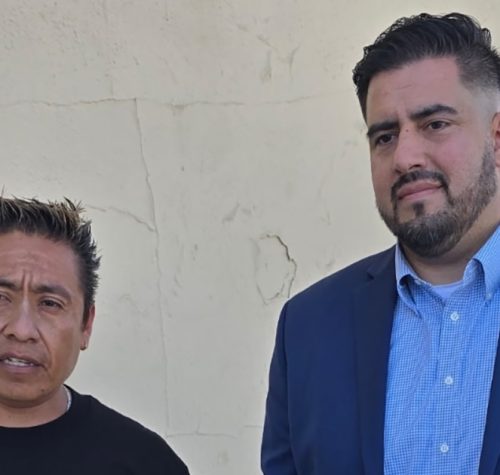
The first video “Richard LA” posted to TikTok appeared on Aug.

Source link

TAGS:
19 views

Oct. 22, 2025, 2:08 PM EDTBy Elizabeth CohenWhen a radiologist reviewed Deirdre Hall’s mammogram images last summer, everything seemed fine. There were no shadows or lumps or irregular patches that could signal cancer.The doctor gave it a second look for one reason: artificial intelligence software had drawn a circle around an area in the upper part of her left breast that it found suspicious.Because the AI software had put up that red flag, Hall, 55, got an order for an ultrasound that led to a biopsy. There were four cancerous tumors in the spot AI had identified.“This would have been completely missed without the AI,” said Dr. Sean Raj, chief medical officer and chief innovation officer at SimonMed Imaging in Tempe, Arizona, where Hall had her mammogram.Not only was Hall’s breast tissue dense, but the layers of tissue crisscrossed over each other in a particularly complicated pattern.“It camouflaged the cancer,” said Raj, a breast imaging specialist. “Even I could have missed it.”They caught her cancer at Stage 1, said Hall, who’s a respiratory therapist at a local hospital.“They didn’t find anything in the lymph nodes, which they were grateful for,” she said. “I’m so glad they caught it early.” “I’m glad it was found,” Deirdre Hall said about the software program that detected suspicious images on her mammogram.Courtesy Deirdre HallWhen reading women’s routine mammograms, radiologists are increasingly augmenting their eyes with artificial intelligence. While many major medical centers have adopted the technology enthusiastically, some experts point to concerns, including a lack of studies in the U.S. showing that AI actually saves lives and does not needlessly raise concerns about benign growths. Experts train AI software by feeding it hundreds of thousands, or sometimes millions of mammogram images. Some of the images contain cancerous tumors, and, over time, the AI learns to distinguish the often subtle differences between malignant and benign tissue. Some AI programs, like the one used on Hall, identify a suspicious area. Others predict the chance that a woman will develop breast cancer. At the University of California, San Francisco, researchers are using AI to try to speed up the time from a mammogram to cancer diagnosis. In a study released this week, the radiologists used the technology to flag suspicious-looking mammograms so those patients could be seen more quickly. For patients with breast cancer, that AI triage cut the average time from mammogram to biopsy by 87%, from 73 days to nine days. The study was posted Tuesday to the preprint server MedRxiv. (Studies posted to preprint servers have not been peer-reviewed.) AI software used by SimonMed Imaging, where Hall had her mammogram, marked an area suspicious for cancer.Courtesy Deirdre HallHowever, Dr. Sonja Hughes, vice president of community health at Susan G. Komen, a breast cancer organization, said more research is needed before AI is used as the standard of care. “We’re not there yet,” she said. “We don’t have enough research or enough data.”Dense breasts: Finding a snowball in a blizzardMammograms have saved countless lives, but they’re imperfect. Dense breast tissue, which is a risk factor for developing cancer, makes mammograms harder to interpret. About 40% of U.S. women have dense breasts, according to the American Cancer Society. “It’s like trying to find a snowball in a blizzard,” said Dr. Otis Brawley, a professor of oncology and epidemiology at Johns Hopkins University.The Food and Drug Administration has authorized many AI programs for mammograms, with varying rates of accuracy. The AI software used on Hall’s mammogram, called Lunit, accurately identified cancers 88.6% of the time, according to a 2024 JAMA Oncology study of more than 8,800 women in Sweden who got mammograms. Another study published in Radiology noted that AI software caught cancers that were missed by two radiologists. However, in the Sweden study, AI gave a false positive 7% of the time, saying there might be a tumor when there wasn’t one. A false positive can trigger more testing and anxiety while waiting for results. With any mammogram, the chance of having a false positive result is about 10%, according to research.A doctor interprets the screening’s resultsMajor academic medical centers using AI in their imaging centers include the MD Anderson Cancer Center, the Mount Sinai Hospital in New York City, the Perelman Center for Advanced Medicine at the University of Pennsylvania, the Siteman Cancer Center at Barnes-Jewish Hospital, and MedStar Health.In all centers, the software is used along with, not instead of, a radiologist’s eyes, as FDA regulations require a doctor to interpret mammograms. Some breast imaging experts see advantages to this human-machine combination.“The nice thing about AI is that it doesn’t get tired,” said Dr. Lisa Abramson, associate professor of radiology at Mount Sinai. “It’s not going to replace the job or the expertise of radiologists, but I think it’s only going to enhance our ability to detect more and more breast cancers.”Brawley, the Johns Hopkins professor, said AI could help women who don’t have access to radiologists who specialize in breast imaging, and instead have their mammograms read by general radiologists.A study using RadNet’s software found that without AI, specialists correctly identified breast cancers 89% of the time, compared with 84% for generalists. With AI, the accuracy for both groups rose to about 93%.“It’s incredibly subjective when a human reads a mammogram,” Brawley said. “Maybe it’s going to reduce the disparities in how these things are read.”Does AI cost more? Typically, academic medical centers don’t charge patients extra for the use of AI software, and they can’t charge insurance companies for it, since there’s no billing code specifically for the AI, according to Susan G. Komen, a nonprofit breast cancer organization. SimonMed, which has centers in 11 states, and RadNet, which has centers in eight states, don’t charge for an initial layer of AI on mammograms, although patients are charged $40 and $50 respectively if they opt to have their images run through a second set of the technology.Drawbacks of AIBrawley worries that AI might be too good at its job.According to the American Cancer Society, it’s possible that mammograms flag some tumors that are technically cancerous, but not life-threatening. The patient then undergoes the physical, emotional, and financial toll of treating a tumor that was never going to hurt her.“It’scancer, but it’s not genetically programmed to grow, spread, or kill,” Brawley said. “I am worried that AI may help us find even more of these tumors that don’t need to be found.”Brawley pointed to the lack of data in the U.S. that shows AI actually saves women’s lives.Last month, researchers at the University of California, Los Angeles and University of California, Davis, announced a $16 million, two-year study at seven medical centers to take a deeper look at the technology.There are several other concerns about using AI in mammography. The technology isn’t perfect, and some worry that doctors could make mistakes if they become too dependent on it, according to an article last year in RadioGraphics. That’s why radiologists emphasize that AI is a tool, not a solution in itself. “It’s not going to replace the job or the expertise of radiologists,” said Abramson, the breast radiologist at Mount Sinai. “I think it’s only going to enhance our ability to detect more and more breast cancer.” Another concern is that if AI is trained mainly on breast images of white women, it could be less accurate for women of color, since genetic differences can make tumors look different.Hall, the Arizona patient, said she’s not necessarily a fan of AI in general — she says she finds the technology “creepy” — but she’s glad she paid $50 for the extra AI on her mammogram. “I don’t love all this AI stuff, but I definitely love this for me or anyone else in my position,” she said. “No matter how it was found, I’m glad it was found.” Guidance for mammogramsGuidance from the United Services Preventive Services Task Force recommends women to get a mammogram every other year starting at age 40. According to American Cancer Society guidelines:Women 45 to 54 should get mammograms every year.Women 55 and older can switch to a mammogram every other year, or they can choose to continue yearly mammograms.Dr. Shanthi Sivendran, senior vice president at the American Cancer Society, offers guidance for more accurate breast cancer screening. Try to go to the same place every year so radiologists can compare your images over time.Ask if a center uses radiologists who’ve completed a fellowship in breast imaging. In some rural or underserved areas, it may be harder to find these specialists, and so women should seek out radiologists who primarily read breast images. Try to find a center that can either provide or direct you to follow-up care, such as additional imaging, in case your mammogram finds something suspicious. According to FDA regulations, your mammogram report should state if you have dense breasts. If you do, ask your doctor about whether you might need additional imaging tests. Elizabeth CohenElizabeth Cohen is a Peabody Award-winning journalist and a health contributor to NBC News. She is the author of the book “The Empowered Patient.” 

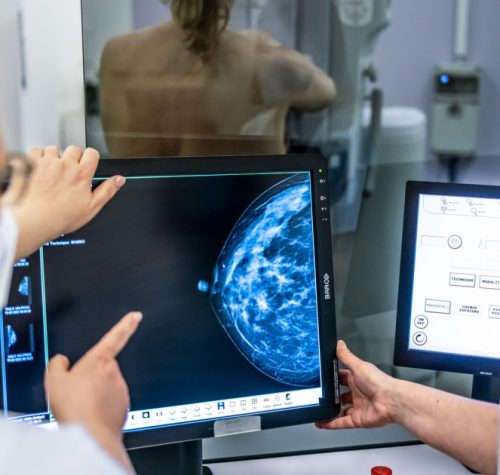
When reading women’s routine mammograms, radiologists are increasingly augmenting what they’re observing with artificial intelligence to better interpret the scan.

Source link

TAGS:
20 views

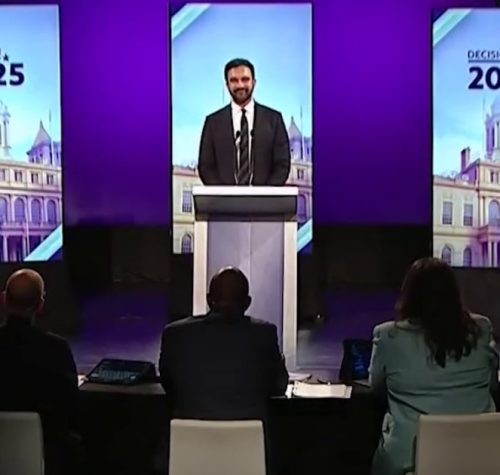
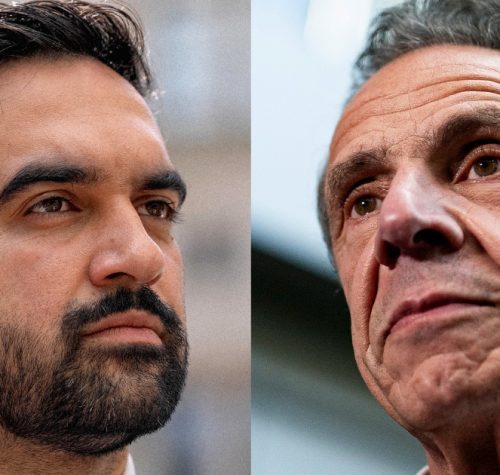
Oct. 22, 2025, 10:00 PM EDTBy Adam EdelmanZohran Mamdani and Andrew Cuomo clashed Wednesday in the final New York mayoral debate, which put on full display their personal animosity and their array of disagreements over both city and national issues.Throughout the 90-minute debate, Cuomo — the former Democratic governor running as an independent — called Mamdani, 34, a state assemblyman, a “kid” who would get knocked “on his tuchus” by President Donald Trump, a “great actor” and a “divisive force in New York” who brings “toxic energy for New York.”Mamdani, the Democratic nominee, who defeated Cuomo in the party’s primary in June, slammed Cuomo as a “desperate man” and “Trump’s puppet” whose political career was decidedly in the past.The contentious event, held three days before early voting kicks off and less than two weeks before Election Day, comes as Mamdani has maintained a double-digit lead in public polling. With time to further narrow the gap before the election running out, Cuomo took swing after swing at Mamdani, criticizing him for not having adequate experience to lead a city of nearly 9 million and to stand up to Trump, who has repeatedly vowed to withhold federal funding from New York if Mamdani wins.Cuomo ripped Mamdani, a self-described democratic socialist, in his opening statement as someone with “no new ideas” and a “rehash” of Mayor Bill de Blasio, saying he has “never run anything, managed anything, never had a real job.”Mamdani slammed Cuomo as someone who “will only speak of the past” “and a “desperate man lashing out because he knows that the one thing he’s always cared about, power, is now slipping away from him.” Republican nominee Curtis Sliwa, who also took part in the debate, teed off on both of his opponents. “Zohran, your résumé could fit on a cocktail napkin,” he said. “And Andrew, your failures could fill a public school library in New York City.”Wednesday’s debate also came amid growing calls among Mamdani’s opponents for Sliwa to drop out of the race to create a more competitive two-man contest with Cuomo. Sliwa, who earlier in the day said he’d be leaving his conservative talk radio perch, gave no indication that he’d exit the race.Affordability, housing, homelessness and New York-centric issues like education and policing — Mamdani confirmed that he’d retain New York Police Commissioner Jessica Tisch — accounted for the bulk of the night’s debate. But the candidates were first asked to weigh in on questions with national implications, including Immigration and Customs Enforcement raids and how to deal with Trump.Candidates were asked how city officials should have approached an ICE raid this week that targeted undocumented immigrants who may have connections to illegal street vending. Cuomo replied that he would have called Trump and told him, “Look, you’re way out of bounds.”“I’ve had a lot of dealings with President Trump, and there’s only one way to deal with him. He puts his finger in your chest, and you have to put your finger right back in his chest,” Cuomo said. “We don’t need ICE to do quality-of-life crimes. We don’t need them to worry about illegal vendors. That’s a basic policing function for the NYPD.”Mamdani slammed ICE as a “reckless entity that cares little for the law and even less for the people that they’re supposed to serve,” and he promised to “end the chapter of collaboration between City Hall and the federal government.”Responding to a question about how he’d work with or against Trump, Mamdani said he’d fight him “every step of the way” over deporting Americans and going after his political enemies. But when it came to Trump’s promises to lower the cost of living, Mamdani said he’d be open to working together. “If he wants to talk to me about the third piece of that agenda, I will always be ready and willing,” he said. “We heard from Donald Trump’s puppet himself, Andrew Cuomo. You could turn on TV any day of the week, and you will hear Donald Trump share that his pick for mayor is Andrew Cuomo, and he wants Andrew Cuomo to be the mayor not because it will be good for New Yorkers, but because it will be good for him,” Mamdani added. Trump has called Mamdani a communist and threatened to withhold federal funds and deploy the National Guard, as he has done in other major cities, if he wins the November election.Cuomo seized on the comments from Trump.“You are going to have to confront him, and you can beat him. I confronted him, and I have beaten him,” Cuomo said. Trump, he added, “has said he’ll take over New York if Mamdani wins — and he will, because he has no respect for him.”“He thinks he’s a kid and he’s going to knock him on his tuchus,” Cuomo added. Tensions surfaced yet again after the candidates were asked how their views on Gaza and Israel might affect their ability to be an effective mayor. In a fiery exchange, the three candidates sparred over who would best combat antisemitism in the city, with Mamdani starting by promising to protect Jewish New Yorkers and backing a plan to introduce more lessons about the Jewish experience in New York in public schools.But Cuomo told Mamdani: “Not everything is a TikTok video. You’re the savior of the Jewish people? You won’t denounce [the phrase] ‘globalize the intifada,’ which means ‘kill Jews.’” He added that Mamdani was among a group of leaders “who stoke the flames of hatred against Jewish people.”Cuomo’s comments referred to Mamdani’s past decision not to condemn the phrase “globalize the intifada.” The New York Times later reported that Mamdani privately promised to “discourage” use of it.Mamdani responded that the city needs “a leader who takes [antisemitism] seriously, who roots it out of these five boroughs, not one who weaponizes it as a means by which to score political points on a debate stage.”Sliwa then jumped in, calling Mamdani and Cuomo “two kids in a schoolyard.” He said several of his family members view Mamdani “as the arsonist who fanned the flames of antisemitism.” “They cannot suddenly accept the fact that you’re coming like a firefighter and you’re going to put out these flames,” he said.Mamdani also drew attention to the sexual harassment allegations that prompted Cuomo to resign as governor in 2021 by announcing that one of the women who made such accusations, Charlotte Bennett, was in the audience.“You sought to access her private gynecological records. She cannot speak up for herself because you lodged a defamation case against her,” Mamdani said. “I, however, can speak.”“What do you say to the 13 women that you sexually harassed?” he asked Cuomo.Cuomo, who has denied the allegations, responded that “everything you just stated, you just said, was a misstatement — which we’re accustomed to.”Bennett this year settled her lawsuit against New York that alleged the state didn’t do enough to prevent Cuomo’s alleged sexual harassment. Cuomo threatened to sue her this year for defamation.Mamdani also attacked Cuomo over a scandal involving undercounting nursing home deaths during the Covid pandemic that embattled his administration as governor.“You will hear from Andrew Cuomo about his experience, as if the issue is that we don’t know about it. The issue is that we have all experienced your experience,” Mamdani said. “The issue is that we experienced you taking a $5 million book deal while you sent seniors to their deaths in nursing homes.”“The issue is your experience,” he added.Cuomo hit back by diving back into his own key accusation against Mamdani.“The issue is you have no experience,” he said. “You’ve accomplished nothing.”Adam EdelmanAdam Edelman is a politics reporter for NBC News. Alexandra Marquez contributed.

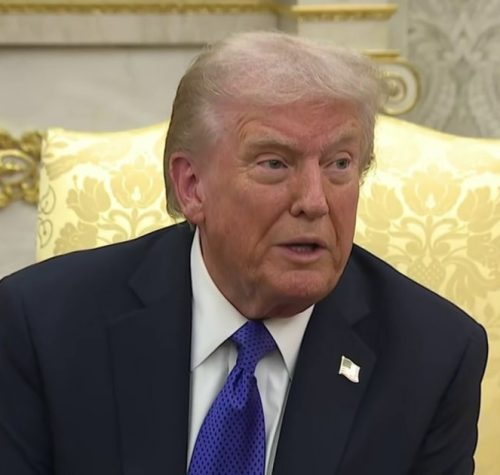
Zohran Mamdani and Andrew Cuomo clashed Wednesday in the final New York mayoral debate, which put on full display their personal animosity and their array of disagreements over both city.

TAGS: