20 views

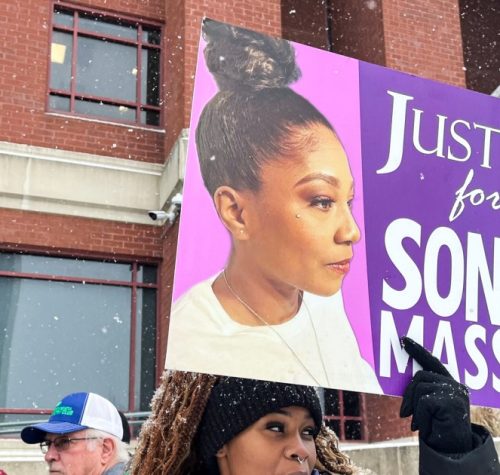
Oct. 22, 2025, 11:05 AM EDTBy Mirna Alsharif and Selina GuevaraLawyers gave their opening statements to a jury at the Peoria County Courthouse on Wednesday morning, officially kicking off the trial of a former Illinois deputy accused of fatally shooting Sonya Massey.Sean Grayson, 31, shot Massey, a 36-year-old Black mother of two, in June 2024 after she called authorities to her Springfield home about a possible prowler. The former Sangamon County sheriff’s deputy, who is white, said in a report written after the incident that he feared bodily harm because Massey was holding a pot of boiling water and said, “I rebuke you in the name of Jesus.”Nearly two weeks later, Grayson was fired and charged with first-degree murder, one count of aggravated battery and one count of official misconduct. He pleaded not guilty and was held in jail pending trial.On Tuesday, the aggravated battery and official misconduct charges were dropped at the request of the prosecutors with no objection from the defense, according to the court docket.Jury selection began Monday when a jury of 10 women and five men was selected. No cameras are allowed in the courtroom.John Milhiser, the state’s attorney for Sangamon County, said in his opening statement that Grayson did not turn on his body camera that night, which is part of a pattern of not following policies or training. He said Grayson shot Massey because he was angry. “It will be clear that the defendant, without lawful justification, in the home of Sonya Massey, the defendant shot and killed Sonya Massey because he was mad at her,” Milhiser told the court. Grayson’s attorney, Daniel L Fultz, said in his opening statement that evidence will show that the former deputy lawfully discharged his weapon and acted to protect his life. “He believed he would suffer great bodily harm or death,” he said. He said that Grayson had warned Massey to put down the pot of water before firing his weapon. “What happened to Ms. Massey was a tragedy, but it was not a crime,” Fultz said. Grayson appeared in court wearing a black suit and glasses. He sometimes rocked back and forth in his chair and glanced at the courtroom gallery, where media and members of Massey’s family were seated. Massey’s killing triggered a national response, igniting protests across the country. Protesters gathered outside the courthouse Monday to call for justice for Massey, who had mental health issues, according to her family.Her death raised new questions about U.S. law enforcement shootings of Black people in their homes and it prompted a change in Illinois law requiring fuller transparency on the background of candidates for law enforcement jobs.The trial is expected to last a week and a half.Mirna AlsharifMirna Alsharif is a breaking news reporter for NBC News.Selina GuevaraSelina Guevara is an NBC News associate producer, based in Chicago.Minyvonne Burke contributed.

Lawyers gave their opening statements to a jury at the Peoria County Courthouse on Wednesday morning, officially kicking off the trial of a former Illinois deputy accused of fatally shooting.

TAGS:
20 views

Oct. 22, 2025, 8:07 AM EDTBy Jason Abbruzzese and Corky SiemaszkoAmerican grandmaster Daniel Naroditsky’s death has sent shock waves through the professional chess world, with many top players blasting a Russian rival who accused him of cheating during online matches.They said Naroditsky, whose death at age 29 was reported Monday, was bullied relentlessly online by Russian former world champion Vladimir Kramnik, with some calling for Kramnik to be banned from the game.Kramnik, who has accused many players of cheating in online play, first voiced “concerns” about Naroditsky’s play last year, leading to an ongoing feud between the two players. Kramnik routinely posted online about Naroditsky, calling for an investigation into his play and at times appearing to threaten legal action against him.In an October 2024 interview, Naroditsky characterized Kramnik’s efforts as “a sustained, evil and absolutely unhinged attempt to destroy my life.”Others in the chess community said the accusations had taken their toll.”He said he was under immense stress due to a lot of baseless accusations — headed by Kramnik, of course,” Indian grandmaster Nihal Sarin, who said he was the last to play Naroditsky, told The Indian Express.”I can totally imagine the pain he was going through and it has been going on for a very long time,” he told the paper. Sarin did not immediately respond to an NBC News request for comment.

American grandmaster Daniel Naroditsky’s death has sent shock waves through the professional chess world, with many top players blasting a Russian rival who accused him of cheating during online matches
TAGS:
20 views

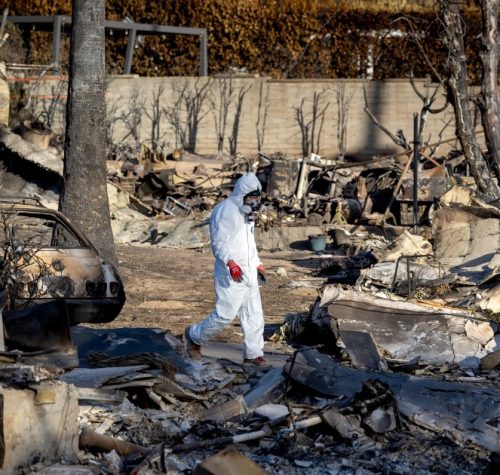
Savewith a NBCUniversal ProfileCreate your free profile or log in to save this articleOct. 22, 2025, 10:00 AM EDTBy Evan BushThe first half of this year was the costliest ever recorded for weather and climate disasters in the United States, according to an analysis published Wednesday by the nonprofit organization Climate Central.It is information that the public might never have learned: This spring, the Trump administration cut the National Oceanic and Atmospheric Administration program that had tracked weather events that caused at least $1 billion in damage. The researcher who led that work, Adam Smith, left NOAA over the decision. Climate Central, a research group focused on the effects of climate change, hired Smith to redevelop the database, which includes records back to 1980. According to the organization’s new analysis, 14 weather events exceeded $1 billion in damages in the first six months of 2025. The January wildfires in Los Angeles were, by far, the most expensive natural disaster so far this year — they caused more than $61 billion in damage. That also makes them the most expensive wildfire event on record.Suspect arrested in connection with deadly Palisades Fire02:09The findings show how the costs of weather and climate disasters continue to escalate as extreme weather grows more frequent and intense, and as populations spread into areas prone to costly destruction from wildfires and flooding. The report itself is also an example of the way nonprofit groups are increasingly taking over federal projects that once tracked and quantified the effects of climate change as the Trump administration makes cuts to climate science. President Donald Trump has called climate change a “con job.” His administration has cut funding for clean energy projects and is trying to remove the Environmental Protection Agency’s ability to regulate the greenhouse gas pollution that is causing global warming. Jennifer Brady, a senior data analyst and research manager at Climate Central who worked on the project, said the shuttering of NOAA’s billion-dollar disasters database upset staff at the nonprofit, who decided to take matters into their own hands. “This has always been one of our favorite datasets. It’s told so many different stories. It tells the climate change story. It tells the story of where people are living, how they’re living at risk,” Brady said. “We’re happy to bring it back.”Kim Doster, a NOAA spokesperson, said the agency “appreciates that the Billion Dollar Disaster Product has found a funding mechanism other than the taxpayer dime.”“NOAA will continue to refocus its resources on products that adhere to the President’s Executive Order restoring gold standard science, prioritizing sound, unbiased research,” Doster said in an email. The database was a politically polarizing project. House Republicans complained to NOAA’s administrator in 2024 about the program, voicing concerns about what they described as “deceptive data.” Last month, Senate Democrats introduced legislation that would require NOAA to publish the dataset and update it twice a year, saying that lawmakers used the reports to inform disaster funding decisions. But the bill remains in committee and stands little chance of passing in the Republican-controlled Senate.Last month, a Trump administration official told NBC News that NOAA had ended the database project because of uncertainties in how it estimated the costs of disasters. The official said that the project cost about $300,000 annually, that it required substantial staff hours and that the data “serves no decisional purpose and remains purely informational at best.”“This data is often used to advance the narrative that climate change is making disasters more frequent, more extreme, and more costly, without taking into account other factors such as increased development on flood plains or other weather-impacted spots or the cyclical nature of the climate in various regions,” the official said at the time.Brady, however, said the database has always acknowledged changes in population and climate variability as important factors in the cost of disasters. Climate Central’s work uses the same methodology and data sources that NOAA’s database did, she said. Those sources include National Flood Insurance Program claims, NOAA storm events data and private property insurance data, among others. The analysis captures the “direct costs” of disasters, such as damage to buildings, infrastructure and crops. It doesn’t factor other considerations, including loss of life, health-related costs of disasters or the economic losses to “natural capital” such as forests or wetlands. The data is adjusted to account for inflation. The new analysis of the first half of 2025 indicates that this year is on pace to be one of the costliest on record, even though no hurricanes have made landfall in the continental U.S.Last year, NOAA counted 27 billion-dollar disasters, with costs that totaled about $182.7 billion. That was the second highest number of billion-dollar disasters in the report’s history, after 2023. Climate Central is not the only group stepping in to re-create work the federal government used to do as the Trump administration makes cuts to climate science.A group of staffers laid off from NOAA has launched climate.us, a nonprofit successor to climate.gov, a federal website that once provided data and analysis to explain climate issues to the broader public. The site went dark this summer. Rebecca Lindsey, who edited climate.gov before she was laid off in February, said she and the other NOAA employees who co-founded the nonprofit have raised about $160,000. They plan to host the climate.gov archives on the new site and start publishing new articles about climate change in the next few weeks. “We’re rescuing this information and making sure when people need answers about what’s happening with the climate, they’ll be able to find them,” Lindsey said.The American Geophysical Union and American Meteorological Society also announced that they plan to publish a special collection of research focused on climate change, after the Trump administration told scientists volunteering to work on the National Climate Assessment — a comprehensive synthesis of research about climate change and its effects in the U.S. — that they were no longer needed. The administration laid off staffers in the U.S. Global Change Research Program, which organized the National Climate Assessment and coordinated climate research programs across different federal agencies. Walter Robinson, publications commissioner for the American Meteorological Society, said the National Climate Assessment had been “effectively canceled” by the administration’s decisions, which he viewed as an “abrogation” of the federal government’s responsibility. The new collection can’t replace the assessment, he added, but it aims to organize the latest science on the effects of climate change in the U.S. in one place. The research will be released across several scientific journals on a rolling basis. “People are stepping in,” Robinson said of his group’s efforts. “As scientists, we do what we can.” Evan BushEvan Bush is a science reporter for NBC News.

The first half of 2025 was the most costly ever recorded for weather disasters, according to a new report. NOAA used to track this data, but the Trump administration cut.

TAGS: