10 views

Nov. 25, 2025, 8:34 PM ESTBy Dan De Luce, Courtney Kube and Abigail WilliamsIn a meeting with Ukrainian officials in Kyiv last week, U.S. Army Secretary Dan Driscoll delivered a grim assessment. Driscoll told his counterparts their troops faced a dire situation on the battlefield and would suffer an imminent defeat against Russian forces, two sources with knowledge of the matter told NBC News.The Russians were ramping up the scale and pace of their aerial attacks, and they had the ability to fight on indefinitely, Driscoll told them, according to the sources. The situation for Ukraine would only get worse over time, he continued, and it was better to negotiate a peace settlement now rather than end up in an even weaker position in the future.And there was more bad news. The U.S. delegation also said America’s defense industry could not keep supplying Ukraine with the weapons and air defenses at the rate needed to protect the country’s infrastructure and population, the sources said.Driscoll’s message came after he had presented a U.S.-backed peace plan that Kyiv officials viewed as a capitulation to Moscow, according to the two sources.“The message was basically — you are losing,” one of the sources said, “and you need to accept the deal.”The meeting between Driscoll and the Ukrainians was part of an effort by some Trump administration officials to press the Ukrainians to accept the new U.S.-backed peace proposal without delay, even though it embraced Russia’s maximalist demands and required painful concessions from Kyiv’s government, multiple current and former Western officials said. Ukraine politely declined to sign on to the peace plan as it was presented, and the proposal has been heavily revised since the discussions between Driscoll and Ukrainian officials last week.The meeting was just the latest example of a long-running rift inside the Trump administration over how to end the war in Ukraine. The split features a looming potential political rivalry between two former senators and potential presidential hopefuls positioning themselves for 2028: Vice President JD Vance and Secretary of State Marco Rubio.One camp, including Vance, special envoy Steve Witkoff and other officials, views Ukraine as the primary obstacle to peace and favors using U.S. leverage to force Kyiv to make major compromises, according to multiple current and former officials. The other camp, represented by Rubio and other officials, sees Russia as the culprit for having launched an unprovoked invasion of its neighbor and says Moscow will relent only if it pays a price for its aggression through sanctions and other pressure.With his deputies vying for his attention along with Republican lawmakers and European leaders, President Donald Trump has veered back and forth on how to resolve the conflict. “It was clear for some time that there was a divide, but we’ve never seen it in action publicly quite the way we have in the last few days,” said a former senior U.S. diplomat with experience in Eastern Europe. Ukrainian servicemen fire a Caesar self-propelled howitzer toward Russian troops near the front-line town of Pokrovsk in the Donetsk region of Ukraine on Sunday. Anatolii Stepanov / ReutersReached for comment Tuesday, the White House referred to a social media post in which Trump said the original peace plan has been “fine-tuned, with additional input from both sides, and there are only a few remaining points of disagreement.”“I look forward to hopefully meeting with President Zelenskyy and President Putin soon, but ONLY when the deal to end this War is FINAL or, in its final stages,” Trump added in the post. A State Department spokesperson said, “President Trump’s entire team, including Secretary Rubio, Special Envoy Witkoff, Secretary Driscoll, and many others, are working in lockstep, as they have been for 10 months, to bring an end to the senseless and destructive war.”The Ukrainian Embassy in Washington did not respond to a request for comment.Grave doubtsThe frenetic diplomacy began last week after a purported 28-point U.S. peace plan leaked to the media. The plan was the product of discussions in Miami between Russian President Vladimir Putin’s envoy, Kirill Dmitriev, and his U.S. counterpart, Witkoff, according to two sources with knowledge of the meeting. White House officials told reporters it was an American proposal, even though the document embraced Russia’s repeated demands to force Ukraine to cede territory it controls, scale back its military and give up ever joining the NATO alliance. Some elements of the plan contradicted the Trump administration’s previously stated positions, including language that implied U.S. military forces would be barred from Poland. Republican and Democratic senators said Rubio had told them it was a plan drafted by the Russians. But Rubio later said their account was false, and he and the White House later insisted it was a U.S. proposal with Russian and Ukrainian “input.” In an unusual move, the White House chose Driscoll, the Army secretary, to brief the Ukrainians on the proposal, instead of a senior diplomat. Driscoll, an old Yale Law School classmate of Vance’s, was headed to Ukraine on a previously scheduled visit to discuss drone technology, NBC News previously reported. Taken aback by the peace proposal’s terms, Ukrainian President Volodymyr Zelenskyy expressed grave doubts but stopped short of vetoing the plan, saying his government was ready to hold diplomatic discussions. Rubio used cautious language about the plan after it leaked, posting on X that peace would “require both sides to agree to difficult but necessary concessions” and that the United States would “continue to develop a list of potential ideas for ending this war.”Trump, meanwhile, ramped up pressure on Ukraine, telling reporters that Zelenskyy’s choice was to accept a peace deal or “continue to fight his little heart out.”Andriy Yermak, chief of staff the Ukrainian presidential office, and Secretary of State Marco Rubio at a news conference after their closed-door talks at the U.S. Mission in Geneva on Sunday.Fabrice Coffrini / AFP via Getty ImagesRubio flew to Geneva over the weekend, and after talks with the Ukrainians and appeals from European diplomats, the most problematic provisions for Ukraine were removed or revised, according to multiple Western officials and sources with knowledge of the matter. Instead of the take-it-or-leave-it tone White House officials used about the peace plan earlier, Rubio portrayed the discussions as fluid and said the plan was rapidly evolving. “This is a living, breathing document. Every day with input it changes,” he told reporters in Geneva.By Tuesday, the Ukrainians had struck a positive note, expressing optimism about what was now a 19-point plan under discussion. “Our delegations reached a common understanding on the core terms of the agreement discussed in Geneva,” Rustem Umerov, secretary of Ukraine’s national security and defense council, wrote on social media. And he raised the prospect of a possible visit to Washington by Zelenskyy to seal the deal.Driscoll traveled on to Abu Dhabi, where he held talks with a Russian delegation Monday and Tuesday, officials said.With the peace plan revised from its original form, it resembled previous proposals that Russia has rebuffed. Lavrov, the Russian foreign minister, who had “welcomed” the initial draft from last week, suggested Tuesday that the Kremlin might reject what was now on the table. Lavrov cited discussions in August between Trump and Putin at a summit in Anchorage, Alaska, saying the latest draft proposal appeared to contradict the understanding reached in those talks.“Some forces want to jeopardize efforts by Donald Trump and to change the peace plan,” Lavrov said, adding, “If the ‘spirit’ of Anchorage will be wiped out from this plan, then it’s going to be a whole other story.”As in previous U.S. diplomatic efforts, one faction in the administration had tried to champion a proposal that favored Russia and other officials had pushed back, with the backing of European governments and senior Republicans in Congress, according to Western officials, former U.S. diplomats and experts.“If the split lasts, it’s going to be very difficult to pursue a coherent policy,” said William Taylor, a former ambassador to Ukraine who is now a fellow at the Atlantic Council think tank. Dan De LuceDan De Luce is a reporter for the NBC News Investigative Unit. Courtney KubeCourtney Kube is a correspondent covering national security and the military for the NBC News Investigative Unit.Abigail WilliamsAbigail Williams is a producer and reporter for NBC News covering the State Department.Gordon Lubold and Peter Nicholas contributed.

The meeting between Army secretary Dan Driscoll and the Ukrainians was the latest example of the rift inside the Trump administration about how to end the war.

Source link

TAGS:
8 views

Nov. 25, 2025, 6:33 PM ESTBy Berkeley Lovelace Jr.The Centers for Medicare and Medicaid Services on Tuesday announced lower prices on 15 costly prescription drugs under Medicare, including Ozempic and Wegovy. The price cuts come through the Medicare drug price negotiation program created under the Inflation Reduction Act, which President Joe Biden signed into law in 2022. It’s different from President Donald Trump’s “most favored nation” drug pricing approach, which relies on executive orders and voluntary deals with drugmakers — not legislation. Trump recently announced such a deal with Novo Nordisk, the maker of Ozempic and Wegovy, to lower the price of the drugs in exchange for tariff relief.The Trump administration has been largely quiet about the Medicare price negotiation program.This is the second round of negotiations. Last year, the Biden administration reached deals on 10 prescription drugs, including several for heart disease and diabetes. Those price cuts are set to take effect in 2026. This latest round of price negotiations will go into effect in 2027.“President Trump directed us to stop at nothing to lower health care costs for the American people,” Health and Human Services Secretary Robert F. Kennedy Jr. said in a news release. “As we work to Make America Healthy Again, we will use every tool at our disposal to deliver affordable health care to seniors.” Drugmakers can choose not to strike deals under the negotiation program, but doing so would most likely mean withdrawing their drugs from Medicare — cutting them off from one of the nation’s largest markets. Drugmakers have challenged the program in court but so far have been unsuccessful. The negotiated prices are what Medicare will pay drugmakers for the medicines, not what patients will pay out of pocket. Those discounts will save taxpayers $12 billion, according to CMS. It’s expected to save Medicare enrollees $685 million in out-of-pocket costs in 2027. Here are the negotiated prices for the drugs, based on a 30-day supply, compared to the 2024 list price:Ozempic, Rybelsus and Wegovy, for Type 2 diabetes and weight loss: $274 negotiated price, down from the $959 list price. (Negotiated prices for higher doses of Wegovy are $385.)Trelegy Ellipta, an asthma treatment: $175, down from $654.Xtandi, for prostate cancer: $7,004, down from $13,480.Pomalyst, a chemotherapy drug: $8,650, down from $21,744.Ofev, for idiopathic pulmonary fibrosis: $6,350, down from $12,622.Ibrance, a breast cancer drug: $7,871, down from $15,741.Linzess, a chronic constipation drug: $136, down from $539.Calquence, a cancer drug: $8,600, down from $14,228.Austedo and Austedo XR, for Huntington’s disease: $4,093, down from $6,623.Breo Ellipta, a COPD drug: $67, down from $397.Xifaxan, for diarrhea and irritable bowel syndrome: $1,000, down from $2,696.Vraylar, an antipsychotic drug: $770, down from $1,376.Tradjenta, a diabetes drug: $78, down from $488. Janumet and Janumet XR, diabetes drugs: $80, down from $526.Otezla, a psoriatic arthritis drug: $1,650, down from $4,722.The 15 drugs accounted for $42.5 billion, or 15%, of total Medicare Part D spending in 2024. Medicare Part D covers medications that people take at home, as opposed to those administered in a facility, such as IV chemotherapy. “The price negotiations look very reasonable to me,” said Stacie Dusetzina, a health policy professor at Vanderbilt University in Nashville, Tennessee. “It should hopefully provide some relief for taxpayers and beneficiaries in the long run.” Dusetzina said the $274 negotiated price for Ozempic and Wegovy is higher than the $250 price in Trump’s deal. “They should’ve gotten that deal for the taxpayers and the Medicare beneficiaries,” she said.The price cuts come as many Americans say the cost of prescription drugs is unaffordable.About 1 in 5 adults say they’ve skipped filling a prescription because it was too expensive, according to a survey published in July by health policy research group KFF. About 1 in 7 say they have cut pills in half or skipped doses of medicine in the last year because of the cost. Berkeley Lovelace Jr.Berkeley Lovelace Jr. is a health and medical reporter for NBC News. He covers the Food and Drug Administration, with a special focus on Covid vaccines, prescription drug pricing and health care. He previously covered the biotech and pharmaceutical industry with CNBC.

The Centers for Medicare and Medicaid Services on Tuesday announced lower prices on 15 costly prescription drugs under Medicare, including Ozempic and Wegovy.

Source link

TAGS:
10 views

Nov. 25, 2025, 6:39 PM ESTBy Angela YangWarning: This article includes descriptions of self-harm.After a family sued OpenAI saying their teenager used ChatGPT as his “suicide coach,” the company responded on Tuesday saying it is not liable for his death, arguing that the boy misused the chatbot.The legal response, filed in California Superior Court in San Francisco, is OpenAI’s first answer to a lawsuit that sparked widespread concern over the potential mental health harms that chatbots can pose. In August, the parents of 16-year-old Adam Raine sued OpenAI and its CEO Sam Altman, accusing the company behind ChatGPT of wrongful death, design defects and failure to warn of risks associated with the chatbot.Chat logs in the lawsuit showed that GPT-4o — a version of ChatGPT known for being especially affirming and sycophantic — actively discouraged him from seeking mental health help, offered to help him write a suicide note and even advised him on his noose setup.“To the extent that any ‘cause’ can be attributed to this tragic event,” OpenAI argued in its court filing, “Plaintiffs’ alleged injuries and harm were caused or contributed to, directly and proximately, in whole or in part, by Adam Raine’s misuse, unauthorized use, unintended use, unforeseeable use, and/or improper use of ChatGPT.”Family sues OpenAI over son’s suicide03:41The company cited several rules within its terms of use that Raine appeared to have violated: Users under 18 years old are prohibited from using ChatGPT without consent from a parent or guardian. Users are also forbidden from using ChatGPT for “suicide” or “self-harm,” and from bypassing any of ChatGPT’s protective measures or safety mitigations.When Raine shared his suicidal ideations with ChatGPT, the bot did issue multiple messages containing the suicide hotline number, according to his family’s lawsuit. But his parents said their son would easily bypass the warnings by supplying seemingly harmless reasons for his queries, including by pretending he was just “building a character.”OpenAI’s new filing in the case also highlighted the “Limitation of liability” provision in its terms of use, which has users acknowledge that their use of ChatGPT is “at your sole risk and you will not rely on output as a sole source of truth or factual information.”Jay Edelson, the Raine family’s lead counsel, wrote in an email statement that OpenAI’s response is “disturbing.”“They abjectly ignore all of the damning facts we have put forward: how GPT-4o was rushed to market without full testing. That OpenAI twice changed its Model Spec to require ChatGPT to engage in self-harm discussions. That ChatGPT counseled Adam away from telling his parents about his suicidal ideation and actively helped him plan a ‘beautiful suicide.’ And OpenAI and Sam Altman have no explanation for the last hours of Adam’s life, when ChatGPT gave him a pep talk and then offered to write a suicide note,” Edelson wrote.(The Raine family’s lawsuit claimed that OpenAI’s “Model Spec,” the technical rulebook governing ChatGPT’s behavior, had commanded GPT-4o to refuse self-harm requests and provide crisis resources, but also required the bot to “assume best intentions” and refrain from asking users to clarify their intent.)Edelson added that OpenAI instead “tries to find fault in everyone else, including, amazingly, saying that Adam himself violated its terms and conditions by engaging with ChatGPT in the very way it was programmed to act.”OpenAI’s court filing argued that the harms in this case were at least partly caused by Raine’s “failure to heed warnings, obtain help, or otherwise exercise reasonable care,” as well as the “failure of others to respond to his obvious signs of distress.” It also shared that ChatGPT provided responses directing the teenager to seek help more than 100 times before his death on April 11, but that he attempted to circumvent those guardrails.“A full reading of his chat history shows that his death, while devastating, was not caused by ChatGPT,” the filing stated. “Adam stated that for several years before he ever used ChatGPT, he exhibited multiple significant risk factors for self-harm, including, among others, recurring suicidal thoughts and ideations.”Earlier this month, seven additional lawsuits were filed against OpenAI and Altman, similarly alleging negligence, wrongful death, as well as a variety of product liability and consumer protection claims. The suits accuse OpenAI of releasing GPT-4o, the same model Raine was using, without adequate attention to safety. OpenAI has not directly responded to the additional cases.In a new blog post Tuesday, OpenAI shared that the company aims to handle such litigation with “care, transparency, and respect.” It added, however, that its response to Raine’s lawsuit included “difficult facts about Adam’s mental health and life circumstances.”“The original complaint included selective portions of his chats that require more context, which we have provided in our response,” the post stated. “We have limited the amount of sensitive evidence that we’ve publicly cited in this filing, and submitted the chat transcripts themselves to the court under seal.”The post further highlighted OpenAI’s continued attempts to add more safeguards in the months following Raine’s death, including recently introduced parental control tools and an expert council to advise the company on guardrails and model behaviors.The company’s court filing also defended its rollout of GPT-4o, stating that the model passed thorough mental health testing before release.OpenAI additionally argued that the Raine family’s claims are barred by Section 230 of the Communications Decency Act, a statute that has largely shielded tech platforms from suits that aim to hold them responsible for the content found on their platforms.But Section 230’s application to AI platforms remains uncertain, and attorneys have recently made inroads with creative legal tactics in consumer cases targeting tech companies.If you or someone you know is in crisis, call or text 988 to reach the Suicide and Crisis Lifeline or chat live at 988lifeline.org. You can also visit SpeakingOfSuicide.com/resources for additional support.Angela YangAngela Yang is a culture and trends reporter for NBC News.

Warning: This article includes descriptions of self-harm

Source link

TAGS:
10 views

Nov. 25, 2025, 6:00 PM ESTBy Denise ChowListen to this article with a free account00:0000:00Few things in the universe are as perplexing as dark matter — the invisible and exotic “stuff” that is thought to make up most of the matter in galaxies. The theory goes like this: To reconcile our current understanding of physics with what we observe in the cosmos, there must be massive amounts of matter that we can’t see. Scientists are sure that this “missing matter” exists because of the gravitational effects it exerts, but detecting it firsthand has eluded scientists, who have had to indirectly infer how dark matter occupies the universe.Nearly a century after dark matter was first theorized, a Japanese astrophysicist says he may have found the first direct evidence of its existence — gamma rays extending out in a halo-like pattern — in a region near the center of our Milky Way galaxy.“I’m so excited, of course!” study author Tomonori Totani, a professor in the astronomy department at the University of Tokyo, told NBC News in an email. “Although the research began with the aim of detecting dark matter, I thought the chances of success were like winning the lottery.”Totani’s claim of detecting dark matter for the first time is an extraordinary one that not all experts are convinced of. But the findings, published Tuesday in the Journal of Cosmology and Astroparticle Physics, offer insights into the wild hunt for dark matter and the difficulties of searching the cosmos for something that cannot be seen.Dark matter is thought to make up about 27% of the universe, while ordinary matter — people, everyday objects, stars and planets, for instance — only makes up about 5%, according to NASA. (The rest is made up of an equally mysterious component known as dark energy.)Totani’s study used observations from NASA’s Fermi Gamma-ray Space Telescope aimed near the heart of the Milky Way. The telescope is designed to pick up a type of intense electromagnetic radiation known as gamma rays. Dark matter was first proposed in the 1930s by Swiss astronomer Fritz Zwicky, who stumbled on an anomaly while measuring the mass and movement of galaxies in the large Coma Cluster of galaxies. The galaxies moved too quickly for his calculations, and instead of escaping the cluster, they were somehow being held together.The resulting theories proposed a truly strange form of matter. Dark matter cannot be seen because it does not emit, absorb or reflect light. However, because it theoretically has mass and occupies physical space in the cosmos, its existence can be inferred based on its gravitational effects throughout the universe.Different models exist to potentially explain dark matter, but scientists think the mysterious material is made up of exotic particles that behave differently from regular matter that we’re all familiar with.One popular school of thought suggests that dark matter is made up of hypothetical particles known as WIMPs (short for “weakly interacting massive particles”) that interact very little with ordinary matter. When two WIMPs collide, however, they could annihilate each other and unleash powerful gamma rays.In his research, Totani, an astronomer and astrophysicist, discovered intense gamma-ray emissions that he said were roughly equivalent to one-millionth the brightness of the entire Milky Way. The gamma rays also appeared to be spread out in a halo-like structure across a large region of the sky. If instead the emissions were concentrated from a single source, it might suggest a black hole, star or some other cosmic object was to blame for the gamma rays, rather than diffuse dark matter. Gamma-ray intensity map spanning approximately 100 degrees in the direction of the galactic center. The horizontal gray bar in the central region corresponds to the galactic plane area, which was excluded from the analysis to avoid strong astrophysical radiation.Tomonori Totani / The University of Tokyo“To my knowledge, no phenomenon originating from cosmic rays or stars exhibits a spherically symmetric and the unique energy spectrum like the one observed in this case,” Totani said.But some scientists who were not involved with the study were skeptical of the findings.David Kaplan, a professor in the department of physics and astronomy at Johns Hopkins University, said it’s difficult to trace emissions back to dark matter particles with any certainty because too much is still unknown about gamma rays.“We don’t even know all the things that can produce gamma rays in the universe,” Kaplan said, adding that these high-energy emissions could also be produced by fast-spinning neutron stars or black holes that gobble up regular matter and spit out violent jets of material.As such, even when unusual gamma-ray emissions are detected, it’s often hard to draw meaningful conclusions, according to Eric Charles, a staff scientist at Stanford University’s SLAC National Accelerator Laboratory.“There’s a lot of details we don’t understand,” he said, “and seeing a lot of gamma rays from a large part of the sky associated with the galaxy — it’s just really hard to interpret what’s going on there.”Dillon Brout, an assistant professor in the departments of astronomy and physics at Boston University, said the gamma-ray signals and halo-like structure described in the study are in a region of the sky “that is genuinely the hardest to model.”“So, any claims have to be treated with great caution,” Brout told NBC News in an email. “And, of course, extraordinary claims require extraordinary evidence.”Kaplan called the study “interesting” and “worth following,” but said he isn’t totally convinced that follow-up analyses will confirm the findings. But he is hopeful that scientists will directly confirm dark matter’s existence in the future.“It would be a total game changer, because it really is something that seems to dominate the universe,” he said. “It explains the formation of galaxies and therefore of stars and planets and us, and it’s a key part of our understanding of how the universe formed.”Totani himself said additional study is needed to prove or disprove his claim.“If correct, the results would be too impactful, so researchers in the community will carefully examine its validity,” he said. “I am confident in my findings, but I hope that other independent researchers will replicate these results.”Denise ChowDenise Chow is a science and space reporter for NBC News.

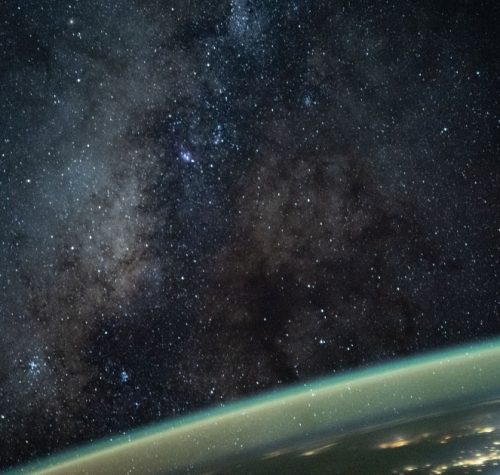
Few things in the universe are as perplexing as dark matter — the invisible and exotic “stuff” that is thought to make up most of the matter in galaxies.

Source.

TAGS: