11 views

Savewith a NBCUniversal ProfileCreate your free profile or log in to save this articleNov. 24, 2025, 5:00 AM ESTBy Brian CheungIn June, President Donald Trump’s two older sons held an event at Trump Tower where they touted a new made-in-the-USA mobile phone with an American flag on its back, plus a new wireless service called Trump Mobile.The phone was announced on the 10th anniversary of Trump’s presidential campaign launch and was the Trump brand’s first foray into mobile products and services. According to the initial announcement, the phone was supposed to be released in August.But three months later, there are no signs that the phone has become a reality.NBC News placed an order for a T1 phone in August, paying the $100 deposit for the purposes of tracking the $499 phone’s development.After confirming with the credit card company that the transaction was not fraudulent, NBC News received a confirmation email verifying the order.But the company provided no proactive updates after the order. NBC News made five separate phone calls to the Trump Mobile customer support line between September and November. At one point in October, the call operator promised a specific ship date: Nov. 13.That date passed without an update, and when NBC News followed up with the call center, an operator said the delivery would now be in the “beginning of December,” with no specific date.The operator cited the government shutdown as a reason for the delay, without further explanation.Trump Mobile launched the T1 phone in tandem with a number of phone service offerings, including a 5G service plan priced at $47.45 per month — a nod to the president’s terms. In addition to unlimited talk, text and data, the plan promised “telehealth services, including virtual medical care.”But since the original announcement, plans appear to be in flux. Quiet edits to the Trump Mobile website suggest that details around the phone’s design and production may have changed since it was announced.The Trump Mobile website has scrubbed any mention of a specific release month, but continues to collect $100 down payments on the promise of availability “later this year.”Neither Trump Mobile nor the Trump Organization responded to NBC News’ multiple requests for comment on when the phone would be released and why it’s delayed.When the company announced the phone in June, photos on the website promised a phone featuring an iPhone-like cluster of three cameras on its back.But in August, Trump Mobile’s X account posted, “The wait is almost over!” The post featured a photo of a supposed T1 phone with a completely different design, including more than three rear cameras.The Verge reported that the phone appeared to be a render of a Samsung Galaxy S25 Ultra. When phone case company Spigen noticed that the photo appeared to be a doctored image of a Samsung in one of its cases, the company suggested it would sue.NBC News has not been able to identify any lawsuit from Spigen, and the company has not responded to repeated requests for comment.In late June, the same month the phone was announced, the website removed any mention of “Made in the USA,” as was originally promised.Instead, the website now says the phone is “brought to life right here in the USA. With American hands behind every device,” and that the phone has “American-proud design.”The T1 phone has been met with skepticism since its unveiling. Smartphone industry insiders have suggested it’s nearly impossible to manufacture a “Made in the USA” smartphone on as quick a timeline as Trump Mobile has promised, and without some Chinese involvement.Todd Weaver, the founder and CEO of Purism, a Carlsbad, California-based company that manufactures the only U.S.-made smartphone on the market, said that when his company started, there was “no skilled labor” in the U.S. capable of manufacturing a phone, and “nobody [had] done it before.”He said that creating a chain of production that would allow for a made-in-the-USA label was time and labor-intensive.“We actually had to go over to China with our designs, to learn the process, the manufacturing process, to see what are all the steps,” Weaver said. He said it took him six years to take his Liberty Phone from idea to production, which Purism sells at a $2,000 price point.And even then, Liberty Phone isn’t entirely American-sourced, even if it is branded as “Made in the USA electronics.” Most of its materials come from the United States, Canada or Europe. Other parts like the chassis are made in different countries, including China and India, according to the company. While Trump Mobile customers wait for the T1, the company is offering other phones for sale, including refurbished iPhones (which are primarily produced in China) and devices from Samsung, a Korean company. Trump Mobile says that both devices are “brought to life right here in the USA.”Brian CheungBrian Cheung is a business and data correspondent for NBC News.Maya Huter contributed.

Trump Mobile has posted conflicting photos of the phone and scrubbed mention of its “Made in the USA” promise.

Source link

TAGS:
10 views

Nov. 24, 2025, 5:00 AM ESTBy Lindsey LeakeAs you age, you gradually lose muscle mass and gain visceral body fat, a type of fat deep inside your body that surrounds your heart, kidneys and other organs. Now, scientists say the ratio of visceral fat to muscle can uncover clues about your brain health.People with higher muscle mass and a lower visceral fat-to-muscle ratio tend to have younger brains, according to research being presented next week at the annual meeting of the Radiological Society of North America.“We know that the age of a person, in terms of their appearance, might not match with their chronological age,” said senior study author Dr. Cyrus Raji. “Turns out, the age of their organs might not match their chronological age either.”One reason the findings are so important is because chronological age — and therefore an aging brain — is “by far” the top risk factor for developing Alzheimer’s disease and other forms of dementia, said Raji, an associate professor of radiology and neurology at the Mallinckrodt Institute of Radiology at the Washington University School of Medicine in St. Louis.“Risk of disease crosses organ systems,” Raji said. “Disease doesn’t just neatly respect the anatomical boundaries of one organ system.”Previous research, including Raji’s own, has studied the relationship between visceral fat and health outcomes such as brain volume loss, cognitive impairment and structural changes in the brain.The study involved 1,164 healthy people whose average chronological age was 55.17. About 52% were women and 39% were nonwhite. All underwent a whole-body MRI that looked at brain, fat and muscle tissue.To determine participants’ brain age, Raji and his colleagues used an algorithm that had been trained on the MRI scans of 5,500 healthy adults ages 18 to 89. The average brain age of study participants was 56.04 — older than their average chronological age. Researchers called this difference the “brain age gap.”The average brain age gap was 0.69 years, meaning participants’ brains looked slightly older than they should. However, this metric was not statistically significant.Just as higher muscle mass and a lower visceral fat-to-muscle ratio corresponded to a younger brain age, lower muscle mass and a higher visceral fat-to-muscle ratio corresponded to an older brain age.This link between body fat and brain age only held true for visceral fat, which is also known as hidden fat, active fat or deep belly fat. Subcutaneous fat, the layer of fat just below the skin’s surface, wasn’t associated with brain age, the study found.“Visceral fat, which is the really terrible fat, [is] linked to a higher rate of diabetes, insulin resistance, prediabetic states, high cholesterol,” Raji said. “That leads to a higher inflammatory state in the body, which over time affects the brain. That’s the main mechanism by which we believe obesity can affect risk for Alzheimer’s disease.”BMI reveals little of body compositionFrom a clinical perspective, the study results are on par with what Dr. Zhenqi Liu, the James M. Moss professor of diabetes at the University of Virginia School of Medicine, would expect.“When people are very young and healthy, they tend to have more muscle mass and they will have [a] younger brain age,” said Liu, who wasn’t involved in the research.Older adults, on the other hand, especially those living with chronic diseases such as diabetes or obesity, usually have lower muscle mass, Liu added. “I wouldn’t be surprised if their brain volume is decreased.”Even so, the study reinforces that muscle health is vital to overall health, Liu said.The limitations of body mass index, or BMI, as a measure of health are also on display in this research, Liu said. BMI is a standardized, nearly 200-year-old body fat metric calculated using your height and weight. But it’s fallen out of favor in recent years, namely because it doesn’t take into account how your fat — neither visceral nor subcutaneous — is distributed throughout your body.A BMI of 30 or higher falls into the obese category. For Raji, his latest work demonstrates how a low BMI could disguise poor brain health.“If you have more visceral fat and less muscle, you can have an older-looking brain,” Raji said. “That makes sense in terms of Alzheimer’s being a big risk factor — regardless of whatever the BMI would show.”Liu favors two other approaches to assessing body composition. The first is waist circumference. Measurements beyond 35 inches for women or 40 inches for men increase your risk of heart disease and Type 2 diabetes, according to the National Heart, Lung, and Blood Institute. The second metric is the waist-hip ratio, which involves dividing your waist circumference by your hip circumference. According to the World Health Organization, this ratio shouldn’t exceed 0.85 for women or 0.9 for men.Still, you can’t accurately measure your own visceral fat unless your doctor refers you for an MRI, which can assess the amount of fat under the skin and surrounding the organs. An elective full-body scan can cost up to $5,000.The good news is, there are steps you can take to increase muscle mass and lower visceral fat without spending a dime.How to build muscle and burn visceral fatIf it’s been ages since you’ve touched a dumbbell or gone for a long walk, fear not, said Siddhartha Angadi, a colleague of Liu’s and an associate professor of kinesiology at UVA’s School of Education and Human Development.“Anyone can exercise — regardless of their age,” said Angadi, who wasn’t involved in the research. “There’s excellent data across the lifespan, across the health span, across multiple diseases showing that exercise is incredibly safe.”Angadi recommends following the American College of Sports Medicine’s physical activity guidelines. At least twice a week, healthy adults 65 and younger are encouraged to do muscle-strengthening activities that work all major muscle groups.“Do 10 to 15 different exercises,” Angadi said. “You want to do one to three sets; in each set, you want to have eight to 12 reps. Use machines if you’re not familiar with resistance training, which is a fancy way of saying weightlifting.”Aerobic exercise is particularly effective at targeting visceral fat, Angadi said. The guidelines suggest 150 minutes of moderately intense aerobic activity every week.“There’s nothing that can reverse brain aging,” Angadi said. “You can just slow the rate of it.”Glenn Gaesser, a professor of exercise physiology at the Arizona State University College of Health Solutions, said baby steps can help build muscle and burn visceral fat.“A lot of people think that it takes a lot to produce some sort of health benefit from exercise, and that is not necessarily true,” said Gaesser, who wasn’t part of the study. “The biggest return on investment is with the initial few minutes of exercise.”For example, if you’re striving for the recommended 150 minutes of aerobics per week, your body will benefit most in those first 30 minutes, Gaesser said.“Same with resistance training,” Gaesser said. “A lot of people may not want a gym membership, they may not want to go and lift weights, but you can do resistance training even with the weight of your own body.”While Raji’s research doesn’t conclude that higher muscle mass and a lower visceral fat-to-muscle ratio guarantee better brain health, it spotlights the relationship between the brain and the musculoskeletal system, Gaesser said. When you work out, your muscles release chemical signals thought to positively influence the brain and other tissues.“This is why individuals who perform regular exercise tend to have lower risk of cognitive decline, dementia, Alzheimer’s and the like,” Gaesser said. “If you want a healthy brain, you need to have healthy muscle.”Gaesser added, “It’s not surprising that the single best predictor of whether or not you’re going to spend the last years of your life in a nursing home or assisted living is fitness.”Strength training crucial for healthy weight lossIn October, Michael Snyder turned 70, an age when muscle mass and strength are naturally in decline. He’s also taking a GLP-1 medication to help maintain a healthy weight.As GLP-1 usage has surged in recent years, so too has awareness of the decline in muscle mass that can accompany significant weight loss, said Snyder, the Stanford W. Ascherman professor of genetics at the Stanford University School of Medicine, who wasn’t part of the study.“If you’re on [GLP-1s], you should be strength training,” Snyder said. “I lift weights every day.”Dr. David D’Alessio, chief of the division of endocrinology, metabolism and nutrition at the Duke University School of Medicine, stressed that muscle loss isn’t unique to people taking GLP-1s.“If you lose weight by restricting calories — that is, going on a diet — or if you lose weight by bariatric surgery, or if you lose weight by taking Ozempic, you’re going to lose some fat mass and some lean mass,” said D’Alessio, who wasn’t involved in the study. “It’s going to be about 30% lean, 70% fat. About half of lean mass on these measures is muscle.”Even for people who aren’t trying to lose weight, strong muscles are necessary for a long, healthy life, Snyder said.“There’s a ton of interest in longevity these days,” Snyder said. “Everybody wants to live forever, and to do that, you’re going to want to keep your mass up.”Lindsey LeakeLindsey Leake is an award-winning health journalist and contributor to NBC News. She holds an M.A. in science writing from Johns Hopkins University, an M.A. in journalism and digital storytelling from American University and a B.A. from Princeton University.

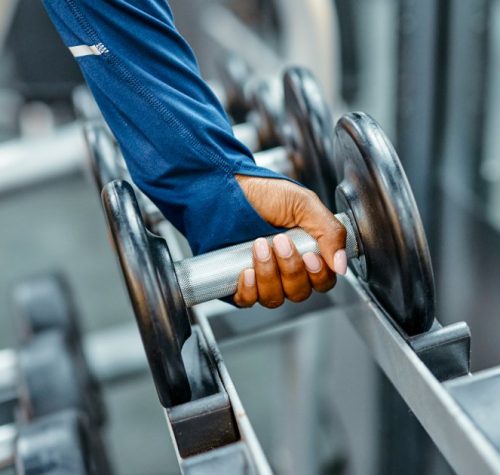
As you age, you lose muscle and gain visceral fat around your organs. Scientists say your visceral fat to muscle ratio may reveal clues about brain health.

Source link

TAGS:
8 views

Nov. 23, 2025, 10:33 AM EST / Updated Nov. 23, 2025, 12:09 PM ESTBy Alexandra MarquezTreasury Secretary Scott Bessent on Sunday said “no” when asked whether the U.S. was at risk of entering a recession in 2026, telling NBC News’ “Meet the Press” he’s confident Americans will feel economic relief next year stemming from President Donald Trump’s tariff agenda and trade deals.“I am very, very optimistic on 2026. We have set the table for a very strong, noninflationary growth economy,” Bessent told moderator Kristen Welker.He also said, “We believe health care is going to come down,” adding that the Trump administration would have news on that front this week.Bessent says inflation ‘has nothing to do with tariffs’ as U.S. rolls them back: Full interview12:52The treasury secretary acknowledged that there is some pressure on the economy in certain sectors like housing, responding to comments from National Economic Council Director Kevin Hassett earlier this month that “we’re starting to see pockets of the economy that look like they might be in a recession.”“Clearly, housing has been struggling, and interest rate-sensitive sectors have been in a recession,” Bessent said Sunday. He added that the recent government shutdown, which was the longest in history, also squeezed the economy.An NBC News poll earlier this month found that about two-thirds of registered voters say the Trump administration has fallen short on the economy and the cost of living.Still, the treasury secretary pointed to the GOP’s landmark domestic policy package that Trump signed into law over the summer — the president’s “big, beautiful bill” — and to the Trump’s tariff and trade agenda as signs that 2026 will yield a stronger economy for Americans.“I am very confident about 2026, because what we are going to see is the president has done peace deals, tax deals and trade deals [and] the ‘One Big, Beautiful Bill,’” Bessent said, adding that the various components of that legislation are “all kicking in.”In a separate interview on Fox, Hassett also predicted that “it’s going to be an absolute blockbuster year ahead.””The good news for the next year is that the factories are going to be in place, and then people are going to start getting the jobs next to the machines and everything else. And so it really, really is a very, very promising set of data,” he added.Also Sunday, the treasury secretary published an opinion piece in The Washington Post calling for an end to the Senate filibuster.“It’s time for Republicans to acknowledge that the filibuster no longer serves the country — and to be prepared to end it,” he wrote in the piece, later telling Welker that it was meant “to put the Senate on notice.”“The Democrats haven’t been able to stop President Trump in the courts. They haven’t been able to stop him in the media, so they had to harm the American people — 1.5% hit to GDP,” Bessent said, referencing the recent shutdown. “They don’t care. So I believe that Senate Democrats — if Senate Democrats close the government again, that Senate Republicans should immediately abrogate the filibuster.”Bessent also blasted several Democratic lawmakers who are former military and intelligence officers after they released a video telling current military and intelligence officers that they “must refuse” any illegal orders given by the Trump administration.“What I am confident of is that this was a display of gross, gross negligence,” he said, not answering a question about whether the Trump administration is issuing illegal orders.He added, “There is one commander in chief, and when you step outside of the chain of command and try to create the noise and chaos, that only helps our enemies.”He also spoke about the ongoing peace negotiations between Russia and Ukraine, voicing support for a 28-point peace deal backed by the U.S. that has drawn concern from Ukrainians, European leaders and a bipartisan group of senators who say the peace proposal favors Russia.“At the end of the day, it’s going to be a decision with the Ukrainians. President Trump is a president of peace,” Bessent said before blasting European leaders who are planning more sanctions on Russia.“The Europeans tell me, ‘Oh, we are doing our 19th sanctions package.’ In my mind … if you’re going to do something 19 times, you failed,” the treasury secretary said, instead praising Trump’s economic sanctions package on India, which targeted Russian oil.He added that he has not spoken to the president about an alleged timeline for negotiating this peace proposal, including whether Trump is pushing for the deal to be signed by Thanksgiving.Alexandra MarquezAlexandra Marquez is a politics reporter for NBC News.Megan Shannon contributed.

Treasury Secretary Scott Bessent said the U.S. is not at risk of entering a recession, saying he’s confident Americans will feel economic relief in 2026.

Source link

TAGS:
7 views

Nov. 24, 2025, 12:01 AM ESTBy Jarrod BarryAs the holiday shopping season starts to kick into high gear, Americans are balancing Black Friday deals with lingering concerns about their own finances.Consumers are looking to shell out less this holiday season, new data from Deloitte shows. Surveyed shoppers said they plan to spend 4% less than last year between Black Friday and Cyber Monday, citing higher costs of living and more fear of the economy.It’s a reversal. Previous Deloitte surveys dating back to 2021 had shown shoppers planned to spend more than previous years during the post-Thanksgiving weekend.The pullback is expected to hit both ends of the income spectrum. Consumers making less than $50,000 a year are expected to spend 12% less than last year, according to the business services firm. Shoppers making more than $200,000 a year say they’ll cut their spending by 18%.“While we expect shoppers to plan to pull back on spending, we also anticipate strong participation throughout the holiday week,” Natalie Martini, Deloitte’s vice chair and U.S. retail and consumer products leader, said in a press release.The firm surveyed 1,200 consumers across the United States between Oct. 15 and Oct. 23.Shoppers are hitting the malls and retail websites at a precarious time, with Americans feeling increasingly fearful about both the broader economy and their personal finances. Consumer confidence hit one of the lowest levels on record in November, according to the University of Michigan’s consumer sentiment survey that was released Friday. It’s just slightly above the June 2022 low, when inflation was soaring.Voters cited affordability as a top concern during November’s elections, fueling Democratic wins in Virginia, New Jersey and New York City. President Donald Trump has tried to address rising food costs by eliminating many of the tariffs he imposed this year on food imports, including beef and coffee from Brazil.The University of Michigan report found that consumers were particularly worried about their jobs and personal finances: 69% of respondents said they expect unemployment to increase over the next year, twice the percentage from a year ago.“After the federal shutdown ended, sentiment lifted slightly from its mid-month reading,” wrote Joanne Hsu, the director of consumer surveys at the school. “However, consumers remain frustrated about the persistence of high prices and weakening incomes.”The rate of inflation, which slowed earlier this year, has been climbing since April, according to federal data, reaching an annual rate of 3% in September. That’s stinging Americans’ wallets, and many aren’t expecting relief anytime soon. Respondents in the University of Michigan consumer sentiment survey expect inflation to hit 4.5% by next year.Retail earnings reports over the past few weeks point to some troubling consumer trends. Walmart posted strong results last week as the discount retailer benefited from shoppers looking to save money on core items like groceries and other staples. The company said higher-income families are shopping more at the store in search of bargains, while lower-income families are under greater financial strain.“As pocketbooks have been stretched, you’re seeing more consumer dollars go to necessities versus discretionary items,” said John David Rainey, Walmart’s chief financial officer, during the company’s earnings call.Discount fashion retailers like Gap and TJX Cos., which owns the chains T.J. Maxx and Marshalls, also reported strong quarterly earnings, another sign that shoppers are trading down and seeking out cheaper options. Target and Bath & Body Works, which are seen as stores that encourage splurging, struggled during the previous quarter.With their bank accounts already stretched, consumers are increasingly turning to financing in order to afford their purchases. A report last month from PayPal found that half of shoppers plan to use buy now, pay later services for their holiday shopping. These services, which include apps like Klarna, Afterpay and Affirm, allow customers to make a purchase and then pay it off in installments, typically with 0% interest.These apps are especially popular with younger shoppers. According to the Deloitte study, 39% of Gen Zers and millennials will use buy now, pay later apps for Black Friday spending. Many shoppers use these services to spread out their spending over a longer period of time, but some worry that it entices people to spend more than they can afford and can pull them into debt they didn’t expect.Jarrod BarryJarrod Barry is an intern with the NBC News Business Unit.

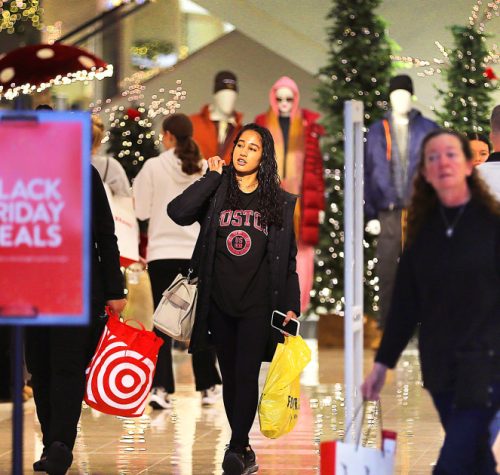
As the holiday shopping season starts to kick into high gear, Americans are balancing Black Friday deals with lingering concerns about their own finances

Source link

TAGS:
10 views

Nov. 23, 2025, 5:45 AM ESTBy Evan BushThree Category 5 storms, one of the most powerful hurricanes ever recorded, zero U.S. landfalls and a mystifying lull at the usual peak of activity: Together, these and other factors made for a “screwball” hurricane season this year.That’s how atmospheric scientist Phil Klotzbach put it, anyway.“It was just a strange year,” said Klotzbach, who studies hurricanes at Colorado State University. “Kind of a hard year to characterize.”Hurricane season comes to its official close on Nov. 30. In some ways, 2025 fits what researchers expect to see more often as the climate warms: Hurricanes continued forming late into the season and several intensified at extreme rates to produce some of the most intense storms in history.But in other ways, it was simply odd. Fewer hurricanes formed than experts predicted, but almost all of them became major storms. And the continental U.S. was spared a landfall for the first time in a decade. The surprises were a reminder of hurricane season’s unpredictability — particularly in a warming world — even as forecasting gets more accurate.Fewer hurricanes, higher intensityForecasters at the National Oceanic and Atmospheric Administration in May predicted an above-average season with six to 10 hurricanes. Of those, at least three were expected to be major storms, meaning Category 3 or above, with sustained winds at or above 111 mph.Klotzbach came up with the same forecast independently, and other hurricane-tracking groups were in the same ballpark.In the end, fewer hurricanes formed, but of the five that did — Erin, Gabrielle, Humberto, Imelda and Melissa — four were considered major.Hurricane Imelda over Bermuda on Oct. 1.NOAA“That’s the highest ratio there’s been in the past 50 years,” said Brian McNoldy, a hurricane researcher at the University of Miami’s Rosenstiel School of Marine, Atmospheric, and Earth Science.What’s more, three of those major storms were Category 5, the highest level of intensity.Forecasters’ predictions of an above-average season still proved accurate despite the lower number of storms because of a metric called accumulated cyclone energy — essentially a calculation of the overall intensity and duration of all tropical storms in a season.Klotzbach predicted the accumulated energy would be 125% of the 30-year average. The season ended up at 108%, which, given the low number of hurricanes, means each packed a punch.“It was a quality season, not a quantity season,” he said.Nine of the past 10 Atlantic hurricane seasons have been above normal, according to Klotzbach, who attributes the trend to high ocean temperatures and La Niña, a seasonal circulation pattern that tends to weaken the high-altitude winds that discourage hurricane formation.McNoldy, who closely tracks Atlantic water temperatures, said 2025 was “anomalously warm.”“Whatever storms were out there definitely had a lot of fuel to tap into,” McNoldy said. Ocean heat drives evaporation, causing warm, moist air to rise from the surface to create convection; hurricanes require ocean temperatures of at least 79 degrees Fahrenheit to form.

Hurricane season ends on Nov. 30. Researchers are taking stock of its surprises: Hurricane Melissa was one of the most powerful storms ever recorded, but a lull came at the.

TAGS:
12 views

Nov. 23, 2025, 2:40 PM ESTBy Angela Yang“Wicked: For Good” didn’t need magic to shatter box office records.The highly anticipated sequel to the first “Wicked” is now the No. 1 film at the domestic box office, hauling in an estimated $150 million domestically and $226 million worldwide this weekend.The film had the biggest-ever opening weekend for a Broadway adaptation, beating out its predecessor, which opened to $112.5 million almost exactly a year ago. It also achieved the second-highest opening weekend of the year, just behind “A Minecraft Movie,” which raked in $163 million when it debuted in April.Paul Dergarabedian, head of marketplace trends at box office data company Comscore, said he was impressed that “Wicked: For Good” outpaced “Wicked” at the box office, noting there’s never a guarantee that sequels of popular movies will perform to expectations.“That doesn’t always happen,” he said. “It’s a testament to how much audiences around the world love ‘Wicked,’ these stars and just the way these movies are presented on the big screen.”Dergarabedian attributed much of the film’s success to the marketing push from Universal Pictures — including a range of product partnerships, themed experiences and viral press moments from Ariana Grande and Cynthia Erivo — that have turned Universal Pictures’ “Wicked” franchise into a cultural event.(NBC News and Universal Pictures share Comcast as a parent company.)Movie theaters this weekend were decked out in pink-and-green popcorn tins and drink cups, with some even offering “Wicked”-themed photo-ops for viewers. Online, fans shared videos of themselves dressed in Elphaba- or Glinda-inspired outfits as they headed to the theaters.The second installment of the two-part film series takes on slightly darker tones than the fluffier first movie, exploring Elphaba’s exile as the Wicked Witch of the West while Glinda, now living a glamorous life as the Good Witch, wrestles with complicated feelings about their friendship.“Wicked: For Good” opened to a 95% audience score on Rotten Tomatoes, as well as an A on Cinemascore. Dergarabedian said he expects the film, which debuted right ahead of Thanksgiving weekend, to have long-term playability going into the holidays.“This isn’t just a one-weekend wonder,” Dergarabedian said. “This is a film that’s perfectly tailored for audiences over the next six weeks, heading all the way to New Year’s Eve and beyond.”He predicts the film will help fuel one of the biggest-ever Thanksgiving weeks for movie theaters, along with the upcoming Wednesday release of “Zootopia 2.”After a quiet October, he said, “Wicked: For Good” is kicking off the momentum for a slew of potential end-of-year box office hits, including “Five Nights at Freddy’s 2” on Dec. 5, as well as “Avatar: Fire and Ash” and “The SpongeBob Movie: Search for SquarePants” on Dec. 19.Angela YangAngela Yang is a culture and trends reporter for NBC News.

“Wicked: For Good” didn’t need magic to shatter box office records

Source link

TAGS: