36 views

Sept. 22, 2025, 11:20 AM EDTBy Edwin Flores, Morgan Radford and Aaron FrancoYou’ve heard of pickleball, the wildly popular sport that’s gone mainstream. But now there’s padel — another racket sport that’s surging in popularity and one that has strong Latino roots.“It’s a sport that always keeps you on your toes,” said Roy Tabet, a professional padel player and a coach at Reserve Padel, one of the biggest luxury padel brands in the U.S., with clubs in Miami and New York. Tabet said he had played tennis his whole life but started finding it repetitive.“I started playing padel and I immediately felt the passion. The hype for the game was real,” he said in an interview with the “TODAY” show’s Morgan Radford.Morgan Radford and Santiago Gomez at Padel Haus in the Dumbo neighborhood of Brooklyn, N.Y.NBC NewsPadel got its start in Acapulco, Mexico, in 1969 when Enrique Corcuera, a Mexican businessman, was trying to build a makeshift tennis court in his backyard. He didn’t have enough space and chose to make a smaller version — the very first padel court — with a distinguishing feature: It was surrounded by an almost 10-foot wall.The sport would eventually grow and spread internationally. It’s now described as the fastest-growing sport worldwide. The International Padel Federation says padel is played in more than 140 countries around the world with about 30 million amateur players.Currently in the U.S., there are over 100,000 amateur players, according to PadelUSA, an online marketplace for padel equipment, but the number of padel courts has been increasing.The sport’s growing popularity has even captured the attention of athletes and celebrities like Eva Longoria, Derek Jeter, Jimmy Butler and Adam Levine.“It’s like pickleball but kind of a little cooler,” Levine told Jimmy Fallon in April on “The Tonight Show.” “It’s super fun,” the singer added, explaining he was first introduced to the sport by Michael Bublé, his fellow coach on “The Voice,” when they were vacationing together in Mexico.Padel differs from other racket sports in that the court is about one-third the size of a tennis court and is typically surrounded by a glass or mesh wall. The ball can be hit off the walls and even from outside the court, as players can exit the court through a door to return the ball. Players must have a teammate, as the sport can only be played in doubles.A big draw, fans say, is the community it fosters as well as the game’s fast pace.“What got me hooked is the community. I feel like I met a lot of my best friends here, so coming to see them specifically turned into my love for playing padel,” Rachel Kuan, who’s now a customer experiences employee at Reserve Padel, told “TODAY.” Santiago Gomez, who fell in love with the game while growing up in Acapulco, founded Padel Haus, a sprawling padel social and cultural hub located in New York City — and among the first dedicated padel courts in the U.S. Padel Haus has since opened more courts across the New York City area as well as in Atlanta, Nashville and Denver.“A lot of Latinos were first — they were the first ones to come because they play the sport at home,” Gomez said.“Americans didn’t know about the sport when we first opened in 2022,” he said. “And then after that, a lot of tennis players, former tennis players, former squash players — Americans — came and tried it for the first time and they fully converted to padel.”Gomez estimates that about 70% of Padel Haus’ members are from the U.S. while the remaining 30% hail from other countries. The growth has increased so significantly that there’s now a waitlist for people looking to sign up.Fast pace ‘keeps you hooked’In addition to the social aspect of the game, Gomez said it’s addictive because of how fast-paced it can get compared to other racket sports.“[In tennis], a ball passes you, your mind is wired to think that the point is over. But here, given the wall’s in the back, you can still save the point. So you feel like a hero when you’re catching a ball that you couldn’t catch in tennis,” Gomez said.“You’re still in the game, and that gives you [a] big dopamine rush and that’s what keeps you hooked.”Mexican tennis player Yola Ramirez competing in the women’s singles tournament at the Wimbledon Tennis Championships in London, on July 1,1959.Evening Standard / Hulton Archive/Getty Images fileThe International Padel Federation is working on getting the sport included in the 2032 Olympics. But for some like Marnie Perez-Ochoa, whose grandmother Yola Ramirez was a former professional tennis player from Mexico and grandfather built Padel courts for professional tournaments in Acapulco, the game has also become a point of cultural pride.“The power of sport is so prevalent — it’s just now getting started in the States. You see it in Mexico. It already boomed in Europe — Spain in particular. So I’m really excited to see where it’s going to go in the States. And I think it’s really beautiful that it started in Mexico,” Perez-Ochoa said.Edwin FloresEdwin Flores was a former reporter and video producer based in Anaheim, California. Morgan RadfordAaron Franco

The fast-paced game, which has millions of fans around the world, is starting to build a cult following in the U.S., with waiting lists to play in the few courts.

TAGS:
34 views

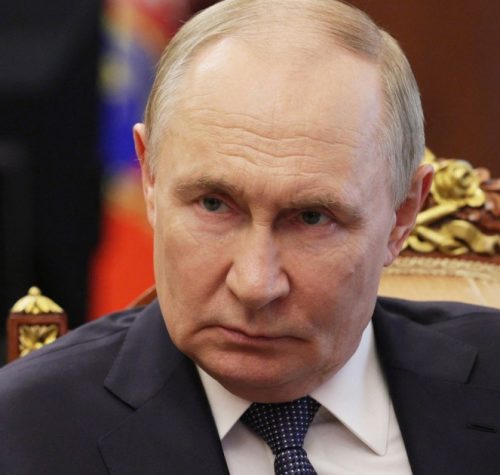
Sept. 22, 2025, 8:04 AM EDT / Updated Sept. 22, 2025, 11:58 AM EDTBy Freddie ClaytonDrones over Poland. Fighter jets above Estonia. Surveillance planes over the Baltic Sea.To U.S. allies in Europe, the pattern is unmistakable: A deliberate campaign of escalation from the Kremlin, designed to probe NATO’s defenses and political resolve. The question hanging over an emergency meeting of the United Nations Security Council on Monday is how exactly the alliance will respond.As NATO struggles to turn alarm into action, officials and analysts urged a more forceful response and warned that hesitation risks emboldening Russian President Vladimir Putin. But questions about U.S. support, escalation risks and what this growing threat means for Ukraine remain unresolved. Estonia, which called for the Security Council meeting after three Russian MiG-31 fighter aircraft entered its airspace for 12 minutes without permission last week, pressed members to address what it described as a “blatant, reckless, and flagrant violation of NATO airspace” and Russia’s “repeated violations of international law.”Russia’s actions “undermine principles vital to the security of all U.N. member states,” Estonian Foreign Minister Margus Tsahkna said Sunday in a post on X. Claims that Russia violated Estonian airspace were “baseless” and “aimed at escalating tensions,” Kremlin spokesman Dmitry Peskov said Monday, adding that Russia operated within international regulations. So far, NATO’s response has largely been limited to meeting rooms as Moscow’s probing exposes a contrast between European leaders’ urgent calls for action and President Donald Trump’s more muted response.A Russian MiG-31 fighter jet that took part in the violation of Estonian airspace, in a photo released by the Swedish armed forces.Swedish Armed Forces / via ReutersAsked by reporters Sunday whether Washington would come to the defense of Poland and the Baltic states if Russia attacks, Trump said: “Yeah I would.”And on Monday Mike Walz, the U.S. ambassador to the United Nations told the Security Council meeting that the events left “the impression either Russia wants to escalate or doesn’t have full control of its fighter planes and drones.” Either scenario, he said, was “very disconcerting.” The U.S. “will defend every inch of NATO territory,” he said, adding that he expected “Russia to seek ways to de escalate, not risk expansion.” At the same meeting, Britain’s Foreign Minister Yvette Cooper also warned that Russia’s incursions into NATO territory risked triggering an armed conflict. “Your reckless actions risk direct armed confrontation between NATO and Russia. Our alliance is defensive but be under no illusion we stand ready to defend NATO’s skies and NATO’s territory,” she said. “If we need to confront planes operating in NATO space without permission then we will do so,” she added. This drew an immediate rebuke from Moscow, which dismissed Europe’s concerns as groundless and hysterical.NATO’s response to this ratcheting Russian activity amounts to the launch of operation “Eastern Sentry” earlier this month to bolster the defense of Europe’s eastern flank in response to a series of Russian drone incursions over Poland. After Germany and Sweden scrambled fighter jets Sunday to intercept and track a Russian surveillance plane flying unidentified over the Baltic Sea, one regional leader said Russia was not just testing NATO’s response, but was also aiming to reduce support for Ukraine by compelling countries to redirect resources.Calibrating how to respond to Russia was not easy, Latvian President Edgars Rinkevics said on social media, adding that Russia was doing just enough not to cross a red line.European confidence about backing from Washington has been shaken by Ukraine, where Trump has so far stopped short of imposing his promised punishment of further sanctions on the Kremlin for refusing peace talks. Ukrainian President Volodymyr Zelenskyy said that he was preparing for an “intense week” at the U.N. General Assembly in New York, where he hopes to build support for efforts to stop Russia’s invasion.Ukraine has also submitted a request to attend the Security Council meeting and present its position.The aftermath of a Russian missile attack Saturday, in Dnipro, Ukraine. Denys Poliakov / Global Images Ukraine via Getty ImagesBut Europe’s security will require decisive action, and that will not happen at a Security Council meeting, “for the very simple reason that Russia has a veto on the council,” said Keir Giles, a senior fellow at Chatham House, a London-based think tankUnable to rely on Trump’s “shifting position” on Russia, Giles told NBC News, the “coalition of the willing” — European nations that say they are prepared to underwrite security guarantees for Ukraine — must become the “coalition of the able and actually doing something.”Poland will not hesitate to shoot down objects that violate its airspace and pose a threat, its prime minister said Monday. But, he said, his country would take a more cautious approach when dealing with situations that are less clear-cut, and would need to know it had its allies’ support.”You really need to think twice before deciding on actions that could trigger a very acute phase of conflict,” Donald Tusk told a news conference.Trump met with Putin in Alaska but his peace push in Ukraine has stalled.Kevin Lamarque / ReutersHesitation, analysts said, risks sending a dangerous signal.“Europe and NATO have to show the will to respond forcefully to Russia,” said Moritz Brake, a senior fellow at the Center for Advanced Security, Strategic and Integration Studies.“Russia is trying to gauge whether it’s possible to single out individual elements of the alliance,” he said in a phone interview. A forceful approach, Brake argued, would involve not just intercepting Russian aircraft, but also sending “manned fighter jets” that could shoot Russian jets down “at any minute.” As an example, he pointed to 2015, when NATO member Turkey shot down a Russian warplane seconds after it violated the country’s airspace near the Syrian border. Moscow did not retaliate militarily. “Russia didn’t declare war on Turkey,” Brake said. “Wavering is much more dangerous than a forceful approach.”Freddie ClaytonFreddie Clayton is a freelance journalist based in London. Abigail Williams contributed.

U.S. allies called an emergency meeting of the United Nations Security Council on Monday after a series of incidents raised alarm about Russian threats to NATO.

Source link

TAGS: