12 views

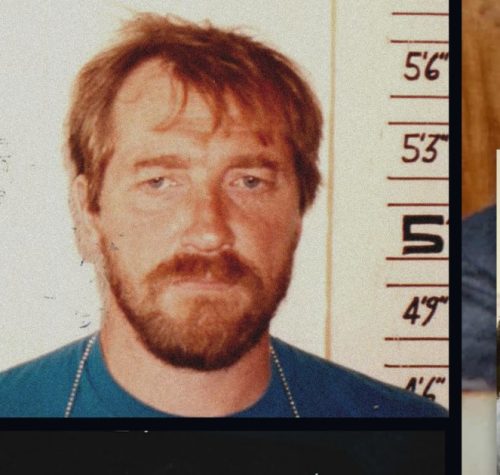
Nov. 21, 2025, 5:49 PM ESTBy Tim StellohFor as long as she can remember, Heather Thiel believed her father was a killer.She was so convinced that she twice urged authorities to examine whether he was responsible for a horrific, unsolved double murder that shook rural Wisconsin more than three decades ago. But her role in the investigation into the slaying of Tim Mumbrue and Tanna Togstad led to an outcome she never could have imagined: three years ago, authorities concluded that her cousin, not her now-deceased father, fatally stabbed the couple on March 21, 1992.For more on the case, tune in to “Raising the Dead” on “Dateline” at 9 ET/8 CT tonight.DATELINE FRIDAY SNEAK PEEK: Raising the Dead01:59Just as head-spinning, that cousin, Tony Haase, was acquitted in the murders earlier this year. During a nearly monthlong trial, Haase’s lawyers made the case that the evidence pointed at Heather Thiel’s dead father, Jeff Thiel. For Heather Thiel, who is 40 and works at a group home for mentally ill adults, the whiplash of the last three years left her questioning longstanding beliefs and wrestling with a familiar feeling.“I wish there was a definite answer,” she said. “Now, I feel like we still don’t know for sure.”Fixated on murderOn March 11, 1995, Jeff Thiel pointed a shotgun at a law enforcement officer after he was pulled over in a traffic stop. The officer retreated to his car, and Jeff Thiel, who’d worked in the maintenance department of an iron foundry in a rural community east of Green Bay, escaped, Haase’s defense attorney said at trial. Heather Thiel. Courtesy DatelineHe blew through a roadblock and fled the state, said the attorney, John Birdsall. Nearly three months later, in a hotel room in Washington state, Jeff Thiel died by suicide, according to his daughter. He was 44. Heather Thiel, who was 11 when her mother told her the news, can still recall her response: “I said, ‘When’s the party?’”Heather Thiel described her father as a scary and abusive parent who killed neighborhood pets and would casually — and routinely — threaten to shoot her mother. Her mom, Marie Stanchik, also believed her ex-husband was a killer. In an interview with authorities three years ago, she recalled how his “ultimate dream was to kill somebody.”Jeff Thiel. Courtesy Dateline“He used to tell me that all the time,” Stanchik said, according to audio of the interview. “He’s had a gun in my face and said if I ever call the cops on him, he’s gonna use it.”Jeff Thiel also had a thing for knives, said Heather Thiel, who has memories of him sitting in a recliner with sharpening tools and blades. Because he worked at a foundry, she said she came to believe he easily could have brought a murder weapon to work with him and melted it down.And there was this comment, which she said her father made the day Togstad and Mumbrue were killed: “It’s funny how you can get away with murder these days.”A suspect from the start The murders were brutal. They were found in the bedroom of Togstad’s farmhouse. Mumbrue, 34, was stabbed 27 times, according to a forensic pathologist who testified at Haase’s trial. His throat had been cut. Togstad, 23, had been stabbed once in the chest and appeared to have been sexually assaulted. Tanna Togstad and Tim Umbrue.Courtesy DatelineEven Togstad’s dog, a terrier named Scruffy, was fatally stabbed. According to one of the original detectives who investigated the case, authorities focused on Jeff Thiel as a possible suspect early on. “With his background and build and strength, he was certainly a person that we had to go after,” said Al Kraeger, who retired from the Waupaca County Sheriff’s Department six years ago.But physical evidence soon cleared those suspicions for law enforcement, said Capt. Nick Traeger of the Waupaca County Sheriff’s Department. In 1996, just as DNA was revolutionizing forensic sciences, an analysis eliminated Jeff Thiel as the person who sexually assaulted Togstad, Traeger told “Dateline.” A blood sample taken from the clothes he was wearing at the time of his suicide did not match semen found on Togstad, the captain said.Heather Thiel said she knew none of this. And as the years passed and no arrests were made, she said she would tell anyone who would listen that her father was probably responsible for the murders.In 2010, she saw a billboard authorities had put up seeking information about the killings and called the listed phone number.According to a law enforcement summary of the interview that followed, Heather Thiel told investigators about her father’s habit of killing animals and his casual comments about murder. She told them that he’d wanted to be with Togstad and had an obsession with knives. And she told them that he’d taken his own life after fleeing from law enforcement. “I had spent my whole life thinking my dad did this and maybe I’d get answers,” Heather Thiel said. “But then, literally nothing came of it.”One of the investigators who interviewed Heather Thiel, Mike Sasse of the Wisconsin Division of Criminal Investigation, said that they did nothing with her information because he already knew that DNA had eliminated Jeff Thiel as a suspect years earlier.“Now, could he have been a peripheral character” in the murders? Sasse added. “At that time, yes, he could have been.”A confession from a night in a ‘drunken stupor’More than a decade passed and still, there were no arrests. Then, on April 8, 2022, Heather Thiel found herself speaking to law enforcement — again. This time, her mother was present for the interview, according to a case report from the Wisconsin Division of Criminal Investigation. Authorities were interested in obtaining their DNA and learning about the family’s allegations against Jeff Thiel, the report states.During the interview, Heather Thiel said she raised the same concerns that she’d detailed for Sasse in 2010. She provided a buccal swab, she said, as well as access to a family tree she’d been developing on a genealogy site. “She turned on her profile, and it was like the Christmas tree lit up,” said Traeger, one of the investigators who interviewed her. The mystery DNA obtained from the crime scene did not match Jeff Thiel, Traeger said, but it did match someone else in the family — Heather Thiel’s cousin, Tony Haase, a father of four with no criminal record who worked at the same iron foundry as Jeff Thiel.Authorities confirmed the link by surreptitiously collecting Haase’s DNA from a pen during a traffic stop, Traeger said. During interviews with authorities, Haase, 54, denied that he had anything to do with the murders. When one of the officers told him that his DNA was found at the crime scene, he said: “I still don’t buy it,” a video of the interview shows.Tony Haase. Courtesy DatelineBut as investigators continued to press Haase, he admitted that over the years he’d had “little clicks” — or memories — that made him wonder if he’d been involved in the killings. He said he remembered a barbell in the house — crime scene photos showed one in the bedroom — then leaving the house and vomiting outside, according to the video. In an interview at the sheriff’s office, investigators said this latter detail was a natural human response following an extreme event.Haase described how his father had been killed in an accident while racing snowmobiles with Togstad’s father, and how on the night the couple was killed, he was drunk and all he could think about was the accident.“I didn’t go there to hurt nobody,” he told investigators. “I honestly can tell you that I don’t know what started, what happened, what started it all.”Asked why it took so long for him to acknowledge what he’d done, Haase said: “Because I didn’t want it to sound like I had this planned.”On Aug. 11, 2022, Haase was arrested for the murders of Togstad and Mumbrue. A probable cause affidavit filed in Waupaca Circuit Court said that at the time of the killings he’d been in a “drunken stupor.”Doubt surrounds murder trialHeather Thiel was shocked. She didn’t know her cousin well but said he didn’t seem to have a mean bone in his body.The arrest also prompted some self-reflection.“I was like, how could I have had it wrong?” she said. “If I was wrong about my dad and it was actually my cousin — well, sorry, you should pay for what you did.”Jeff Thiel, however, continued to loom over the case as Haase’s trial approached. In a pretrial hearing in May, Haase’s attorneys said that because Jeff Thiel’s genetic profile had not been excluded from all of the blood evidence gathered at the crime scene, they should be able to argue at trial that he was still a possible suspect in the murders. Prosecutors objected, but the judge sided with the defense, a transcript shows. So the state asked to exhume Jeff Thiel’s remains to carry out additional DNA testing — a process that Waupaca County District Attorney Kat Turner said would allow them to exclude him from physical evidence gathered at the scene. In June, Jeff Thiel’s remains were disinterred from a Waupaca County cemetery.“The DNA analyst worked on nothing but that until he had the analysis complete,” Turner told “Dateline.” “And again, excluded Jeff Thiel from all of the blood evidence that was available.”In the pretrial proceedings, Haase’s lawyers sought to bar that evidence because they said they didn’t have time to prepare a response before trial, which was scheduled to start two weeks later. Prosecutors again objected, Turner said, but the judge ruled that if the trial started as scheduled, the state would be prohibited from presenting any DNA evidence related to Jeff Thiel.Instead of delaying the trial and challenging the ruling — a process that could have taken years, Turner said — the prosecution forged ahead. Turner said that decision was made after consulting with victims’ families and weighing the challenge of trying an old case in which investigators and scientists were becoming sick or dying.’Somebody who has no conscience’Haase’s trial began in July in a Waupaca County courthouse. His attorneys argued that Haase’s confession had been coerced — investigators planted false memories in an hourslong interrogation — and they said the male DNA found on Togstad’s body had been degraded by years of testing and storage. As evidence of Jeff Thiel’s involvement in the murders, attorney John Birdsall cited an apparent motive — Tanna had rejected Jeff Thiel’s advances — and he linked Jeff Thiel’s habit of killing pets to Scruffy’s death.“This was killed by somebody who has no conscience, who has absolutely no problem killing anything in its path,” he said in his closing argument. “That’s Jeff.”Amy Ohtani, the assistant attorney general who also prosecuted the case, described the defense’s strategy as an effort to “weave together a fantasy to keep you from paying attention to the actual evidence.” The DNA had been properly collected, preserved and tested, she said in her closing argument, and the idea that Haase’s admissions were false was a “distraction.” Jeff Thiel, she said, was the “perfect scapegoat.”Jeff Thiel. Courtesy DatelineAt trial, she said, he’d been described by family members as an “absolutely terrible person” — but wasn’t there to defend himself and there was no evidence actually linking him to the crime. “Jeff Thiel sounds like he was a terrible guy,” she said. “But that doesn’t mean he killed Tim and Tanna.”On the fourth day of deliberations, the jury acquitted Haase of the murders.For his cousin, that decision was the right one. Heather Thiel had come to doubt the forensics that excluded her father from the murders and linked her cousin to them, she said, and she believed Haase had been coerced into making a false confession.Although the trial produced no definitive answers, Heather Thiel said, the proceedings prompted her to return to a long-held position about who killed Mumbrue and Togstad.“Until proven otherwise, I will always believe it’s my dad,” she said.Tim StellohTim Stelloh is a breaking news reporter for NBC News Digital.

Thirty years after a brutal double murder in Wisconsin, the daughter of one of the original suspects comes forward — reigniting the case all the way to trial.

Source link.

TAGS:
10 views

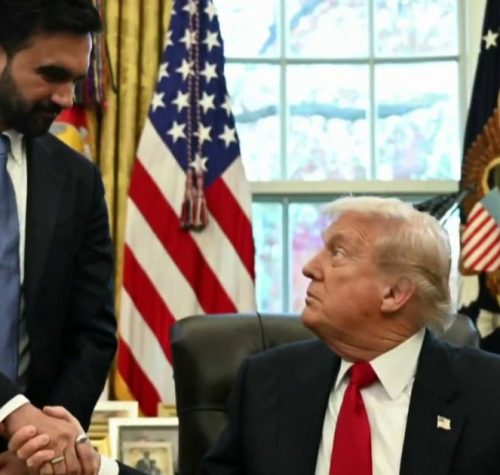
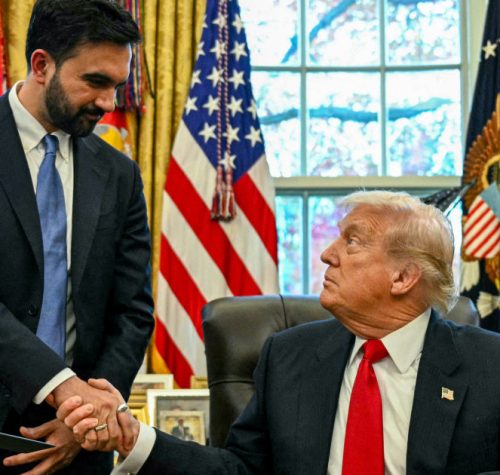
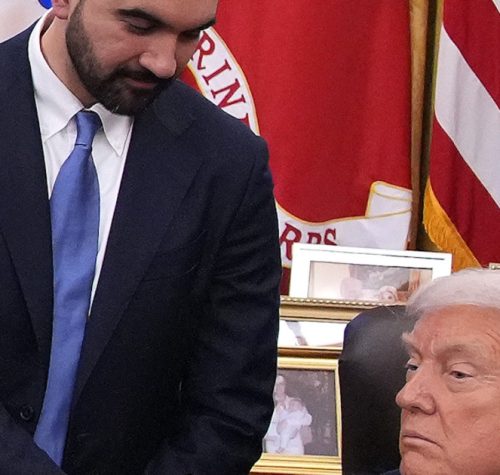
Nov. 21, 2025, 6:00 PM ESTBy The Politics DeskWelcome to the online version of From the Politics Desk, a newsletter that brings you the NBC News Politics team’s latest reporting and analysis from the White House, Capitol Hill and the campaign trail.In today’s edition, Kristen Welker breaks down an unexpectedly warm meeting between President Donald Trump and New York Mayor-elect Zohran Mamdani. Plus, Ben Kamisar explores how the redistricting fight is scrambling campaigns ahead of the midterms. Sign up to receive this newsletter in your inbox every weekday here.— Adam WollnerProgramming note: We’re taking a holiday break next week. We’ll be back on Dec. 1. Have a happy Thanksgiving!Trump and Mamdani find a surprising amount of common ground in their first meetingAnalysis by Kristen WelkerTheir improbable victories were fueled by populist messages, serving as direct repudiations of their parties’ elder statesmen and inspiring voters who normally sit on the sidelines. In countless ways — their backgrounds, their policies, their ages — President Donald Trump and New York Mayor-elect Zohran Mamdani could not be more different. But the similar manner in which the two men rose to power provided the backdrop for their first face-to-face meeting in the Oval Office today. In an extraordinary reversal, the insults Trump and Mamdani have been trading for months evaporated in an instant this afternoon, with the two political foes shaking hands and showering each other with praise. Trump called his meeting with Mamdani “very productive,” adding that it “surprised” him — in a positive way. “We agree on a lot more than I would have thought,” said Trump, a native New Yorker. Trump and Mamdani downplayed their differences and played up their shared goals — on affordability, on peace in the Middle East and on wanting the best for New York City. “There were more New Yorkers who voted for President Trump in the most recent presidential election because of that focus on cost of living. And I’m looking forward to working together to deliver that affordability agenda,” Mamdani said, noting that about 1 in 10 of his voters backed Trump in 2024.Asked by reporters about the past attacks they’ve lobbed at each other, both politicians brushed them off. “I’ve been called worse than a despot,” Trump quipped in response to a question about Mamdani’s past criticism. And while Trump had previously floated cutting off federal funding to the city in response to Mamdani’s policy proposals, he told reporters today: “I don’t think that’s gonna happen. … I expect to be helping him, not hurting him.” The warm encounter between the two stands in stark contrast to how they treated each other in the run-up to this month’s mayoral election. Trump cast Mamdani, a democratic socialist, as a “communist” and issued a last-minute endorsement to his main opponent in the race, former Gov. Andrew Cuomo. Meanwhile, Mamdani called the administration “authoritarian” and memorably addressed Trump directly during his victory speech, telling him to “turn the volume up.”Today’s meeting is yet another way the 34-year-old Mamdani has stayed in the national spotlight since his election, perhaps sending a signal of the role he will play moving forward in a party that is still trying to find its footing following the 2024 election. His affordability-centric message has already inspired Democrats to follow a similar path heading into next year’s midterms. He publicly discouraged an ally who launched a primary challenge to House Minority Leader Hakeem Jeffries, D-N.Y. — one of the party leaders who was slow to embrace Mamdani’s candidacy. And Mamdani will sit down with me for an exclusive interview that will air on “Meet the Press” this Sunday. I will also speak with Treasury Secretary Scott Bessent and Sen. Amy Klobuchar, D-Minn. I hope you’ll join us.Read more on the Trump-Mamdani meeting →How the redistricting fight has scrambled dozens of midterm campaigns across the countryBy Ben KamisarThe national redistricting battle has cast a long shadow over the race for control of Congress next year — not only fundamentally reshaping the battlefield, but also creating a domino effect that’s pushing candidates into new seats, ushering longtime lawmakers to the exits and exposing deep political rifts in state parties across the country.The fight is still playing out across courtrooms, back rooms and President Donald Trump’s social media accounts, as Republicans and Democrats tinker with district lines. Developments like this week’s federal court ruling blocking the new Texas maps from going into effect — leaving the ultimate decision to the Supreme Court — also show how much remains to be determined in the redistricting fight.Texas: The map Texas enacted over the summer adds more Republicans to the battleground districts represented by Democratic Reps. Henry Cuellar and Vicente Gonzalez, while redrawing two districts in Houston and Dallas in a way that will likely force incumbent Democrats into primaries against each other. It also split Austin to create one deep-blue seat and one additional Republican-leaning seat that stretches toward San Antonio. The Supreme Court’s eventual decision will have a significant impact on a spate of races, starting with whether Austin-area Democratic Rep. Lloyd Doggett decides to retire. There’s also the question of whether the winner of January’s special election to succeed the late Democratic Rep. Sylvester Turner will have to immediately run against a longtime Democratic incumbent, and how Democratic Reps. Marc Veasey, Julie Johnson and Jasmine Crockett handle a potentially significant redraw in North Texas that could leave one of them out of a job. The redistricting plan already has Crockett weighing a Senate bid.California: The Democratic-drawn map voters approved earlier this month has similar potential to upend the Republican caucus in the state. The districts represented by GOP Reps. Doug LaMalfa, Darrell Issa, Kevin Kiley, Ken Calvert and David Valadao are becoming significantly more vulnerable to being flipped by Democrats, according to an analysis from the University of Virginia Center for Politics.One early bit of fallout: Calvert’s decision to seek re-election in a nearby district currently represented by fellow Republican Rep. Young Kim, which will likely trigger an expensive primary between two prominent incumbents. In an early show of force, Kim has already announced plans to spend more than $3 million on ads ahead of the 2026 primary.Utah: A court decision to enact a new map over the protests of Republicans created a new blue seat in the Salt Lake City area — one that could spark a primary focused on ideology as well as electability, an unusual position for Utah’s Democratic minority. Read more from Ben →🗞️ Today’s other top stories🌏 Russia-Ukraine update: Trump said he wants Ukraine to accept a new peace deal by Thanksgiving, after Ukrainian President Volodymyr Zelenskyy warned the proposal was forcing his country to choose between its “dignity” and a “key partner.” Read more →🗣️ War of words: Trump said that he’s “not threatening death” toward a group of Democratic members of Congress whom he accused of committing “seditious behavior,” which he said a day earlier was “punishable by death.” Read more →🛥️ Reality check: Drug cartels operating vessels in the Caribbean, where roughly 50% of U.S. airstrikes have taken place, are mainly moving cocaine from South America to Europe — not to the U.S., according to current and former U.S. law enforcement and military officials as well as narcotics experts. Read more →🛢️ Drill, baby, drill: The Trump administration announced new oil drilling off the California and Florida coasts for the first time in decades. Read more →🗳️ Special election watch: The Democratic group House Majority PAC is putting more than $1 million into TV and digital ad reservations ahead of the Dec. 2 special election in Tennessee’s deep-red 7th District. Democrat Aftyn Behn raised more than $1 million from Oct. 1 to Nov. 12, while Republican Matt Van Epps brought in about $591,000. Read more →💰 Money moves: The Democratic National Committee took out a $15 million loan in October, an unusually large amount of debt for this point in the political calendar, as the party looks to rebuild its brand and infrastructure under new leadership. Read more →🔵 2026 watch: Rep. Eric Swalwell announced that he will run for California governor, the latest Democrat to join the crowded race to succeed outgoing Gov. Gavin Newsom. Read more →🗽 2026 watch, cont.: 72-year-old Rep. Nydia Velázquez, D-N.Y., will not seek re-election next year, telling The New York Times that “now is the right moment to step aside and allow a new generation of leaders to step forward.” Read more →🔴 2028 watch: Long-simmering tensions between Trump and Sen. Ted Cruz are boiling over, with White House allies convinced that the Texas Republican is aiming to boost his 2028 presidential prospects at the expense of Vice President JD Vance. Read more →💲 It’s still the economy: In Nevada, concerns about the direction of the economy and high costs are threatening to wipe away the gains Trump and the GOP have made with Latino voters. Read more →That’s all From the Politics Desk for now. Today’s newsletter was compiled by Adam Wollner.If you have feedback — likes or dislikes — email us at politicsnewsletter@nbcuni.comAnd if you’re a fan, please share with everyone and anyone. They can sign up here. The Politics Desk    

President Donald Trump and New York Mayor-elect Zohran Mamdani found a surprising amount of common ground in their first meeting at the White House.

Source link

TAGS: