12 views

Savewith a NBCUniversal ProfileCreate your free profile or log in to save this articleNov. 19, 2025, 5:00 AM ESTBy Megan LebowitzFormer House Speaker Nancy Pelosi’s announcement that she would not seek re-election capped off a decades-long tenure in Congress and the top echelons of the Democratic Party. Now, her departure also sets up a clearer picture of the race to be San Francisco’s next representative in the House — and of how Democrats want to chart the future of their party at a moment of generational change.The two main contenders for Pelosi’s district — Scott Wiener, a California state senator, and Saikat Chakrabarti, the former chief of staff to Rep. Alexandria Ocasio-Cortez — had already jumped into the race ahead of Pelosi’s decision. Others could jump into the California race ahead of next June’s all-party primary, but already the two existing candidates’ views reflect different wings of the Democratic Party. In interviews with NBC News, Wiener said that he has a record of building diverse coalitions and delivering on legislation, while Chakrabarti touted his push for “whole scale, structural change.” The perspectives reflect the wider party debate about whether to seek political change more through practical advances within existing systems or rather by overhauling those longstanding systems entirely. Saikat Chakrabarti at the Capitol Visitor Center in 2019.Tom Williams / CQ-Roll Call via Getty ImagesIt’s not the first time the race to succeed a former speaker also serves as a litmus test for the future of the party. After then-House Speaker John Boehner stepped down in 2015, the crowded GOP primary to fill his Ohio seat echoed the Republican Party’s broader debate over its future. Rep. Warren Davidson ultimately won the seat with the backing of the anti-establishment conservative Club for Growth, which had previously sparred with Boehner. Neither Wiener nor Chakrabarti believed that Pelosi’s announcement changed much about the dynamics of the race. Wiener predicted that Chakrabarti, who had been focusing much of his attention on Pelosi, would pivot to attacking the state senator instead. Chakrabarti said that he believed the race wasn’t just about the former speaker, but the Democratic Party needing “wholesale change.”“In my opinion, the real moment right now in the Democratic Party is, do we want to go back to the politics as usual?” Chakrabarti said in an interview, framing his opponent as “part of that normal establishment politics.”Across the divide, Wiener presented himself as the candidate who could actually deliver. “It’s not enough to just say that you want to accomplish X, Y and Z and to make videos about it, you need to give voters confidence that you know how to actually deliver on those promises around housing, health care, energy and so forth,” Wiener said, referencing Chakrabarti’s social media presence. State Sen. Scott Wiener in Sacramento, Calif., in 2022.Rich Pedroncelli / AP fileWiener’s website touts the candidate’s record “authoring and passing more than 100 state laws,” pointing to his push to advance housing and pro-LGBTQ issues. Chakrabarti disputed Wiener’s questions about whether he can deliver legislatively. He emphasized his role in crafting the Green New Deal, a progressive set of policy goals, and asserted that when people mobilized around climate, it forced Democratic presidential candidates to embrace environmental proposals in 2019 and 2020. Chakrabarti argued that the push contributed to former President Joe Biden’s Inflation Reduction Act, which included billions of dollars to fight climate change. Pelosi has not yet weighed in on the race, and she told NBC News last week that making an endorsement was not her “current plan.”Chakrabarti declined to share whether he was in talks about potential endorsements with the likes of Ocasio-Cortez or Sen. Bernie Sanders, I-Vt. Chakrabarti worked on Sanders’ 2016 presidential campaign. Chakrabarti acknowledged that if he’s elected in 2026, while Republicans still control the White House, he would not be able to push forward on goals like enacting a universal health care system or developing a national bank to “fund, finance and develop affordable housing.” Instead, he said his initial goals would be “defending” constituents from Trump administration policies like immigration raids and troop deployment and working to “force the conversation” on anti-corruption issues.If elected, Wiener emphasized wanting to elevate housing as a bigger issue at the federal level. Asked about similarities and differences with Pelosi, he noted that he is “very aligned” with her on issues like expanding health care access and said he was “a huge admirer of her work.”“I’m my own person, and we have lots of shared values and priorities, and I have priorities that are my own,” he said.Megan LebowitzMegan Lebowitz is a politics reporter for NBC News.Scott Wong contributed.

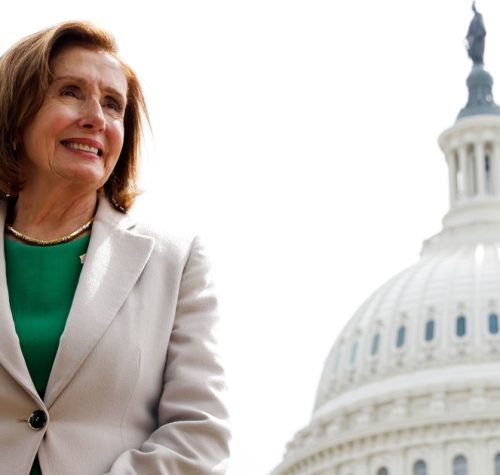
Former House Speaker Nancy Pelosi’s announcement that she would not seek re-election capped off a decades-long tenure in Congress and the top echelons of the Democratic Party.

Source link

TAGS:
9 views

Nov. 18, 2025, 6:40 PM ESTBy Sahil Kapur, Melanie Zanona and Julie TsirkinWASHINGTON — Inside a closed-door meeting of House Republicans on Tuesday, Rep. Jen Kiggans, a swing district member who is a linchpin of the party’s narrow majority, stood up and made a plea. “Doing nothing on health care is not the right answer,” the Virginia Republican later told NBC News, summing up her message to colleagues. “I would really appreciate if we could have a timeline because we know that the end of the calendar year is coming, and I don’t want to see people’s premiums go up. I don’t want to see people lose their health insurance.”The remarks drew an unspectacular reception.“Average,” Kiggans replied when asked how it was received. “We line up, we have our one minute to state our case. Usual reaction.”Republicans seek an alternative to Obamacare03:33Republicans are careening to a health care cliff with no solution in hand. An estimated 22 million people in the U.S. are about to see their health insurance premiums soar by, in some cases, thousands of dollars per month, as billions in funding for the Affordable Care Act expires on Dec. 31. The expiring funds, costing about $35 billion per year, were first passed during the pandemic to subsidize insurance payments, capping premiums for a “benchmark” ACA, or “Obamacare,” plan to 8.5% of income.Kiggans has offered a bill to extend those funds for one year, as a stopgap option to prevent cost increases while Congress haggles over a longer-term solution.But just 14 Republicans have signed on. And her plea appears to be falling on deaf ears with the rest of the party.President Donald Trump and Republicans have dialed up their attacks on that pot of funding, making increasingly clear they won’t allow an extension in its current form.“It’s going to end,” Sen. Rick Scott, R-Fla., said Tuesday evening, citing Trump’s opposition as part of the reason.Instead, Republican leaders have deputized committee chairs and rank-and-file members to draft alternative options that would give the funds directly to people, perhaps through tax-advantaged health savings accounts (HSAs), flexible savings accounts (FSAs) or even direct cash payments.“The only healthcare I will support or approve is sending the money directly back to the people,” Trump wrote Tuesday in all caps on social media, saying he won’t accept a continuation of the ACA structure where the funds are provided to insurance companies to keep premiums down. “Congress, do not waste your time and energy on anything else,” Trump added.Party leaders have taken note.House Republican leadership railed against the ACA during a closed-door conference meeting Tuesday and made a forceful case against extending the subsidies, according to two lawmakers in attendance. Instead, Republican leaders presented other potential ideas to help lower health care costs.But at least one House Republican expressed frustration with how little time they have left to write, much less pass, an alternative before the looming ACA cliff. During Tuesday’s meeting, Rep. Nathaniel Moran of Texas stood up and complained that Republicans could have been working on their own health care plan “for months,” the two lawmakers in the room said, instead of six weeks before the tax credits expire.Trump told reporters in West Palm Beach on Sunday that he is talking with Democrats about a direct health care payment plan, saying: “I’ve had personal talks with some Democrats.”But a senior White House official on Tuesday could not identify a single Democrat with whom Trump has discussed the issue. On a call with reporters on Monday, Senate Health Committee Chair Bill Cassidy, R-La., couldn’t name a Democrat who is even open to the idea.“I’ll let Democrats speak for themselves, because I can’t tell you that they’ve all bought in,” he said.Any plan would require 60 votes to advance in the Senate, which means at least seven Democrats would have to support the legislation. Republicans have floated the prospect of using the filibuster-proof reconciliation process to push through a health care solution without Democrats, but a variety of their proposals would be deemed ineligible for that.Rep. Rob Bresnahan, R-Pa., who narrowly won a competitive district around Scranton, said expiration of the ACA money without a replacement plan would harm his constituents.“My district is especially hit hard on this. Ripping the rug out certainly is not the solution,” Bresnahan said. “So I am in support of extending the ACA, the enhanced premium tax credits, for some period of time.”Rep. Andy Harris, R-Md., said he’s certain ACA funds won’t be extended in their current form.“There is no way a clean extension comes to the House floor,” Harris said Tuesday after the GOP meeting, even suggesting that it would spark a revolt. “The business would stop in the House completely if an attempt was made to bring that to the floor.”Rep. Derrick Van Orden, R-Wis., who represents a competitive district that Democrats are targeting in 2026, blasted the law he called the “Unaffordable Care Act” as a failure. He said the subsidies prove that.“If you have to subsidize something, by definition, it’s not affordable,” Van Orden said, arguing that Democrats don’t “give a s—” about health care beyond their ability to benefit from it politically. “It’s all about their political survival, and it’s, quite frankly, revolting.”Cassidy said it’s “incorrect to assume that a temporary extension” of ACA funds “can be quickly implemented,” suggesting it’s too late because insurers have set rates for 2026. And even if Democrats prefer a short-term extension, he said, “the president’s not going to sign it.”Michael Linden, an economic policy expert who worked in the Biden White House budget office while the enhanced health care tax credits were crafted, said Republicans missed their chance to extend the subsidies earlier this year.“If Republicans in Congress had wanted to avoid big spikes in health care premiums, the logical moment for them to have done so was in the midst of their massive reconciliation bill,” he said.There may yet be an eleventh-hour push if Republicans are sitting on the brink of the new year with no health care plan.Rep. Jeff Van Drew, R-N.J., a co-sponsor of the Kiggans bill, said he might consider signing a “discharge petition” to end-run party leaders and force the measure to a House vote.“I would only think of it if nothing is done that’s satisfactory, and we just have some concepts, but nothing specific,” he said.Bresnahan didn’t shut the door to supporting a discharge petition but said that one offered by House Minority Leader Hakeem Jeffries, D-N.Y., to extend the subsidies for three years is “a little bit too long.” He said he’s also open to ideas to reform the existing ACA tax credits.Rep. Mike Lawler, R-N.Y., said he supports a one-year extension of ACA subsidies to give his party time to work on “longer-term issues” with the health care plan.“Right now, this should be negotiated between the House and the Senate. That will be the fastest way to get an agreement on this,” he said. “A discharge [petition] may move it out of the House, but if the Senate is not in agreement, it’s not going to go anywhere. The objective here is to get this done before the end of the year.”Sahil KapurSahil Kapur is a senior national political reporter for NBC News.Melanie ZanonaMelanie Zanona is a Capitol Hill correspondent for NBC News.Julie TsirkinJulie Tsirkin is a correspondent covering Capitol Hill.Peter Alexander contributed.

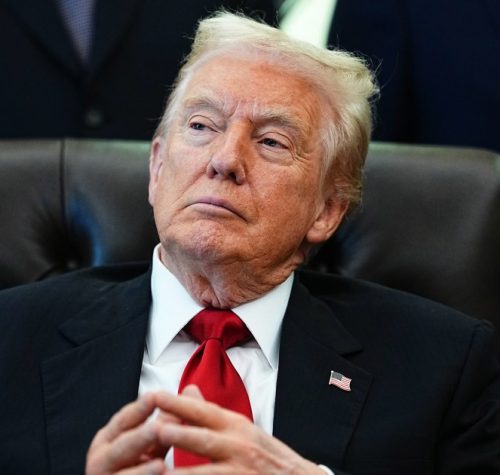
Republicans are unlikely to renew Affordable Care Act subsidies before year-end deadline, as Obamacare health insurance premiums soar.

Source link

TAGS: