• Dec. 13, 2025, 7:30 AM ESTBy Denise ChowThe…
  • Brown University warns of active shooter on campus
  • Explosion in Idaho parking lot leaves one dead
  • How the Trump administration is reacting to Syria…

Be that!

contact@bethat.ne.com


Be That ! Menu   ≡ ╳
  • Home
  • Travel
  • Culture
  • Lifestyle
  • Sport
  • Contact Us
  • Politics Politics
☰

Be that!

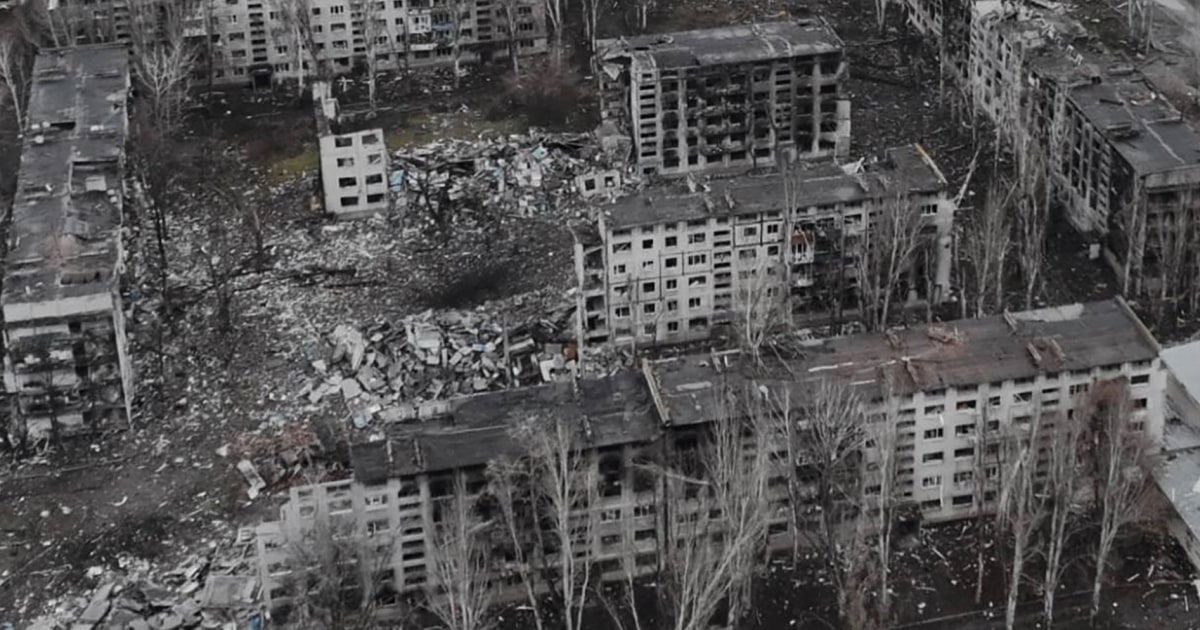
Dec. 13, 2025, 4:51 AM ESTBy Freddie ClaytonUnited States special envoy Steve Witkoff is on his way to Berlin, Germany, to meet with Ukrainian President Volodymyr Zelenskyy and European leaders for peace negotiations aimed at ending the war in Ukraine, a senior White House official told NBC News.Witkoff has spearheaded talks with Ukraine and Russia since President Donald Trump took office in January, but multiple high-level meetings between the U.S. and the two warring nations have yet to produce results as disagreements remain over the content of a peace plan.Trump, who has pushed for a deal to be in place by Christmas, has signaled that his patience is running thin.European leaders have focused on how to support Ukraine in the event of a peace deal, with talks ongoing over security guarantees and funding. But long-time American allies in Europe have struggled to balance the mounting pressure from Washington with their reluctance to give in to Russia’s hard-line demands. Zelenskyy said Ukraine submitted a 20-point plan to the U.S. on Wednesday, as it sought to balance out a 28-point U.S.-backed plan whose original version was seen as too favorable to Moscow.Ukraine’s proposal included separate documents on security guarantees, to prevent Russia from attacking again, and on rebuilding Ukraine’s war-hit cities.The issue of ceding territory remains a major sticking point in negotiations, and Russian President Vladimir Putin last week reiterated his goal to take eastern Ukraine “by force” unless his unwavering demands are met.Zelenskyy said there was still no common understanding on the land issue and that Ukrainians should vote on any territorial concessions in a referendum.Russia has continued its bombardment of Ukraine as talks continue. Ukraine’s southern port city of Odesa and the surrounding region suffered major blackouts on Saturday after a large overnight Russian attack on the power grid across the country.Ukraine’s Zaporizhzhia nuclear power plant also temporarily lost all offsite power overnight for the 12th time, the International Atomic Energy Agency (IAEA) said on Saturday, citing its Director General Rafael Mariano Grossi.Zelenskyy said in a post on X: “It is important that everyone now sees what Russia is doing – every step they take in terror against our people, all their attacks, for this is clearly not about ending the war. They still aim to destroy our state and inflict maximum pain on our people.”Witkoff’s visit to Berlin comes as the European Union agreed Friday to indefinitely freeze Russian assets worth 210 billion euros ($246 billion) held in Europe, as it considers using those assets to fund Ukraine’s war effort.The indefinite freeze appears to be a bid to convince Belgium, where much of that money is held at Euroclear, to agree to plans that would loan a large chunk of the money to Ukraine to cover its military and civilian budget needs in 2026 and 2027.Belgium opposed the plan because it fears legal retaliation by Russia, which has condemned the freezing of its assets as theft, but the agreement includes a guarantee that Belgium would not be left alone to foot the bill should a potential Russian lawsuit prove successful. Zelenskyy said Thursday that negotiators are wrestling with the question of territorial possession in U.S.-led peace talks on ending the war with Russia, including the future of Ukraine’s eastern Donetsk region and the Russian-occupied Zaporizhzhia nuclear power plant, one of the world’s 10 biggest atomic plants.Speaking to reporters in Kyiv on Friday, Zelenskyy said the U.S. is offering as a compromise to create a “free economic zone” in the Ukraine-controlled parts of the eastern Donbas which Russia has demanded that Ukraine cede.Among the issues Zelenskyy shared were that Russia wants to incorporate the entire Donbas, which Ukraine opposes. He also said the U.S. proposed turning Donbas into a “free economic zone.” That would mean Ukrainian forces withdraw from Donbas and Russia refrains from entering the parts of Donbas it does not currently occupy.“They see it as Ukrainian troops withdrawing from the Donetsk region, and the compromise is supposedly that Russian troops will not enter this part of Donetsk region. They do not know who will govern this territory,” he said, adding that Russia is referring to it as a “demilitarized zone.”NATO chief Mark Rutte struck a drastic note Thursday as he urged allies to step up defense efforts. “We are Russia’s next target,” he said, warning of a conflict that could be on “the scale of war our grandparents and great-grandparents endured.”Freddie ClaytonFreddie Clayton is a freelance journalist based in London. Yamiche Alcindor and Reuters contributed.
admin - Latest News - December 13, 2025
admin
2 views 22 secs 0 Comments


United States special envoy Steve Witkoff is on his way to Berlin, Germany, to meet with Ukrainian President Volodymyr Zelenskyy and European leaders for peace negotiations aimed at ending the war in Ukraine, a senior White House official told NBC News


Source link

TAGS:
PREVIOUS
Dec. 13, 2025, 6:30 AM ESTBy Nicole AcevedoLawful permanent residents are seeing their naturalization ceremonies abruptly canceled this month as the Trump administration puts an indefinite “hold” on immigration applications from certain countries.The holds apply to green card and U.S. citizenship requests by people from 19 countries deemed “high risk” by the Trump administration. The list includes Cuba, Iran, Haiti and Somalia, among others.Lawful permanent residents, or green card holders, are already among the most thoroughly vetted individuals in the nation’s immigration system. When they decide to naturalize, they undergo an even more comprehensive government review that includes background checks, interviews with immigration officers and a citizenship test.The citizenship ceremony is the last step in a long process that starts with having a green card for several years, submitting the application, paying hundreds of dollars in fees, completing an interview with an immigration officer, passing a background check as well as an English and civics test, all before finally taking the oath.“If you’re scheduled for an oath ceremony, you have gone through all of the checks that are required,” said Deborah Chen, supervising attorney at the New York Legal Assistance Group’s immigrant protection unit.The Trump administration’s new policy placing a hold on naturalization ceremonies for immigrants from the 19 countries is the latest among several other changes implemented this year that could make it more difficult for many lawful permanent residents to become U.S. citizens.In addition to the holds on immigration applications, the administration is cutting grants to groups that help prepare people to become citizens, implementing stricter social media vetting for those seeking citizenship, conducting neighborhood investigations into applicants’ “moral character,” and giving a more difficult civics test required for citizenship.Ready to become citizens — now ‘re-scrutinized’In Florida, Anyi Cabrales, who is Cuban, went to the salon on the morning of Dec. 1 to get her hair done ahead of her citizenship ceremony, she shared on social media. Cabrales told Noticias Telemundo she had been looking forward to the special occasion for the past eight months, but a few hours before being sworn in as a U.S. citizen she received a phone call from a U.S. Citizenship and Immigration Services official notifying her about the cancelation.In Massachusetts, a Haitian immigrant who has lived in the state for more than 20 years was pulled out of the line at her citizenship oath ceremony on Dec. 4, Gail Breslow, executive director of Project Citizenship, the legal services organization helping the woman, told NBC Boston.“It’s just because of this policy memo, all of a sudden, everyone from these 19 countries are going to be re-scrutinized,” NYLAG’s Chen said.Throughout the year, USCIS has been cutting back on naturalization ceremonies in smaller localities across the nation, many of them held in public or donated venues such as public libraries and historical sites and buildings like Oakland’s Paramount Theatre in California and the Oregon Historical Society in Portland.Last month, USCIS canceled naturalization ceremonies held in local courthouses across seven counties in upstate New York. Those ceremonies were quickly reinstated two days later following public outcry. This week, three of those counties had their ceremonies canceled again.In Ulster County, one of the counties affected, the cancelations are causing not just “emotional damage” to those ready to take their citizenship oath, said Victor Cueva, a naturalized citizen born in Peru who serves as the executive director of the Ulster Immigrant Defense Network. “There’s also legal damage.” Canceling these ceremonies, and in many cases not rescheduling them, Cueva said, “is a harm done to people that have gone through 99% of the naturalization process.”USCIS has said it wants to do away with judicial oath ceremonies, which take place at courthouses, and allow only administrative ceremonies that are held in USCIS field offices or other federal buildings. For some, the cancelations would mean that people would have to wait longer and travel farther outside their county to take their citizenship oath.USCIS did not respond to a request for comment. The agency previously told NBC News it had concerns about the efficient use of USCIS grants following the funding freeze in February. In a policy email made public by the Immigration Policy Tracking Project, USCIS said it stopped coordinating naturalization ceremonies in public venues, preferring to continue conducting them at USCIS field offices.President Donald Trump laid the foundation for a more strict naturalization process in his Jan. 20 executive order seeking to enhance vetting and screening efforts for migrants coming to the United States as well as those already in the country.About a month later, the Trump administration stopped disbursing USCIS grants to organizations providing English classes and civics instruction to lawful permanent residents getting ready for their citizenship interviews and tests.In Rhode Island, Channavy Chhay began noticing the ripple effects of these cutbacks. As the executive director of the Center for Southeast Asians, she works with many families who’ve come from Laos, Vietnam, Cambodia and Myanmar.In a state that is home to one of the nation’s largest Southeast Asian refugee populations per capita, there are essentially no citizenship classes, Chhay said. The discontinuation of the USCIS grants jeopardized the support of four federally funded citizenship and immigration services programs in Rhode Island that helped lawful permanent residents go through the naturalization process.In June, following the travel ban on 19 “high risk“ countries including Laos and Myanmar, decisions on immigration applications from many in these communities stalled, Chhay said. After all immigration requests from people in these countries were indefinitely halted this month, it “just went dark.”“We haven’t seen anyone get sworn in or get the chance to even file to become U.S. citizens. We haven’t seen that at all for a long time,” said Chhay.Aside from USCIS’ use of criminal history checks by the FBI and biometric screening, between August and September the Trump administration reintroduced neighborhood investigations into prospective citizens’ “moral character” as well as stricter social media vetting of applicants. The agency has said the changes are part of a “multi-step overhaul” to restore “robust vetting for all aliens and stricter reviews.” In neighborhood investigations, immigration officers visit an applicant’s home to assess good “moral character” and interview neighbors, landlords, co-workers and other community members about the applicant.Some clients of the New York Legal Assistance Group who had pending naturalization applications when the new policies went into effect were denied because they owed taxes, even though they were on a payment plan, according to NYLAG’s Chen.“It used to be that if you didn’t have any arrests, that was good enough,” Chen said, adding “that’s not good enough” anymore. To prove “good moral character,” applicants must also show “positive attributes,” such as family caregiving, educational attainment, stable employment and community involvement.With the growing scrutiny, compounded by immigration officers’ wider discretion to determine if someone has “good moral character,” the organization began advising more clients to renew their green cards instead of going through the naturalization process, Chen said, to avoid any potential issues that could jeopardize a person’s legal immigration status.USCIS plans to soon open a vetting center in Atlanta that will use “powerful screening resources” and “state-of-the-art technologies” including artificial intelligence to review immigration applications, especially from “presidentially designated countries of concern,” according to a news release.Nicole AcevedoNicole Acevedo is a news reporter for NBC News.
NEXT
River carries off Washington couple's home
Related Post
October 8, 2025
Trump floats invoking Insurrection Act
September 25, 2025
Kimmel draws record ratings for first show back
October 30, 2025
The difference between nuclear weapons and bomb tests
November 12, 2025
Jeffrey Epstein wrote Trump 'knew about the girls' and referenced Mar-a-Lago in newly released emails
Comments are closed.
Scroll To Top
  • Home
  • Travel
  • Culture
  • Lifestyle
  • Sport
  • Contact Us
  • Politics
© Copyright 2025 - Be That ! . All Rights Reserved