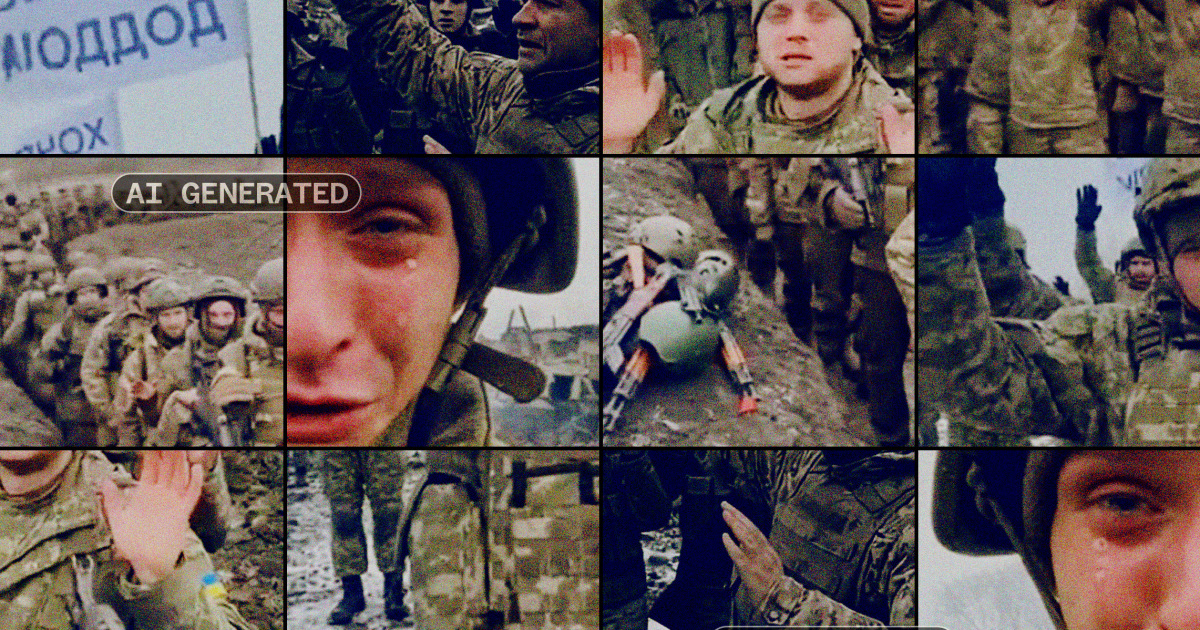
The videos began to circulate on social media in early November: Ukrainian soldiers appearing to weep and surrender on the front lines
Source link
Dec. 13, 2025, 5:30 AM ESTBy Marin Scott and Tavleen TarrantThe videos began to circulate on social media in early November: Ukrainian soldiers appearing to weep and surrender on the front lines.To the naked eye, they look real, mirroring many of the videos that have emerged from the region during years of conflict. Few have telltale signs of manipulation.But Aleksei Gubanov, a popular Russian livestreamer who now lives in New York, immediately recognized something fishy: his own face.“At first I didn’t take it seriously, but soon I noticed how quickly the view count was growing and, even worse, how many people believed these videos were real,” Gubanov said of the videos he saw. “Tens of thousands, if not hundreds of thousands, of users were leaving comments expressing condolences to the supposedly Ukrainian soldiers in the videos and directing anger toward the Ukrainian leadership.”Gubanov, who streams video games and chatting on Twitch and fled Russia due to his criticism of President Vladimir Putin, has never served in the armed forces, let alone in the Ukrainian army. What his followers had flagged was an AI-generated video that used his likeness to spread a false narrative about morale among Ukrainian troops.“We were taken to draft commission and sent here. Now we are being taken to Pokrovsk. We don’t want to. Please,” the AI-generated Gubanov said in Russian while wearing a uniform with the Ukrainian flag on it. “Mom, Mom, I don’t want!”The video is one of 21 AI-generated videos of Ukrainian soldiers reviewed by NBC News in recent weeks that appear to have been created or manipulated using advanced artificial intelligence programs, resulting in some so realistic that they offer few hints of their origins.But in at least half of these videos, a small logo in the corner gives it away: They were made with Sora 2, the latest iteration of OpenAI’s text-to-video generator. Some of the videos generated by Sora used the faces of popular Russian livestreamers, such as Gubanov, in dramatic deepfakes while others show groups of Ukrainian soldiers surrendering to Russian forces en masse.Those that appear to have been generated by other AI platforms also had very subtle errors that would be challenging for most people to find, such as incorrect or simplified versions of the uniforms and helmets Ukrainian soldiers wear. And to Ukrainians, there’s an obvious issue: The majority of videos feature soldiers speaking Russian, while only eight of the 21 videos feature military personnel speaking Ukrainian.