• Dec. 6, 2025, 6:47 PM ESTBy Courtney Kube,…
  • Dec. 6, 2025, 6:00 AM ESTBy Mithil AggarwalHONG…
  • Dec. 6, 2025, 9:05 AM ESTBy Rohan NadkarniAt…
  • How might the U.S. fare in the 2026…

Be that!

contact@bethat.ne.com


Be That ! Menu   ≡ ╳
  • Home
  • Travel
  • Culture
  • Lifestyle
  • Sport
  • Contact Us
  • Politics Politics
☰

Be that!

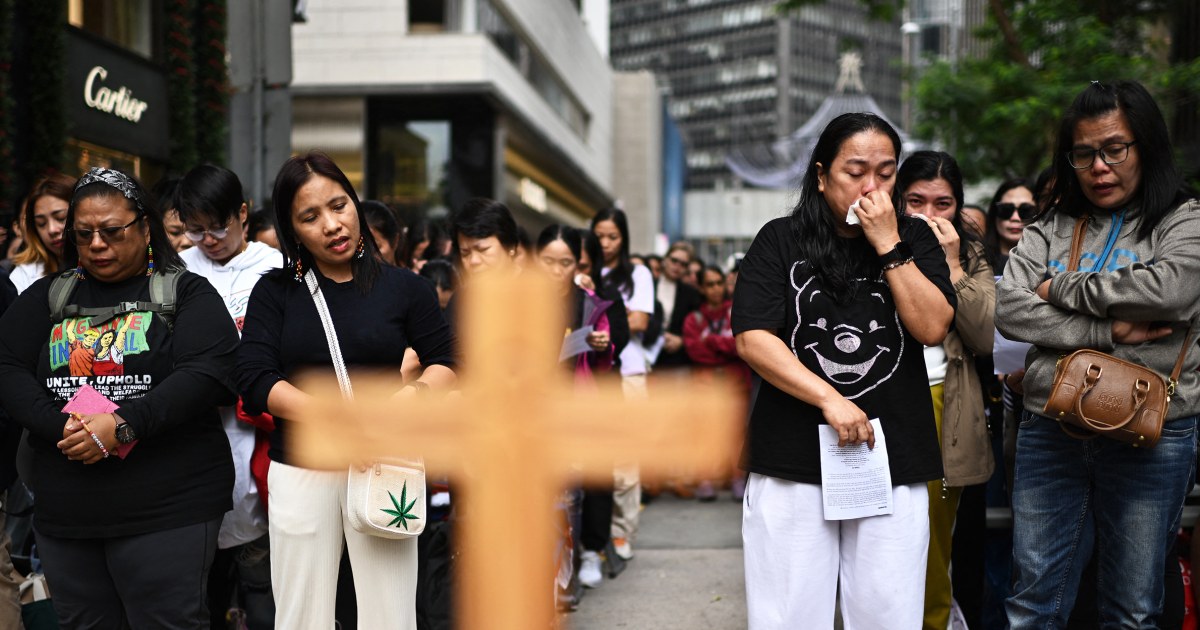
Dec. 6, 2025, 6:00 AM ESTBy Mithil AggarwalHONG KONG — As smoke quickly filled the corridors of a 31-story tower in Hong Kong last week, Rhodora Alcaraz found herself trapped alone with a 3-month-old baby.The 28-year-old migrant worker had arrived in the Chinese territory from the Philippines only a day earlier to work for a family living in a high-rise housing estate. When a massive fire ignited in the middle of the afternoon, tearing across seven of the estate’s eight buildings, Alcaraz shielded the baby in her arms and was rescued by firefighters just in time, along with her employer’s elderly mother.Hong Kong, an international financial hub of 7.5 million people, is home to hundreds of thousands of domestic helpers like Alcaraz, mostly women from low-income Asian countries such as the Philippines and Indonesia.The bravery of Alcaraz and other domestic helpers during the Nov. 27 blaze at Wang Fuk Court in the northern district of Tai Po, which killed at least 159 people, has put a spotlight on the critical role they play in the city, where they work for low wages and often live in cramped homes alongside employers who heavily rely on them for housework and caregiving.At least 10 domestic helpers were killed in the fire, including nine from Indonesia and one from the Philippines.“We are truly grateful for their selflessness and also their heroic acts during the fire,” Chris Sun, Hong Kong’s secretary for labor and welfare, told reporters Tuesday.He added that families of the domestic helpers who died will receive about 800,000 Hong Kong dollars ($100,000) in condolence and compensation payments.Firefighters work Saturday outside one of the charred housing blocks at Wang Fuk Court.Philip Fong / AFP via Getty ImagesThe Tai Po fire, the deadliest in Hong Kong in almost 80 years, has shocked and angered the public amid accusations of corrupt business practices and failures in government oversight. Authorities say the rapid spread of the five-alarm fire was caused by the use of highly flammable materials around the buildings during renovations. Hong Kong’s top leader, John Lee, said this week that a judge-led independent committee would be set up to “review” the fire, which displaced thousands of people from their homes. Almost two dozen people have been arrested on suspicion of manslaughter and fraud in separate investigations.Alcaraz was still recovering in the hospital and was seen wearing purple scrubs and a mask in a picture posted by Philippines Sen. Imee Marcos.“I salute you, Rhodora, and all overseas foreign workers who continue to sacrifice for their families even while far from home,” she said in a Facebook post Sunday after visiting Alcaraz in the hospital.While authorities and aid agencies announced several support measures for affected residents, including transitional housing and a donor-supported reconstruction fund that has raised about 2.8 billion Hong Kong dollars ($360 million), the fire creates additional uncertainty for domestic helpers, who live in Hong Kong on dedicated visas and are entitled to far fewer rights than a typical resident.A helper’s salary starts at about $650 a month.Even with an additional food allowance of about $160, they still earn below the minimum wage in Hong Kong, which at about $5.40 an hour amounts to $860 a month for a 40-hour workweek. They are also ineligible for permanent residency, which in most cases can be obtained by living in the city for seven years.Many domestic helpers are mothers themselves, sending most of their earnings to their children back home to support their education.“They have deep trauma now. Whenever they pass by the building, they always cry. Some had friends who died in that building,” said Sring Sringatin, a domestic helper in Hong Kong who is chair of the Indonesian Migrant Workers Union.Sringatin said helpers from Wang Fuk Court were still residing with their employers, either in temporary shelters or alternative housing. Previously, they would often share a room with the family’s children. Now that their employers are homeless, accommodating helpers has become even more difficult, according to Sringatin and other aid workers who have met with affected helpers.Thick smoke and flames rose from Wang Fuk Court on Nov. 26.Tommy Wang / AFP – Getty ImagesIt is also unclear whether employers whose homes have been destroyed will be able to pay their salaries on time, even as the workers — who are so embedded with families that they often act as the primary caregivers to children and elderly relatives — continue providing care.“They just follow the families if there is care to be given,” said Johannie Tong, a community relations officer for the nonprofit group Mission for Migrant Workers.“It’s like a default for them. The disaster has happened, but they are still working. They don’t have this question, whether I should work,” said Tong, who visited some of the displaced workers over the past week in government-run temporary shelters that journalists could not access.Before the fire, workers got little time to themselves. In most cases they worked six days a week, meeting fellow workers on Sundays at parks and other public places to sing karaoke, do each other’s nails or enjoy picnics. Now they are not only traumatized, but they may also be facing more pressure at work and feeling isolated at a time when they are far away from their families, Tong and Sringatin said.The fire, which killed at least 159 people, has shocked and angered Hong Kong.Philip Fong / AFP via Getty Images“They are trying their best to perform their duties, but at the same time they need to be strong, because as a domestic worker there is this feeling that they don’t have anyone in here,” Sringatin said.Tong said her charity was trying to determine what kind of long-term help workers might need, including immigration assistance or support for their families back home. In the short term, she said, there are ample donations at their center in Hong Kong’s Jordan neighborhood, where workers on Monday were sorting through clothes, toiletries, medicines and more.Mission for Migrant Workers said it had obtained a SIM card for Alcaraz to use to communicate with her family back in the Philippines.“Since she hasn’t recovered her voice yet, she just gave a thumbs-up and smiled to express her joy and appreciation,” the charity said Wednesday.Mithil AggarwalMithil Aggarwal is a Hong Kong-based reporter/producer for NBC News.
admin - Latest News - December 6, 2025
admin
0 views 15 secs 0 Comments


Last week’s massive blaze at a Hong Kong housing estate killed at least 159 people, including 10 domestic helpers, highlighting the critical role they play in the Chinese territory.


Source link

TAGS:
PREVIOUS
Dec. 6, 2025, 9:05 AM ESTBy Rohan NadkarniAt the start of the college football season, no Division I program had more losses in its history than Indiana’s 715 defeats.But 15 weeks later, as we enter conference championship Saturday, that number remains unchanged as the 12-0 Hoosiers — ranked No. 2 in the country — prepare to face No. 1 Ohio State in Saturday’s Big Ten title game.Indiana, the school and state synonymous with basketball, is now a pigskin powerhouse on the precipice of its second straight College Football Playoff.The school’s fans are as shocked as everyone else.“Hell no,” Mark Cuban, the billionaire multihyphenate and 1981 graduate of Indiana’s business school, told NBC News via email if he ever thought the Hoosiers would be on the same level as a blue blood like Ohio State. “I thought I would be dunking with my feet before that would happen.”Galen Clavio, a 2001 IU grad who is currently an associate dean at the school, took it a step further: “It feels like someone beamed somebody else’s team down to planet Earth and now they’re wearing Indiana uniforms.”Clavio, who also hosts “CrimsonCast,” a podcast about Hoosier sports, added: “I know that sounds hyperbolic, but it really is hard to get your head wrapped around as someone like me who’s been following that program for so long.”Indiana has had spurts of competence before, though the school has not won a bowl game since 1991. In 2020, the Hoosiers finished the season ranked 12th in the Associated Press poll, their first top-25 finish since 1988.Cuban was in school during one of the program’s best moments, a win in the Holiday Bowl after the 1979 season under then-head coach Lee Corso. Cuban was at a packed Motley’s Pub when the Hoosiers upset an undefeated BYU team, a game that featured a memorable 62-yard punt return by Tim Wilbur.But over the last half-century, the football program has paled in comparison to its basketball counterpart, which has made five Final Fours and won three national championships since 1976. The basketball success came under the direction of a legendary though ultimately controversial figure in Bobby Knight.The football team now has its own mythmaking figure in charge (and without any off-field baggage): Curt Cignetti, who in two seasons since joining the school from James Madison has led Indiana to a 23-2 record and all but clinched back-to-back CFP appearances.At Cignetti’s first press conference as head coach, he was asked how he could turn around one of college football’s dormant programs and responded with a prophetic phrase.“I win,” Cignetti said. “Google me.”And that’s what Cignetti did, leading the school to an 11-2 record and to 10th in the final rankings in his first year at the helm, IU’s best finish in the final poll since 1967. The head coach’s confidence — and ability to back it up — has energized the fan base.“He is a Pittsburgh guy,” Cuban said. “He has the yinzer accent, the hard-work pedigree, and the gumption to say what he will do and back it up.”Said Clavio: “Cignetti, his staff and the players that they bring in, there’s a professionalism and a focus and a discipline about them that looks like what you see at top football programs. What’s exciting about it for me and for a lot of other IU fans is that it feels sustainable because it feels like an actual program now. It’s not dependent on one good player or one good recruiting class.”The emergence of the football team as a legitimate contender has created a massive spike in fan interest.Earlier this year, Cuban made his first donation to the school’s athletic department. He said he talks to athletic director Scott Dolson “all the time” and will help the school any way he can.Clavio, who was also an IU sports fan growing up, said in his 30 years attending football games, he’s never seen the student section full before the start of every game as he has this season.Alex Bozich is the co-founder and editor of “Inside the Hall,” a website launched in 2007 to cover all things Hoosier basketball. Beginning this season, for the first time, Bozich had his staff start covering football full time as well.“Cignetti, the way he presented himself early in the media, he was kind of a driving force for the excitement,” Bozich said. “We’ve noticed, in terms of the comments that we’re getting on stories, there’s a lot of people engaged and just excited in general about following the team.”The excitement spreads from Bloomington to as far as California.Scott Rappaport is a 2004 IU grad who is currently the president of the school’s alumni association in Los Angeles. He used to ask the school’s designated bar, State Social House (which is mainly a Texas Longhorns hangout), for a couple tables for football watch-alongs, trying to entice alums to attend with mimosa breakfasts.Last year, Rappaport noticed excitement grow as the season went along, with crowds increasing from 20 people to 50 to, finally, by the time Indiana and Ohio State faced off in an undefeated matchup last November, close to 150. Fans were lined up outside State Social House well before the 9 a.m. local start time.“We’re like, OK, this is definitely different,” Rappaport said. “Football has definitely been bigger the last two years than basketball.”Rappaport said Cignetti hasn’t only changed the school’s fortunes, but he’s also changed the fans’ expectations.“We have all these points of getting out of the old IU fan mindset, where we’re thinking, ‘We’re gonna blow it,’ to thinking, ‘Cig is our coach, this is different, we expect to win pretty much every game.’”While Saturday’s game may not be the highest-stakes one of Cignetti’s brief tenure — that would be the first-round defeat to Notre Dame in last year’s playoff — it is still incredibly important to the school.The Hoosiers have not beaten the Buckeyes since 1988. Indiana has not won a Big Ten championship since 1967. And the school has never been ranked No. 1 in football in its entire history, which would happen with a victory.The Hoosiers enter after a perfect regular season that included wins against No. 9 Illinois and on the road against No. 3 Oregon. Indiana was led by quarterback (and Heisman Trophy candidate) Fernando Mendoza, a transfer from Cal who threw for 2,758 yards and 32 touchdowns, while running for six more scores.“People couldn’t be more excited for the opportunity to watch IU in the Big Ten championship, especially right up the road in Indianapolis,” Bozich said. “It’s going to be a special, special moment for a lot of IU fans who have waited a long time to see something like this.”When asked what it would mean for the Hoosiers to play in the national championship game, Clavio said it’s not something he could even fully comprehend.“That’s like asking me how it would feel if someone offered me to land on the moon tomorrow,” he said. “To be able to see them on that prominent of a stage would be the most fulfilling thing I could ever experience as a sports fan.”Rohan NadkarniRohan Nadkarni is a sports reporter for NBC News. 
NEXT
Dec. 6, 2025, 6:47 PM ESTBy Courtney Kube, Julie Tsirkin and Gordon LuboldWASHINGTON – WASHINGTON — Defense Secretary Pete Hegseth ordered the U.S. military on Sept. 2 to kill all 11 people on a suspected drug-smuggling boat in the Caribbean Sea because they were on an internal list of narco terrorists who U.S. intelligence and military officials determined could be lethally targeted, the commander overseeing the operation told lawmakers in briefings this past week, according to two U.S. officials and one person familiar with the congressional briefings. Such a list includes individuals who are eligible for being targeted, including with lethal action, if given the opportunity. The commander who oversaw the Sept. 2 strikes, Adm. Frank “Mitch” Bradley, told lawmakers that U.S. intelligence officials had confirmed the identities of the 11 people on the boat and validated them as legitimate targets, then the military launched airstrikes as part of President Donald Trump’s military campaign against alleged drug-smuggling vessels, the U.S. officials and person familiar with the congressional briefings said. The detail that the 11 people on the boat were on an internal U.S. military target list has not previously been made public. It adds another dimension to the Sept. 2 operation that has been mired in controversy over the military’s decision to launch a second strike after the first left two survivors in the water. Lawmakers have raised questions about whether the second strike violated international law. Whether Hegseth directed Bradley, who is the commander of U.S. Special Operations Command, to kill everyone on the boat has been key question in the controversy over the second strike. An administration official said Bradley made clear in his briefings with lawmakers that he acted in complete compliance with the law throughout the operation. “As with all such actions, a uniformed JAG provided advice and counsel every step of the way,” the official said in a written statement, adding that the boat was targeted because it was “carrying cocaine” and was “affiliated with a cartel designated by the president as a terrorist organization.”“The cumulative impact of these narcoterrorist shipments directly threaten Americans and the national security interests of the United States,” the official said.The Pentagon did not respond to a request for comment. U.S. Special Operations Command declined to comment.The Pentagon has said 22 strikes on alleged drug boats have killed 86 people — 11 strikes have been in the Caribbean Sea and 11 in the Eastern Pacific. The administration has produced no evidence supporting its allegations about the vessels or the people on board.On Thursday, Bradley spent more than eight hours on Capitol Hill briefing a dozen members of Congress and their staff about what happened during the operation. The Chairman of the Joint Chiefs of Staff Gen. Dan Caine also attended the briefings. This account of Bradley’s detailed timeline and explanation of events throughout the Sept. 2 operation as told to lawmakers in the private briefings is based on interviews with the two U.S. officials and person familiar with the congressional briefings. Bradley told lawmakers that the orders he received from Hegseth were to kill the individuals on the approved target list, which included everyone on the boat, then destroy the drugs and sink the boat, those sources said. White House press secretary Karoline Leavitt told reporters on Monday that “Secretary Hegseth authorized Admiral Bradley to conduct these kinetic strikes.” She added Bradley “worked well within his authority and the law directing the engagement to ensure the boat was destroyed and the threat to the United States of America was eliminated.” Bradley told lawmakers the second strike killed the two survivors, but did not sink the boat, so he ordered a third and a fourth strike to complete the mission, the officials and person familiar with the congressional briefings said. Hegseth has said he observed the operation on Sept. 2 but “did not personally see survivors.” During a Cabinet meeting at the White House this past week, he defended the second strike, saying Bradley “made the right call.” “This is called the fog of war,” Hegseth said. During Bradley’s joint briefing Thursday with the House and Senate Armed Services Committee leadership, he was pressed about whether Hegseth gave an order to kill everybody on board, according to one of the U.S. officials and the person familiar with the briefing. Bradley, referencing the approved list of targets, said Hegseth told him to kill everyone on board and to destroy the vessel, the official and person familiar with the briefing said. In another briefing, Bradley was asked whether Hegseth gave him a ‘no quarter order,’ which is an illegal military directive to kill all enemy combatants and show no mercy, even if they surrender or are gravely injured, one of the U.S. officials and a second person with knowledge of the briefing said. They said Bradley replied that he was not given such an order and would not have followed one if it had been given. The White House and Hegseth have said no illegal orders were given.Unlike a ‘no quarter order’, an order to kill everyone on a target list is not forbidden under U.S. and international law. The three sources said Bradley said the military struck the boat with a GBU-69, a precision-guided munition that was set to air burst, meaning it detonated in mid-air rather than on impact. He said the explosion killed nine of the people on board, capsized the boat and damaged the back of it, including the motor. Another part of the boat split off and caught fire, but a major section of the boat was not ablaze. The damage made the boat unlikely to continue navigating, Bradley told lawmakers. For more than 30 minutes, Bradley said he observed the two survivors among the wreckage.He told lawmakers there were bags of cocaine on the boat that were not ejected during the initial explosion. Because the bags of cocaine were not seen floating in the water, Bradley said he believed they were strapped in and had stayed tied down during the explosion, making it likely the drugs were still under the capsized boat. The cocaine was wrapped in plastic waterproof bundles, which likely made them more buoyant and may have contributed to the boat not sinking, he told lawmakers. The two survivors got on the side of the boat that was not on fire and were able to flip it over and eventually stand on it. Bradley observed them take off their shirts to check each other for wounds and told lawmakers they did not appear to have any visible injuries. He said the military’s overhead surveillance zoomed in to ensure the survivors weren’t injured or bleeding. A U.S. military aircraft overhead spotted the survivors waving their arms but could not say with certainty whether they were signaling to the aircraft, Bradley told lawmakers, according to the three sources. He said he determined that while the boat sustained damage significant enough that it may not be able to navigate, it may still have been able to keep floating or drifting. U.S. intelligence also spotted another larger boat in the area, determining that the damaged boat was supposed to link up with it to transfer the drugs onto the larger vessel. The larger boat was not on the approved target list Bradley had, so he did not have the authority strike it. He said because the U.S. did not have positive identification of who was on the larger boat, waiting to see if it came to try to salvage the damaged boat and two survivors was not a viable option. Bradley explained, the three sources said, that his decision to target the boat with the survivors was because the drugs were not destroyed and the individuals on the boat had not surrendered and were not visibly injured but were still on the list of approved targets. And while the survivors were not armed, he said the mission identified the drugs as the threat to the U.S., effectively deeming the cocaine as the weapon that could endanger Americans. Even so, Bradley acknowledged to lawmakers that U.S. intelligence did not conclude the drugs were heading to the U.S. Rather it showed that the boat was traveling south toward another country in South America, Suriname, which was first reported by CNN. Bradley told the lawmakers the boat was eventually to Europe or Africa.Courtney KubeCourtney Kube is a correspondent covering national security and the military for the NBC News Investigative Unit.Julie TsirkinJulie Tsirkin is a correspondent covering Capitol Hill.Gordon LuboldGordon Lubold is a national security reporter for NBC News.
Related Post
November 22, 2025
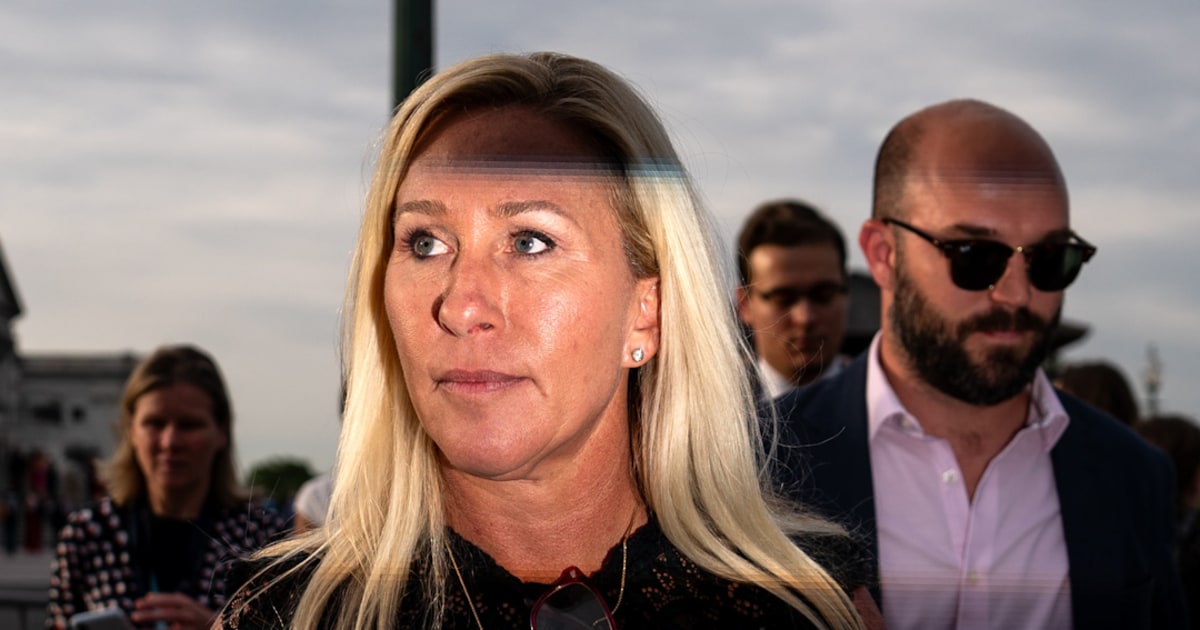
Why Marjorie Taylor Greene is resigning from Congress
November 18, 2025
Trump and Saudi crown prince questioned about killing of Jamal Khashoggi
September 23, 2025
Trump discusses strikes on boats 'smuggling poisonous drugs' from Venezuela
September 28, 2025
Trump Says ‘I Think There Will Be Others’ After Comey Indictment
Comments are closed.
Scroll To Top
  • Home
  • Travel
  • Culture
  • Lifestyle
  • Sport
  • Contact Us
  • Politics
© Copyright 2025 - Be That ! . All Rights Reserved