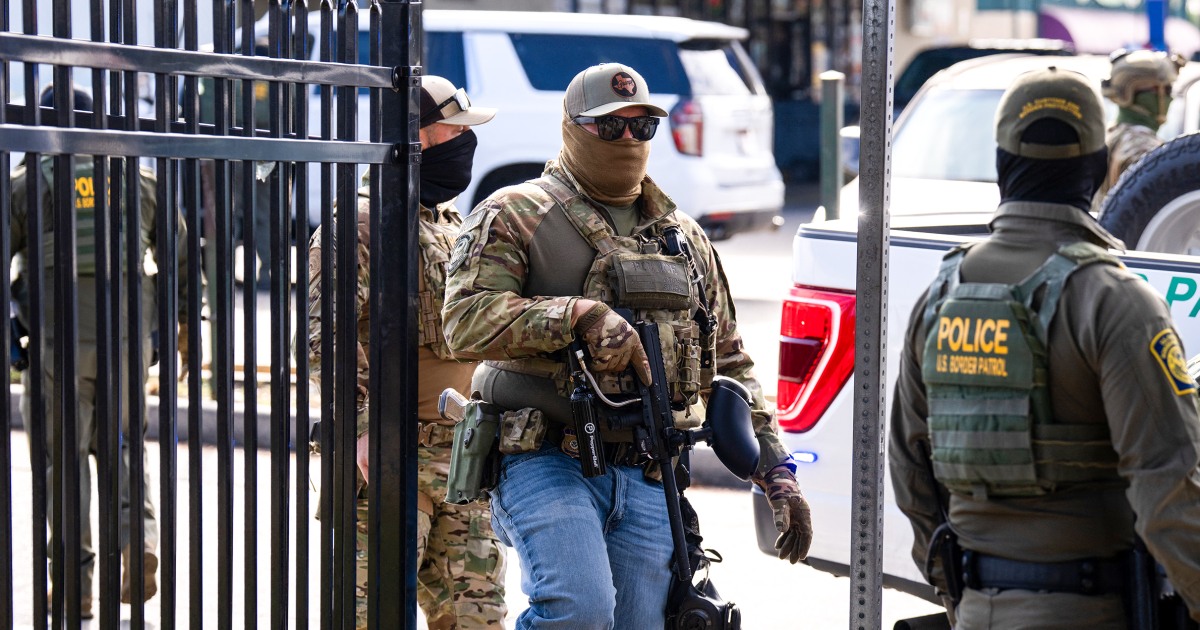
The immigration enforcement operation launched Wednesday in Louisiana is pitting New Orleans’ sanctuary city policies against state laws favored by Republican lawmakers
Source link
Dec. 7, 2025, 5:30 AM ESTBy Alicia Victoria LozanoThe immigration enforcement operation launched Wednesday in Louisiana is pitting New Orleans’ sanctuary city policies against state laws favored by Republican lawmakers.Officials in New Orleans have expressed an unwillingness to aid the operation in a city rich with diversity. But unlike states like California and Illinois, where Democratic governors and lawmakers opposed to President Donald Trump’s immigration policies have pushed back, Louisiana’s top officials welcome federal intervention.“Louisiana will not be a refuge for violent offenders. We stand with our federal partners and the law enforcement officers who protect our people every day,” Gov. Jeff Landry said in a social media post Wednesday. “Thank you to President [Donald Trump] and [Homeland Security Secretary Kristi Noem] for ensuring Louisiana has the resources and coordination needed to keep our citizens safe.”“Operation Catahoula Crunch,” the name given by the Department of Homeland Security to immigration enforcement efforts in Louisiana, is the latest in a series of escalations unfolding in Democratic-led cities like Los Angeles, Chicago and, most recently, Minneapolis. It is unfolding, in part, at the behest of Landry, who has said an enforcement crackdown is key to fighting crime — even as police data shows violent crime, such as nonfatal shootings, burglary and assault, is on a downward trend in New Orleans.The city is on pace to have its lowest number of homicides in nearly 50 years, according to the New Orleans Police Department. As of early November, there have been 97 reported murders in 2025 compared to 124 in 2024.Stronger state-federal cooperation Local leaders have decried the enforcement escalation, calling it unnecessary and harmful.“The announcement of Operation Catahoula Crunch has caused significant alarm in our city and created a culture of fear among our most vulnerable residents,” New Orleans Mayor-elect Helena Moreno said in a statement.But New Orleans officials have little recourse to resist federal enforcement. Landry has steadily steered state immigration policy toward the right and signed legislation aimed at strengthening ties between the state and federal officials.‘It’s chaotic right now,’ Louisiana immigration lawyer says03:07In May, Landry issued an executive order directing state law enforcement agencies to help in federal immigration operations. This included encouraging local departments to sign on to DHS’ 287(g) program, which allows Immigration and Customs Enforcement to delegate to local and state agencies its power to enforce federal laws.More than 20 parishes have signed agreements with federal immigration officials, including Jefferson Parish, which is home to the largest Latino population in the state and is adjacent to Orleans Parish. Hispanic people comprise some 30% of residents in the city of Kenner, where Police Chief Keith Conley has said he welcomes federal agents.On Saturday, Gregory Bovino, the Border Patrol commander overseeing the Louisiana sweep, applauded Landry and Kenner police for helping federal agents.“Massive support. THIS is America,” he posted on X.Landry also created an expedited “alien removal” process to speed up and assist in the deportation of prison inmates found to be in the U.S. illegally.Consent decreeThe policies mirror similar efforts in other Republican-led states, like Oklahoma and South Dakota, but conflict with local policies in New Orleans, which is a sanctuary city and limits cooperation with federal immigration enforcement.In 2016, the New Orleans Police Department adopted a policy that prohibits officers from assisting federal immigration authorities except in limited instances, like a threat to public life or safety and when services are needed to execute a court-issued warrant.The policy stems from a 2013 federal consent decree intended to address a history of corruption and unconstitutional practices, including racial profiling, within NOPD.On Nov. 19, less than two weeks before immigration officials deployed agents to New Orleans, a federal judge ended the consent decree at the request of city leaders and the U.S Department of Justice.At the time, police Superintendent Anne Kirkpatrick said her department had “graduated” from federal oversight after years of implementing reforms addressing racial profiling.“Our support is to make sure they are not going to get hurt and our community is not in danger,” she told reporters, referring to New Orleans’ immigrant community. Kirkpatrick added that immigration is a civil issue and that her department would not enforce civil laws.