• Interstellar comet 3I/ATLAS' journey through our solar system,…
  • Democrat wins Miami's mayoral race for the first…
  • Trump delivers remarks on economy
  • Dec. 9, 2025, 5:56 PM ESTBy Erika Edwards…

Be that!

contact@bethat.ne.com


Be That ! Menu   ≡ ╳
  • Home
  • Travel
  • Culture
  • Lifestyle
  • Sport
  • Contact Us
  • Politics Politics
☰

Be that!

Dec. 9, 2025, 5:56 PM ESTBy Erika Edwards and Mustafa FattahDoctors, hospitals and public health departments are scrambling to ensure proper care for pregnant women and their babies following a controversial vote from Centers for Disease Control and Prevention advisers that reversed decades of standard medical practice giving newborns the hepatitis B vaccine.“We don’t really know just yet how individual hospitals and clinicians will handle this,” said Dr. Brenna Hughes, interim chair of the department of obstetrics and gynecology at Duke University in Durham, North Carolina. “It’s creating fear and distrust.”Last Friday, the CDC’s vaccine panel advised that only babies born to women who test positive for hepatitis B should get the first dose within 24 hours of delivery. The decision rolled back decades-long guidance that all newborns should be protected against the lifelong, incurable infection that can lead to liver disease and cancer. Many babies in the U.S., however, are born to women who never have the chance to be tested. A March of Dimes report published in November found that nearly a quarter of pregnant women aren’t under a doctor’s care during their first trimester, when most women are tested for hepatitis B. Dr. Steven Fleishman, president of the American College of Obstetricians and Gynecologists, said the hepatitis B vaccine given to newborns acts as a safety net. “If there is someone who gets exposed to hepatitis B later in pregnancy, or develops an infection later on,” Fleishman said, “the baby is protected by that vaccine.” The virus can pass from mom to baby during delivery.As of Tuesday, acting CDC director Jim O’Neill hadn’t yet signed off on the committee’s recommendation. The agency isn’t required to follow the panel’s advice, but usually does.The CDC doesn’t mandate vaccination. It recommends a schedule for children to be protected against infectious diseases. The vaccine panel regularly reviews data and makes changes to the schedule based on guidance by doctors or scientists with expertise in the subject matter.But experts said the advisory panel, stacked with members handpicked in June by Health Sec. Robert F. Kennedy Jr., failed to provide the kind of scientific evidence historically associated with the CDC to back up its reasoning. The group “has not followed the standard and transparent process that had made the advisory committee a bastion of good evidence-based decision making,” said Dr. Jason Goldman, an internal medicine doctor and president of the American College of Physicians. “Their information and decisions cannot be trusted.”The panel recommended that women who test negative for hepatitis B can decide in consultation with a health care provider whether their baby should get the birth dose. The panel’s vote to hold off the hepatitis B vaccine for babies until at least 2 months of age for the first dose if the vaccine is not given at birth was totally out of line with decades of evidence proving the shot’s safety and effectiveness, experts say. The birth dose, implemented for all babies in the early 1990s, has driven down cases of acute hepatitis B infections in children by 99%.During a call with reporters Tuesday, Dr. Aaron Milstone, a pediatrician at Johns Hopkins Medicine and member of the American Academy of Pediatrics’ committee on infectious diseases, said the fallout is “chaos and confusion” among public health experts trying to counsel clinicians on best practices, as well as doctors in exam rooms faced with worried parents.“Many physicians are working across our country in fear that doing the best thing for their patient is now at odds with information coming from what were previously trusted resources,” Dr. Sarah Nosal, president of the American Academy of Family Physicians, said during the same call. “If you have to spend 20 minutes explaining that vaccines, yes, in fact, are safe,” said Dr. Kevin Schulman, professor of medicine at Stanford Medicine, “then we’re not spending 20 minutes making sure the baby’s on the growth curve, that you’re wearing seat belts, that you’re using car seats appropriately.”Dr. Anna Lok, director of clinical hepatology and assistant dean for clinical research at the University of Michigan Medical School, said the change in guidance adds barriers for parents, especially in a chaotic delivery room. “It’s just telling the parents, we’re going to make you climb to Mount Everest in order to get your baby vaccinated,” Lok said. “Because every single step, every hurdle, is just making sure that something that should be done, doesn’t get done.” Dr. Rashmi Roa, an OB-GYN who specializes in high-risk pregnancies at UCLA Health, said nothing has changed from a medical standpoint. “Our recommendations will stay the same.”Some states are bypassing federal recommendations and instead joining forces to establish their own guidance. Dr. Naima Joseph, an OB-GYN at Beth Israel Deaconess Medical Center in Boston, said that health officials in Massachusetts and other states have formed the Northeast Public Health Collaborative.“We have already made recommendations regarding universal birth dose hepatitis B vaccine that continues to ensure access” to newborns, she said. The measured approach isn’t expected nationwide, said Joe Zamboni, a lawyer for the nonprofit American Families for Vaccines. “I think some states will probably do it better than others,” he said.One state that worries public health experts is Florida. The state’s surgeon general, Joseph Ladapo, said in September that Florida is working to eliminate all vaccine requirements for children to attend school. The Florida Department of Health has scheduled a meeting for this Friday, Dec. 12, to discuss those requirements. A department spokeswoman told NBC News via email that the meeting will be held in Panama City and will not be available to the public online.Erika EdwardsErika Edwards is a health and medical news writer and reporter for NBC News and “TODAY.”Mustafa FattahMustafa Fattah is a medical fellow with the NBC News Health and Medical Unit. 

admin - Latest News - December 10, 2025
admin
0 views 13 secs 0 Comments


Doctors say the controversial vote to not recommend the hepatitis B vaccine for all newborns is creating chaos and hurdles for parents.


Source link

TAGS:
PREVIOUS
Dec. 9, 2025, 7:02 PM ESTBy Allan SmithGovs. Josh Shapiro of Pennsylvania and Spencer Cox of Utah are sitting for a wide-ranging interview with “Today” co-anchor Savannah Guthrie on Tuesday, as the Democratic and Republican leaders have been at the forefront of handling political violence in their states.Cox, a Republican, was widely praised for his handling of the assassination of conservative political activist Charlie Kirk in Utah in September, an event that inflamed political divides. Shapiro, a Democrat, has dealt with political violence repeatedly in his state, including the attempt on President Donald Trump’s life at a rally in Butler last year and the politically motivated firebombing of his own home this year. Shapiro had similarly received plaudits from both sides of the aisle for his handling of the aftermath of the attempt on Trump’s life.In a speech about political violence days after Kirk was assassinated, Shapiro criticized the “selective condemnation” of such attacks.“As I have made clear each and every time, this type of violence has no place in our society, regardless of what motivates it or who pulls the trigger, who throws the Molotov cocktail or who wields the weapon,” he said. “It doesn’t matter if it’s coming from one side or from the other, directed at one party or another, one person or another, it is all wrong, and it makes us all less safe.”Shapiro and Cox have built a friendship across party lines. In September, Shapiro reached out to Cox to offer any assistance he could following Kirk’s death, a person familiar with their conversation said.Allan SmithAllan Smith is a political reporter for NBC News.
NEXT
Trump delivers remarks on economy
Related Post
October 8, 2025
Trump: Israel, Hamas agree to first phase of peace plan
September 22, 2025
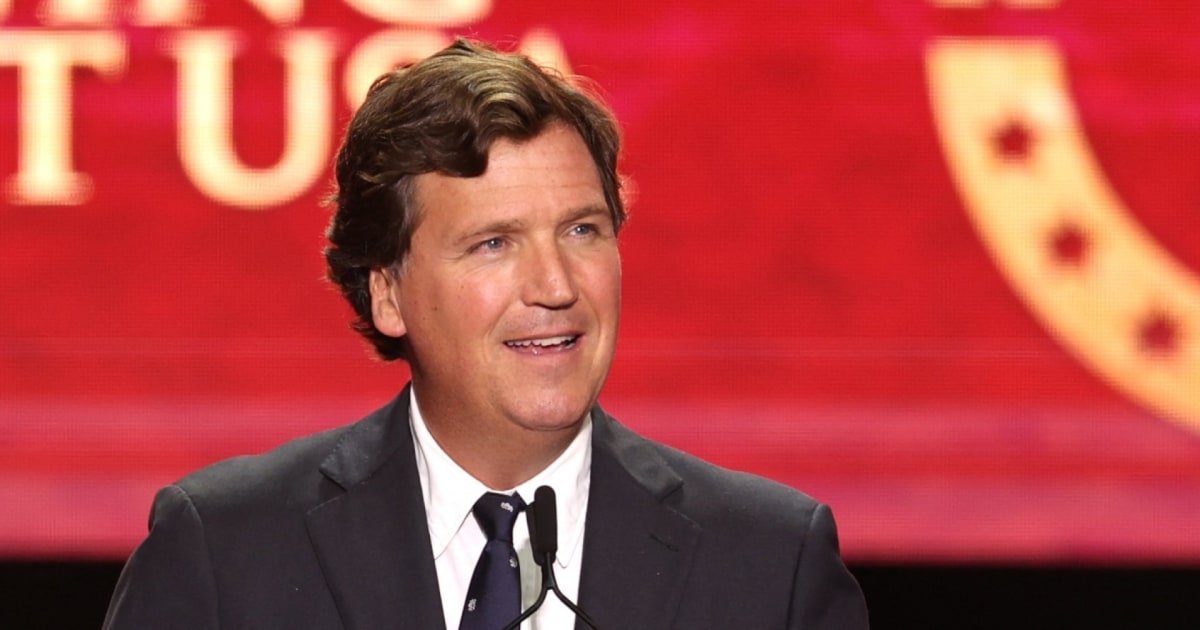
Tucker Carlson speaks at Charlie Kirk memorial
November 13, 2025
Eiffel Tower lit up on Paris attacks 10th anniversary
October 16, 2025
Oct. 16, 2025, 5:46 PM EDT / Updated Oct. 16, 2025, 6:01 PM EDTBy Aria BendixPresident Donald Trump on Thursday announced two policy changes aimed at making in vitro fertilization more affordable — a long-awaited follow-up to his pledges to require health insurers to cover IVF services and to an executive order aimed at lowering the cost of fertility treatments.However, the announcement was not a new rule that insurers must cover IVF. Rather, the Trump administration said that the White House has negotiated with two specialty pharmacies and a drug manufacturer to lower the cost of a commonly prescribed fertility drug that stimulates the ovaries to produce eggs.Additionally, the administration announced forthcoming guidance from the Labor, Treasury, and Health and Human Services departments that will help employers offer fertility benefits outside of major medical health insurance plans, the same way they offer dental, vision or life insurance. “We want to make it easier for all couples to have babies, raise children and start the families they have always dreamed about,” Trump said at a briefing in the Oval Office. The bulk of Thursday’s announcement focused on discounted fertility medications from drugmaker EMD Serono, which is part of the pharmaceutical giant Merck. The company said it would make its IVF drugs available at a lower cost through TrumpRx, a direct-to-consumer website operated by the federal government, starting in early 2026. “We are proud to announce that Americans will have access to our leading IVF therapies for an 84% discount off list prices,” Libby Horne, head of U.S. fertility at EMD Serono, said.Most IVF patients in the U.S. pay out of pocket for treatment, according to KFF, a nonprofit research group. Among the discounted drugs is a commonly used medication called Gonal-f, which some IVF patients take in the form of daily injections for roughly one or two weeks.Lab staff prepare small petri dishes, each holding several embryos, for cells to be extracted from each embryo to test for viability in Houston in 2024.Michael Wyke / AP fileSenior administration officials said the specialty pharmacies involved in the deal, CVS Specialty and Express Scripts’ Freedom Fertility — which they estimated account for more than 80% of the distribution of Gonal-f — agreed to reduce their expenses associated with the drug’s handling.“Upwards of 40% of the cost of IVF comes from the specialty drugs used for this treatment. Reducing these costs can have a significant impact on affordability and access,” Dr. Roger Shedlin, CEO of the fertility benefits company WIN, said in a statement.Trump’s announcement came after months of relative silence from the White House on which policies it was considering to expand IVF access. The executive order he issued in February had called for recommendations for “protecting IVF access and aggressively reducing out-of-pocket and health plan costs for IVF treatment.” Trump received a list of those recommendations in May.The new deal is part of Trump’s broader effort to bring the cost of prescription drugs in the U.S. more in line with the lowest prices charged in other wealthy countries — what’s known as the “most favored nation” pricing model.The White House has not yet negotiated lower prices on IVF drugs from other manufacturers.Sean Tipton, chief advocacy and policy officer at the American Society for Reproductive Medicine, which represents IVF providers, called the announcement a “crucial first step,” but said it still doesn’t go far enough to boost affordability.“One executive action cannot, on its own, ensure that every patient who needs IVF — which for some represents the only option to have a child — can access it,” he said.For now, senior administration officials said, medications made by EMD Serono will be discounted on TrumpRx at varying levels depending on a buyer’s income. Patients earning below 550% of the federal poverty level will be eligible for the more significant discount, the officials said.Trump campaigned last year on expanding IVF access, referring to himself at the time as the “father of IVF.” However, some conservatives and anti-abortion groups see IVF as unethical because the process often involves discarding embryos that have genetic issues or aren’t needed. The Washington Post reported in August that the administration had veered away from the idea of an IVF coverage requirement for health insurers.EMD Serono is seeking approval from the Food and Drug Administration for another fertility drug, Pergoveris, which is approved in Europe but not the U.S. Administration officials said on Thursday the FDA intends to give that application priority review status, which would expedite the process.Aria BendixAria Bendix is the breaking health reporter for NBC News Digital.
Comments are closed.
Scroll To Top
  • Home
  • Travel
  • Culture
  • Lifestyle
  • Sport
  • Contact Us
  • Politics
© Copyright 2025 - Be That ! . All Rights Reserved